
About this worksheet
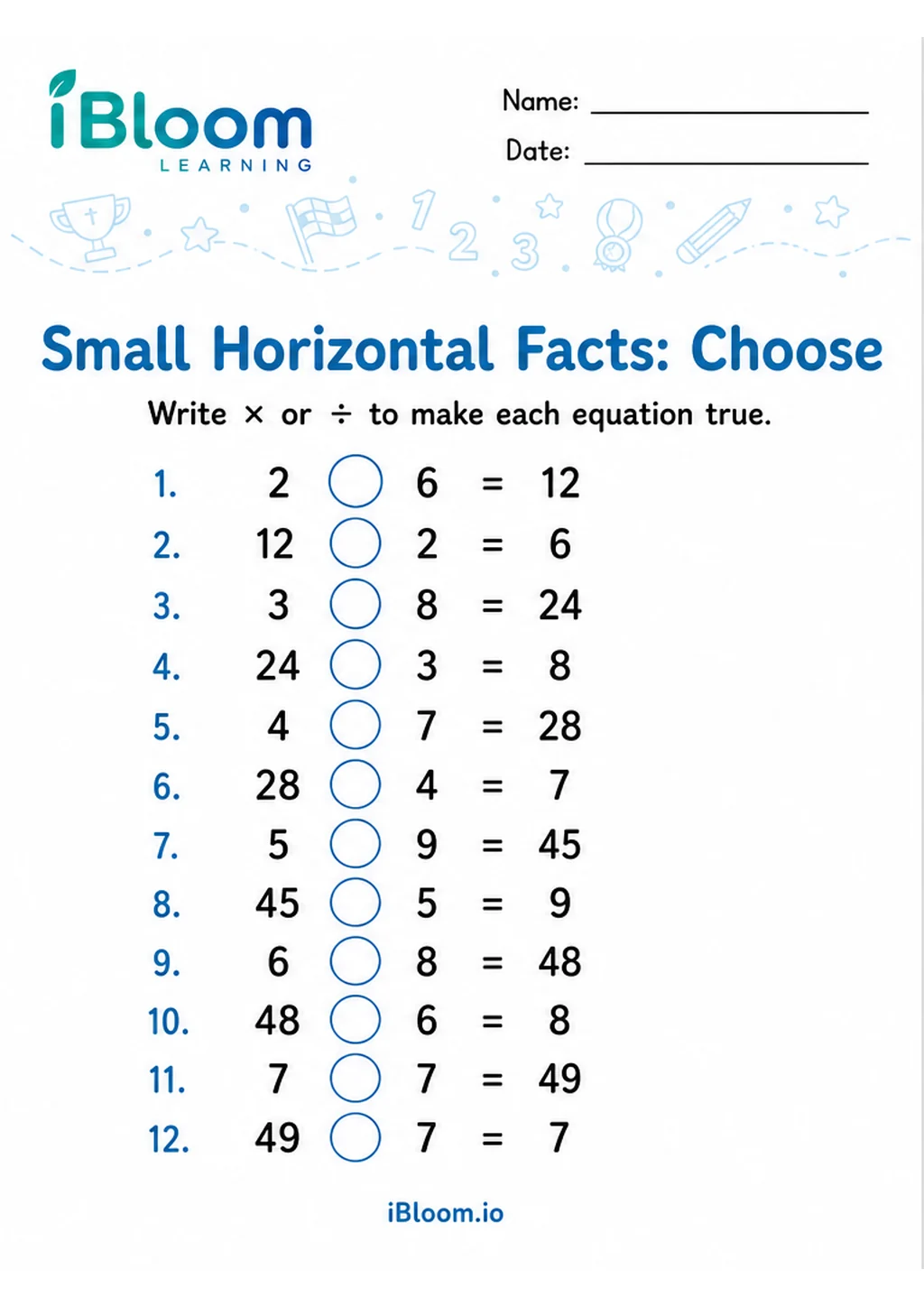
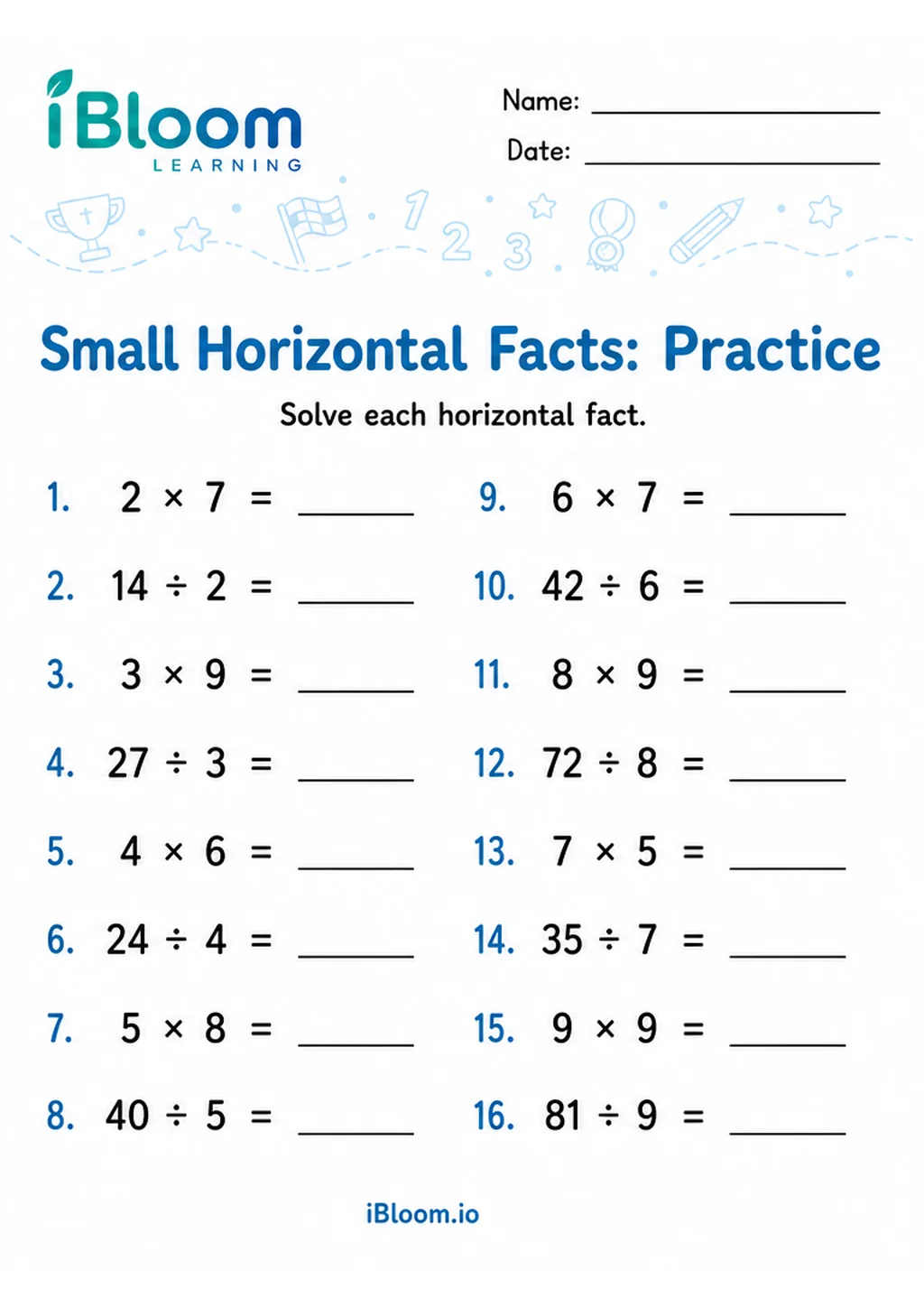
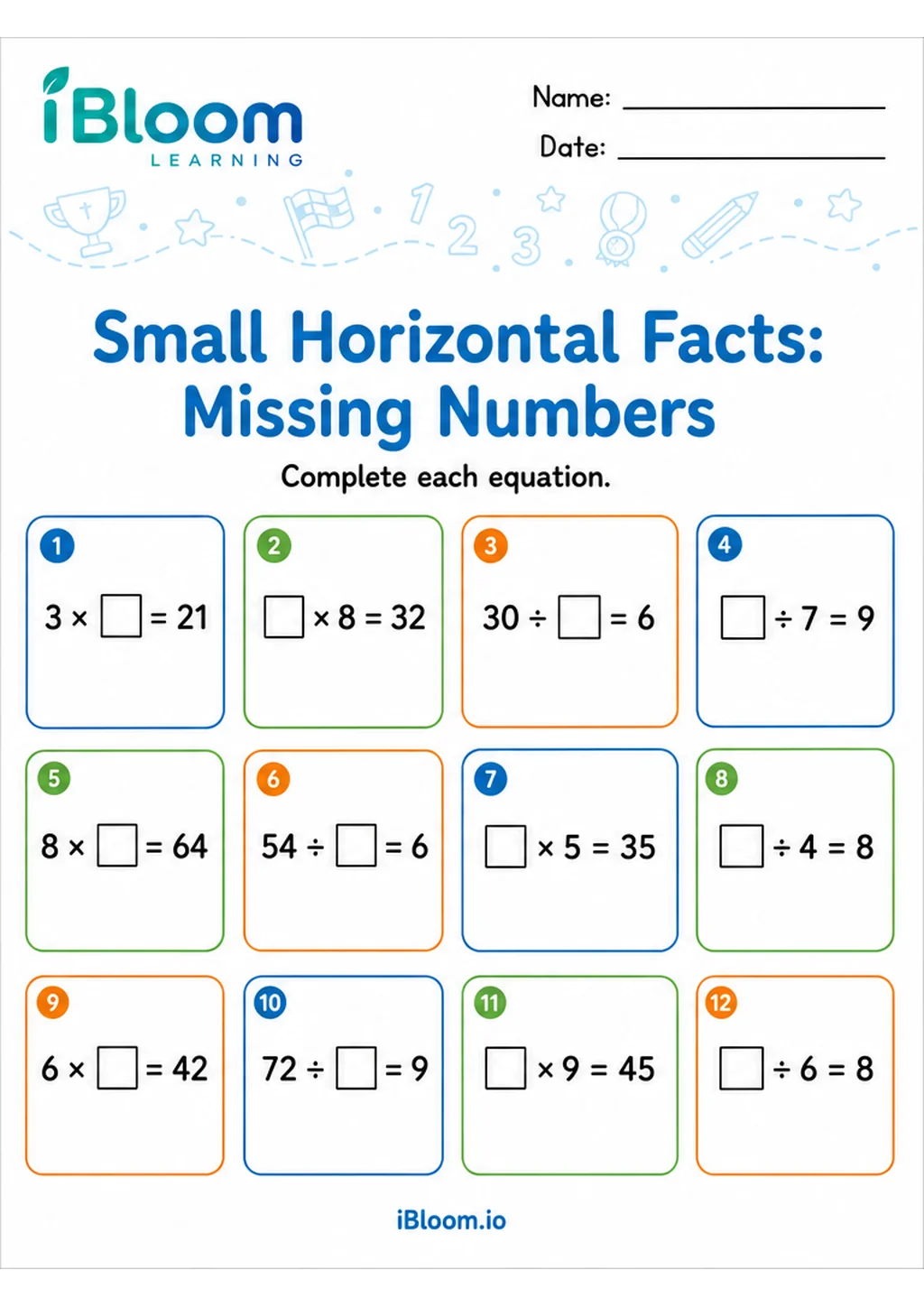
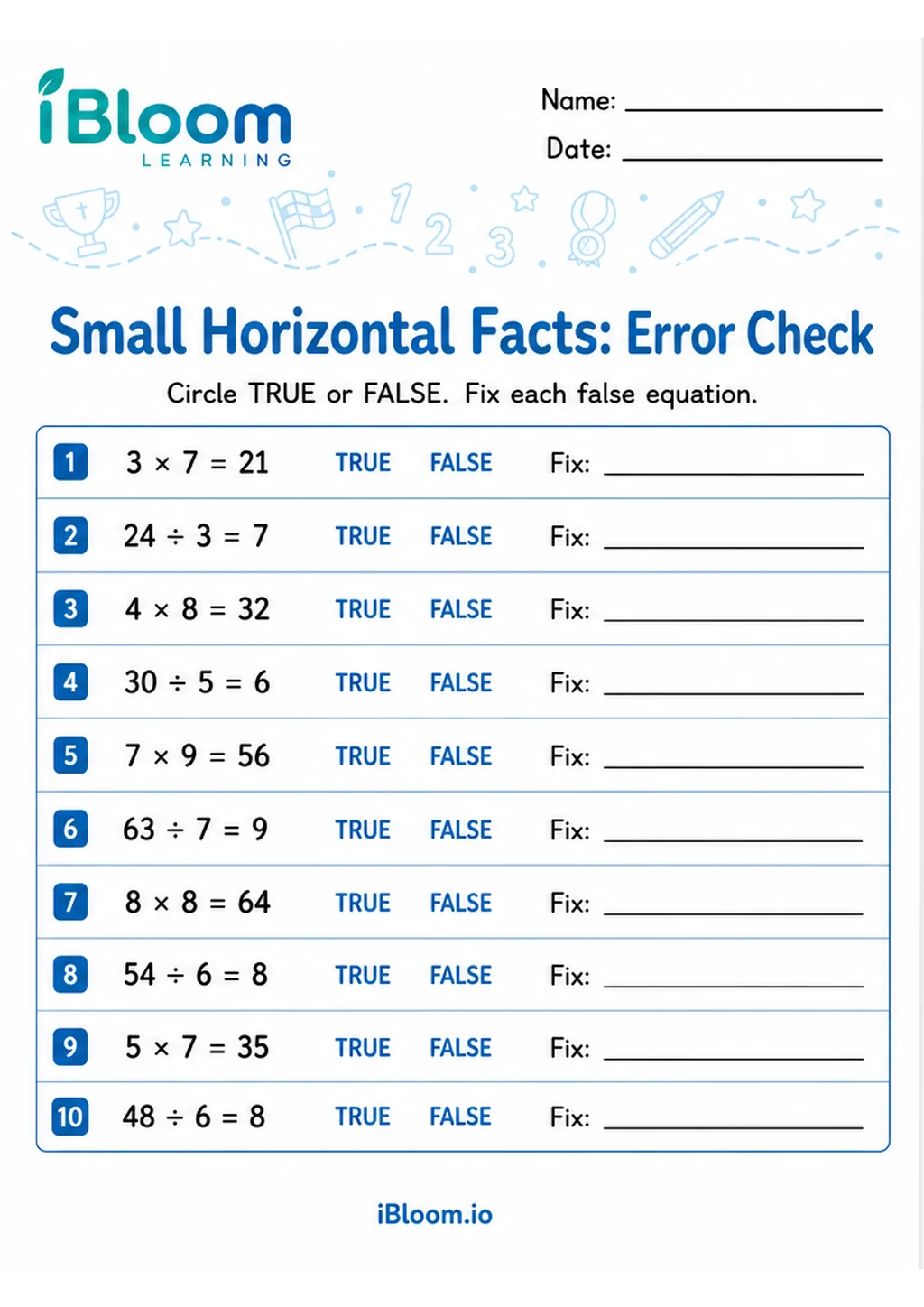
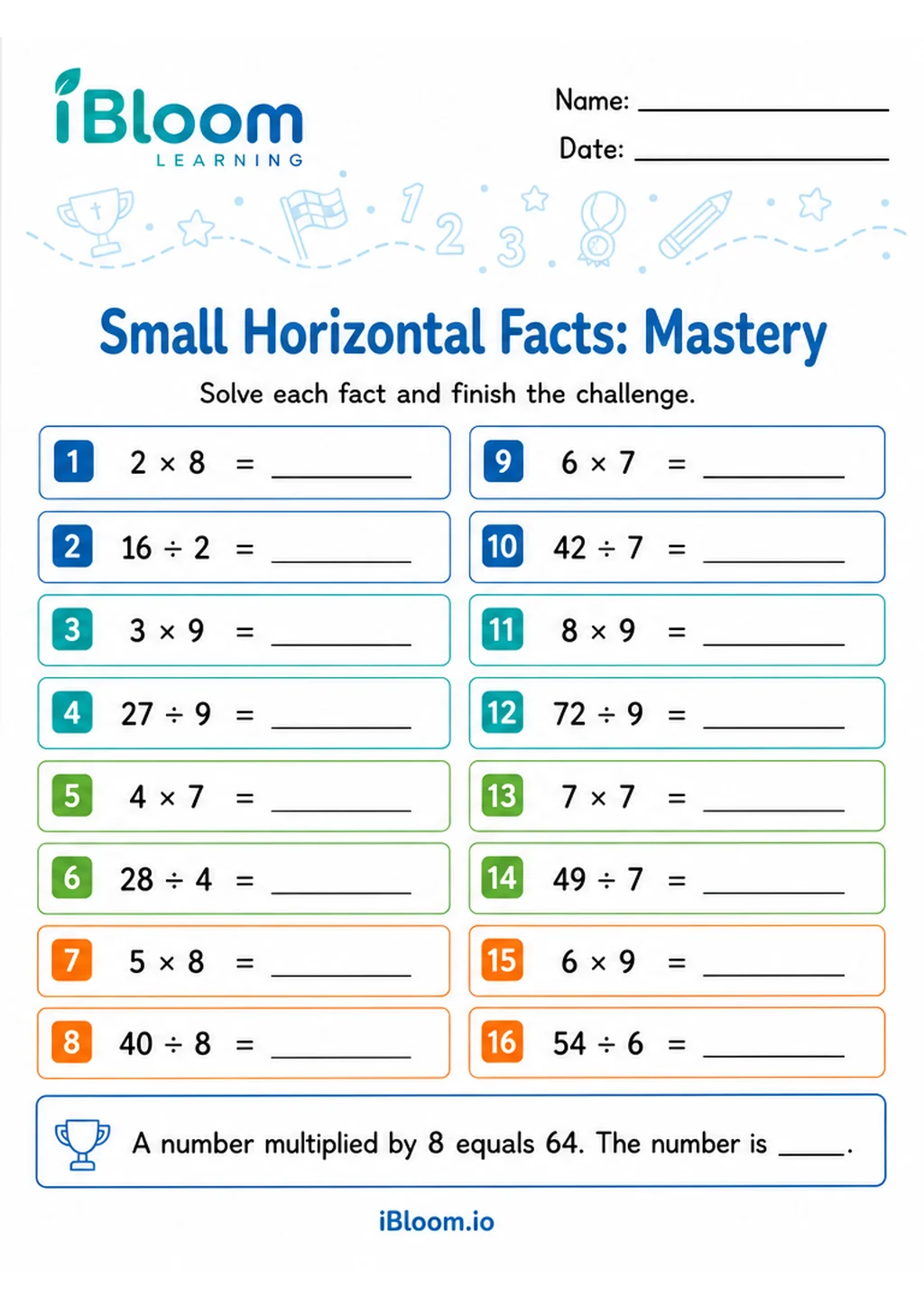
This free printable Grades 3–6 worksheet gives learners 16 questions to rewrite and solve multiplication and division facts vertically. The first two parts mix one-digit facts; the final part applies the operations to equal-group and sharing situations. A separate answer key shows each result.
Aligned to 3.OA.C.7
How do multiplication and division facts connect?
Multiplication names equal groups or rows, while division finds the size or number of equal groups. Knowing one fact can help solve its related fact, such as 6 × 4 = 24 and 24 ÷ 6 = 4.
When can a vertical setup help?
The title’s vertical practice means rewriting a short horizontal fact in a vertical arrangement before solving. Keep the operation sign clear, then check that the answer makes sense for the fact.
- 13 × 7 = 21
- 2Write the factors in a vertical setup if that helps keep the work organized.
How should children solve the situations?
Look for equal groups, rows, or sharing. Choose multiplication for a total made from equal groups and division when a total is shared or split into equal groups.
How to use this worksheet
- 1Read each part’s direction before starting.
- 2Solve the facts or clues in order and show work where space is provided.
- 3Use the operation or text detail that fits the question.
- 4Check the answer key after completing the practice.
Common mistakes and quick fixes
The mistake
Answering quickly without checking the clue or operation.
The fix
Point to the exact word, detail, number or mark that supports the response.
The mistake
Skipping a question that feels unfamiliar.
The fix
Try the next part, then return and use its directions as a reminder.
The mistake
Changing a correct answer after a quick glance.
The fix
Explain the evidence or calculation aloud before making a change.
Common Core alignment
Fluently multiply and divide within 100 using known facts.
On this sheet: Parts A and B practice one-digit multiplication and related division facts.
Show the official wordingHide the official wording
Fluently multiply and divide within 100, using strategies such as the relationship between multiplication and division (e.g., knowing that 8 × 5 = 40, one knows 40 ÷ 5 = 8) or properties of operations. By the end of Grade 3, know from memory all products of two one-digit numbers.
What to practice next
Further reading
Questions parents and teachers ask
What facts does the worksheet practice?
The 16 questions mix one-digit multiplication and division facts, followed by short situations about equal groups and sharing. Children can rewrite the number sentences vertically as the title suggests, then use the related fact family to check a result. A vertical setup can help children line up numbers or keep their work organized, even though these.
Does every question require vertical work?
The directions invite children to rewrite facts vertically when useful. The facts are short, so a child may solve a familiar one mentally, but writing the setup can help keep multiplication and division signs clear. For example, 45 shared equally among 5 players is 45 ÷ 5. The quotient is the number of cards each player.
How can I check a division answer?
Multiply the quotient by the divisor. For example, if 42 ÷ 6 = 7, check that 7 × 6 equals 42. A matching multiplication fact confirms that the groups combine to the original total. Children can write 7 × 8 for the shelf because the question gives 7 equal rows with 8 books in each row..
What do the story problems ask children to do?
The last four questions describe equal groups, rows, or sharing. Children should decide whether multiplication or division fits the situation, write an equation, and solve it. The answer key gives the expected totals or group sizes. Ask the child to name the equal groups before choosing an operation. The number sentence helps show why multiplication or division fits the story.
How many worksheet pages should I print?
Print both worksheet pages and the separate answer key page. The 16 questions move from quick facts to short situations, so children can work through one section at a time and check answers after completing the practice. The printed directions and answer key make it easy to review the response after the activity is complete.