



About this worksheet
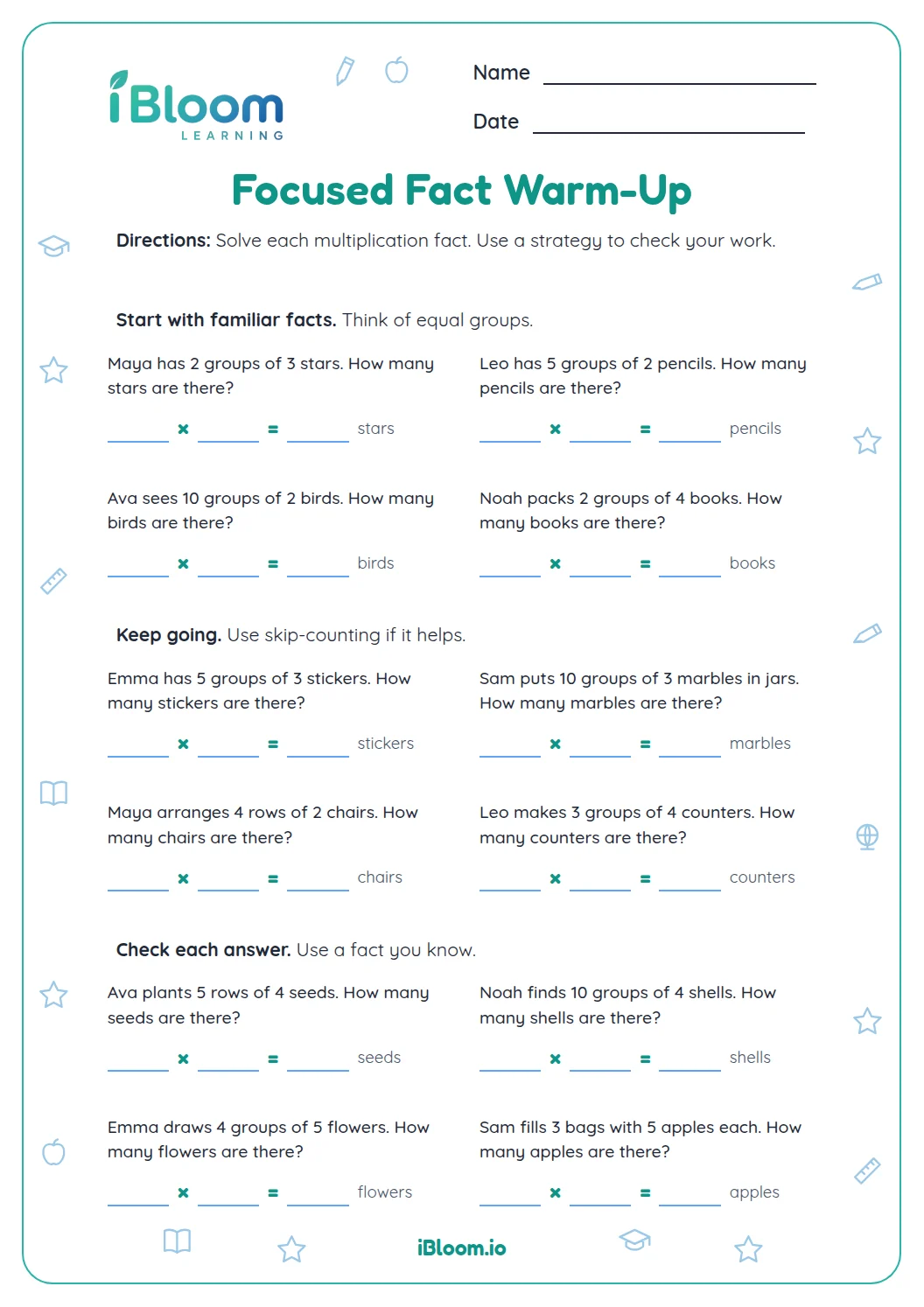
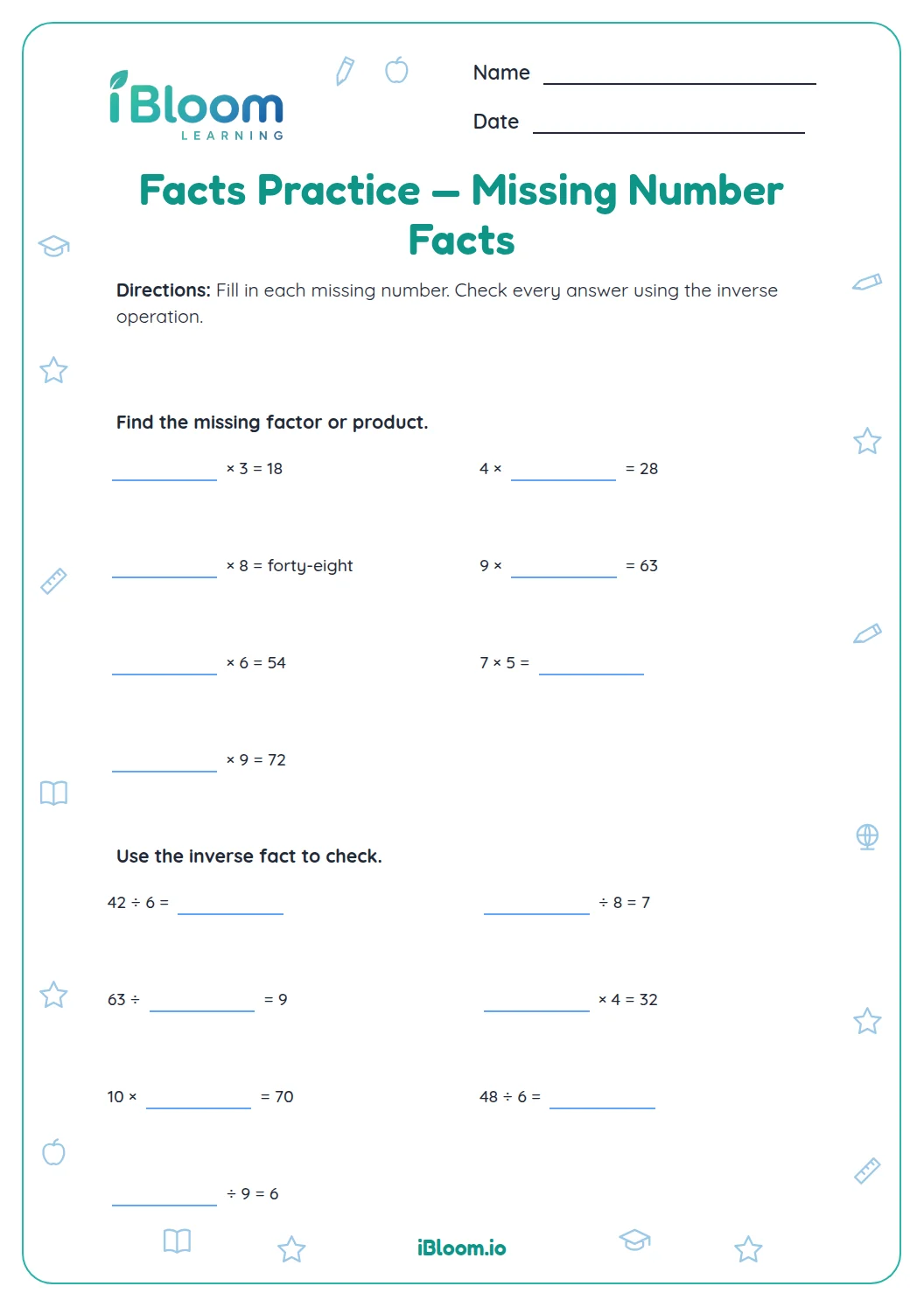
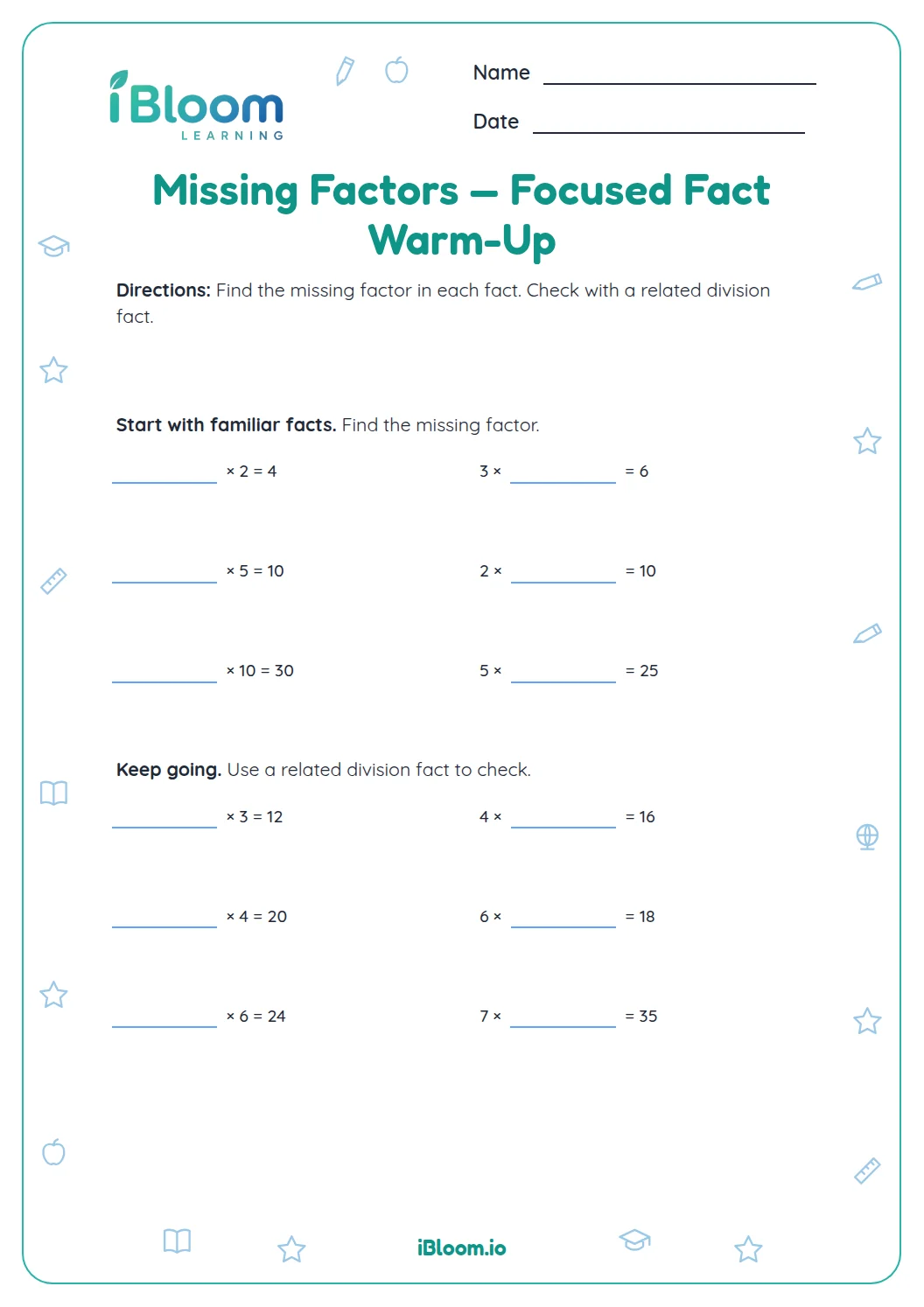
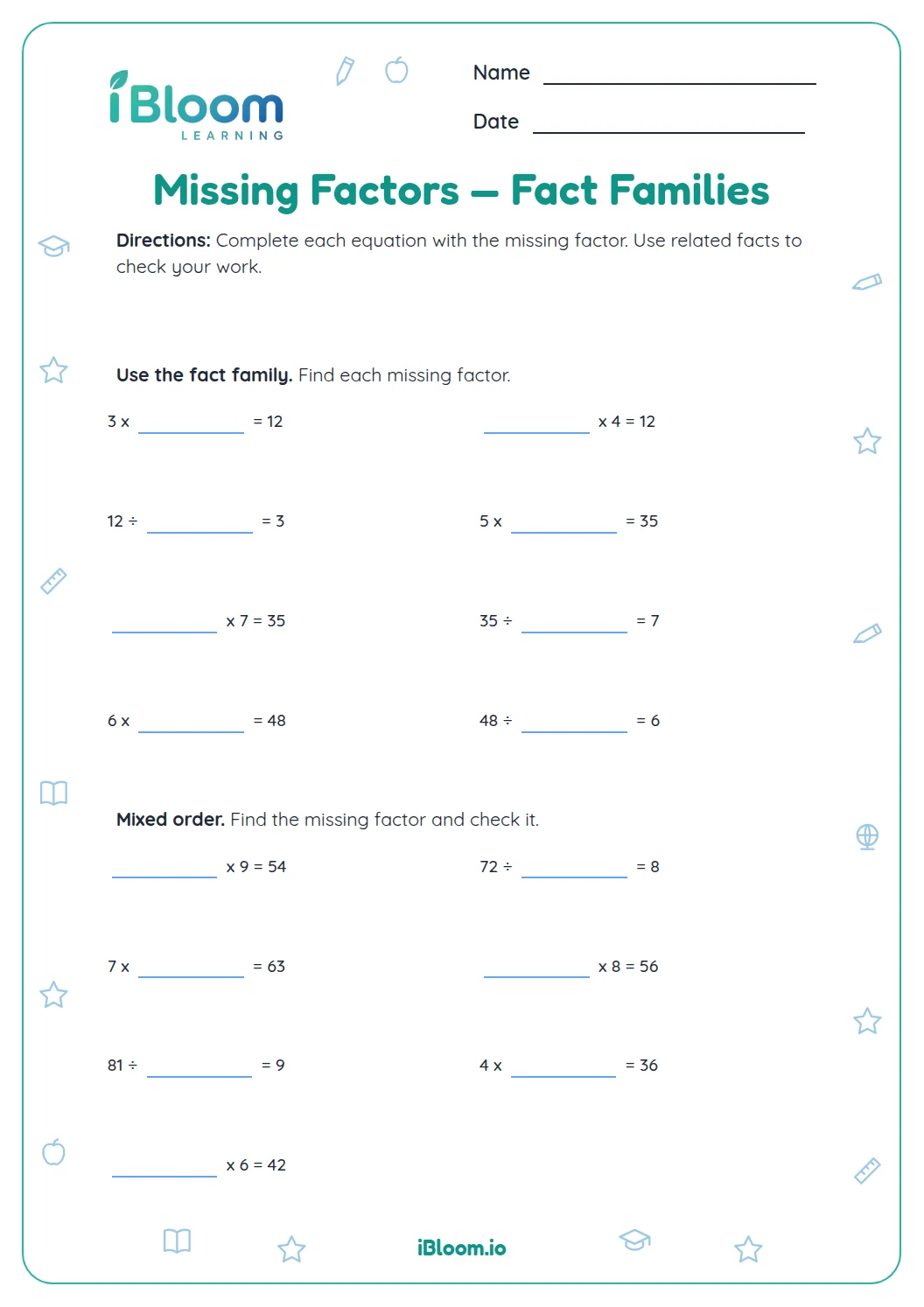
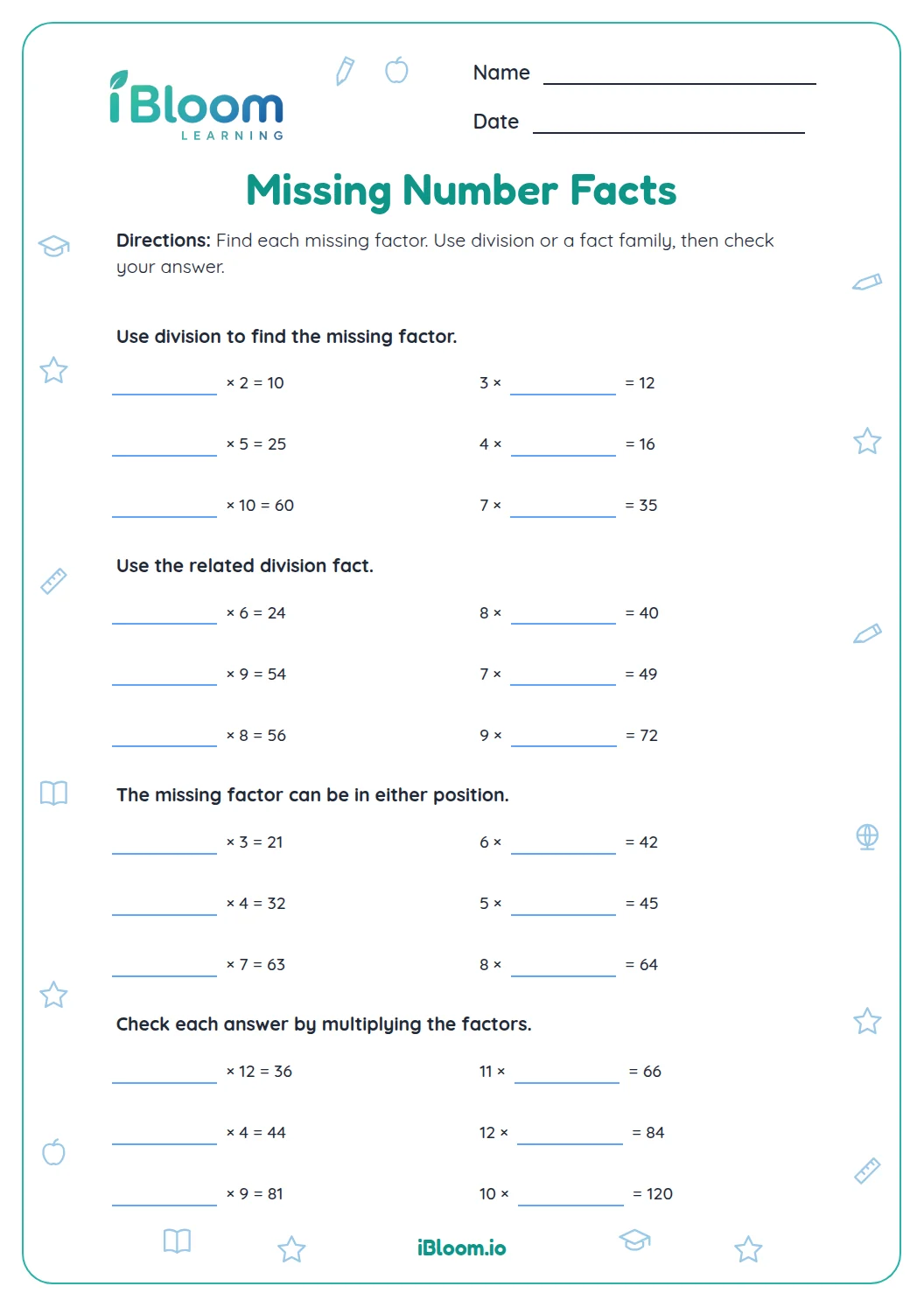
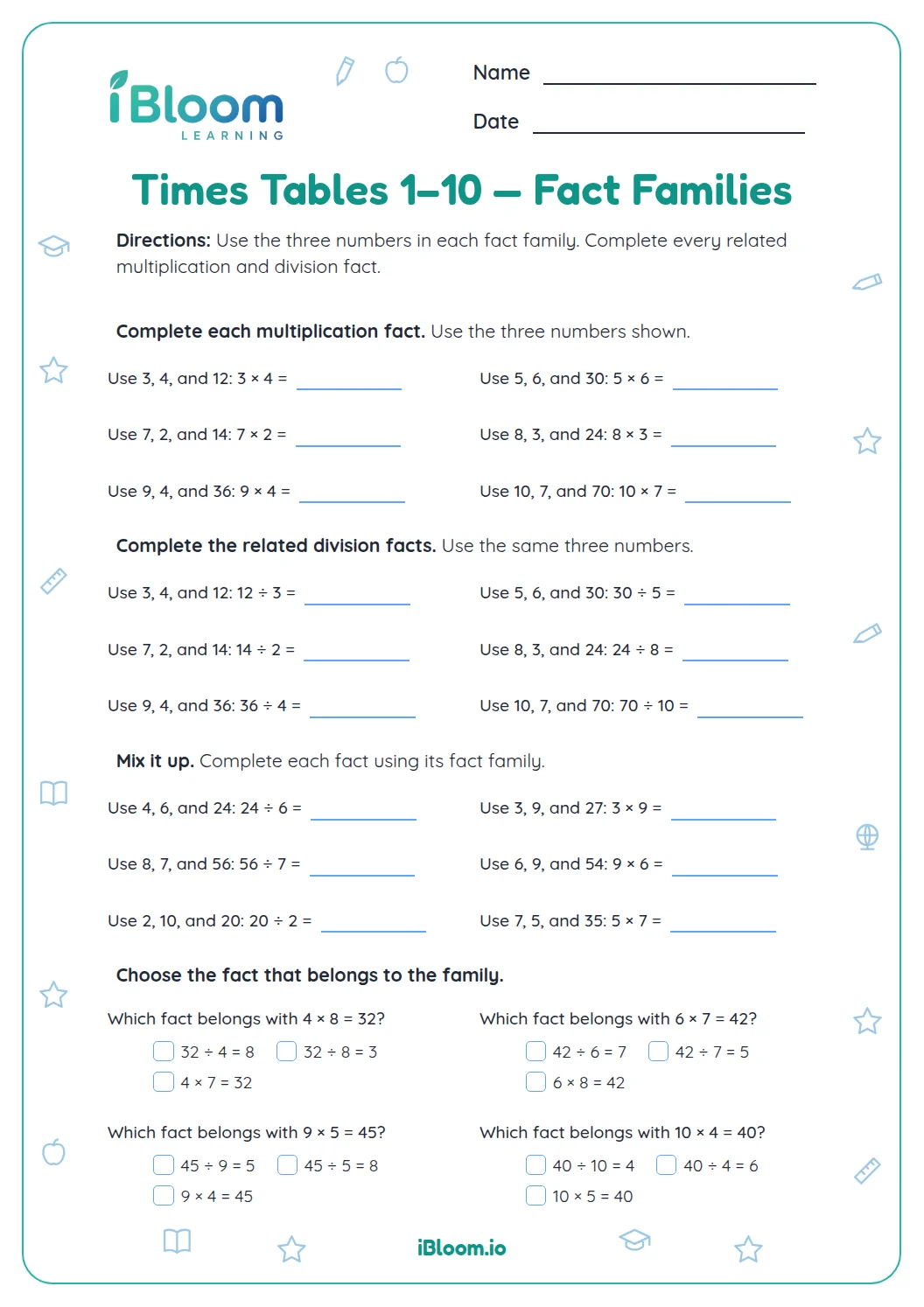
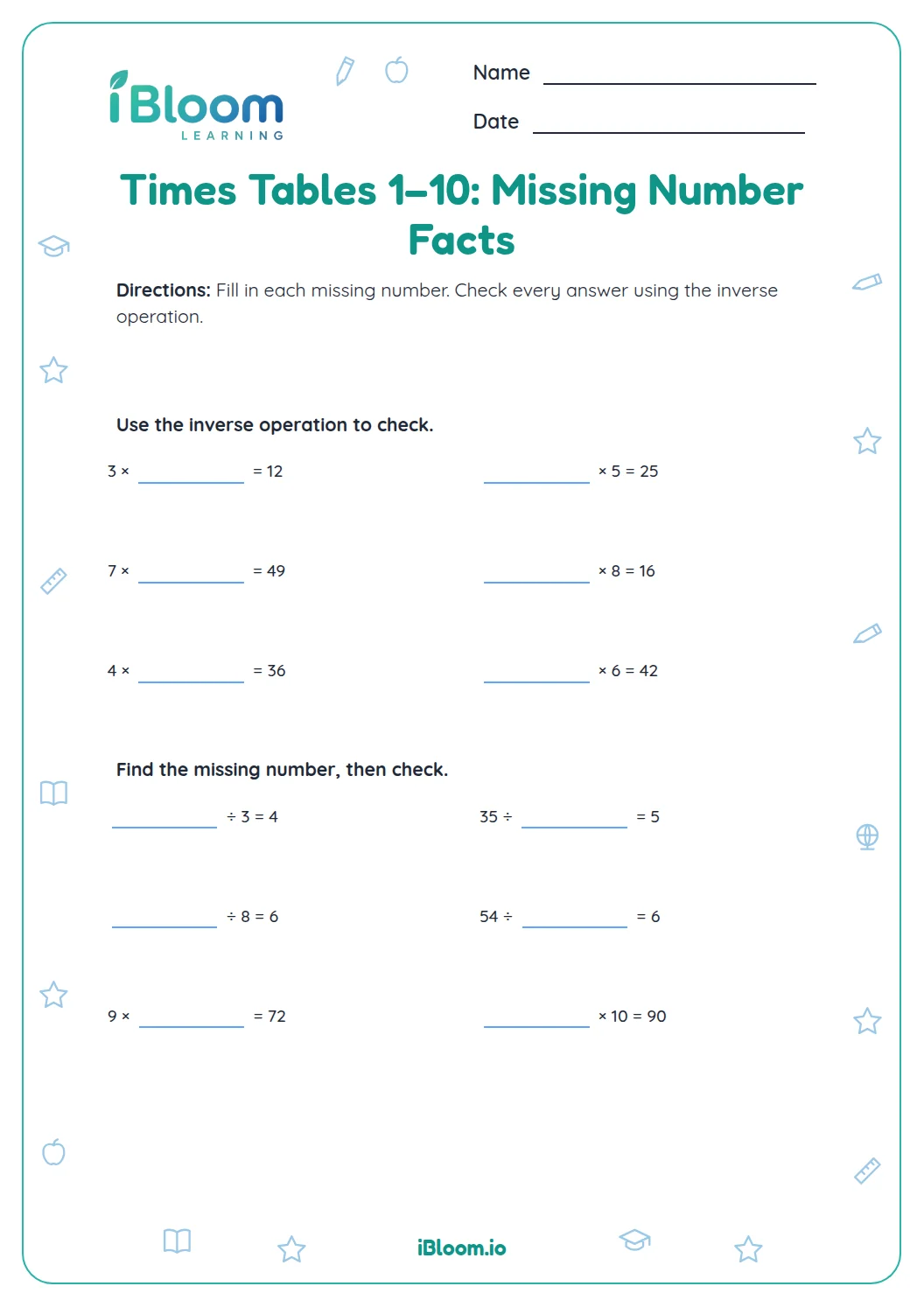
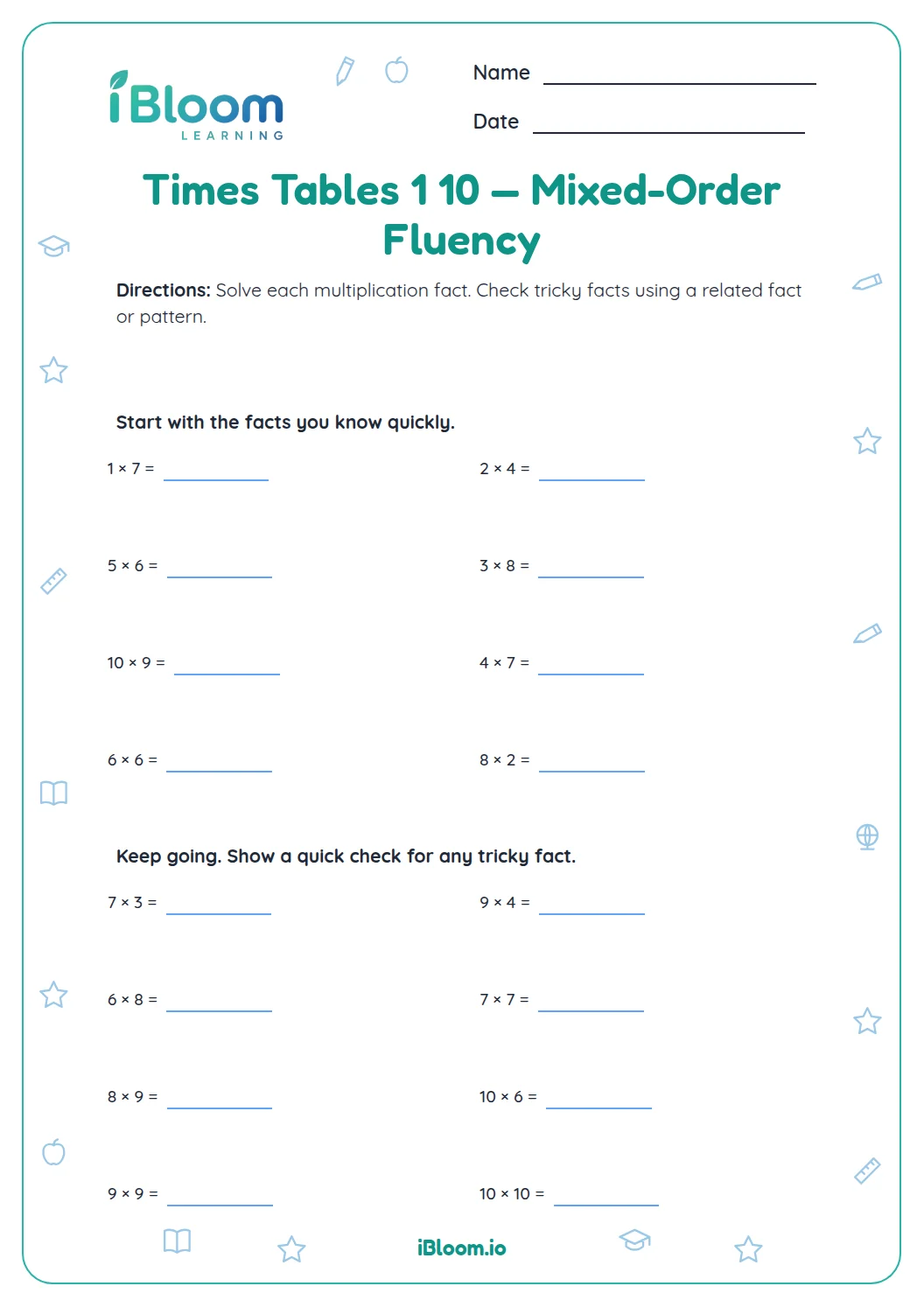
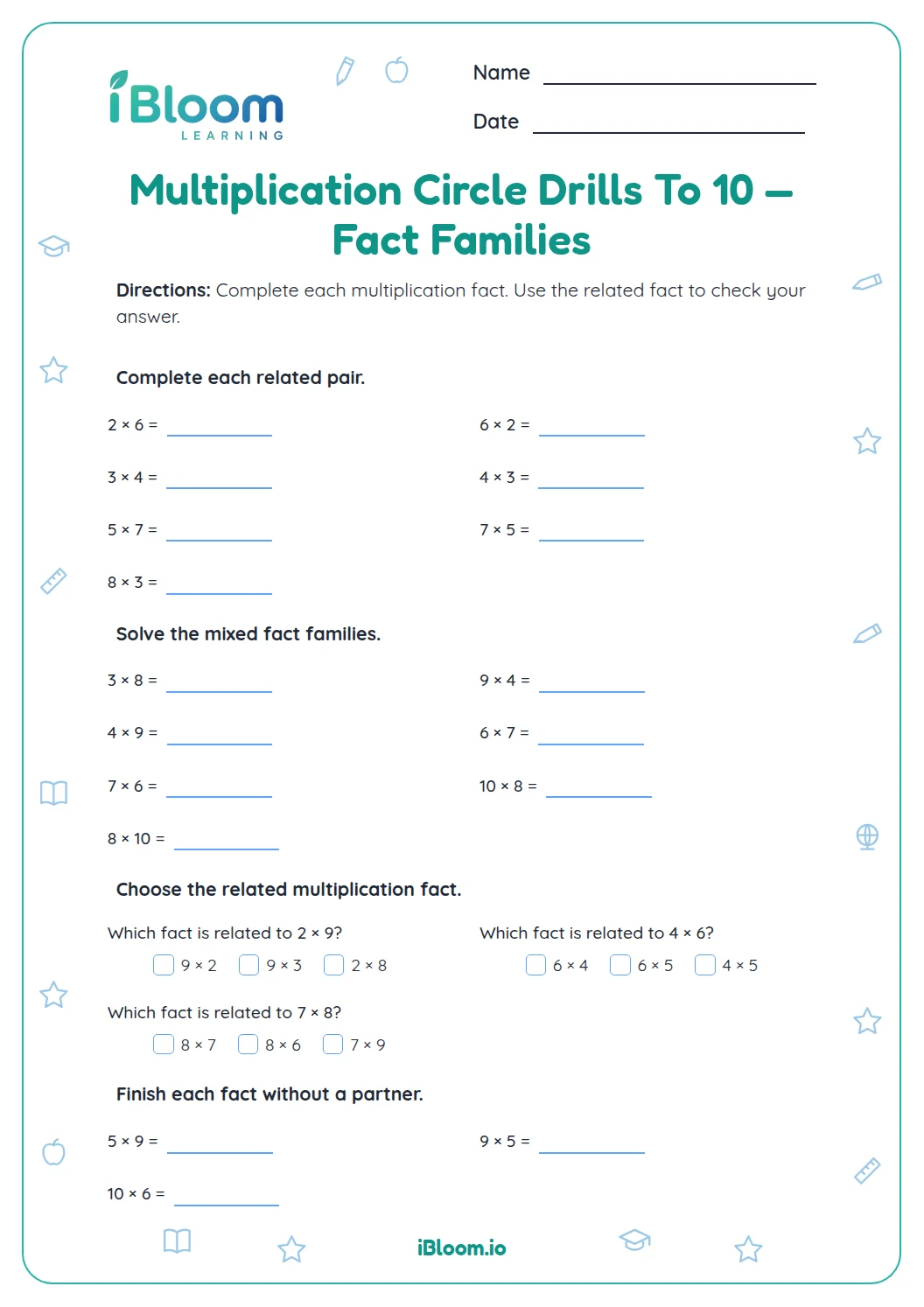
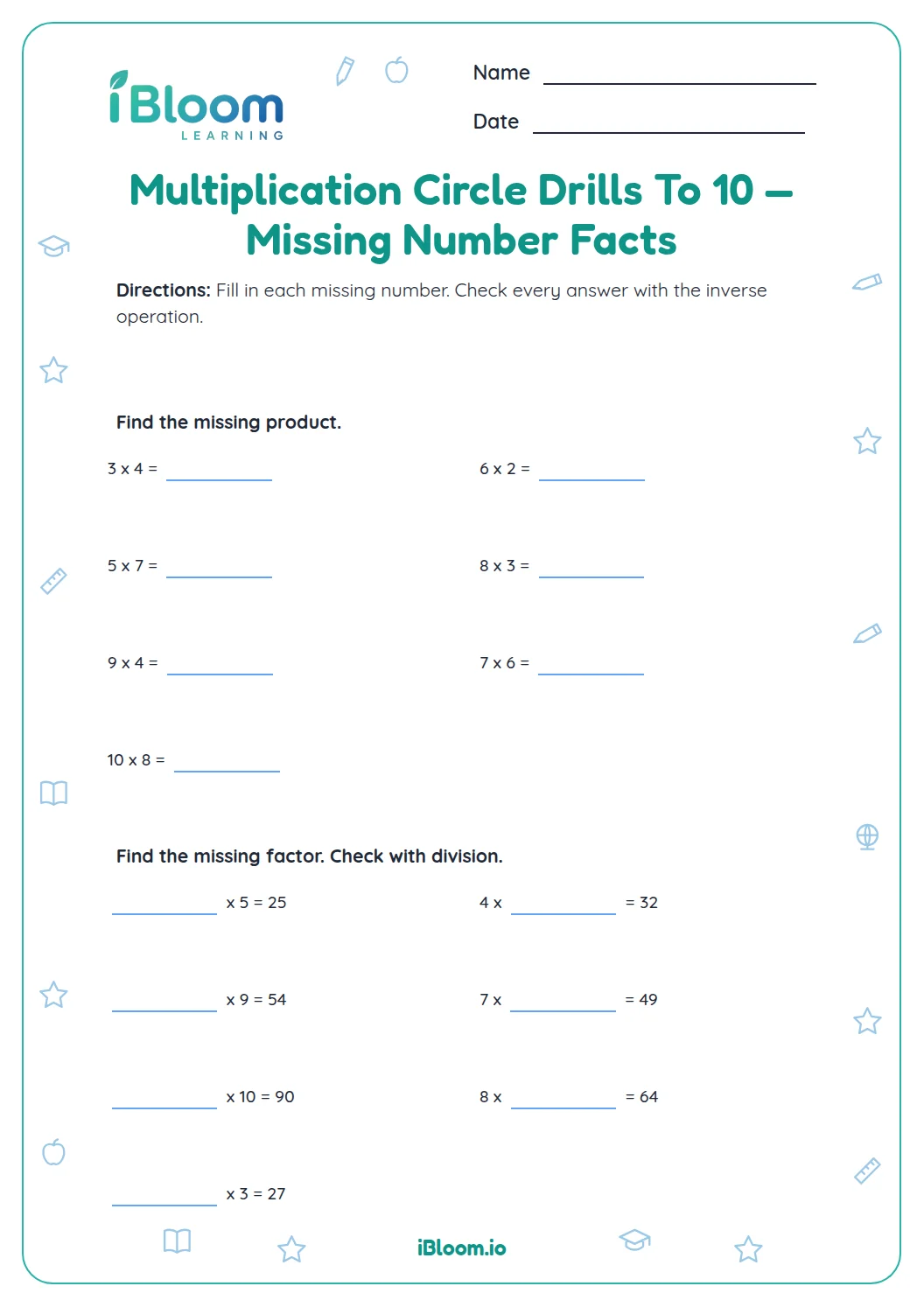
Each group of four equations uses the same three numbers, showing how multiplication and division facts are connected. Students solve both operation types and can use one fact to check another. The numbers stay within basic multiplication facts and division within 100.
Aligned to 3.OA.C.7
Which facts belong in one family?
Each family uses the same two factors and their product. For 3, 4, and 12, the facts are 3 × 4 = 12, 4 × 3 = 12, 12 ÷ 3 = 4, and 12 ÷ 4 = 3.
How can multiplication check division?
Multiply the divisor by the quotient. For 12 ÷ 3 = 4, check 3 × 4 = 12. The four groups on the worksheet each use this relationship.
What is the practice sequence?
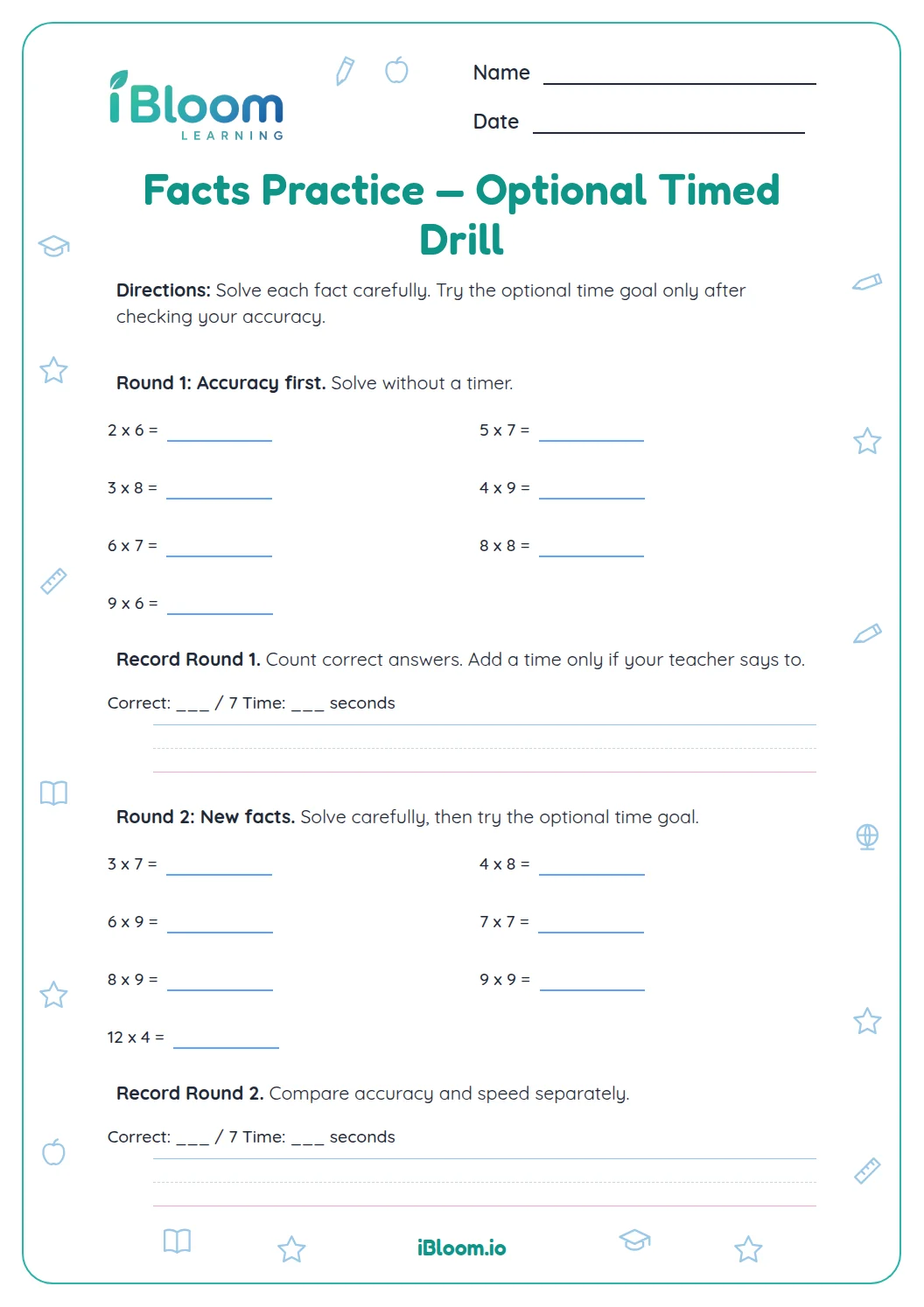
The 16 equations are arranged in four groups of four. Students solve multiplication and division facts in each group, then use the shared numbers to check that the family is complete.
How to use this worksheet
- 1Solve each equation by thinking of a related fact.
- 2Notice the three numbers that stay together in each family.
- 3Check a division answer by multiplying it by the divisor.
- 4Review each group to confirm it contains two multiplication and two division facts.
Common mistakes and quick fixes
The mistake
Reversing the quotient and divisor in a division fact.
The fix
Use the equation: divisor × quotient must equal the dividend.
The mistake
Assuming the two multiplication facts have different products.
The fix
Turn around the factors; the product stays the same.
The mistake
Using a factor as the product in a division fact.
The fix
Multiply the divisor and quotient; their product must equal the dividend.
Curriculum alignment
Grade 3 students build multiplication and division fluency within 100 by using the relationship between the operations.
Fluently multiply and divide within 100.
On this sheet: Each division equation is connected to a multiplication fact in its family.
Show the official wordingHide the official wording
Fluently multiply and divide within 100, using strategies such as the relationship between multiplication and division.
What to practice next
Make more practice
Further reading
Questions parents and teachers ask
How many facts are in a fact family?
A multiplication and division fact family usually has four equations. Two multiply the same pair of factors in a different order, and two divide their product by one factor to find the other. The worksheet groups all four related facts together.
How can multiplication check division?
Multiply the divisor by the quotient. If the product equals the dividend, the division fact is correct. For example, a student can check 12 ÷ 3 = 4 by multiplying 3 × 4 and confirming that the product is 12.
Are all the facts within 100?
Yes. The families use the products 12, 24, 28, and 30. Each multiplication and division equation stays within 100, so students can focus on using related facts instead of managing large numbers. Students can write the equations in any order within a family and still check the same relationships.
Why are there two multiplication facts?
Multiplication factors can switch places without changing their product. The equations 3 × 4 and 4 × 3 belong to the same family because both equal 12. Seeing both forms helps students recognize how the same numbers work together.
How many equations are on the worksheet?
There are 16 equations arranged as four groups of four. Each group has two multiplication facts and two division facts using the same three numbers, and the separate answer key lists the missing value for each equation. Students can use one completed fact to check another.