


About this worksheet
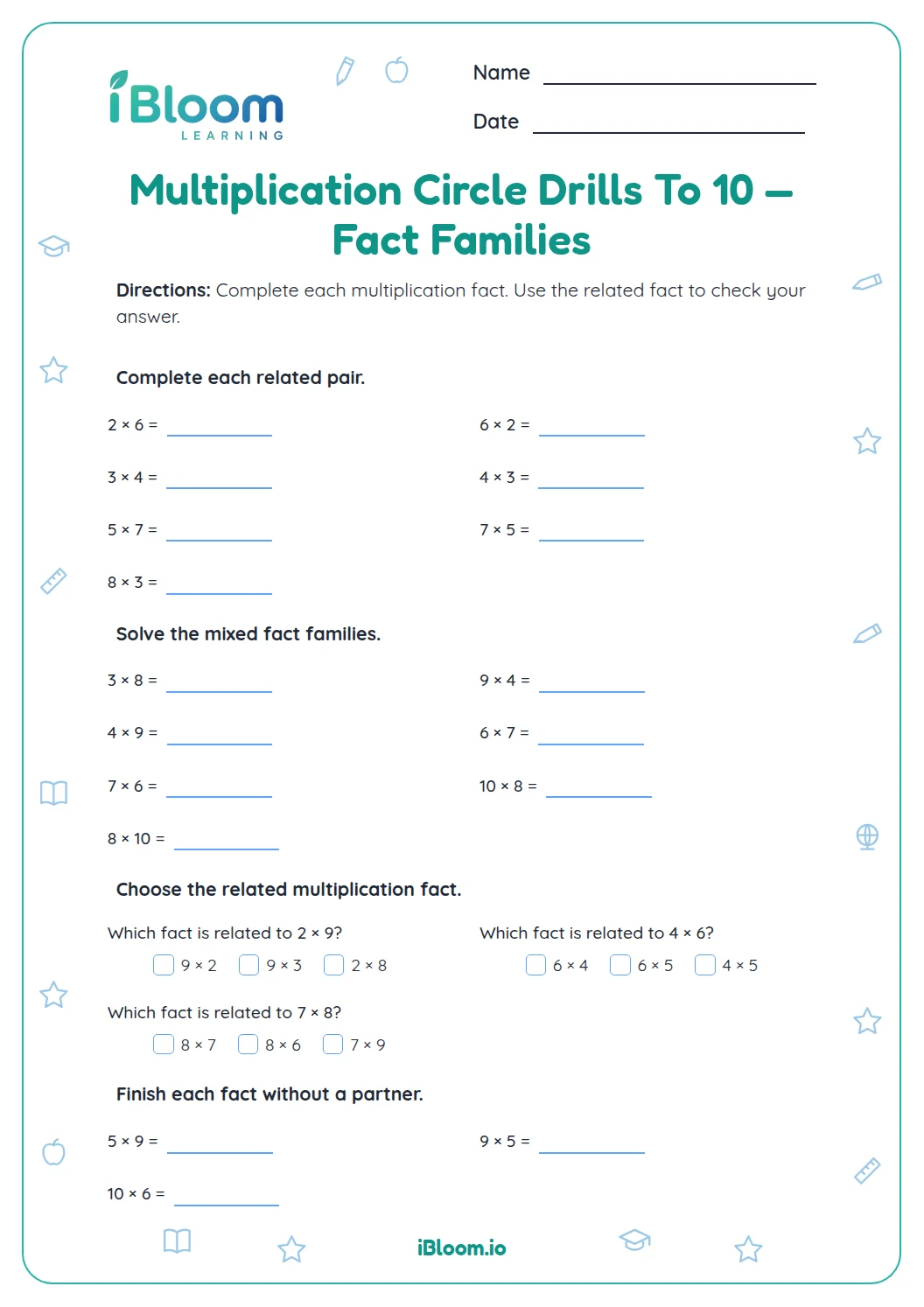
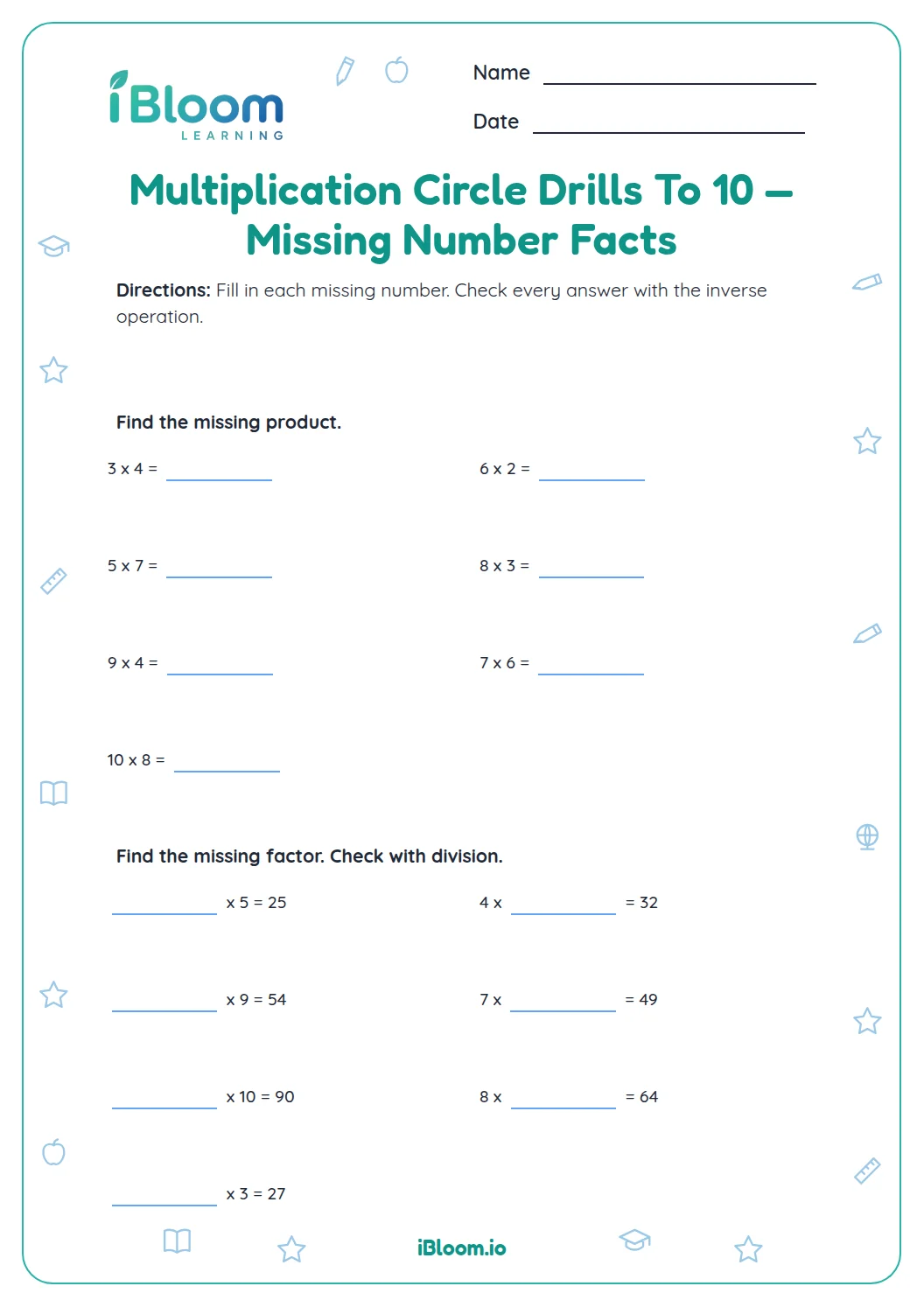
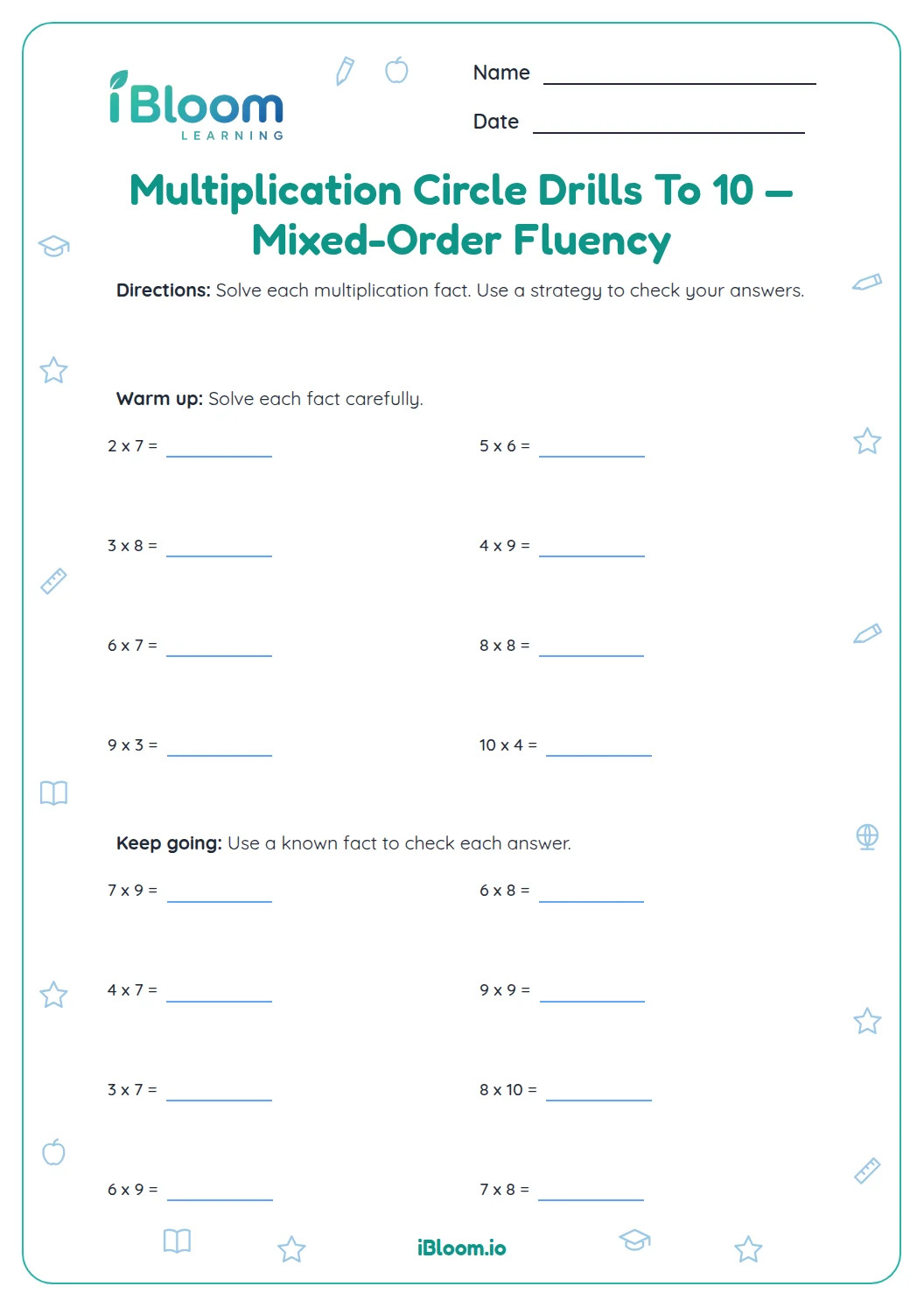
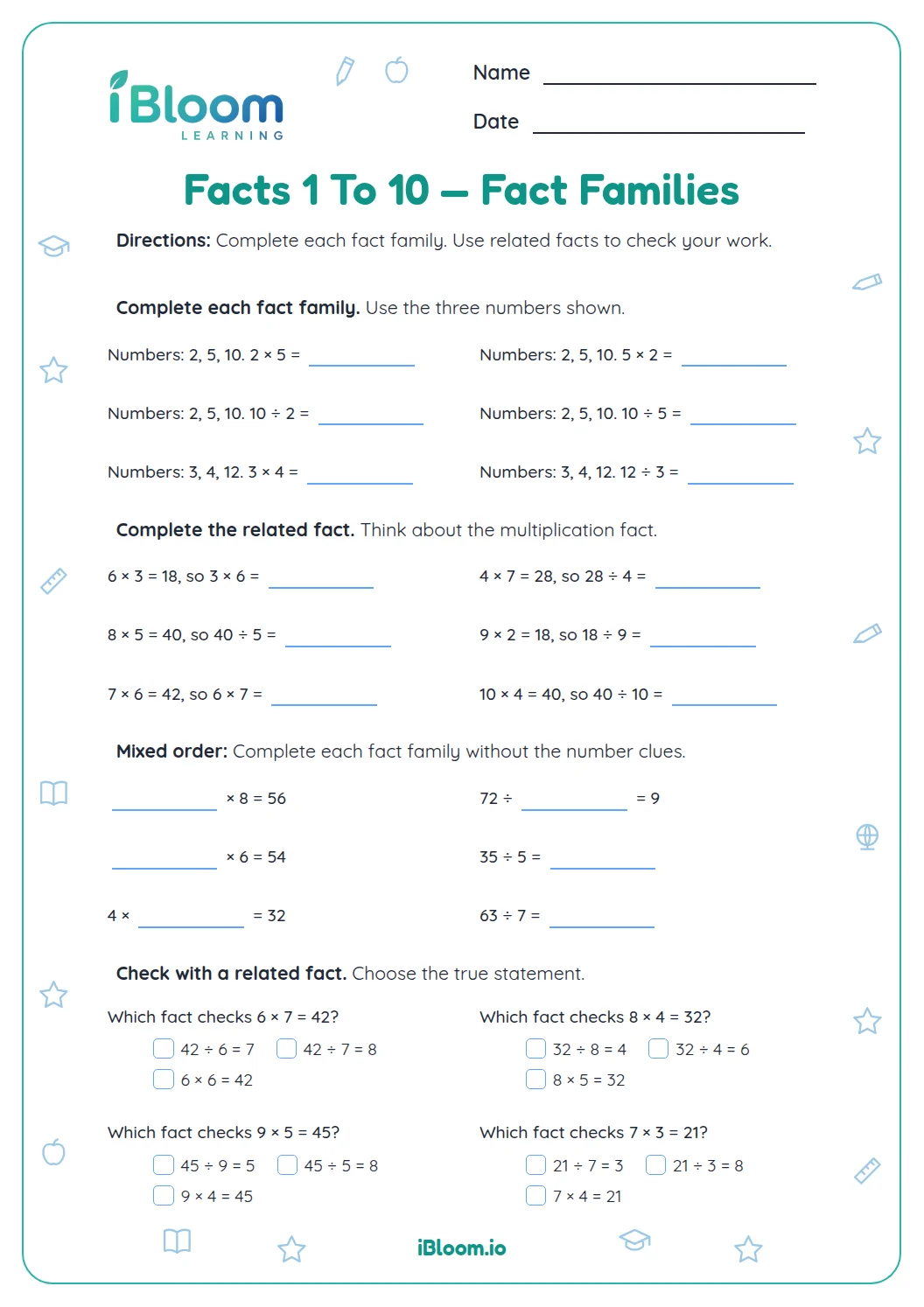
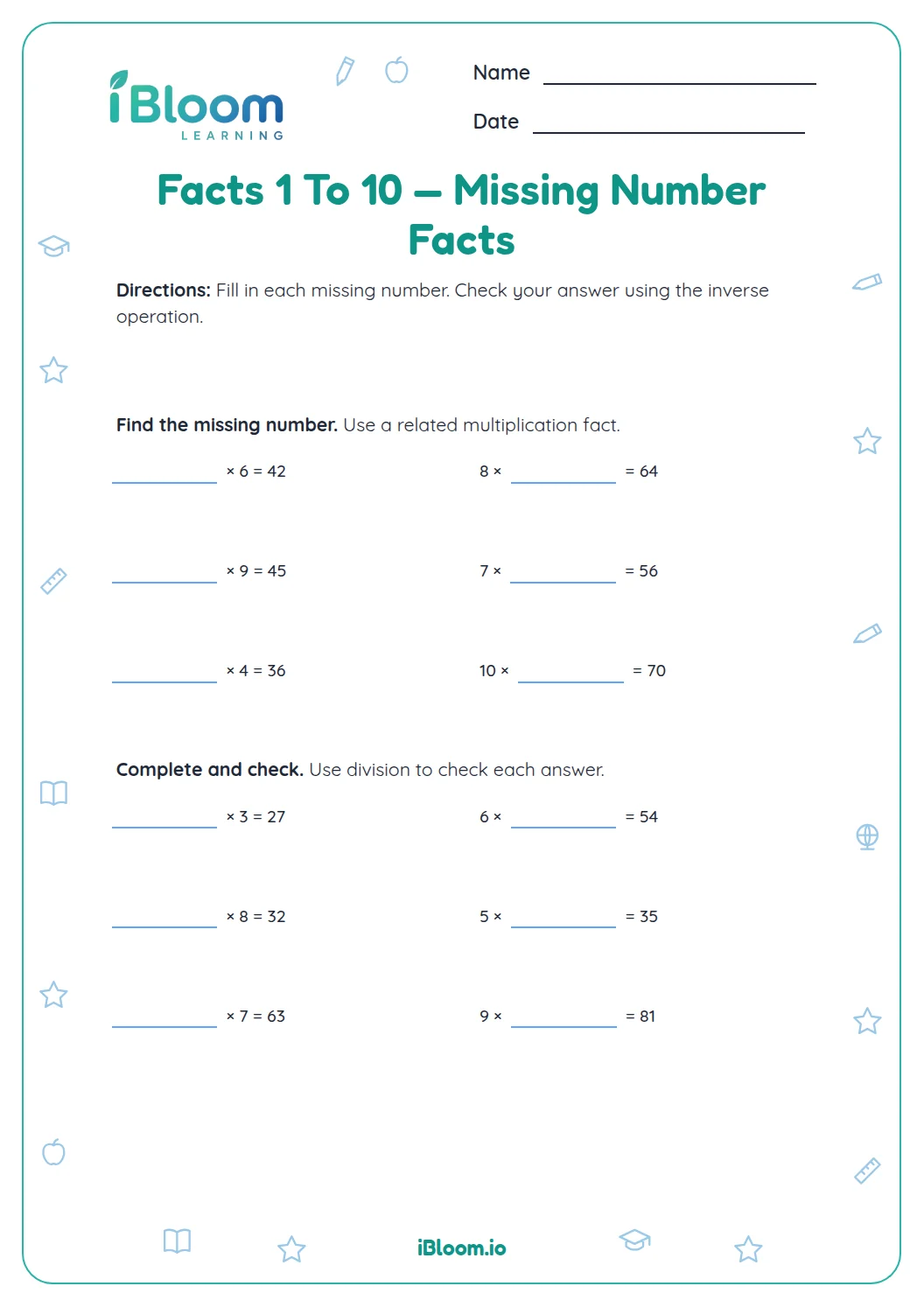
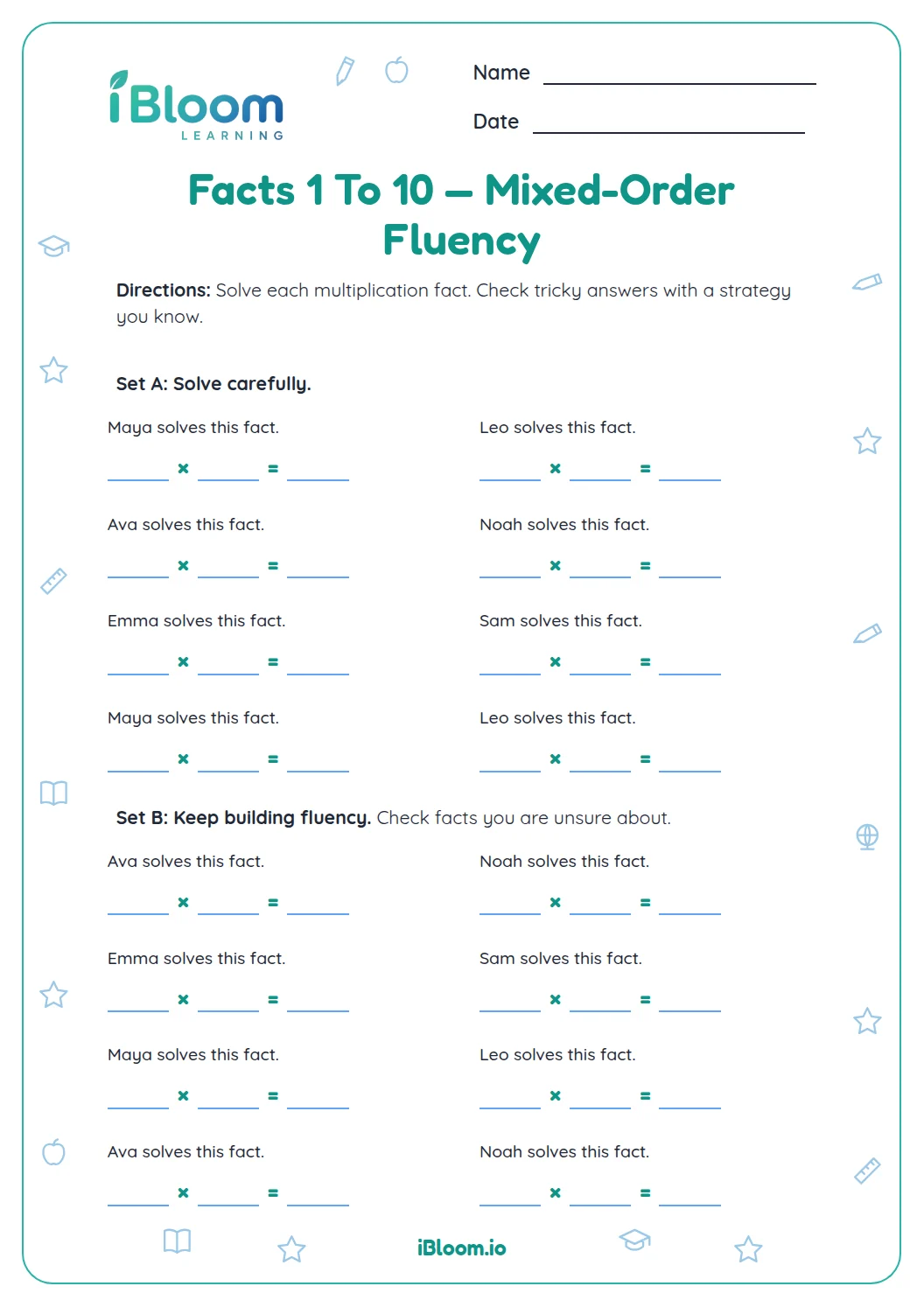
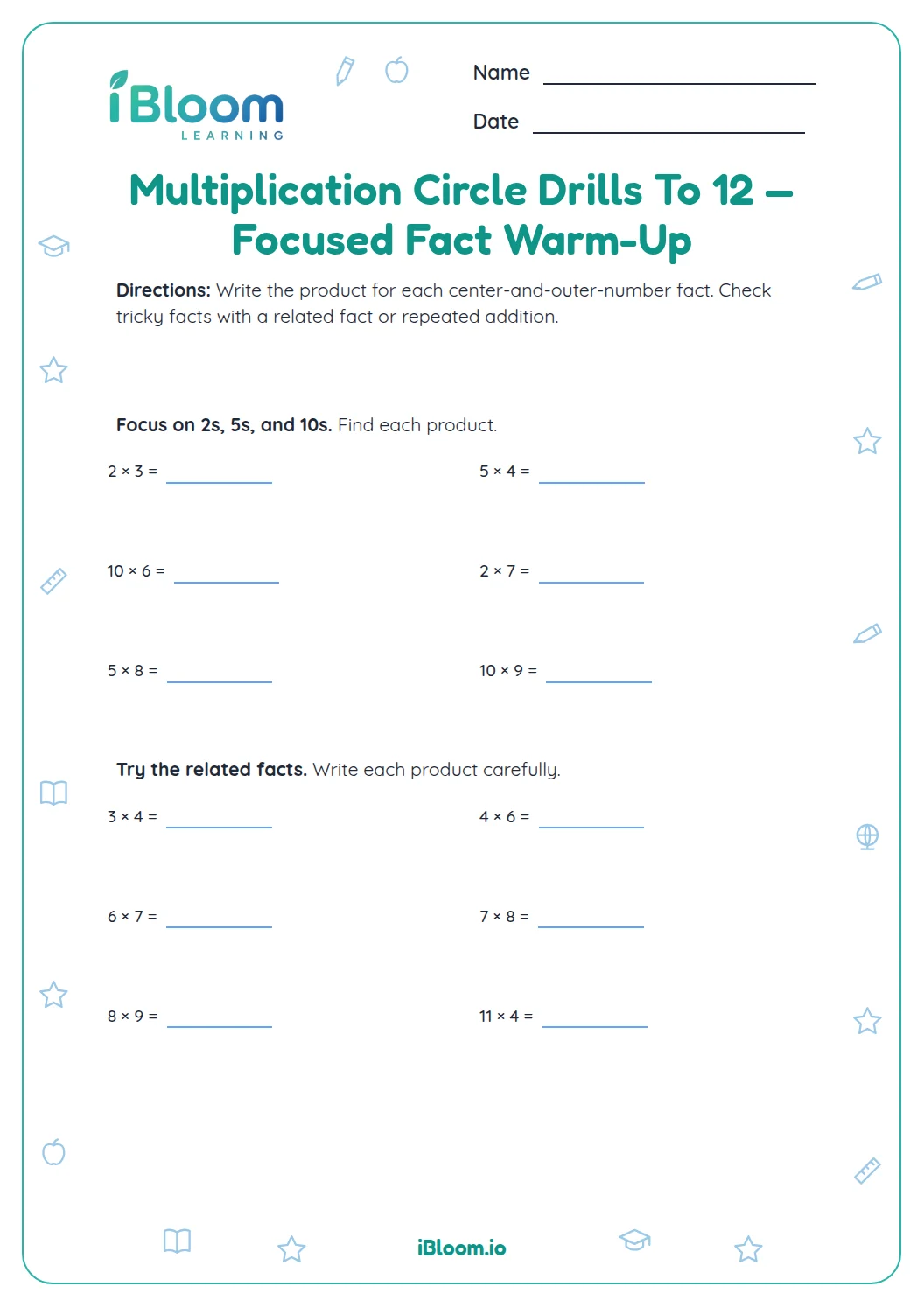
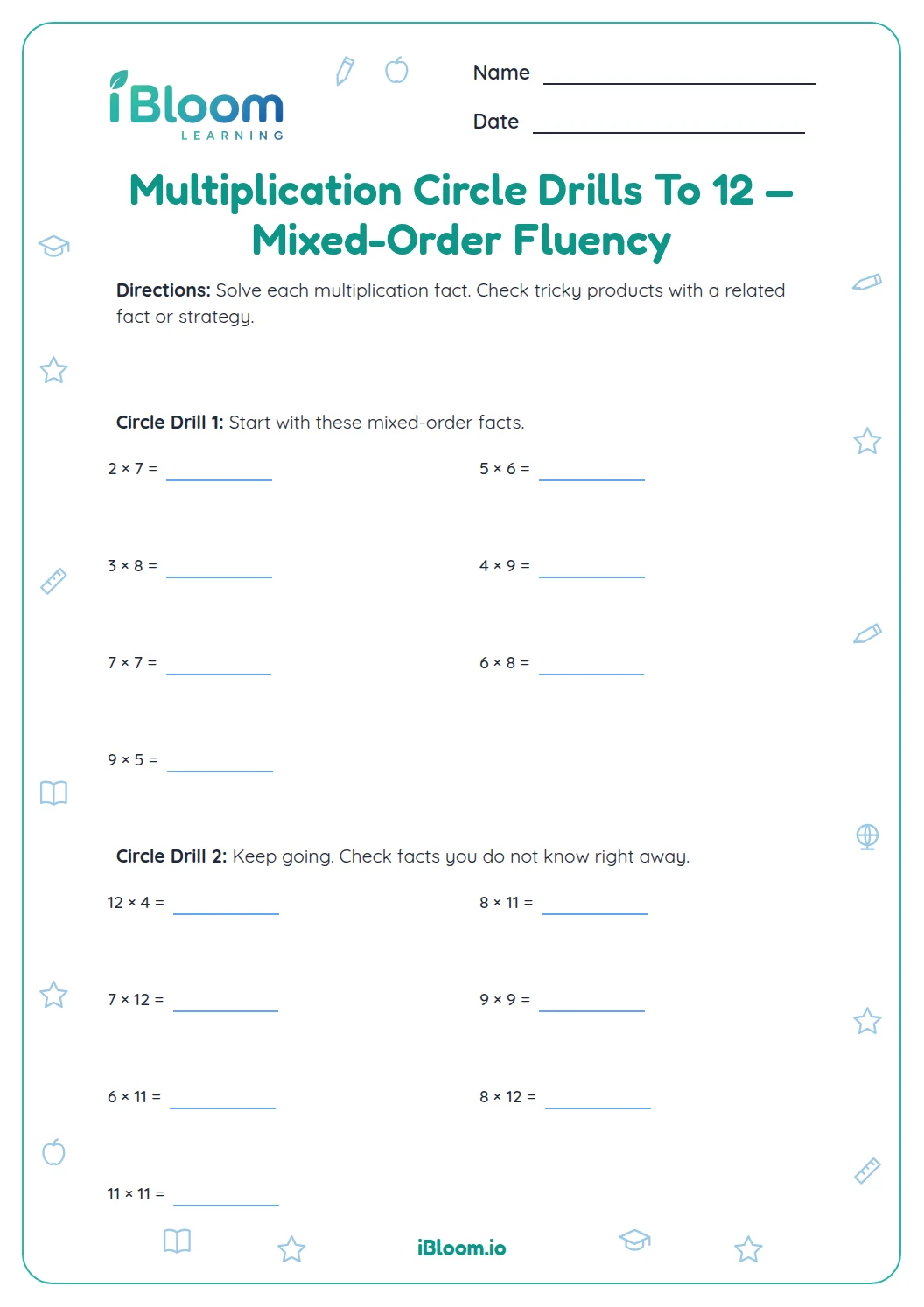
This printable multiplication warm-up is for students practicing one-digit facts. It begins with a full 6-times circle drill, including the focus from the original sheet, then gives 19 individual equations. The 20 questions practice products with factors through 10, and a separate answer key lists the products in order.
Aligned to 3.OA.C.7
How do the times circles work?
Multiply the center number by each number around the circle. The first three drills use 6 as the center, keeping the original sheet’s focus before the mixed facts.
- 1For a 6 times circle, 6 × 4 = 24.
- 2Write 24 beside 4 in the answer sequence.
What comes after the circle drills?
Part B has 16 short equations. It starts with more 6-times facts and then mixes factors from 4 through 10.
How can students check a product?
Use a related fact or equal groups to check. For example, 6 × 8 can be checked as 6 × (4 + 4), or as 24 + 24 = 48.
How to use this worksheet
- 1Read both factors in the equation.
- 2Recall or build the product with equal groups.
- 3Write the product in the blank.
- 4Move to the next fact without changing the factors.
- 5Check the answers in order with the key.
Common mistakes and quick fixes
The mistake
Adding the factors instead of multiplying.
The fix
Think of equal groups: 6 × 4 means four groups of 6.
The mistake
Copying the previous answer into the next line.
The fix
Read both factors again for every equation.
The mistake
Swapping a fact’s factors with a different line.
The fix
Point to the two numbers in the current equation before answering.
Common Core alignment
Build fluency with multiplication facts within 100.
On this sheet: The worksheet provides focused repetition of one-digit multiplication facts.
Show the official wordingHide the official wording
Fluently multiply and divide within 100, using strategies such as the relationship between multiplication and division (e.g., knowing that 8 × 5 = 40, one knows 40 ÷ 5 = 8) or properties of operations. By the end of Grade 3, know from memory all products of two one-digit numbers.
What to practice next
Make more practice
Further reading
Questions parents and teachers ask
How do students solve a multiplication circle?
Multiply the center number by each number shown around the circle, then record the products in that same order. The circle uses 6 as its center, matching the original worksheet’s focus on the 6-times facts. It is followed by 19 individual multiplication equations.
Which multiplication facts are included?
There are 20 numbered questions: one circle drill and 19 single equations. The equations begin with 6-times facts and then mix factors through 10. In the circle, students multiply 6 by each of the outer numbers printed around the center.
What grade is this multiplication worksheet for?
The page is labeled for Grades 3–4 and focuses on one-digit multiplication facts. Students can solve the equations by recall or use a known fact to derive an unfamiliar product. A separate answer key makes it easy to check each drill sequence and equation.
Does the worksheet include a timed challenge?
No timer is printed on this page. Students can complete the circle drill and 19 equations at a steady pace, then check the products in the key. If a teacher chooses to time a later practice, accuracy should still be checked alongside speed.
How can a student check a multiplication answer?
Use a related fact, skip-counting, or equal groups. For example, 6 × 8 can be split into 6 × 4 plus 6 × 4, giving 24 + 24 = 48. The page’s answer key lists the expected products so students can review any fact they missed.