



About this worksheet
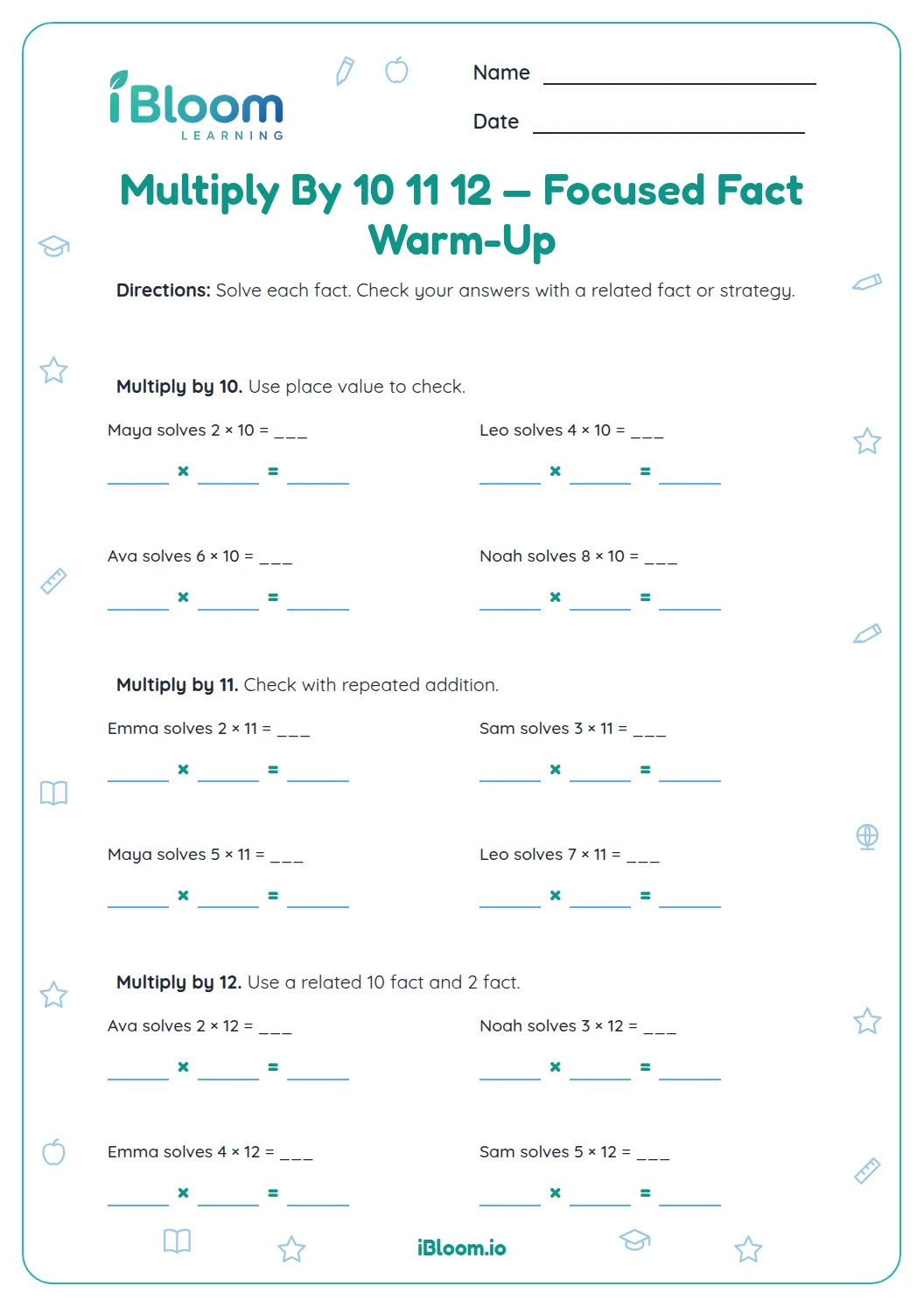
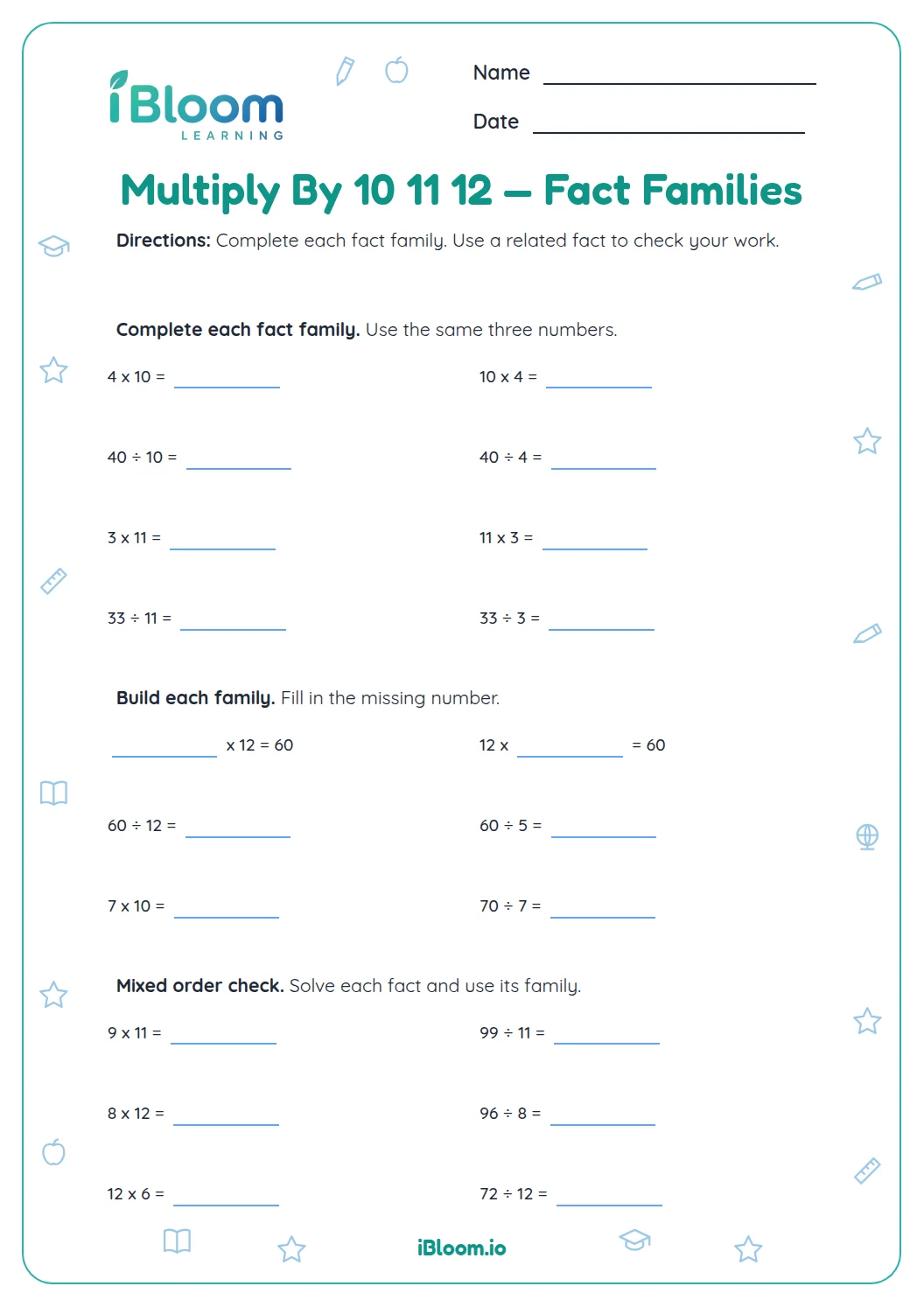
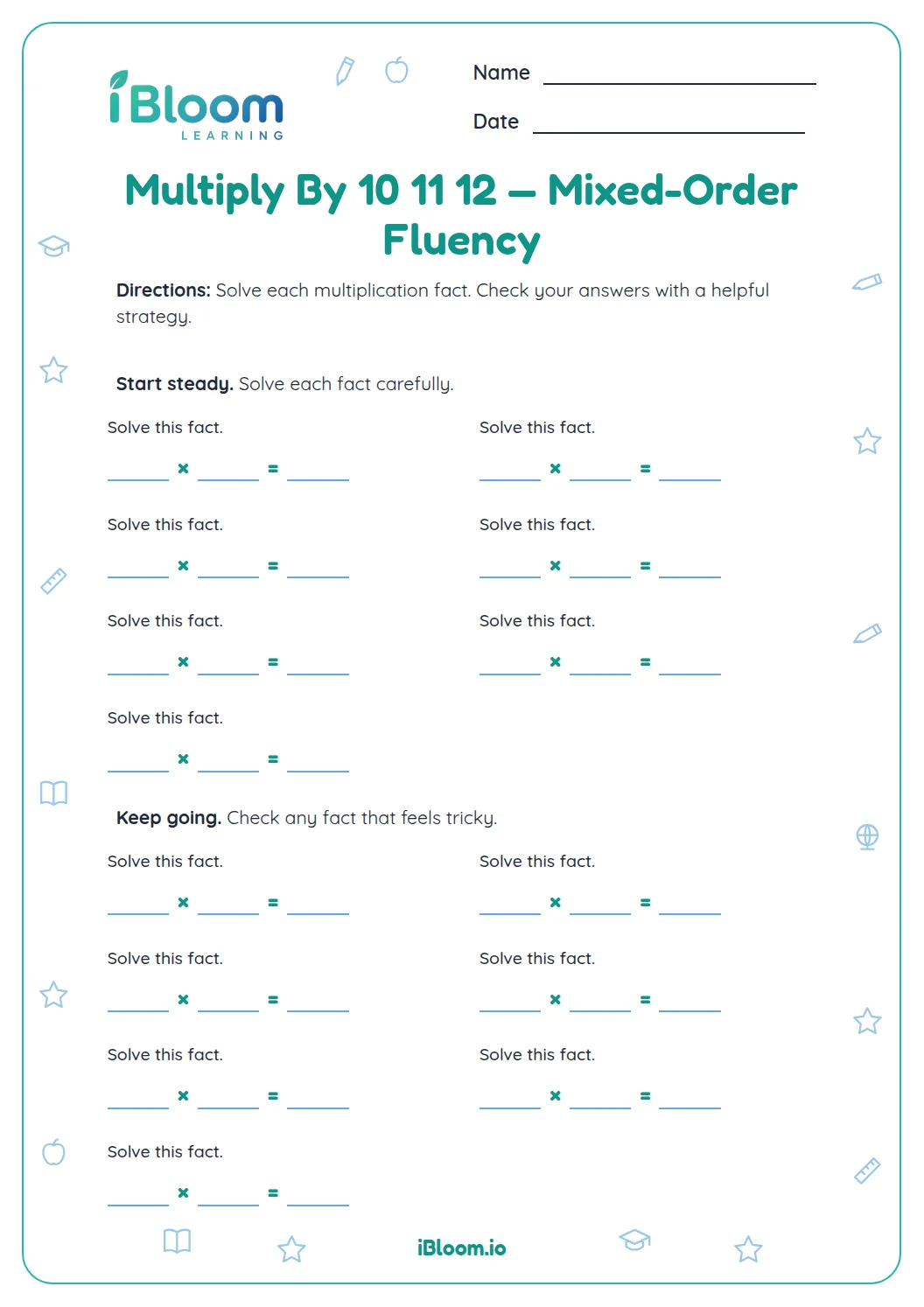
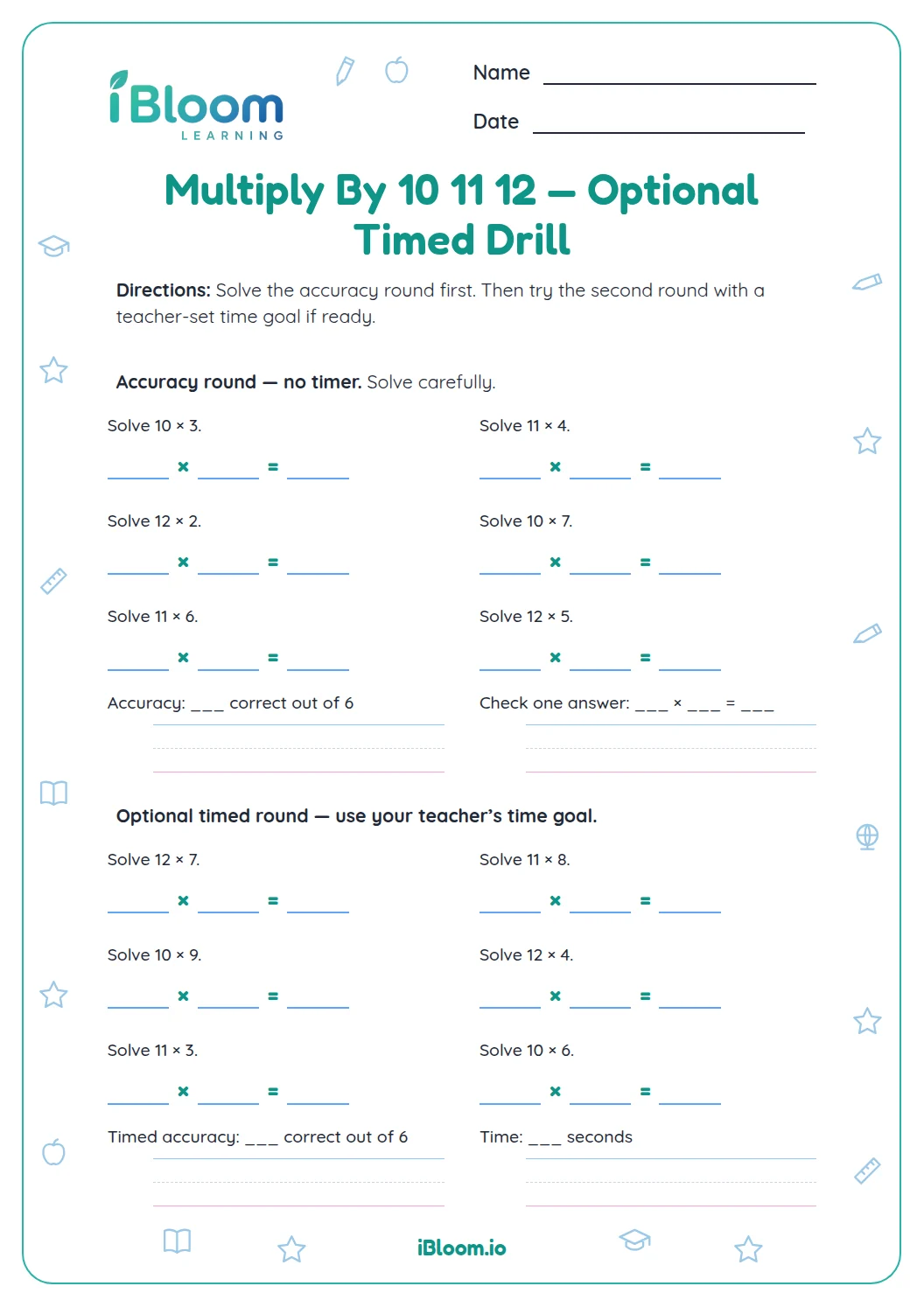
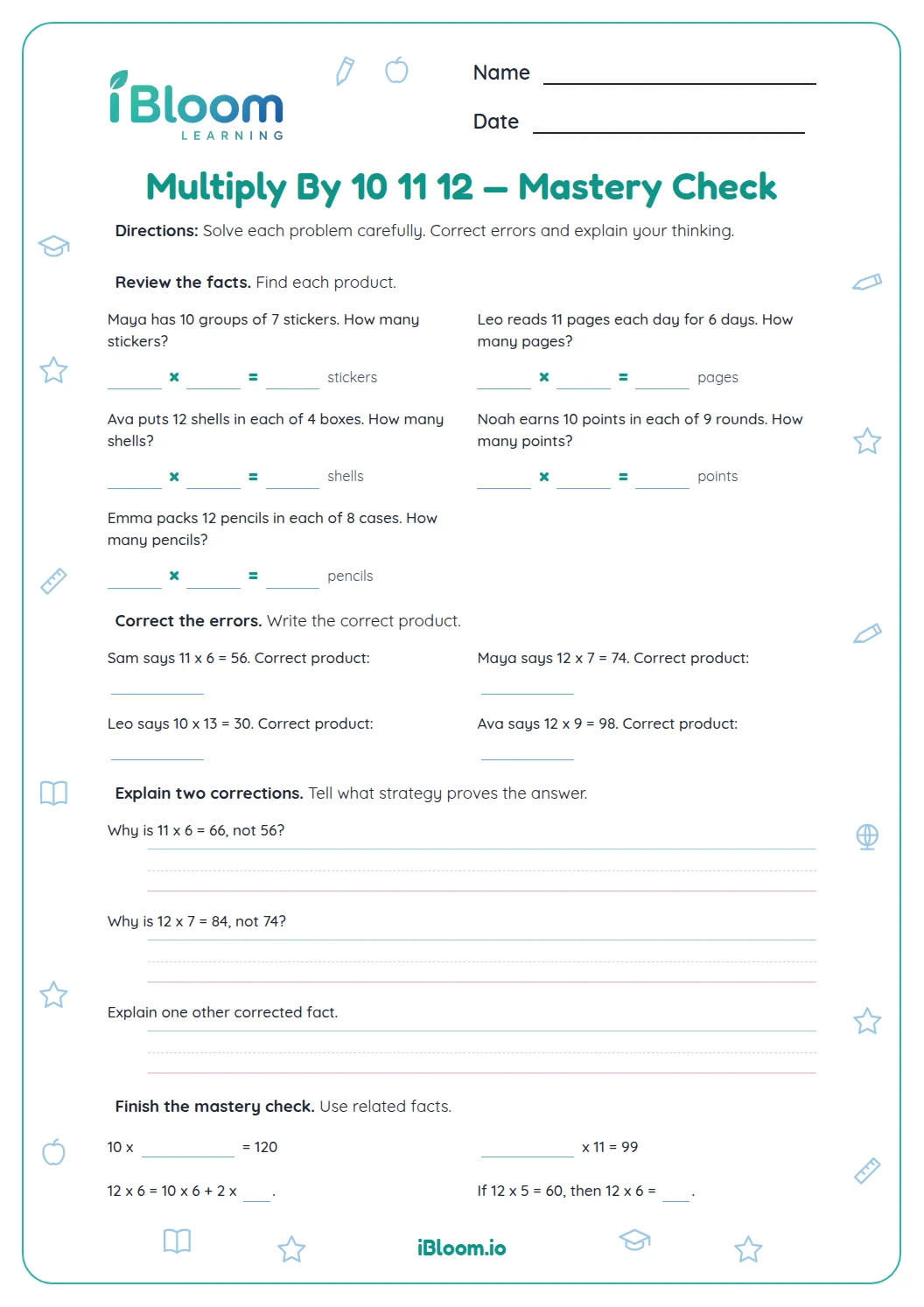
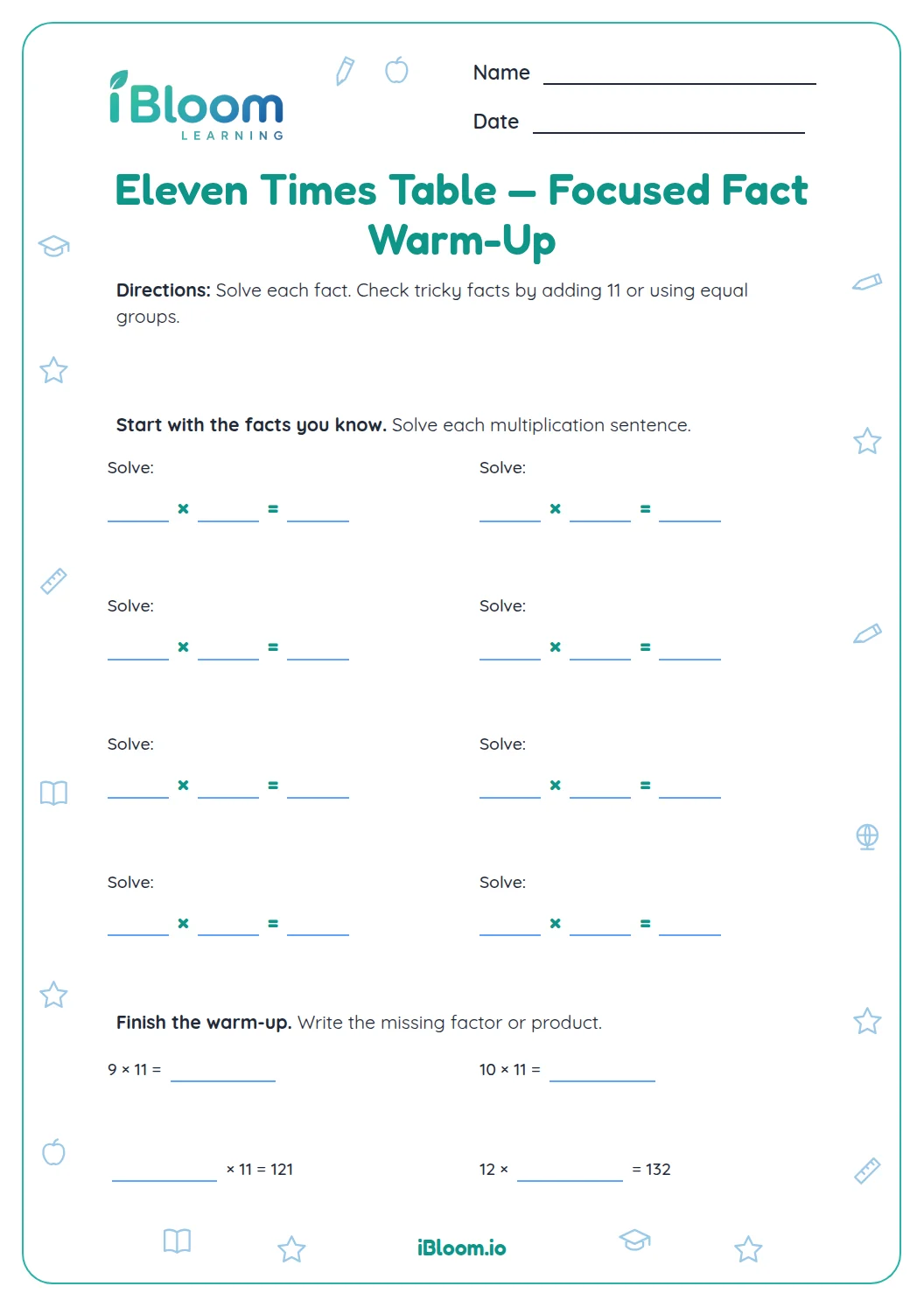
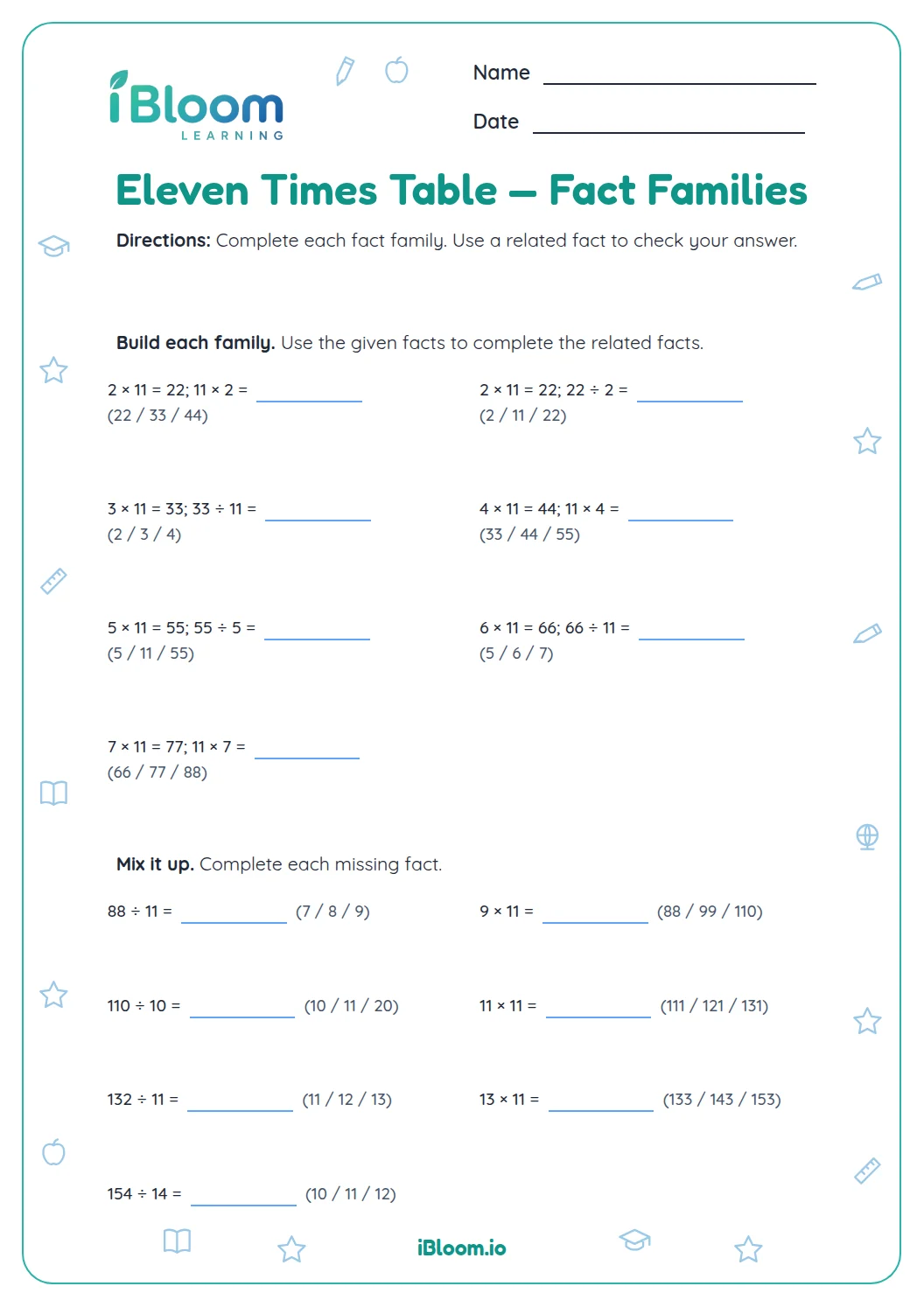
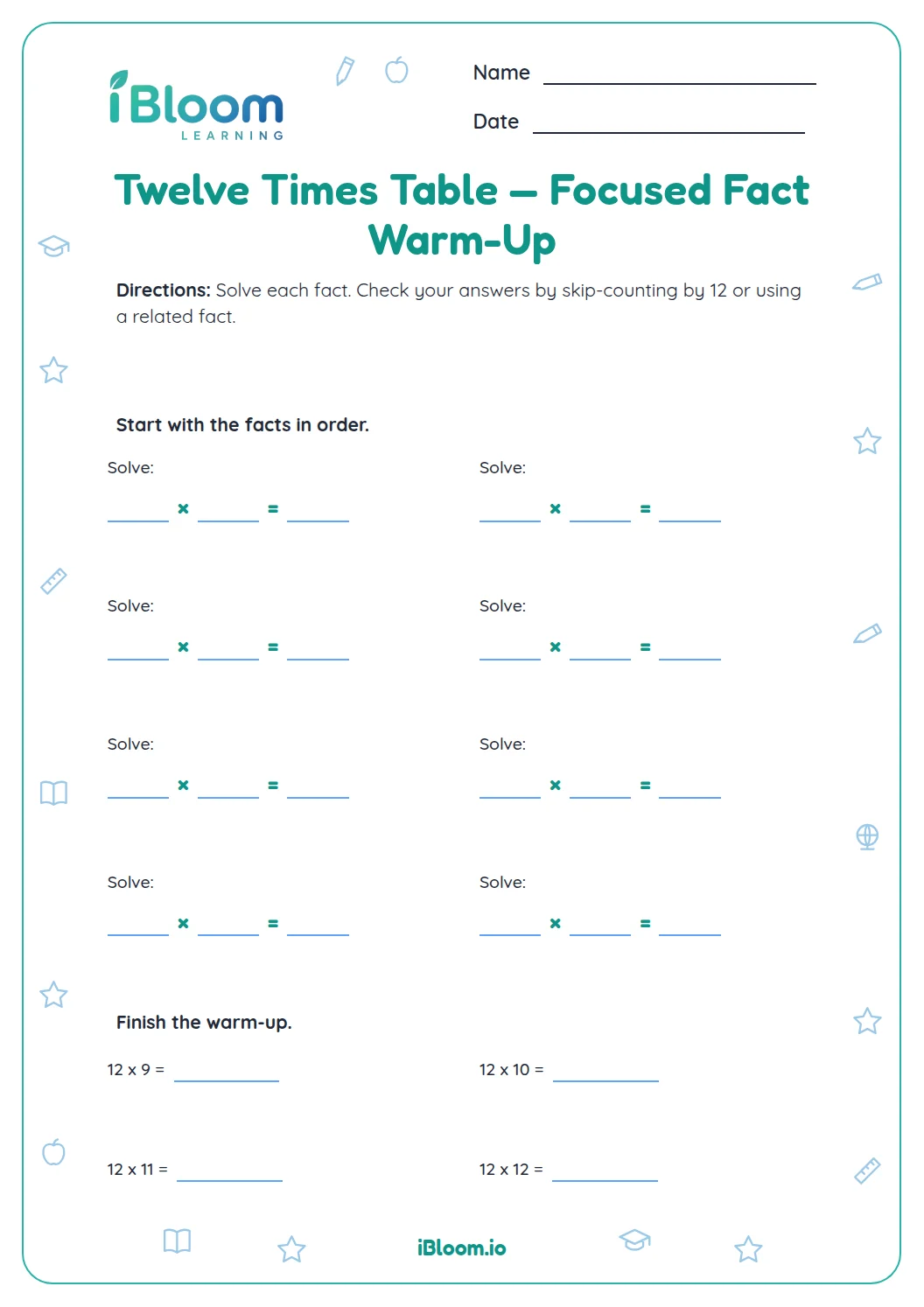
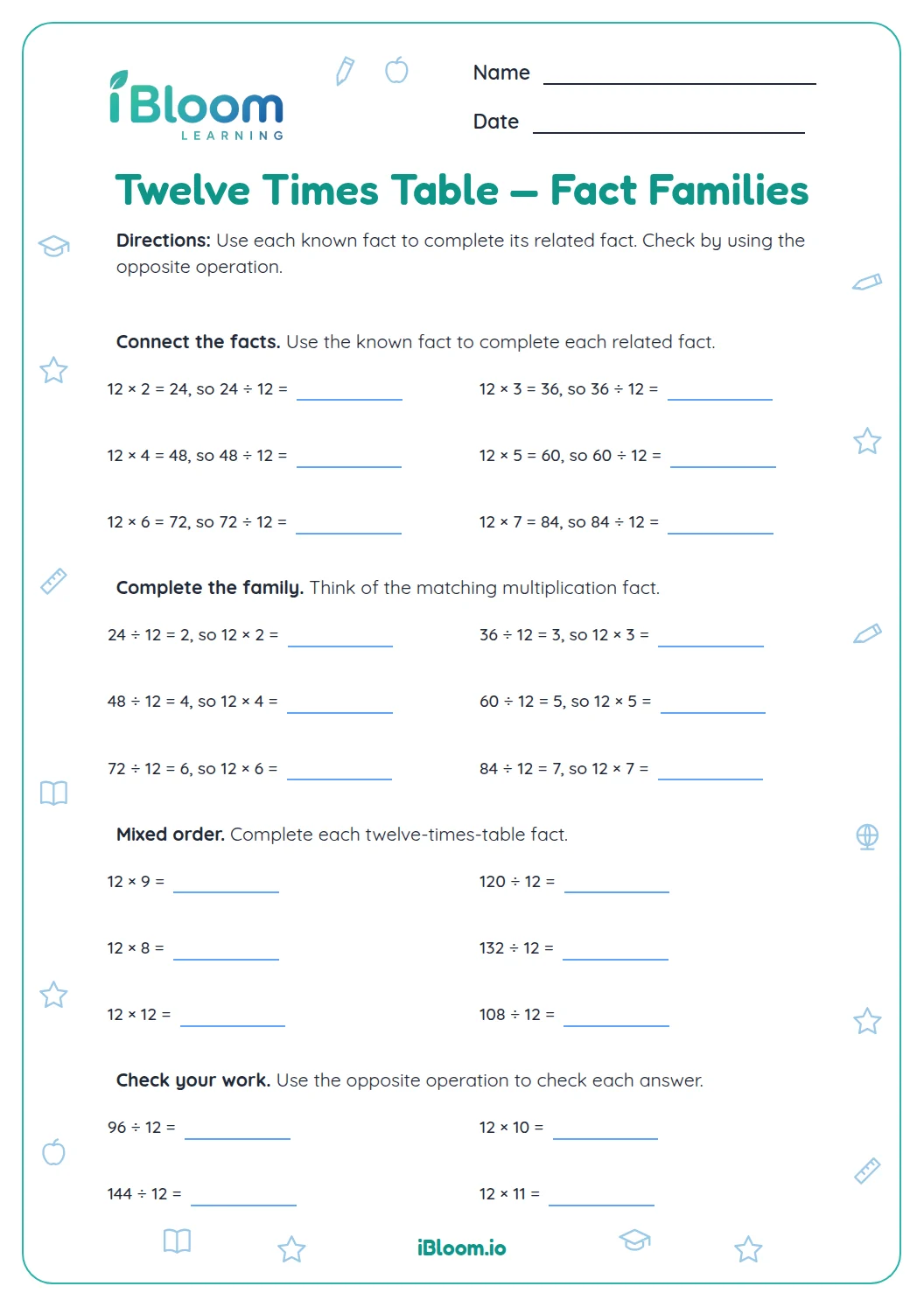
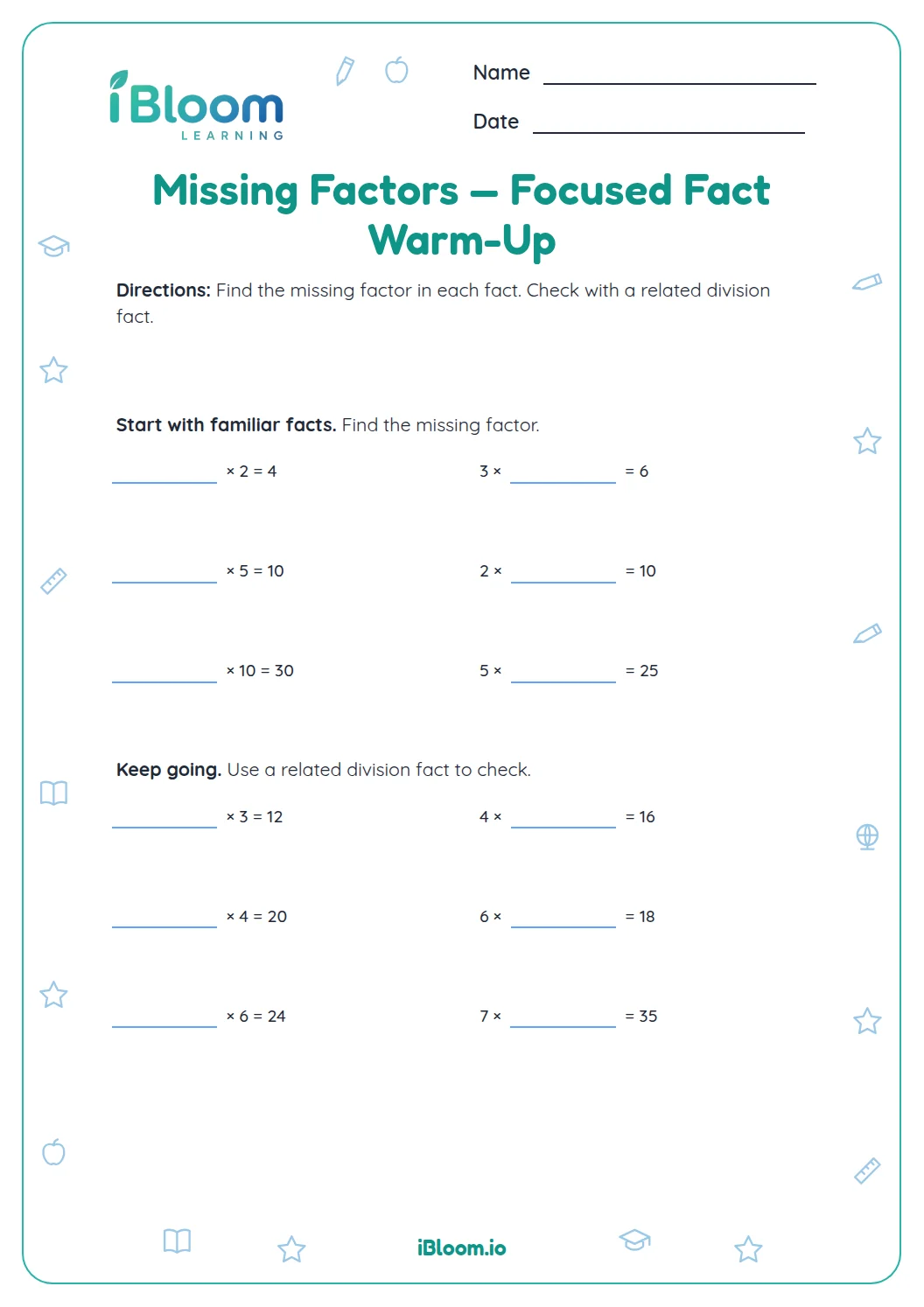
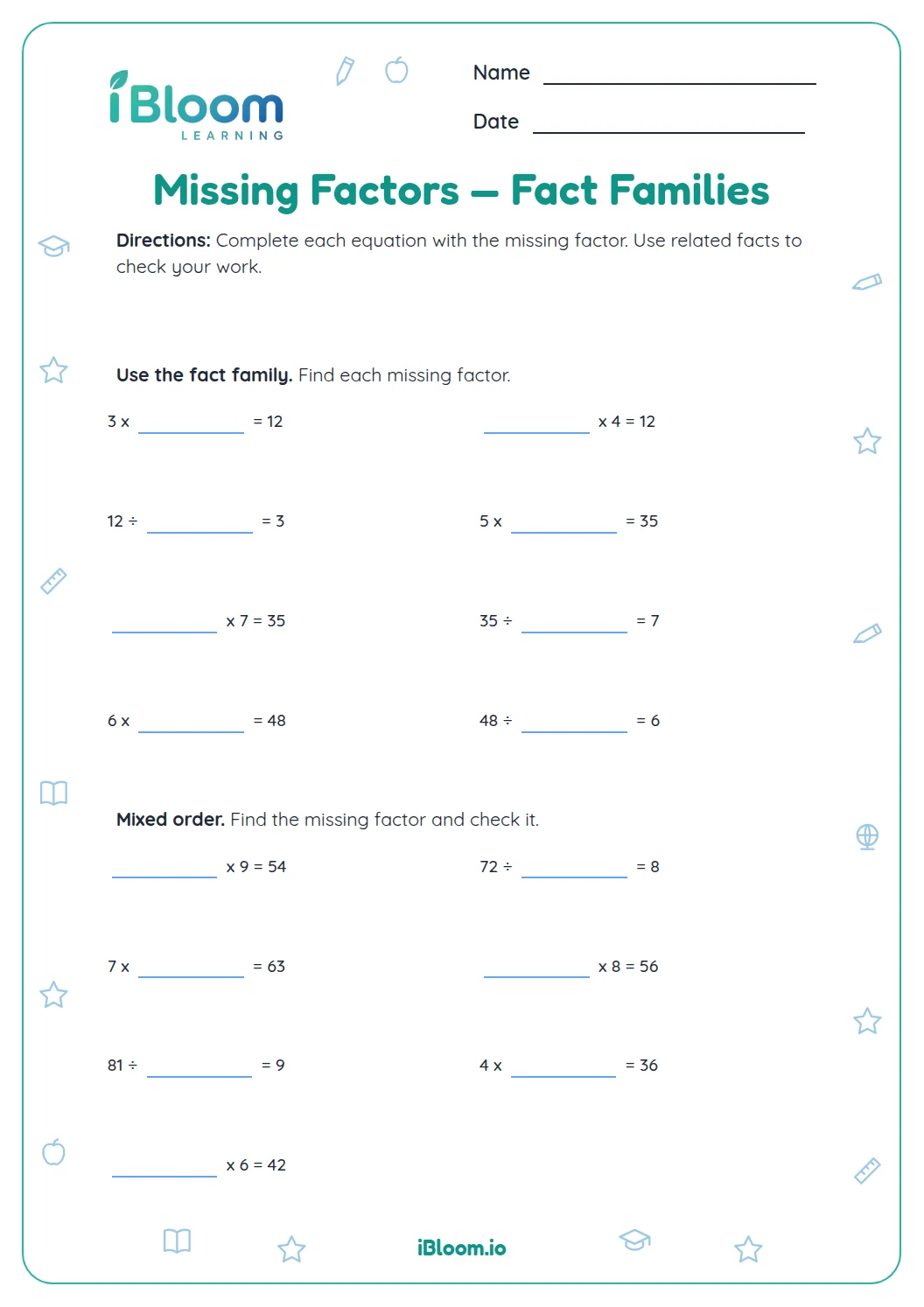
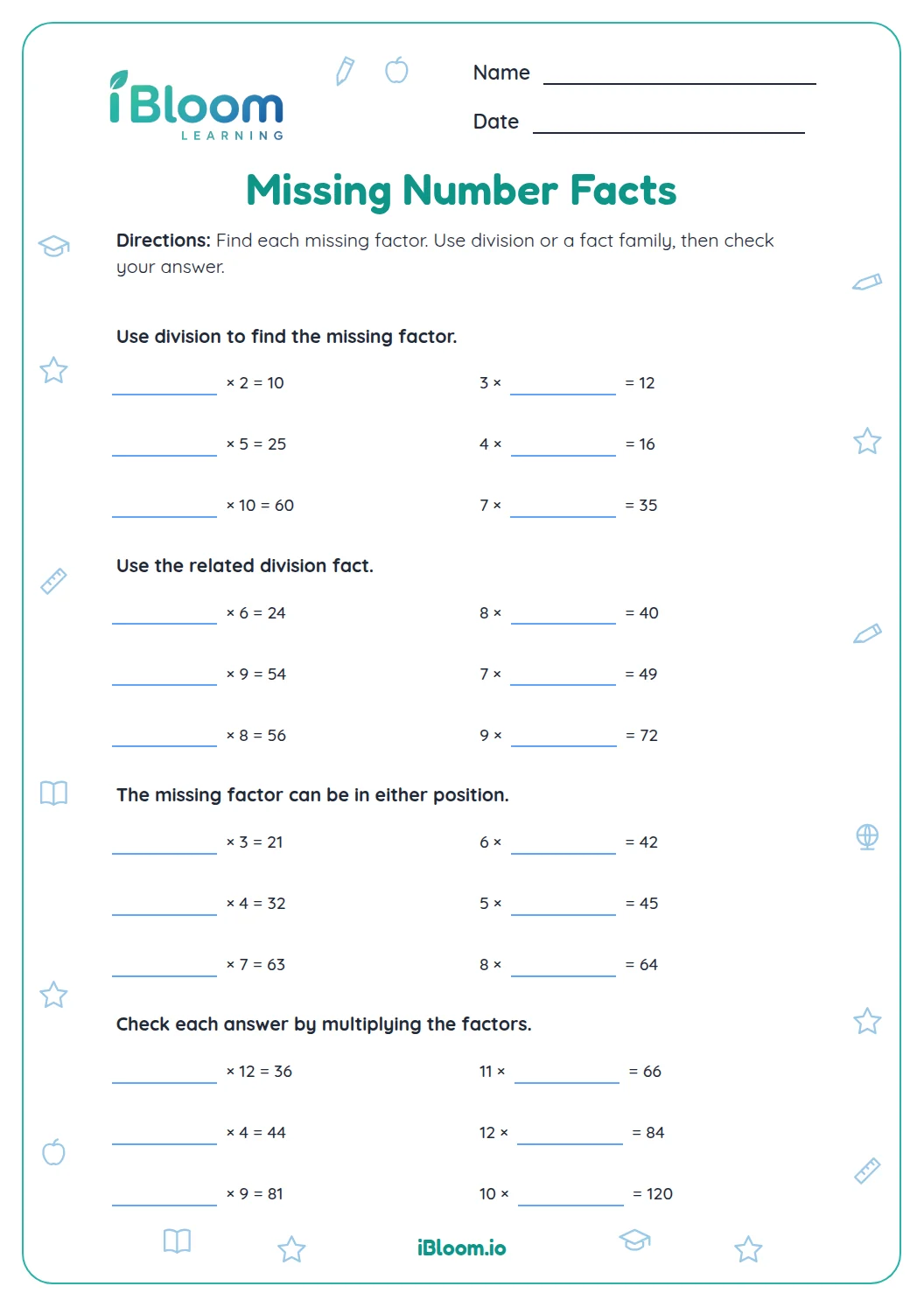
This multiplication drill has 20 missing-factor and missing-product equations using 10, 11, and 12. The blank moves among factor and product positions so students must read each fact instead of relying on one layout. Students can check a missing factor by dividing the product by the known factor. Products range through 144.
How can division reveal a missing factor?
A multiplication equation relates two factors to a product. In 7 × ___ = 77, divide 77 by 7 to find 11; check that 7 × 11 equals 77.
The 20 equations use factors 10, 11, and 12. Some ask for a factor and others ask for a product, so read the blank’s position before choosing an operation.
- Part A: find a missing factor
- Part B: complete facts in varied positions
- Part C: find missing products and factors
How to use this worksheet
- 1Read the full equation and locate the blank.
- 2If a factor is missing, divide the product by the known factor.
- 3If the product is missing, multiply the two factors.
- 4Check the completed equation with multiplication or division.
Common mistakes and quick fixes
The mistake
Multiplying the known factor by the product when a factor is missing.
The fix
Divide the product by the known factor.
The mistake
Treating the blank as the product when it is in a factor position.
The fix
Read the equation from left to right before calculating.
The mistake
Writing a product with a misplaced zero.
The fix
Check the answer by multiplying the factors again.
What to practice next
Make more practice
Further reading
Questions parents and teachers ask
How many multiplication facts are on the page?
There are 20 equations in three parts. All use the 10, 11, or 12 multiplication table, with the blank in a factor or product position. Products range from 33 through 144. Read each prompt carefully, write one response in every blank, and use the included key after attempting the problem independently.
How do I find a missing factor?
Divide the product by the factor that is already shown. For example, in 7 × ___ = 77, compute 77 ÷ 7 to get 11, then multiply 7 × 11 to check the equation. Read each prompt carefully, write one response in every blank, and use the included key after attempting the problem independently.
Are there word problems on this worksheet?
No. Every item is a multiplication equation with one missing number. Students focus on identifying whether the blank represents a factor or the product and choosing multiplication or division accordingly. Read each prompt carefully, write one response in every blank, and use the included key after attempting the problem independently.
Which multiplication tables does it practice?
The equations practice facts involving 10, 11, and 12. Some ask for the missing factor, while others ask for the product. Reading the full equation helps determine which calculation belongs in the blank. Read each prompt carefully, write one response in every blank, and use the included key after attempting the problem independently.
Which multiplication tables does it practice?
The equations practice facts involving 10, 11, and 12. Some ask for the missing factor, while others ask for the product. Reading the full equation helps determine which calculation belongs in the blank, and a related division fact can check a missing factor.