



About this worksheet
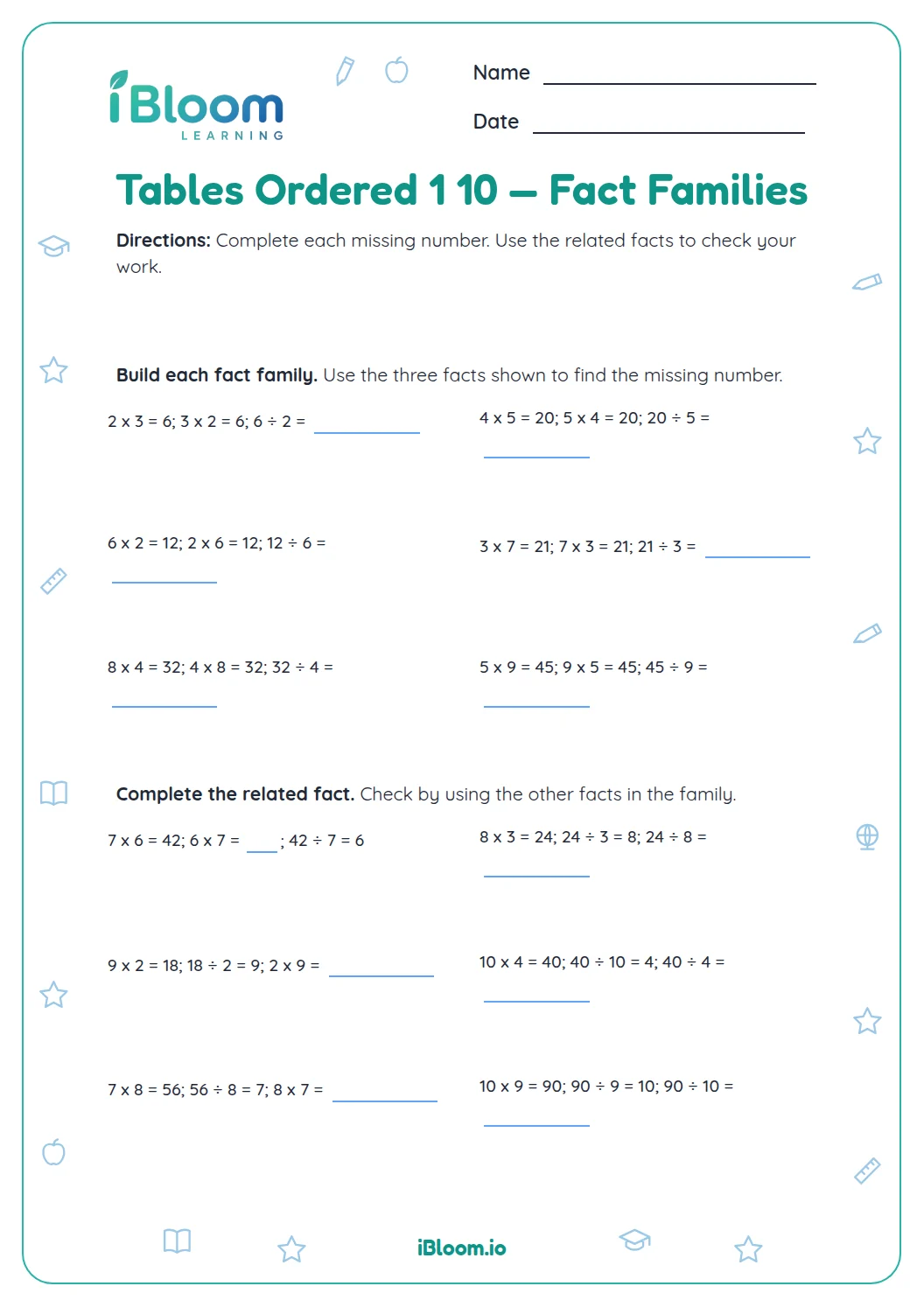
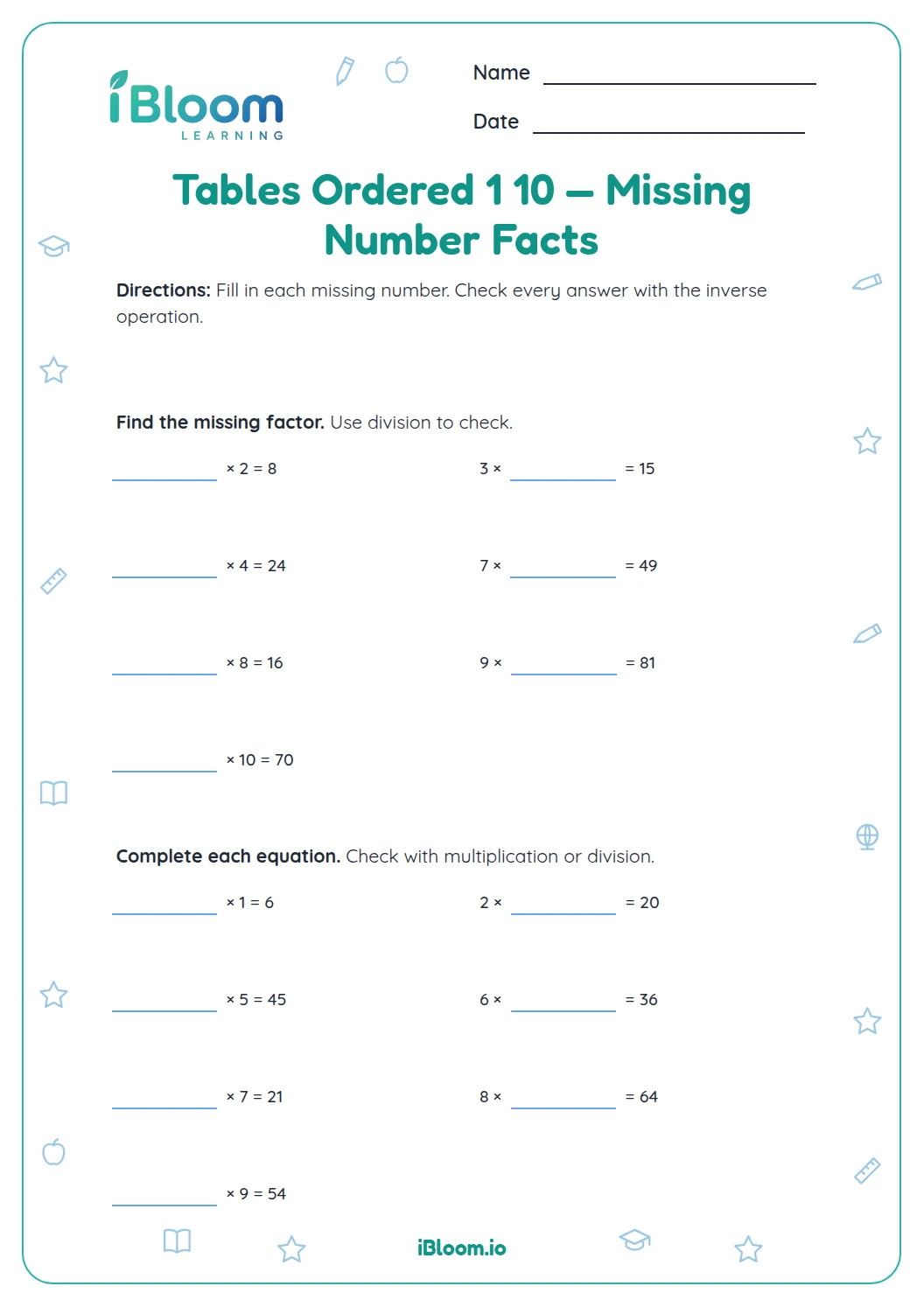
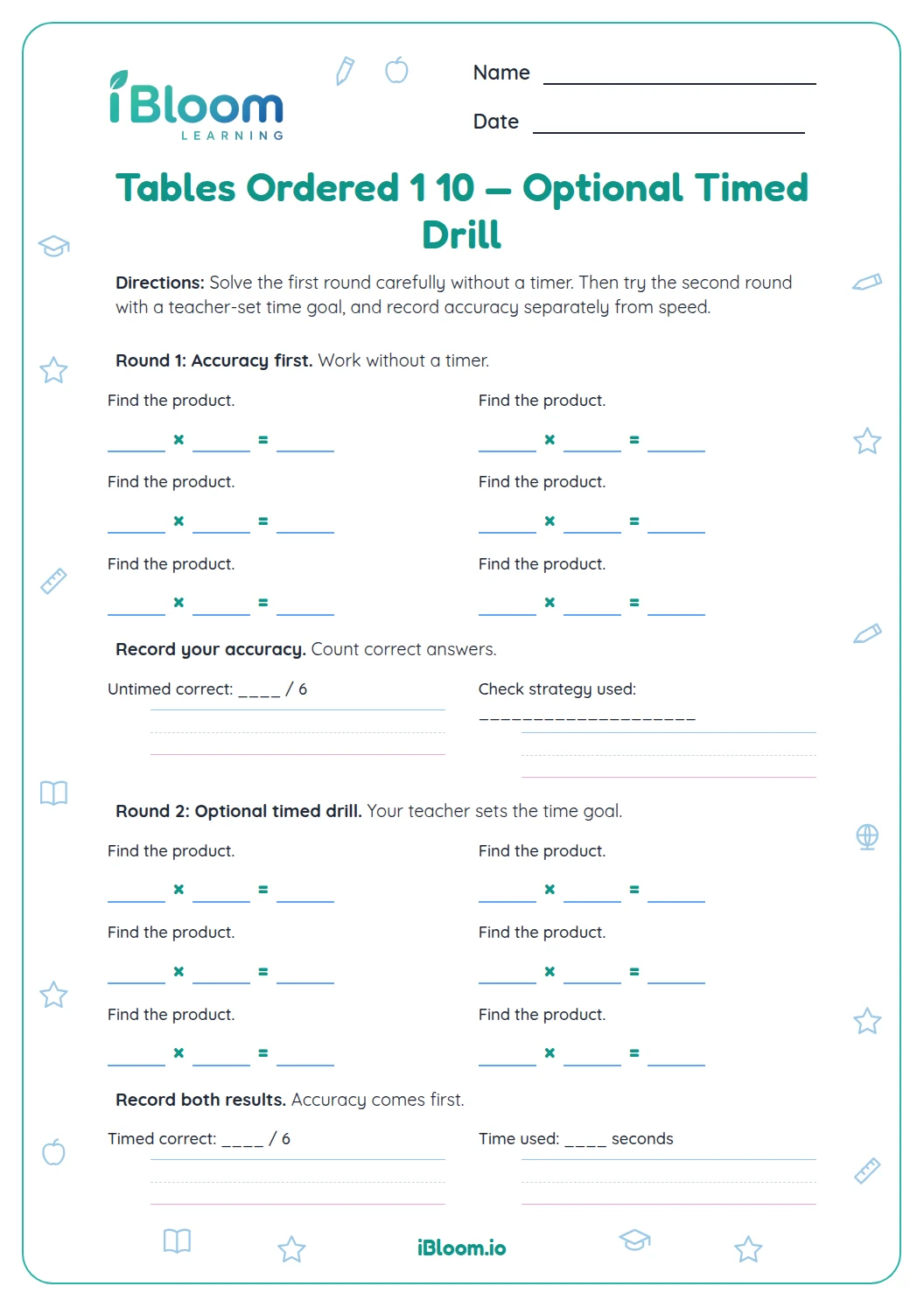
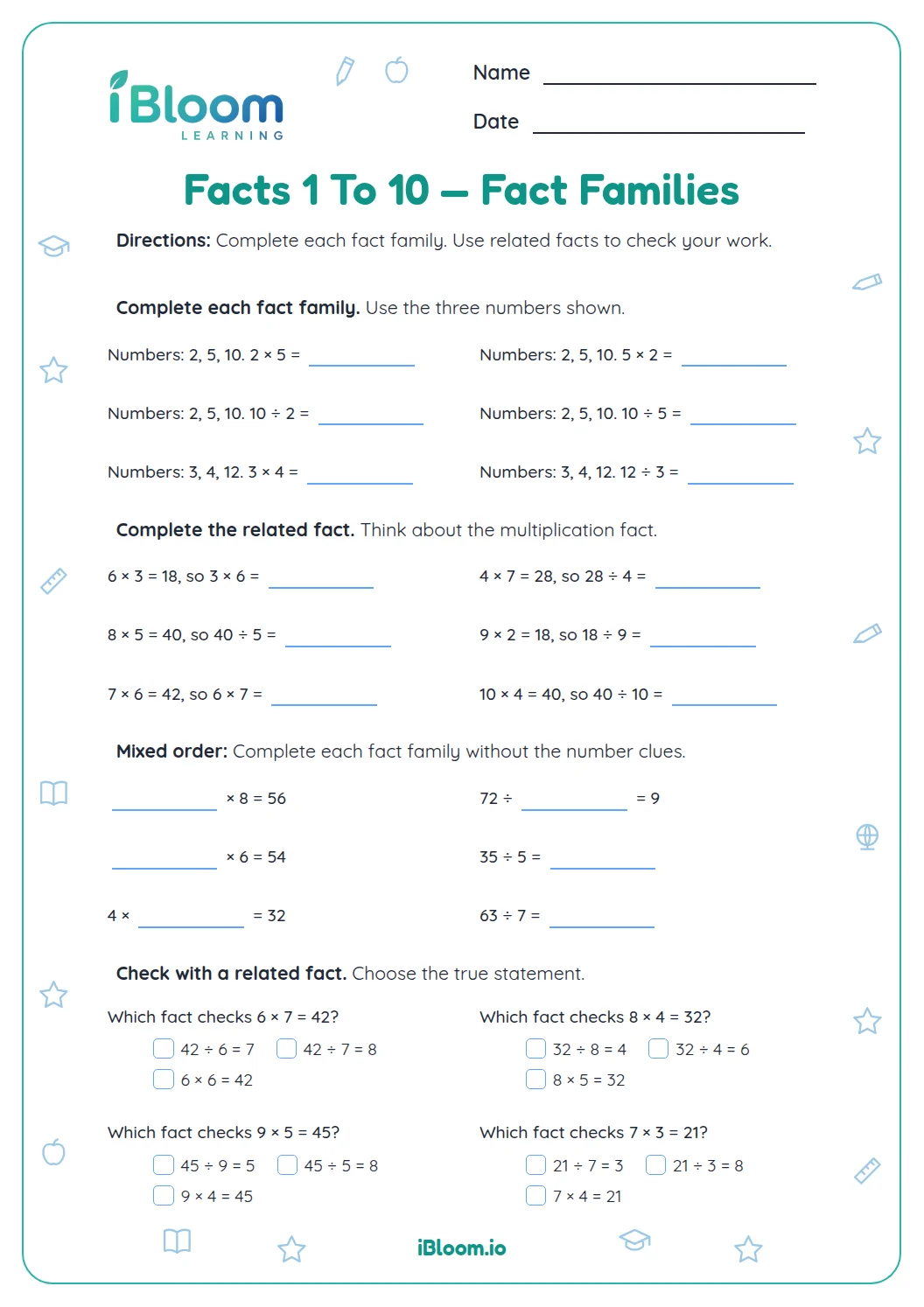
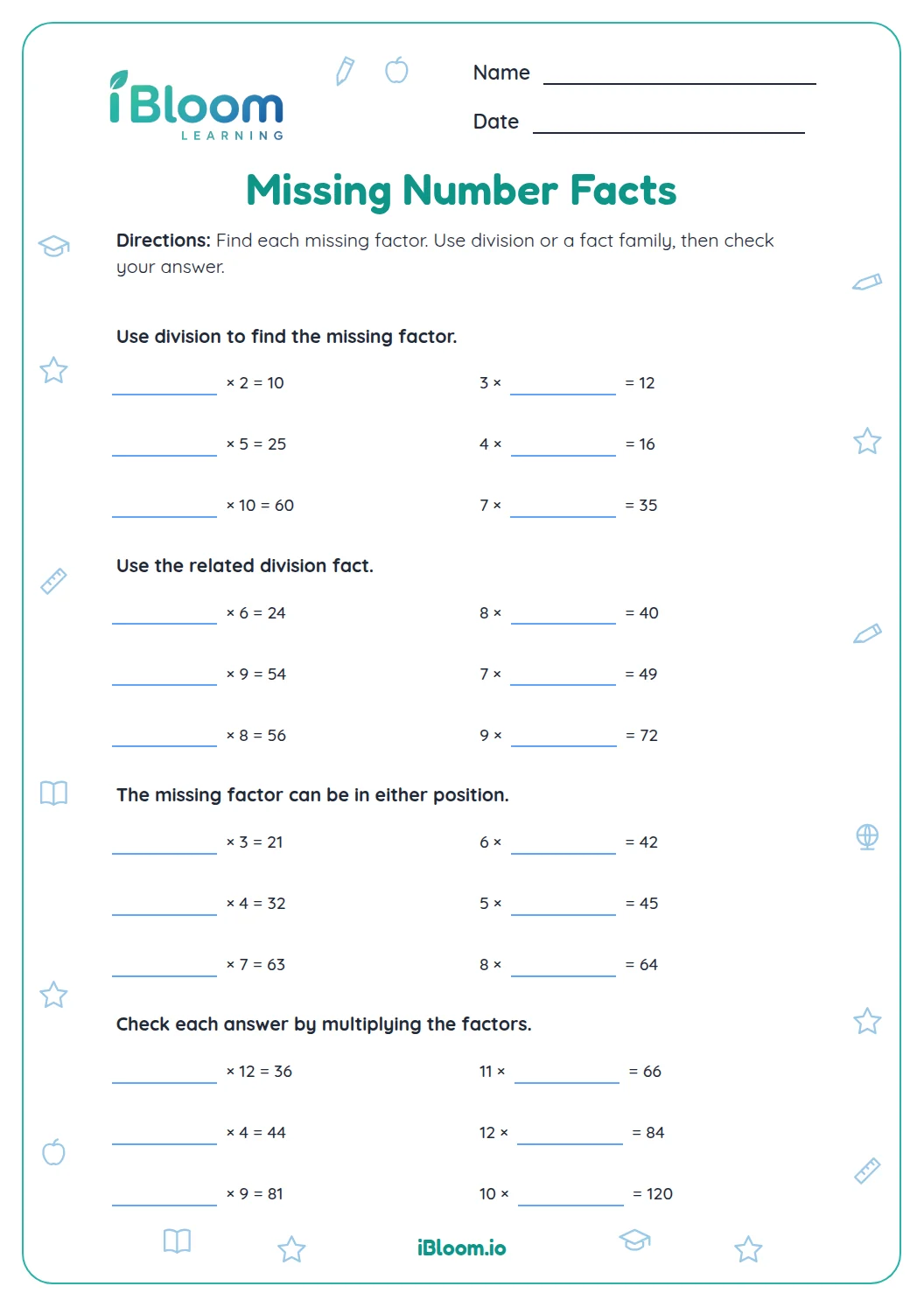
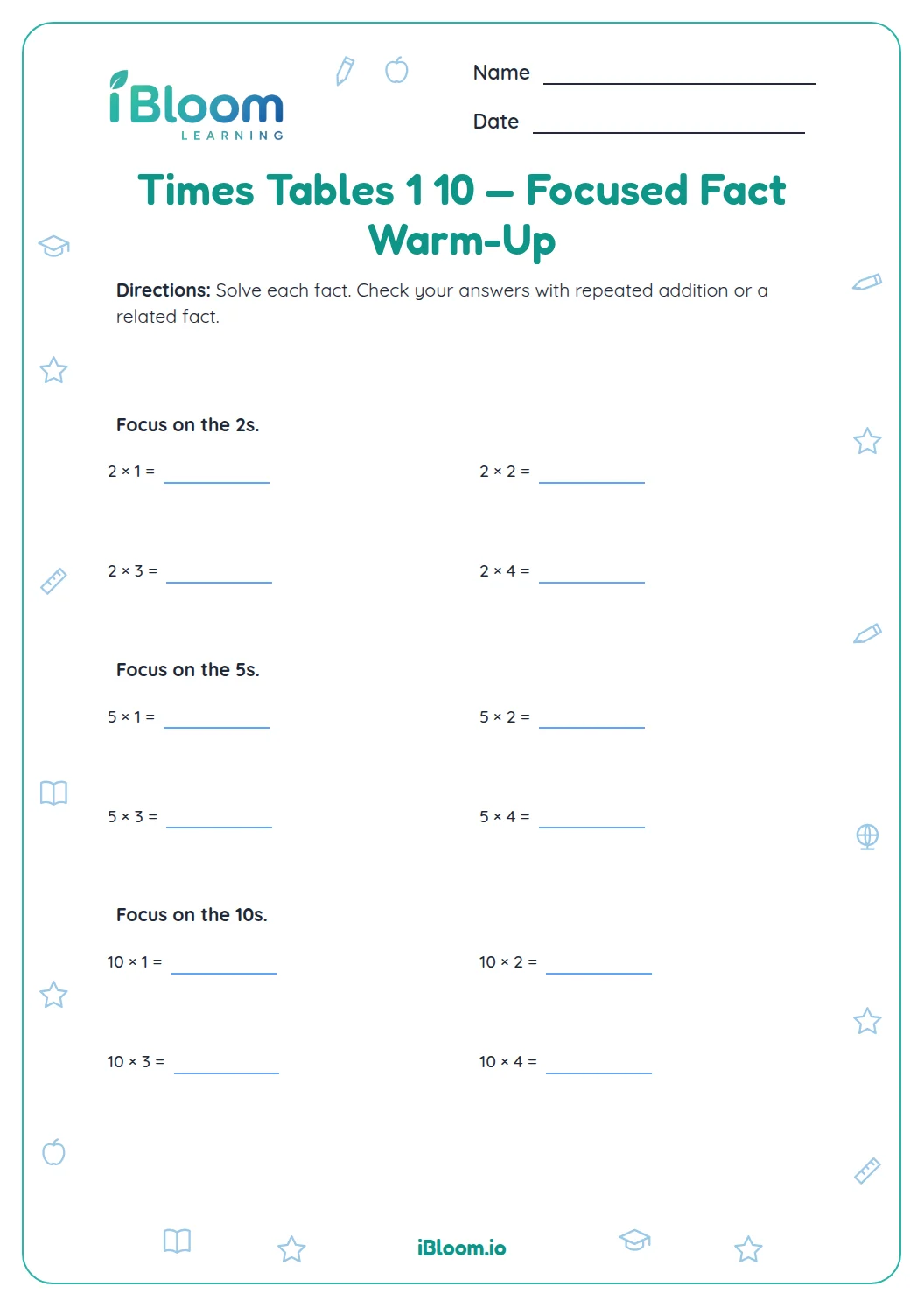
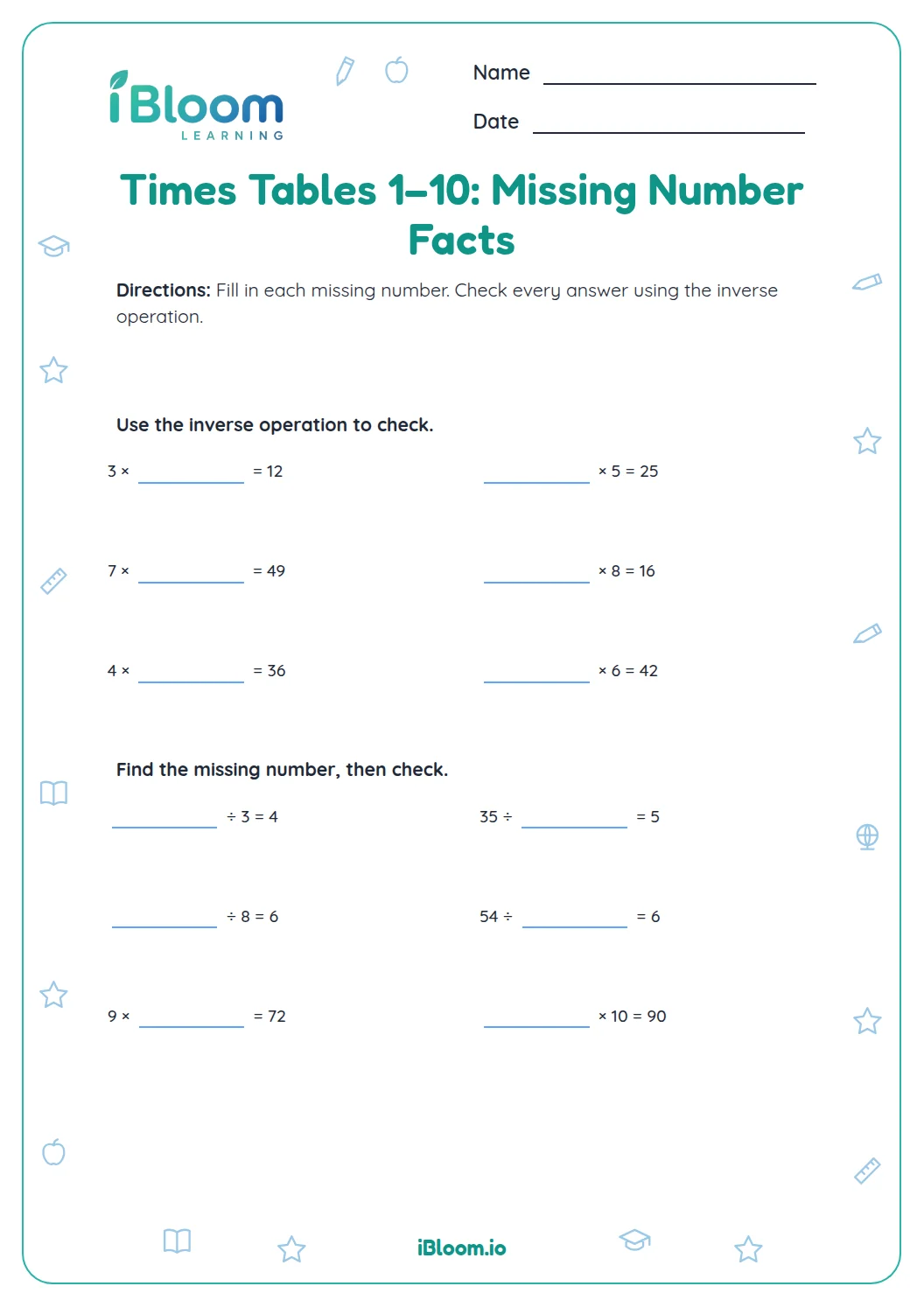
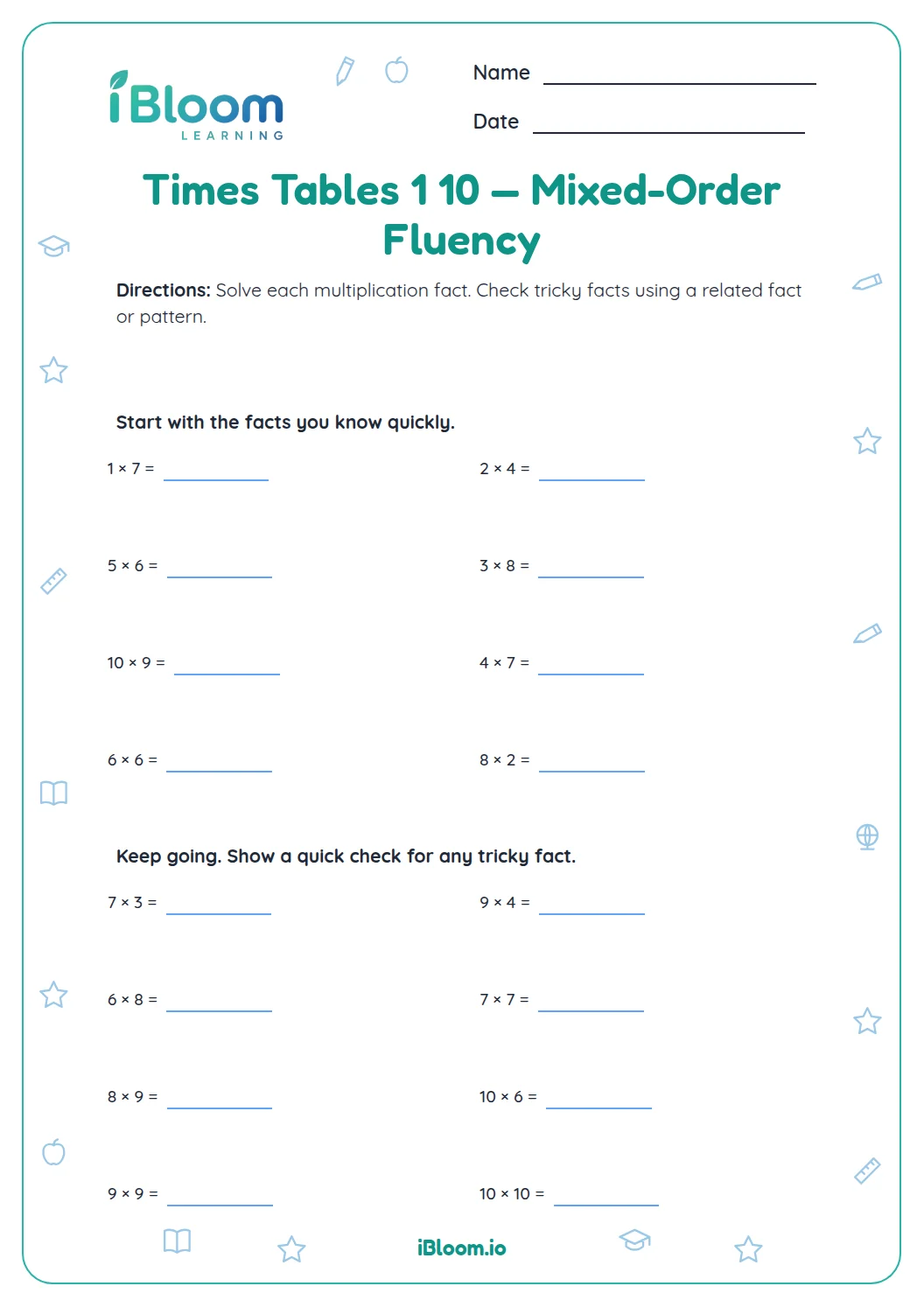
This Grade 3 printable checks multiplication facts from the 1 through 10 tables. Children solve ten direct facts, find five missing factors and apply multiplication to five varied equal-group stories. The first factor appears once in each direct fact across the range from 1 to 10. The separate answer key supports checking. The work practices CCSS 3.OA.C.7 through products within 100.
Aligned to 3.OA.C.7
What does the mastery check include?
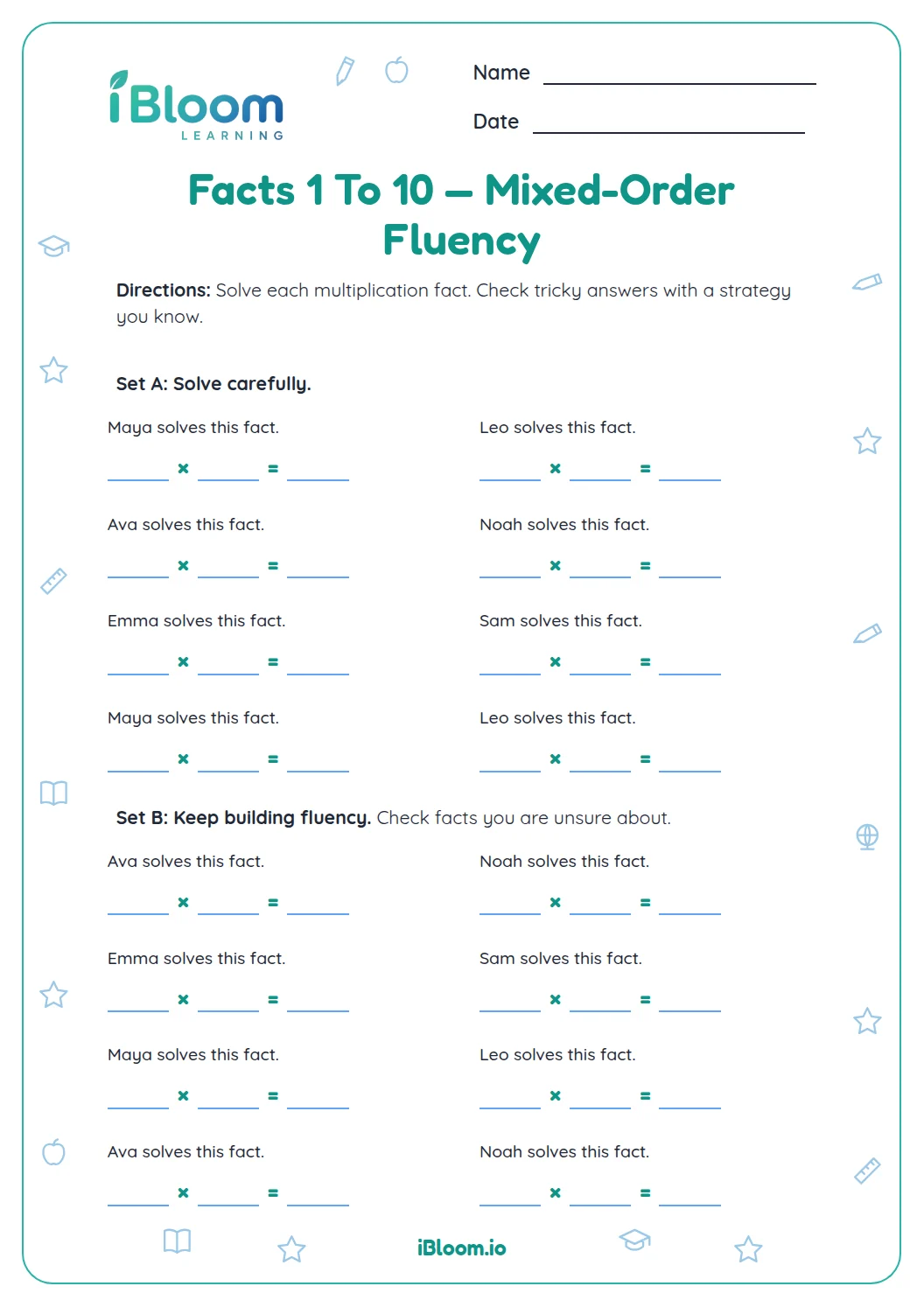
The sheet has three parts: direct facts, missing factors and equal-group stories. A direct fact starts with each factor from 1 through 10; later questions ask children to use related facts in new formats.
- Part A: 10 direct facts
- Part B: 5 missing factors
- Part C: 5 equal-group stories
How can a known fact reveal a missing factor?
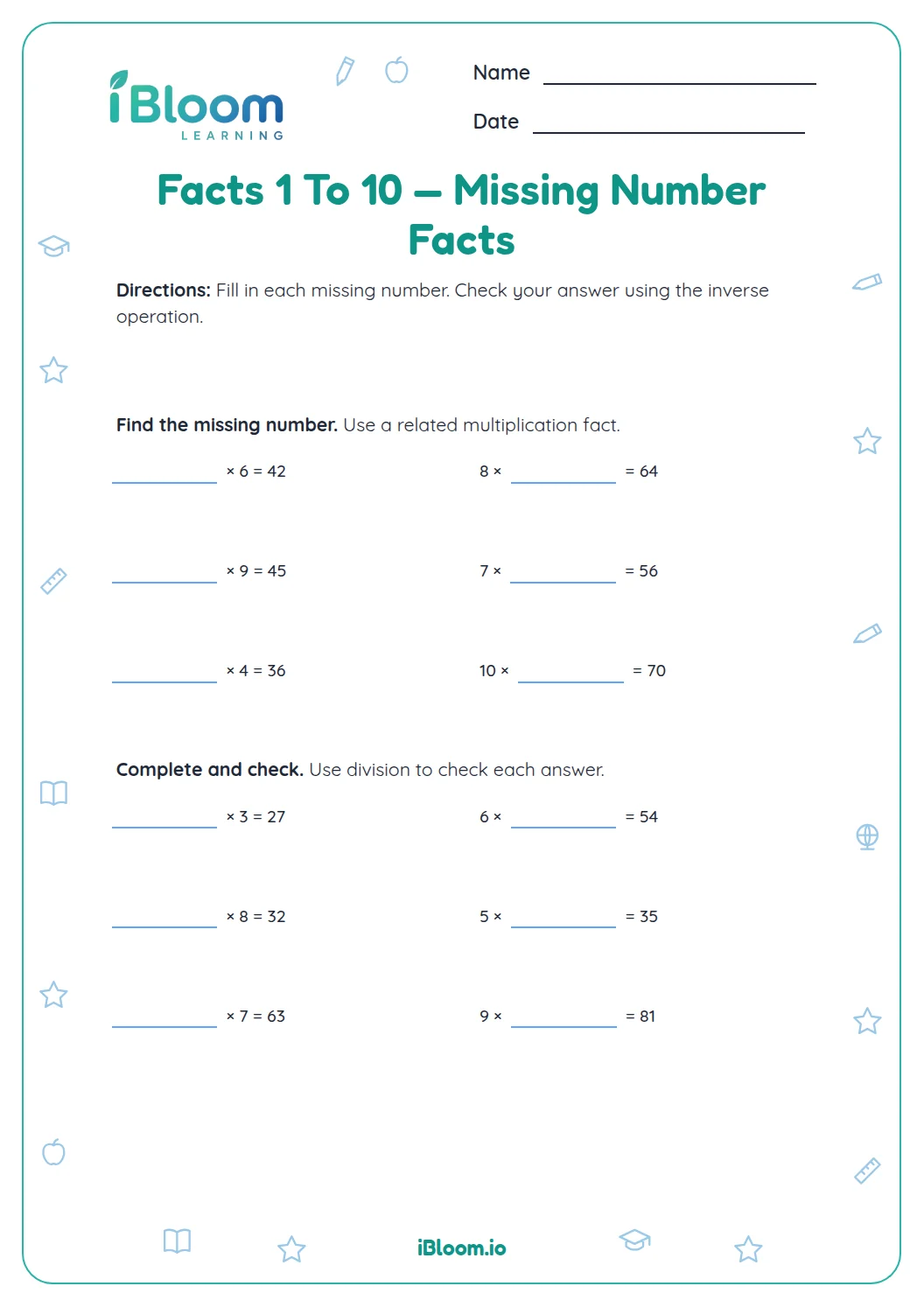
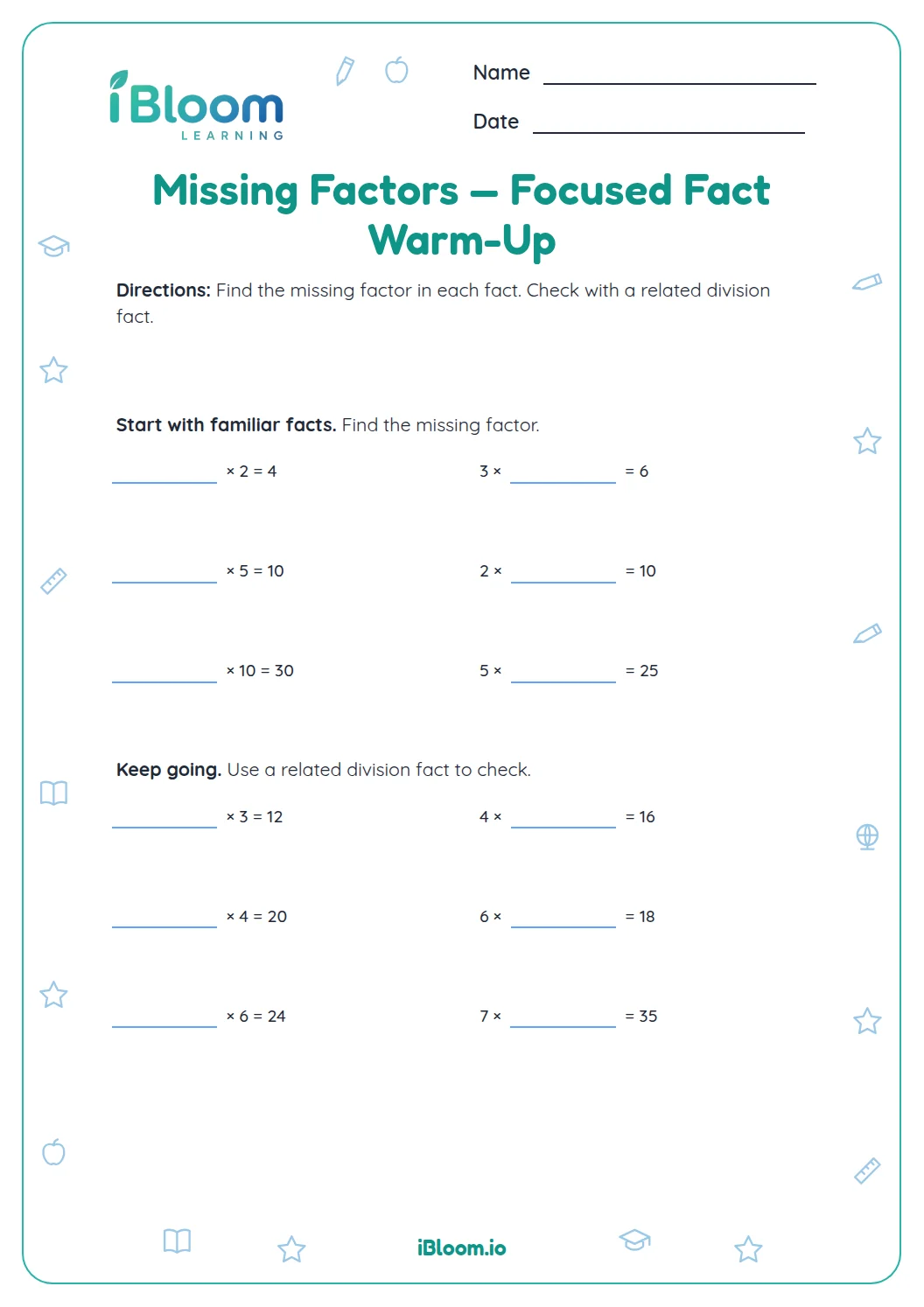
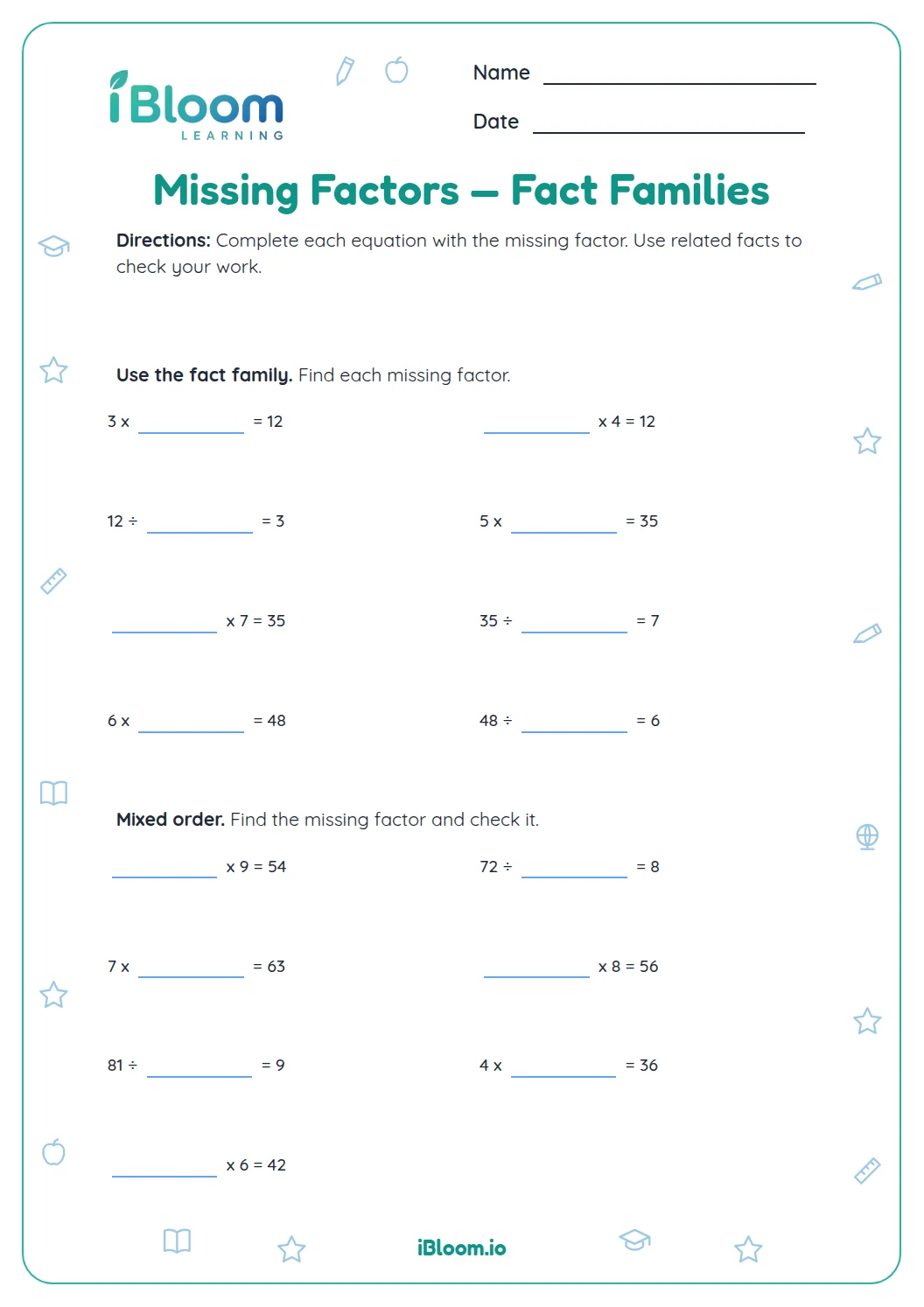
Use the product and the known factor as clues. For 2 × ___ = 18, ask which number multiplied by 2 makes 18. Since 2 × 9 = 18, the missing factor is 9.
- 12 × ___ = 18
- 22 × 9 = 18
- 3The missing factor is 9.
How do the stories become multiplication facts?
Find the number of equal groups and the amount in each group. Multiply those numbers to get the total, then compare the result with the key.
How to use this worksheet
- 1Solve each direct fact and write its product.
- 2For a missing factor, use the known factor and product to recall a related fact.
- 3In each story, identify the number of groups and the amount in each group.
- 4Write a multiplication equation in the workspace and solve it.
- 5Use the answer key to check products and revisit any fact that was uncertain.
Common mistakes and quick fixes
The mistake
Using addition when a story describes equal groups.
The fix
Write the number of groups × the amount in each group before finding the total.
The mistake
Putting the product in the missing-factor blank.
The fix
Keep the known product on the right side and find the factor that makes the equation true.
The mistake
Mixing up the two factors in a story.
The fix
Label how many groups there are and how many are in each group before writing the equation.
Recall one-digit products and apply them to equal groups.
On this sheet:
Show the official wordingHide the official wording
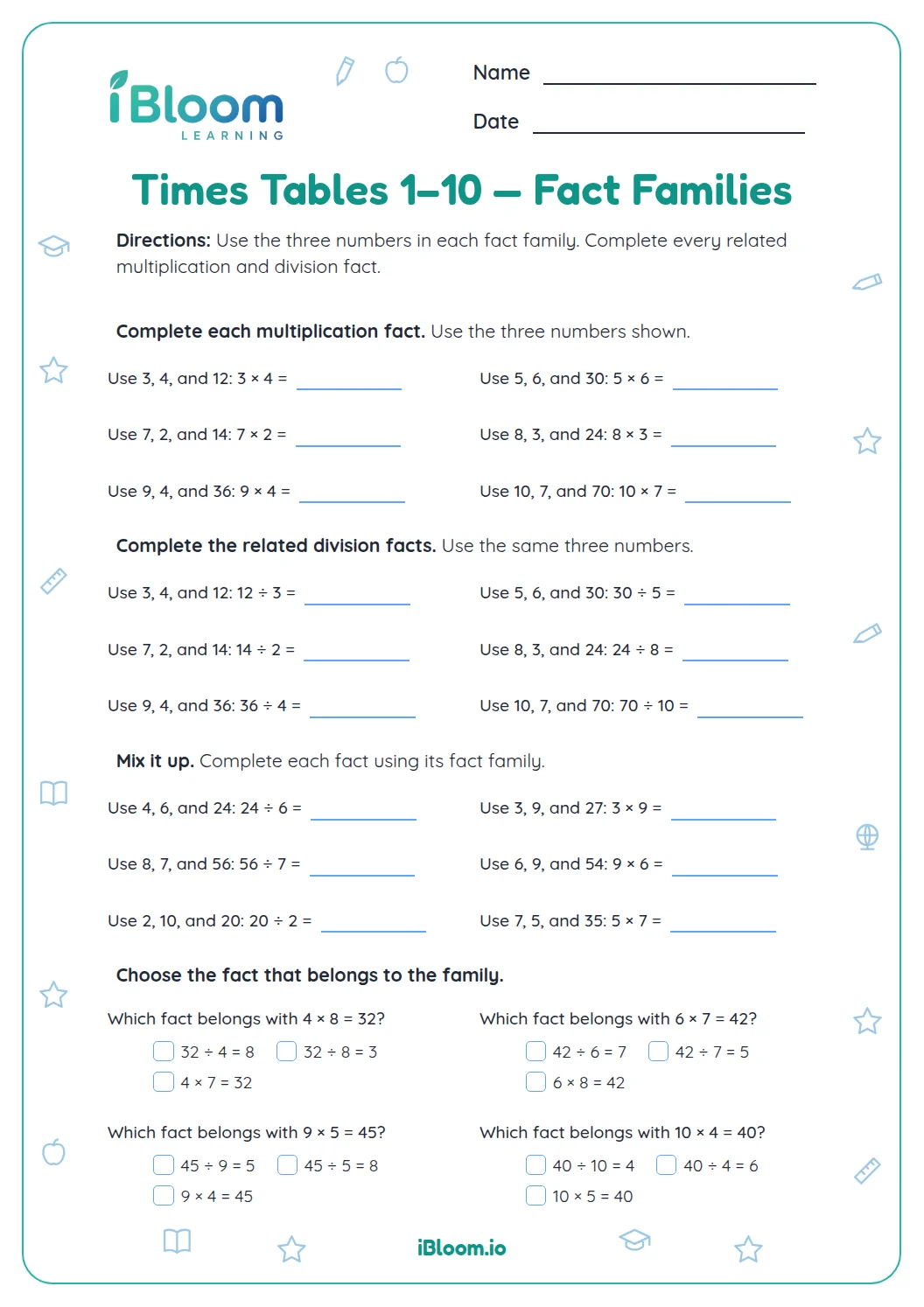
Fluently multiply and divide within 100, using strategies such as the relationship between multiplication and division (e.g., knowing that 8 × 5 = 40, one knows 40 ÷ 5 = 8) or properties of operations. By the end of Grade 3, know from memory all products of two one-digit numbers.
What to practice next
Make more practice
Further reading
Questions parents and teachers ask
How many facts are included?
There are 20 questions: ten direct multiplication facts, five missing-factor equations and five equal-group stories. The first factor in the direct facts covers 1 through 10, and all products stay within 100. The separate key lists each answer.
What does “ordered 1–10” mean here?
The practice uses factors from 1 through 10, with one direct fact beginning with each factor in that range. The facts appear in mixed formats: direct products, missing factors and equal-group stories. This makes learners use the facts in more than one way.
What is a missing-factor question?
A missing-factor question gives a product and one factor, such as 4 × ___ = 32. Use a related multiplication fact to find the number that completes the equation. The key lists the missing factor, and the equation provides room to record it.
How do the story problems work?
Each story describes equal groups, such as rows of flowers or boxes holding the same number of crayons. Write a multiplication equation in the workspace, then find the total. The answer key gives the product for each group story.
Which standard does it support?
The page practices one-digit multiplication facts with products within 100 and applies them to equal groups. These activities align with CCSS 3.OA.C.7, including fluency with products of two one-digit numbers. The standard and its official wording appear in the curriculum section.
How long will it take?
Plan for about 15 minutes, allowing extra time if the learner writes equations for the stories or checks a fact. Children can work through the direct facts and missing factors before the short story problems. The separate key supports a quick review afterward.