

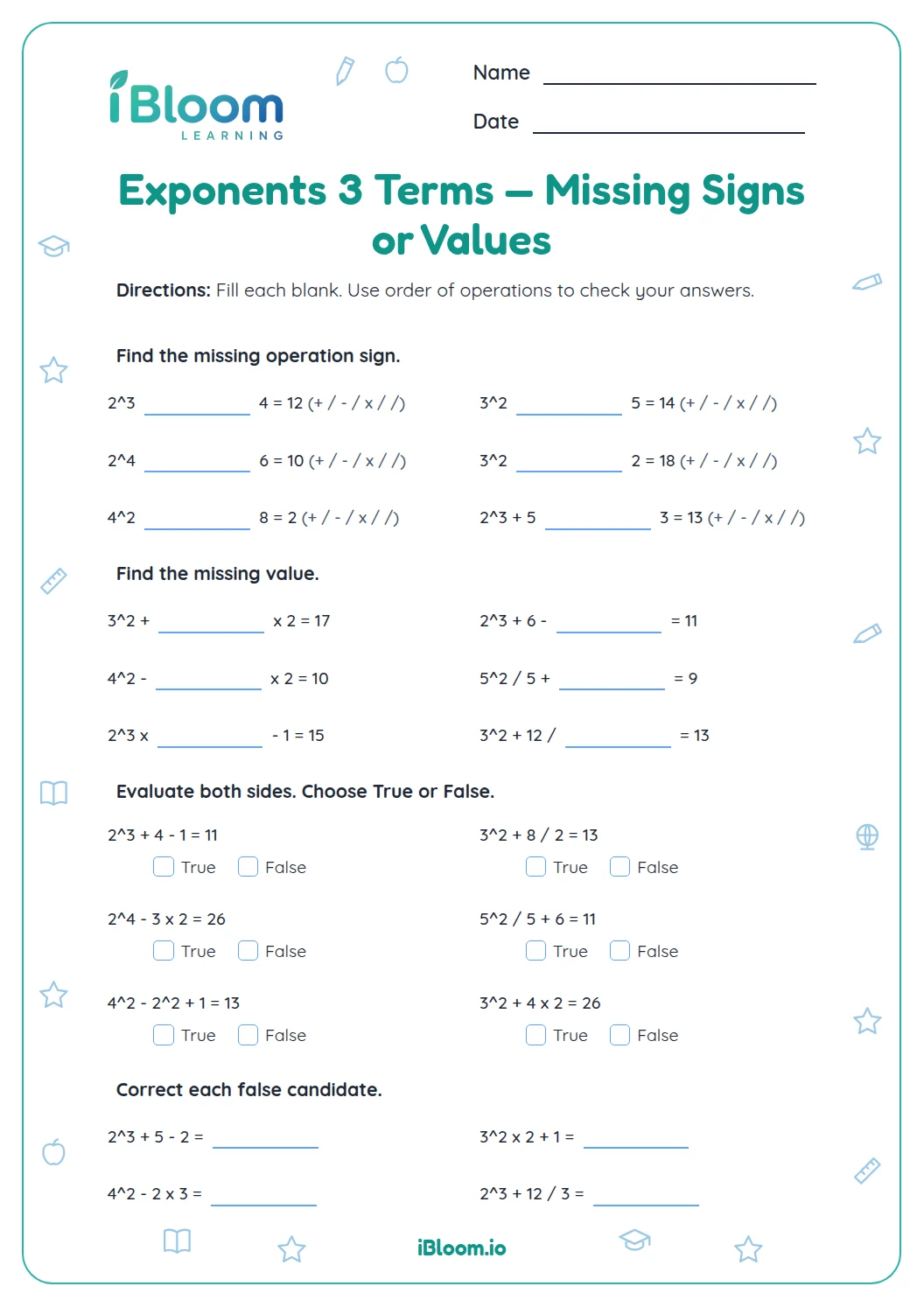
About this worksheet
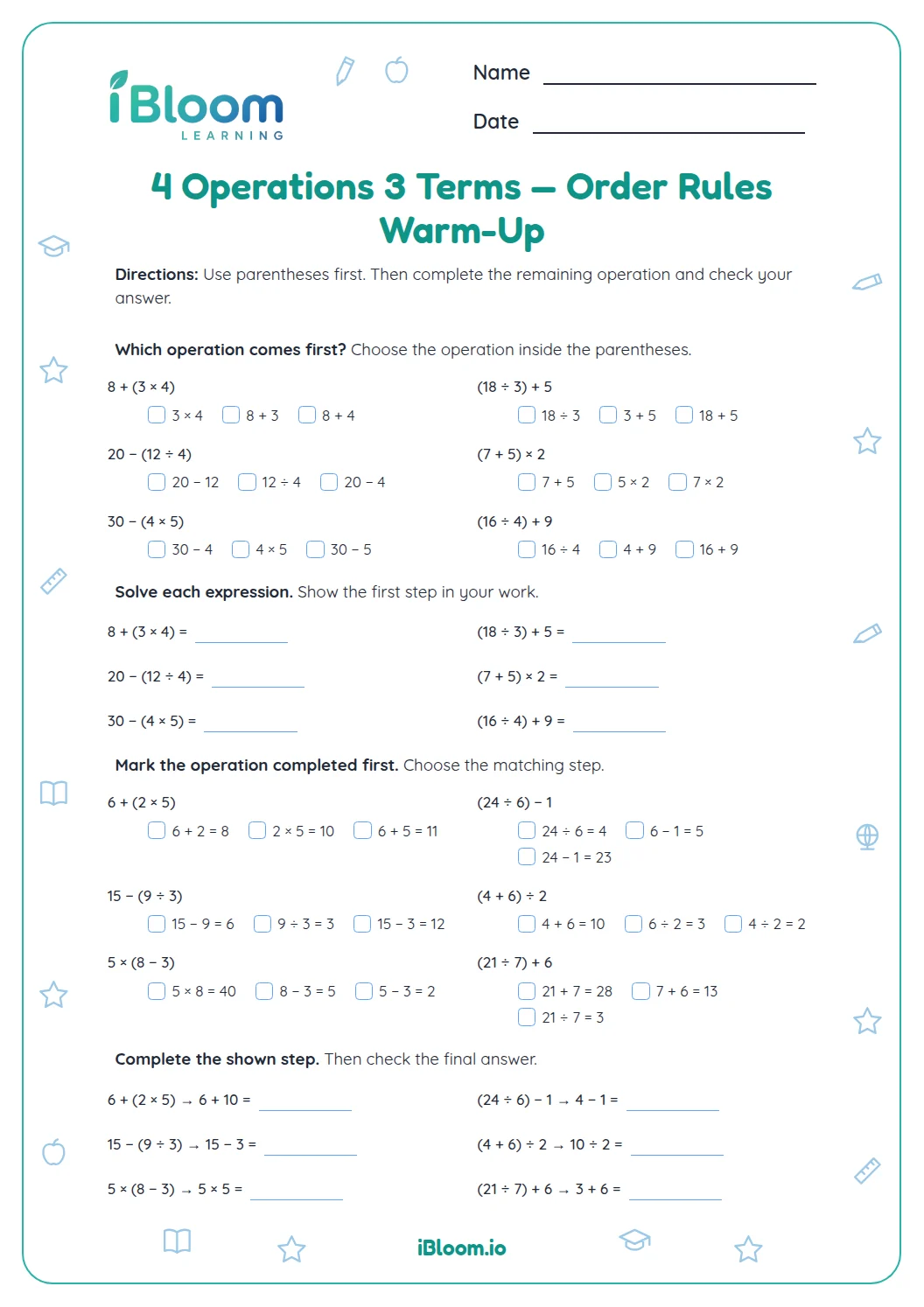
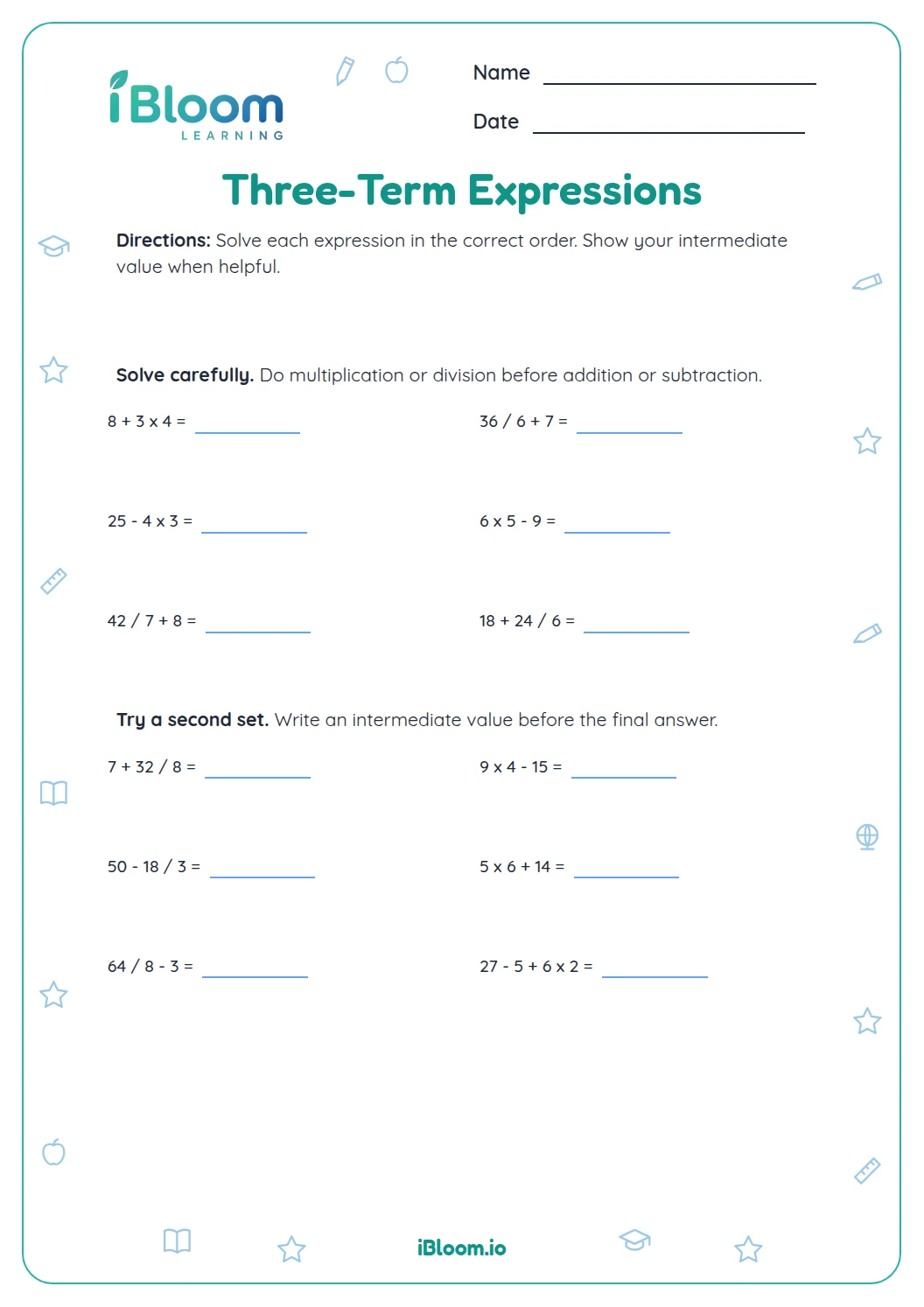
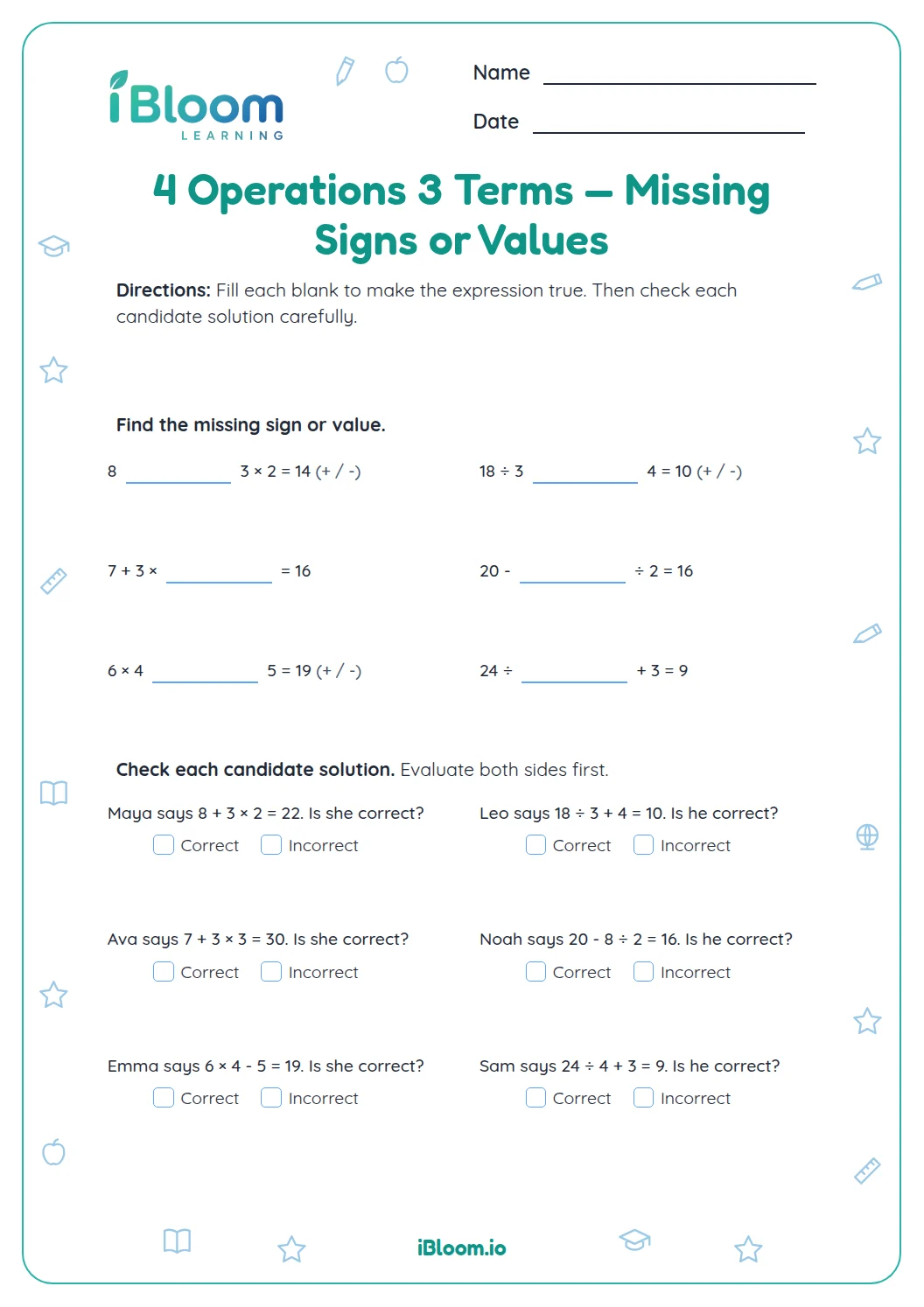
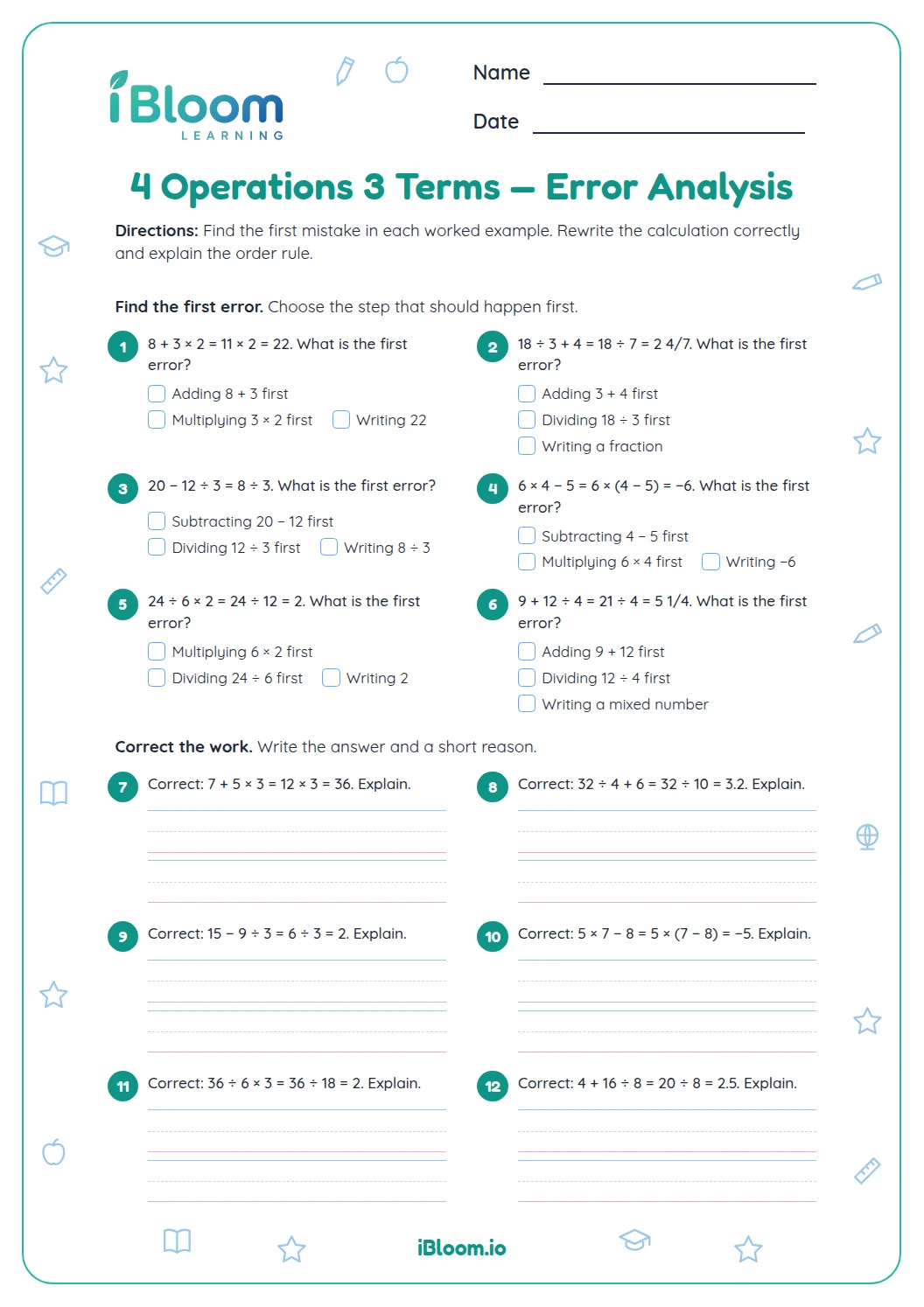
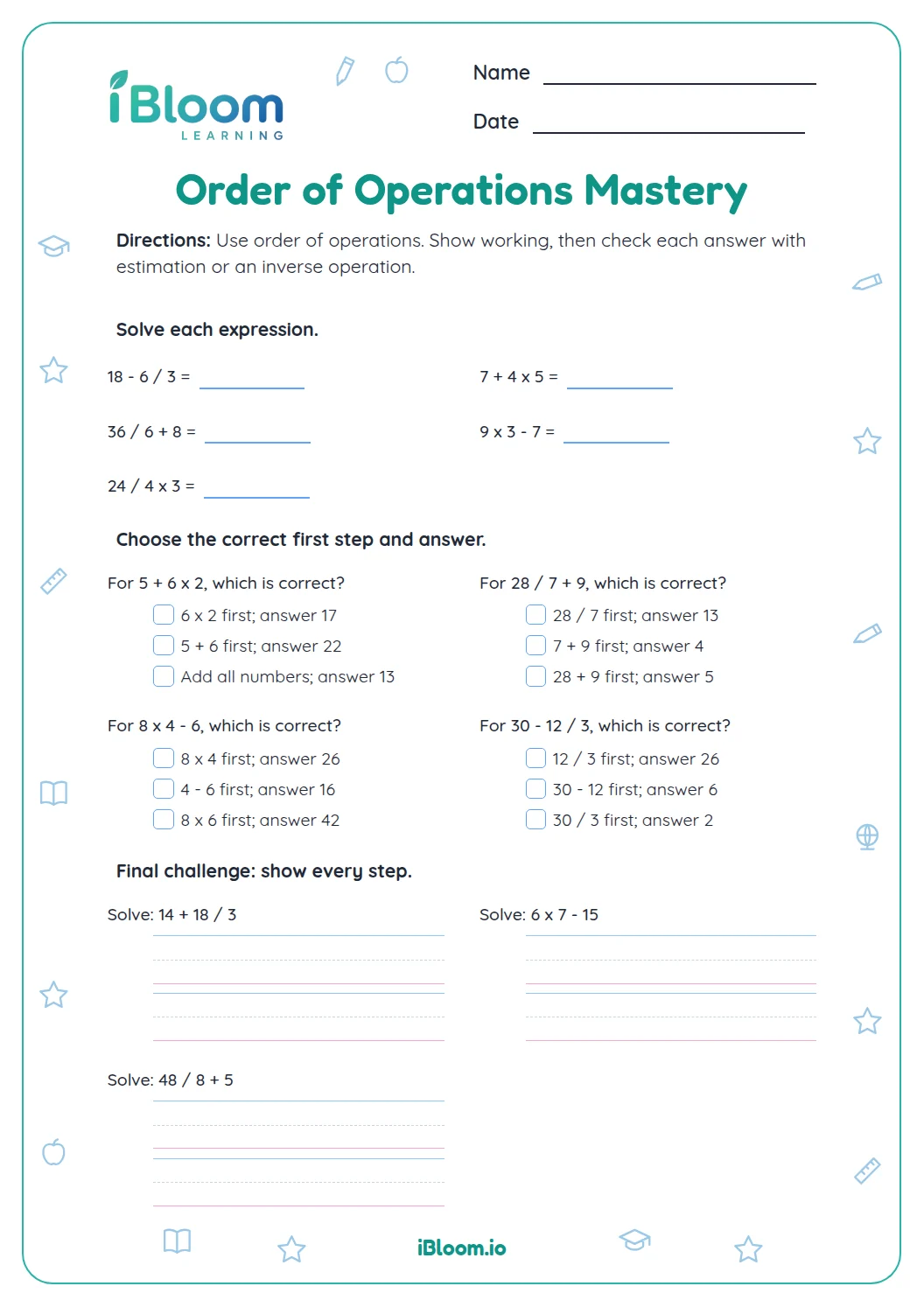
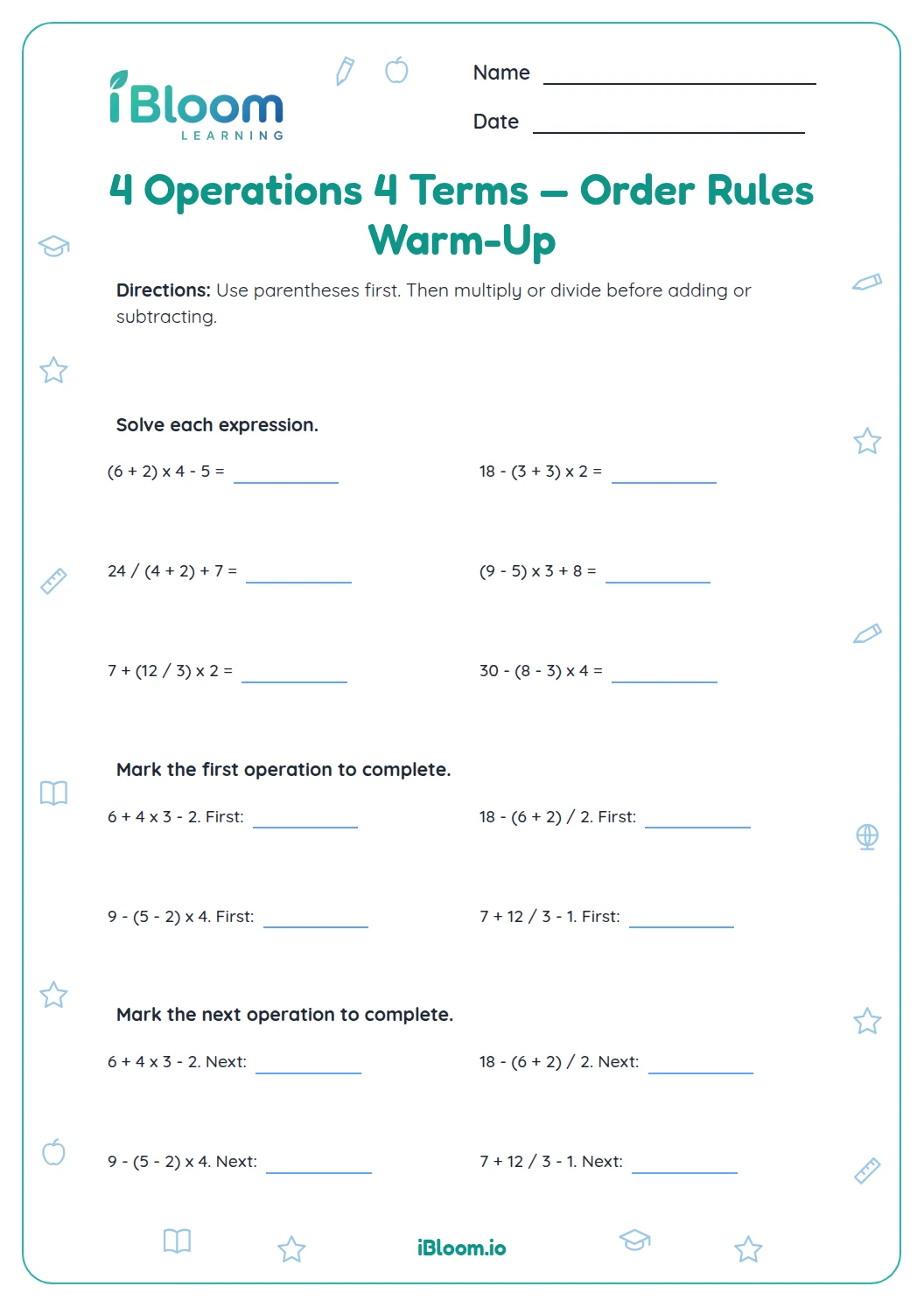
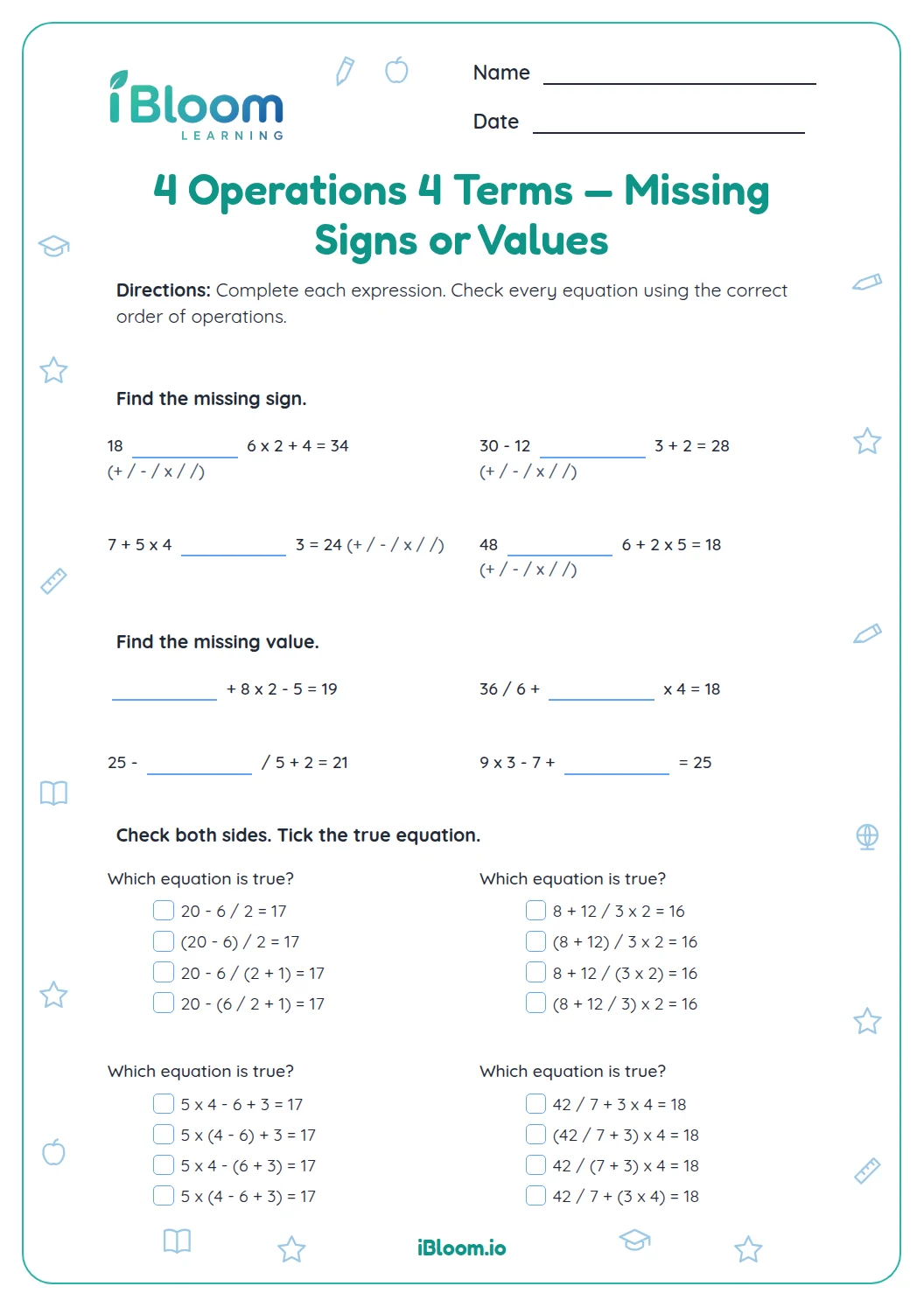
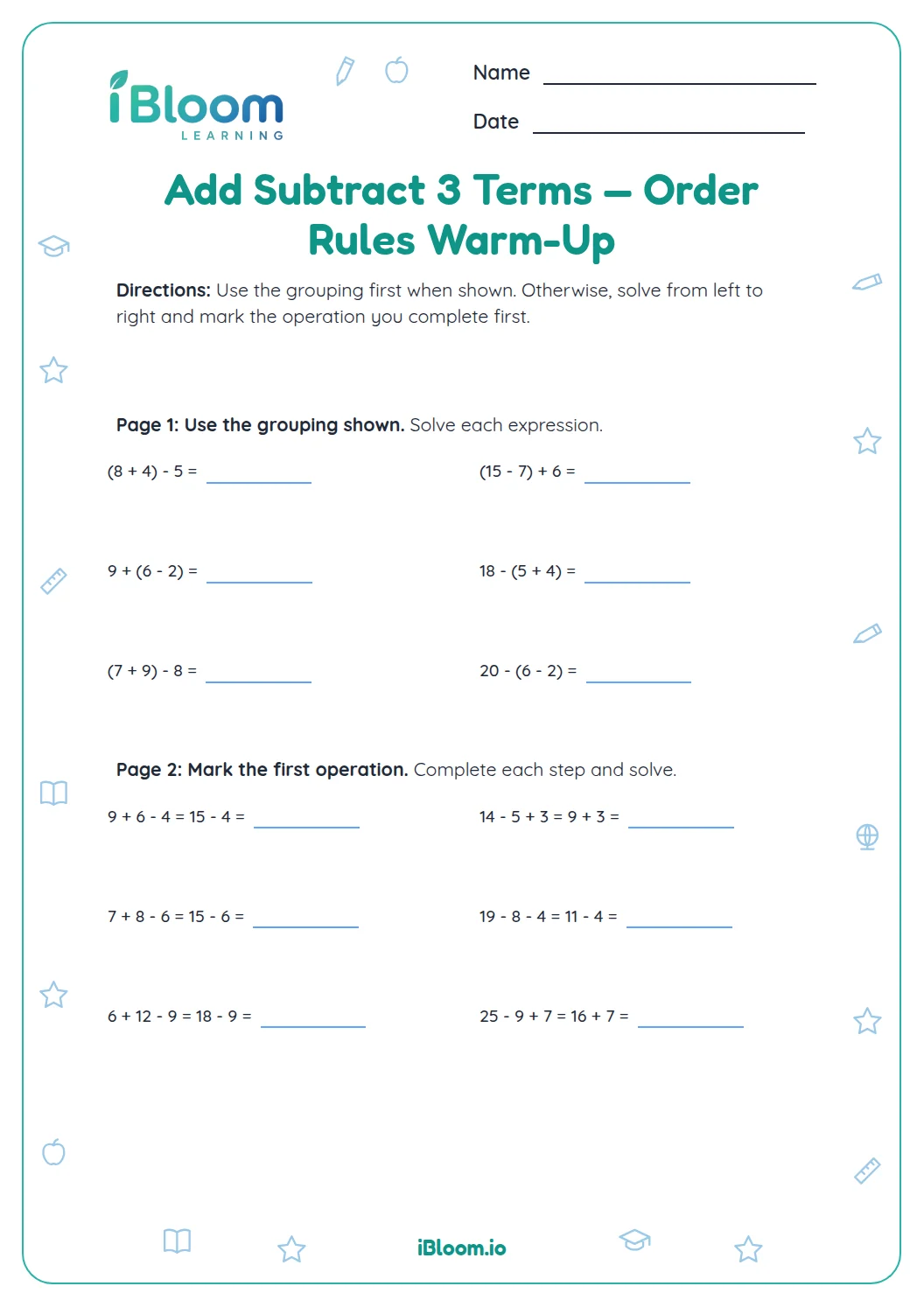
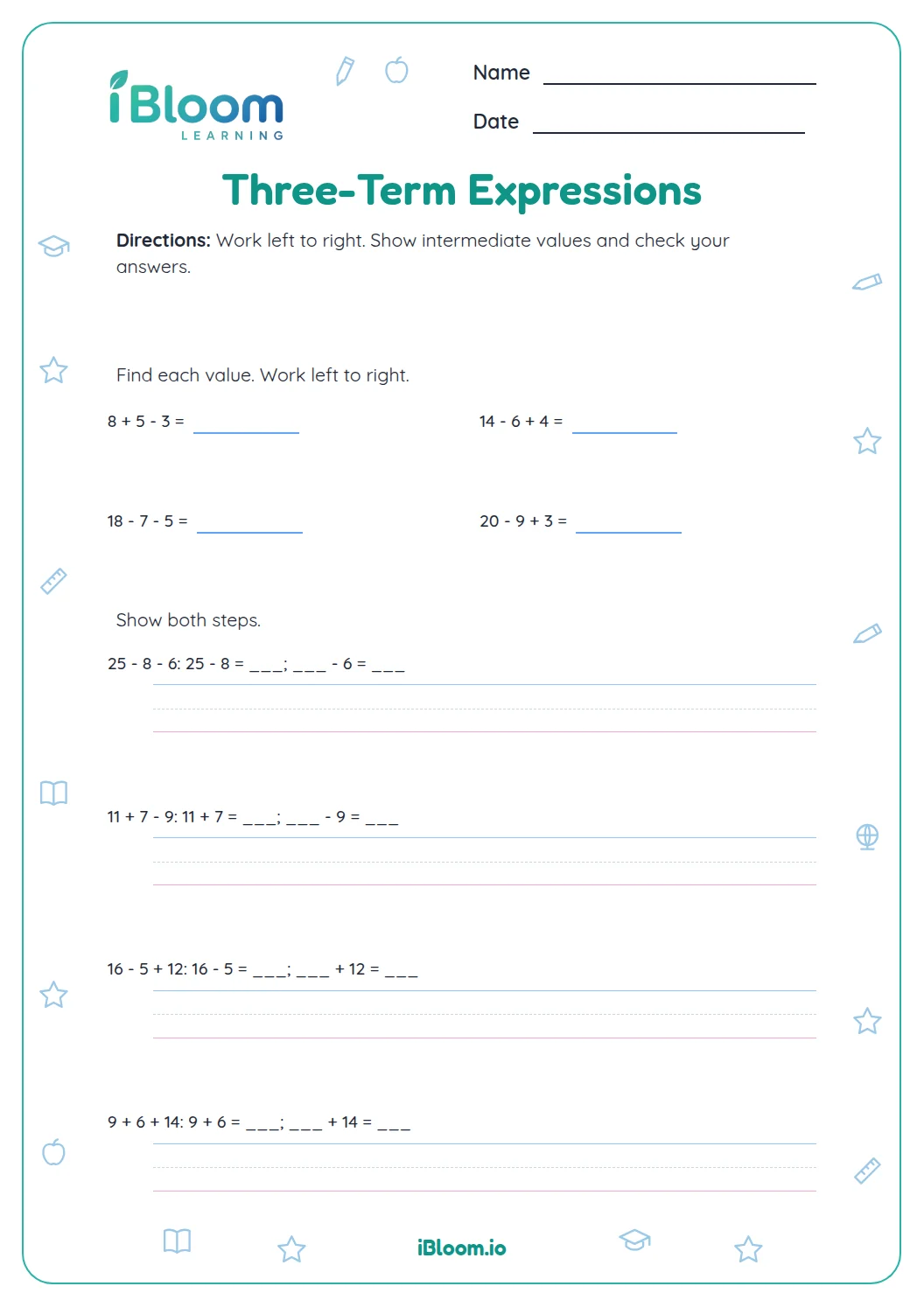
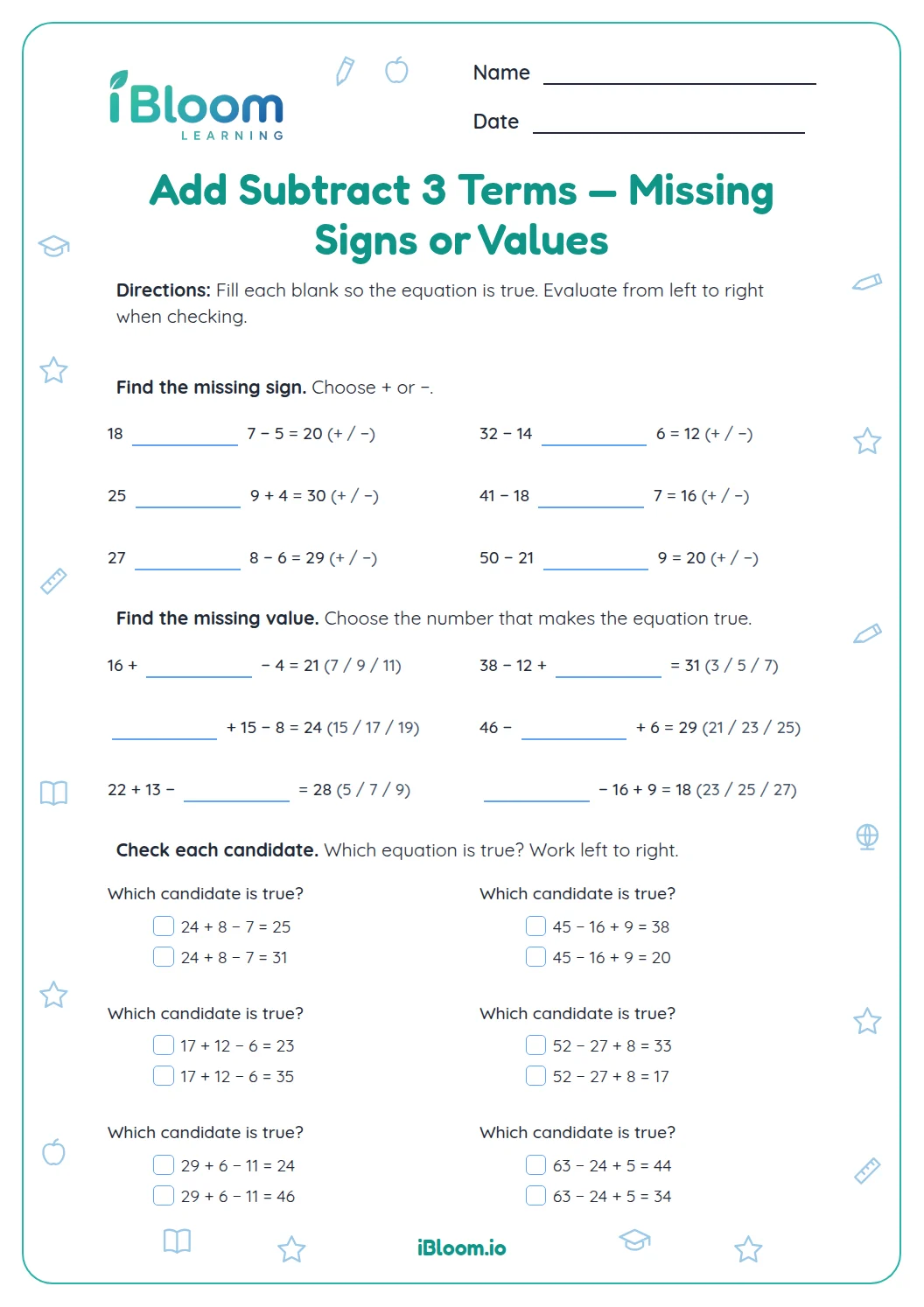
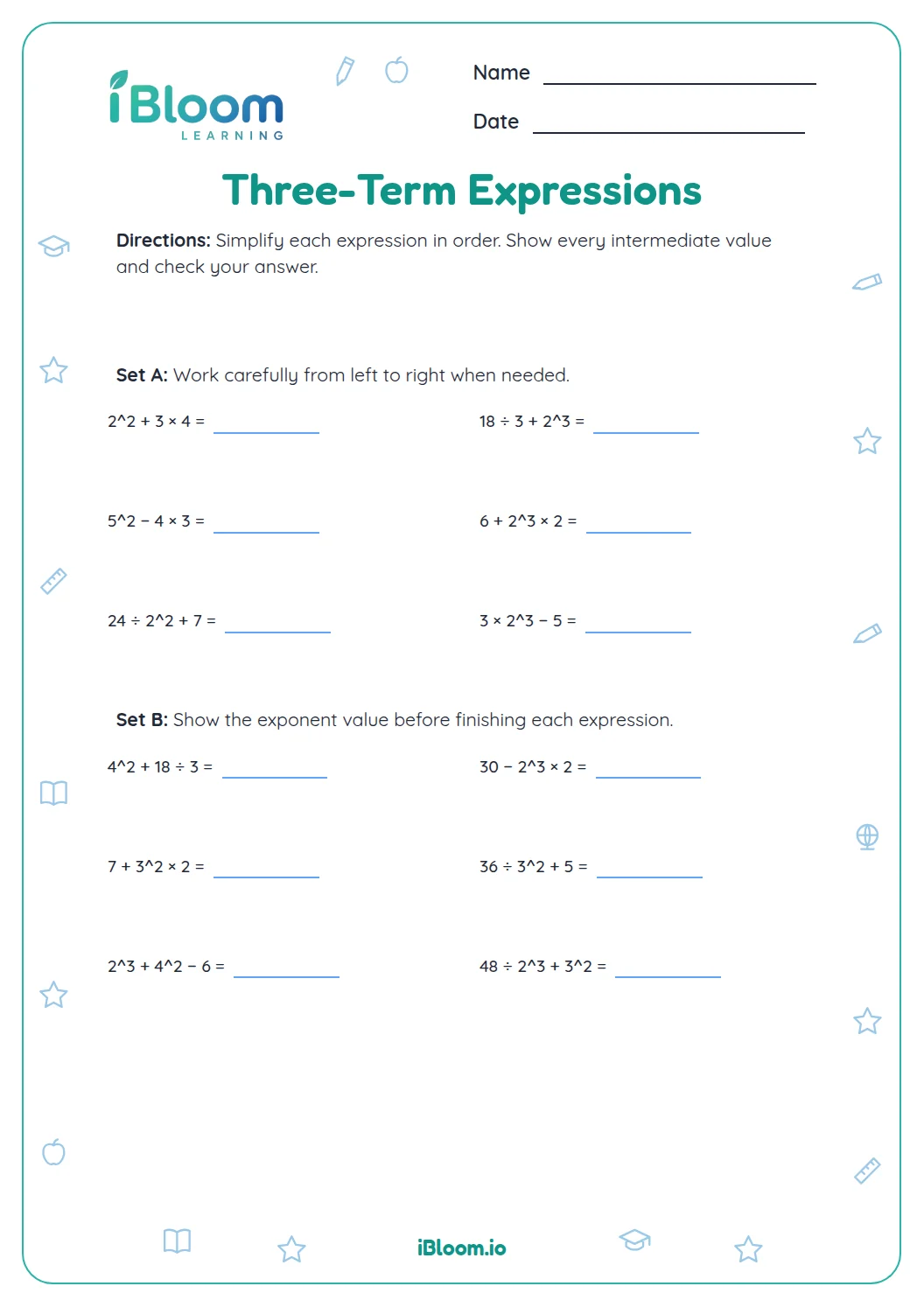
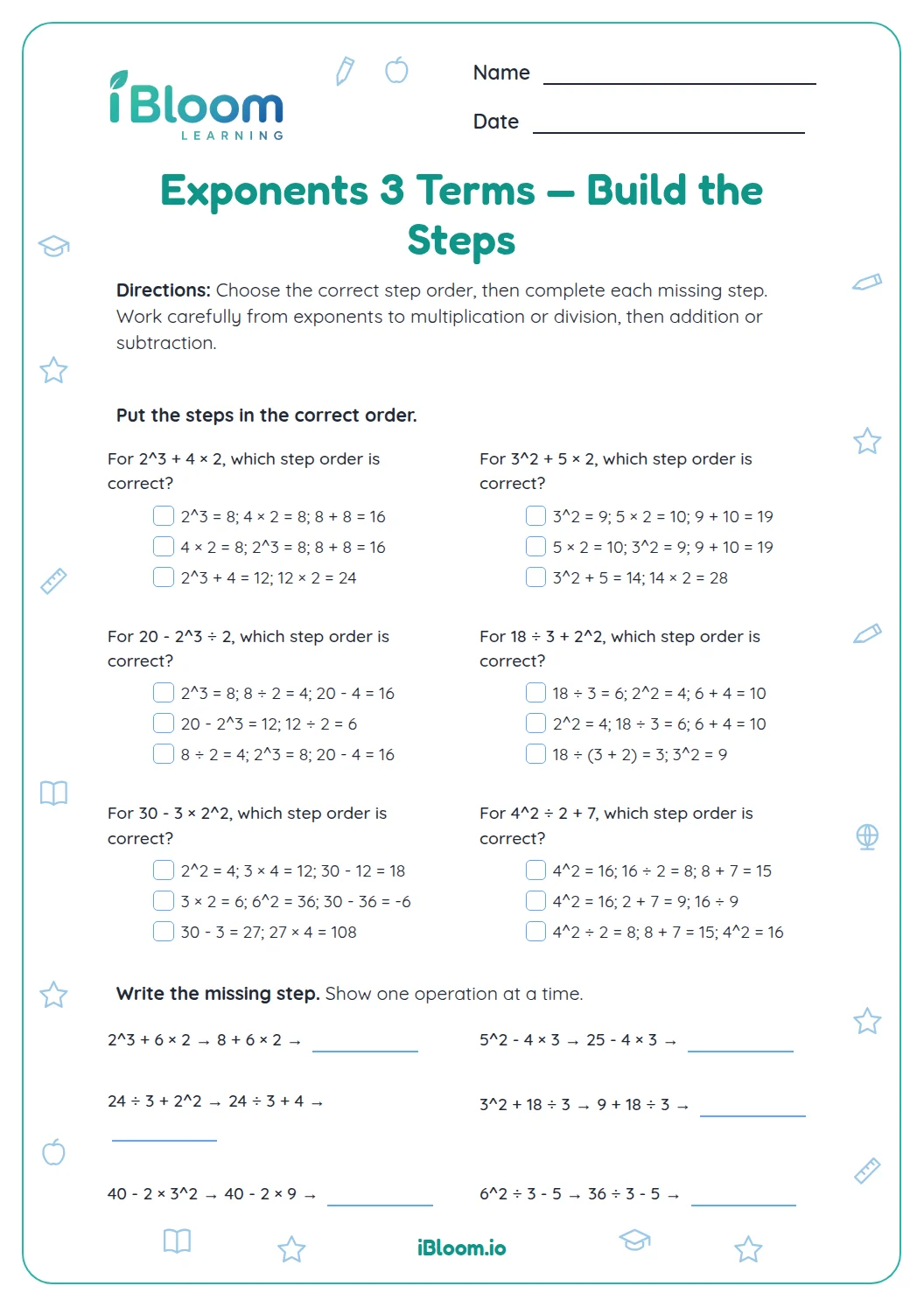
This free order of operations worksheet is for Grades 5–6 and includes 16 problems. Part A asks students to choose the first operation step; later parts practice evaluating expressions with and without parentheses and filling missing intermediate values. A separate answer key shows the correct choices and results.
Aligned to 5.OA.A.1
Which operation comes first?
When an expression has multiplication or division together with addition or subtraction, do multiplication and division first. If both appear, work from left to right. Then finish the addition or subtraction.
For question 1, multiply 4 × 3 to get 12 before adding 6.
- 16 + 4 × 3 → 6 + 12 → 18
What changes when parentheses appear?
Evaluate the expression inside parentheses first. Then continue using the operation order on the remaining expression.
For question 9, add inside the parentheses first: 6 + 2 = 8. Then multiply 8 × 5 to get 40.
- 1(6 + 2) × 5 → 8 × 5 → 40
How can you make each step easy to check?
Copy the expression, change only the part you just evaluated, and keep the operation signs visible. A written intermediate result helps catch a skipped step.
How to use this worksheet
- 1Copy the expression carefully.
- 2Evaluate the parentheses first, if present.
- 3Complete multiplication and division from left to right.
- 4Complete addition and subtraction from left to right.
- 5Check by substituting each intermediate result into the expression.
Common mistakes and quick fixes
The mistake
Multiplying before dividing every time.
The fix
Multiplication and division have equal priority; use left-to-right order.
The mistake
Adding before multiplication because it appears first.
The fix
Complete multiplication or division before addition or subtraction.
The mistake
Ignoring parentheses.
The fix
Evaluate the grouped part first, then continue with the remaining operations.
Common Core alignment
This practice connects to the following Common Core standard.
Use grouping symbols to show which operation to complete first.
On this sheet: Students evaluate three-term expressions with grouping symbols and follow the operation order.
Show the official wordingHide the official wording
Use parentheses, brackets, or braces in numerical expressions, and evaluate expressions with these symbols.
What to practice next
Make more practice
Further reading
Questions parents and teachers ask
What does “left to right” mean?
When multiplication and division both appear, complete the one that comes first from left to right. In 24 ÷ 6 + 5, divide 24 by 6 before adding 5. Questions 1–8 on this sheet ask students to identify the first valid operation step.
Do I always multiply before dividing?
No. Multiplication and division have equal priority. Read from left to right and do whichever of those operations appears first. Apply the same idea to addition and subtraction after multiplication and division are complete. This keeps the steps consistent across expressions with different operation signs.
Why write an intermediate result?
An intermediate result shows which operation you completed and what remains. In 5 × 6 − 8, multiply first to get 30, then subtract 8 to get 22. Questions 15 and 16 use a missing value to check that the intermediate step is correct.
What changes when parentheses appear?
Evaluate the expression inside parentheses before working with the rest. In (6 + 2) × 5, add 6 and 2 to get 8, then multiply 8 by 5. Questions 9–12 practice this grouping step before completing the expression.
What does “build the steps” mean here?
It means identifying the operation to do first and replacing that part of an expression with its value. For 6 + 3 × 4, multiply 3 × 4 first, then add 6. Several questions ask for an intermediate value so the sequence stays visible.