

About this worksheet
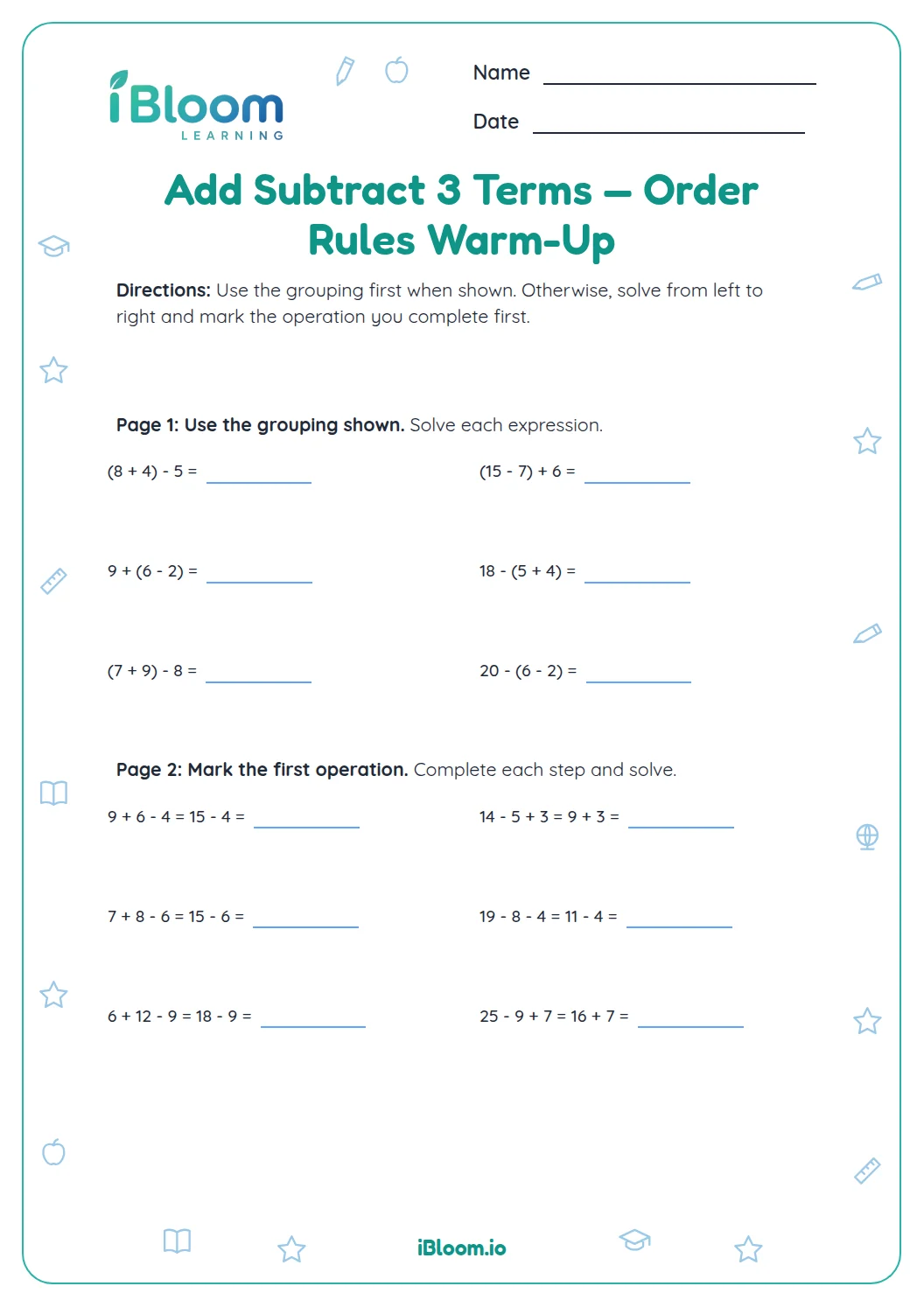
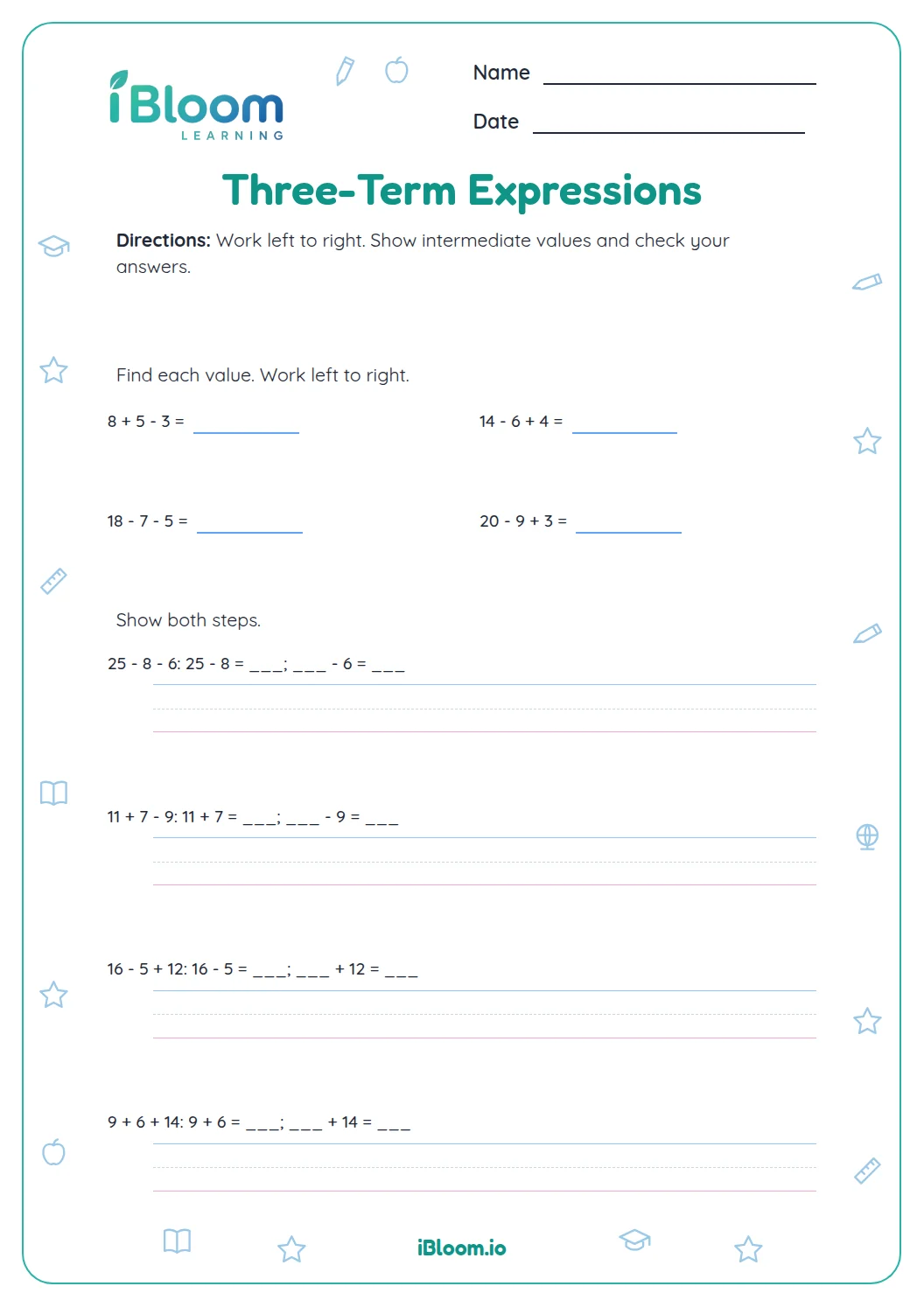
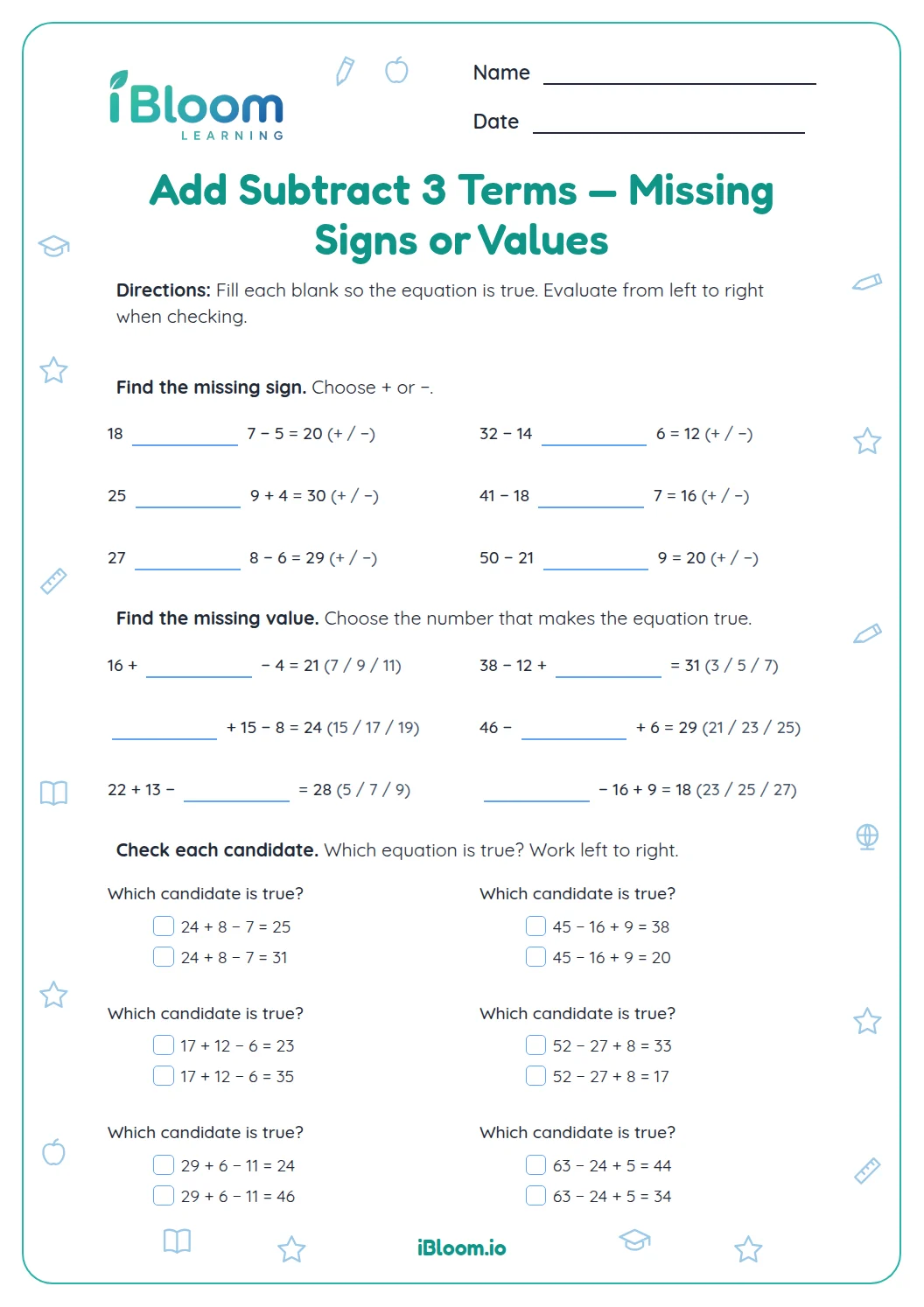
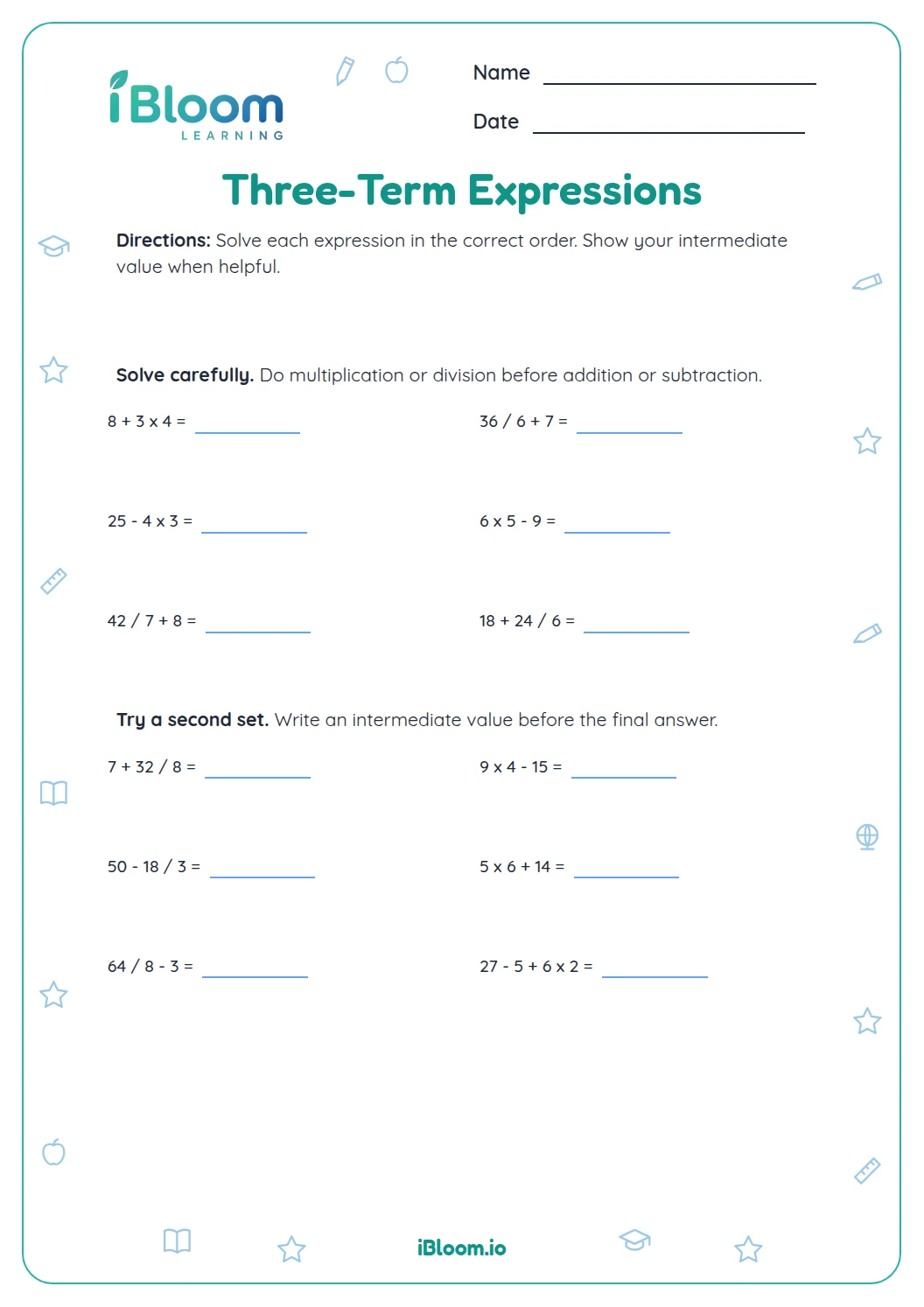
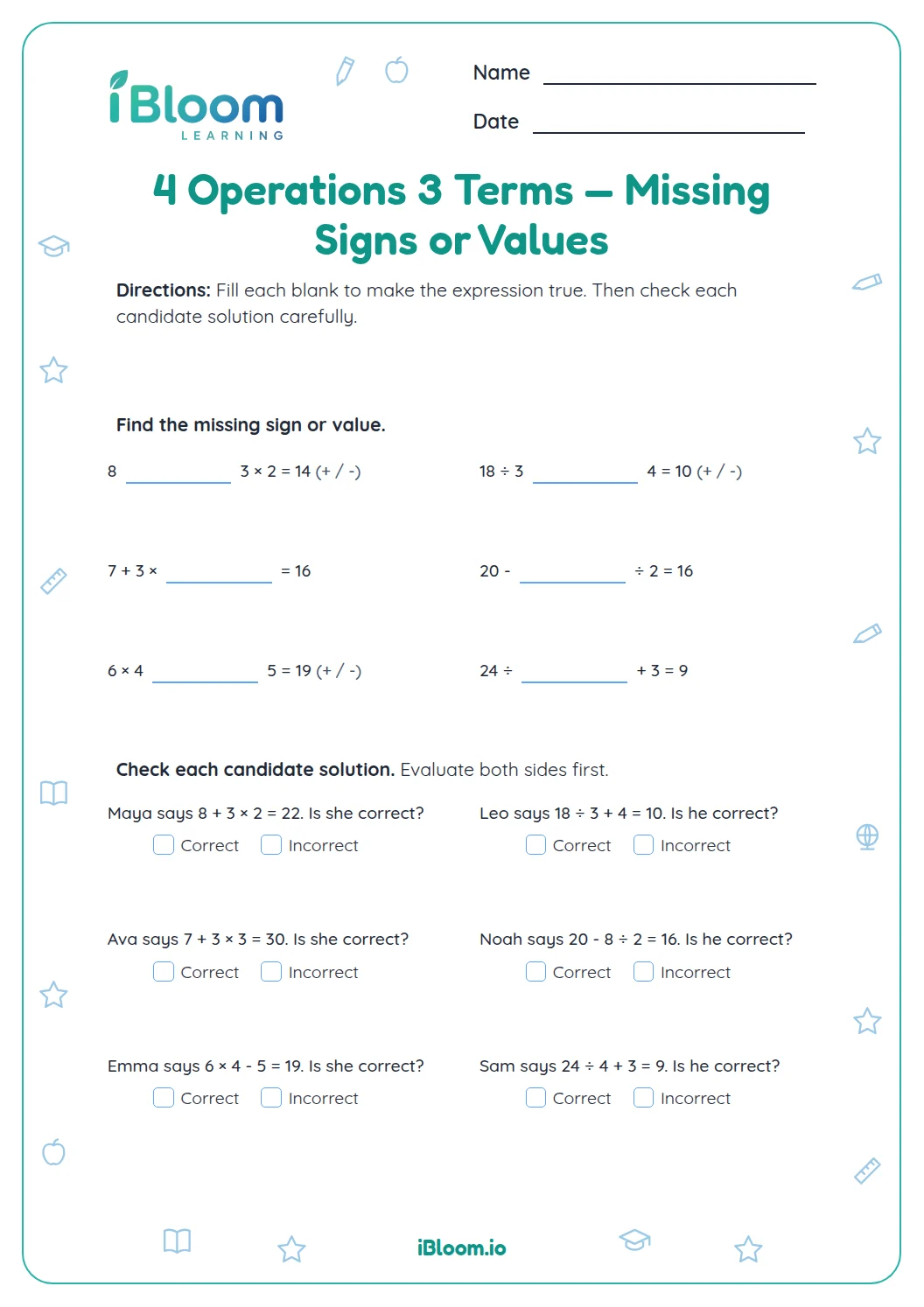
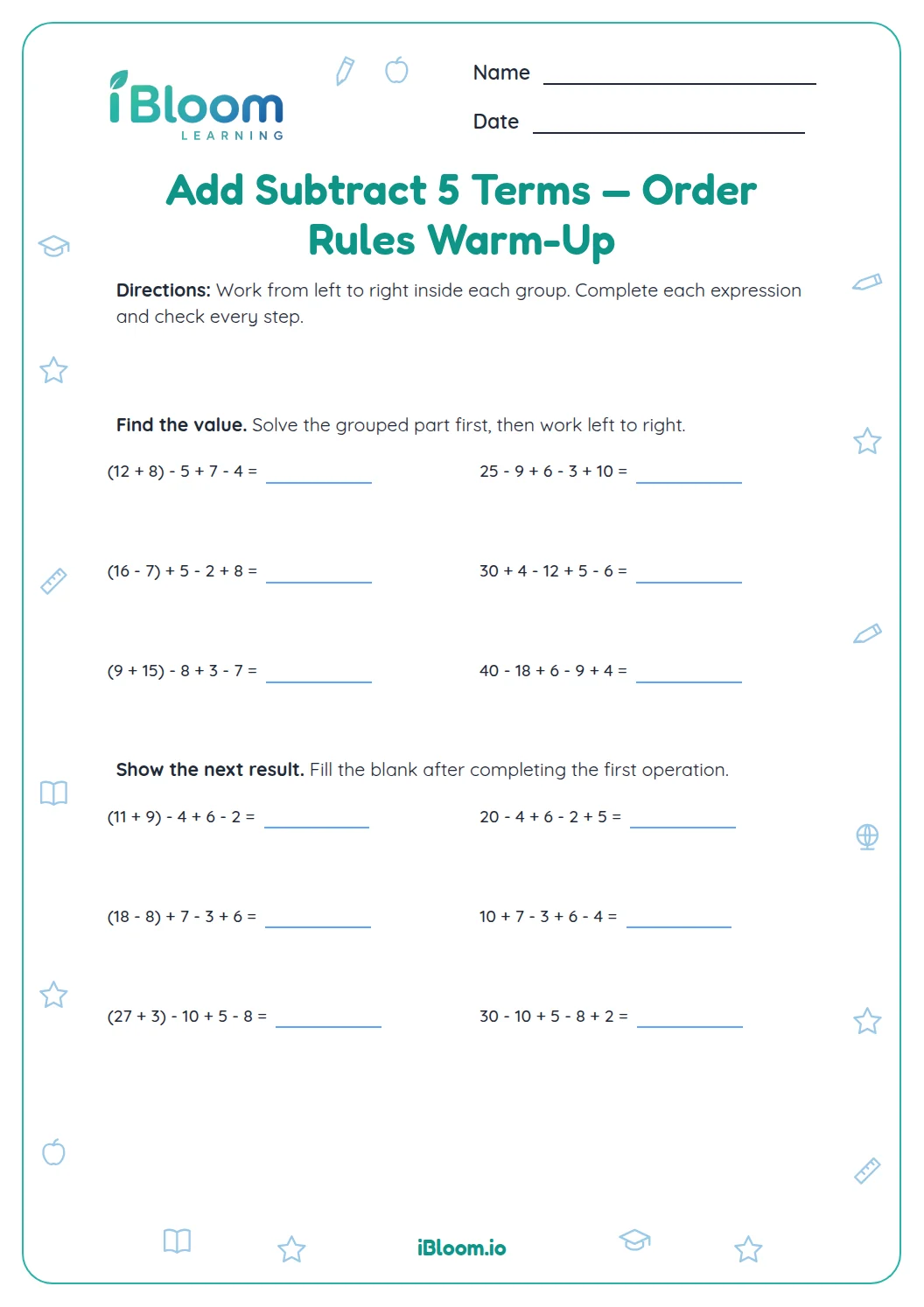
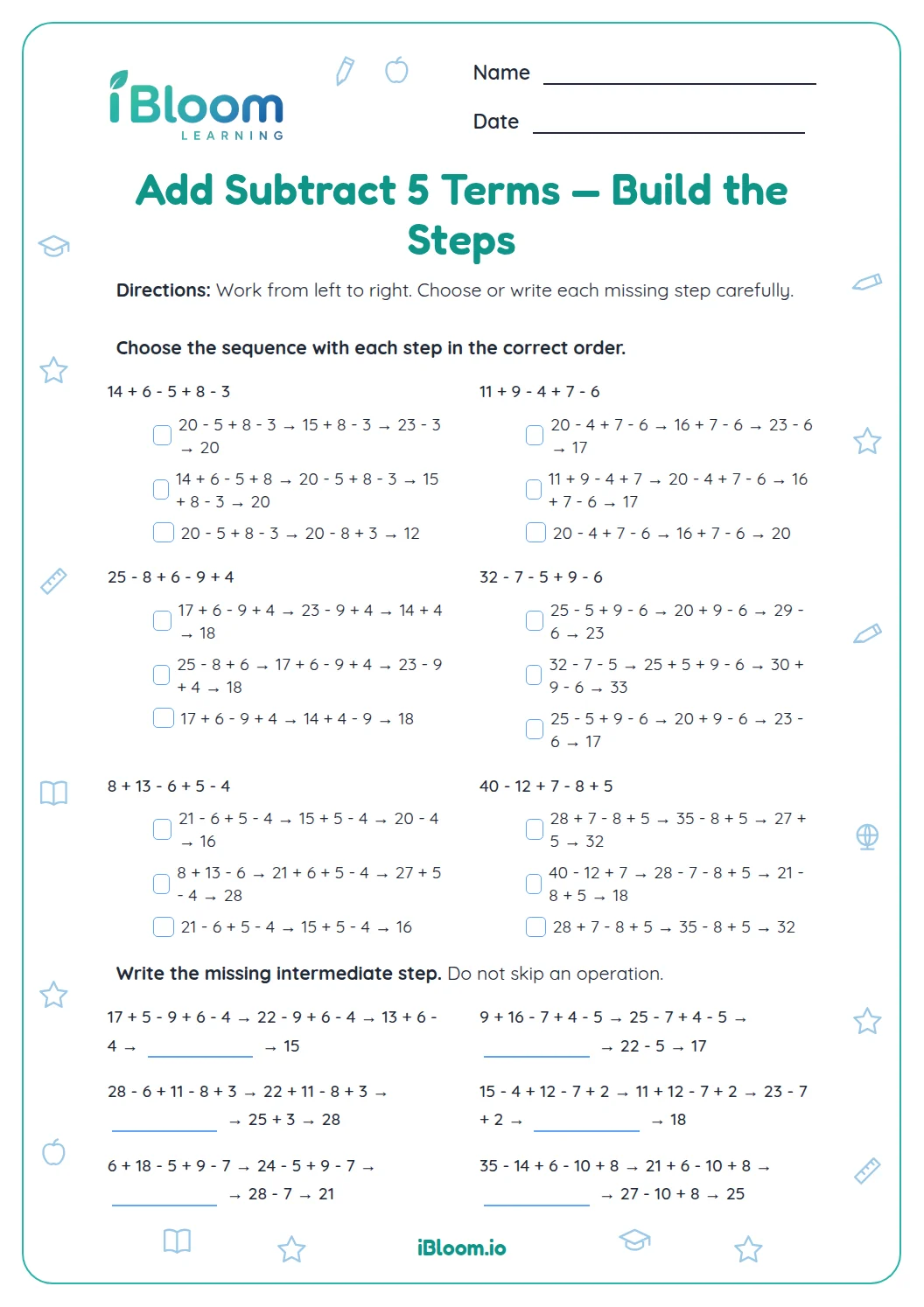
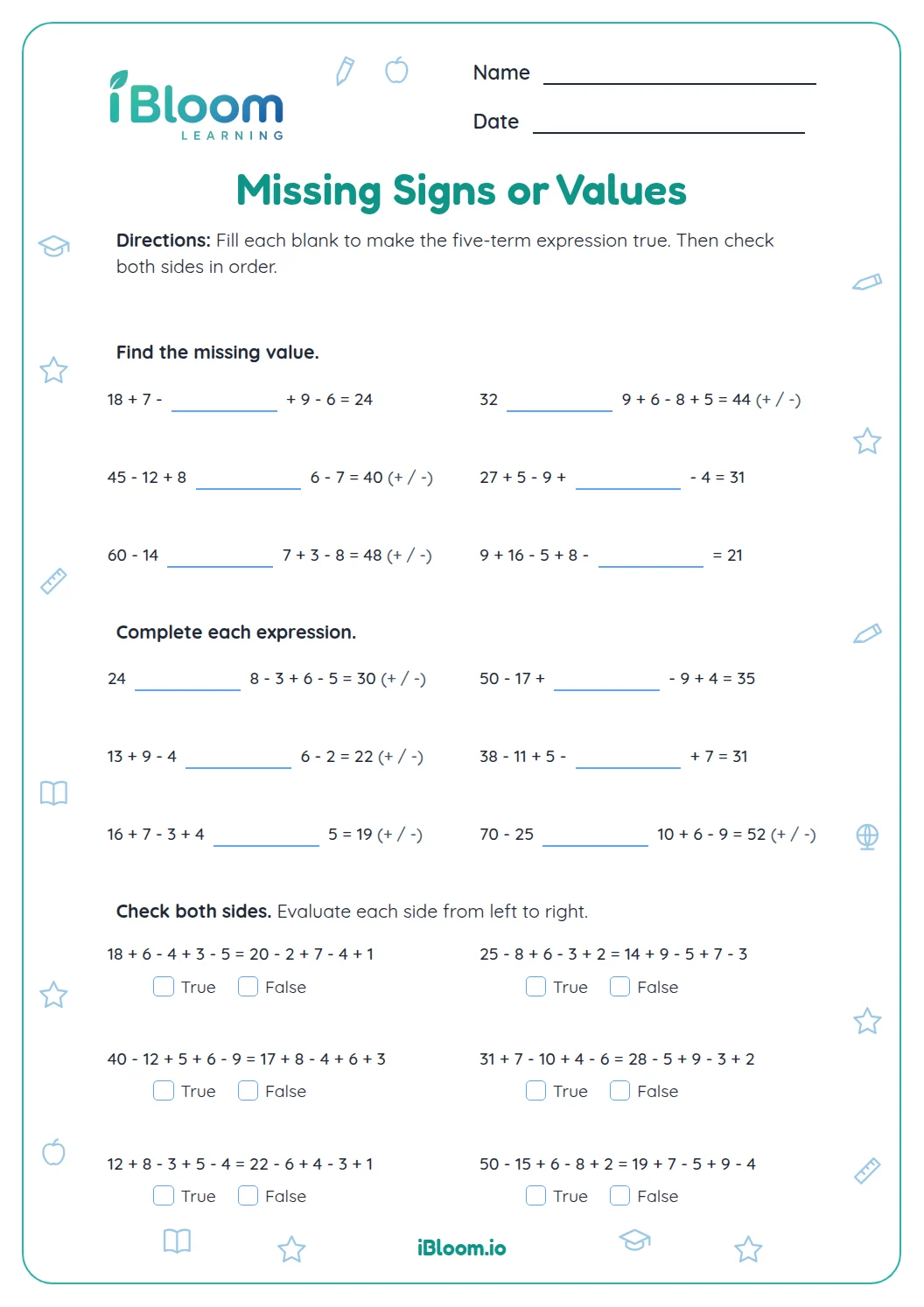
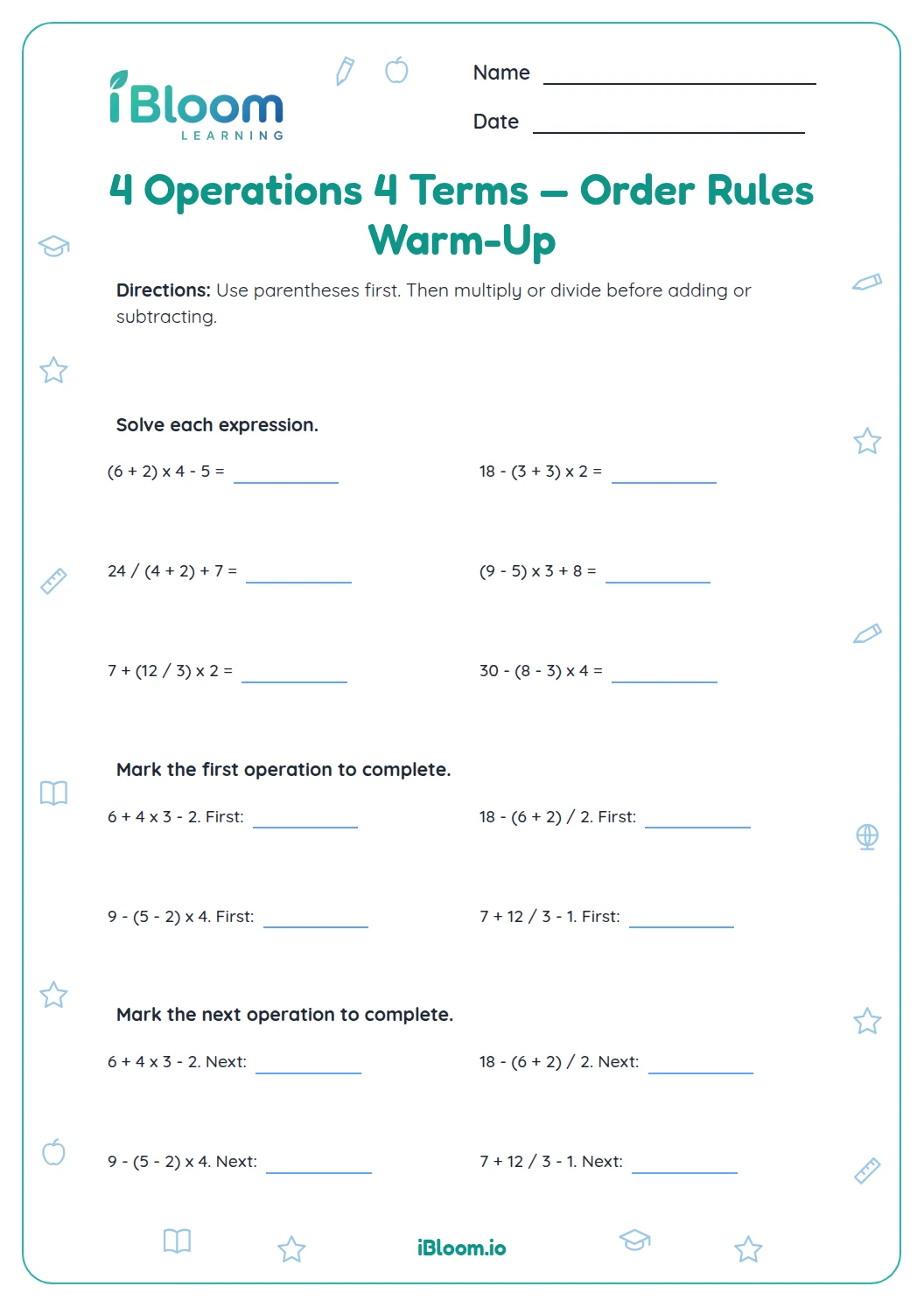
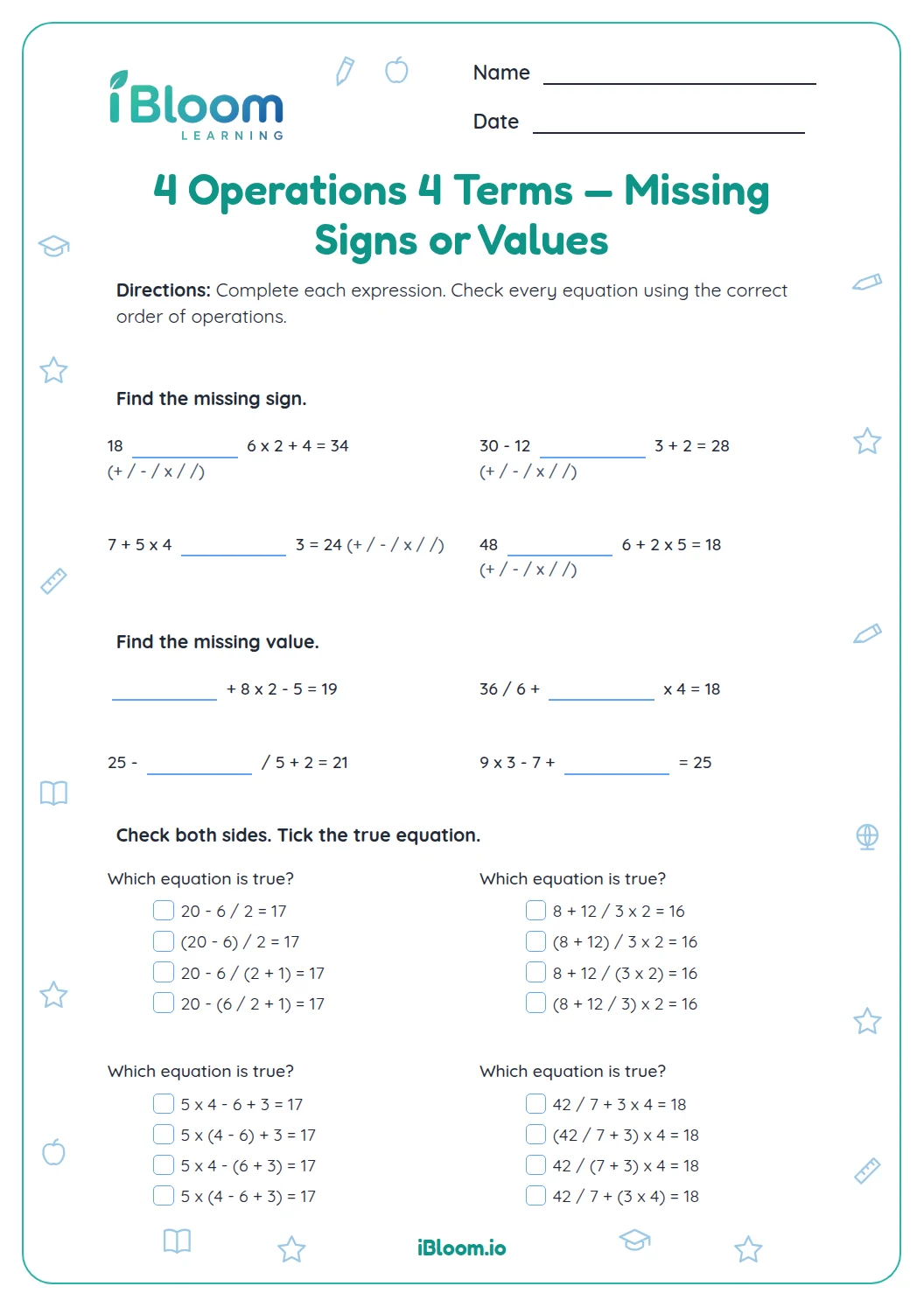
This Grade 5 printable practices evaluating three-term expressions that use addition and subtraction. Students choose the first calculation in six expressions, complete six step chains, and finish four mixed step checks. The sheet reinforces that addition and subtraction have equal priority, so work proceeds from left to right. A separate answer key shows each intermediate result and final value.
How do you choose the first step?
Addition and subtraction have equal priority. Begin at the left and calculate the first operation you meet. In 14 + 6 − 5, first find 14 + 6 = 20; then subtract 5 to get 15. Doing 6 − 5 first changes the order and gives the wrong result.
- 114 + 6 − 5
- 214 + 6 = 20; 20 − 5 = 15
Why write an intermediate result?
A written step makes the order visible and gives you a value to carry into the next calculation. In Part B, the first operation is already shown; fill the final blank after using that intermediate result.
What does each part ask students to do?
Part A asks students to choose the correct first operation for six expressions. Part B gives six guided calculations with a missing final value. Part C has four more step checks. The answer key includes the intermediate values and final answers.
How to use this worksheet
- 1Scan the expression from left to right.
- 2In Part A, select the operation that appears first.
- 3In Parts B and C, use the displayed intermediate result as the next starting value.
- 4Keep the plus or minus sign attached to the operation you are doing.
- 5Check each final result against the key after completing all parts.
Common mistakes and quick fixes
The mistake
Subtracting before an addition that appears to its left.
The fix
Start with the leftmost operation in a chain containing only + and −.
The mistake
Treating addition as always first.
The fix
Addition and subtraction share priority; the written order decides which comes first.
The mistake
Dropping the intermediate result.
The fix
Copy the result of the first step into the next equation before continuing.
What to practice next
Make more practice
Questions parents and teachers ask
What rule does this worksheet teach?
The expressions contain only addition and subtraction, so students work from left to right. The two operations have equal priority. In 14 + 6 − 5, calculate 14 + 6 first, then subtract 5. The worksheet emphasizes writing the intermediate result so the sequence stays clear.
How many problems are included?
There are 16 questions in three parts. Six ask students to choose the correct first step, six provide a guided chain with a missing final value, and four give mixed step checks. The answer key shows both intermediate calculations and final values.
Does this worksheet include multiplication or parentheses?
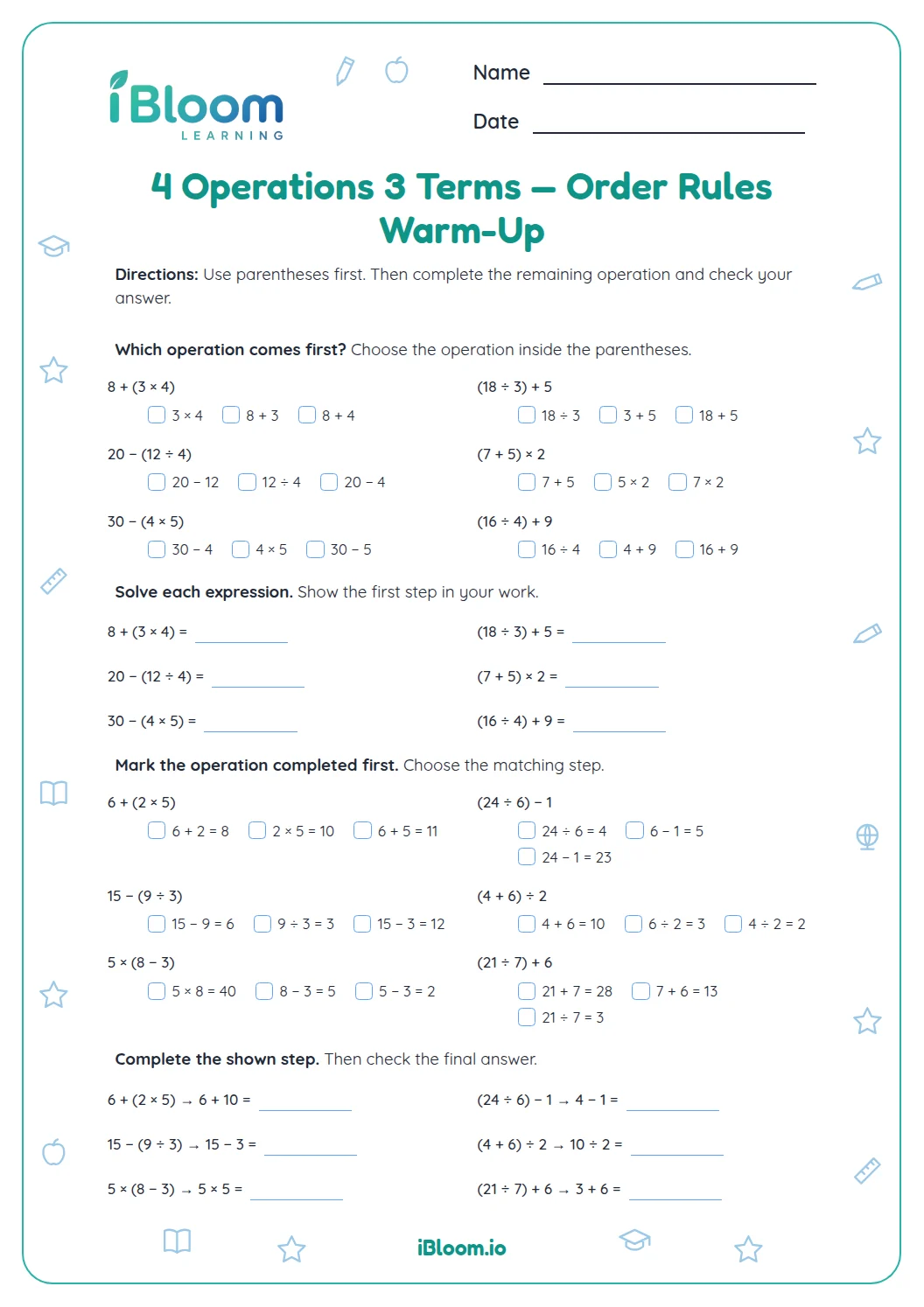
No. All 16 expressions use three terms with addition and subtraction only. That keeps attention on the left-to-right rule practiced here. Related worksheets in the collection extend to other operations and longer expressions. They repeat that left-to-right decision across expressions with different numbers and signs.
Why are there two choices in Part A?
The choices contrast the leftmost operation with a tempting operation to its right. For 14 + 6 − 5, the correct first step is 14 + 6, because it comes first. Students can then use the same rule independently in the later parts.
Is an answer key included?
Yes. The answer-key page gives the correct first-step choice, the intermediate values, and each final answer. Students should finish the steps before checking so the key confirms their process as well as their result. The key also shows the result after each operation, so students can compare their work line by line.
How do I check a three-term expression?
Evaluate the leftmost operation first, then use that result in the next step. For 45 − 9 + 6, subtract 9 from 45 to get 36, then add 6 to get 42. The guided questions and answer key show this sequence for each expression.