

About this worksheet
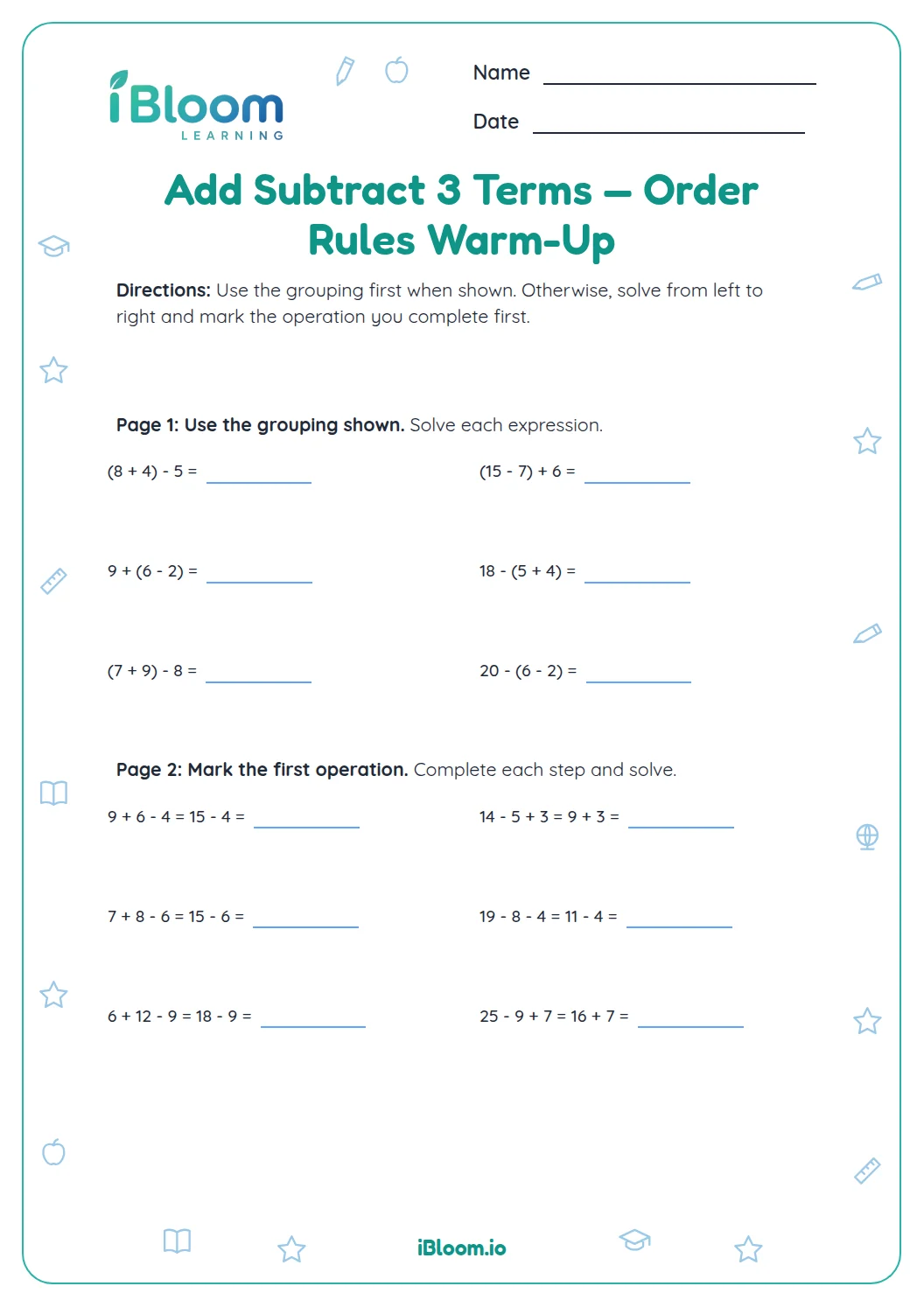
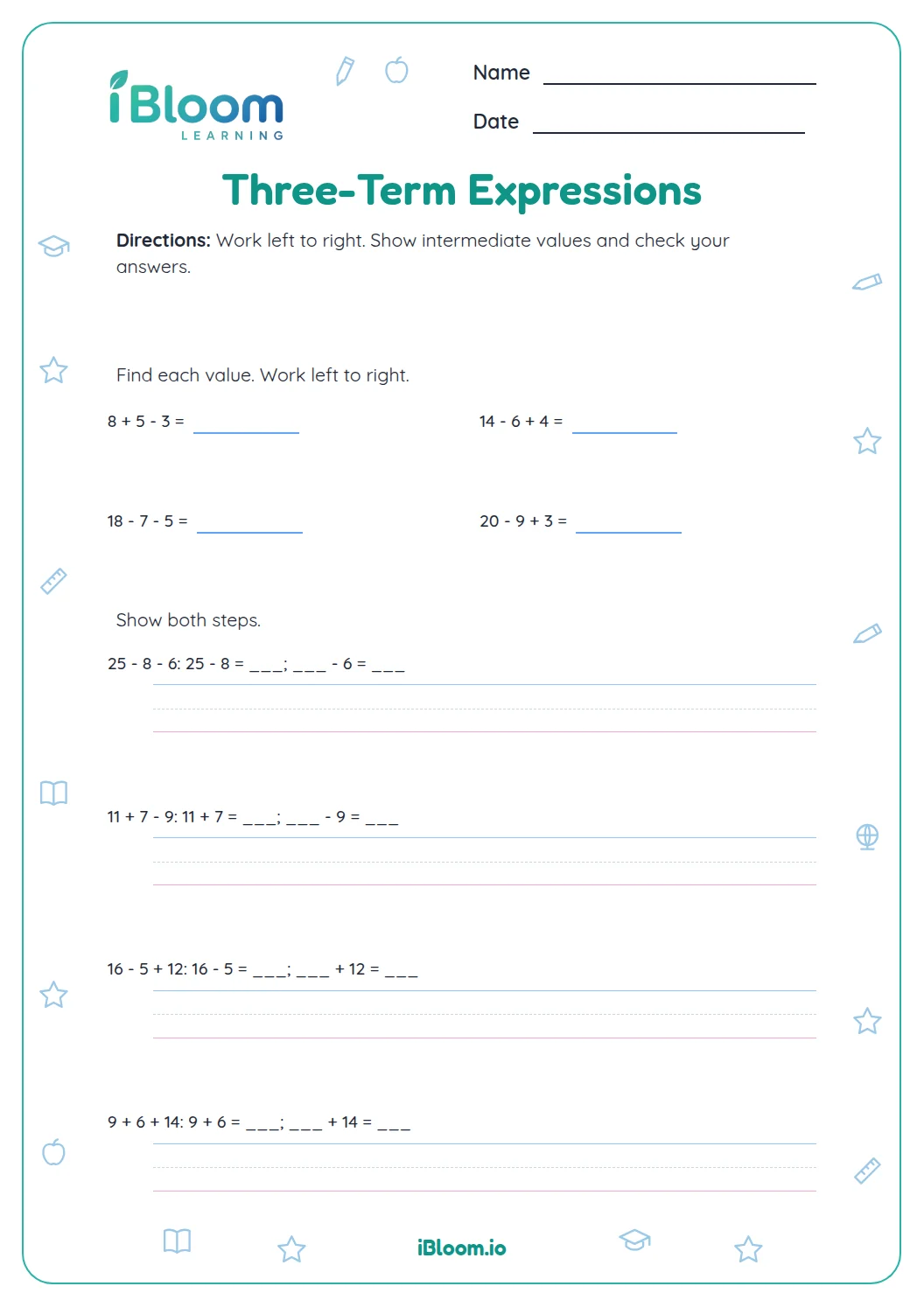
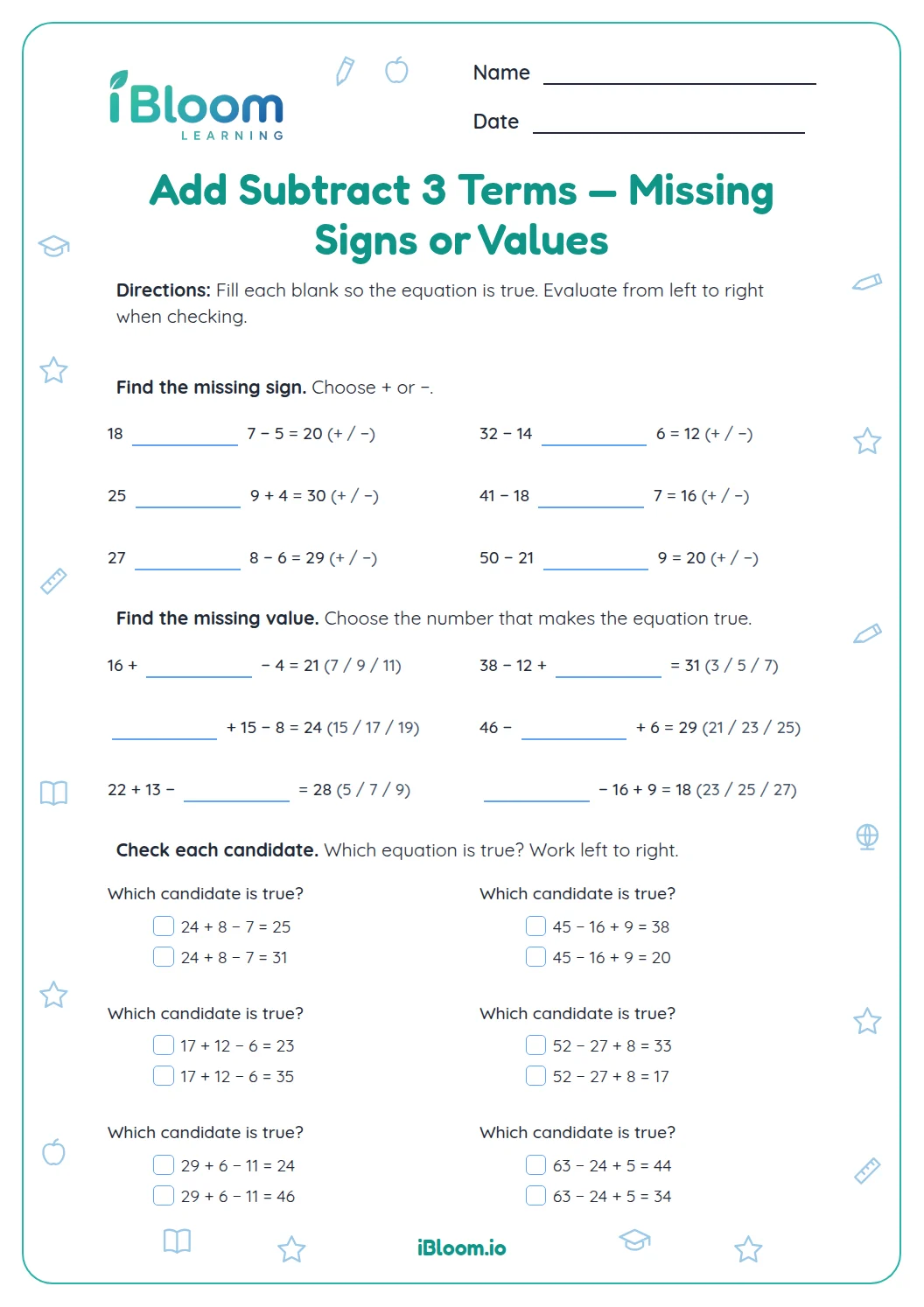
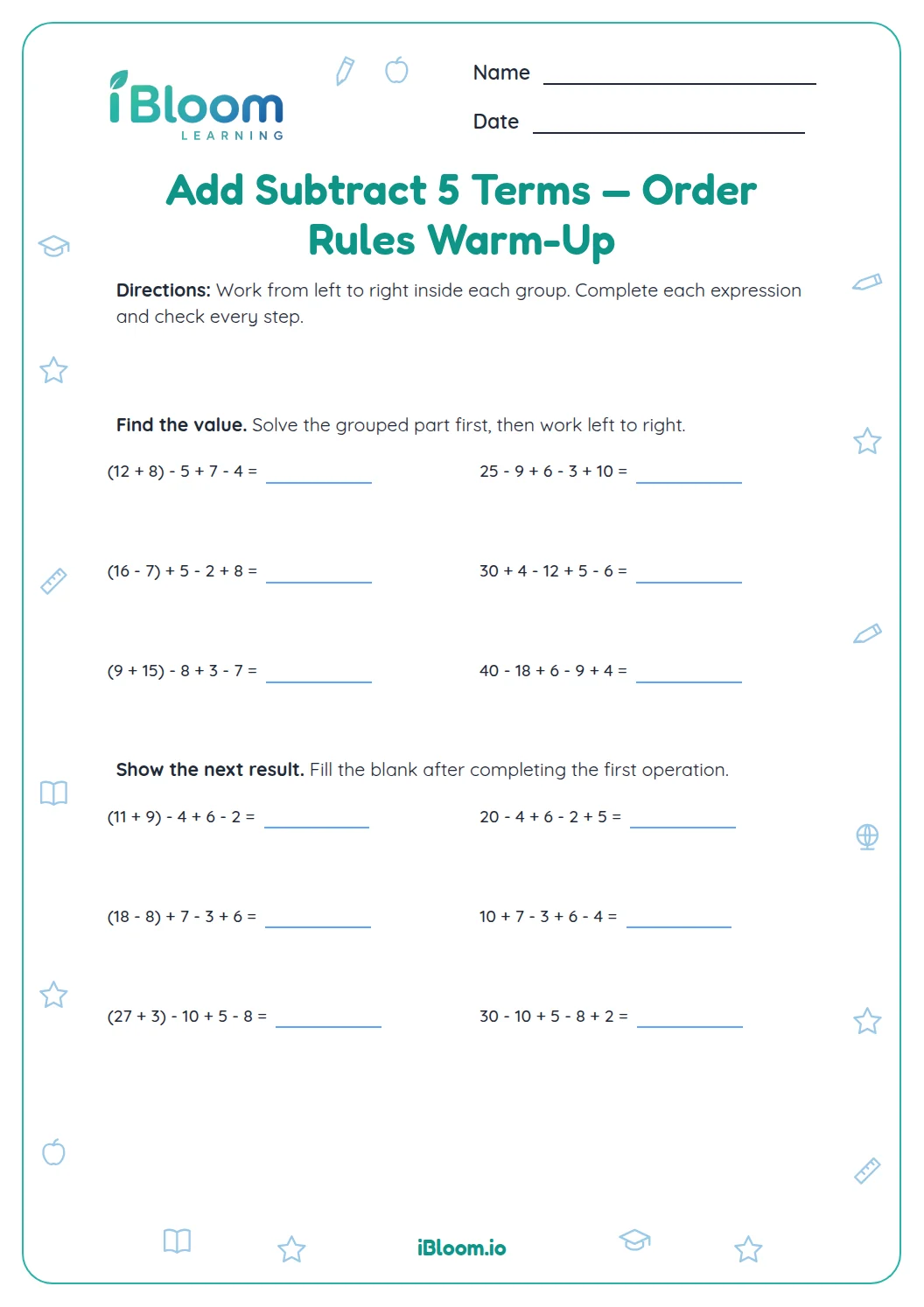
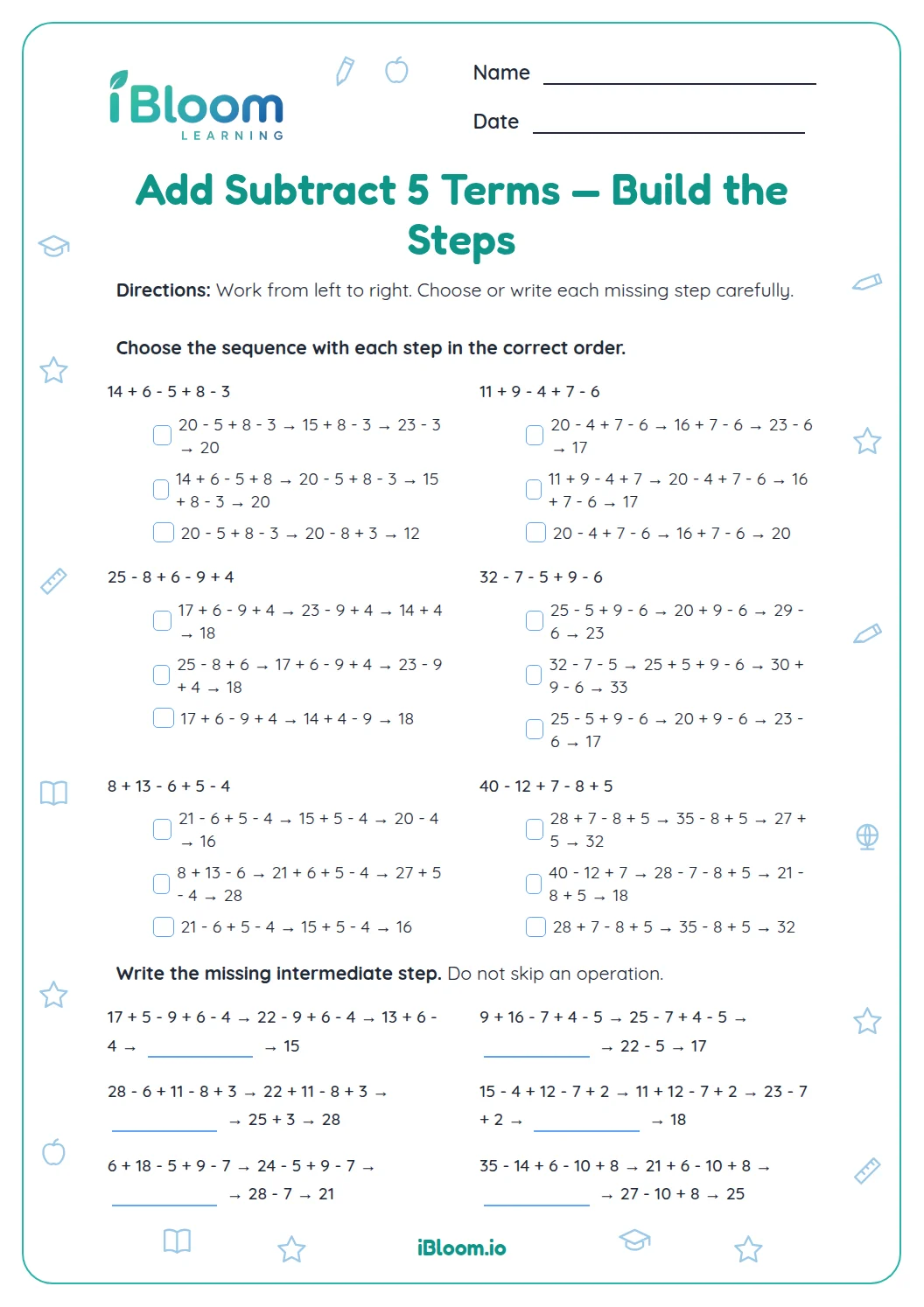
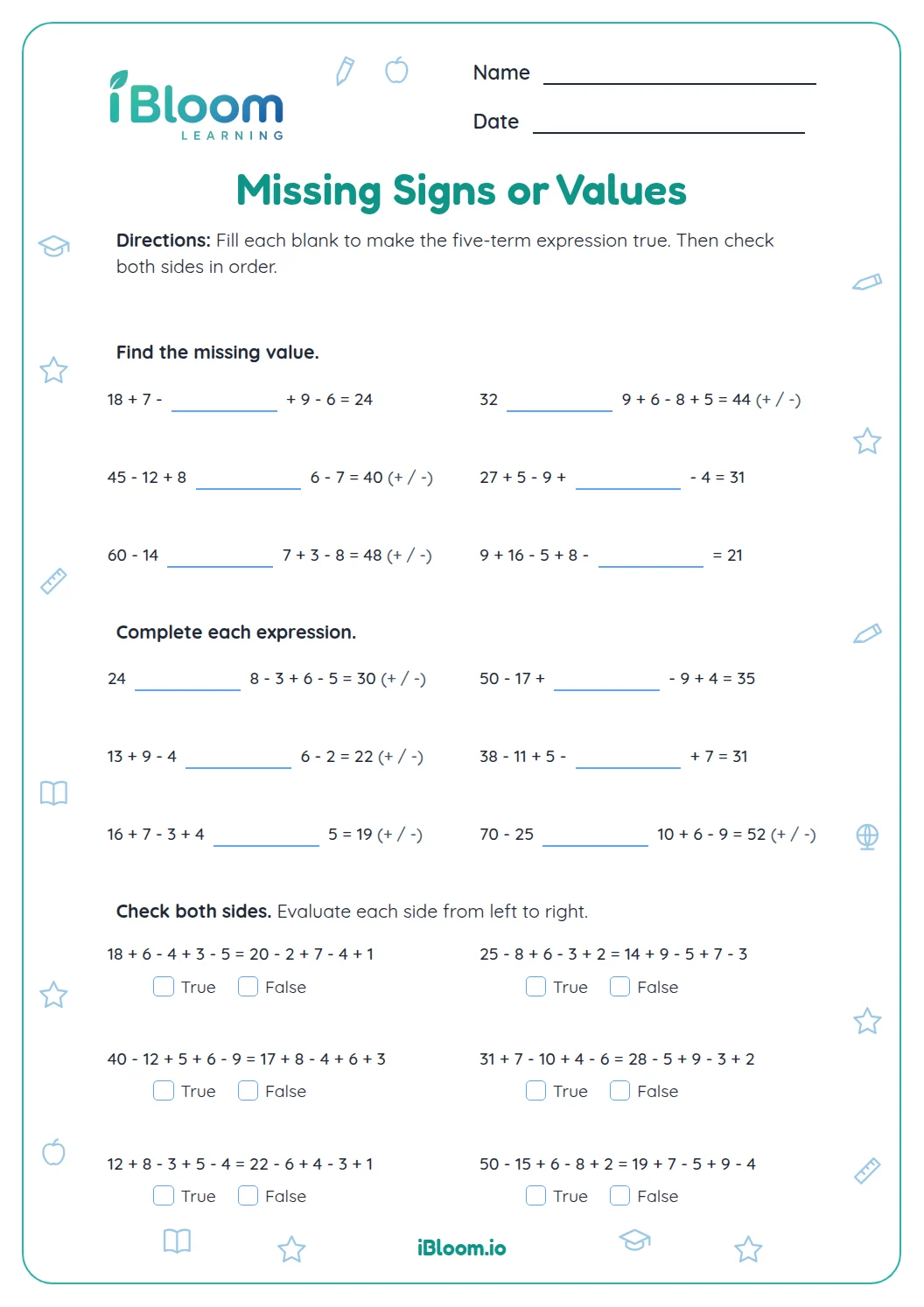
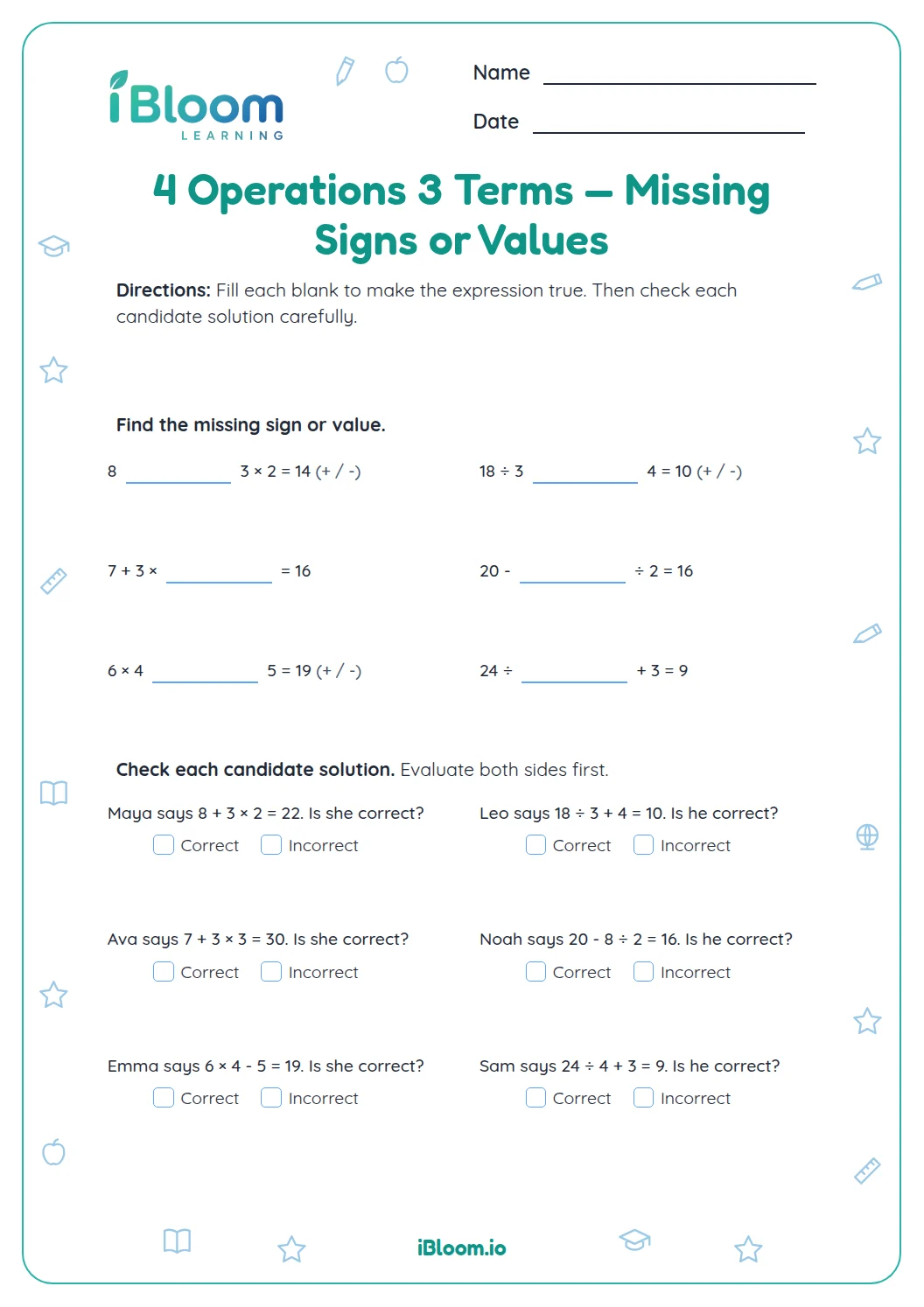
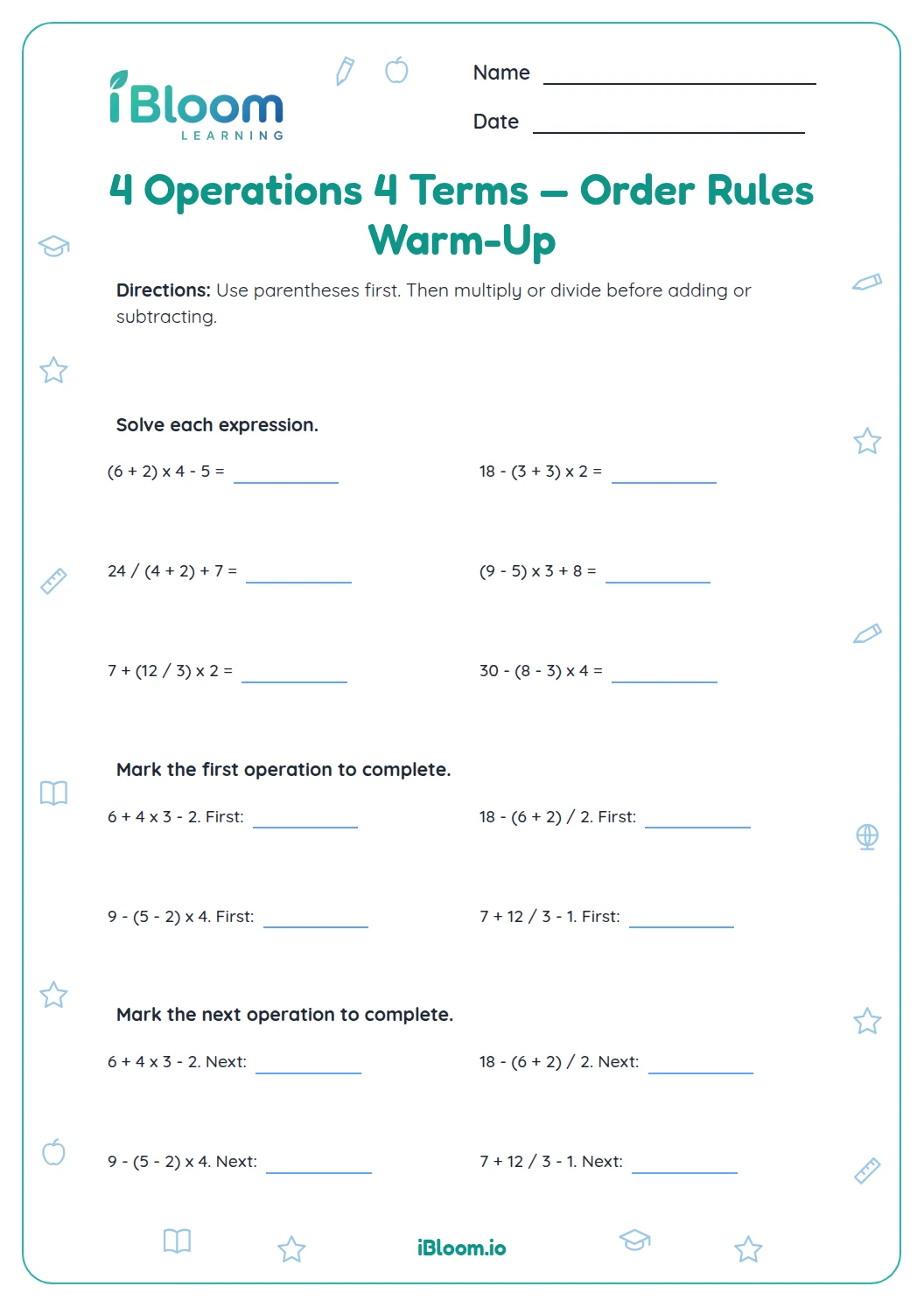
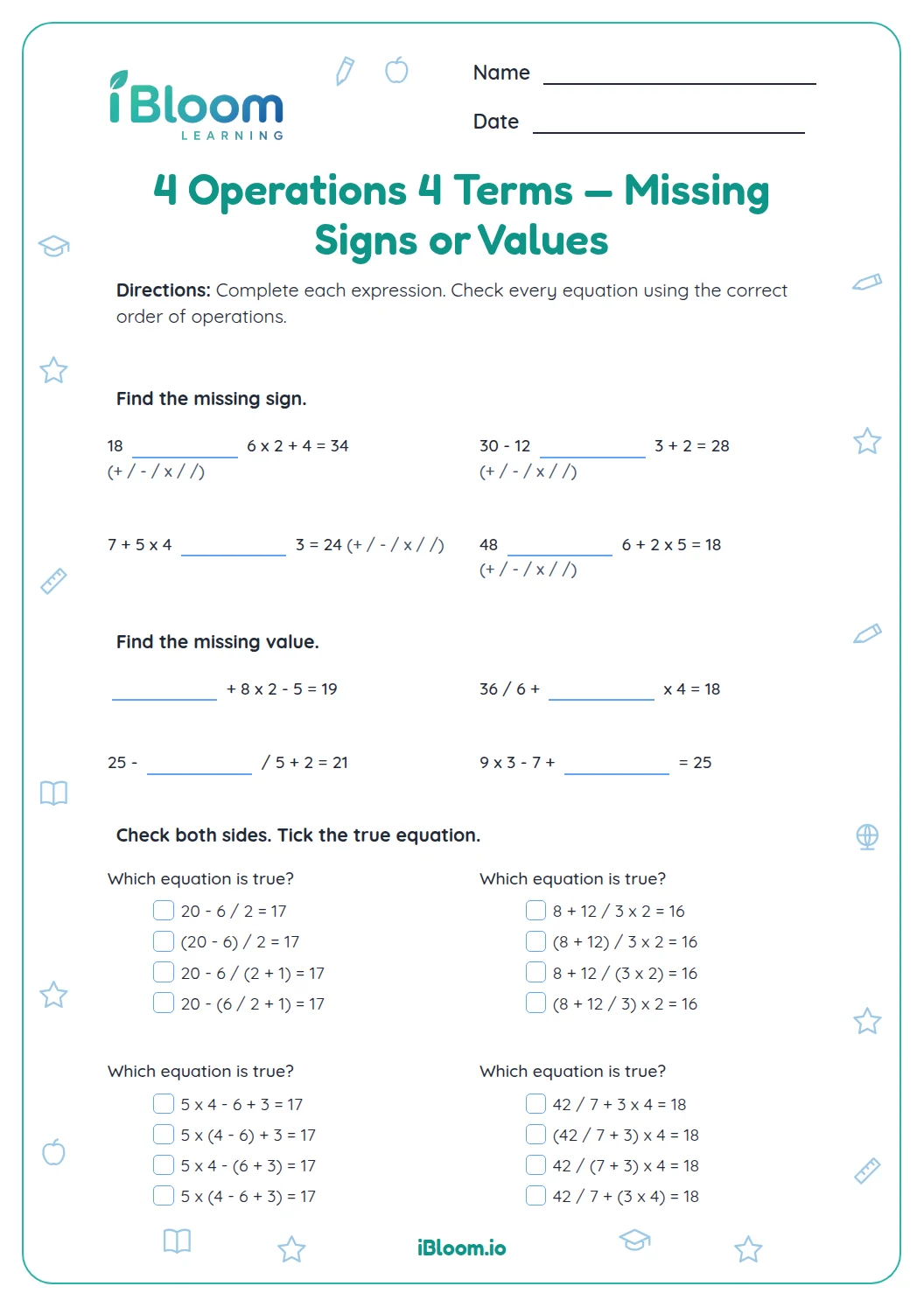
This printable gives learners practice checking three-term addition and subtraction expressions. Because addition and subtraction have equal priority, calculate from left to right, then compare the result with each learner’s claim. The page has eight error-analysis questions and six calculations to repair, with a separate two-page answer key.
Why do these expressions use left-to-right steps?
Addition and subtraction have equal priority, so calculate in the order they appear. In Question 1, 38 − 15 + 7 becomes 23 + 7, which equals 30.
How can you spot the first error?
Recalculate one operation at a time and compare each intermediate value with the learner’s work. In Question 8, 81 − 24 gives 57, then subtracting 17 gives 40, not 74.
How do you repair a calculation?
Ignore the incorrect result, keep the original signs, and evaluate from left to right. In the first calculation in Part C, 63 + 27 − 18 becomes 90 − 18, or 72.
How to use the worksheet
- 1Read the expression and both signs.
- 2Calculate the first operation from the left.
- 3Use that result for the next operation.
- 4Compare the result with the learner’s claim or choice.
- 5Finish the last six expressions and check them with the key.
Check for these slips
The mistake
Combining the last two numbers first.
The fix
Addition and subtraction have equal priority; follow the expression left to right.
The mistake
Changing a sign while copying.
The fix
Keep the original signs visible as you write each step.
The mistake
Accepting a plausible result without checking.
The fix
Recalculate both steps and compare the intermediate total, not only the final answer.
What to practice next
Make more practice
Questions parents and teachers ask
What does the error-analysis page ask learners to do?
Learners check claims about three-term addition and subtraction, choose a correct value or rule, and then evaluate six more expressions. It focuses on recalculating carefully from left to right. Each answer can be checked against the original signs. The original operation signs stay in place.
Why do these expressions use left-to-right steps?
Addition and subtraction have equal priority in these expressions, so evaluate the operations in the order they appear. In 38 − 15 + 7, subtract 15 first to get 23, then add 7 to get 30; do not combine 15 and 7 first.
Are learners asked to correct mistakes?
Yes. The first eight items show a claim, a calculation, or a rule to check. The final six provide expressions to recalculate so learners can apply the same check independently. The key includes a correction for every item. No time limit is needed.
How can a learner check a value?
Recompute one operation at a time and write the changing total. For 81 − 24 − 17, first get 57, then subtract 17 to get 40. Compare both steps with the claim to find where the work went off track.
Is there a separate answer key?
Yes. The key marks the correct choice for each error-analysis question and lists the values of the final expressions. Use it after the learner has shown or discussed the calculation, so the steps can be checked along with the answer.