

About this worksheet
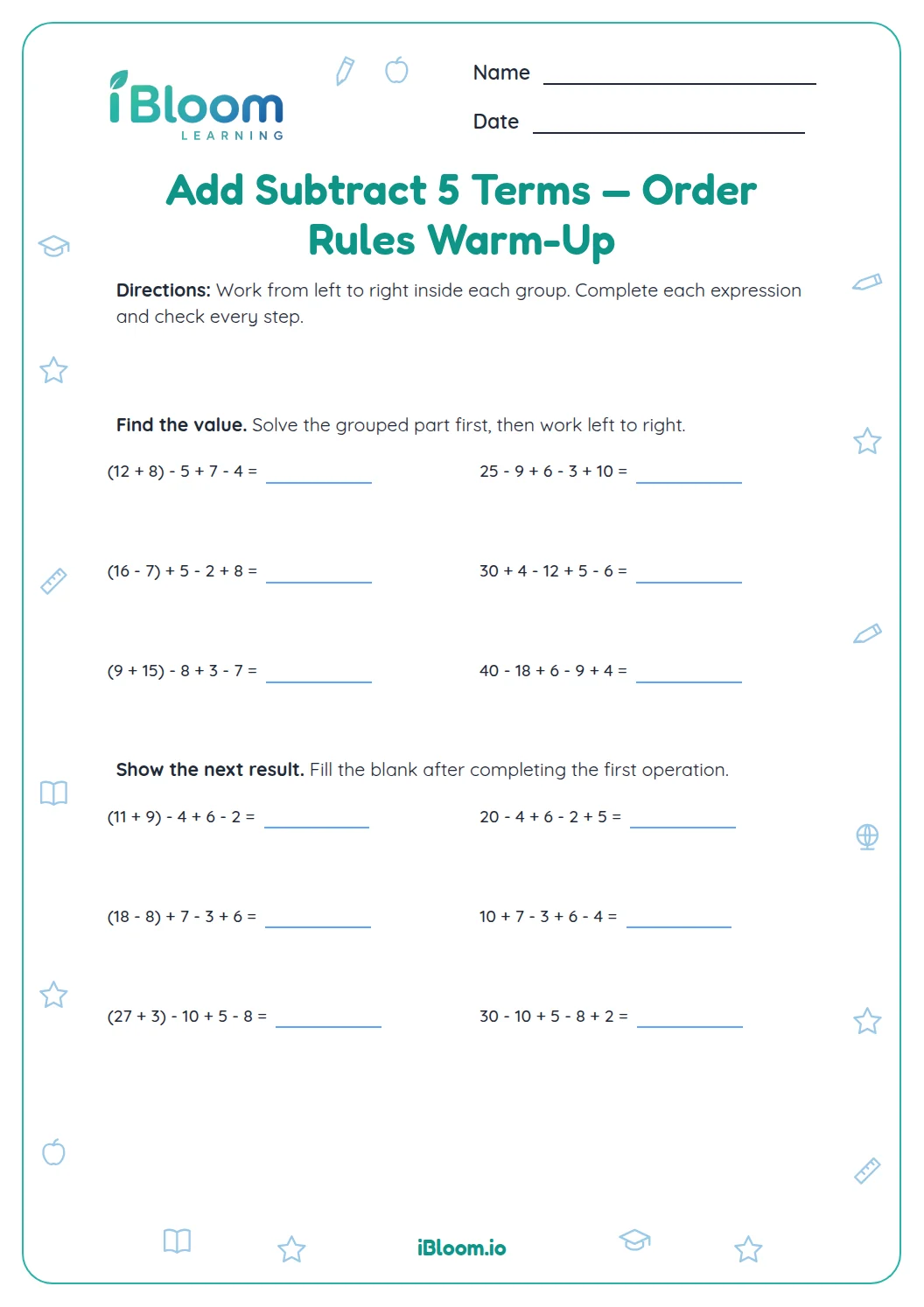
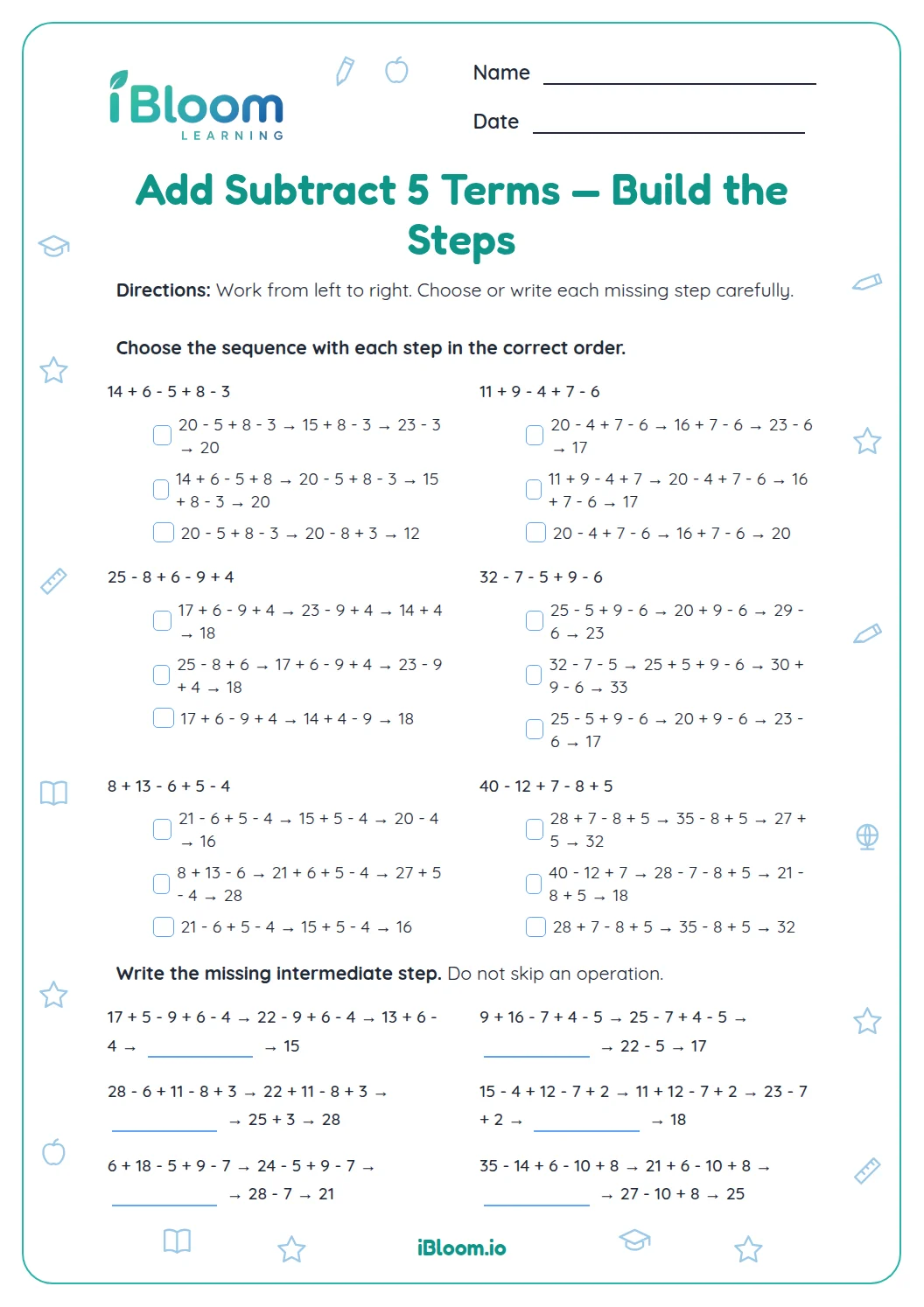
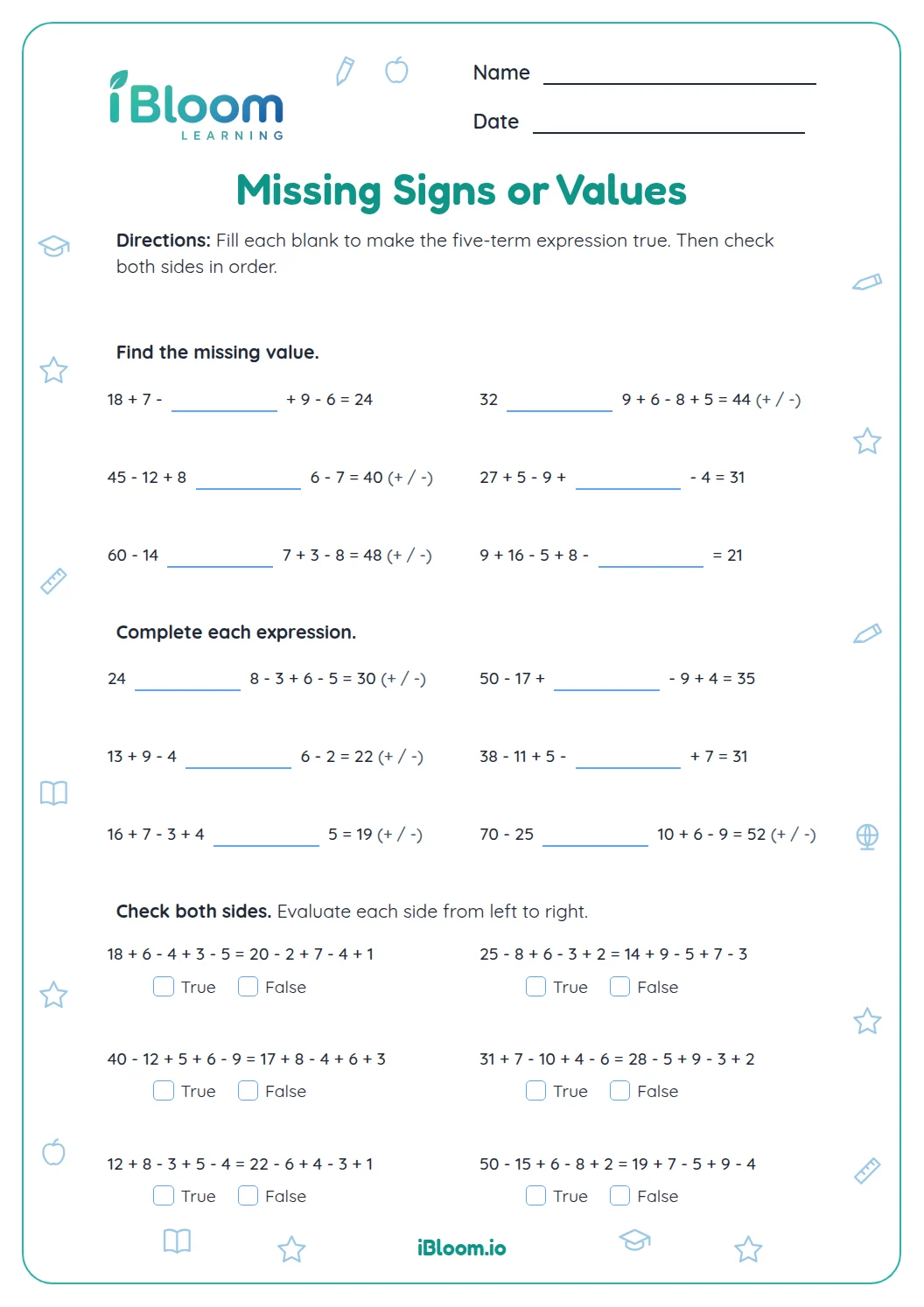
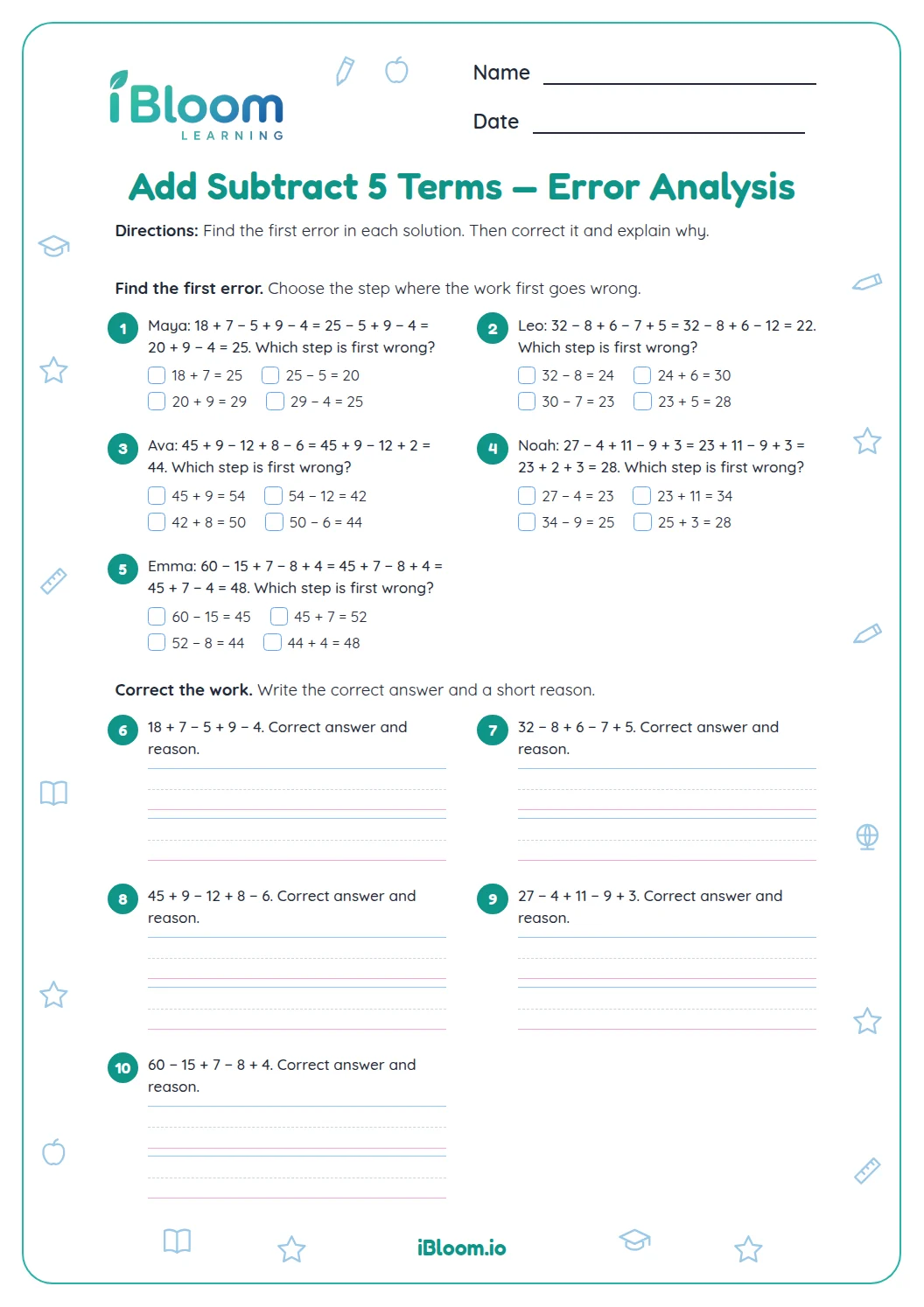
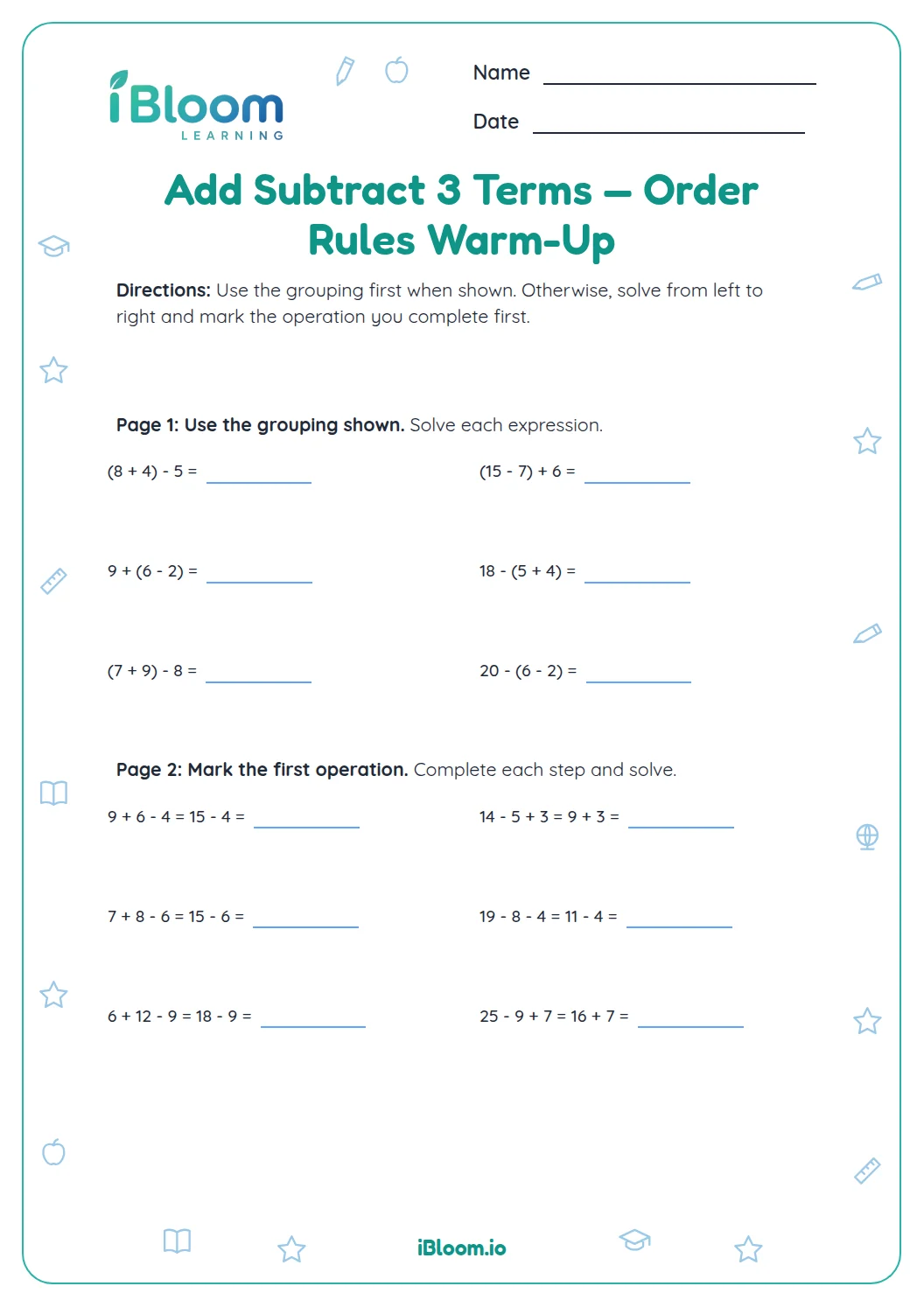
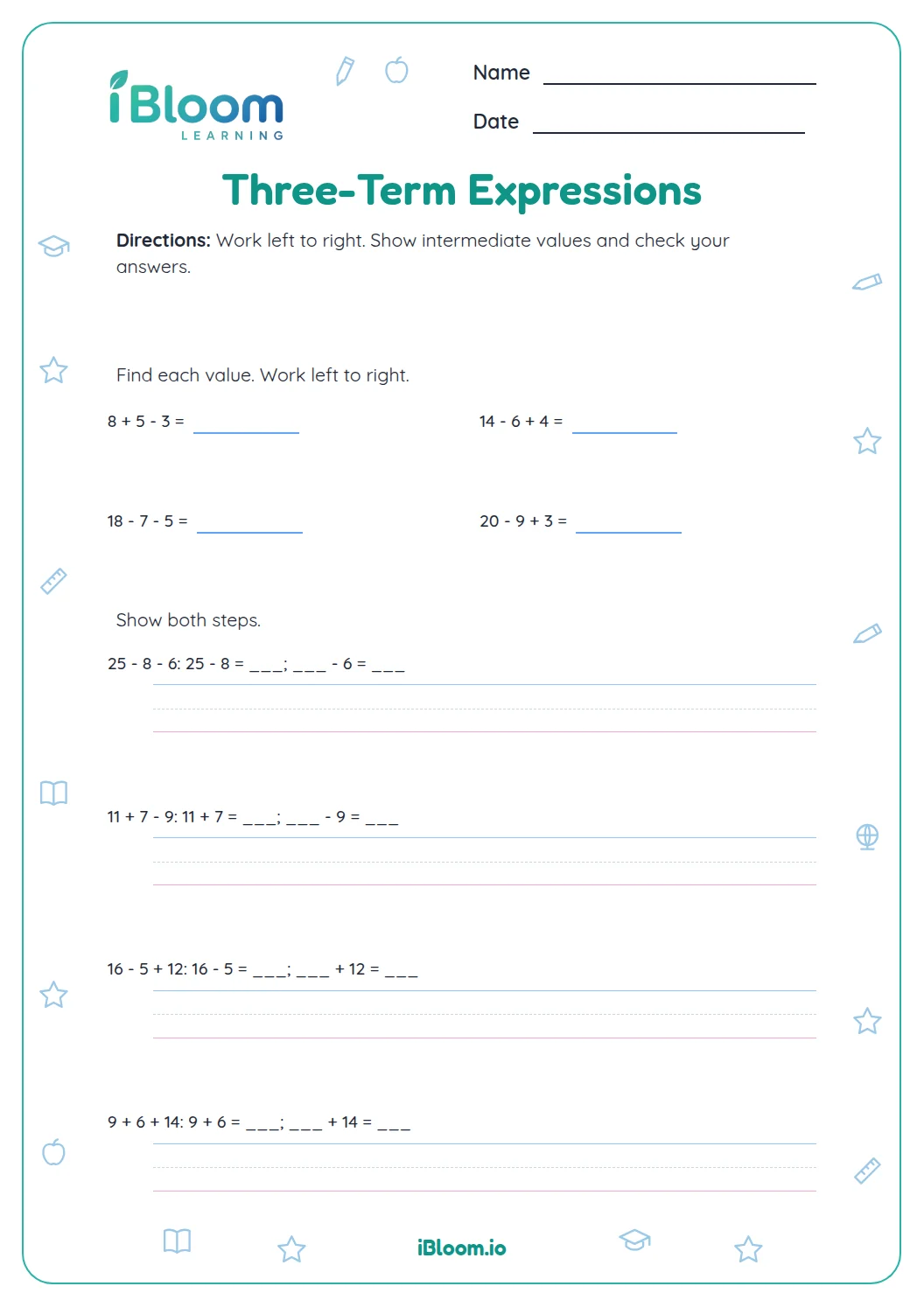
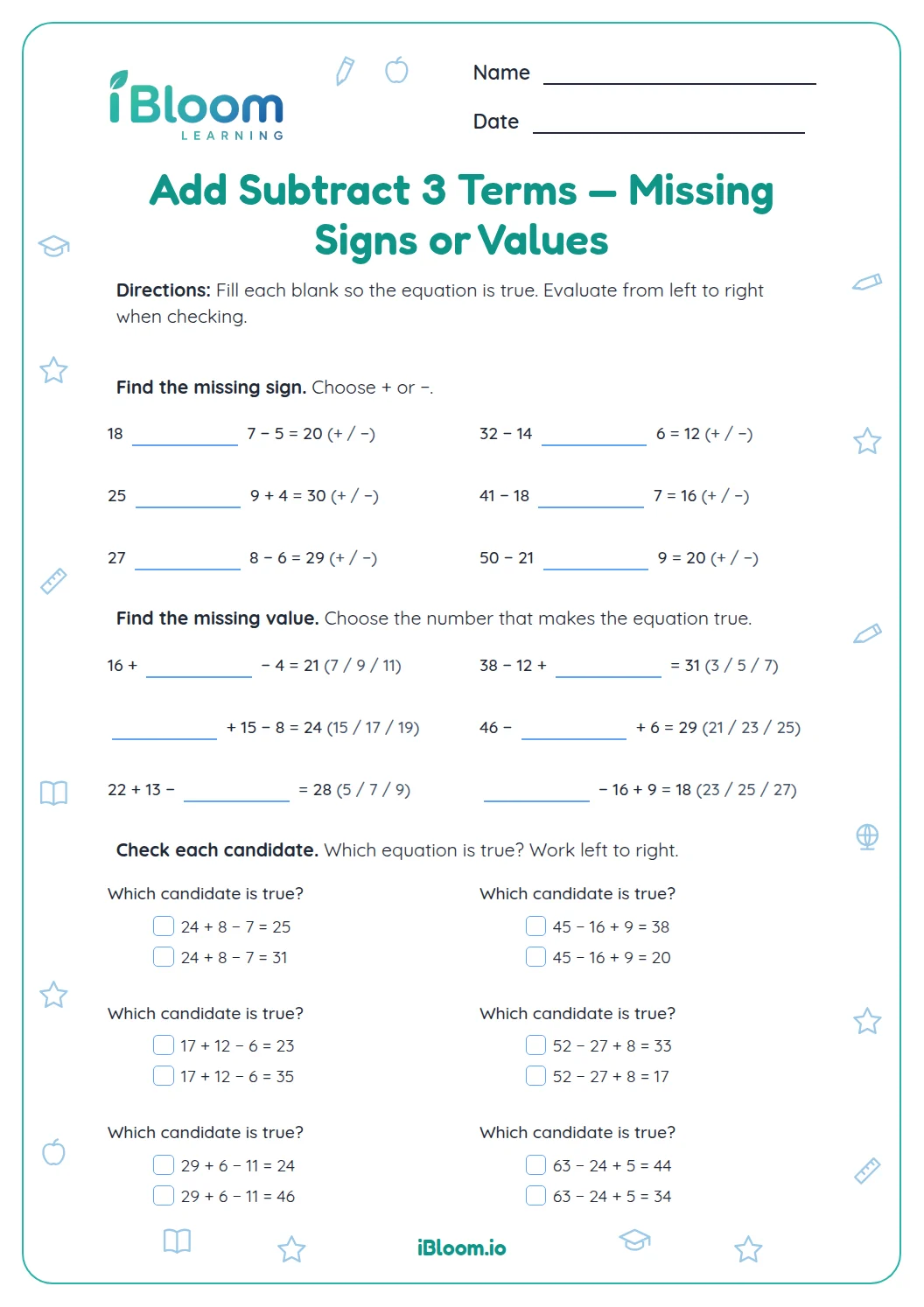
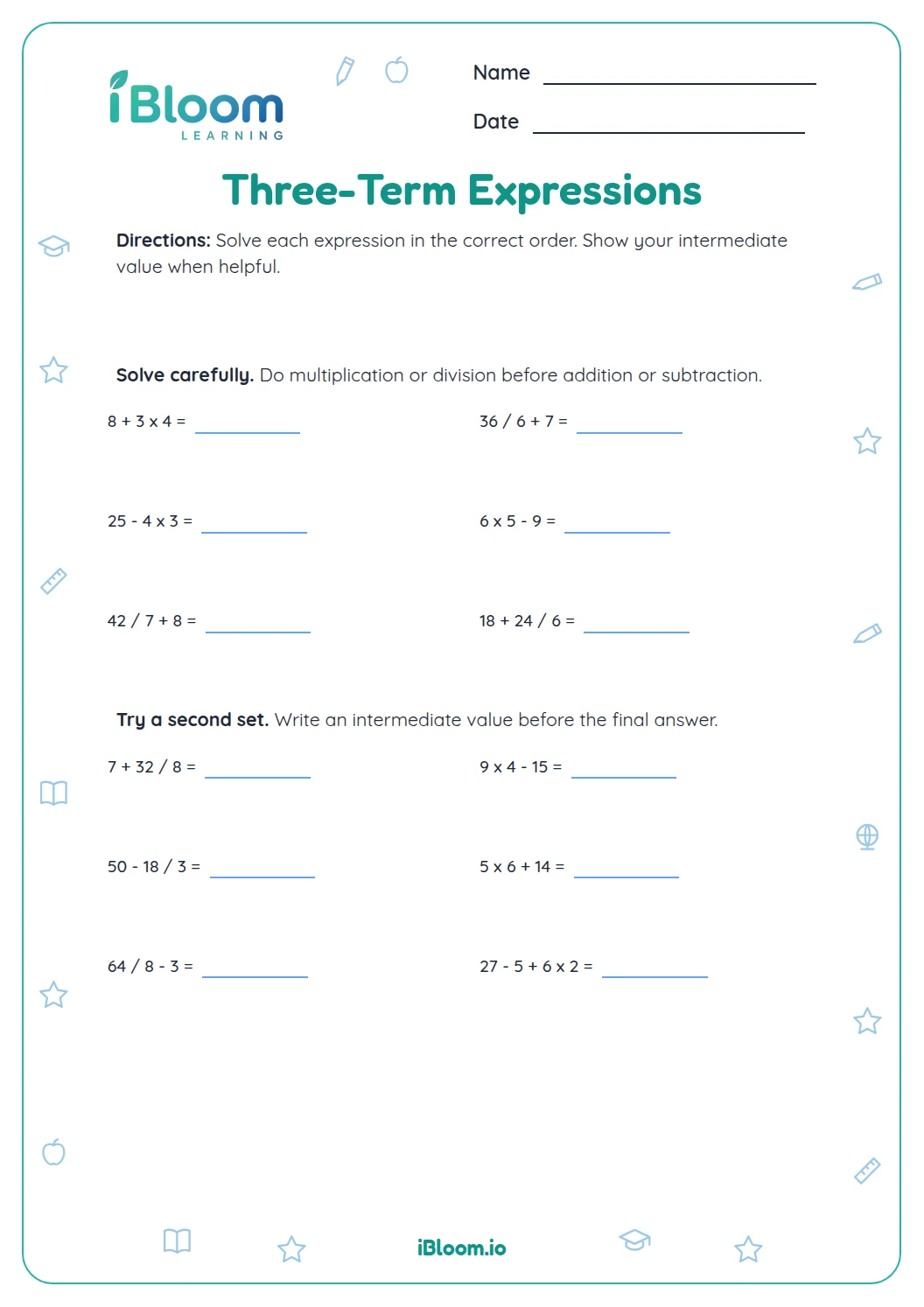
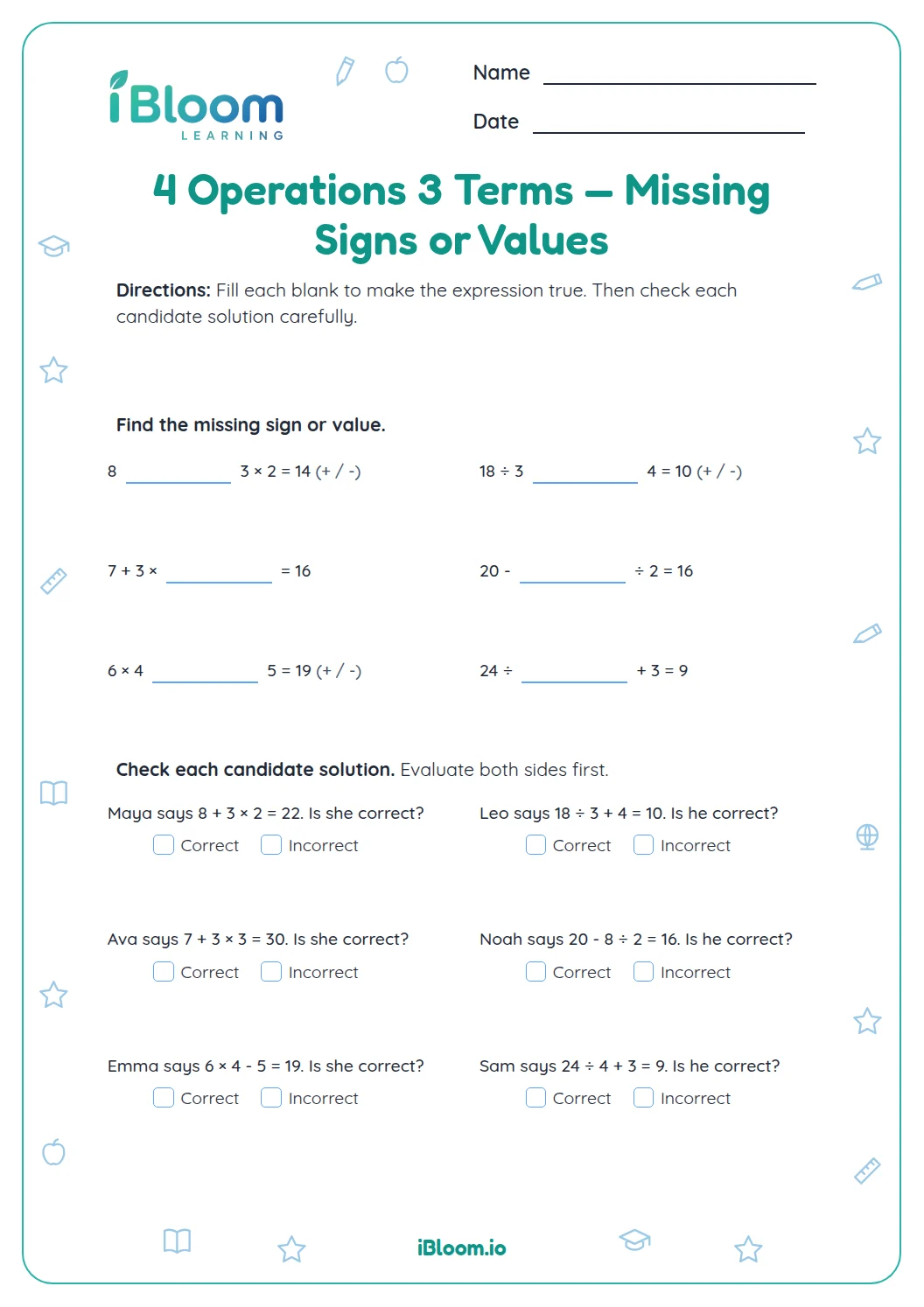
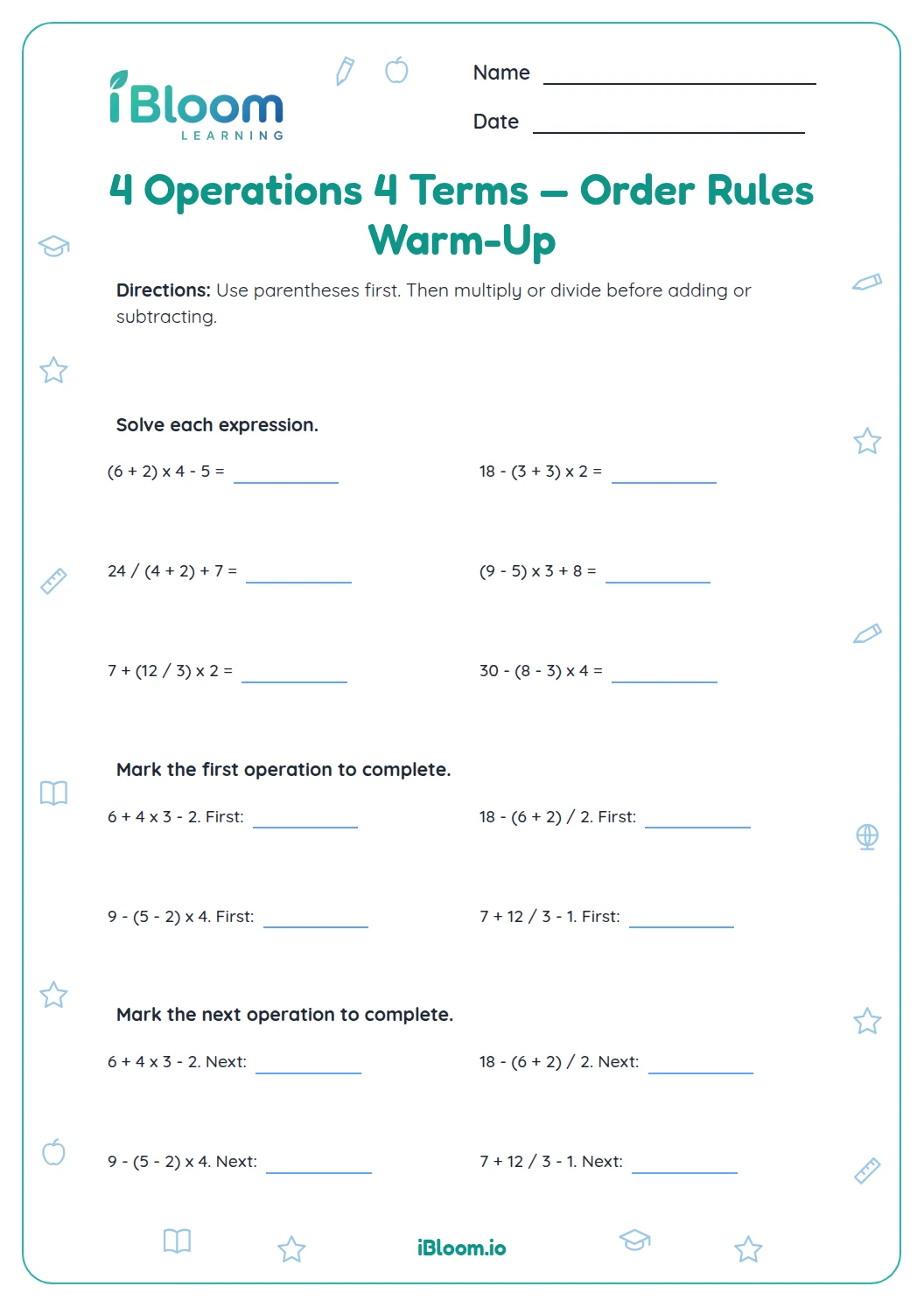
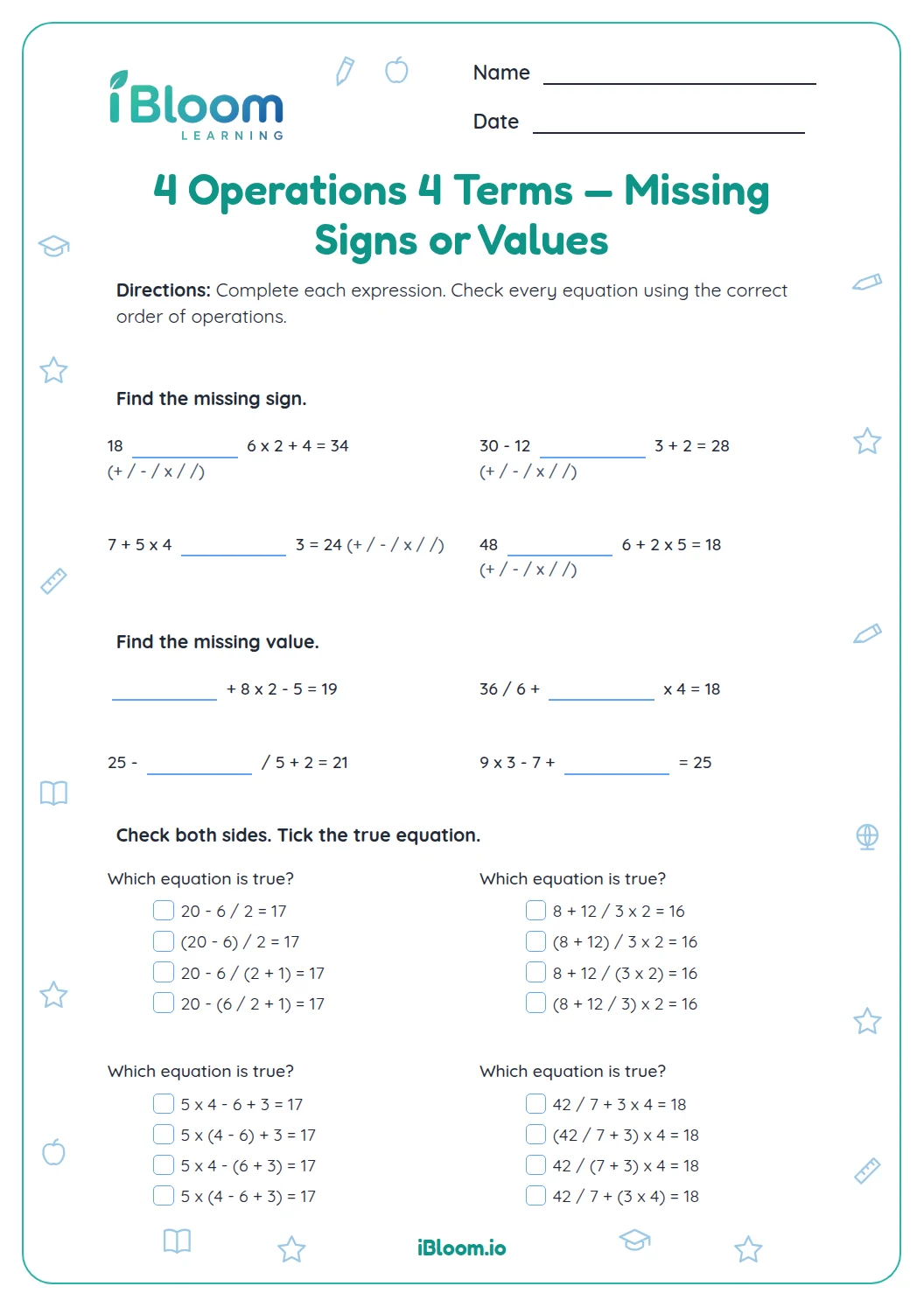
This Grade 5 worksheet gives students 15 three-term addition and subtraction expressions. They evaluate from left to right, record first steps, and solve four expressions with parentheses; the separate answer key lists the correct values.
Aligned to 5.OA.A.1
How do you evaluate addition and subtraction together?
Addition and subtraction have equal priority, so work from left to right unless parentheses group a calculation. For 18 − 6 + 4, subtract first, then add.
Parts A and B practice that order; Part C adds parentheses so students solve the grouped sum first.
- 118 − 6 + 4
- 218 − 6 = 12
- 312 + 4 = 16
Why write the intermediate value?
Recording the first result makes the order visible and helps catch a tempting but incorrect regrouping. In 20 − 7 + 2, the first step is 20 − 7, not 7 + 2.
When should students solve parentheses first?
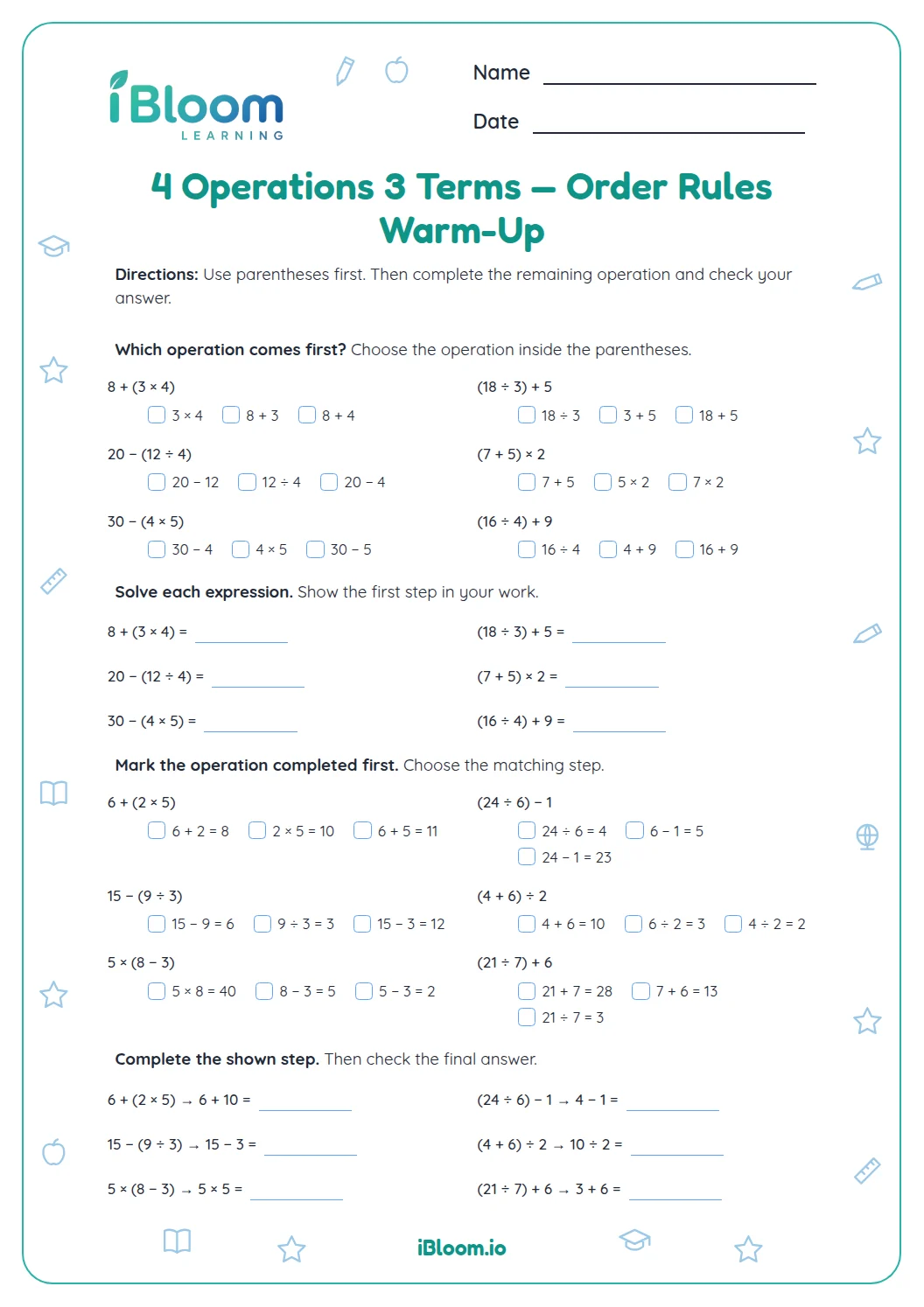
Parentheses group part of an expression to be evaluated first. In the final part, students evaluate three expressions with parentheses and then complete the remaining subtraction.
How to use this worksheet
- 1Read the expression from left to right.
- 2Compute the first two terms.
- 3Use that result with the final term.
- 4Check that each operation sign was copied correctly.
Common mistakes and quick fixes
The mistake
Adding all terms before subtracting.
The fix
Follow the signs in the order they appear.
The mistake
Subtracting the smaller number from the larger one automatically.
The fix
Keep the operation sign: 7 − 12 is negative if such a case appears.
The mistake
Skipping the intermediate result.
The fix
Write the first two terms’ value before completing the expression.
Common Core alignment
This worksheet gives focused practice with the following Common Core skills.
Evaluate addition and subtraction expressions in the stated order.
On this sheet: Evaluate addition and subtraction expressions in the stated order.
Show the official wordingHide the official wording
Use parentheses, brackets, or braces in numerical expressions, and evaluate expressions with these symbols.
What to practice next
Make more practice
Further reading
Questions parents and teachers ask
When should students work from left to right?
When an expression has addition and subtraction without parentheses, complete the operations in the order they appear. For 18 − 6 + 4, subtract 6 from 18 first, then add 4. The first two worksheet parts practice this sequence. This helps when checking the examples and answers on the page.
What changes when parentheses appear?
Evaluate the operation inside parentheses first, then use that result in the rest of the expression. In 24 − (9 + 3), add 9 and 3 before subtracting that sum from 24. Part C gives four examples with parentheses. This helps when checking the examples and answers on the page.
Why not always subtract before adding?
Addition and subtraction have the same priority. The order in the expression decides what to do first, unless parentheses group a different calculation. Following the written order prevents a student from changing the value by rearranging the operations. This helps when checking the examples and answers on the page.
How many problems are on the sheet?
There are 19 questions in four parts: five expressions, four first-step checks, two mixed expressions, and eight more expressions including parentheses. The separate answer key lists each final value and each requested intermediate answer for easy checking. together. This helps when checking the examples and answers on the page.
What is a good way to check an answer?
Write one intermediate result at a time and keep the remaining operation visible. Then substitute your result back into the expression and check the arithmetic. For problems with parentheses, mark that sum first so it is not skipped. This helps when checking the examples and answers on the page.