
About this worksheet
Use place value and careful subtraction to compare attendance, distances, collections and other quantities. Students choose the larger amount, calculate how far apart two amounts are, then explain a comparison in context.
Aligned to 4.NBT.A.2
What is on this worksheet?
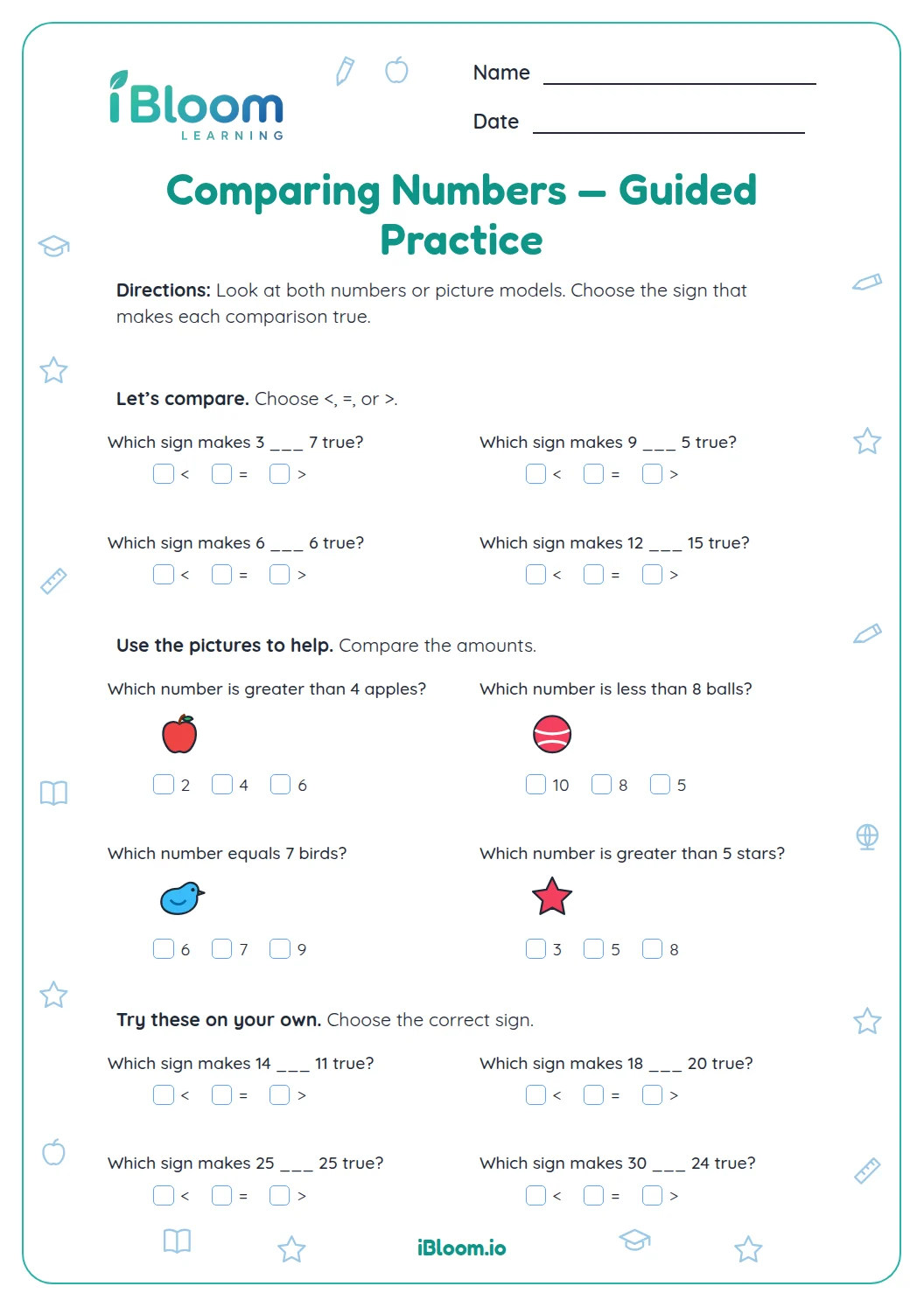
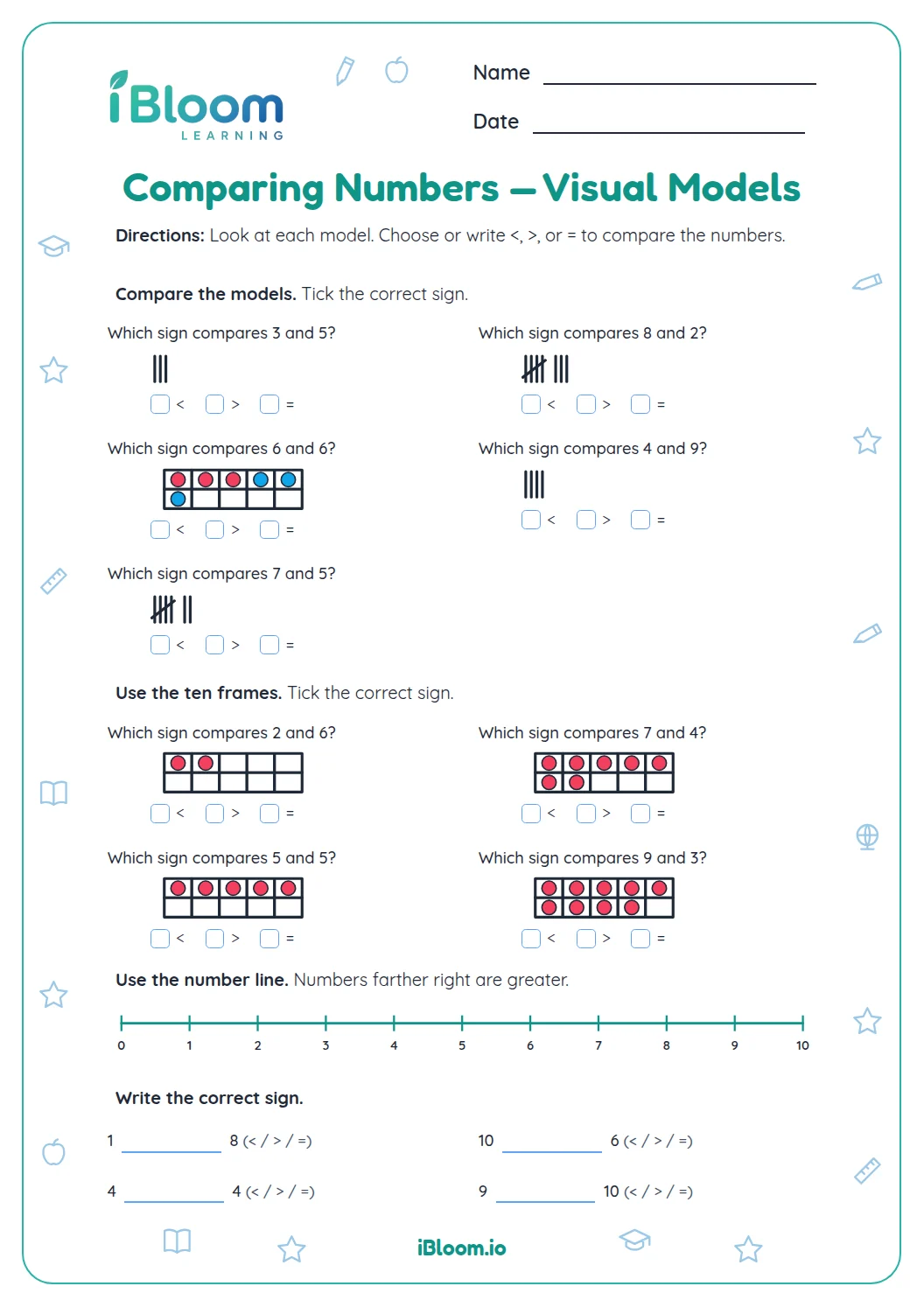
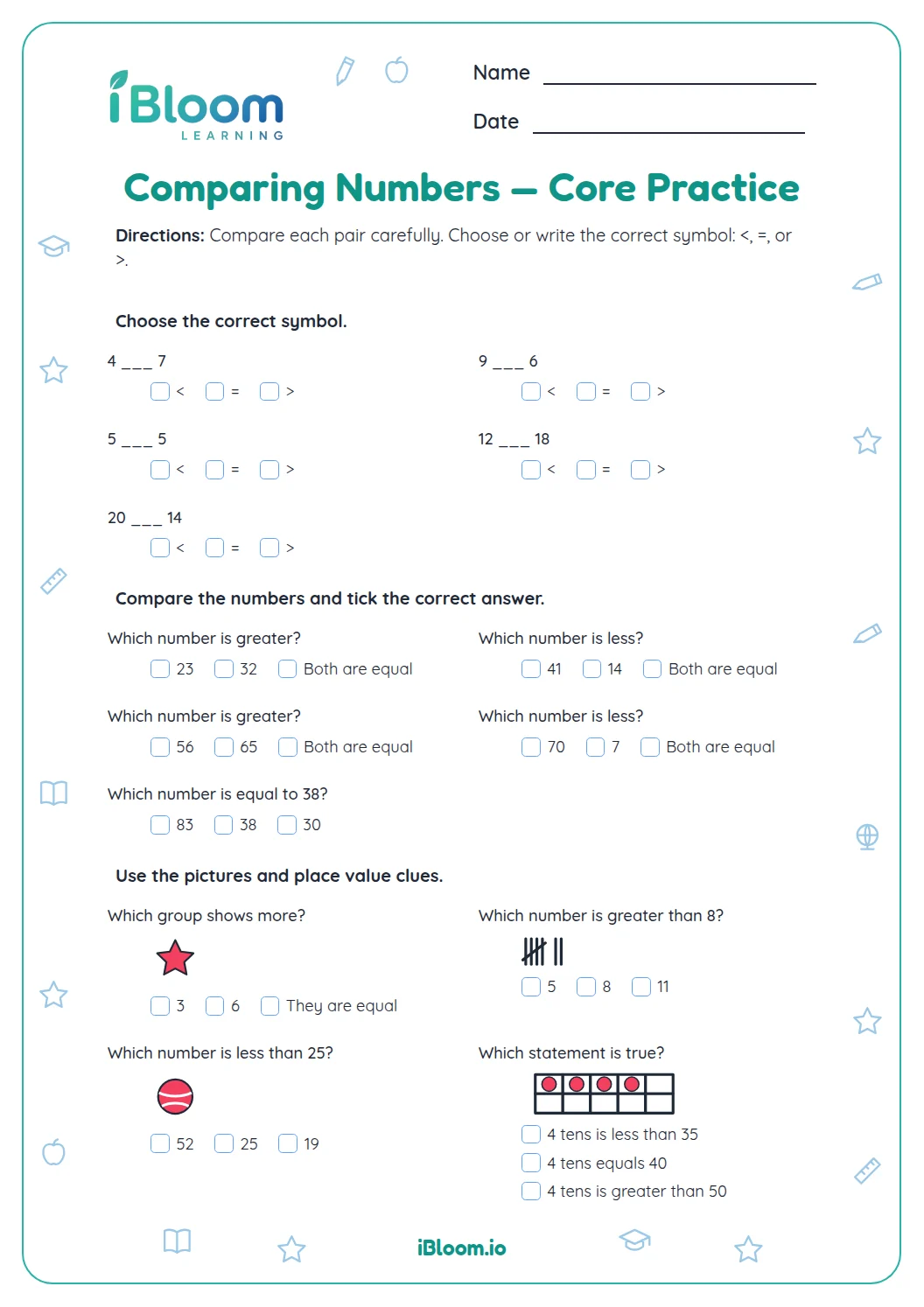
Part A uses counts and measurements so students can identify the greater value.
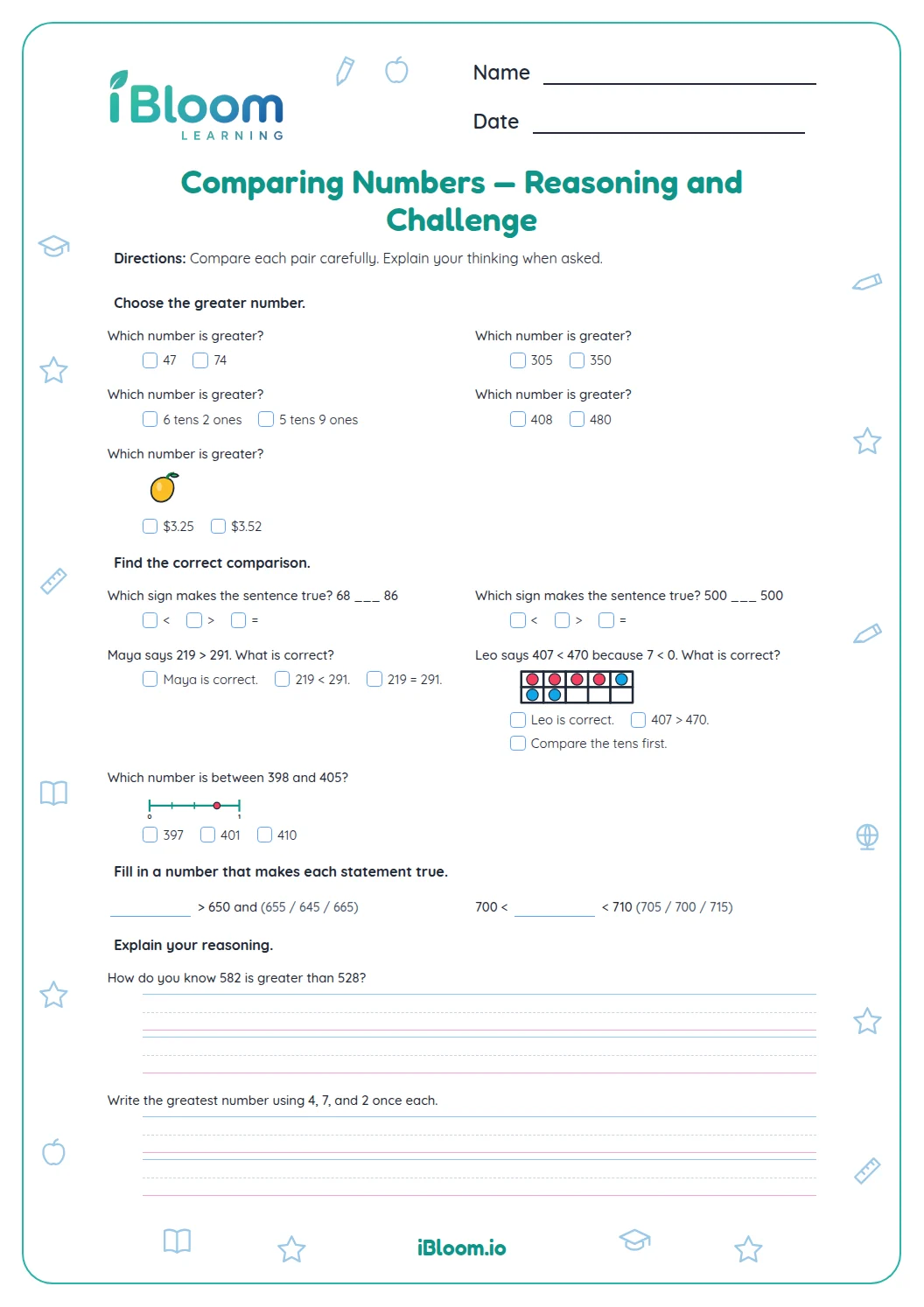
Parts B and C move from subtraction to explaining whether a comparison makes sense.
- Part A: build accuracy with the first set of questions
- Later parts add explanation and more demanding examples
- Answer key included
How should students approach the harder questions?
Compare the greatest place first. If the values differ in a later place, that place decides which number is greater.
- 18,701 < 8,710 because the thousands and hundreds match, but 0 tens is less than 1 ten.
- 2The context names apples, but the comparison itself comes from place value.
Why practice this skill?
Comparing quantities helps students interpret data and check claims in everyday situations.
How to use this worksheet
- 1Read the direction under each part before beginning.
- 2Work one question at a time and show calculations when a problem asks for them.
- 3Use the answer key to discuss any answer that was difficult to explain.
- 4Ask the student to make one new example using the same skill.
Common mistakes and quick fixes
The mistake
Comparing digits from left to right in the wrong order.
The fix
Start at the greatest place value. Stop at the first place where digits differ.
The mistake
Subtracting the smaller place value from the larger one without considering context.
The fix
Write the comparison sentence first, then subtract to find how far apart the amounts are.
Curriculum alignment
This practice targets the stated Common Core skill for the grade.
Read, write and compare multi-digit whole numbers.
On this sheet: Questions compare whole numbers by place value and record comparisons with symbols.
Show the official wordingHide the official wording
Read and write multi-digit whole numbers using base-ten numerals, number names, and expanded form; compare two multi-digit numbers based on meanings of the digits in each place, using >, =, and < symbols to record the results of comparisons.
What to practice next
Make more practice
Questions parents and teachers ask
How do I compare numbers with different numbers of digits?
Comparing digits from left to right in the wrong order can reverse a comparison. Start at the greatest place value, compare those digits, and stop at the first place where they differ. Digits farther to the right cannot change the result once a greater place is different.
How do I compare decimal measurements?
Subtracting one amount from the other without checking which is larger can lead to a negative result or the wrong context. First decide which quantity is greater. Then subtract the smaller amount from the larger amount to find the distance between them.
What does “how many more” ask me to do?
When two whole numbers have different numbers of digits, the number with more digits is greater. For example, 1,000 is greater than 999 because it has four digits while 999 has three. This shortcut works for positive whole numbers, not decimals.
Why explain an answer in words?
Line up decimal points so that the same place values match. Compare the whole-number parts first, then tenths, hundredths and later places. You may add zeros at the end of a decimal to make the place-by-place comparison easier without changing its value.