Free printable practice
Belong Not Belong Practice Activities
Class 1 maths worksheets that help children sort pictures and objects by deciding what belongs in a group and what does not.
Free printable worksheet PDFs
Preview every available page, then download the free worksheet PDF for home, homeschool, tutoring, or classroom practice.
Preview the exact activity before downloading it.
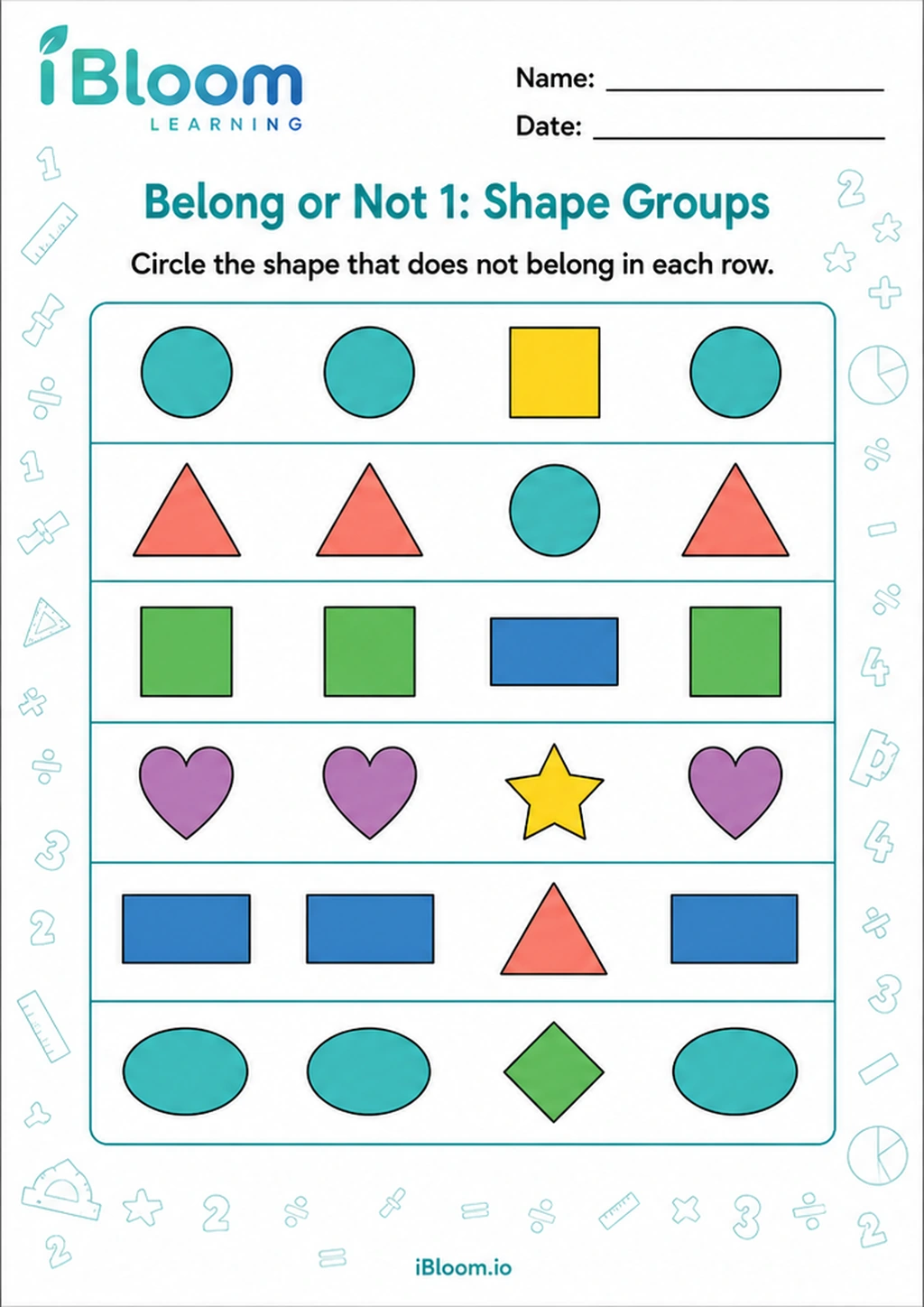 Belong or Not 1: Shape GroupsClass 1 printable practice for Belong and Not Belong.Class 1Free PDF preview
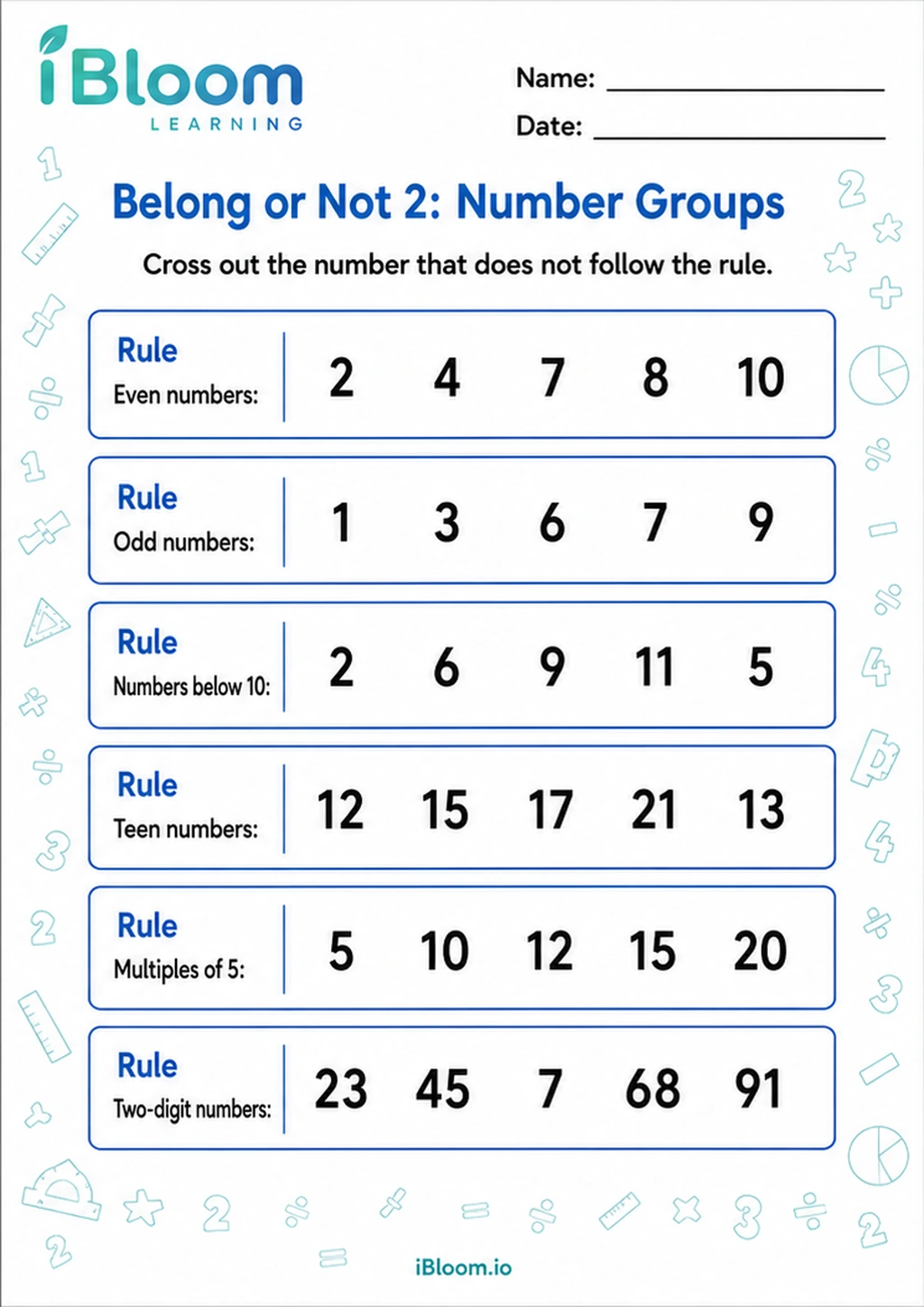 Belong or Not 2: Number GroupsClass 1 printable practice for Belong and Not Belong.Class 1Free PDF preview
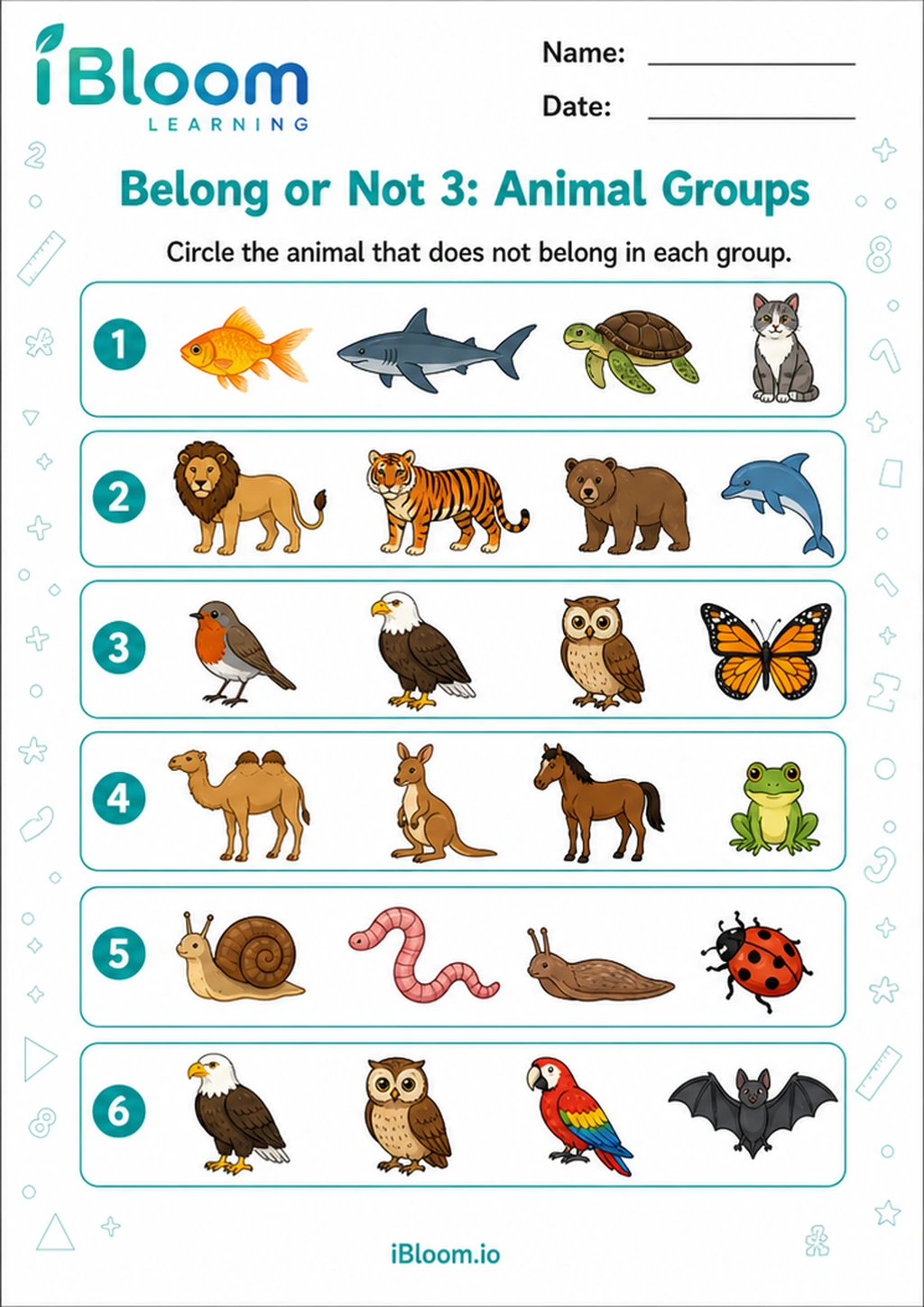 Belong or Not 3: Animal GroupsClass 1 printable practice for Belong and Not Belong.Class 1Free PDF preview
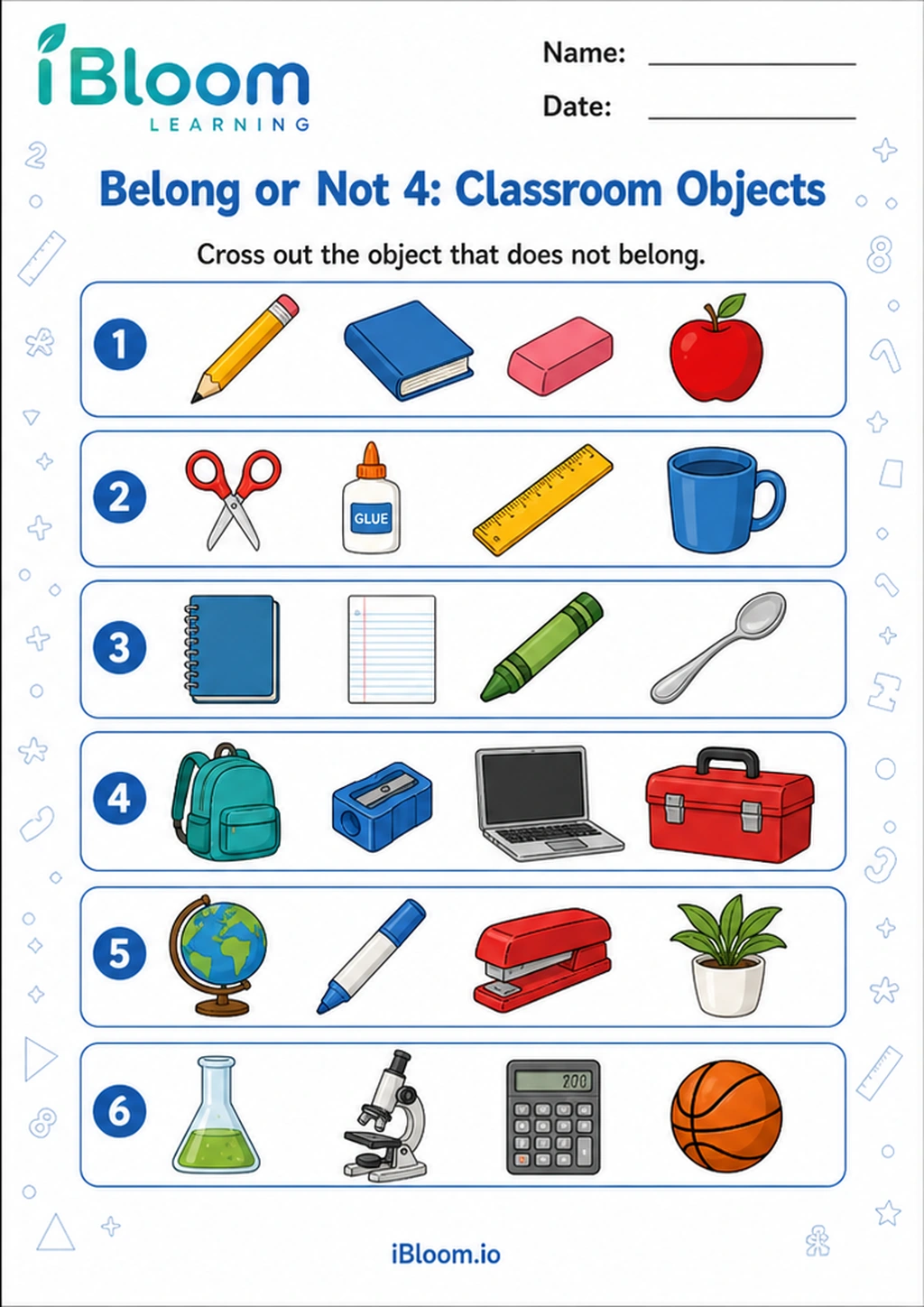 Belong or Not 4: Classroom ObjectsClass 1 printable practice for Belong and Not Belong.Class 1Free PDF preview
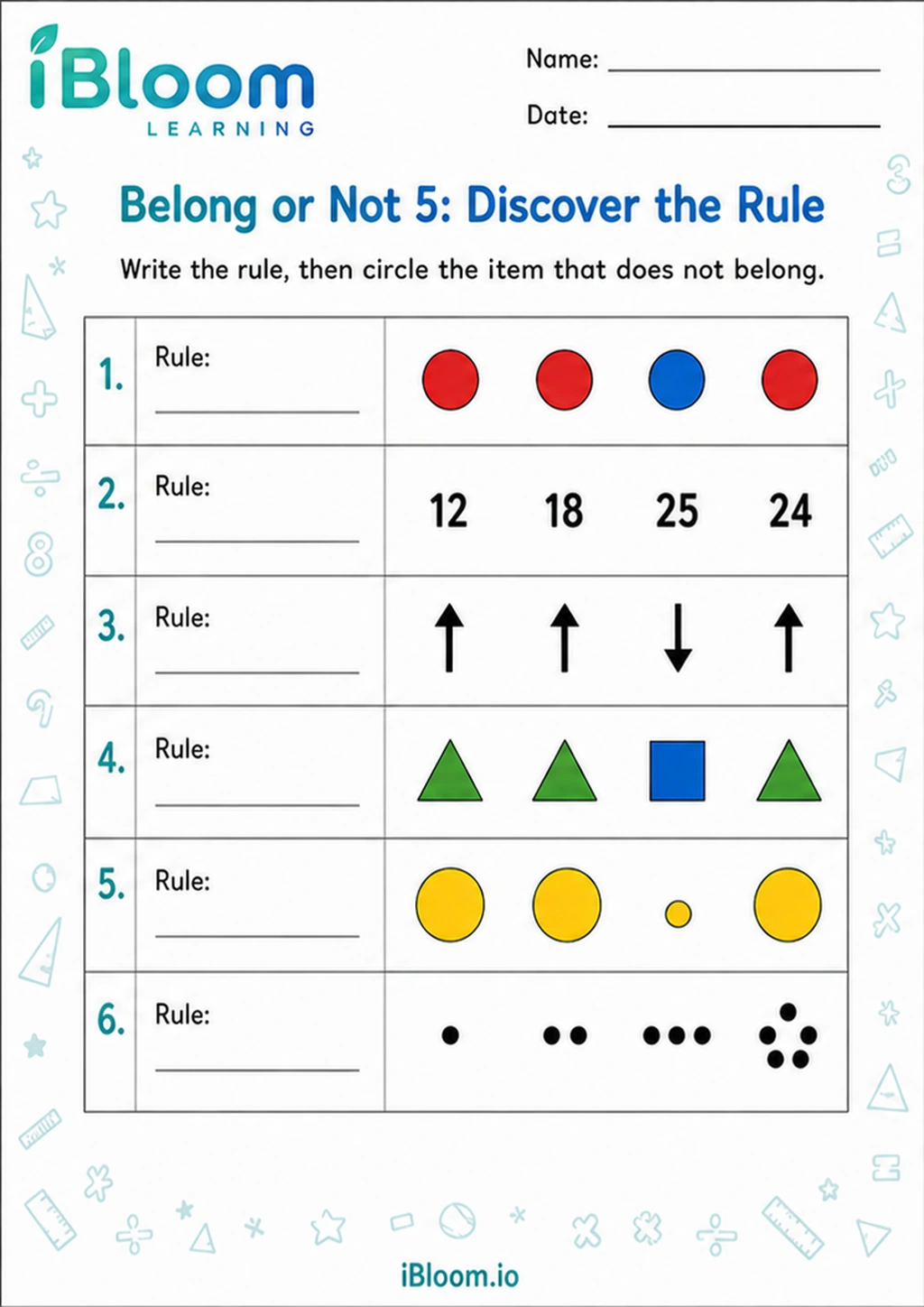 Belong or Not 5: Discover the RuleClass 1 printable practice for Belong and Not Belong.Class 1Free PDF preview
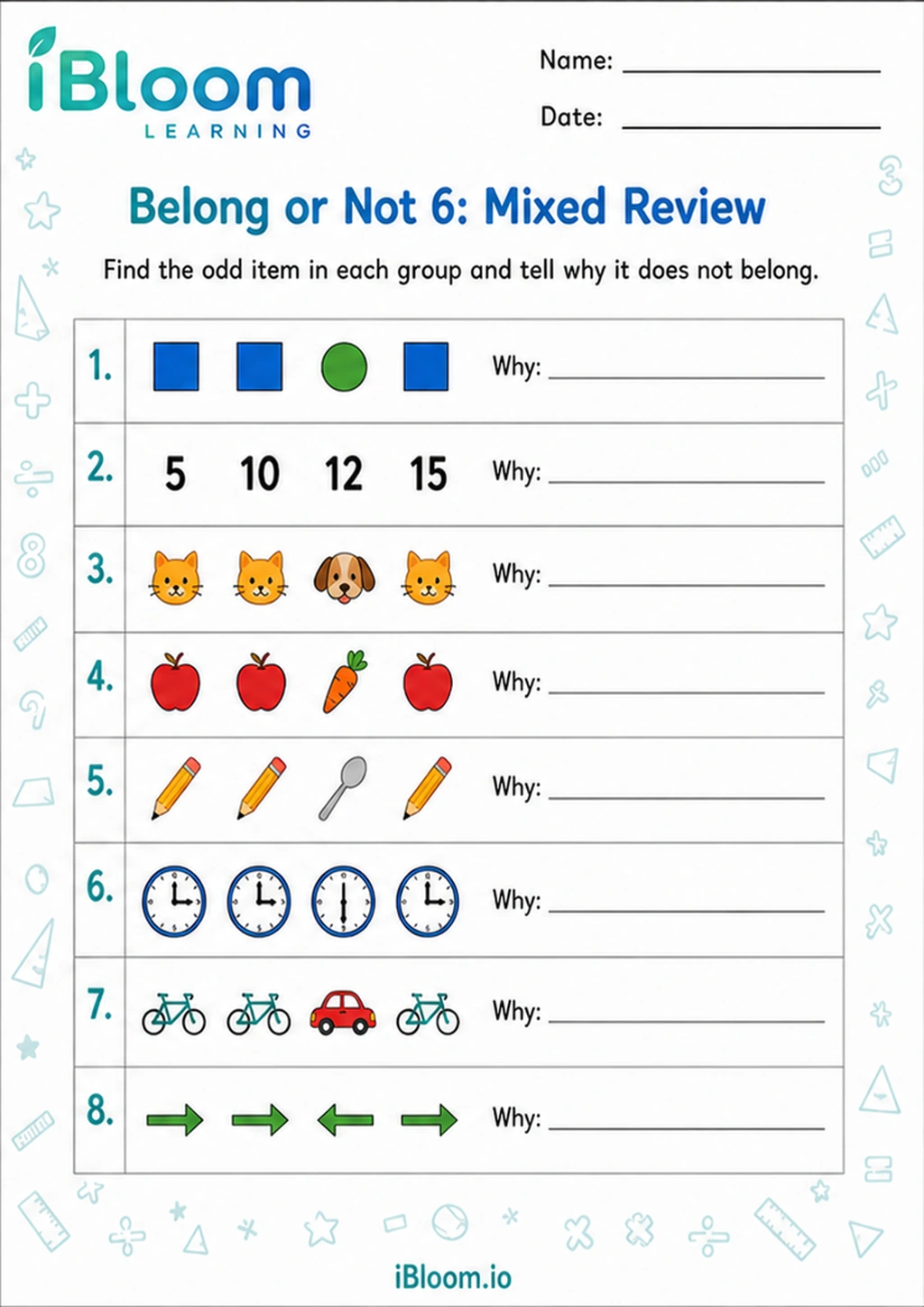 Belong or Not 6: Mixed ReviewClass 1 printable practice for Belong and Not Belong.Class 1Free PDF preview
Practice that builds confidence
What children learn
These Class 1 data graphing worksheets help children practise the idea of whether an object belongs or does not belong in a set. Children look for a shared rule, such as shape, use, size, colour, animal type, food item, or classroom object, and then choose the item that fits or does not fit.
The printable activities include picture-based sorting, circling, crossing out, matching, and simple reasoning tasks. They build the early data-handling skill of classifying objects before children move on to tally marks, tables, and graphs.
Belong and not belong activities teach children to notice attributes. A child may see a group of fruits and identify that a pencil does not belong, or see three circles and one triangle and choose the triangle as the odd one out. This is an early maths skill because data graphing begins with sorting information into clear groups.

How the skill progresses
The worksheets begin with obvious picture groups, such as animals, toys, vehicles, or food. Children then compare more than one feature, for example colour and shape, or living and non-living things. Some questions ask what belongs in a group; others ask what does not belong. This small change is important because it checks whether children understand the rule rather than simply guessing from the pictures.
A parent routine at home
Choose four objects from around the house, such as a spoon, plate, cup, and crayon. Ask, “Which one does not belong? Why?” Then change the rule: a cup may belong with kitchen items, but not with flat objects. Encourage your child to say the rule aloud: “These are things we eat with,” or “These are red.” After this oral practice, use one worksheet page and ask your child to point, explain, and then mark the answer.

Classroom uses for teachers
Teachers can use these printables for warm-ups, maths centres, small-group support, or quick checks after a sorting lesson. They also work well before introducing picture graphs because pupils first need to group items correctly. A class discussion after each page is useful: different answers may be possible if a child gives a sensible rule, so the focus should be on reasoning as well as marking.

Common errors to watch for
Some children choose the biggest or brightest picture instead of looking for the common property. Others mix up “belong” and “not belong”, especially when the instruction changes from one question to the next. Read the direction aloud, underline the key words, and ask, “What is the same about most of these?” before the child answers.
Free printable PDF download
Use this belong not belong worksheets class 1 page to preview the activity, print it, or download it as a PDF for quick practice. It works well for homework, homeschool lessons, tutoring, morning work, revision, and classroom centers.
Answers and answer key support
After the child completes the worksheet independently, parents and teachers can use the answer support or answer key information to check the work, review mistakes, and choose the next practice step.
Why iBloom worksheets help
The activities use familiar Class 1 visuals and simple instructions so children can focus on classification. A helpful strategy is: look at all the pictures, find what most have in common, say the rule, then choose the item. This builds vocabulary such as group, same, different, sort, belong, and not belong in a child-friendly way.
Helpful answers
Frequently asked questions
What does belong and not belong mean in Class 1 maths?
It means deciding whether an object fits a group based on a shared feature. For example, an apple belongs with fruits, while a shoe does not.
How is this topic connected to data graphing?
Before children can make or read simple graphs, they need to sort items into groups. Belong and not belong practice builds that classification skill.
Should my child explain the answer or only mark it?
Ask your child to explain the rule whenever possible. Saying “these are all animals” or “this one is a different shape” shows real understanding.
What if more than one answer seems possible?
In some picture groups, a different answer may make sense if the child gives a logical rule. Encourage clear reasoning, then compare it with the worksheet’s intended pattern.
How can I practise this skill without a worksheet?
Use everyday objects such as toys, utensils, books, and clothes. Make a group of three similar items and one different item, then ask your child to find what does not belong.
Is this belong not belong worksheets class 1 free?
Yes. You can preview it for free and use the printable worksheet for home or classroom practice.
Can I download this belong not belong worksheets class 1 as a PDF?
Yes. Use the worksheet download option to save a printable PDF, or print the worksheet directly from the page.
Does this belong not belong worksheets class 1 include answers or an answer key?
When the activity has fixed answers, iBloom includes answer support so parents and teachers can check the completed worksheet.