Free printable practice
Measurement Practice Activities
Printable Class 1 maths measurement worksheets for comparing length, height, weight and capacity using rulers, centimetres, inches and everyday units.
Explore Measurement
Free printable worksheet PDFs
Preview every available page, then download the free worksheet PDF for home, homeschool, tutoring, or classroom practice.
Preview the exact activity before downloading it.
Practice that builds confidence
Building measurement language
These Class 1 measurement worksheets help children compare and describe real objects by length, height, weight and capacity. They practise words such as longer, shorter, taller, shortest, longest, heavier, lighter, more and less through clear visual tasks.
The printable activities include comparing lengths, measuring with non-standard units, reading simple ruler marks in centimetres and inches, and matching containers by capacity. Children also explore weight using familiar objects before moving to more formal measurement vocabulary.
Class 1 children first need strong comparison words before they measure. These worksheets move from Longest Shortest, Longer Shorter and Taller Shorter tasks to Comparing Lengths and Comparing Lengths Metric activities. Pictures of pencils, ribbons, ladders, children, bottles and other familiar items help learners decide what is being compared: length, height, weight or capacity.

From objects to units
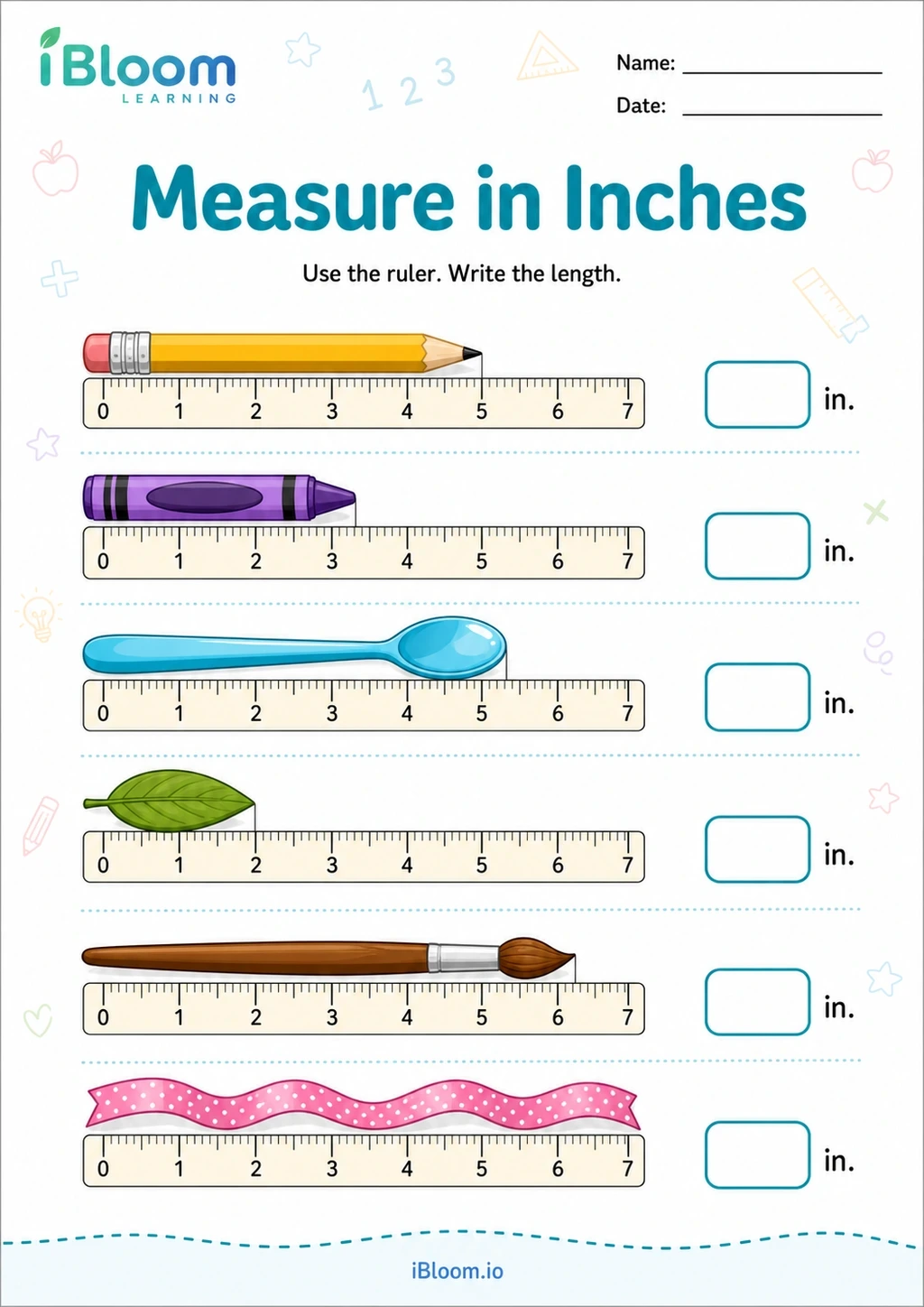
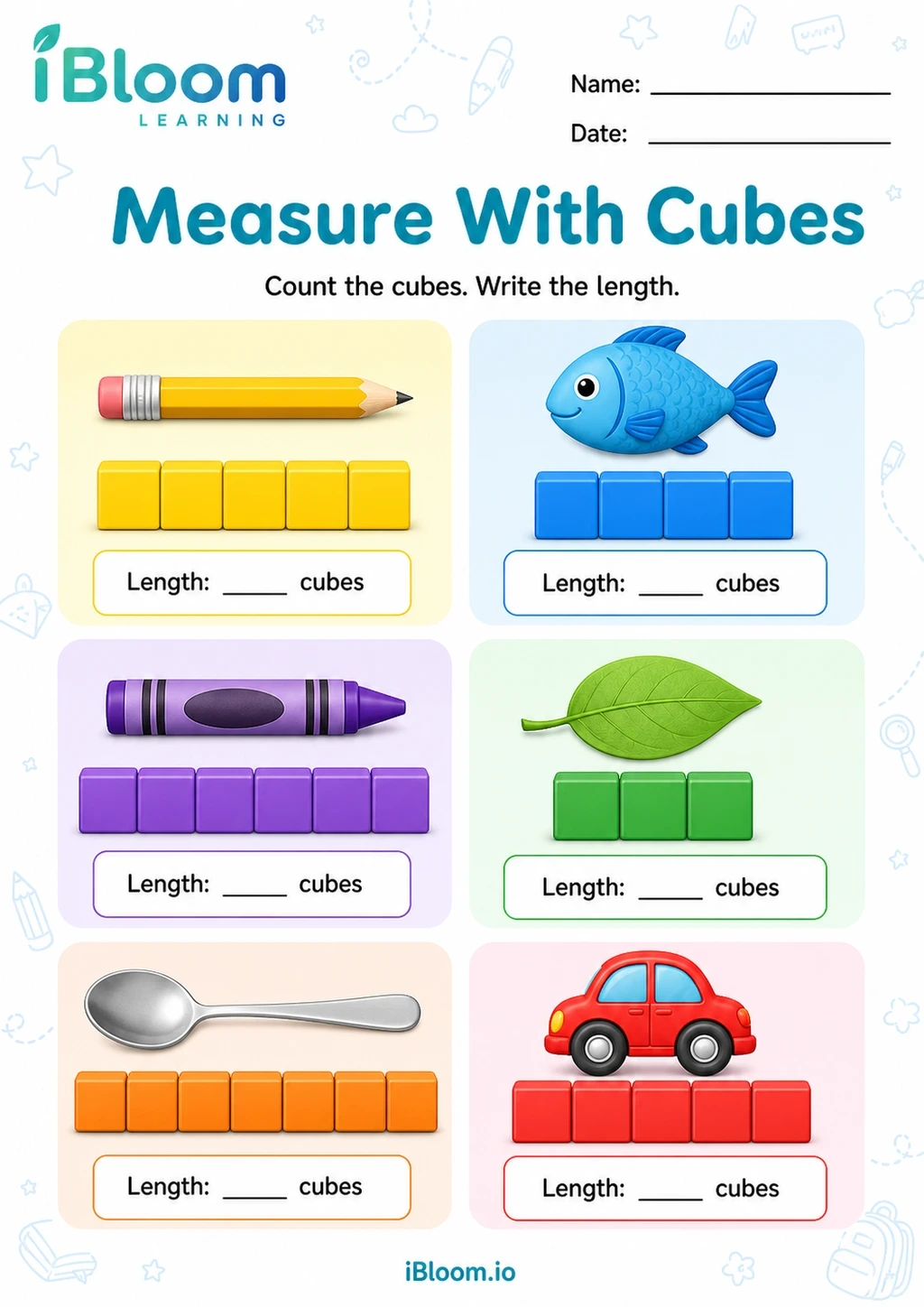
In Length Non Standard Units, children measure with repeated equal objects such as blocks, clips or squares. This builds the idea that a unit must be placed end to end without gaps or overlaps. The worksheets then introduce Lengths Centimeters and Lengths Inches so children can connect informal measuring with standard units.
Using rulers carefully
Length Ruler Centimeters and Length Ruler Inches pages give practice with simple ruler readings. Children learn to start at zero, look at the end point and write the unit with the number. Some questions show objects already aligned; others ask children to compare two measured lengths, helping them see that the larger number means the longer object only when the same unit is used.
Weight and capacity ideas
The Weight worksheets focus on heavier and lighter comparisons using everyday objects rather than complex calculations. Capacity activities develop the idea of containers holding more or less. Children may sort, circle, match or choose which container is likely to hold more, supporting practical maths language used at home and in school.
A simple parent routine
At home, choose two objects and ask, “Which is longer?” or “Which will hold more?” Then let your child check by lining objects up, counting equal units or using a ruler. Encourage full answers such as “The spoon is shorter than the pencil” and “The bottle has more capacity than the cup.”

Free printable PDF download
Use this class 1 measurement worksheet page to preview the activity, print it, or download it as a PDF for quick practice. It works well for homework, homeschool lessons, tutoring, morning work, revision, and classroom centers.
Answers and answer key support
After the child completes the worksheet independently, parents and teachers can use the answer support or answer key information to check the work, review mistakes, and choose the next practice step.
Why iBloom worksheets help
The collection gives gradual practice: visual comparison, non-standard measurement, ruler work, metric and inch vocabulary, then weight and capacity. Teachers can use the pages for maths centres, revision, small-group support or quick assessment. Watch for common errors such as starting a ruler at 1, leaving spaces between non-standard units, comparing height when length is asked, or forgetting the unit. A child-friendly strategy is: “Line it up, start at zero, read the end, say the unit.”
Helpful answers
Frequently asked questions
What measurement skills are covered in these Class 1 worksheets?
They cover comparing length and height, identifying longest and shortest objects, using non-standard units, reading simple centimetre and inch rulers, and comparing weight and capacity.
Should my child learn centimetres before inches?
In Indian classrooms, centimetres are usually more familiar, but these worksheets include both centimetres and inches so children can recognise ruler units and compare measured lengths carefully.
How can I help my child avoid ruler mistakes?
Remind your child to place the object at the zero mark, not at the edge of the ruler or the number 1. Then read the mark where the object ends and say the unit aloud.
Why do the worksheets use non-standard units like blocks or clips?
Non-standard units help children understand what measuring means before using formal units. They learn to repeat equal units with no gaps or overlaps, which prepares them for ruler measurement.
Can these pages be used for classroom maths centres?
Yes. Teachers can place comparison, ruler, weight and capacity pages in different centres, use them for quick revision, or give selected sheets to children who need extra practice with a specific measurement idea.
Is this class 1 measurement worksheet free?
Yes. You can preview it for free and use the printable worksheet for home or classroom practice.
Can I download this class 1 measurement worksheet as a PDF?
Yes. Use the worksheet download option to save a printable PDF, or print the worksheet directly from the page.
Does this class 1 measurement worksheet include answers or an answer key?
When the activity has fixed answers, iBloom includes answer support so parents and teachers can check the completed worksheet.