Free printable practice
Even Odd Numbers Practice Activities
Class 1 children practise identifying, sorting and explaining even and odd numbers using pairs, number charts and simple counting patterns.
Free printable worksheet PDFs
Preview every available page, then download the free worksheet PDF for home, homeschool, tutoring, or classroom practice.
Preview the exact activity before downloading it.
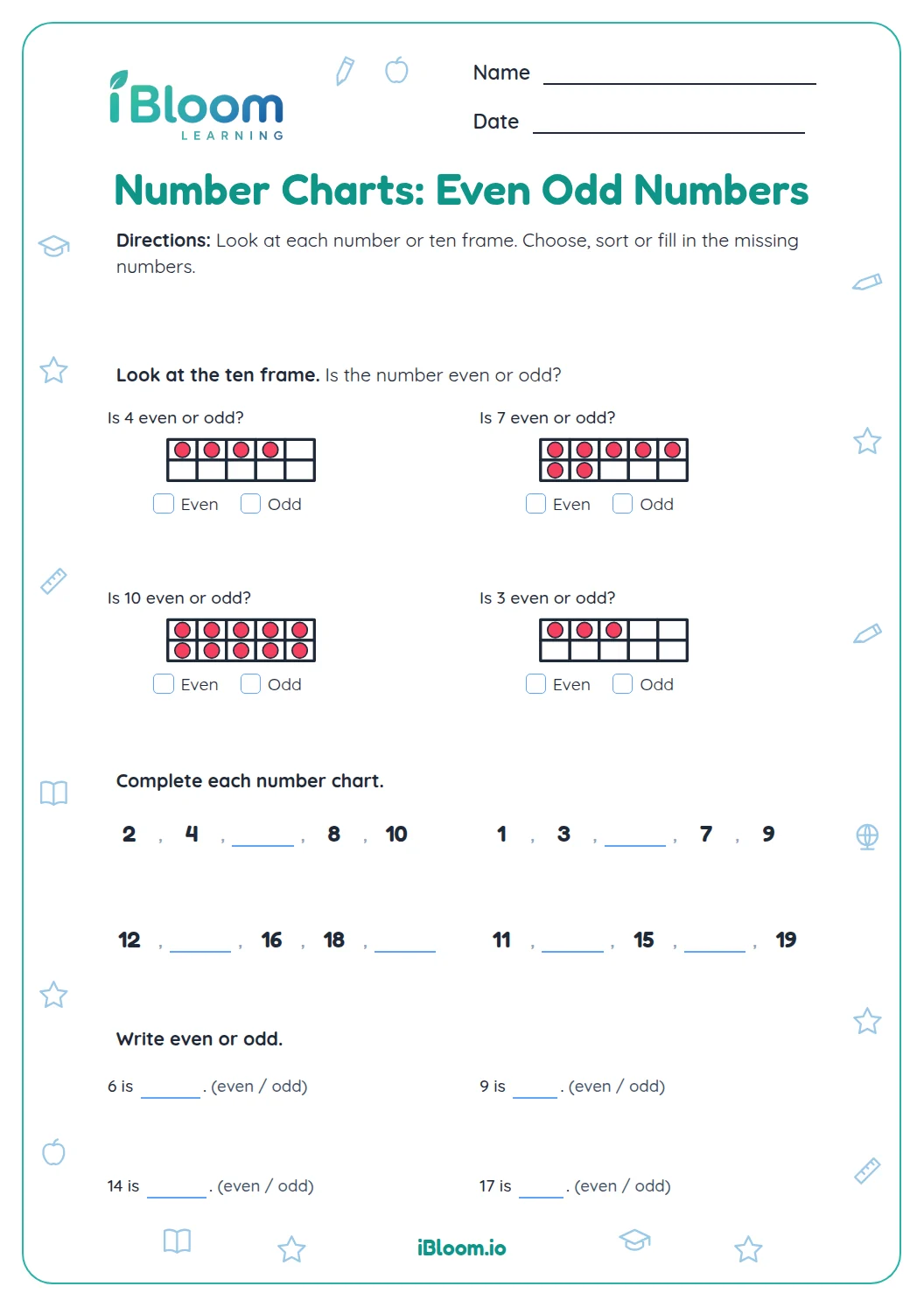 Number Charts: Even Odd Numbers — Concept FoundationsConcept Foundations for number charts: even odd numbers in Class 1. Use ten-frame clues, number-chart patterns and sorting choices to identify even and odd numbers.Class 1Free PDF preview
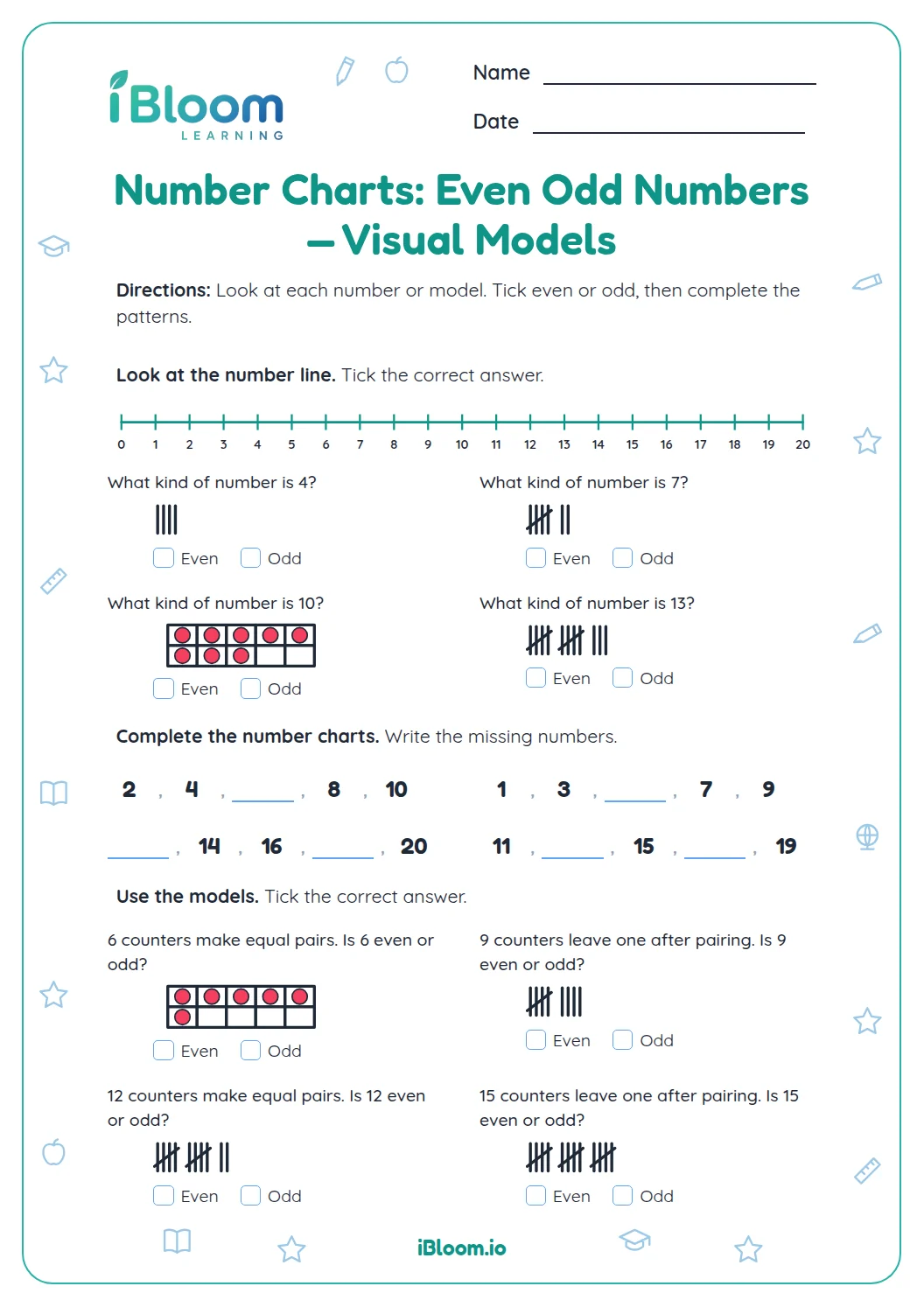 Number Charts: Even Odd Numbers — Visual ModelsVisual Models for number charts: even odd numbers in Class 1. Use number lines, visual groups and chart patterns to identify, sort and complete even and odd numbers.Class 1Free PDF preview
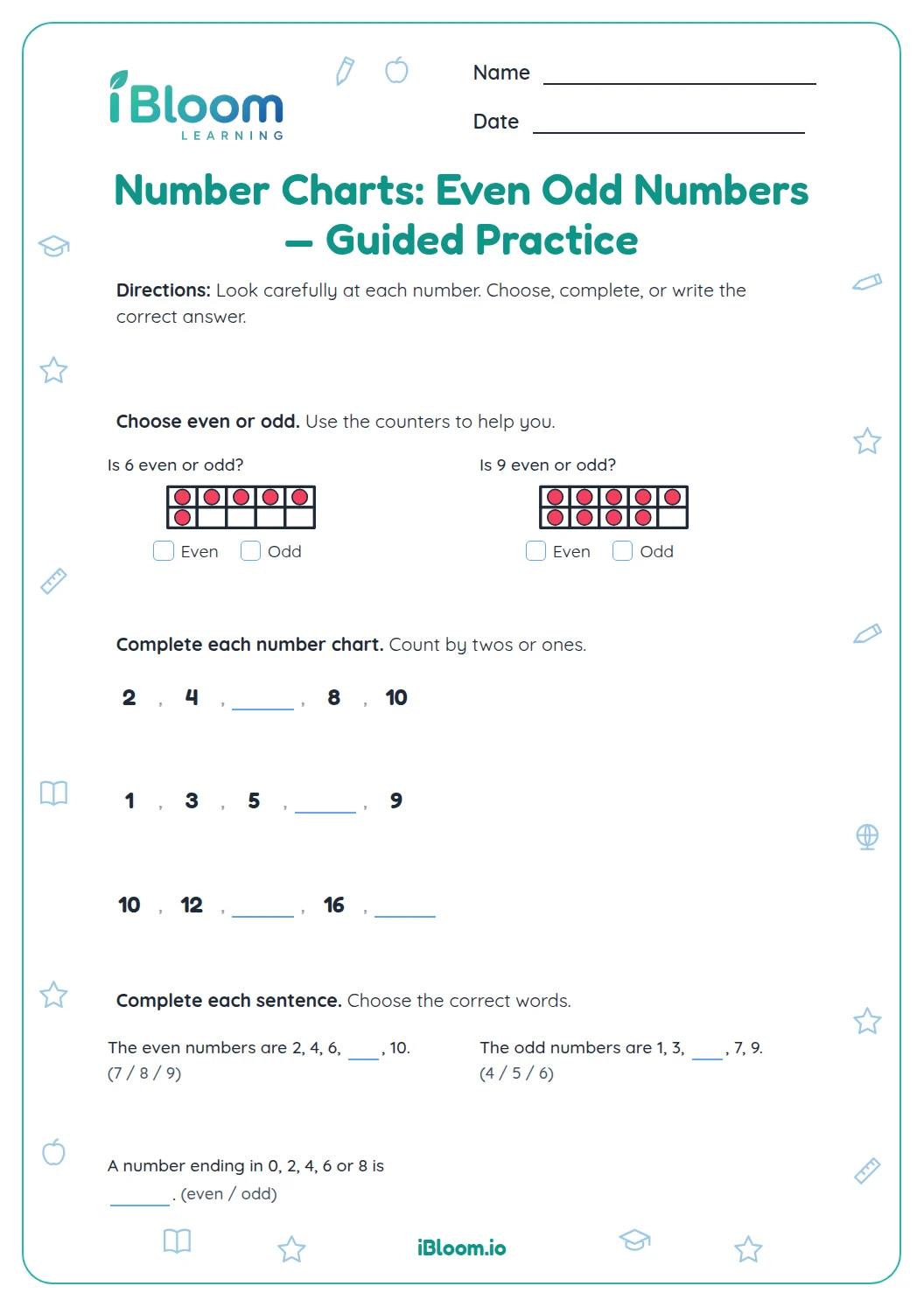 Number Charts: Even Odd Numbers — Guided PracticeGuided Practice for number charts: even odd numbers in Class 1. Identify even and odd numbers, complete number-chart patterns, and explain the rule using the last digit.Class 1Free PDF preview
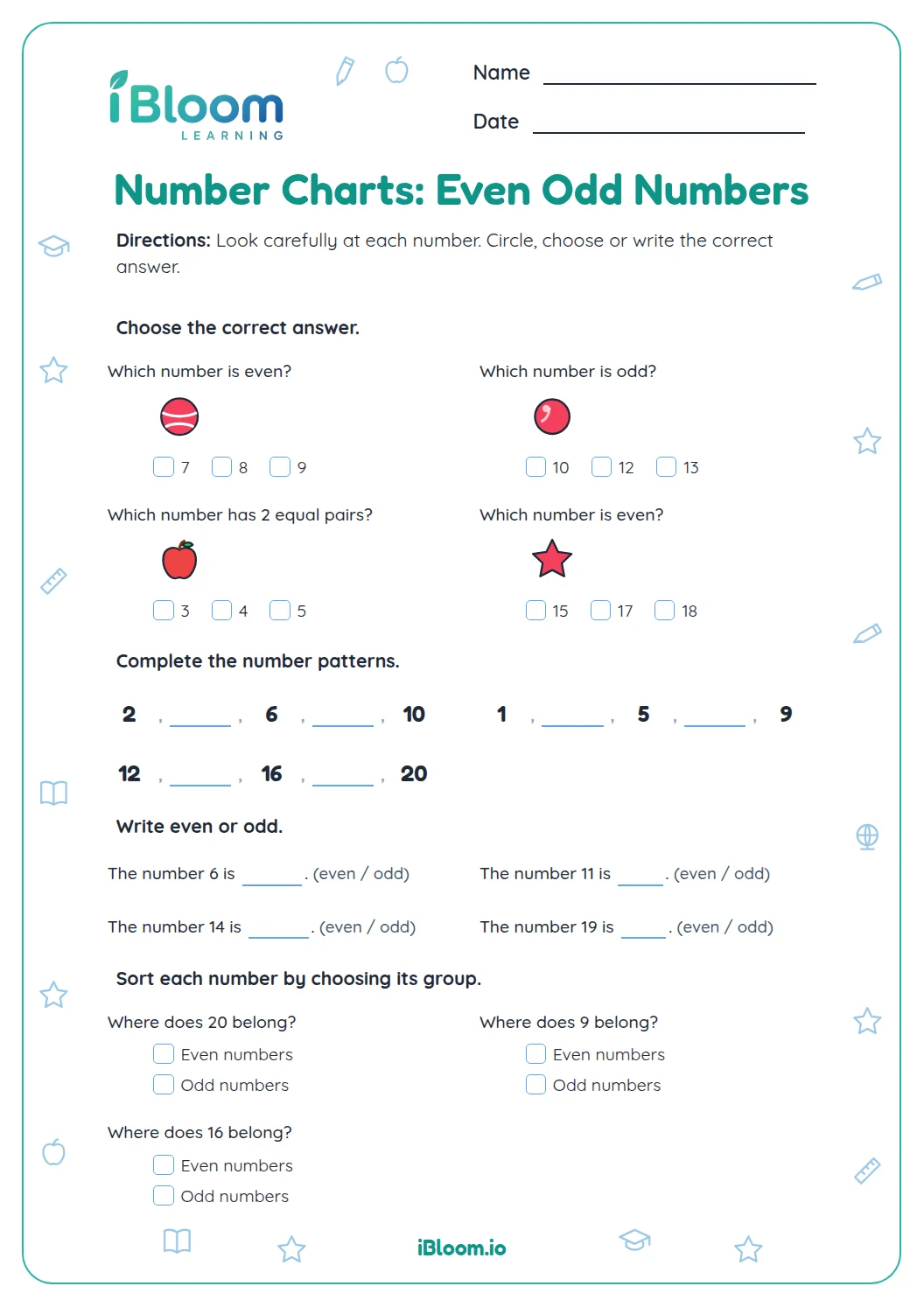 Number Charts: Even Odd Numbers — Independent PracticeIndependent Practice for number charts: even odd numbers in Class 1. Identify even and odd numbers, complete counting patterns, and sort numbers using pairs and number charts.Class 1Free PDF preview
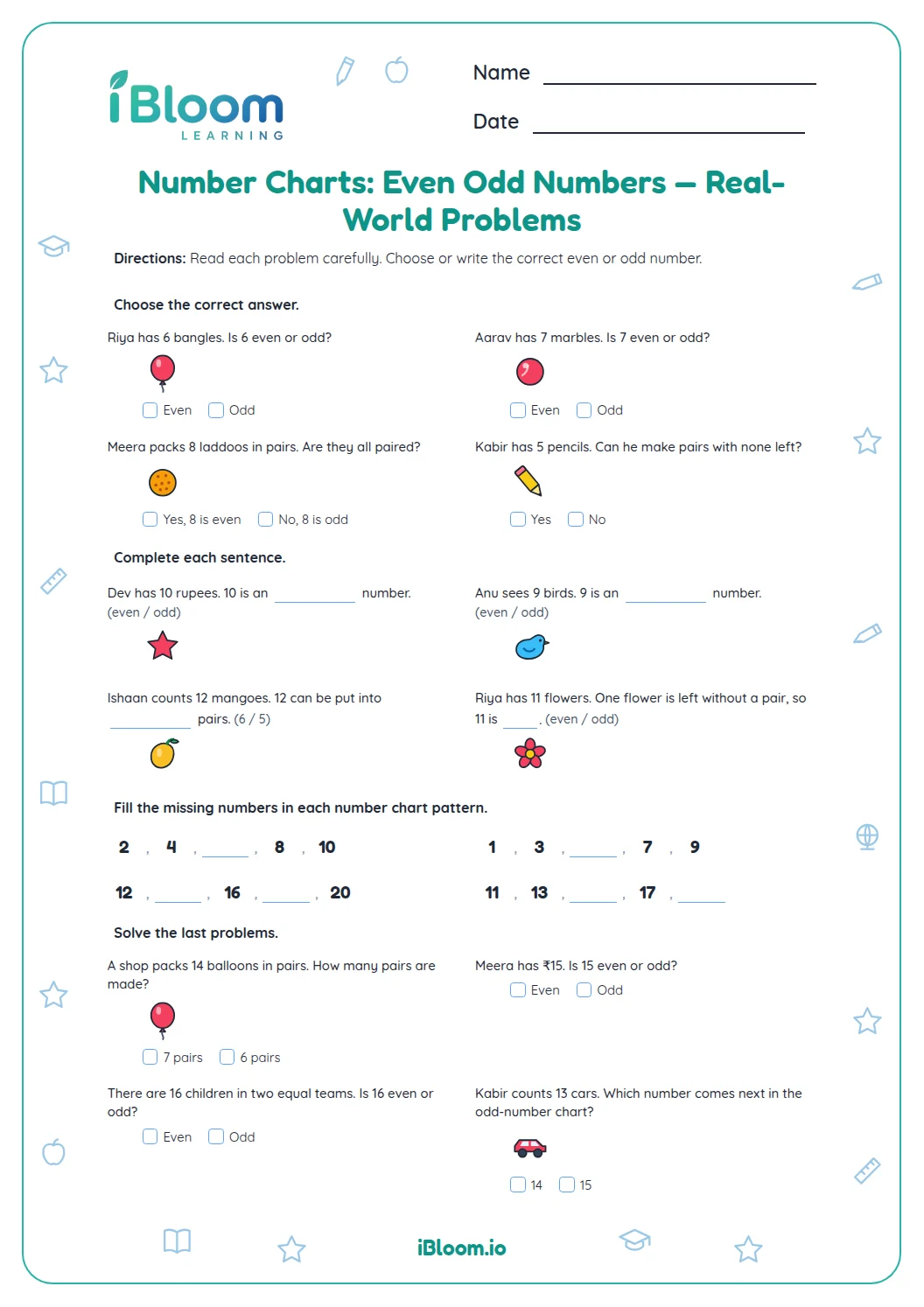 Number Charts: Even Odd Numbers — Real-World ProblemsReal-World Problems for number charts: even odd numbers in Class 1. Solve real-world number-chart problems by identifying, sorting and completing even and odd number patterns.Class 1Free PDF preview
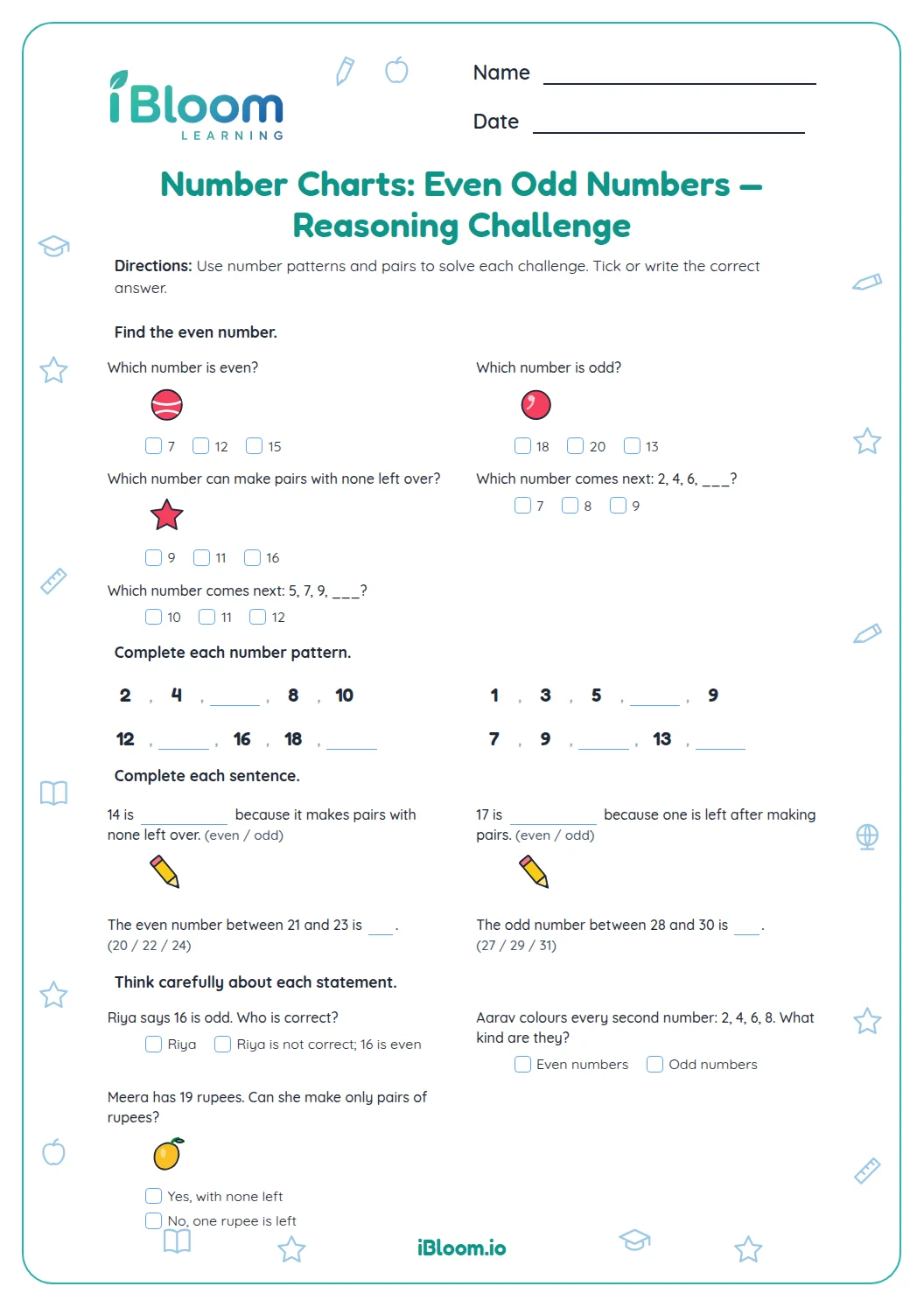 Number Charts: Even Odd Numbers — Reasoning ChallengeReasoning Challenge for number charts: even odd numbers in Class 1. Sort numbers as even or odd, complete counting patterns, and explain even–odd reasoning using number charts and pairs.Class 1Free PDF preview
Practice that builds confidence
Understanding even and odd numbers
These Class 1 maths worksheets help children understand even and odd numbers through clear number-chart practice. Children learn that numbers which can be grouped into equal pairs are even, while numbers with one left over are odd.
The printable activities include identifying even and odd numbers, colouring number patterns, sorting numbers into groups and using simple visual clues such as pairs, objects and last digits. The practice is designed for the Number Charts topic and builds confidence with early number sense.
Even and odd numbers become easier when children see them as pairs. In Class 1, the focus is not on rules alone, but on noticing whether objects can be shared into two equal groups or matched in twos. For example, 6 crayons can make 3 pairs, so 6 is even. 7 crayons make 3 pairs with 1 crayon left, so 7 is odd.

Moving from objects to number charts
These worksheets connect concrete thinking with number-chart patterns. Children may first count dots, objects or pictures in pairs, then mark numbers on a chart. As they practise, they notice that even and odd numbers alternate. They also begin to use the last digit as a clue for familiar numbers, especially 0, 2, 4, 6 and 8 for even numbers, and 1, 3, 5, 7 and 9 for odd numbers.
A simple parent routine
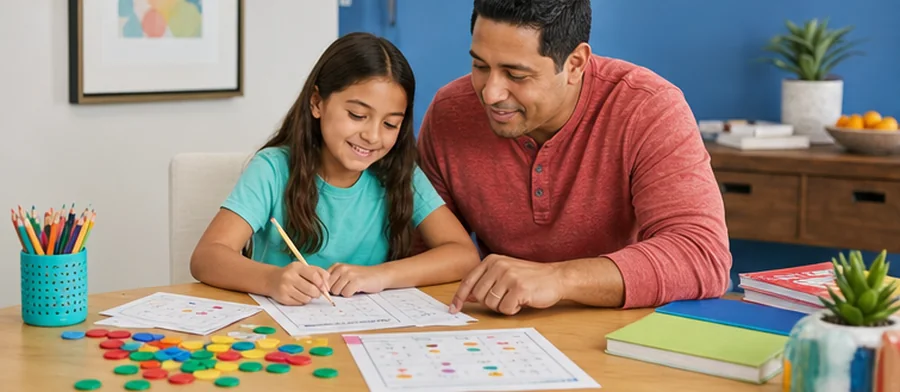
At home, start with a handful of buttons, spoons or building blocks. Ask your child to make pairs and say, “No one is left out, so it is even,” or “One is left out, so it is odd.” Then choose a few numbers from the worksheet and ask your child to explain the answer before writing it. Keep the language steady: pair, left over, even, odd, number chart.
Classroom uses for teachers
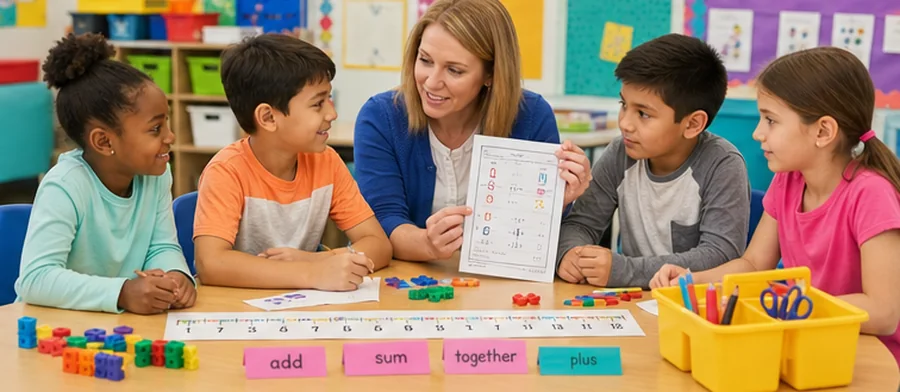
Teachers can use these printable activities during maths practice, revision, small-group work or centres. One group can colour even numbers on a chart, another can sort number cards, and another can draw pairs for a given number. The sheets also work well as quick checks after a lesson because children must identify the number type and show that they understand the pattern.
Common errors to watch for
Some children guess by looking at whether a number “feels big” or “small”. Others memorise a few examples but do not understand pairs. Watch for reversed answers such as calling 9 even because it comes after 8, or marking a whole row without checking the pattern. Encourage children to count carefully in twos and to look for one left over.
Free printable PDF download
Use this Class 1 even and odd numbers worksheet page to preview the activity, print it, or download it as a PDF for quick practice. It works well for homework, homeschool lessons, tutoring, morning work, revision, and classroom centers.
Answers and answer key support
After the child completes the worksheet independently, parents and teachers can use the answer support or answer key information to check the work, review mistakes, and choose the next practice step.
Why iBloom worksheets help
The iBloom activities progress from visual grouping to number-chart recognition, so children do not have to rely only on memory. Clear instructions, familiar number ranges and repeated practice help Class 1 learners see the pattern for themselves. A child-friendly strategy is: “Make pairs, check for one left out, then name the number even or odd.”
Helpful answers
Frequently asked questions
What should a Class 1 child understand about even and odd numbers?
A Class 1 child should understand that even numbers can be grouped into pairs with nothing left over, while odd numbers have one left over after making pairs.
Do these worksheets use number charts?
Yes. The activities use number-chart patterns along with sorting, colouring and identification tasks so children can see how even and odd numbers alternate.
How can I explain odd numbers at home?
Use everyday objects such as spoons or buttons. Ask your child to make pairs. If one object is left without a partner, the number is odd.
Should children memorise the last digit rule?
The last digit rule is useful, but children should first understand pairs. Once they can make pairs confidently, they can use last digits such as 0, 2, 4, 6 and 8 as even-number clues.
What common mistake do children make in this topic?
Many children guess or follow a chart row without checking. Encourage them to count in twos or draw pairs to confirm whether the number is even or odd.
Is this Class 1 even and odd numbers worksheet free?
Yes. You can preview it for free and use the printable worksheet for home or classroom practice.
Can I download this Class 1 even and odd numbers worksheet as a PDF?
Yes. Use the worksheet download option to save a printable PDF, or print the worksheet directly from the page.
Does this Class 1 even and odd numbers worksheet include answers or an answer key?
When the activity has fixed answers, iBloom includes answer support so parents and teachers can check the completed worksheet.