Free printable practice
Morning Afternoon Night Practice Activities
Class 1 maths worksheets that help children sort daily activities into morning, afternoon and night using familiar routines and picture cues.
Free printable worksheet PDFs
Preview every available page, then download the free worksheet PDF for home, homeschool, tutoring, or classroom practice.
Preview the exact activity before downloading it.
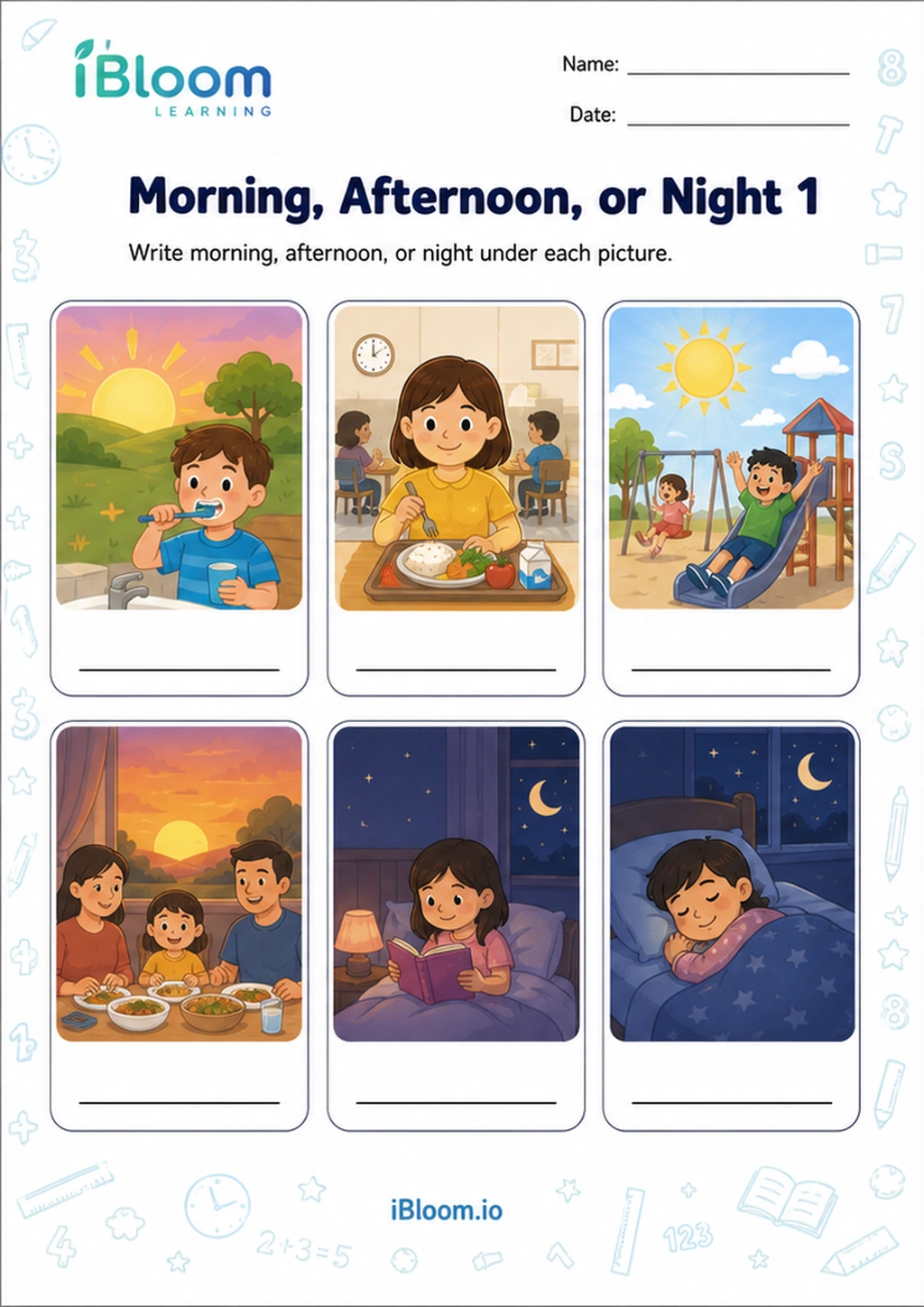 Morning, Afternoon, or Night 1Class 1 printable practice for morning afternoon and night using a clear, age-appropriate learning task.Class 1Free PDF preview
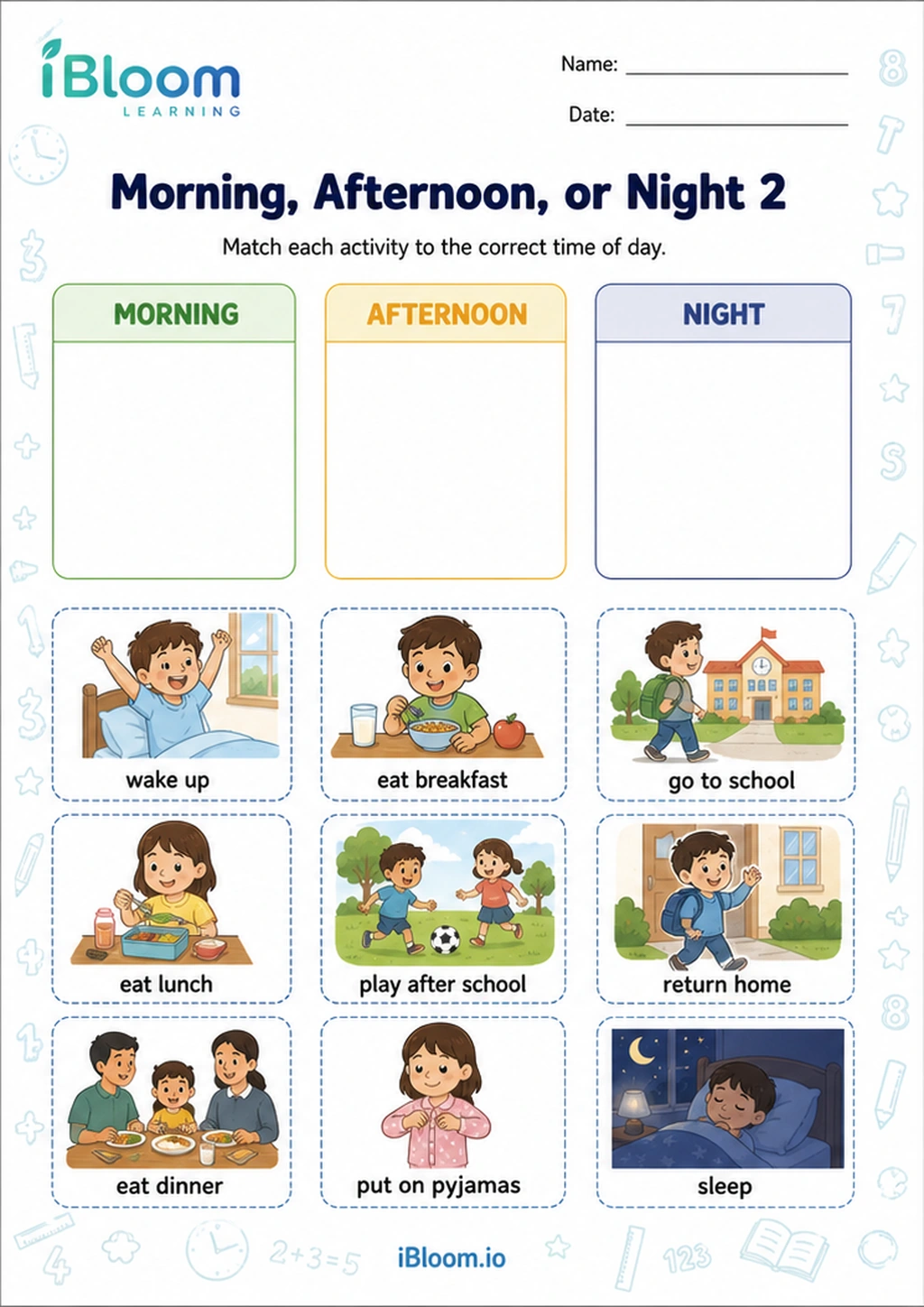 Morning, Afternoon, or Night 2Class 1 printable practice for morning afternoon and night using a clear, age-appropriate learning task.Class 1Free PDF preview
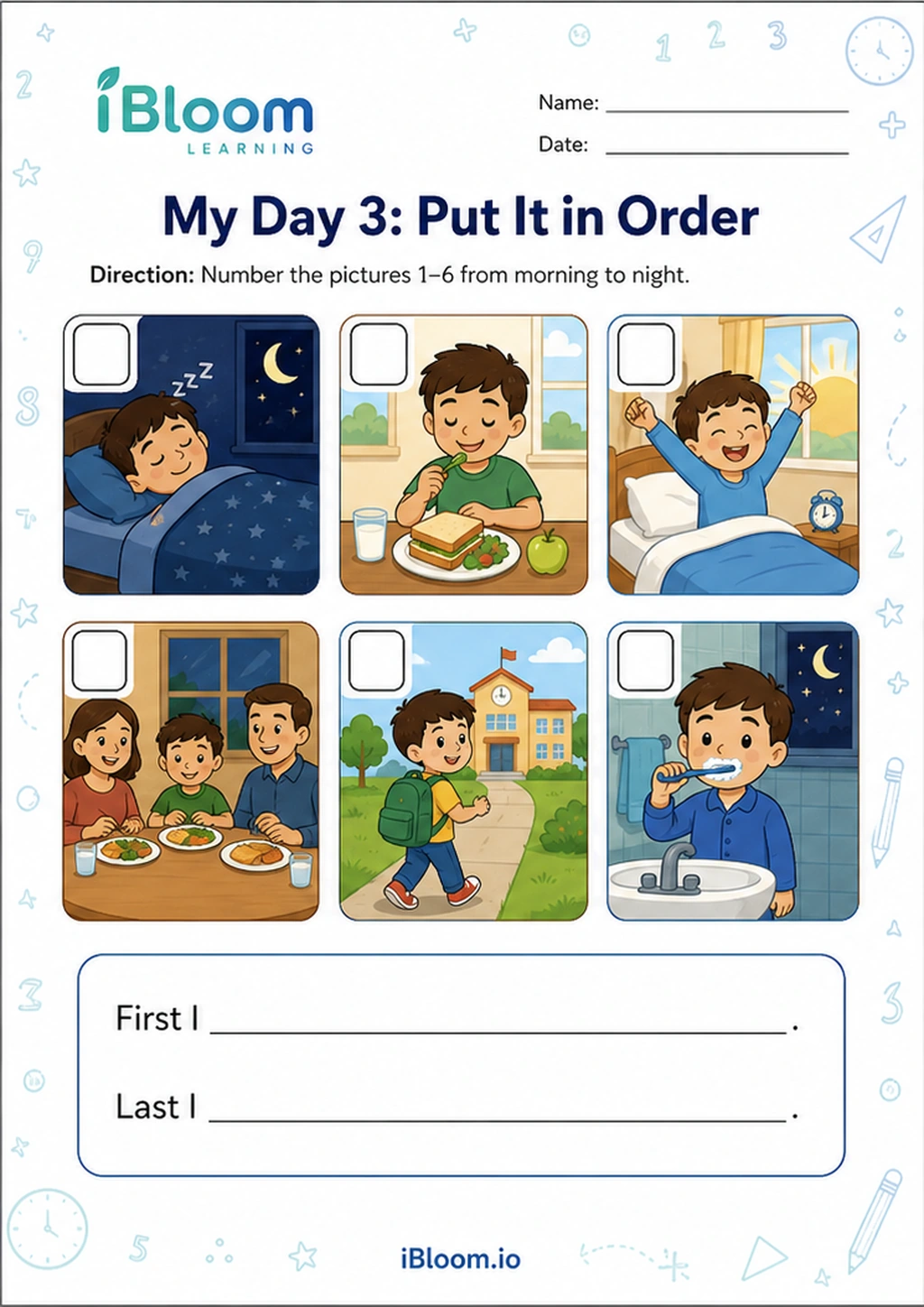 My Day 3: Put It in OrderClass 1 printable practice for morning afternoon and night using a clear, age-appropriate learning task.Class 1Free PDF preview
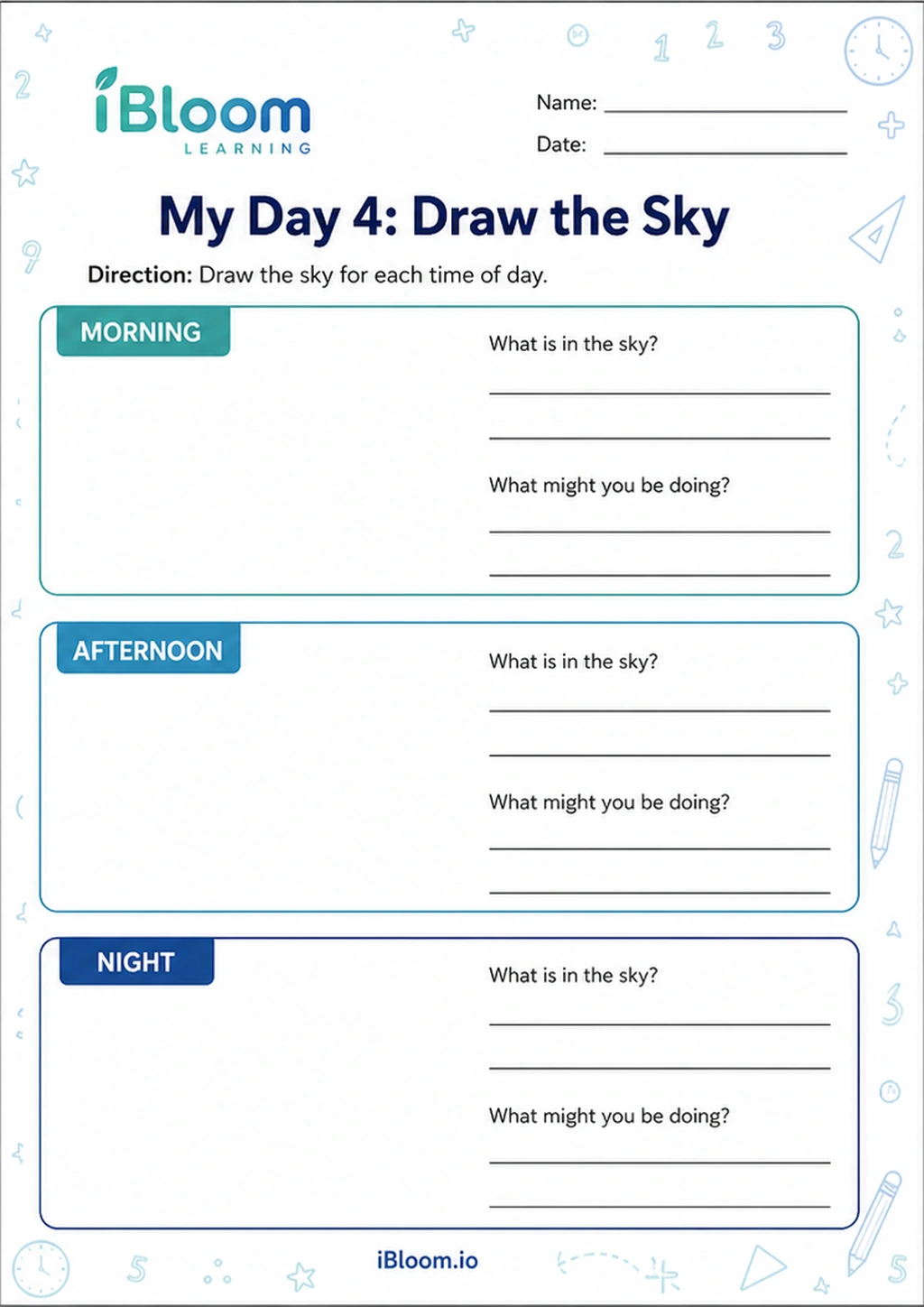 My Day 4: Draw the SkyClass 1 printable practice for morning afternoon and night using a clear, age-appropriate learning task.Class 1Free PDF preview
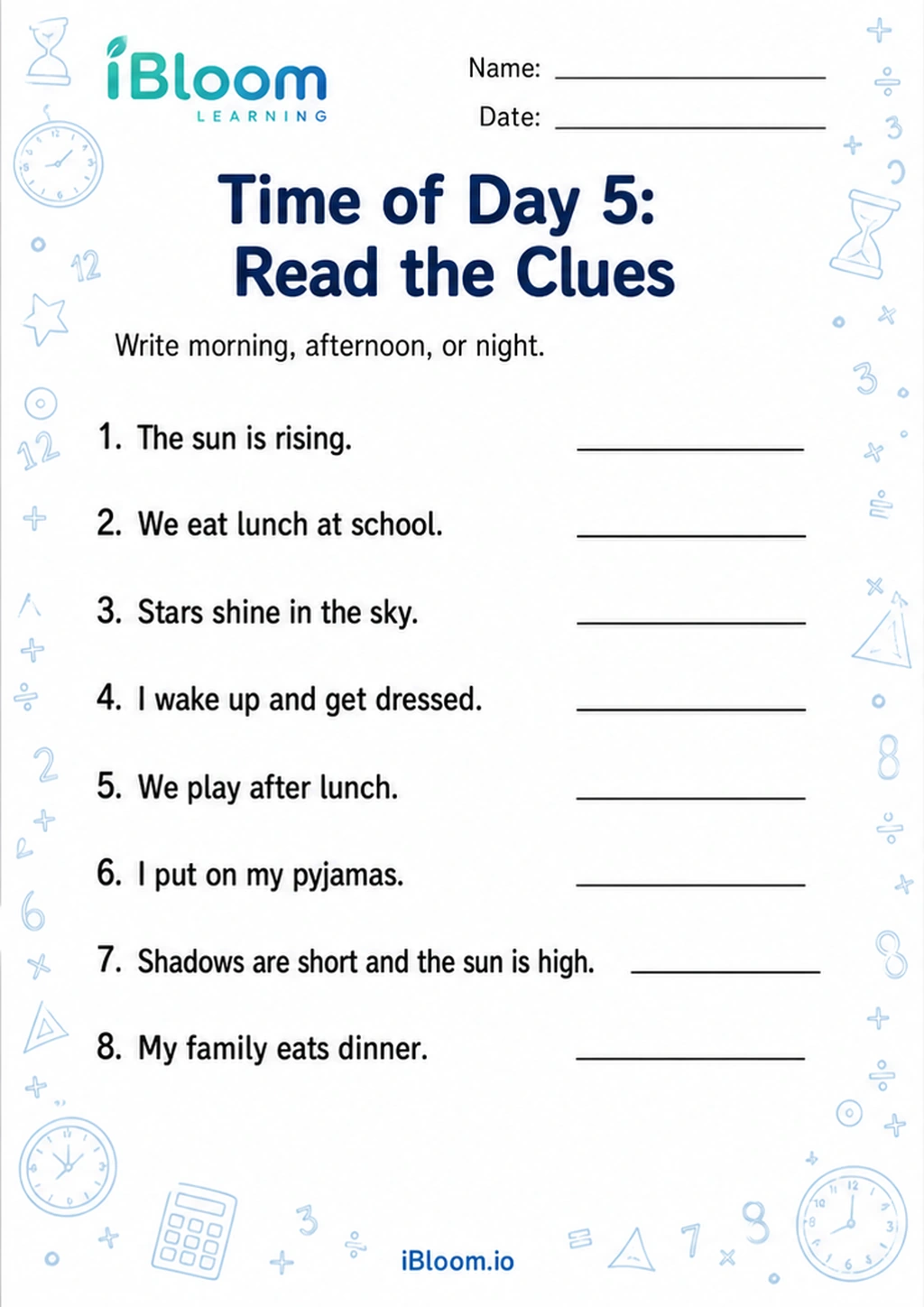 Time of Day 5: Read the CluesClass 1 printable practice for morning afternoon and night using a clear, age-appropriate learning task.Class 1Free PDF preview
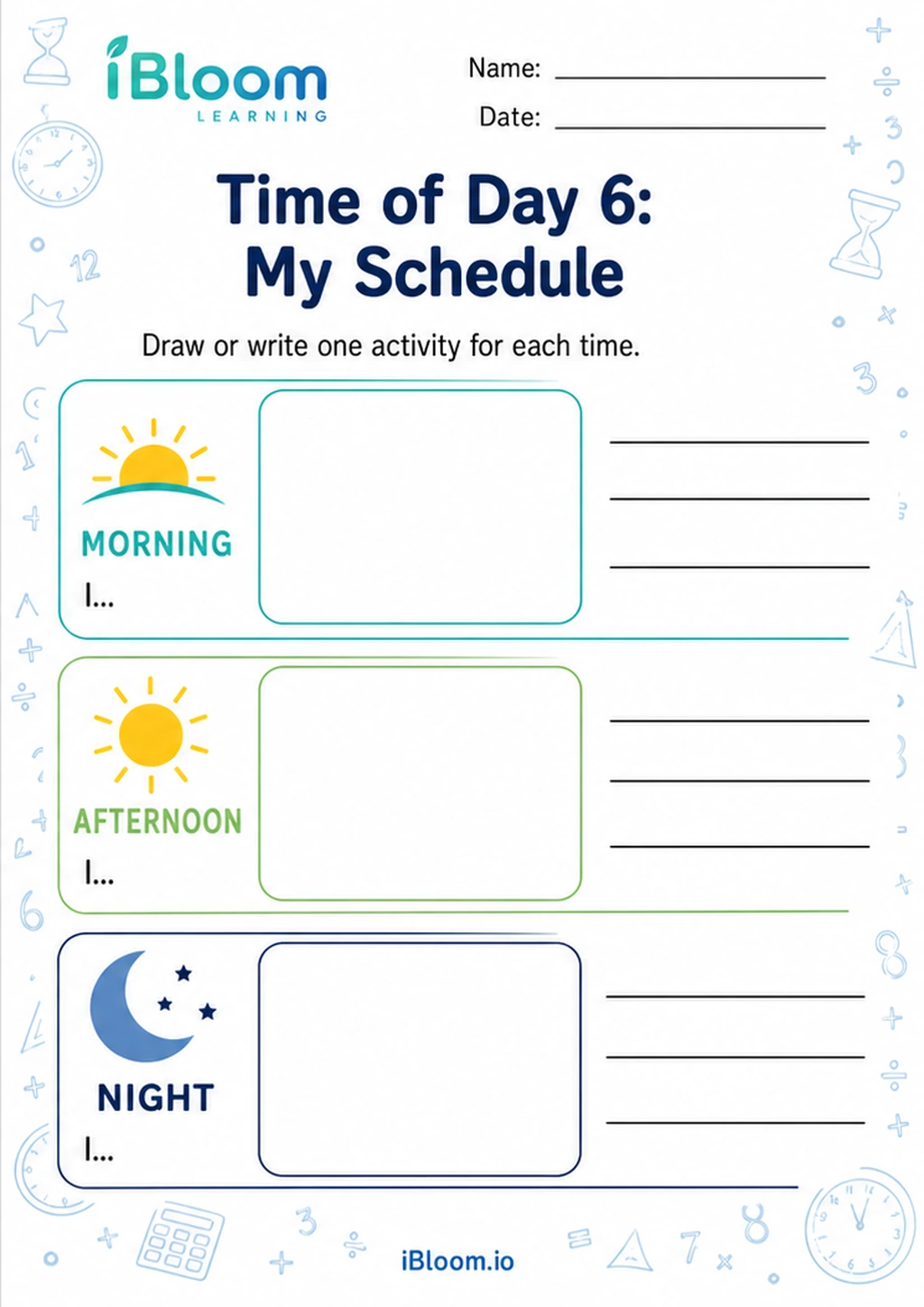 Time of Day 6: My ScheduleClass 1 printable practice for morning afternoon and night using a clear, age-appropriate learning task.Class 1Free PDF preview
Practice that builds confidence
What children learn
These Class 1 telling time worksheets help children recognise the parts of a day: morning, afternoon and night. Children practise connecting time words with everyday actions such as waking up, going to school, eating lunch, playing, having dinner and sleeping.
The printable activities use simple pictures, matching tasks, sorting exercises and sentence-based questions. They build early time vocabulary before children move on to clocks, hours and minutes.
Morning, afternoon and night are early time concepts. At this stage, children do not need to read a clock; they learn that events happen in an order across the day. The worksheets focus on words such as morning, afternoon, night, day, before and after through familiar home and school routines.

Moving from pictures to words
Activities usually begin with picture recognition: brushing teeth in the morning, eating lunch in the afternoon or sleeping at night. Children then match pictures to time words, circle the correct part of the day and complete simple sentences. This progression helps them move from visual clues to using maths language confidently.
A simple home routine
Parents can connect the worksheet to the child’s own day. Ask, “When do you wear your uniform?” or “When do we see the moon?” Then let the child point to morning, afternoon or night on the page. After finishing one activity, invite the child to say three events in order: “I wake up in the morning, eat lunch in the afternoon and sleep at night.”

Classroom uses for teachers
Teachers can use these printables during a telling time lesson, as a maths warm-up or in small-group practice. They also work well for oral language: children can describe a picture, name the part of the day and explain their choice. For a quick class activity, ask pupils to sort picture cards under three headings: Morning, Afternoon and Night.

Common mix-ups to watch for
Some children may think afternoon means any time after school, or may confuse evening with night. If a worksheet shows dinner or stars, discuss the clue instead of only marking right or wrong. Children may also rely on one object, such as the sun, so include routine clues like lunch, bedtime and school time.
Free printable PDF download
Use this morning afternoon night worksheets class 1 page to preview the activity, print it, or download it as a PDF for quick practice. It works well for homework, homeschool lessons, tutoring, morning work, revision, and classroom centers.
Answers and answer key support
After the child completes the worksheet independently, parents and teachers can use the answer support or answer key information to check the work, review mistakes, and choose the next practice step.
Why iBloom worksheets help
iBloom worksheets keep the examples close to a Class 1 child’s life, so the idea feels real and not abstract. A useful child-friendly strategy is: “Look at the action, think of your day, then choose the time word.” This helps children answer with understanding rather than guessing.
Helpful answers
Frequently asked questions
What does a Class 1 child practise in morning, afternoon and night worksheets?
Children practise identifying which part of the day an activity usually happens in, such as waking up in the morning, eating lunch in the afternoon and sleeping at night.
Does my child need to know how to read a clock first?
No. These worksheets build early time understanding before clock reading. Children use daily events and picture clues instead of hours and minutes.
How can I help if my child confuses afternoon and night?
Use real routine questions such as “When do we eat lunch?” and “When do we go to bed?” Discuss the picture clue and connect it to the child’s own day.
Are these worksheets useful for oral practice too?
Yes. Ask children to say a full sentence, such as “I brush my teeth in the morning.” This strengthens both time vocabulary and sentence formation.
Can teachers use these worksheets in class activities?
Yes. Teachers can use them for maths practice, picture sorting, group discussion, notebook work or quick revision during a telling time lesson.
Is this morning afternoon night worksheets class 1 free?
Yes. You can preview it for free and use the printable worksheet for home or classroom practice.
Can I download this morning afternoon night worksheets class 1 as a PDF?
Yes. Use the worksheet download option to save a printable PDF, or print the worksheet directly from the page.
Does this morning afternoon night worksheets class 1 include answers or an answer key?
When the activity has fixed answers, iBloom includes answer support so parents and teachers can check the completed worksheet.