Free printable practice
Making 100 Practice Activities
Printable Making 100 worksheets for practising number pairs, missing addends, and mental addition facts that total 100.
Free printable worksheet PDFs
Preview every available page, then download the free worksheet PDF for home, homeschool, tutoring, or classroom practice.
Preview the exact activity before downloading it.
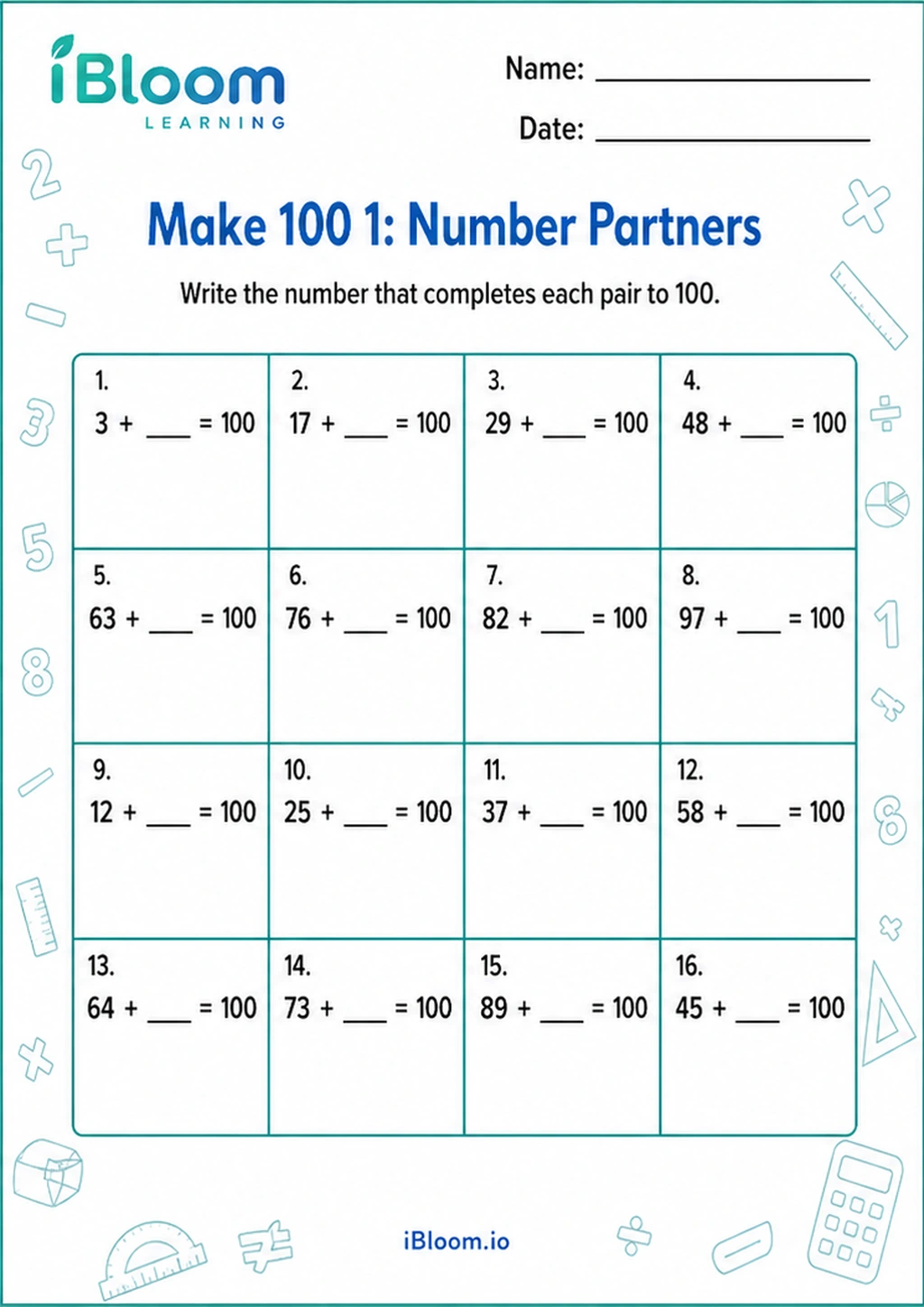 Make 100 1: Number PartnersClass 4 printable practice for Making 100.Class 4Free PDF preview
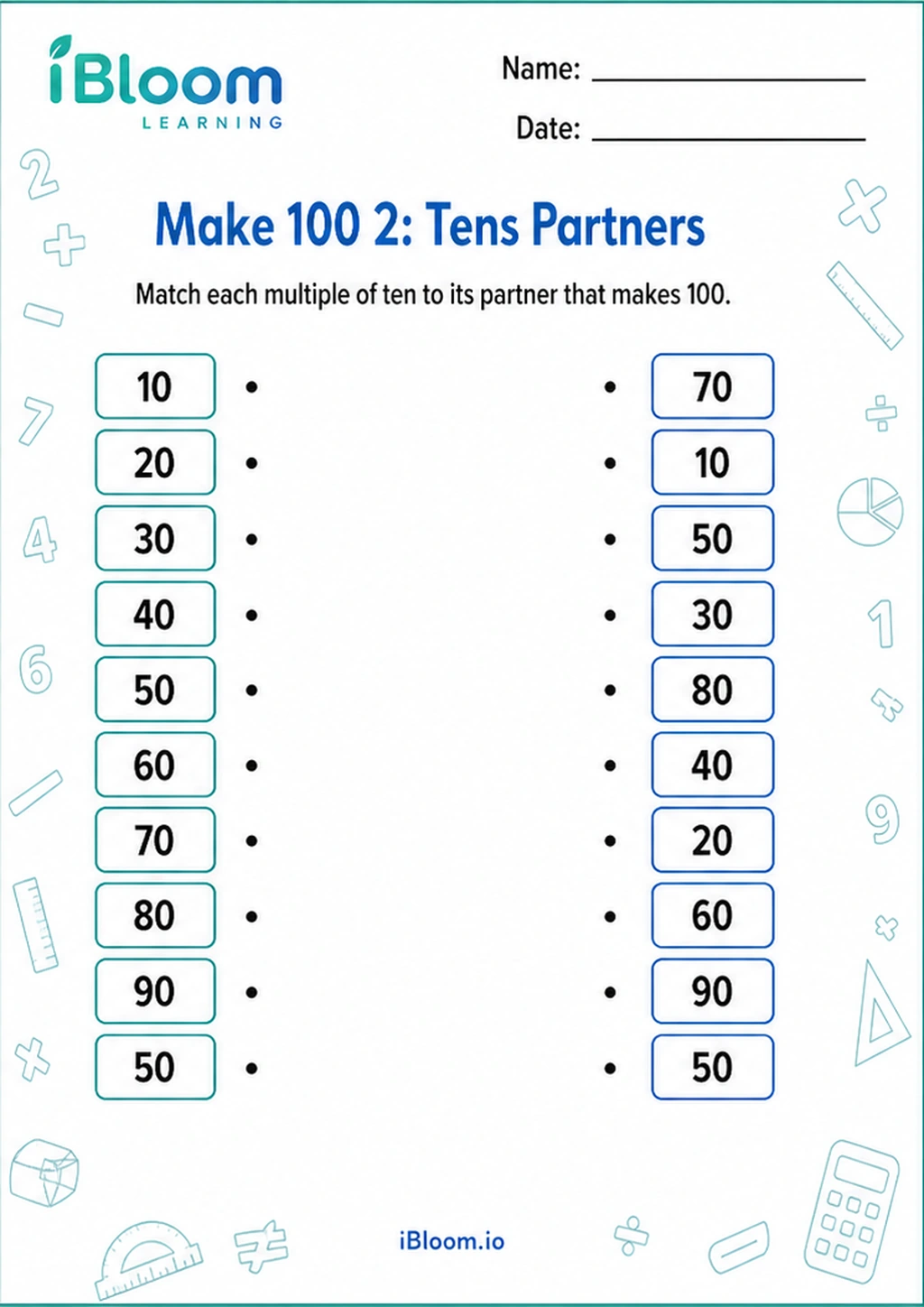 Make 100 2: Tens PartnersClass 4 printable practice for Making 100.Class 4Free PDF preview
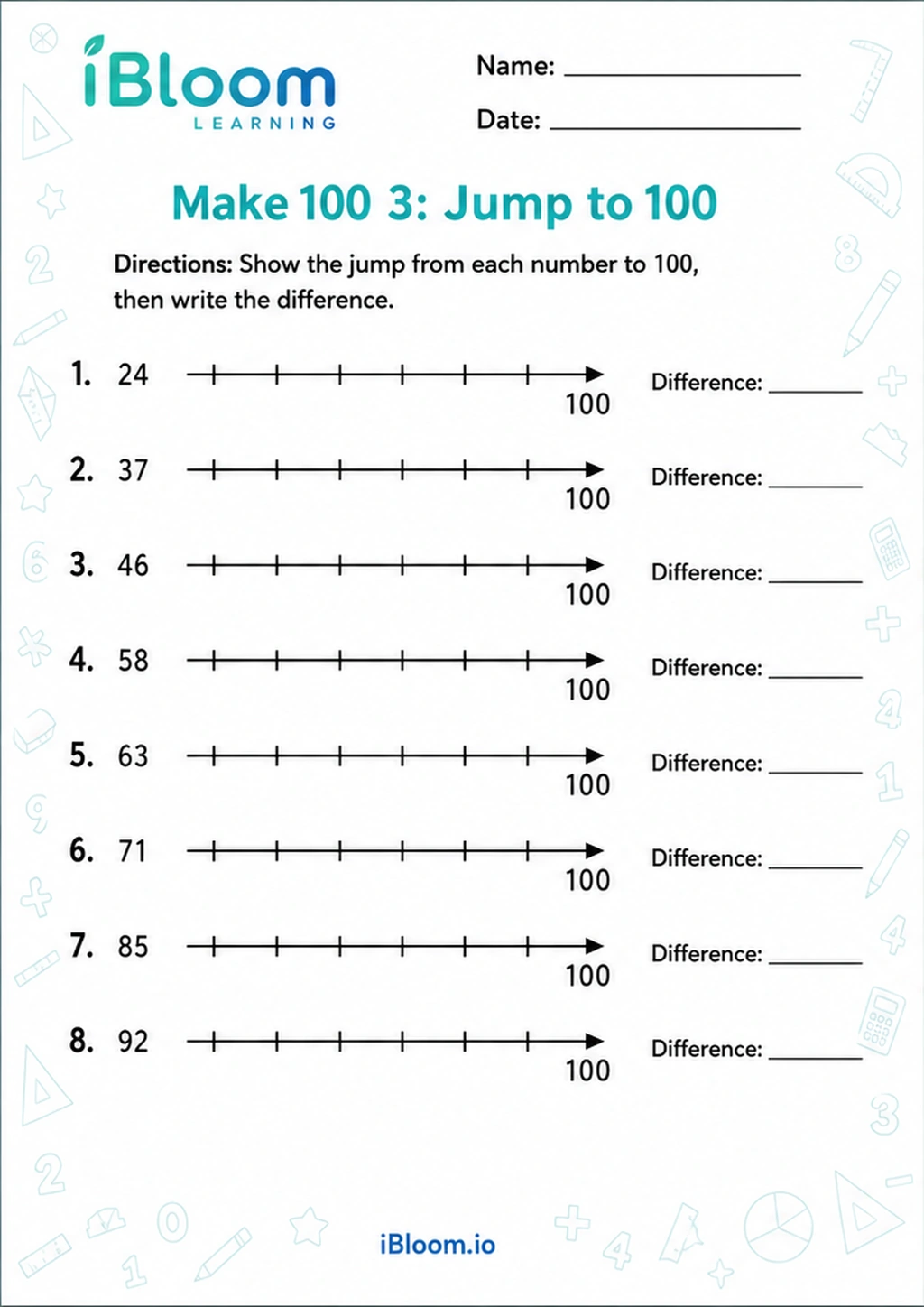 Make 100 3: Jump to 100Class 4 printable practice for Making 100.Class 4Free PDF preview
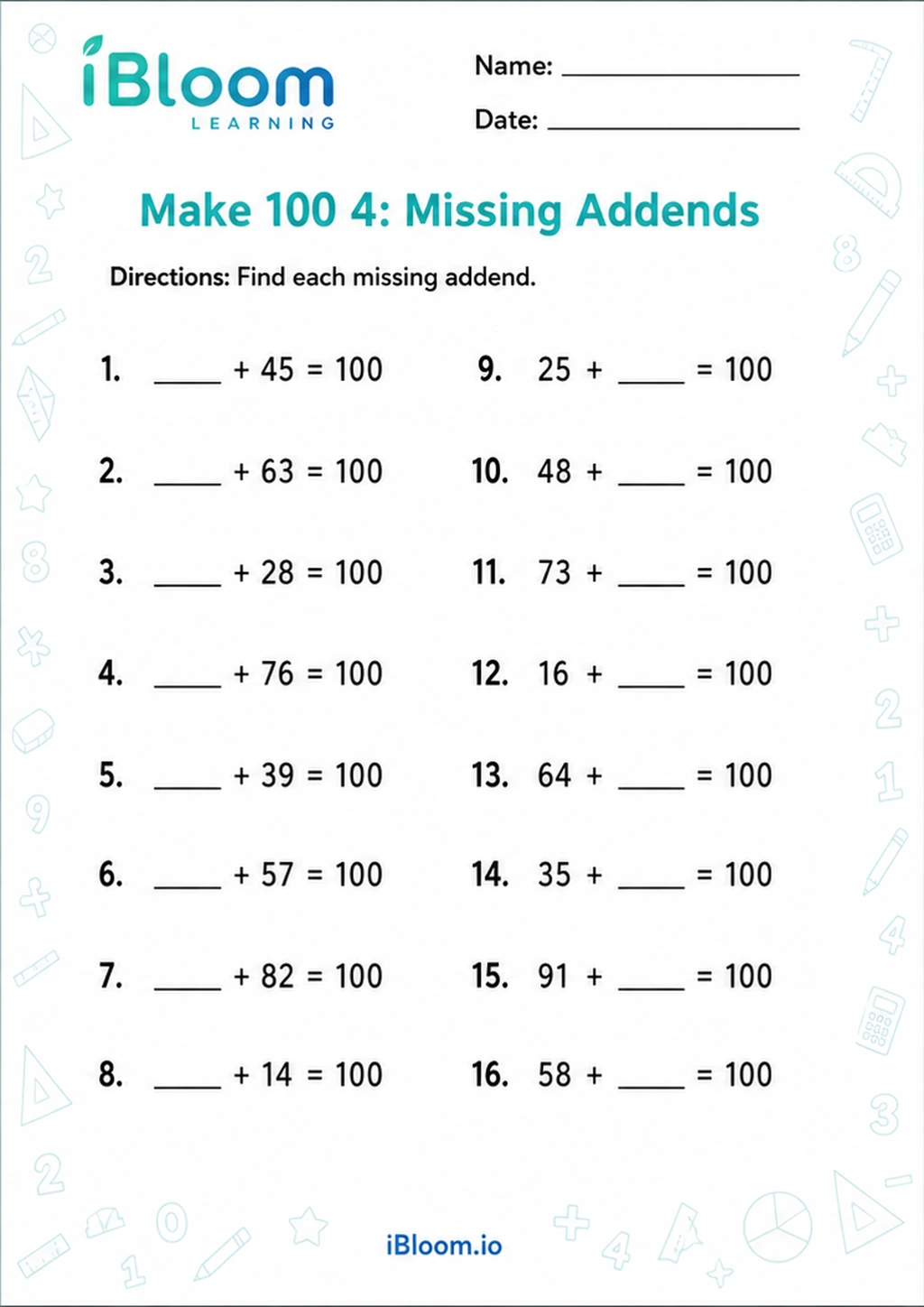 Make 100 4: Missing AddendsClass 4 printable practice for Making 100.Class 4Free PDF preview
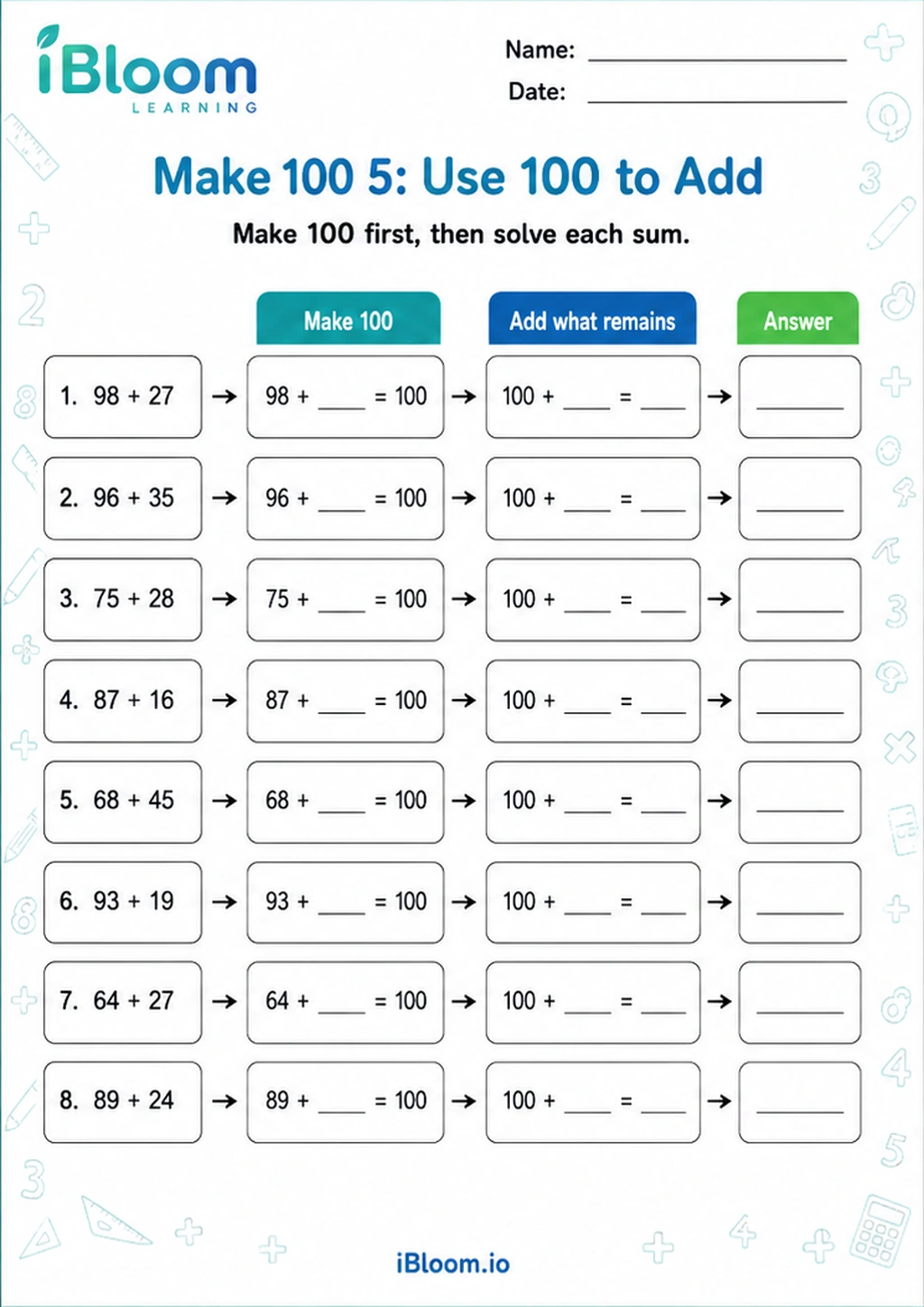 Make 100 5: Use 100 to AddClass 4 printable practice for Making 100.Class 4Free PDF preview
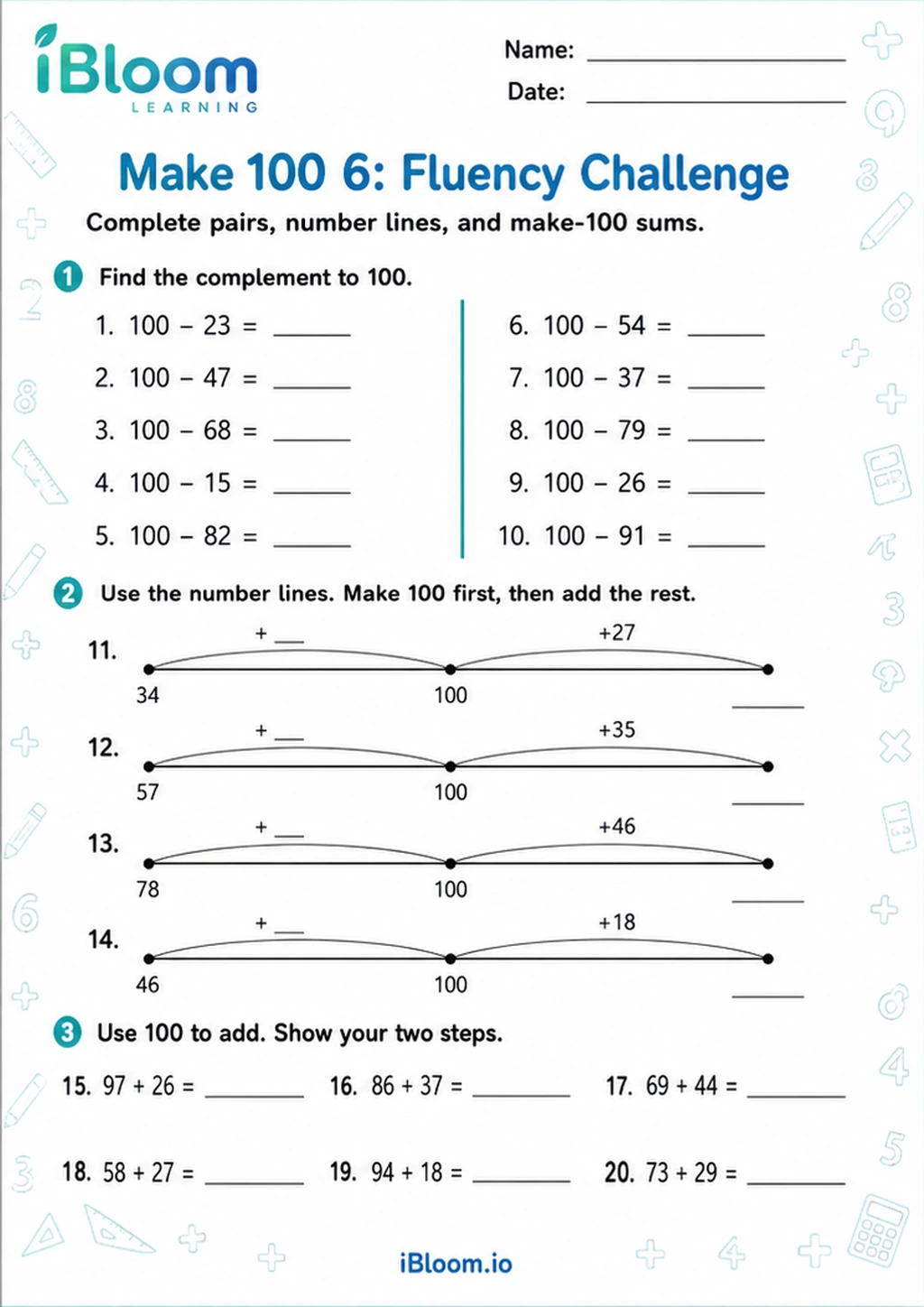 Make 100 6: Fluency ChallengeClass 4 printable practice for Making 100.Class 4Free PDF preview
Practice that builds confidence
What “making 100” means
These Making 100 worksheets help children practise finding pairs of numbers that add to 100, a key mental maths skill for faster addition and subtraction. Learners build fluency with complements such as 60 + 40, 75 + 25, and missing-addend facts like 100 - 68 = __.
Printable activities include number bonds, fill-in blanks, matching pairs, equation completion, and short drills that move from friendly tens to mixed two-digit numbers. The pages are useful for revision, homework, morning practice, or extra support before multi-digit addition.
Making 100 is the skill of recognising the missing part needed to complete 100. Children see 100 as a whole and learn that each number has a complement: 1 pairs with 99, 20 with 80, 47 with 53, and so on. This strengthens place value because learners must think about tens and ones together, not just count forward one by one.

How the practice progresses
The worksheets begin with easier facts such as multiples of 10 and clear number bonds. They then move into missing numbers, mixed equations, and two-digit complements where children may need to bridge through the next ten. For example, to solve 68 + __ = 100, a child can think “68 to 70 is 2, and 70 to 100 is 30, so the missing number is 32.”
A simple parent routine
At home, choose one page and ask your child to say the strategy aloud for the first few questions. Keep a small 100 chart or number line nearby if needed. After the worksheet, play a quick oral round: say a number such as 43, 90, or 17, and let your child answer the number needed to make 100. Praise clear thinking, not only speed.

Classroom uses for teachers
Teachers can use these printables for maths warm-ups, fluency folders, small-group practice, or quick checks after teaching number bonds to 100. They also work well before lessons on column addition, subtraction from 100, money calculations with rupees and paise, and estimating totals close to 100.

Common errors to watch for
Some children match only the ones digit and forget the tens, writing 68 + 2 = 100 instead of 68 + 32. Others reverse digits, confuse 100 with the next ten, or rely on slow counting. Encourage them to split the problem: first make the next ten, then complete the rest to 100.
Free printable PDF download
Use this making 100 worksheet page to preview the activity, print it, or download it as a PDF for quick practice. It works well for homework, homeschool lessons, tutoring, morning work, revision, and classroom centers.
Answers and answer key support
After the child completes the worksheet independently, parents and teachers can use the answer support or answer key information to check the work, review mistakes, and choose the next practice step.
Why iBloom worksheets help
The activities give repeated, well-spaced practice without making every question look the same. Different formats help children connect vocabulary such as total, addend, complement, missing number, and number bond. A child-friendly strategy is: “Make the next ten, then jump to 100.”
Helpful answers
Frequently asked questions
What skill do Making 100 worksheets practise?
They practise finding the number needed to add to a given number to make 100, using number bonds, missing addends, and mental addition strategies.
How should a child solve 68 + __ = 100?
A useful method is to first make the next ten: 68 + 2 = 70. Then add 30 more to reach 100, so the missing number is 32.
Are these worksheets only for multiples of 10?
No. They include easier complements such as 40 + 60 and also mixed two-digit numbers such as 47 + 53 or 86 + 14.
How can parents support this practice at home?
Ask your child to explain the first few answers aloud, then give oral prompts like “What makes 100 with 36?” A 100 chart or number line can help at the start.
Why is making 100 important in addition?
It helps children calculate mentally, understand place value, and prepare for larger addition and subtraction problems where regrouping or bridging is needed.
Is this making 100 worksheet free?
Yes. You can preview it for free and use the printable worksheet for home or classroom practice.
Can I download this making 100 worksheet as a PDF?
Yes. Use the worksheet download option to save a printable PDF, or print the worksheet directly from the page.
Does this making 100 worksheet include answers or an answer key?
When the activity has fixed answers, iBloom includes answer support so parents and teachers can check the completed worksheet.