




About this worksheet
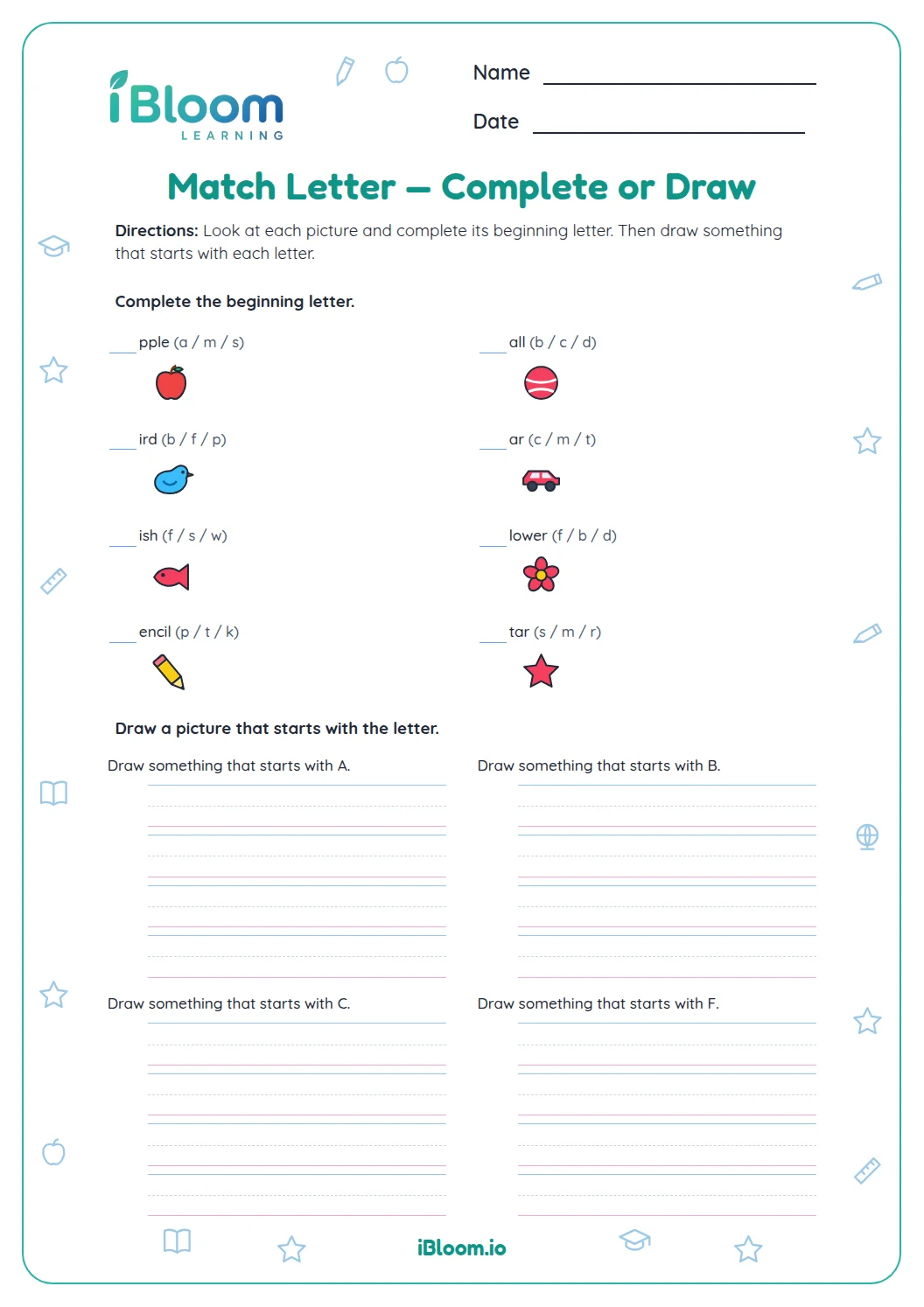
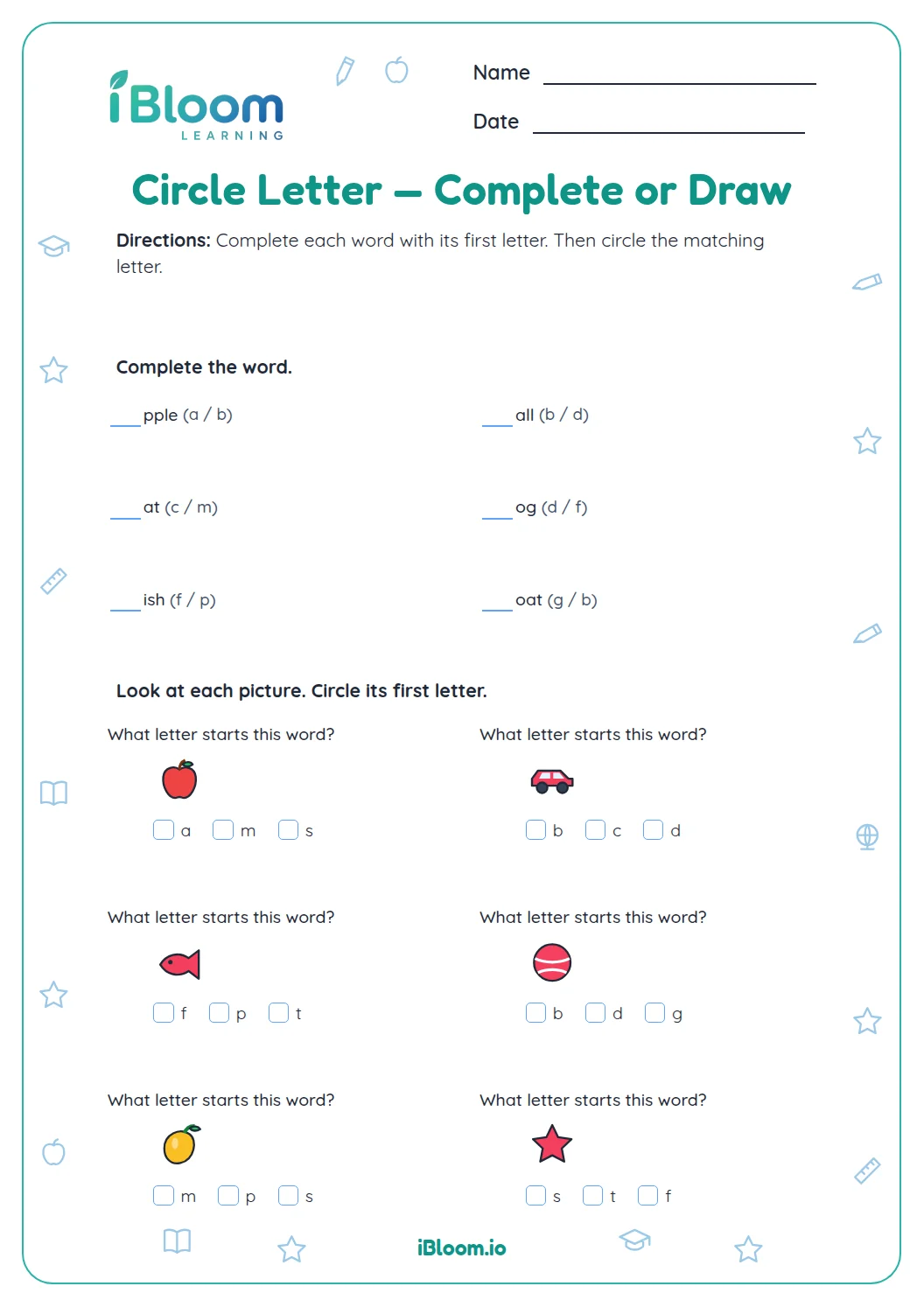
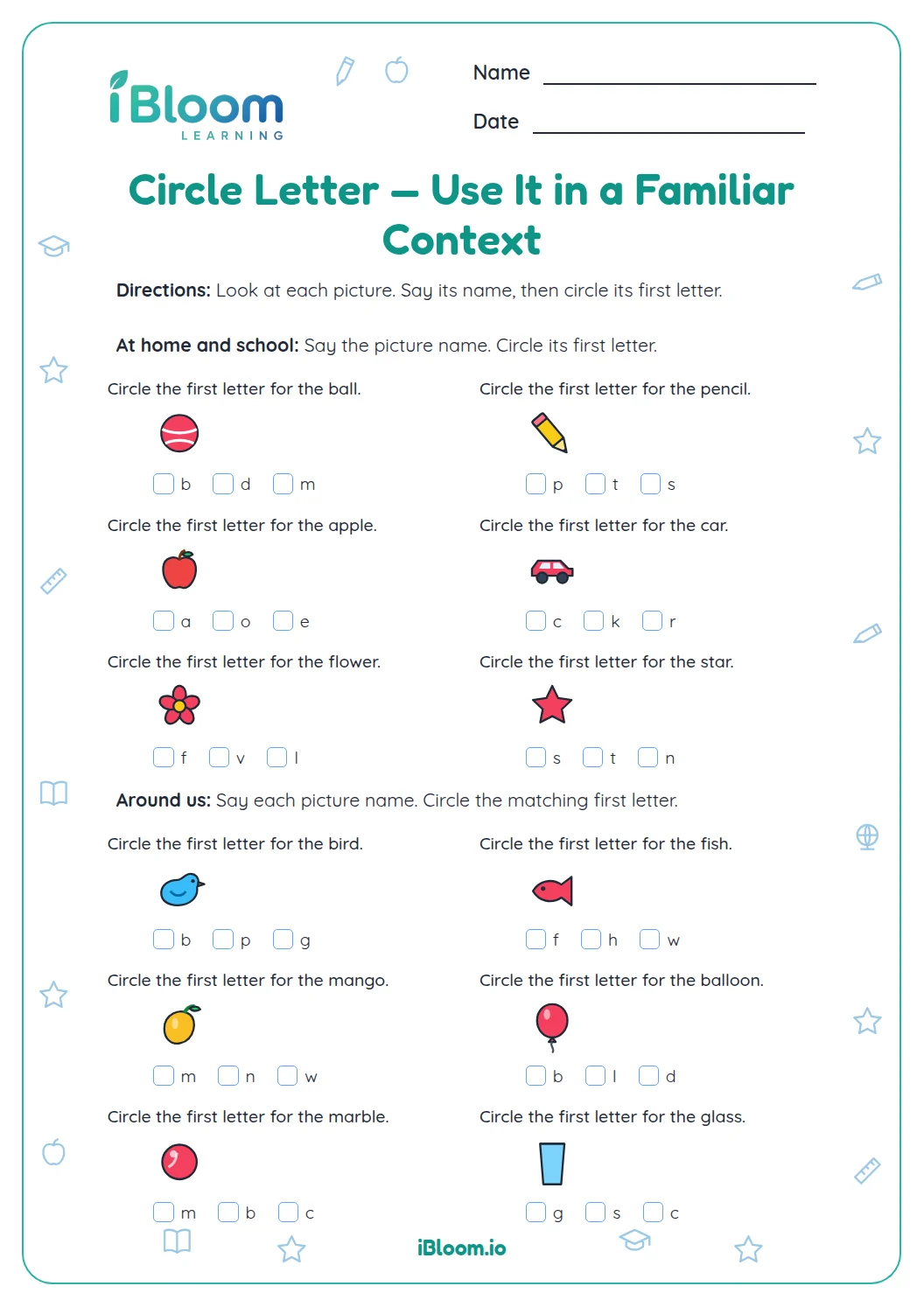
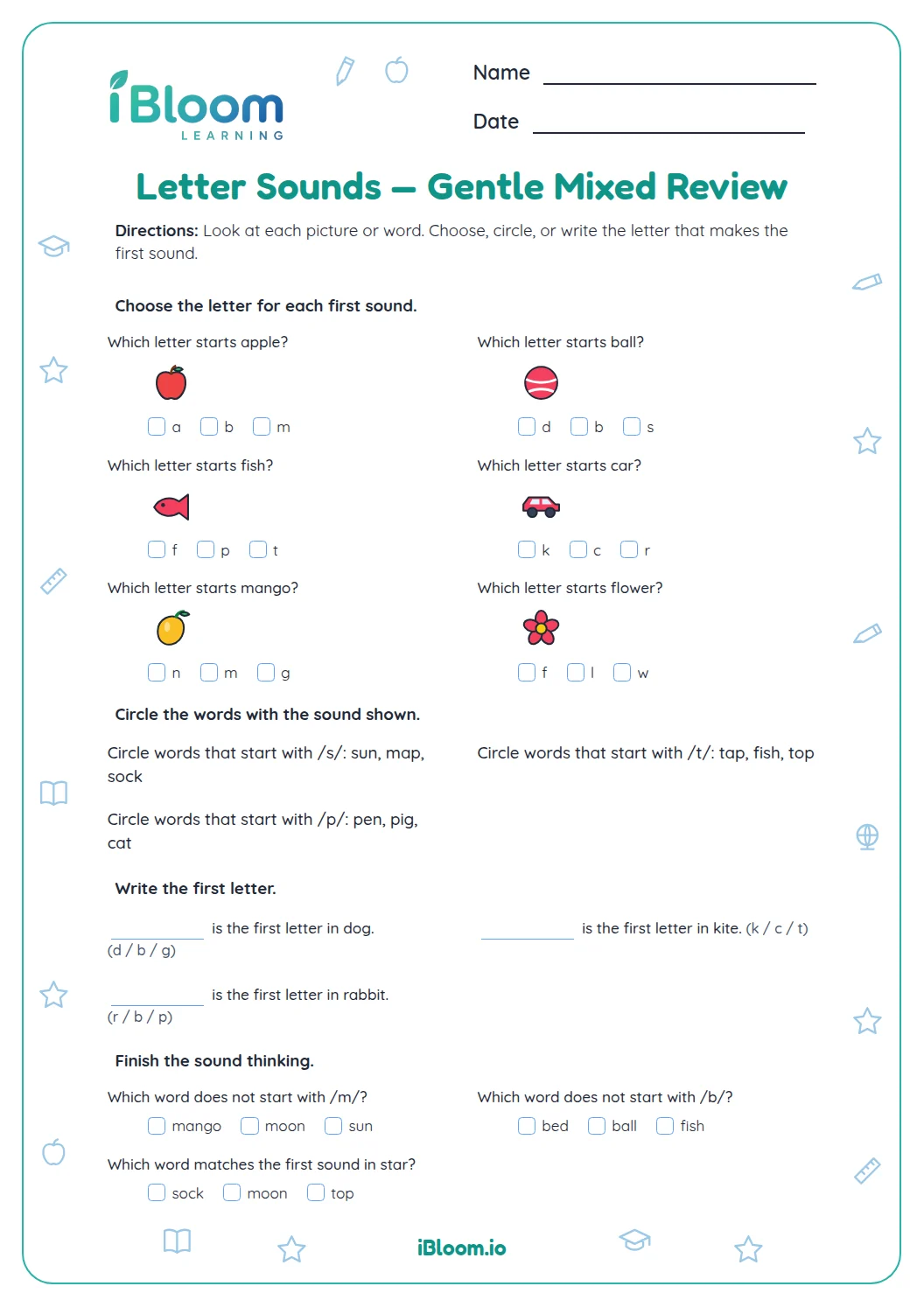
This free printable Grades Pre-K–K worksheet helps learners practice matching the first sound in a pictured word to its letter. It contains 15 questions in 2 parts, with two worksheet pages and a separate two-page answer key. Say the picture name and listen for its first consonant sound. It practices Common Core K.RF.3.a through the questions on this sheet.
Aligned to K.RF.3.a
How can a learner work through matching the first sound in a pictured word to its letter?
Start by identifying what each question asks, then use its picture, number sentence, or context as a clue. Say the picture name and listen for its first consonant sound.
Have the learner show or say one step before checking the answer. That makes the method visible and helps pinpoint where a sign, place value, or word part changed.
- 1The picture is a sun.
- 2Sun begins with /s/, represented by S.
- 3Choose S from the three letter choices.
What appears in each part of the worksheet?
The 15 questions move from direct practice to another way of applying the skill. Each group has its own direction so learners can focus on one task at a time.
- Match the first sound
- Try the mixed review
How can families check the work?
Use the separate answer key after the learner finishes each group. For a missed item, return to the clue in the prompt and solve it again. Say the picture name and listen for its first consonant sound.
How to use this worksheet
- 1Read the directions and name the skill: matching the first sound in a pictured word to its letter.
- 2Complete the first group together, saying the reasoning aloud.
- 3Let the learner try the next questions independently and show a step when helpful.
- 4Check answers with the separate key after finishing a group.
- 5For a missed item, find the clue or calculation step that changes the answer, then solve it again.
Common mistakes and quick fixes
The mistake
Choosing the last sound instead of the first
The fix
Say the pictured word and listen to its opening sound before looking at the choices.
The mistake
Naming the picture incorrectly
The fix
Name the object aloud first; use an adult’s word if the picture is unfamiliar.
The mistake
Choosing a letter name instead of its sound
The fix
Say the consonant sound at the start of the word, then match it to the letter that represents it.
Common Core alignment
Match picture names to the letters for their beginning consonant sounds.
On this sheet: Picture names cue learners to choose the matching first consonant letter.
Show the official wordingHide the official wording
Demonstrate basic knowledge of one-to-one letter-sound correspondences by producing the primary sound or many of the most frequent sounds for each consonant.
What to practice next
Make more practice
Further reading
Questions parents and teachers ask
What skill does this beginning-sounds sheet practice?
Children look at each picture, say its name, and choose the letter for its first sound. There are 15 picture questions in two parts across two worksheet pages, plus a separate two-page answer key for checking. The first group introduces the routine, and the second returns to the same picture-to-sound skill with a fresh set of words.
How should I say the first sound?
Say the picture name naturally, then prolong the beginning sound slightly: sun starts with /s/. Ask the child to choose S, the letter that represents that sound. Avoid adding an extra vowel sound after the consonant. This helps children hear a consonant at the start of a spoken word and connect that sound to its printed letter.
Why are there two groups of questions?
Part A introduces the matching task with pictures such as sun, ball, cat, dog, fish, hat, and moon. Part B provides a mixed review with pig, turtle, apple, bird, cup, goat, nest, and rain. Children revisit the same listening routine with new picture names, building a clear link between a word and its initial sound.
Should I tell the child the picture name?
Let the child name a familiar picture first. If the name is unfamiliar, say it clearly and ask the child to repeat it, then listen for the first sound. This keeps the task focused on the pictured word rather than guessing from the answer choices.
How long does the worksheet take?
Plan for about 10 to 15 minutes for both pages, adjusting for conversation and repetition. Children can complete one group at a time. The answer key is separate, so keep it aside until the child has selected letters for the pictures.