





About this worksheet
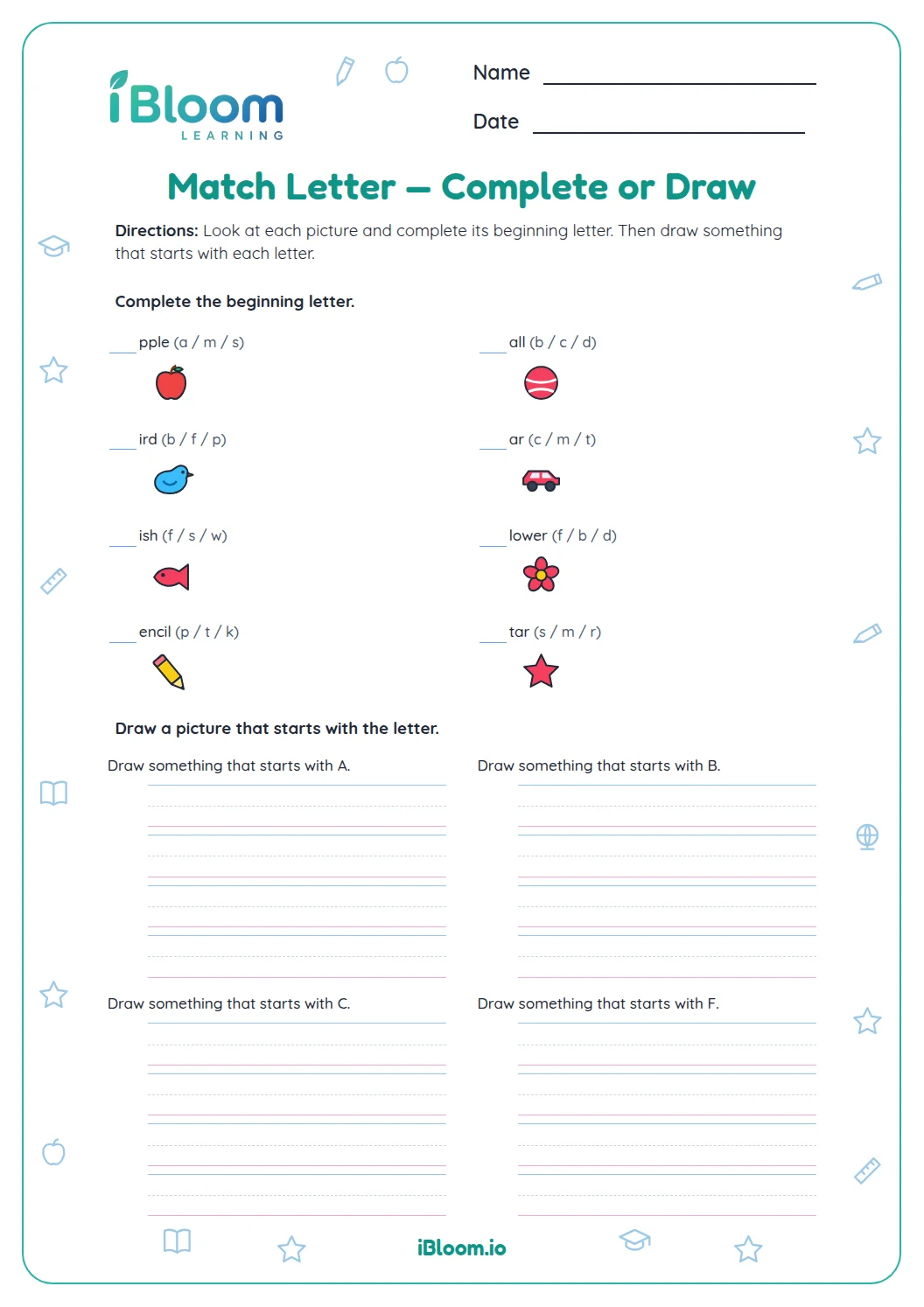
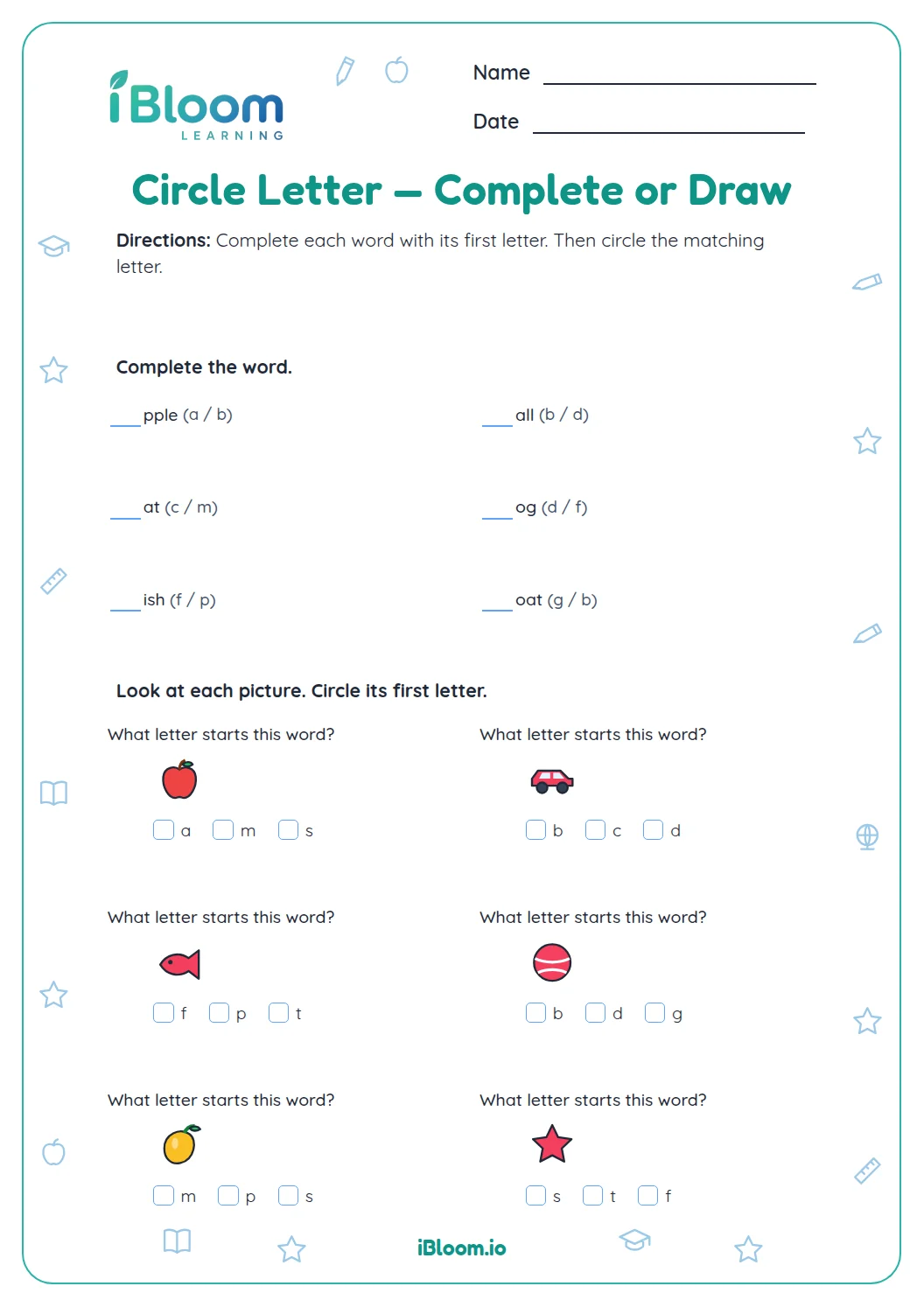
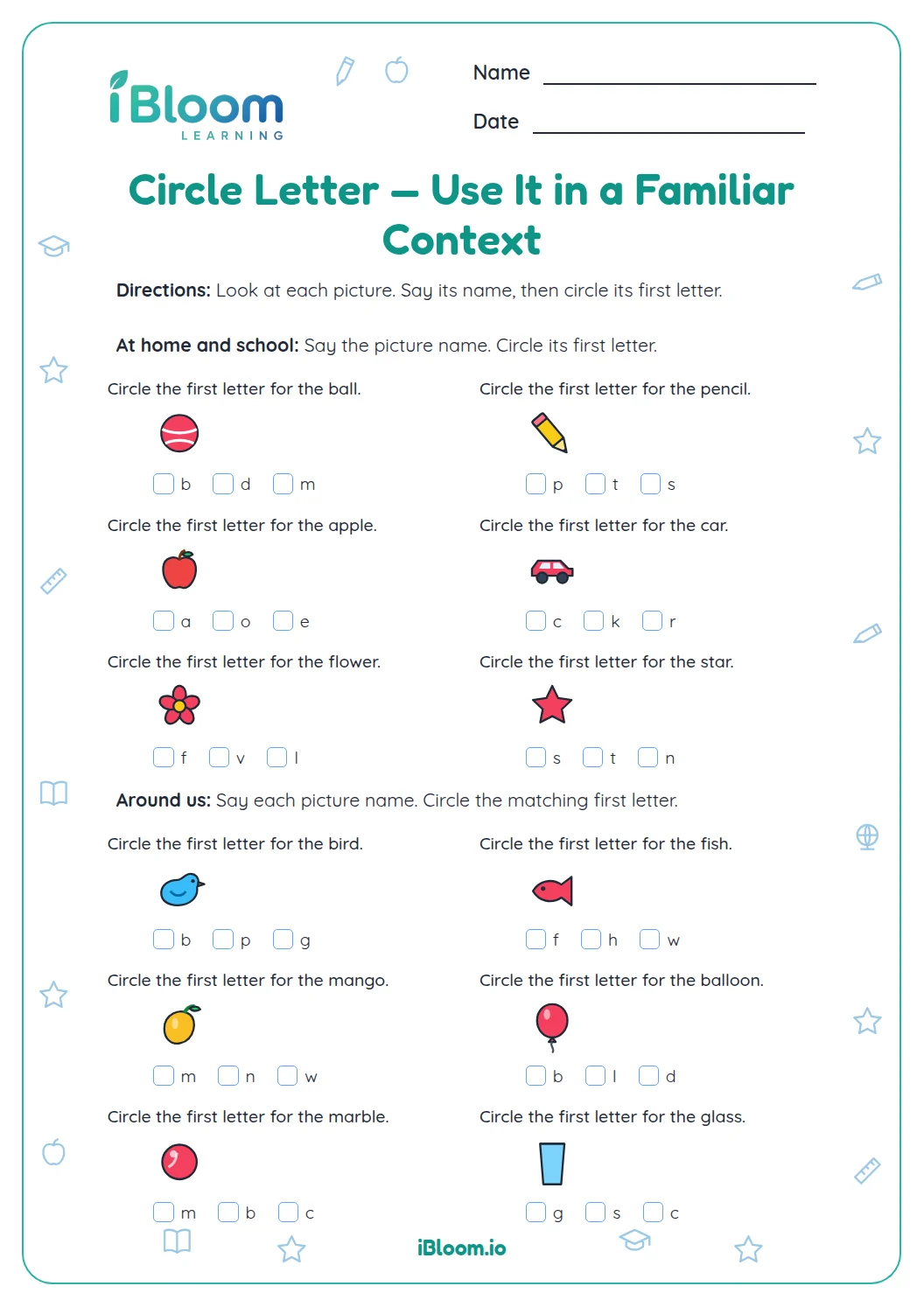
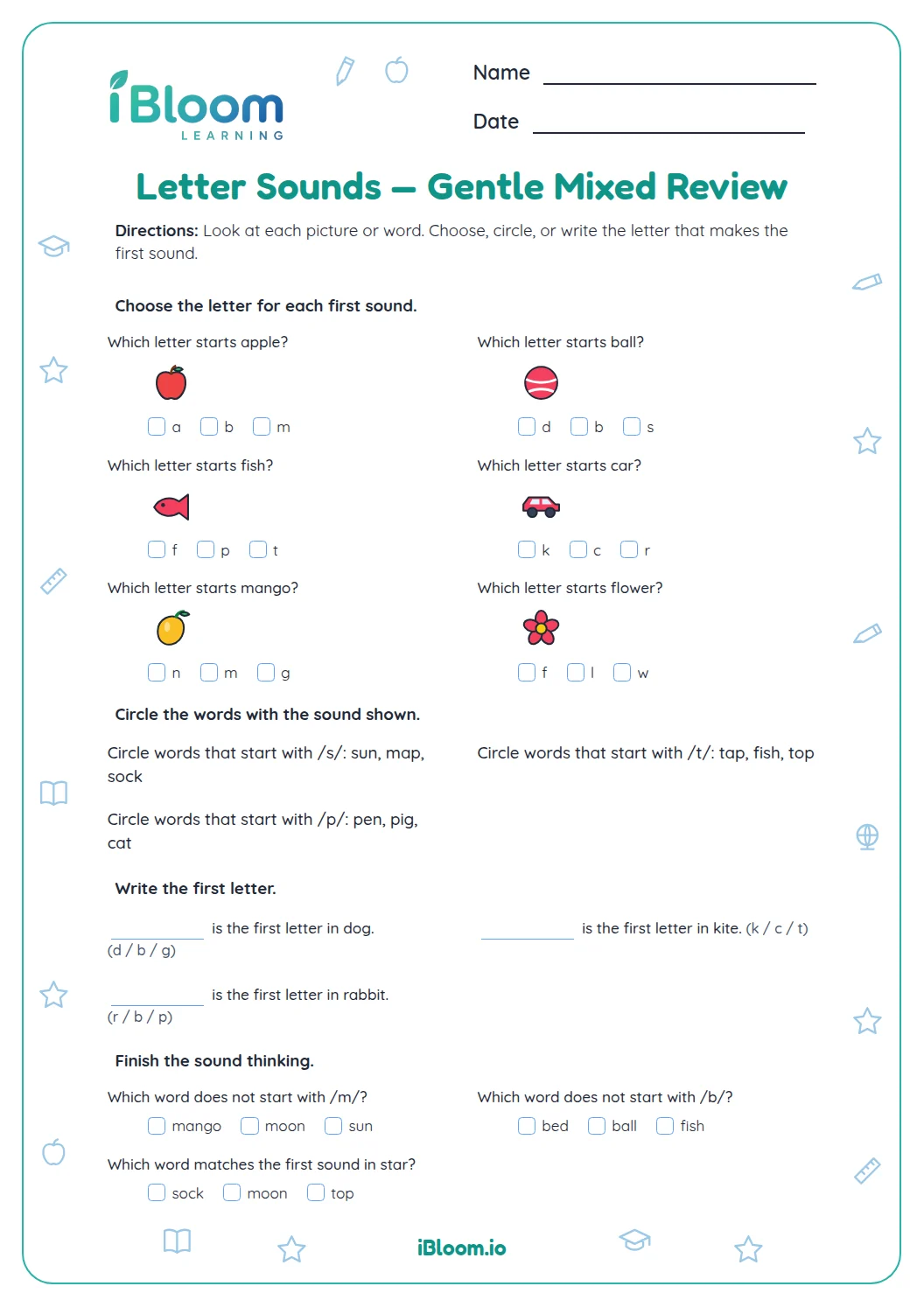
This free printable Preschool–Kindergarten worksheet gives children 14 picture-based chances to connect a spoken word with its first letter. Part A asks which letter starts pictured words such as apple and bird; Part B reverses the task and asks which pictured word begins with a named letter. The worksheet and answer key each use two pages.
What do children do on this beginning-sounds sheet?
Part A shows a picture and asks which letter starts its name. Part B gives a letter and asks children to choose the matching picture. Each prompt has three choices, and the familiar drawings give children a concrete word to say aloud.
The old sheet asked children to color a shape. These new items keep the same printable format while practicing the stated beginning-sounds skill.
- 7 picture-to-letter questions
- 7 letter-to-picture questions
- A separate answer key marks the choices
How can a child match a picture to its first letter?
Say the pictured word slowly, then listen to its first sound. For a picture of a sun, say “sun” and notice /s/ at the beginning. Choose the letter s.
- 1[pic:sun] Which letter starts the picture?
- 2Say “sun.” Its first sound is /s/, so choose s.
How can an adult support the sound practice?
Ask the child to name each picture before looking at the choices. If a picture name is unfamiliar, say the word together and say its first sound slowly: “ffffish.” Then ask which letter represents that sound.
Part B reverses the direction: start with the letter sound, then name each picture choice to find a match.
How to use this worksheet
- 1Read the instruction line and look over the first part together.
- 2Complete the first question as a model, naming the clue or step used.
- 3Finish the rest of that part independently.
- 4Move to the next part and use the same strategy on the new format.
- 5Check answers with the key and revisit any missed item.
Common beginning-sound mix-ups
The mistake
Choosing a letter heard at the end of a word, such as n in sun.
The fix
Say the word slowly and listen to the first sound, before the rest of the word.
The mistake
Looking at the picture’s color or shape instead of naming it.
The fix
Say the object’s name aloud, then match its first sound to a letter.
The mistake
Matching a picture to a letter name rather than its sound.
The fix
Say the sound made at the start of the pictured word and find its letter.
What to practice next
Make more practice
Questions parents and teachers ask
How many questions are on the beginning-sounds worksheet?
There are 14 picture questions across two parts. In Part A, children see a picture and choose its beginning letter. In Part B, they see a letter and choose a picture that starts with that sound. The separate two-page answer key shows each correct choice.
What is an example of a question on the sheet?
One Part A item shows a sun and asks which letter starts the picture. The child says “sun,” listens for /s/ at the beginning, and chooses s. Part B turns the task around by asking which picture begins with a particular letter.
Are the pictures part of the task?
Yes. Each question uses a familiar picture as a word clue, so children should name the object before choosing. If a child calls a picture by another familiar name, say both words aloud and identify the word the worksheet intends.
How should we use the two parts?
Complete Part A first, naming each pictured word and matching its first sound to a letter. Then try Part B, where the letter sound is given and the child finds a matching picture. This order gives practice in both directions.
What can I do if my child chooses the wrong letter?
Ask your child to say the pictured word slowly and listen to its first sound. For “fish,” say the /f/ sound slowly and compare it with the letter choices. Let the child choose again before checking the answer key. The key shows the target letter for each picture or the pictured word that starts with the named letter.