Free printable practice
Blends Practice Activities
Printable preschool and kindergarten blends worksheets that help children hear, say, match, and read consonant blends in simple words.
Free printable worksheet PDFs
Preview every available page, then download the free worksheet PDF for home, homeschool, tutoring, or classroom practice.
Preview the exact activity before downloading it.
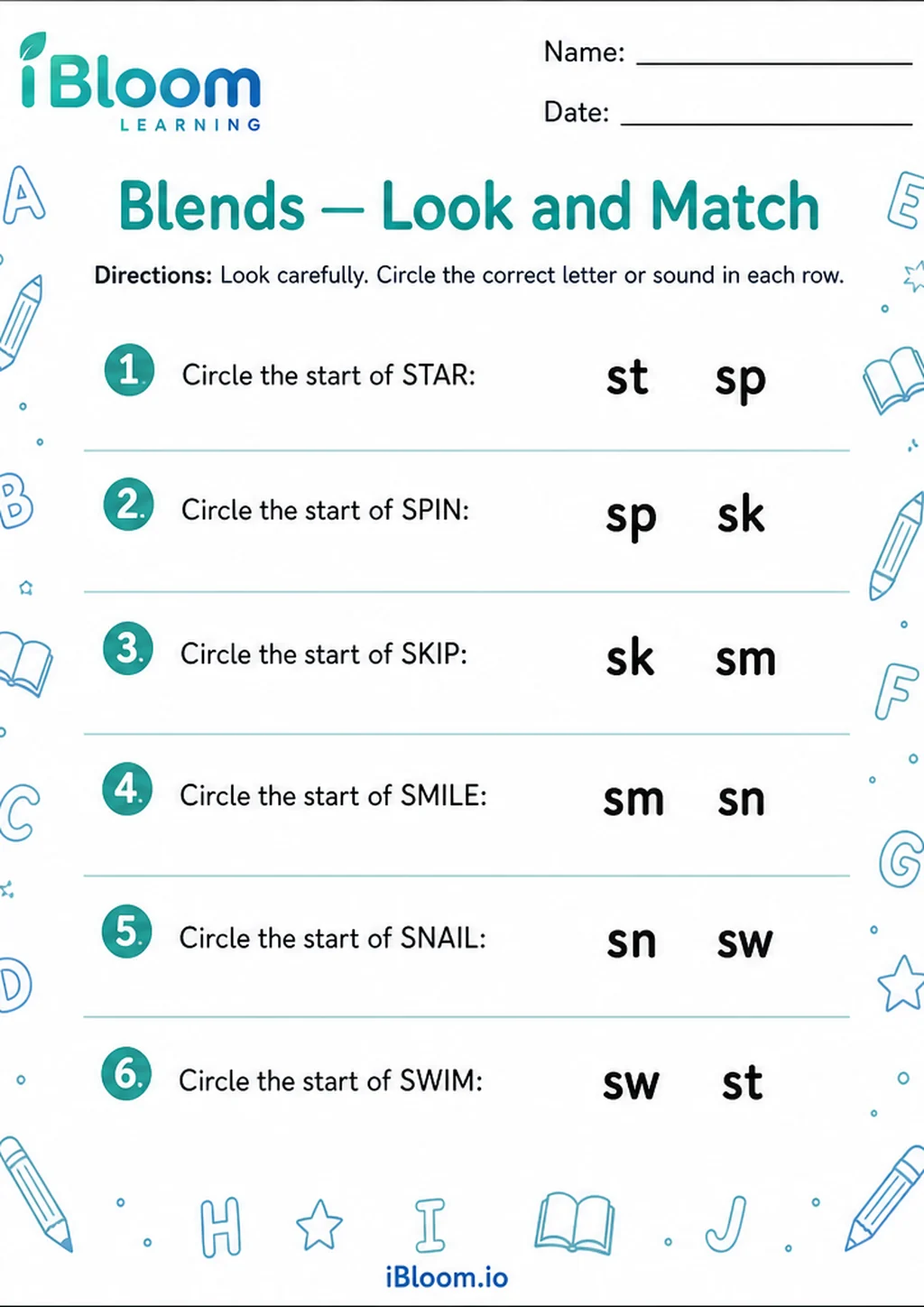 Blends — Look and MatchPrintable preschool and kindergarten blends worksheets that help children hear, say, match, and read consonant blends in simple words. This look and match worksheet provides a distinct, age-appropriate way to practise the same lesson.Preschool, KindergartenFree PDF preview
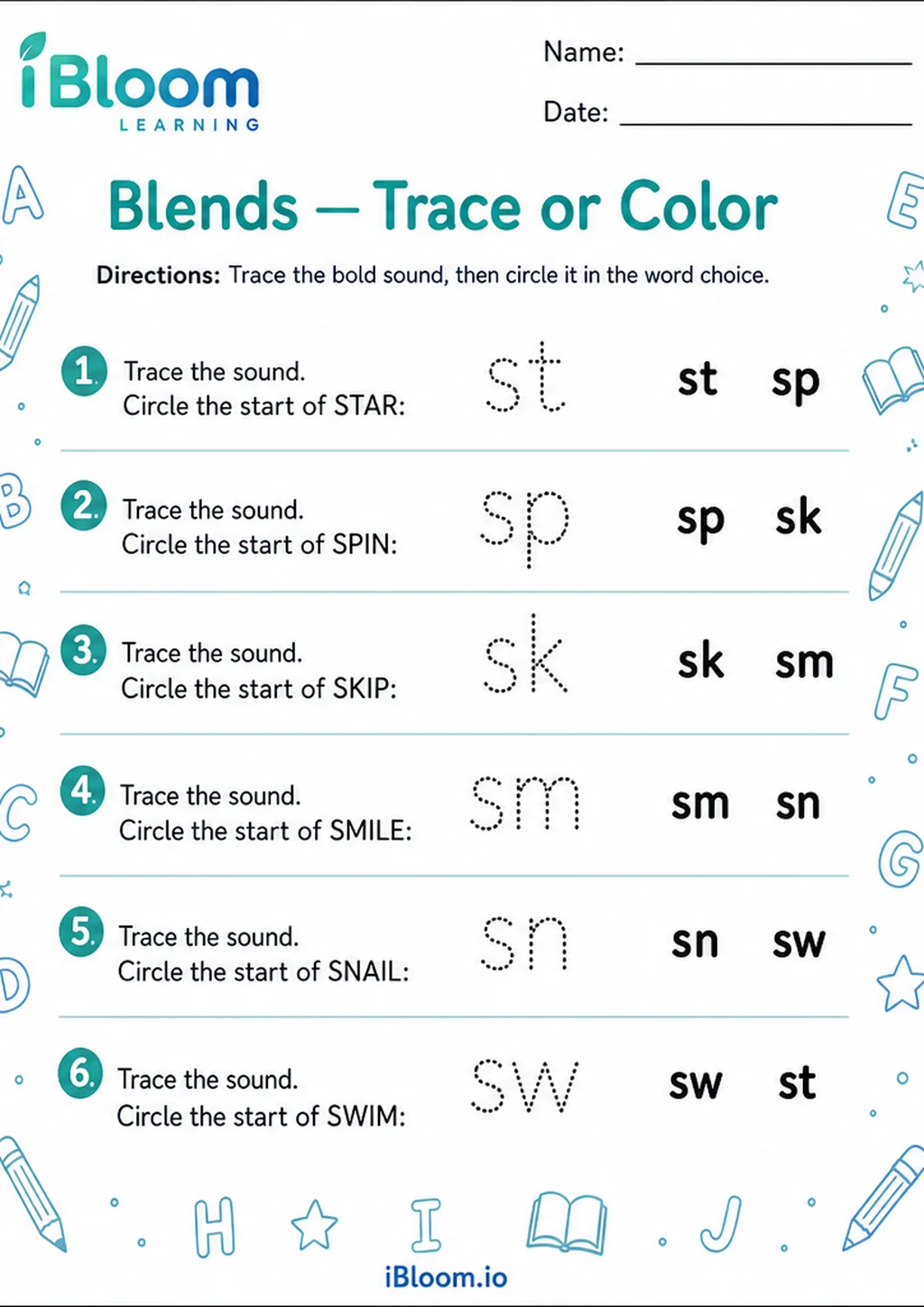 Blends — Trace or ColorPrintable preschool and kindergarten blends worksheets that help children hear, say, match, and read consonant blends in simple words. This trace or color worksheet provides a distinct, age-appropriate way to practise the same lesson.Preschool, KindergartenFree PDF preview
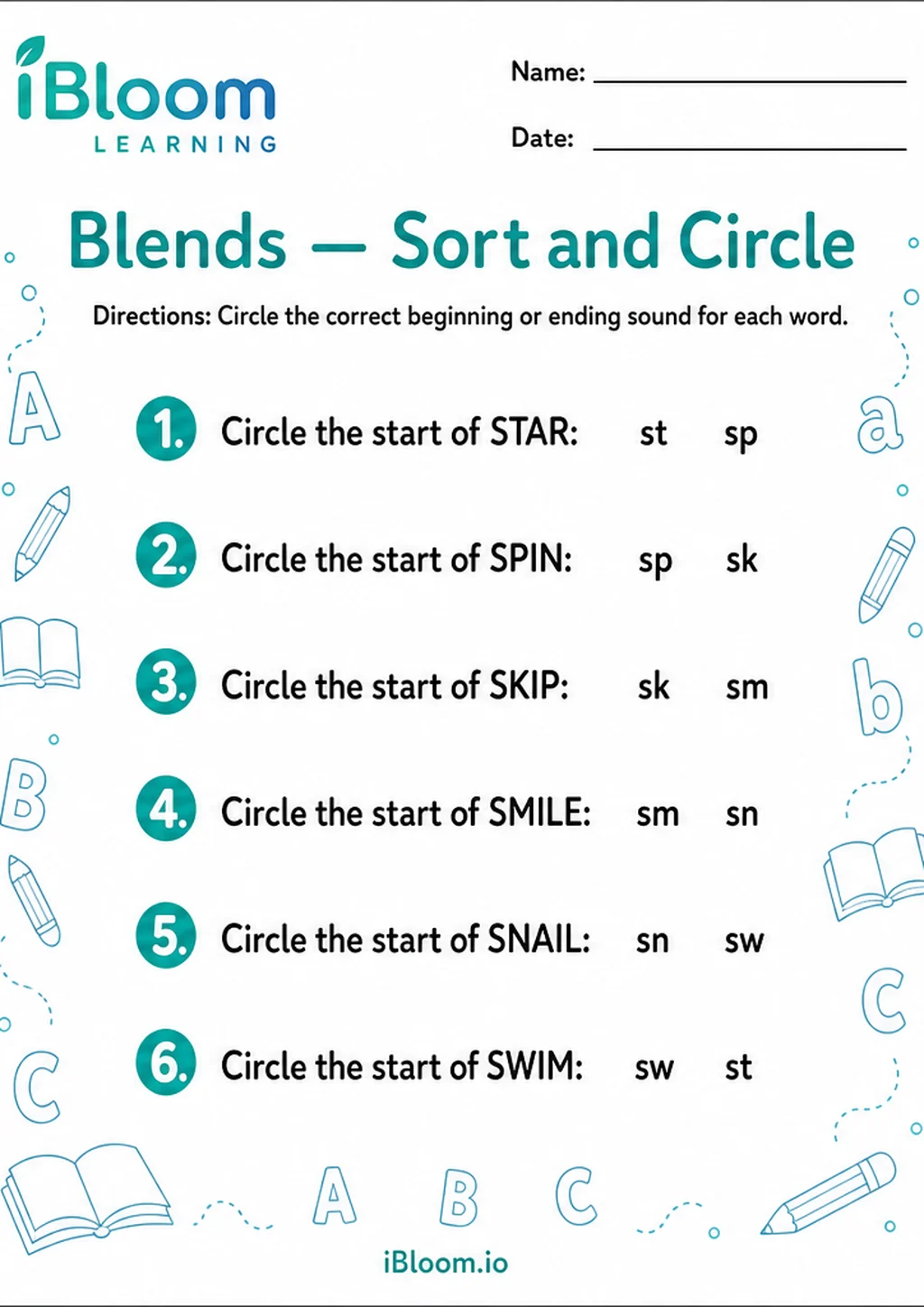 Blends — Sort and CirclePrintable preschool and kindergarten blends worksheets that help children hear, say, match, and read consonant blends in simple words. This sort and circle worksheet provides a distinct, age-appropriate way to practise the same lesson.Preschool, KindergartenFree PDF preview
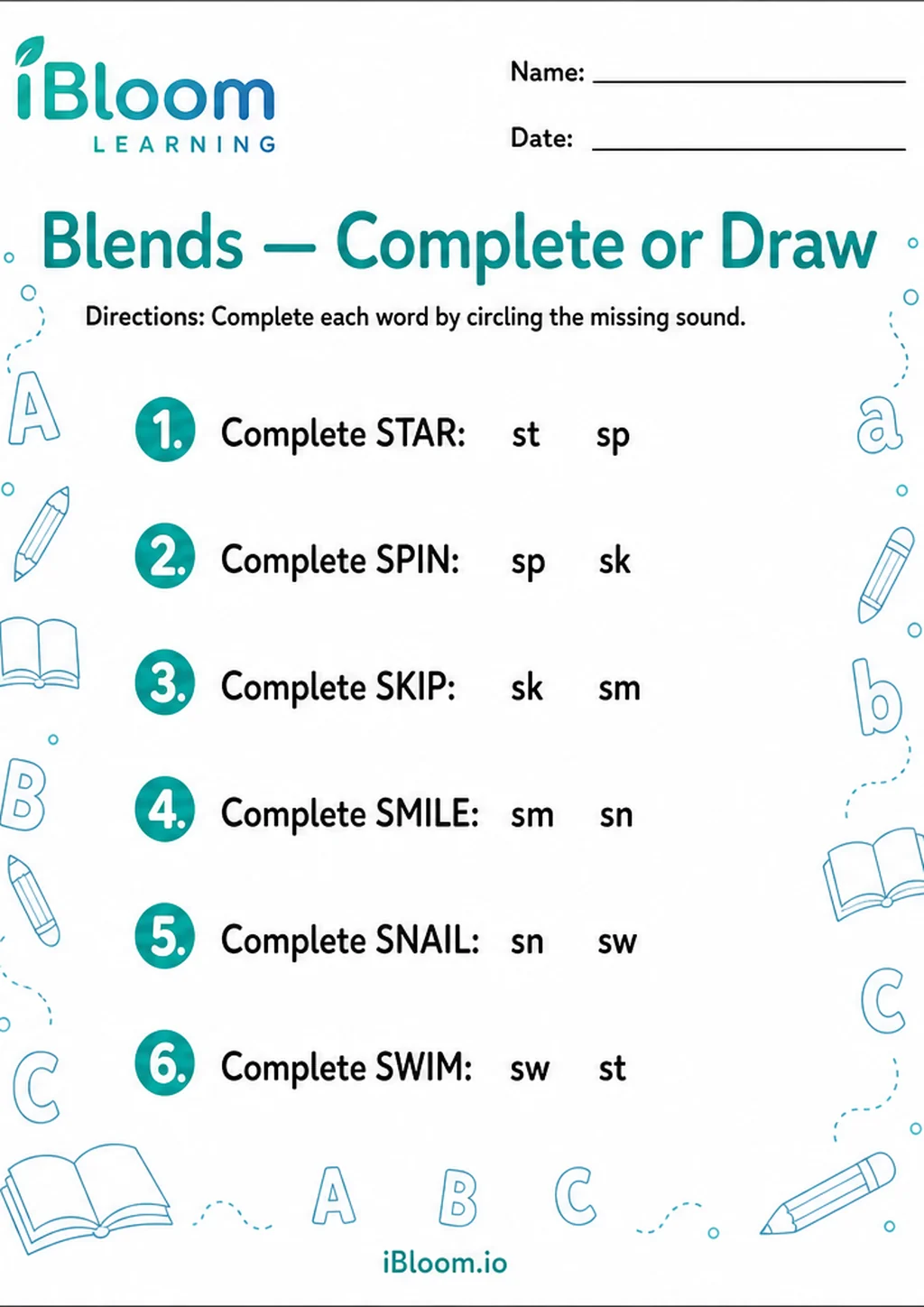 Blends — Complete or DrawPrintable preschool and kindergarten blends worksheets that help children hear, say, match, and read consonant blends in simple words. This complete or draw worksheet provides a distinct, age-appropriate way to practise the same lesson.Preschool, KindergartenFree PDF preview
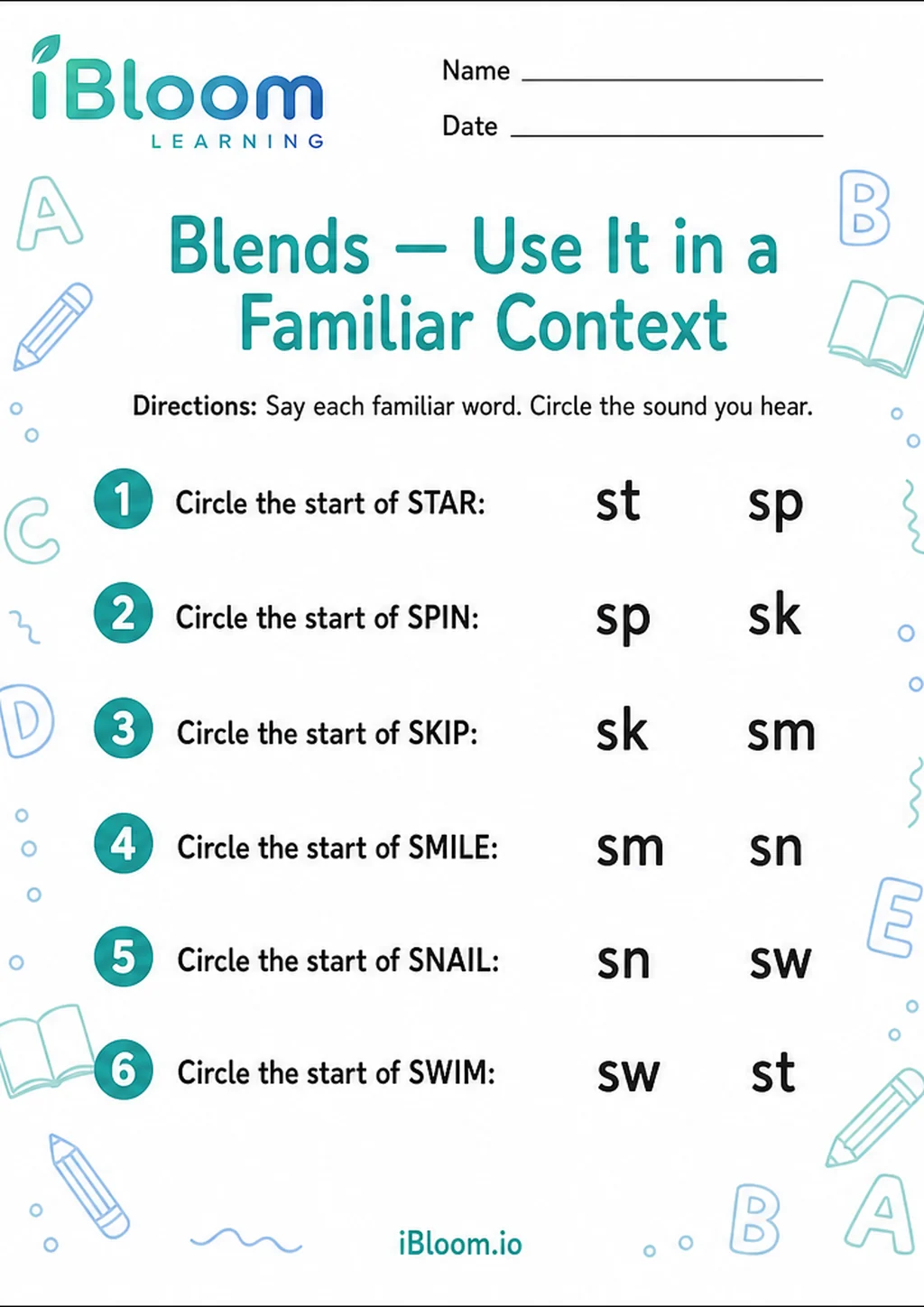 Blends — Use It in a Familiar ContextPrintable preschool and kindergarten blends worksheets that help children hear, say, match, and read consonant blends in simple words. This use it in a familiar context worksheet provides a distinct, age-appropriate way to practise the same lesson.Preschool, KindergartenFree PDF preview
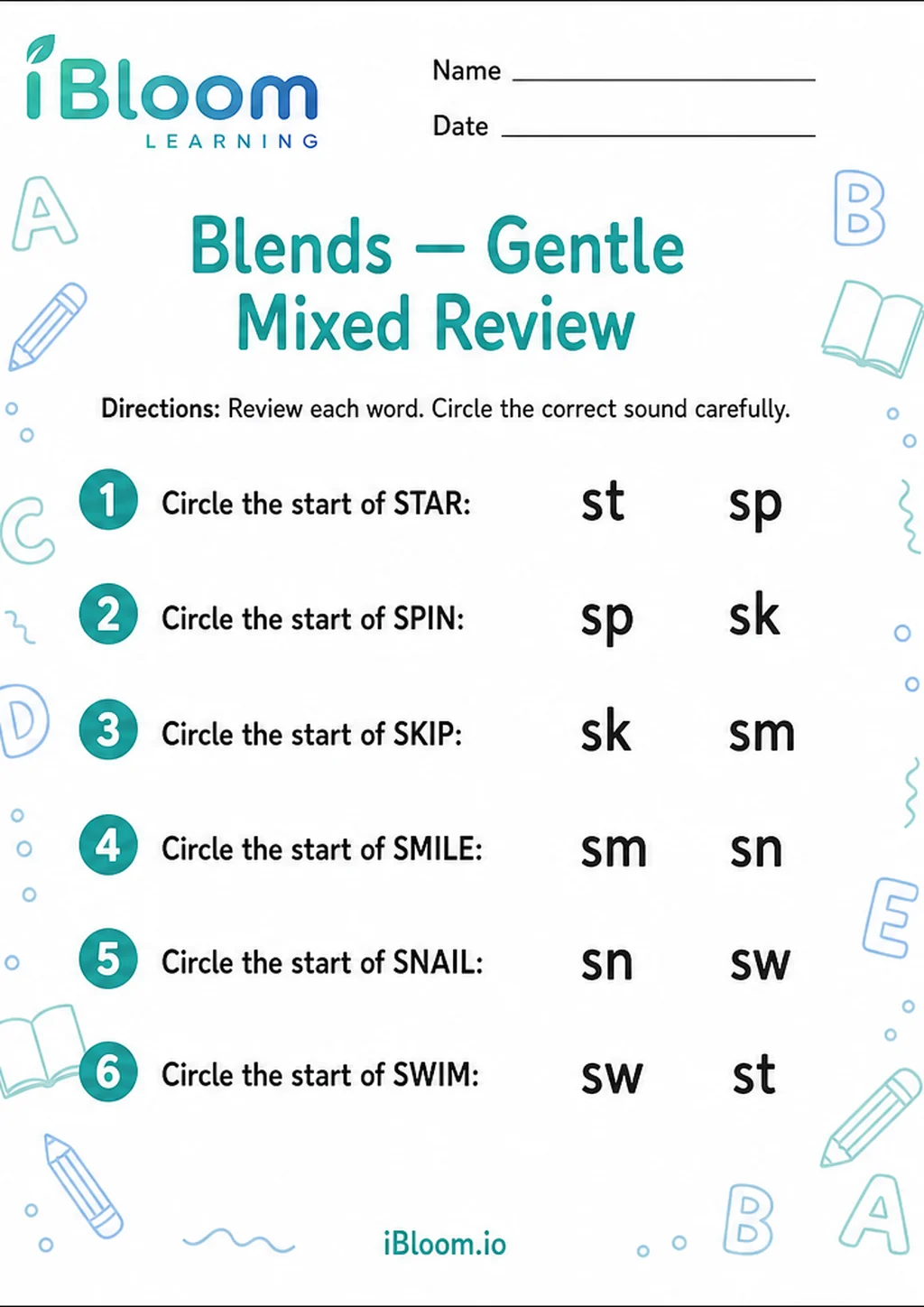 Blends — Gentle Mixed ReviewPrintable preschool and kindergarten blends worksheets that help children hear, say, match, and read consonant blends in simple words. This gentle mixed review worksheet provides a distinct, age-appropriate way to practise the same lesson.Preschool, KindergartenFree PDF preview
Practice that builds confidence
What consonant blends are
These preschool and kindergarten blends practice activities help children notice when two consonants work side by side at the beginning or end of a word. Children practise hearing each sound in blends such as bl, cl, fl, br, st, sn, and sp while connecting the sounds to letters.
The printable worksheets include picture-based tasks, letter matching, tracing, sorting, circling, and simple word reading. Activities move from listening for a blend to recognizing it in print, giving young learners repeated practice without long passages or overwhelming word lists.
A consonant blend is a group of consonants where each sound can still be heard, as in /b/ and /l/ in “blue” or /s/ and /t/ in “star.” This is different from a digraph, where two letters make one new sound. These worksheets focus on helping children keep both sounds in their mouths and ears instead of dropping one.

How the practice builds
Children begin with pictures and oral language: saying words, listening for the first sound group, and matching a picture to a printed blend. They then trace or write blends, choose the missing blend in a simple word, and sort words that start with different blends. Some activities may also include common ending blends, such as -nd or -st, when the task is simple and picture-supported.
A simple parent routine
Choose one page and one blend family, such as bl words. Say each picture name slowly: “b-l-ue, blue.” Ask your child to repeat it, tap once for the first consonant and once for the second, then point to the letters. After the worksheet, play a quick hunt: find something that starts with the same blend, such as block, blanket, or black.

Classroom uses for teachers
Teachers can use these blends worksheets in small-group phonics lessons, literacy centers, morning work, or quick review after a mini lesson. Picture sorting pages work well for children who need more listening practice, while fill-in or matching pages are useful for checking whether children connect spoken blends to written letters.

Common errors to watch for
Young learners often say only one sound in a blend, reading “stop” as “top” or “blue” as “boo.” Others may confuse blends that look or sound close, such as br and bl, or reverse the order of the sounds. Encourage children to say the word slowly, touch each letter, and check that the picture still matches the word they read.
Free printable PDF download
Use this blends worksheets for preschool and kindergarten page to preview the activity, print it, or download it as a PDF for quick practice. It works well for homework, homeschool lessons, tutoring, morning work, revision, and classroom centers.
Answers and answer key support
After the child completes the worksheet independently, parents and teachers can use the answer support or answer key information to check the work, review mistakes, and choose the next practice step.
Why iBloom worksheets help
The pages keep the focus narrow so children can practise one phonics idea at a time. Clear pictures, large print, and repeated blend patterns make the work approachable for preschool and kindergarten learners. A child-friendly strategy is: “Say it, stretch it, touch it, read it”—say the picture name, stretch the first two sounds, touch the letters, then read the whole word.
Helpful answers
Frequently asked questions
What is a consonant blend for preschool and kindergarten children?
A consonant blend is two or more consonants together where each sound is still heard, such as bl in blue, st in star, or sn in snow.
Should my child master single consonant sounds before blends?
Yes, children usually do best with blends after they can recognize and say most individual consonant sounds. Blends require them to hold two sounds in order.
What is the difference between a blend and a digraph?
In a blend, each consonant sound is heard, as in fl in flag. In a digraph, two letters make one new sound, such as sh or ch.
How can I help if my child drops one sound in a blend?
Have your child say the word slowly, tap once for each consonant sound, and touch the matching letters. For example, tap /s/ then /t/ before reading stop.
Are these blends worksheets better for preschool or kindergarten?
They can support both. Preschool children may use the picture and listening activities, while kindergarten children can also trace, match, sort, and read simple blend words.
Is this blends worksheets for preschool and kindergarten free?
Yes. You can preview it for free and use the printable worksheet for home or classroom practice.
Can I download this blends worksheets for preschool and kindergarten as a PDF?
Yes. Use the worksheet download option to save a printable PDF, or print the worksheet directly from the page.
Does this blends worksheets for preschool and kindergarten include answers or an answer key?
When the activity has fixed answers, iBloom includes answer support so parents and teachers can check the completed worksheet.