Free printable practice
Identify Practice Activities
Printable preschool and kindergarten activities for identifying consonant letters and building early phonics awareness.
Free printable worksheet PDFs
Preview every available page, then download the free worksheet PDF for home, homeschool, tutoring, or classroom practice.
Preview the exact activity before downloading it.
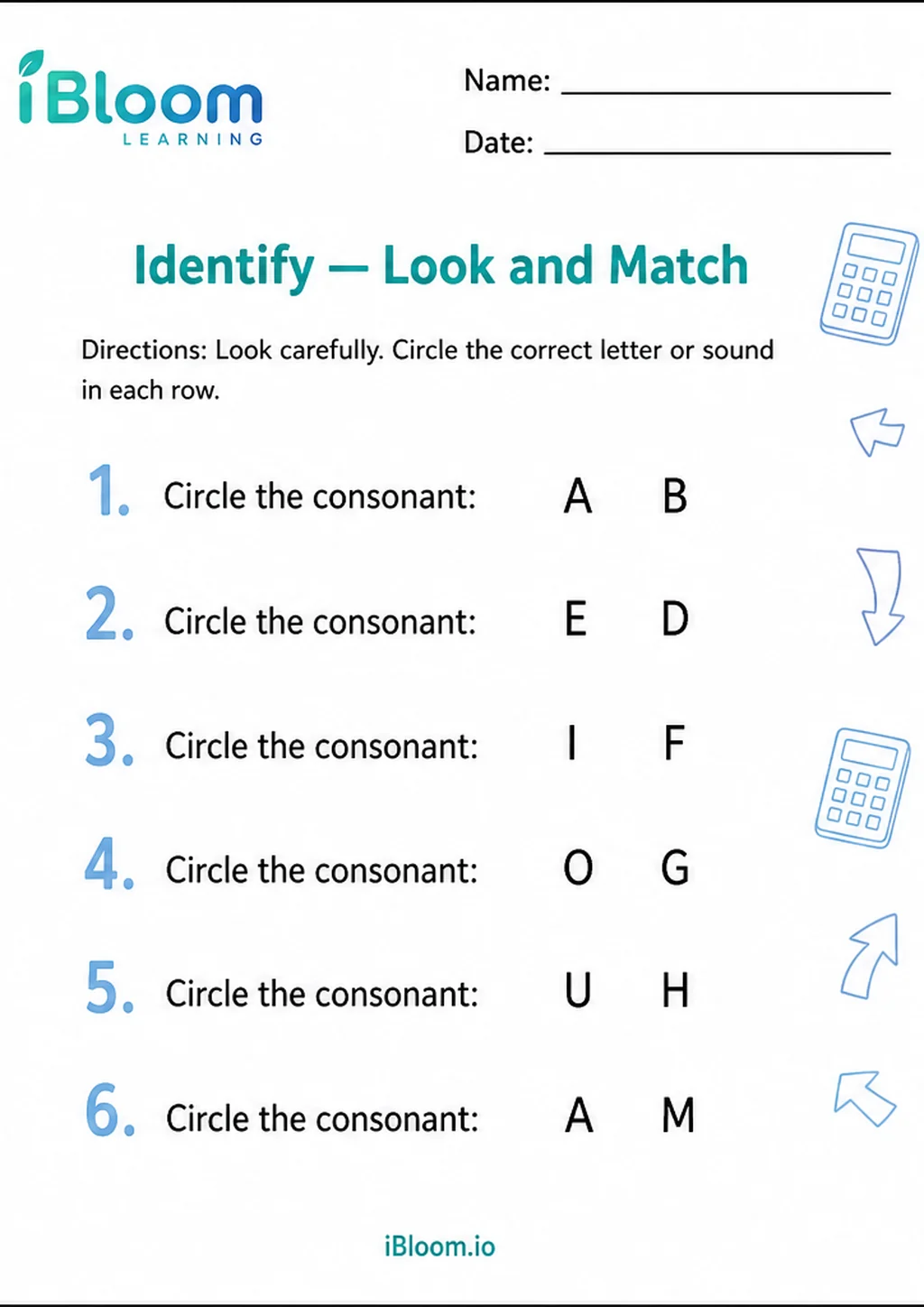 Identify — Look and MatchPrintable preschool and kindergarten activities for identifying consonant letters and building early phonics awareness. This look and match worksheet provides a distinct, age-appropriate way to practise the same lesson.Preschool, KindergartenFree PDF preview
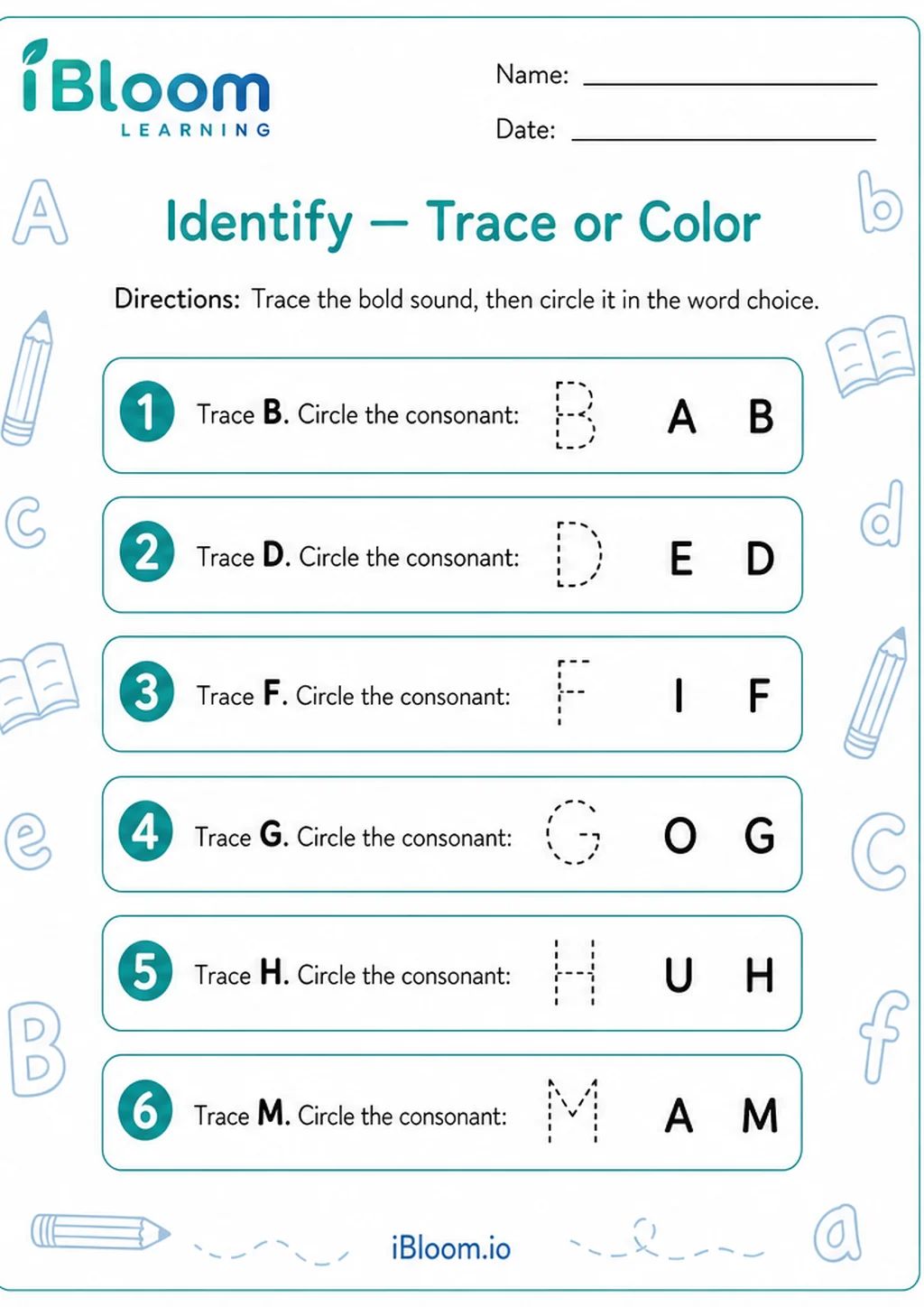 Identify — Trace or ColorPrintable preschool and kindergarten activities for identifying consonant letters and building early phonics awareness. This trace or color worksheet provides a distinct, age-appropriate way to practise the same lesson.Preschool, KindergartenFree PDF preview
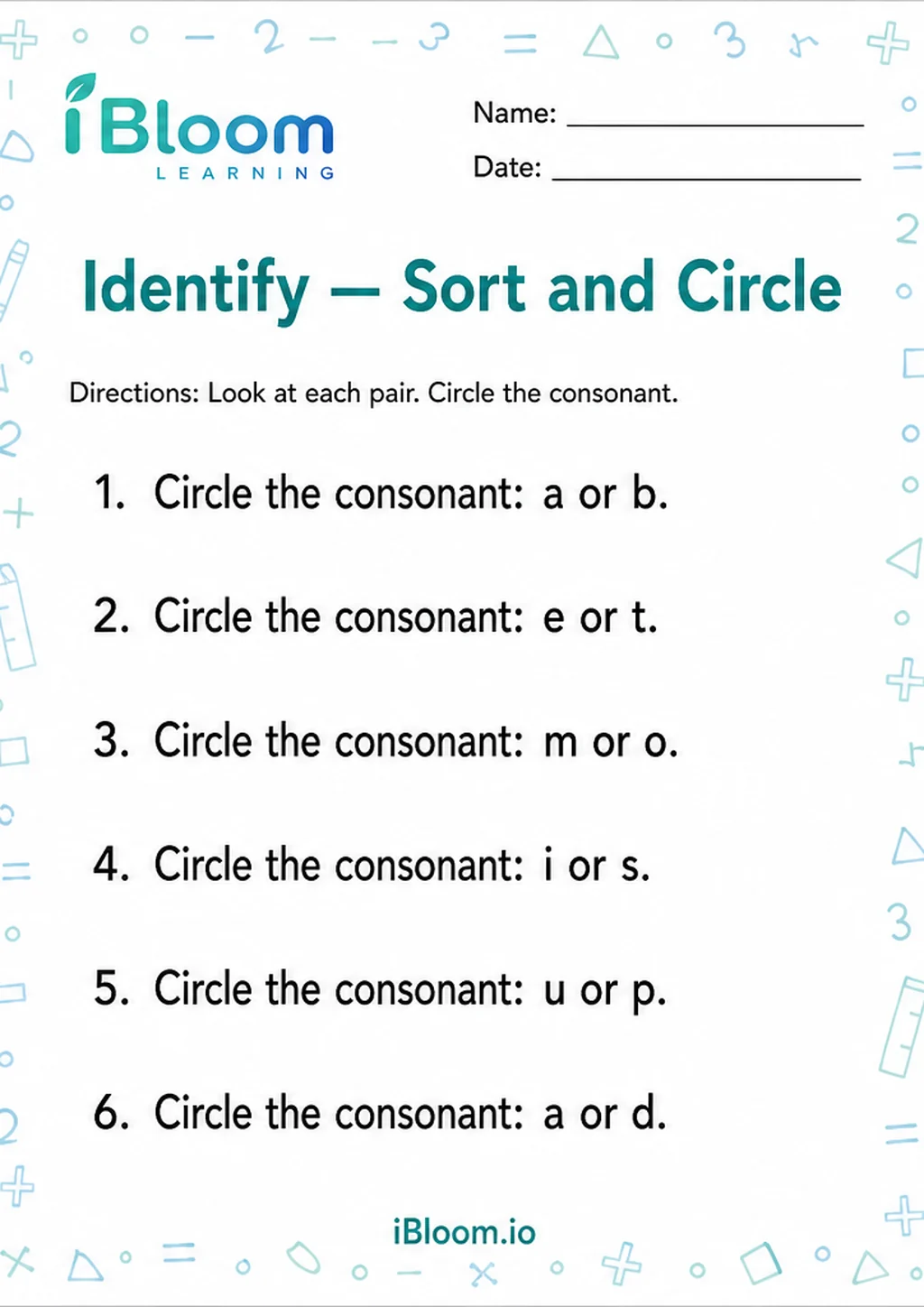 Identify — Sort and CirclePrintable preschool and kindergarten activities for identifying consonant letters and building early phonics awareness. This sort and circle worksheet provides a distinct, age-appropriate way to practise the same lesson.Preschool, KindergartenFree PDF preview
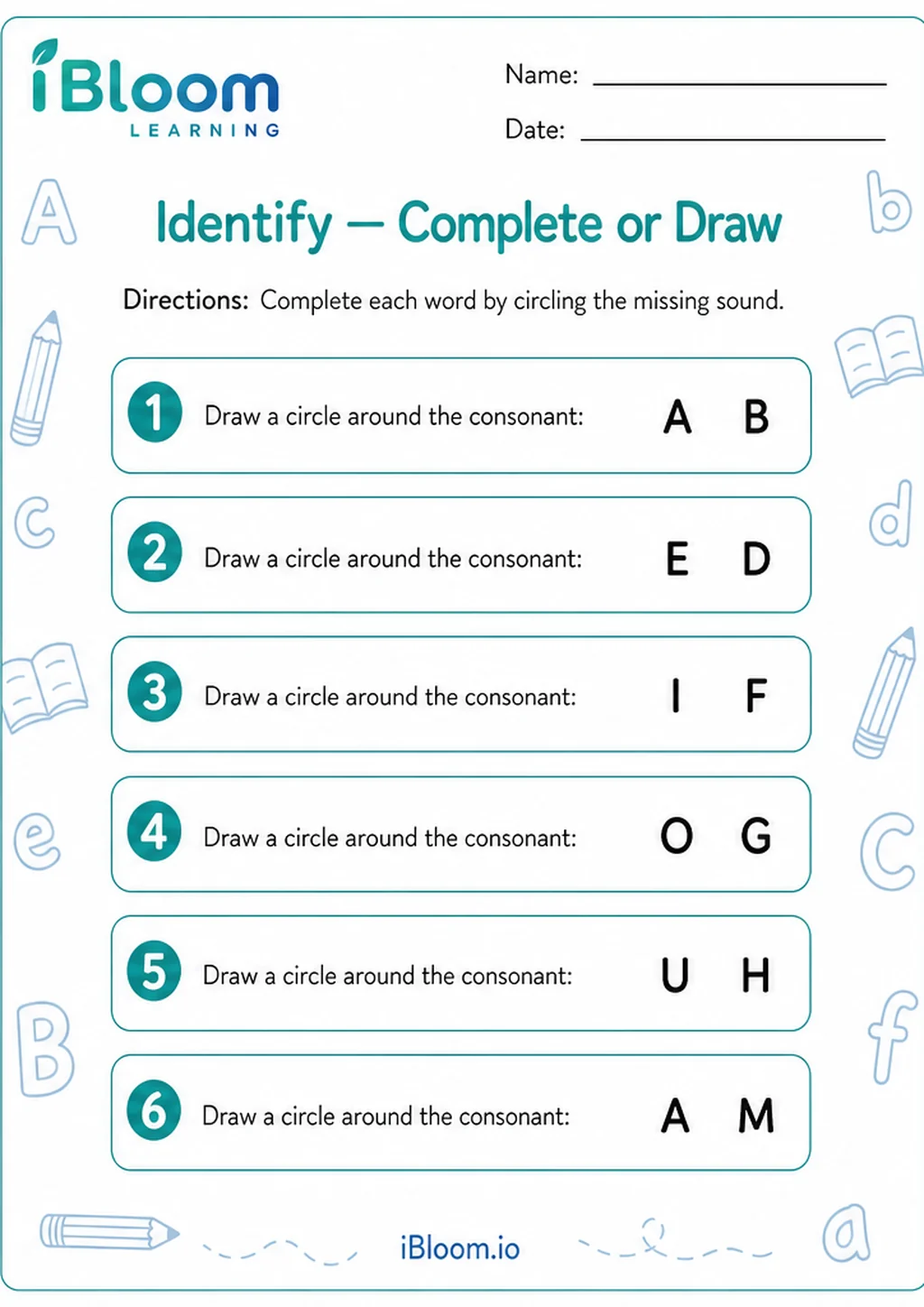 Identify — Complete or DrawPrintable preschool and kindergarten activities for identifying consonant letters and building early phonics awareness. This complete or draw worksheet provides a distinct, age-appropriate way to practise the same lesson.Preschool, KindergartenFree PDF preview
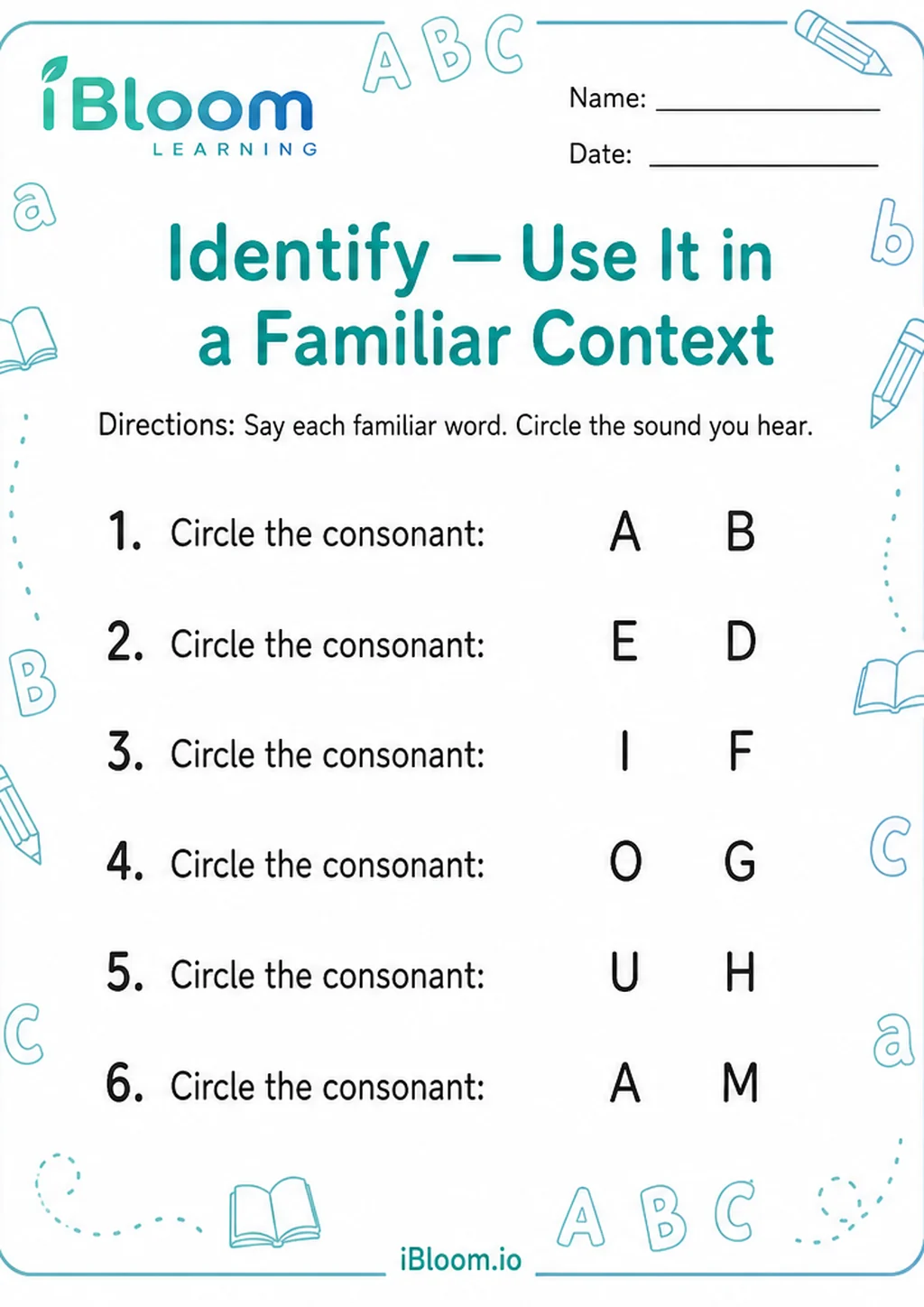 Identify — Use It in a Familiar ContextPrintable preschool and kindergarten activities for identifying consonant letters and building early phonics awareness. This use it in a familiar context worksheet provides a distinct, age-appropriate way to practise the same lesson.Preschool, KindergartenFree PDF preview
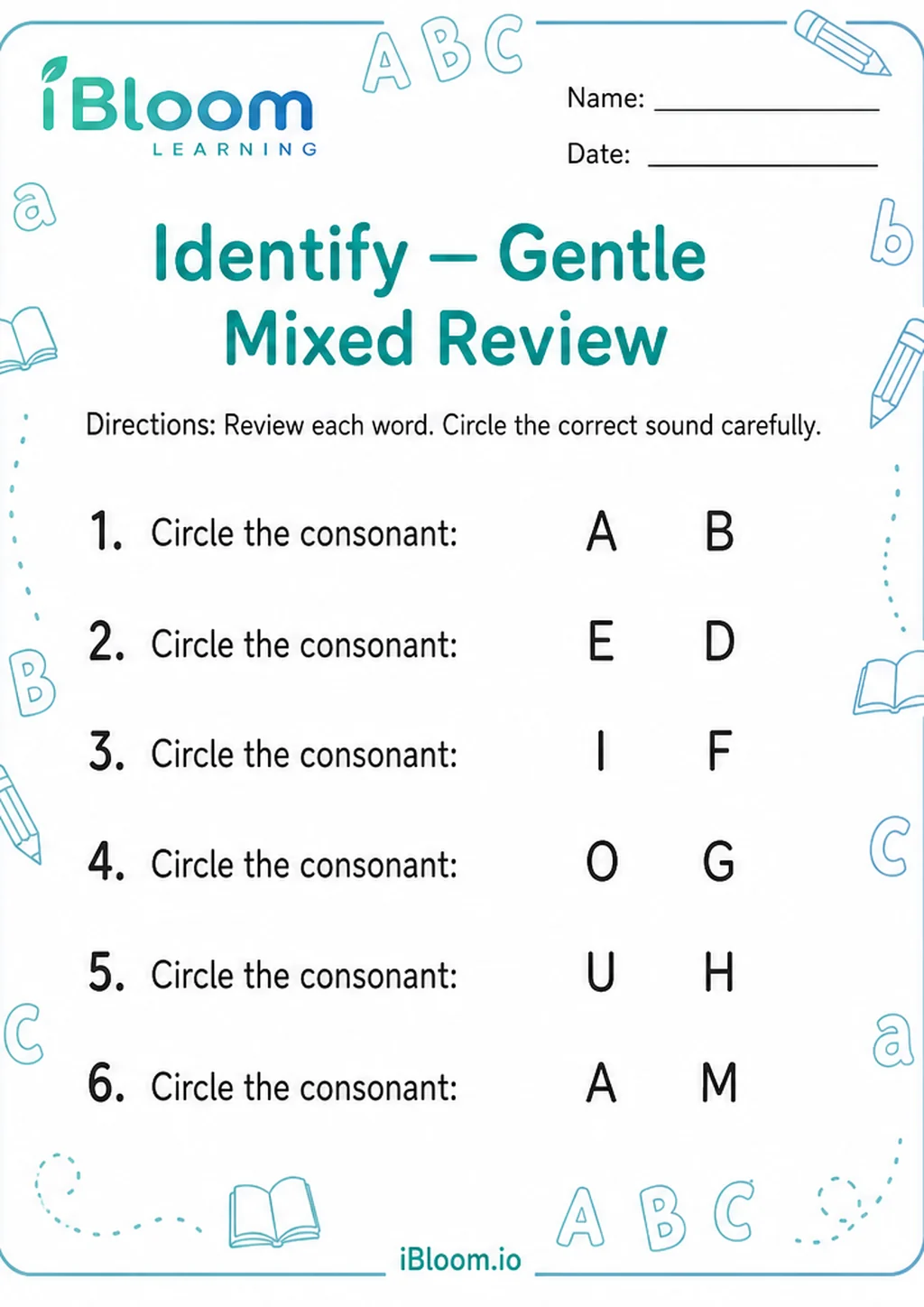 Identify — Gentle Mixed ReviewPrintable preschool and kindergarten activities for identifying consonant letters and building early phonics awareness. This gentle mixed review worksheet provides a distinct, age-appropriate way to practise the same lesson.Preschool, KindergartenFree PDF preview
Practice that builds confidence
What children learn
These preschool and kindergarten consonant worksheets help children notice, name, and identify consonant letters in a clear early-reading context. Learners practise telling consonants apart from other letters and recognizing them in uppercase and lowercase forms.
The printable activities include simple letter hunts, circling tasks, matching prompts, and picture-supported practice where appropriate. Each page keeps the focus on careful looking, letter naming, and early consonant awareness without overwhelming young learners.
In the Preschool and Kindergarten > Consonants > Identify collection, children build the habit of spotting consonant letters accurately. They may look for letters such as b, m, t, s, or r, choose the consonant from a small group, match capital and small letters, or identify a consonant connected to a familiar picture. This supports early phonics because children first need to recognize a letter before they can use it in reading or spelling.

How the skill progresses
Start with one or two easy-to-see letters, then add letters that look similar or sound close. A child who can find M may later compare m with n, b with d, or p with q. The goal is not speed; it is accurate recognition. Saying the letter name, tracing it with a finger, and pointing to its shape all strengthen memory.
A simple parent routine
Choose one worksheet and preview three target consonants together. Ask, “What do you notice about this letter?” Then let your child circle or color the matching letters. After the page, play a quick home hunt: find the same consonant on a cereal box, book cover, or sign. End by asking the child to say one word that begins with that letter if they are ready.

Classroom uses
Teachers can use these printables for morning work, phonics centers, small-group review, or quick checks before introducing more letter-sound tasks. Pages can also be placed in dry-erase sleeves so children can repeat the same identification practice with different colors or partners.

Common errors to watch for
Young learners often confuse letters with similar shapes, especially b and d or p and q. Some children identify only uppercase letters and miss lowercase forms. Others choose a letter by guessing from its position on the page. Encourage children to look at the whole letter: tall stick, curve, tail, or slant.
Free printable PDF download
Use this identify consonants worksheet page to preview the activity, print it, or download it as a PDF for quick practice. It works well for homework, homeschool lessons, tutoring, morning work, revision, and classroom centers.
Answers and answer key support
After the child completes the worksheet independently, parents and teachers can use the answer support or answer key information to check the work, review mistakes, and choose the next practice step.
Why iBloom worksheets help
The activities are designed to be visually clean, predictable, and age-appropriate, so children can focus on the consonant being practised. A child-friendly strategy is: “Look, say, trace, choose.” Look at the letter, say its name, trace its shape in the air, then choose the match on the worksheet.
Helpful answers
Frequently asked questions
Are these worksheets for letter names, letter sounds, or both?
The main focus is identifying consonant letters by sight. Some activities may naturally invite children to say the letter sound or connect a letter to a picture, but accurate letter recognition comes first.
Should my child know the vowels before using these consonant pages?
No. Children can practise identifying consonants while they are still learning vowels. It is helpful, however, to casually point out that a, e, i, o, and u are vowels and the other alphabet letters are consonants.
How can I help if my child mixes up b and d?
Use slow comparison practice. Ask your child to trace each letter, notice which way the curve faces, and say the letter name before choosing. Avoid rushing or drilling too many similar letters at once.
Are these pages suitable before my child can write letters?
Yes. Many identification tasks use circling, coloring, pointing, or matching, so children can build letter knowledge even if their handwriting is still developing.
How many consonants should a preschooler identify at one time?
Begin with two or three familiar consonants, especially letters from the child’s name or common classroom words. Add more letters gradually as recognition becomes confident.
Is this identify consonants worksheet free?
Yes. You can preview it for free and use the printable worksheet for home or classroom practice.
Can I download this identify consonants worksheet as a PDF?
Yes. Use the worksheet download option to save a printable PDF, or print the worksheet directly from the page.
Does this identify consonants worksheet include answers or an answer key?
When the activity has fixed answers, iBloom includes answer support so parents and teachers can check the completed worksheet.