







About this worksheet
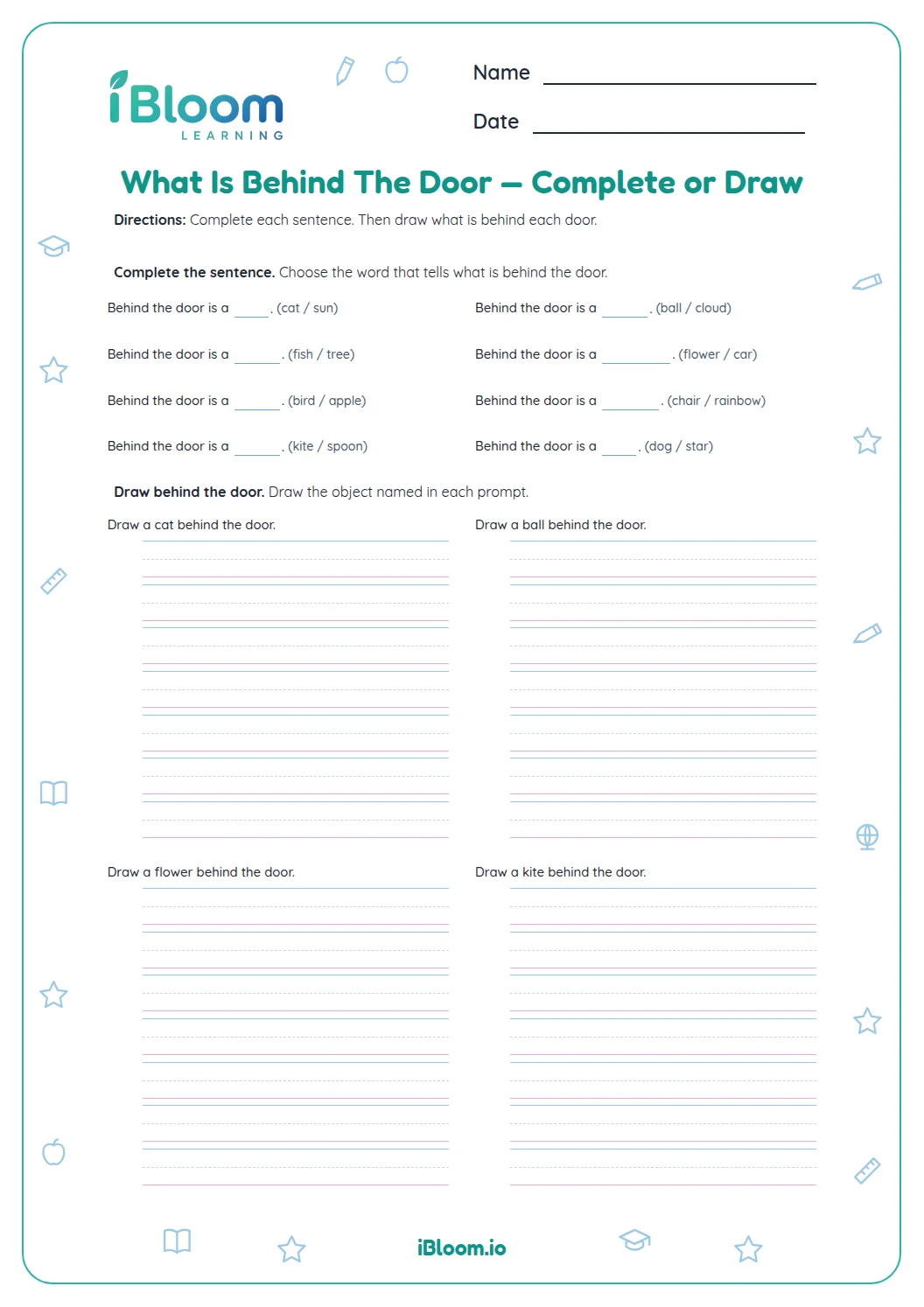
This printable preschool and kindergarten activity keeps the hidden-door mystery at its center. Children listen to short clues about sounds, smells, and objects, then choose a possible surprise that fits. One prompt invites a child to draw a scene behind the door. The key gives sample answers because clues can support more than one sensible idea.
What belongs in the room?
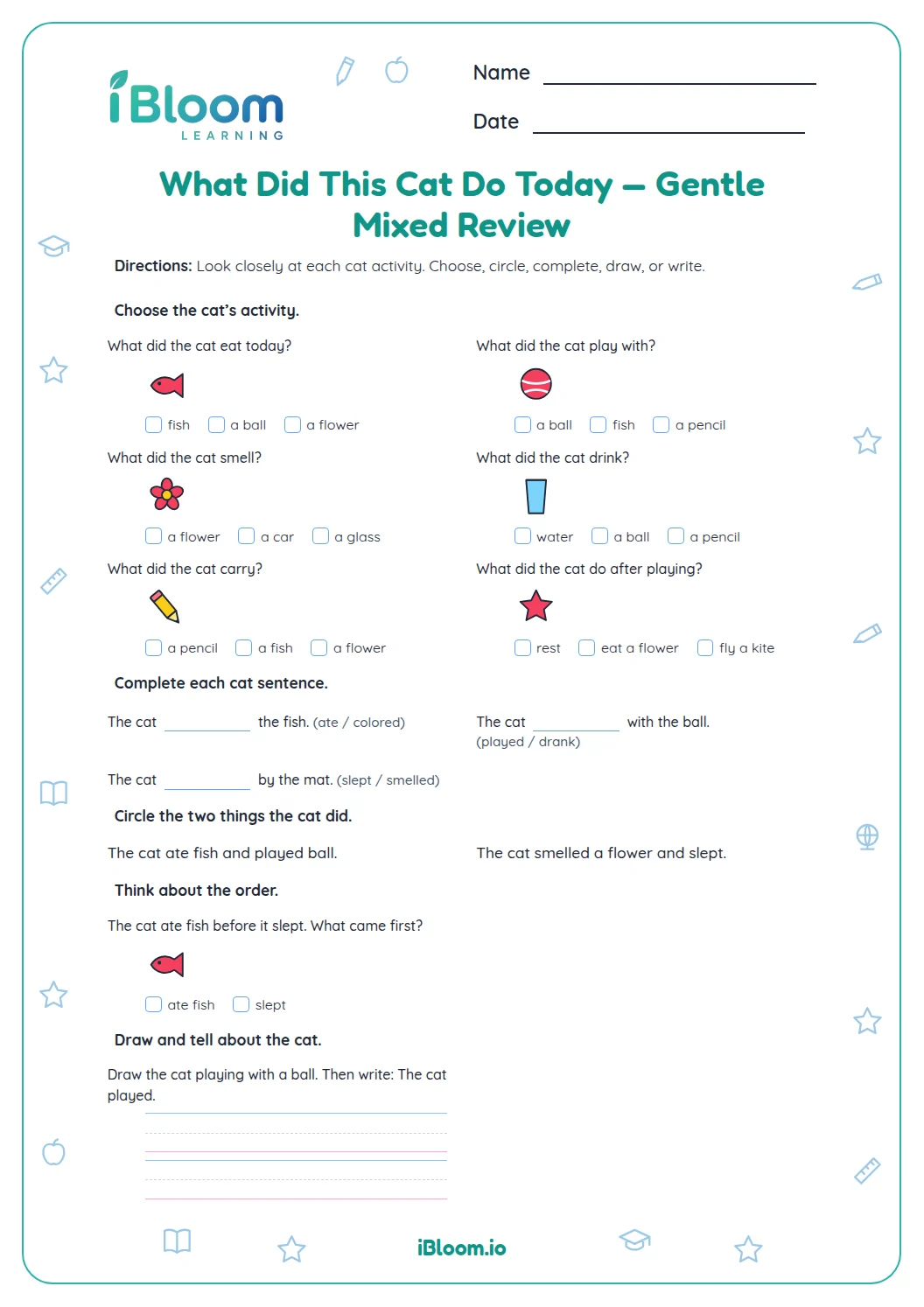
The mystery room contains a cat, a ball, a book, and a plant. Children choose or circle the room items and use details such as round, readable, and leafy to reason about them.
- 1The ball is round, so choose “ball.”
How do the sentence clues work?
Seven short sentences ask children to complete a reason about the room and its items. One drawing prompt asks for the cat behind the door.
How to use this page
- 1Read the clue aloud and pause before showing the choices.
- 2Invite the child to name what the clue makes them imagine.
- 3Choose the idea that best fits the clue.
- 4For the drawing prompt, let the child add a detail behind the door.
- 5Use the key as a sample and ask what clue supports the idea.
Helpful reminders
The mistake
Choosing without connecting the answer to the clue.
The fix
Ask what the child heard, smelled, or noticed.
The mistake
Treating the sample key as the only possible scene.
The fix
Accept a different idea when the child can explain its link to the clue.
The mistake
Rushing through the spoken clues.
The fix
Repeat a short clue and let the child picture it before answering.
What to practice next
Make more practice
Questions parents and teachers ask
What does the child do on this page?
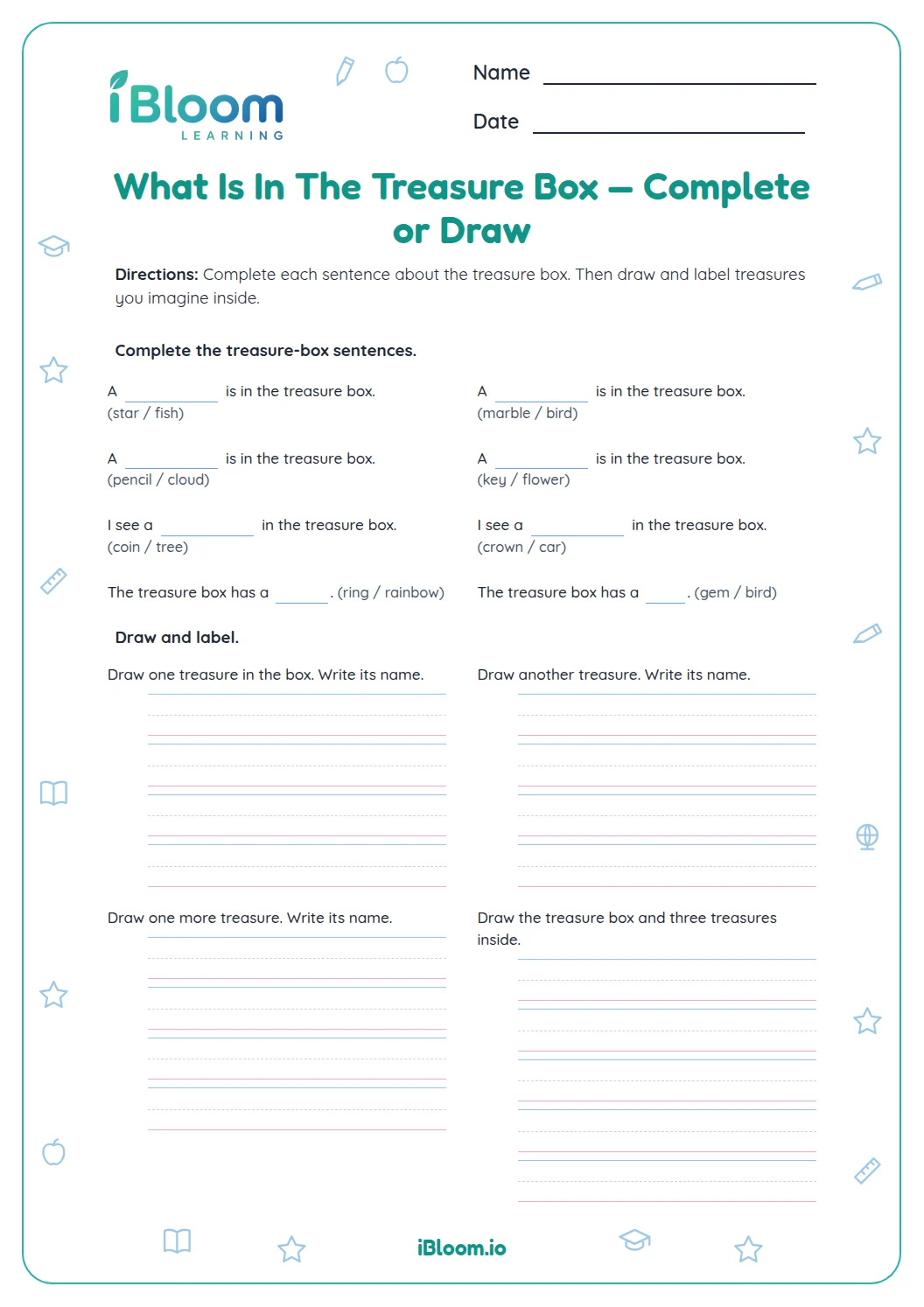
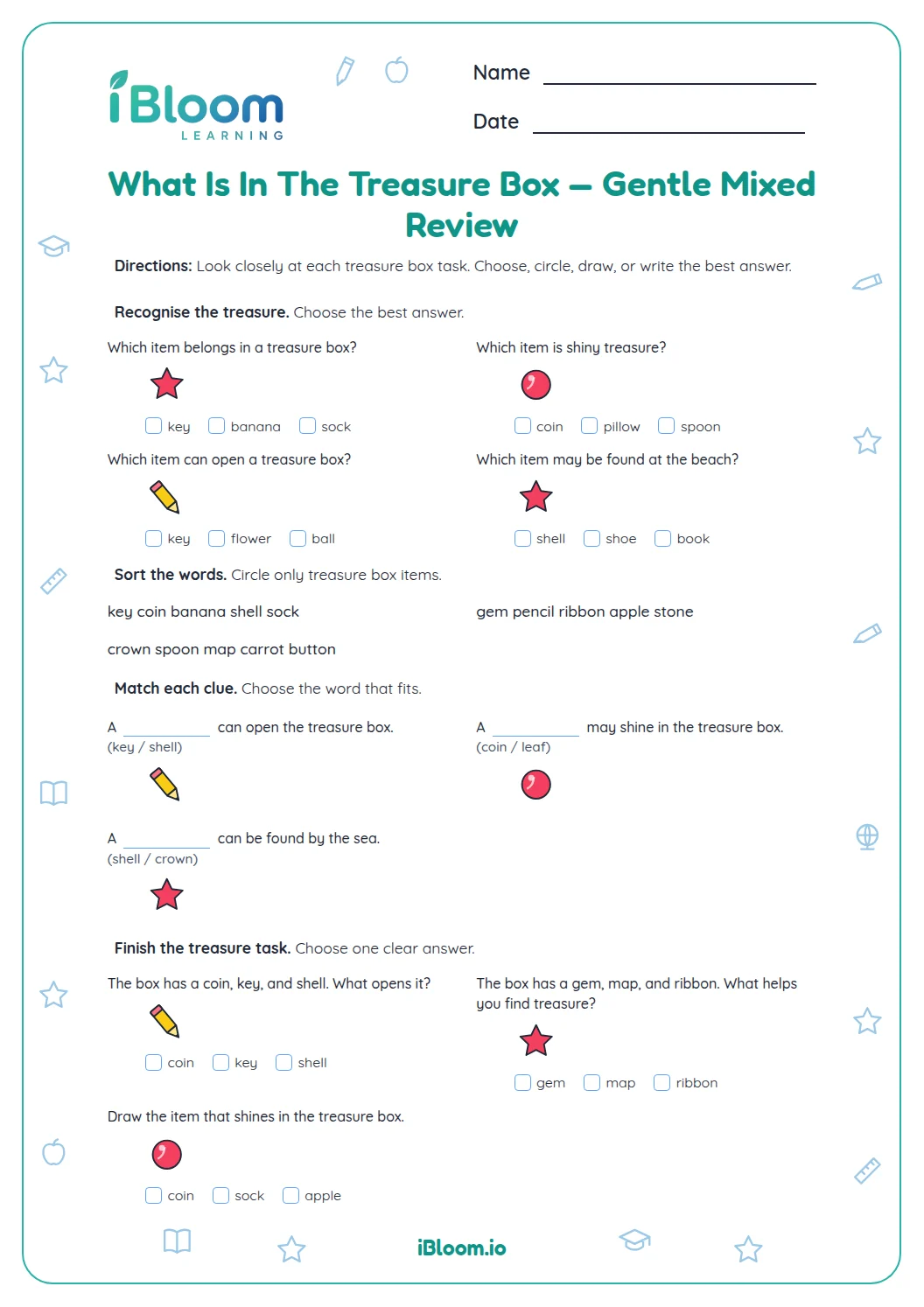
The child listens to clues about the cat, ball, book, or plant and chooses a possible answer. The page has 14 questions: four multiple-choice items, two word-circling rows, seven short sentence completions, and one drawing prompt. The key supplies sample ideas for the open drawing.
Does every clue have only one possible answer?
No. A clue can suggest several reasonable scenes. The key gives one fitting example for each choice question, but the goal is to connect an idea to a detail the child heard or noticed. Ask the child to explain the connection in a few words.
How should I read the clues aloud?
Read each sentence at a comfortable pace, then pause so the child can imagine what might be behind the door. You can repeat a clue or emphasize the sound word. Let the child answer by pointing, speaking, or choosing a printed option.
What should I expect in the drawing prompt?
The child draws one friendly surprise that could fit a clue from the page. The key gives a sample scene, not a model to copy exactly. Invite the child to add one detail and tell which clue inspired the drawing.
How can I help if the child is unsure?
Repeat the clue and talk through what it tells: a meow is a sound, while a feather is an object. Then compare the choices and ask which one could make that sound or leave that detail. Keep the decision focused on the clue.