







About this worksheet
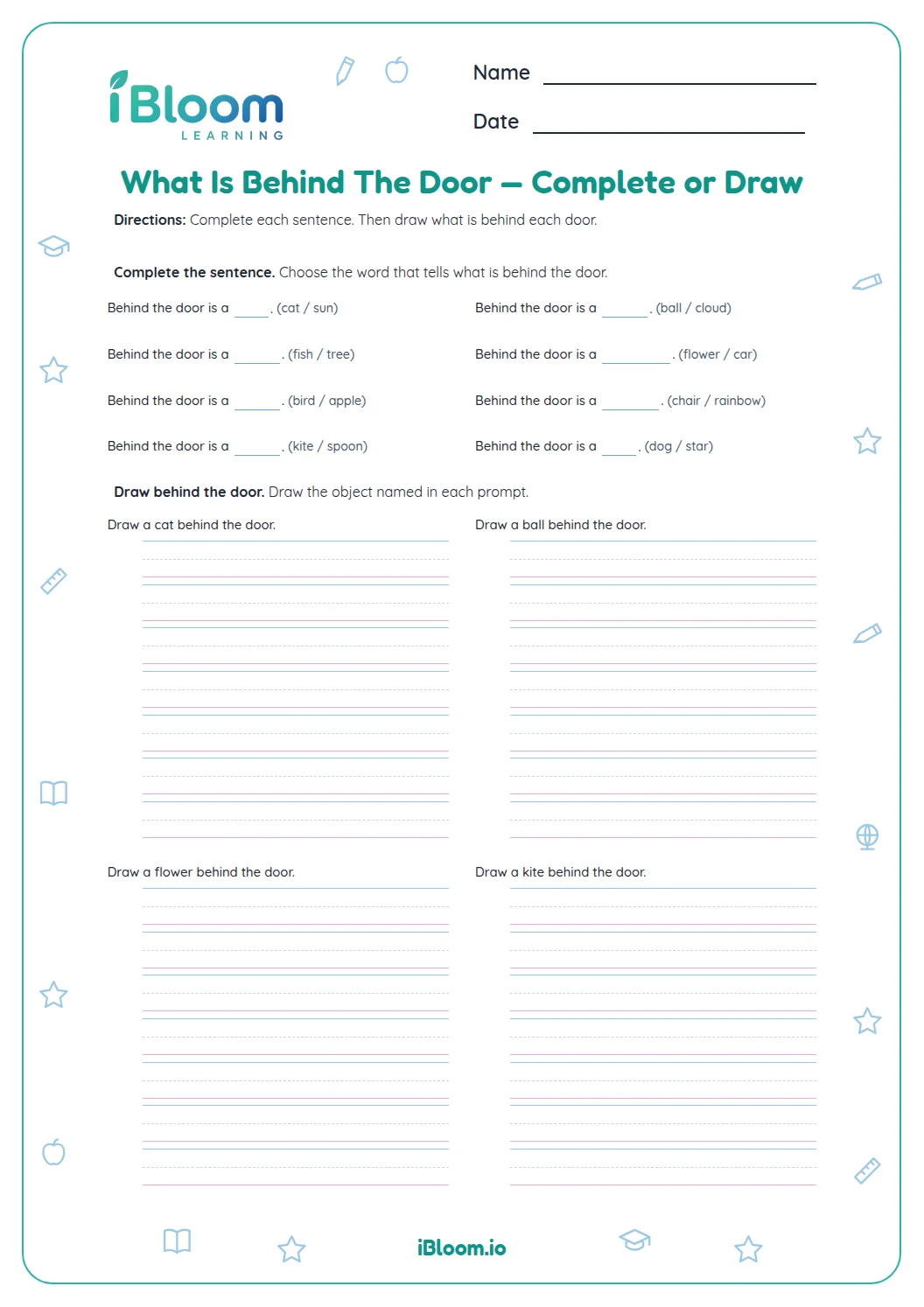
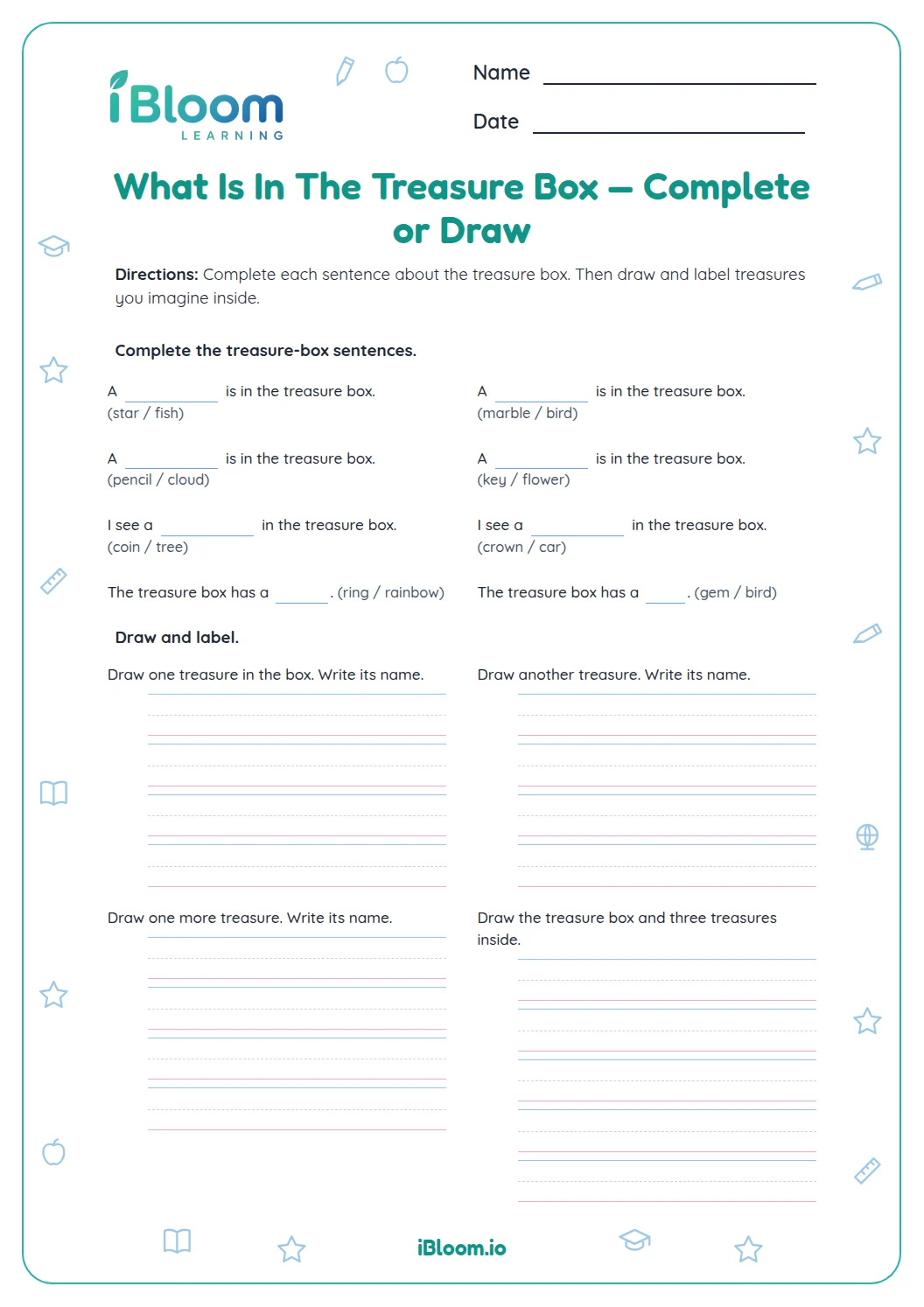
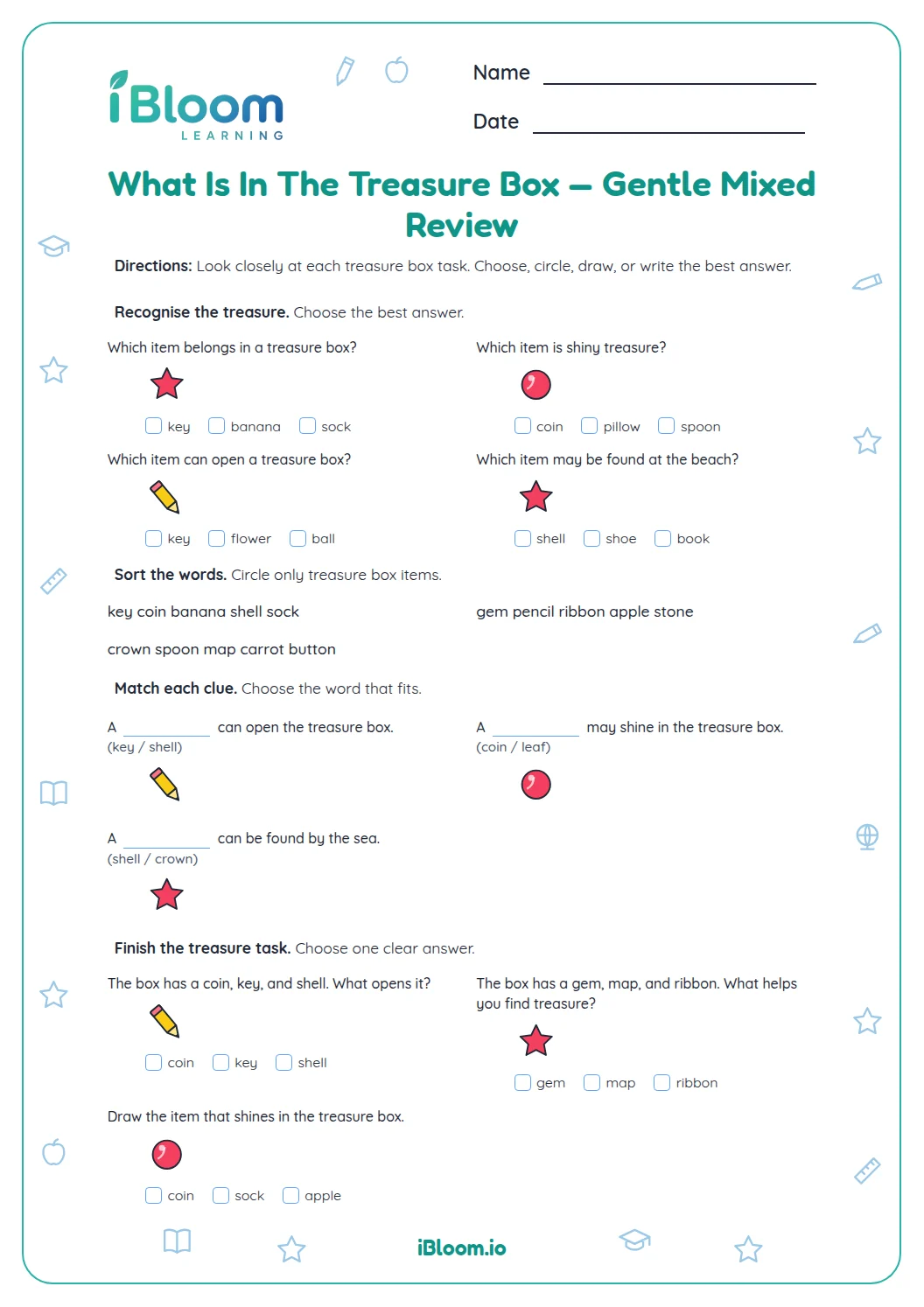
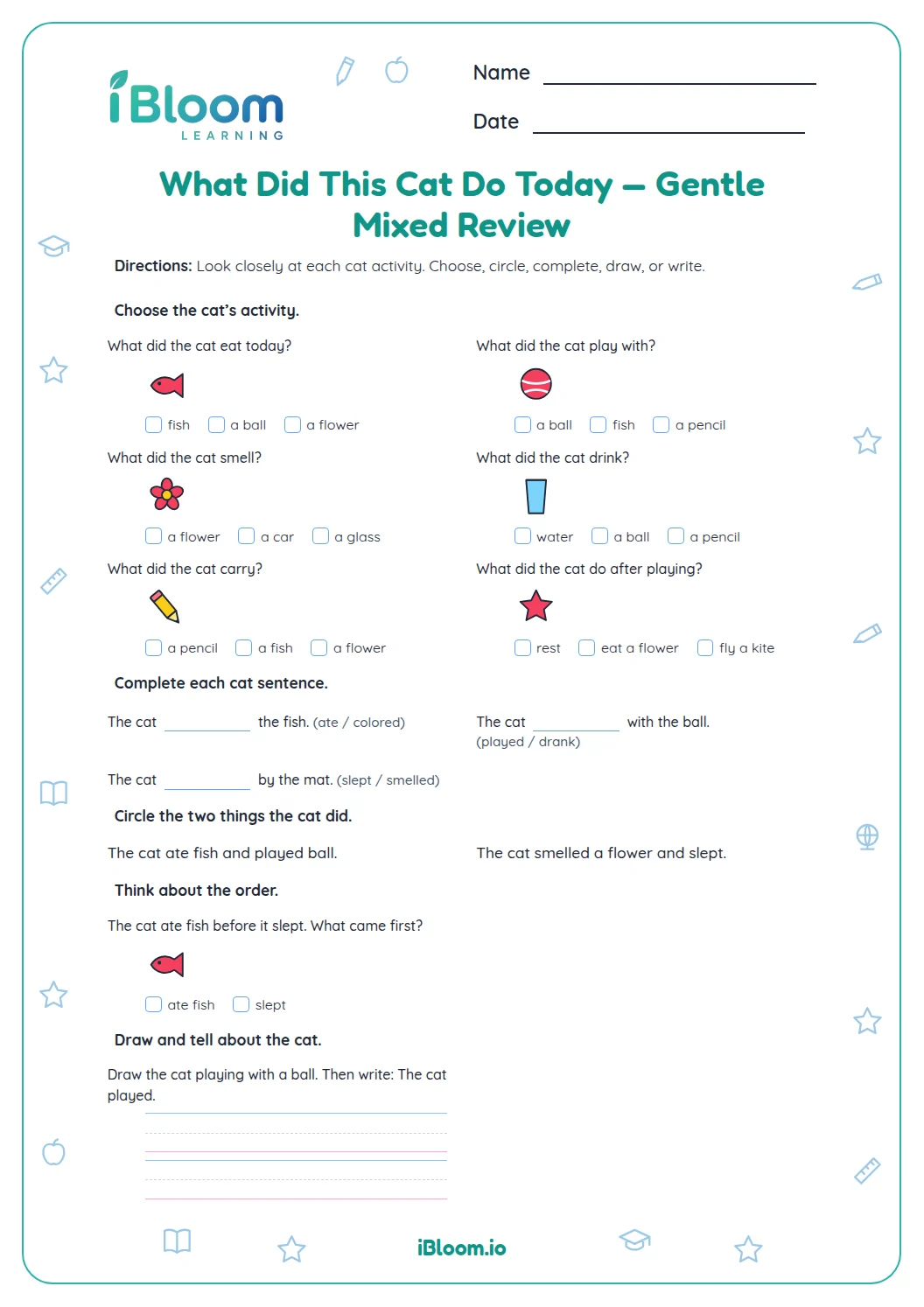
This printable preschool and kindergarten worksheet keeps the “What is behind the door?” idea grounded in familiar places. Children choose pictured objects for a bedroom, classroom, zoo, or garden, complete place-based thoughts, draw and label possible objects, and connect familiar items with ways they use them. The four-page activity includes a sample answer key; personal drawings and ideas can vary.
How do place clues help?
A bedroom, classroom, zoo, and garden suggest different things. Children look at each set of picture choices and select an object that could belong in that place.
- 1What might be behind a bedroom door?
- 2The bed fits a bedroom.
What can children draw?
Four prompts ask children to draw and label one possible object for a familiar place. A bed, desk, chair, or flower are sample answers; another sensible object can work if the child can explain the connection.
How does an object connect to everyday life?
The last four prompts pair a familiar object with an open sentence. A child might say that a book is for reading or a cup is for drinking. An adult may write the child’s words if independent writing is not the goal.
How to use this worksheet
- 1Read the place name and name it together.
- 2Look across the picture choices before choosing.
- 3For a drawing prompt, draw one fitting object and label it.
- 4Finish the last thoughts with a way to use each object.
- 5Invite the child to explain the idea and check sample answers.
Common mistakes and quick fixes
The mistake
Choosing an object that does not fit the place clue.
The fix
Name the place first, then consider what belongs there.
The mistake
Drawing only a door when asked for an object behind it.
The fix
Add one object that could be in that place and label it.
The mistake
Assuming every response must match the sample.
The fix
Accept another clear idea that fits the setting or sentence.
What to practice next
Make more practice
Questions parents and teachers ask
Are there several possible answers?
Yes. The picture-choice questions have a best match among the options, while drawings and personal-use ideas can vary. For example, a child might draw a chair at home or explain another object that belongs in the setting and tell why it fits.
What does the answer key show?
The key marks the best picture choice and gives sample ideas for drawing and sentence responses. It is a guide rather than a list of the only acceptable personal answers. Ask the child to explain how their idea connects to the place or pictured object.
Can an adult read the prompts aloud?
There are 16 picture prompts across four worksheet pages. Children choose pictured objects, finish place-based sentences, draw and label, and connect familiar items with everyday uses. A separate answer key gives a sample for each item; adults can accept other clear responses that fit.
What should a drawing include?
Each drawing prompt asks for one possible object that fits a familiar place, plus a label. A bed could fit a bedroom and a desk could fit a classroom. Children may choose other sensible objects and describe how they belong there.
How do the last four questions use familiar contexts?
Each final prompt names an everyday object and asks the child to finish a thought about using it. A book could be used to read, and a cup could be used to drink. The child can share an idea aloud, write a few words, or dictate to an adult.