




About this worksheet
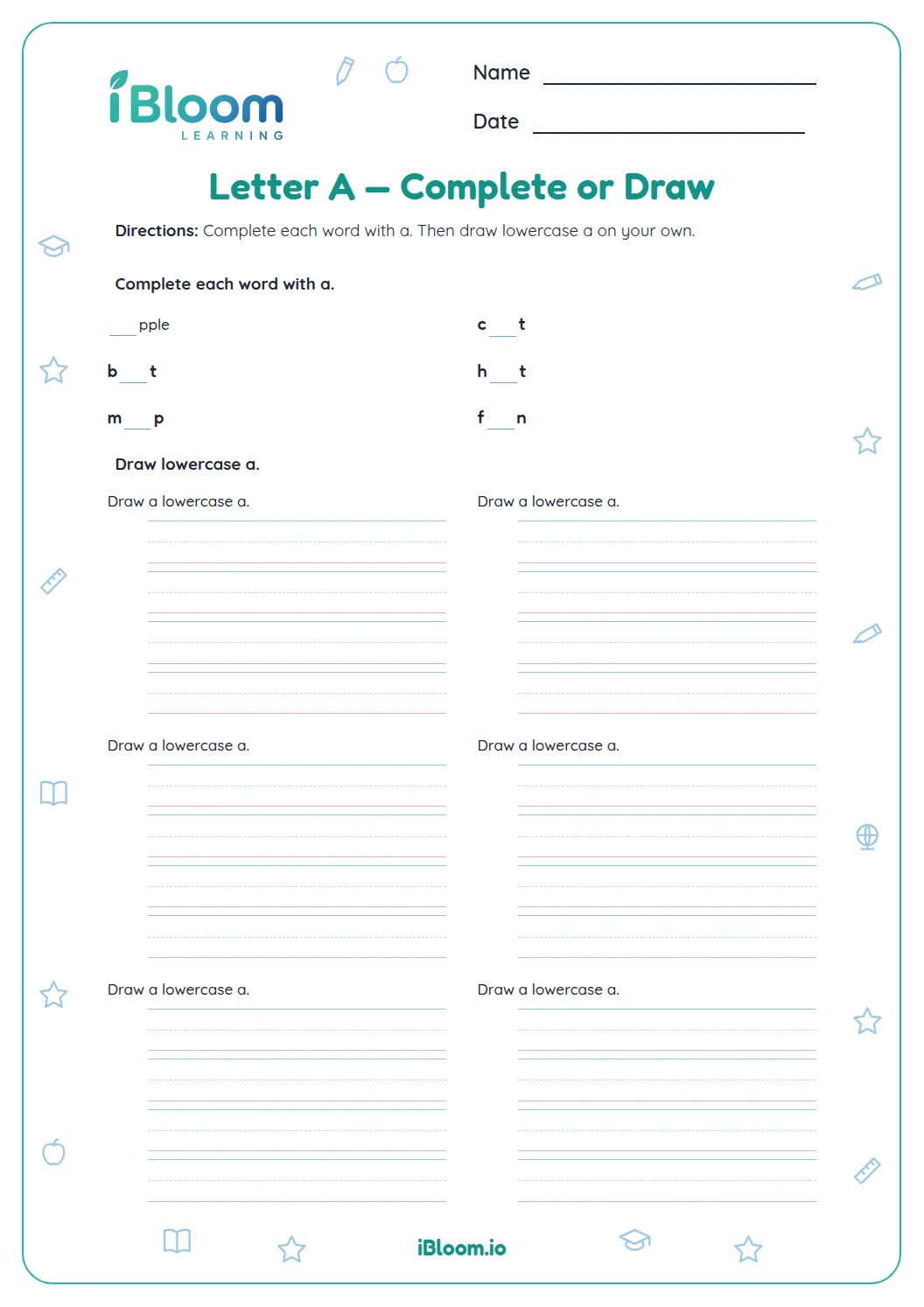
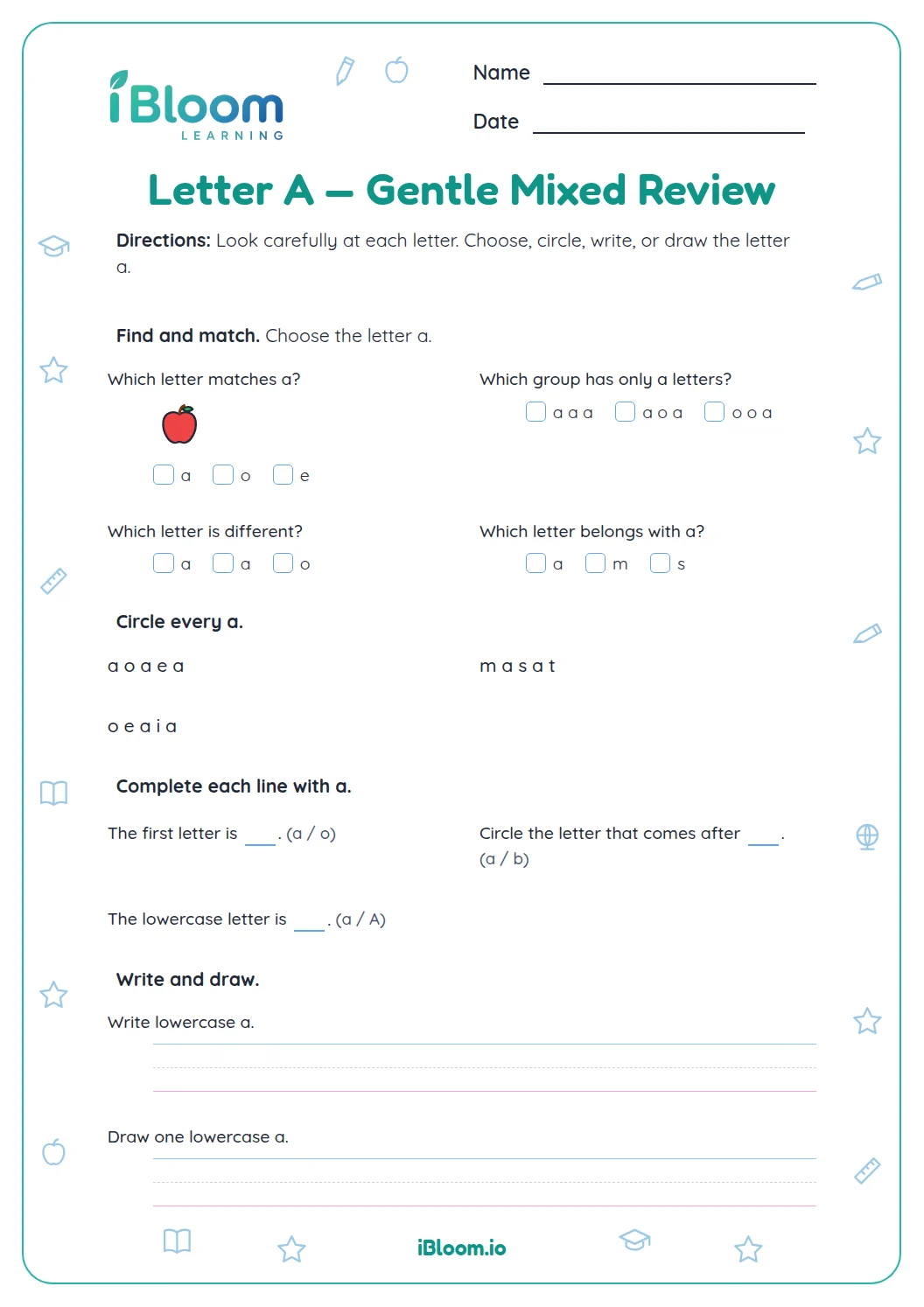
This printable gives preschool and kindergarten learners several ways to practice A. Children name pictured objects, choose words that begin with A, complete four short-a words such as cat and map, trace uppercase and lowercase A together, and find the letter in short sentences. The picture names connect the printed letter with familiar words and its beginning sound. A separate answer key is included.
Aligned to L.K.1.a
Which picture names start with A?
Say each name before choosing. Listen for the sound at the beginning of apple, ant, airplane, or another A word. Question 1 contrasts an A picture with a different beginning sound.
- 1Say “apple.”
- 2The first sound is /a/.
- 3Choose the apple picture.
How are uppercase A and lowercase a different?
Uppercase A is tall and has two slanting sides with a middle bar. Lowercase a is shorter and rounded. Trace each slowly while saying the letter name.
What else is on the page?
Six picture-choice questions give repeated practice with A words. Two tracing prompts and two letter-choice prompts round out the 15 questions.
How to use this worksheet
- 1Name each picture aloud before choosing.
- 2Stretch the first sound and listen for /a/.
- 3Trace uppercase A from the top down each side.
- 4Trace lowercase a around the round shape and finish with its line.
- 5Say the first letter name in the last two picture questions.
Common slips and quick fixes
The mistake
Choosing by the last sound
The fix
Say the whole word slowly and attend to its very first sound.
The mistake
Mixing up uppercase and lowercase forms
The fix
Point to A and a side by side and name each one before tracing.
The mistake
Rushing the pencil path
The fix
Start at the top for uppercase A and follow the dotted path carefully.
Common Core alignment
This worksheet gives children a chance to apply the standard to a focused set of printable questions.
Print many uppercase and lowercase letters.
On this sheet: Tracing and naming uppercase and lowercase A practices letter forms.
Show the official wordingHide the official wording
Print many upper- and lowercase letters.
What to practice next
Further reading
Questions parents and teachers ask
Which words on the page begin with A?
The picture choices include apple, ant, airplane, ambulance, astronaut, avocado, axe, and artist. Say each word aloud and listen to its first sound before choosing. The other pictures give a contrast so children attend to the beginning sound.
What does the short-a practice ask children to do?
Children choose the vowel that completes cat, bag, hat, and map. Each word is paired with its matching picture. Saying the word slowly helps learners hear the short a sound and connect it to the letter. Adults can point to the matching picture as the child says each word aloud.
Why trace both uppercase A and lowercase a?
Children encounter both forms in books and everyday print. The tracing items give practice forming each shape, while the picture and sentence items connect letter recognition to familiar words. Repeating the words helps children hear the shared vowel sound.
What does “circle the letter a” mean here?
Circle each whole word in the short sentence that contains the letter a. The activity includes words such as Maya, bag, cat, and snack, so learners look inside familiar words as well as at their first letters. The child can say the letter name while tracing each form.
How should an adult support the picture questions?
Invite the child to name each picture before choosing. If a word is unfamiliar, say it together and emphasize its first sound. The answer key identifies the intended picture, while the child can point to or say the answer. The sentence gives children a short context for finding the letter.