



About this worksheet
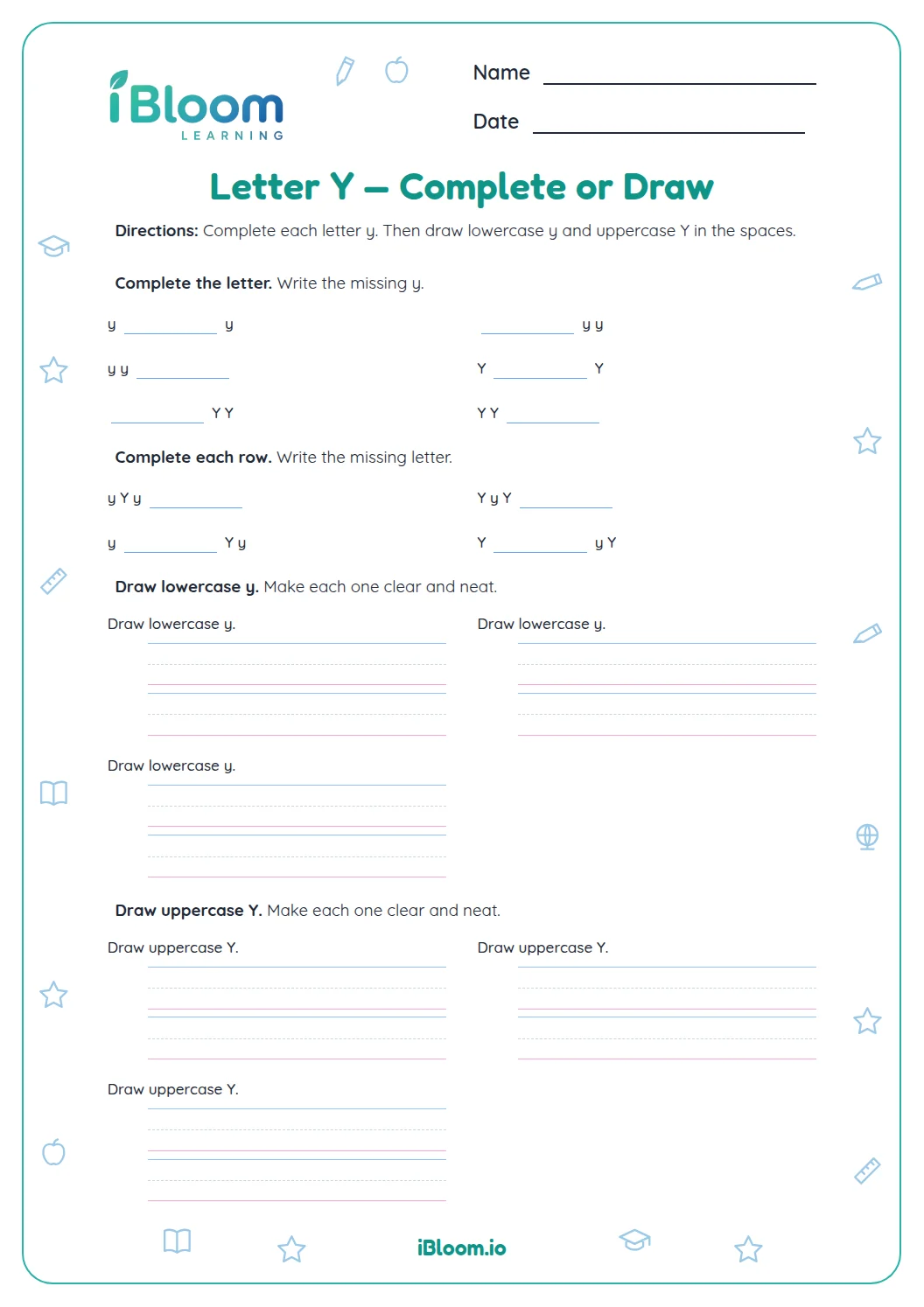
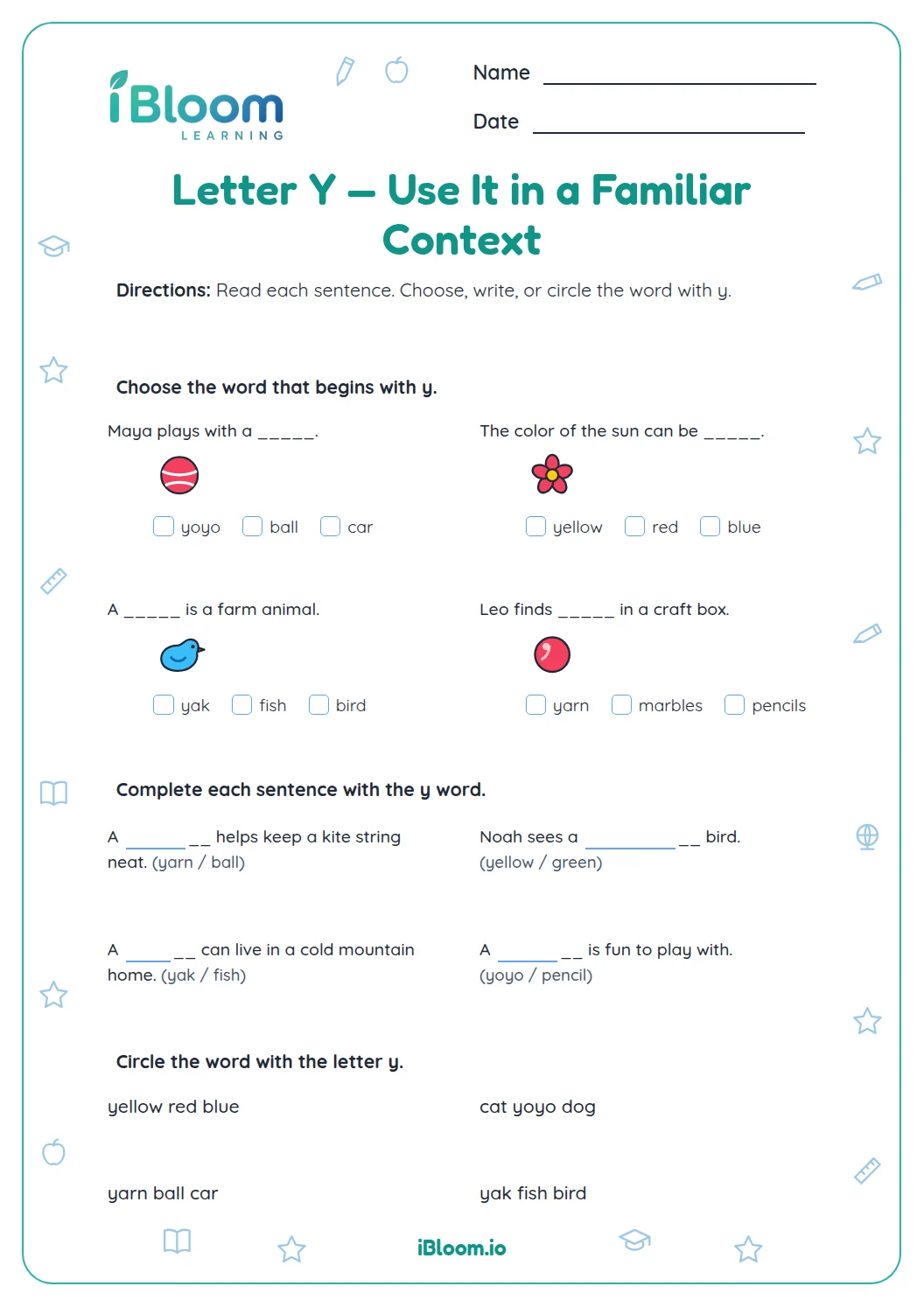
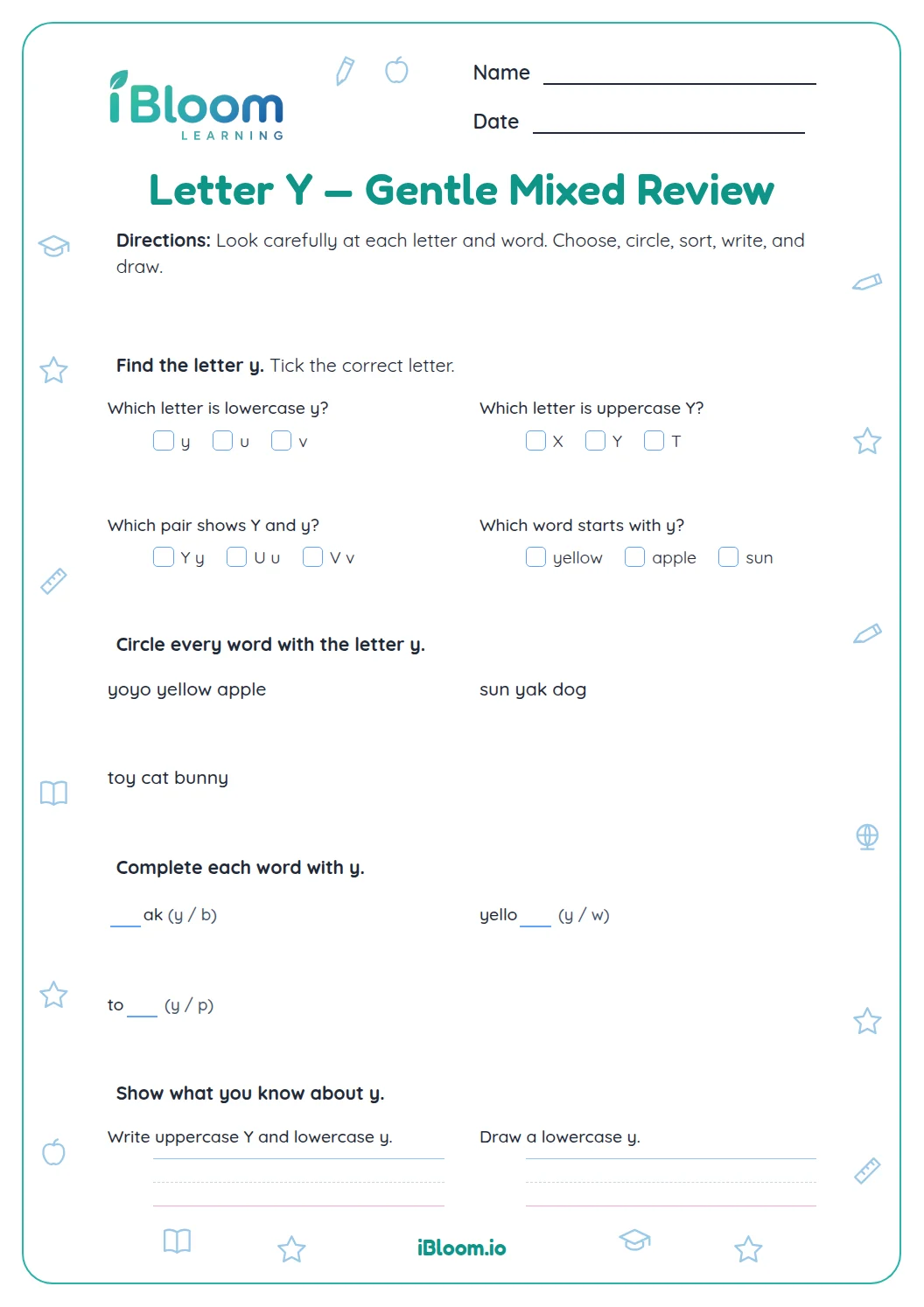
This printable gives preschool and kindergarten learners gentle practice with uppercase B, lowercase b, and the beginning /b/ sound. Children trace B and b, identify the letters, and choose familiar pictures whose names start with B. These activities practice CCSS RF.K.3a by connecting a consonant with its primary sound. The answer key notes the tracing and open response.
Aligned to RF.K.3a
What will children practice?
The activities move between seeing, tracing and hearing B. Picture choices keep the beginning-sound work concrete for young learners.
- 1“Which picture begins with /b/?” → Choose the ball.
How can an adult support the /b/ sound?
Say the picture names slowly and emphasize the first sound. Keep the sound short; the goal is to hear /b/ at the start of the word.
How should children trace uppercase and lowercase B?
Model the tall line and two curves in uppercase B, then the line and one curve in lowercase b. Let the child trace before trying each letter independently.
A short routine for Letter B
- 1Name each letter before tracing it.
- 2Trace uppercase B and lowercase b from top to bottom.
- 3Say each picture name aloud before choosing.
- 4Ask the learner to think of another word beginning with B.
Common mix-ups
The mistake
Choosing a picture because it contains a b sound later in its name.
The fix
Stretch the first sound only and listen for /b/ at the beginning.
The mistake
Mixing uppercase B with lowercase b.
The fix
Point out that uppercase B has two curves; lowercase b has one.
The mistake
Saying the letter name instead of its sound.
The fix
Practice the letter name “bee” and the quick beginning sound /b/ separately.
Common Core alignment
This worksheet practices the listed Common Core skill through its questions and written responses.
Connect the letter B with its primary /b/ sound.
On this sheet: Part B links uppercase and lowercase B with pictured words that begin with /b/.
Show the official wordingHide the official wording
Demonstrate basic knowledge of one-to-one letter-sound correspondences by producing the primary sound or many of the most frequent sounds for each consonant.
What to practice next
Make more practice
Further reading
Questions parents and teachers ask
Which pictures are answers?
Choose ball, bird, book, bee, balloon, bag and bear. Say each name aloud and listen for /b/ at the beginning. Say each word slowly, listen to its first sound, and check that the child follows the direction for that particular item.
Does the worksheet practice both forms of B?
Yes. Children trace and identify uppercase B and lowercase b, then write each form on its own line. Say each word slowly, listen to its first sound, and check that the child follows the direction for that particular item.
How can I help with the sound activity?
Say each pictured word slowly and ask what sound comes first. Model /b/ briefly without adding an extra vowel. Say each word slowly, listen to its first sound, and check that the child follows the direction for that particular item.
Can the final item have different answers?
Yes. Any familiar word that starts with the /b/ sound is acceptable. The key gives “bear” as one sample response. Say each word slowly, listen to its first sound, and check that the child follows the direction for that particular item.
Should children trace before writing?
That order works well: trace both forms, find them among choices, and then try writing B and b independently. Say each word slowly, listen to its first sound, and check that the child follows the direction for that particular item.