






About this worksheet
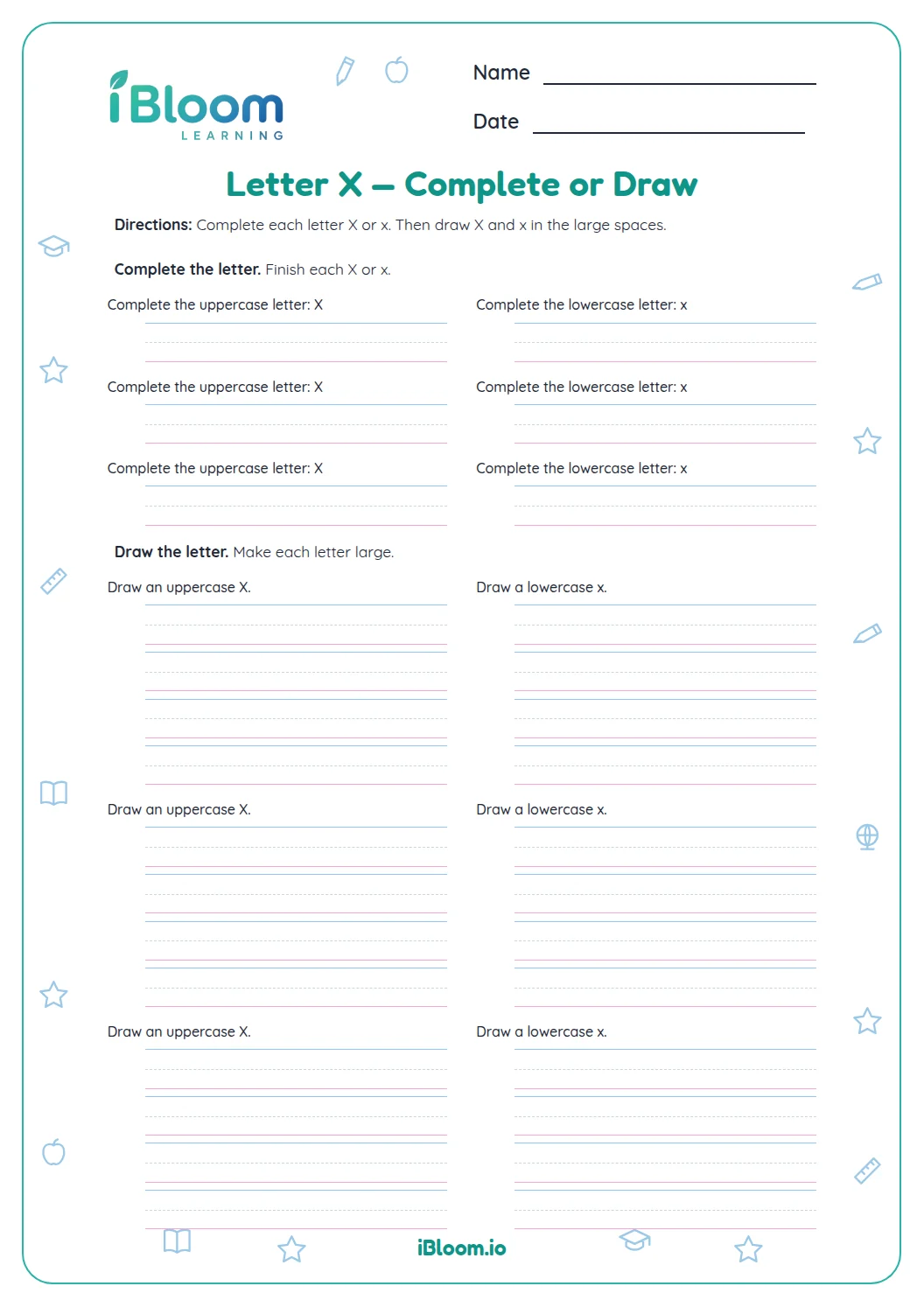
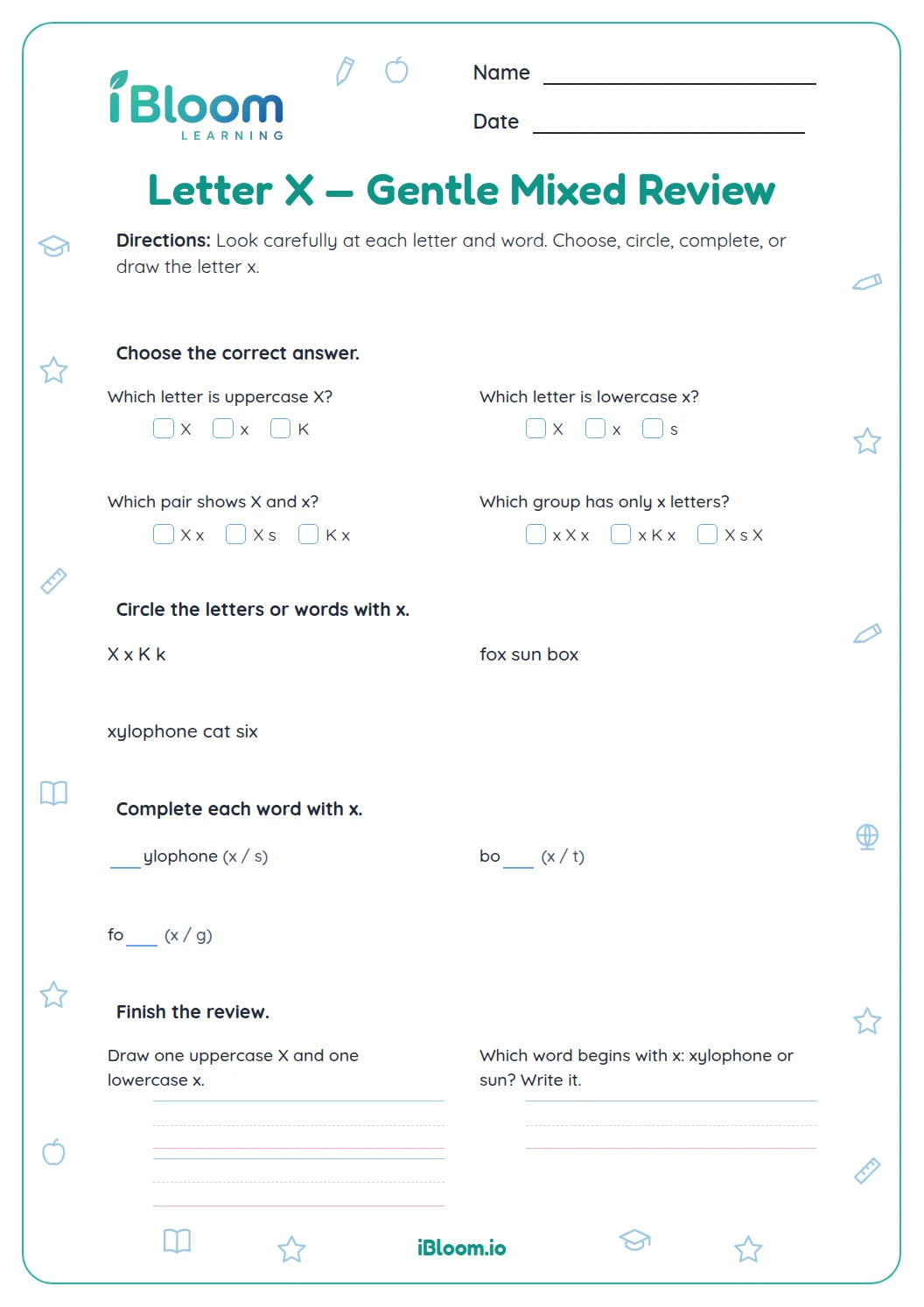
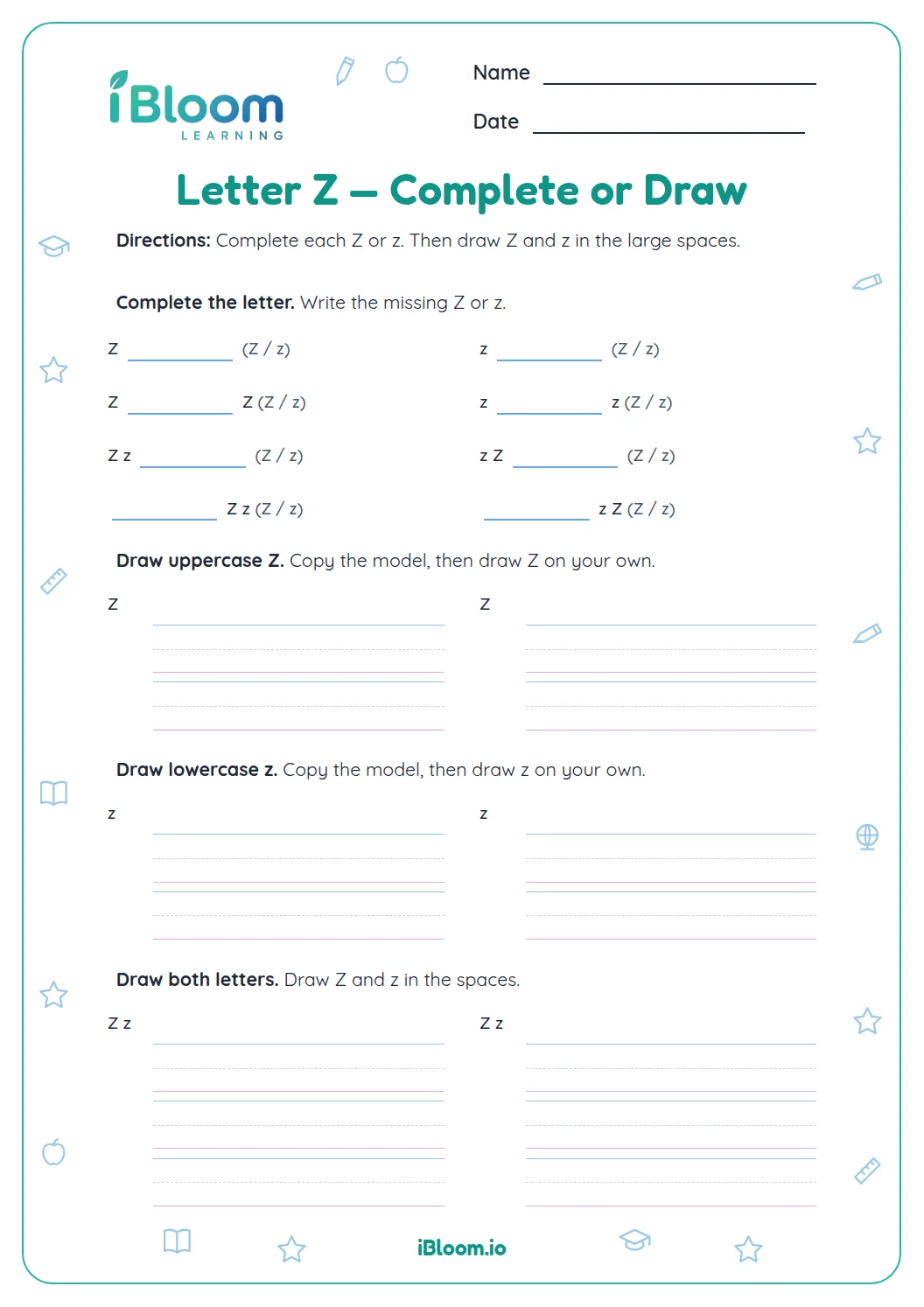
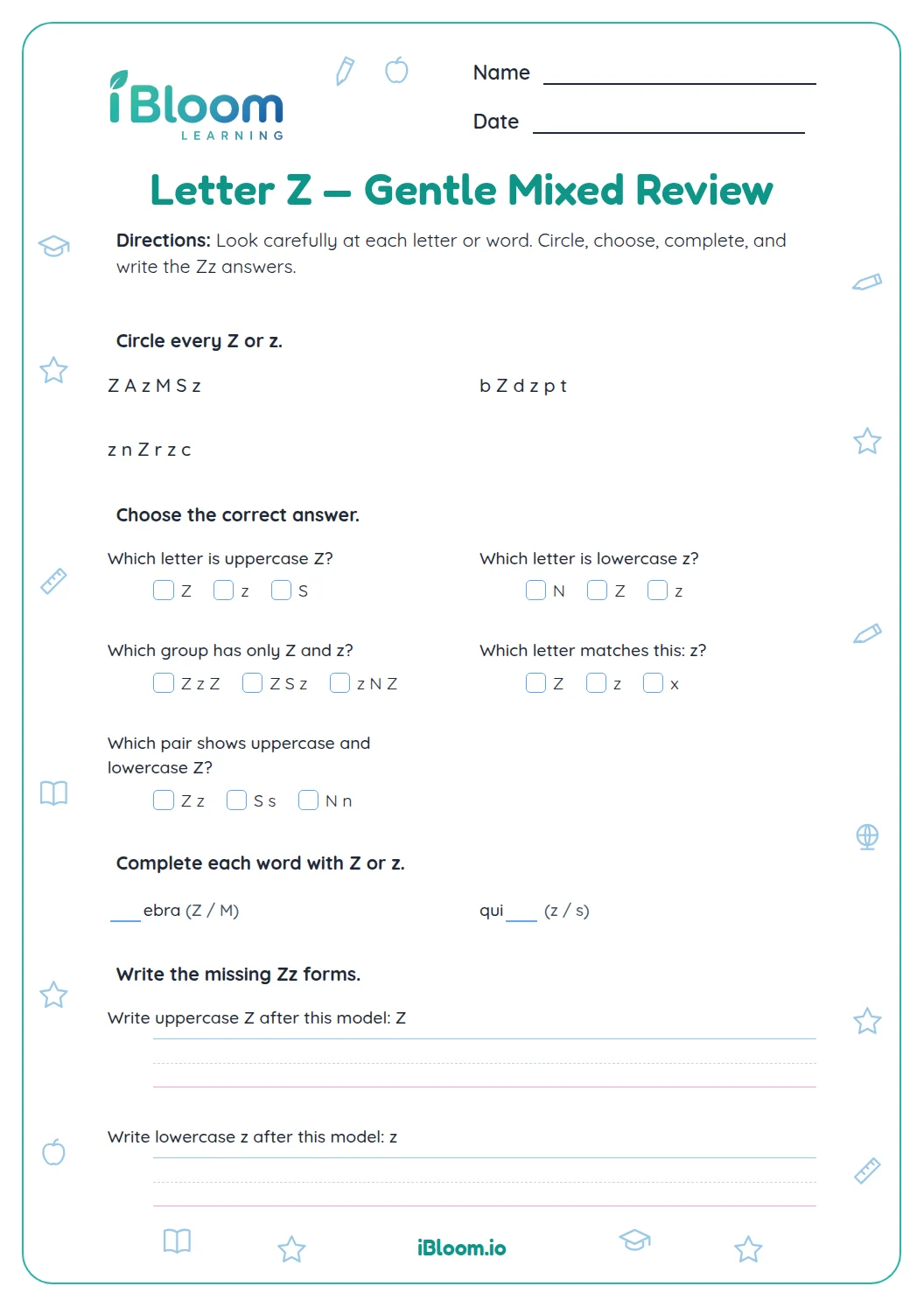
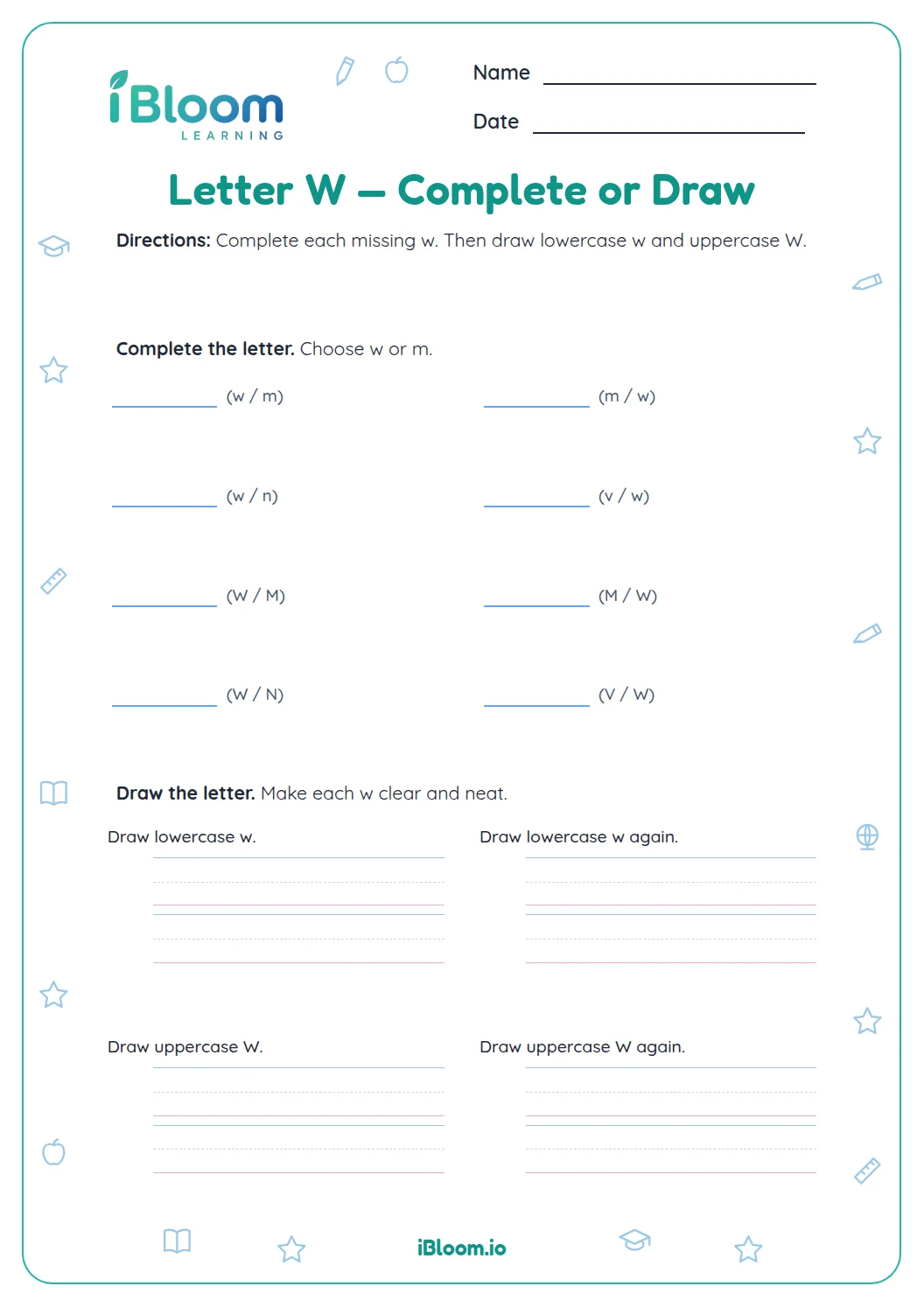
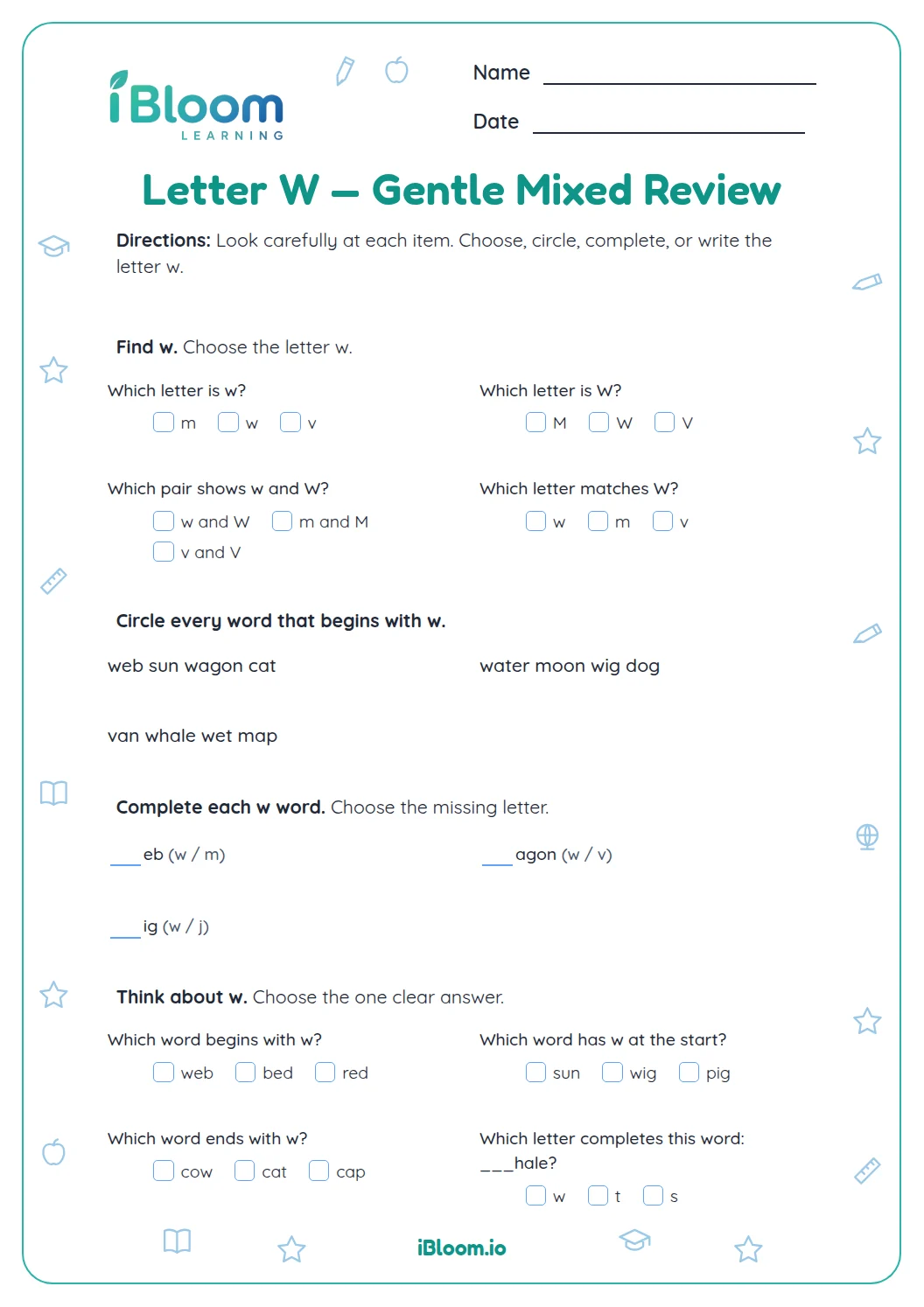
This Pre-K and Kindergarten printable focuses on uppercase X and lowercase x. Children trace and name both forms, choose the letter from a small set, and find x in words for pictured objects such as a box, fox, and taxi. The 14 activities practice letter recognition in CCSS RF.K.3.d. A separate answer key shows the expected letter names and words.
Aligned to RF.K.1.d
How are uppercase X and lowercase x different?
Children trace both letter forms and then identify them among other letters. Saying each letter name while pointing helps connect the printed form with its name.
- 1X → trace the uppercase letter
Where can children find x in a word?
Part B uses familiar picture choices for box, fox, and taxi. The last questions ask children to spot x at the beginning or end of written words and circle words containing the letter.
How can an adult help with the pictures?
Say the pictured object name together, then ask the child where the x appears in the printed word. Pointing to each letter can help a beginning reader locate it.
How to use this worksheet
- 1Trace uppercase X and lowercase x with a finger first.
- 2Say each letter name while tracing.
- 3Name each picture before choosing its word.
- 4Look at the first and last letters in the word questions.
- 5Circle only whole words that contain x.
Letter X slips to watch for
The mistake
Mixing up uppercase X with a similar-looking letter.
The fix
Compare the two crossing strokes and say “X.”
The mistake
Calling lowercase x uppercase X without noticing the form.
The fix
Point to the small x and name it as lowercase x.
The mistake
Circling a word because it sounds like it has x.
The fix
Look at the printed letters and find the actual x.
Common Core alignment
Children practice naming uppercase and lowercase forms of one alphabet letter.
Children trace, recognize, and name uppercase X and lowercase x.
On this sheet:
Show the official wordingHide the official wording
Recognize and name all upper- and lowercase letters of the alphabet.
What to practice next
Make more practice
Further reading
Questions parents and teachers ask
Does this worksheet practice both forms of X?
Yes. Children trace and name uppercase X and lowercase x, then recognize both forms among other letters. Later questions look for x in familiar written words, including at the beginning or end. Picture choices connect the written words box, fox, and taxi to familiar objects.
Which picture words are included?
Picture choices show a box, a fox, and a taxi. Children name each pictured object and connect the word they say with its printed letters. The pictures make the familiar word practice concrete for early learners, and each target word contains the letter x.
Can a child use the tracing items before writing with a pencil?
Yes. A child can trace each printed letter with a finger first, then try with a pencil. An adult can say the letter name aloud while the child follows its shape. Short practice with both forms gives the learner time to notice their differences.
Is there an answer key?
Yes. The separate key gives the target letter for each tracing item, the correct uppercase or lowercase choices, and the words that contain x. It also shows which picture choice names the requested object, so an adult can review responses with the child.
How long does this activity take?
About 10 minutes is a useful estimate for 14 short activities. Let the child take time with tracing and picture naming, and break the worksheet into two short sessions if needed. The answer key makes it easy to return to any item and try it again.