



About this worksheet
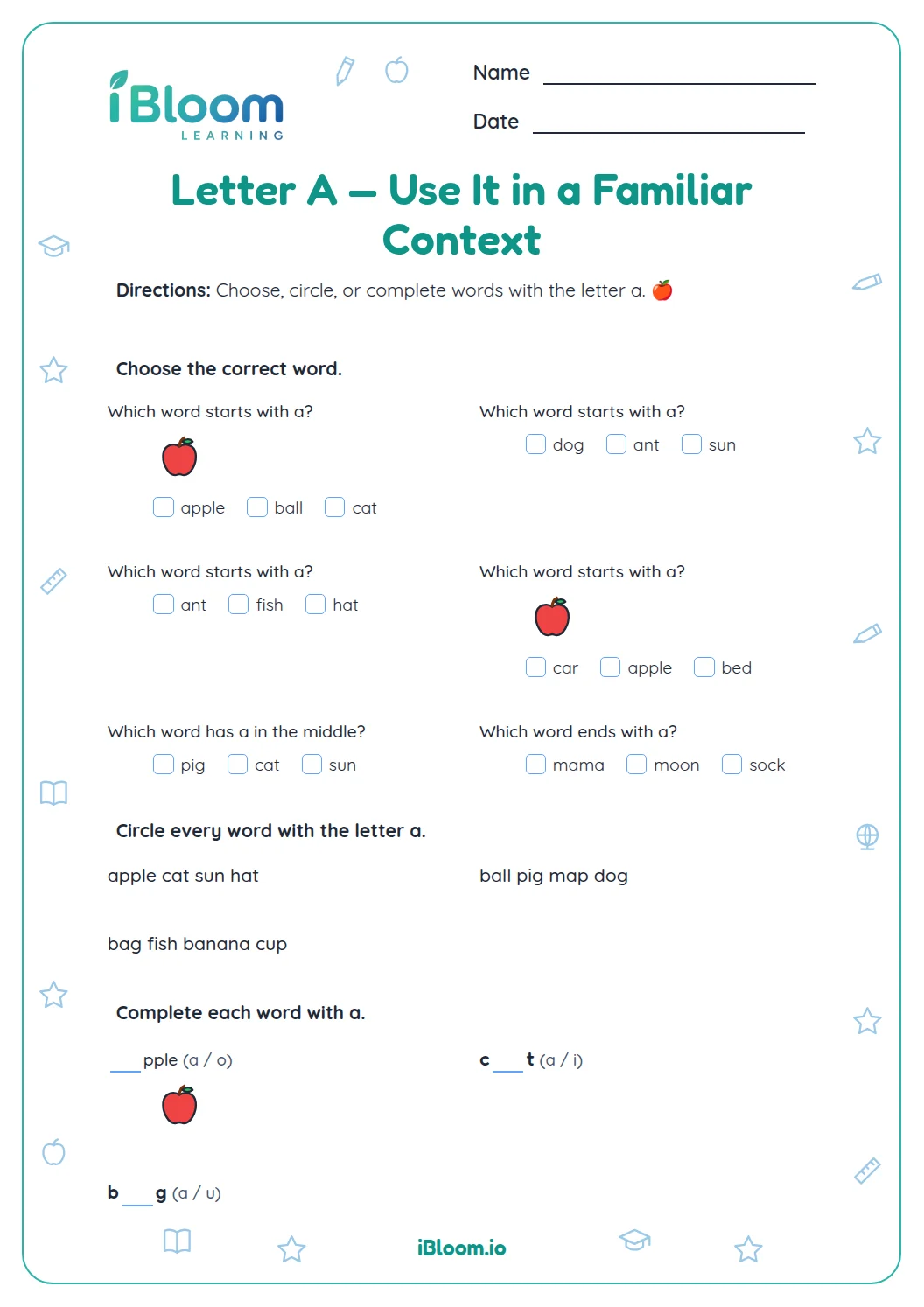
This gentle letter A printable gives young learners a repeated uppercase and lowercase tracing line, letter-recognition choices, and seven picture choices for the short-a beginning sound. The original sheet used an apple picture; this version keeps picture-based practice for the beginning-sound items. It supports letter formation and vowel-sound practice aligned with CCSS L.K.1a and RF.K.3b. A separate answer key is included.
Aligned to L.K.1.a and RF.K.3.b
How do children practice both forms of A?
Start with the repeated Aa model and follow the letter shape carefully. The next choices ask children to tell uppercase A from lowercase a and to recognize the pair in order.
- 1In Part A, trace the dotted uppercase A from top to bottom.
- 2Lift the pencil between strokes, then trace the lowercase a.
How does a child connect A to a sound?
The final seven questions show picture choices. Say each picture name aloud and listen for the short-a sound at the beginning; apple, ant, ax, and alligator begin with that sound.
- 1Look at the apple, sun, and map pictures.
- 2Say each name: apple, sun, map.
- 3Apple begins with the short-a sound.
How can an adult support a first try?
If two pictures seem possible, say the whole word slowly and listen to its first sound. The target is the short vowel sound in apple, not just any word that starts with the letter A.
How to use this worksheet
- 1Name uppercase A and lowercase a before starting.
- 2Trace each dotted letter slowly, following its strokes.
- 3Point to the named letter in the choice rows.
- 4Say each picture name aloud and listen to its first sound.
- 5Use the key to check recognition and picture answers.
Common mistakes and quick fixes
The mistake
Reversing the lowercase a.
The fix
Show a printed a, then trace its round part and short stem.
The mistake
Choosing a picture because it contains the letter name.
The fix
Say the whole word and listen to its very first sound.
The mistake
Rushing through dotted letters.
The fix
Trace one letter at a time and reset the pencil between strokes.
This worksheet gives focused practice with the reading and language skills named below.
Trace and recognize uppercase A and lowercase a.
On this sheet:
Show the official wordingHide the official wording
Print many upper- and lowercase letters.
Identify pictures whose names begin with the short-a sound.
On this sheet:
Show the official wordingHide the official wording
Associate the long and short sounds with the common spellings (graphemes) for the five major vowels.
What to practice next
Further reading
Questions parents and teachers ask
Does the page include uppercase and lowercase A?
Yes. The first item repeats uppercase A and lowercase a for tracing. The next items ask children to identify each form and recognize A followed by a. This gives learners a chance to notice both letter shapes before they work with picture names.
What sound do the picture questions focus on?
The seven picture questions focus on the short-a sound at the beginning of a word. The choices include familiar pictures such as apple, ant, ax, and alligator. Children can say each name aloud and listen for the vowel sound they hear first.
How many questions are on the page?
There are 14 questions: one repeated tracing item, six letter-form or recognition choices, and seven beginning-sound picture choices. A separate answer key gives the intended response for each item. The page moves from letter forms to sound practice.
What materials does a child need?
A printed copy and a pencil are enough. Children can trace the letter model with the pencil and point to or mark the picture choices. An adult may say picture names aloud if helpful, but the pictures are provided on the worksheet.
How can an adult help with short a?
Invite the child to say each picture name slowly, then listen for the first vowel sound. For example, apple begins with short a, while sun begins with short u. The worksheet’s choices let children compare familiar names as they practice.