





About this worksheet
This printable preschool and kindergarten worksheet introduces the letter E through familiar words. Children identify pictured words, trace uppercase E and lowercase e, answer three first-letter checks, and complete seven short word clues. The worksheet has 14 questions and a separate answer key.
How do the pictures introduce E words?
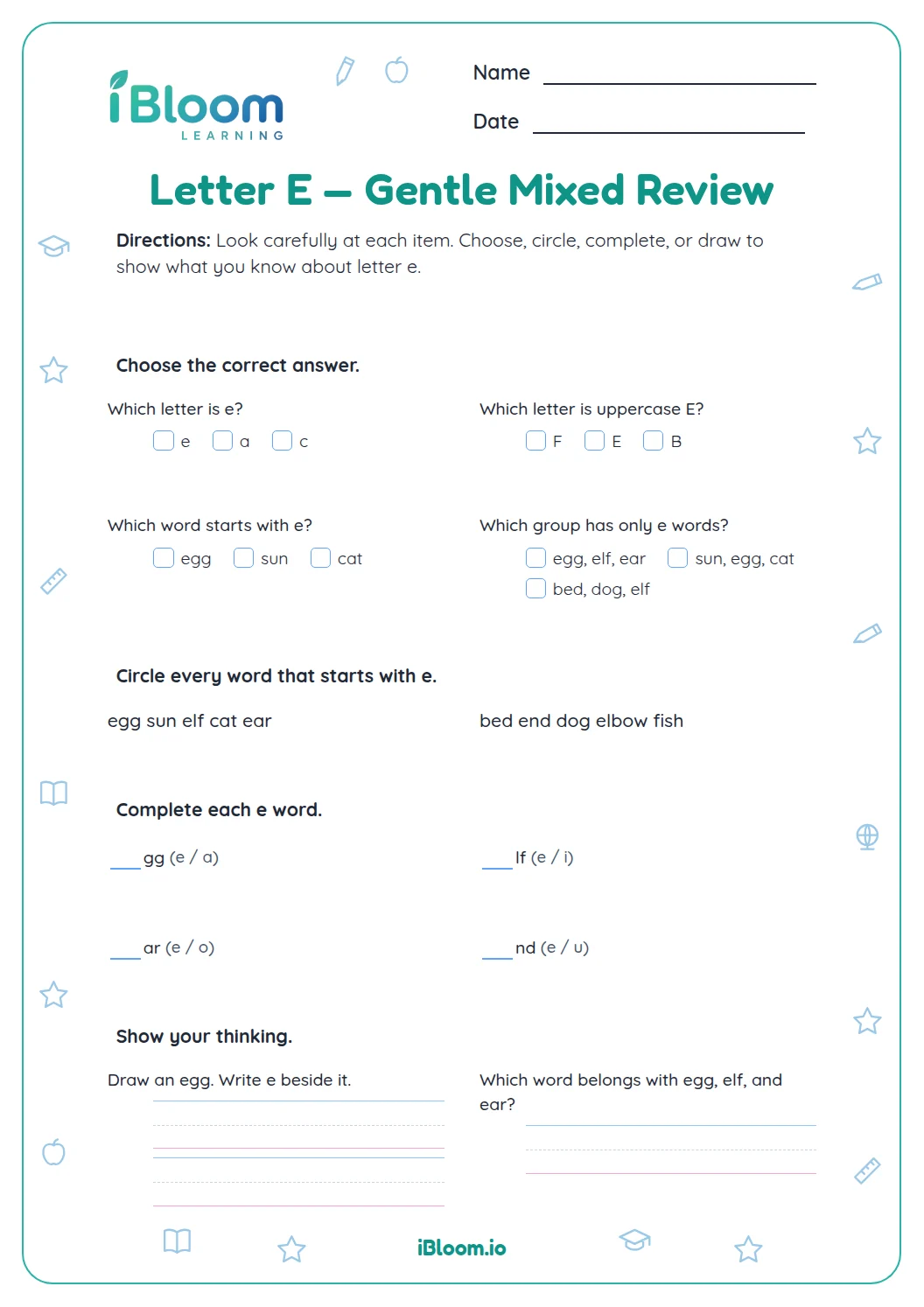
Each of the first three items shows an object and three word choices. The child names the object, then finds its word: egg, elephant, or envelope. Saying the first sound and naming the letter links the picture to the printed word.
- 1Name the pictured object.
- 2Choose “egg” from the three words.
- 3Point to the first letter: E.
What does the tracing practice include?
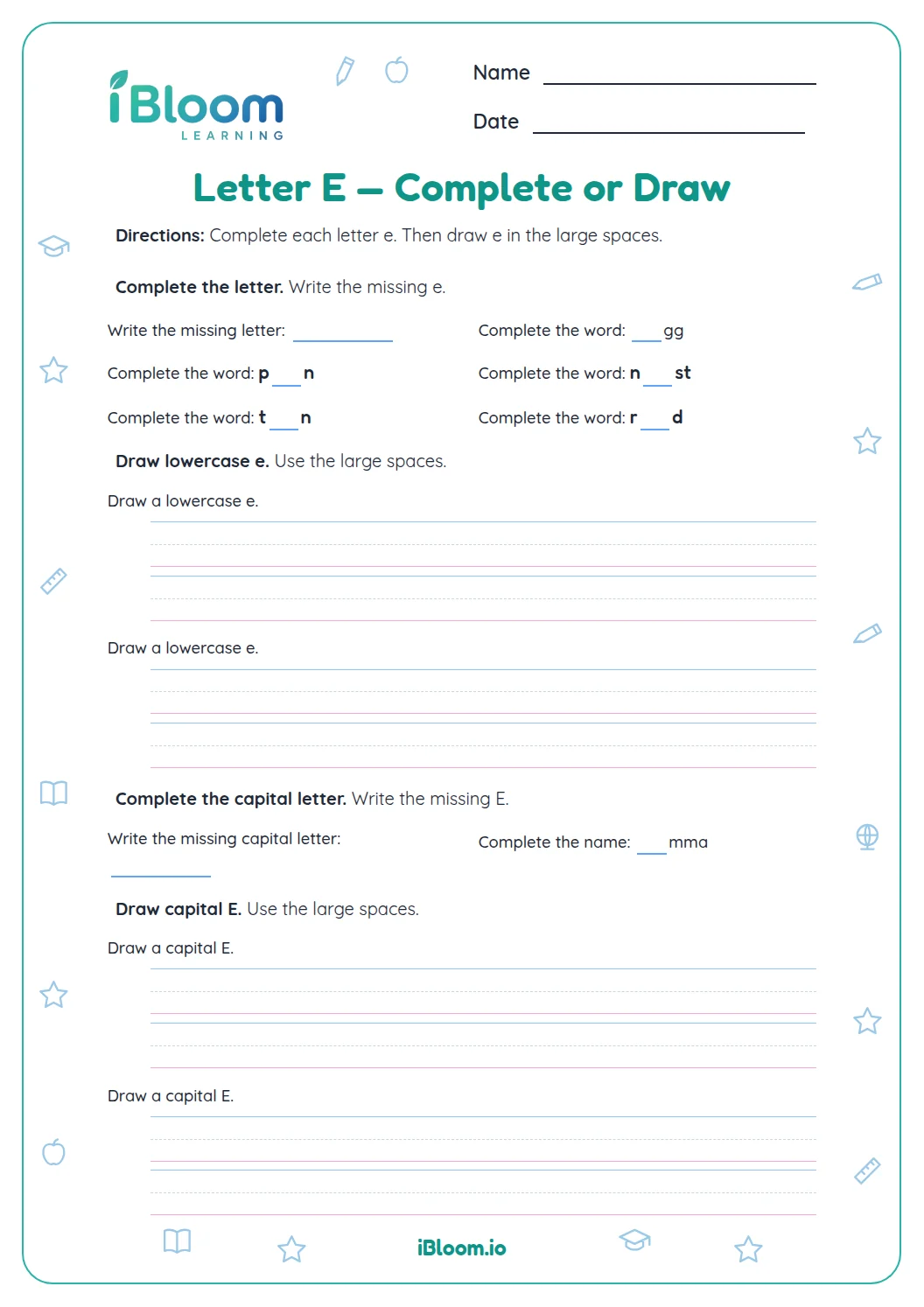
The tracing line practices uppercase E and lowercase e together as “Ee.” Invite the child to say each letter while tracing. The remaining prompts ask children to identify first letters and complete familiar words.
How do the final word clues use E?
The final seven prompts use short word clues. Say each word, find the missing letter, and write it in the blank.
- Part A: 3 picture-word choices
- Part B: 1 tracing line
- Part C: 10 first-letter and word clues
- A separate answer key identifies the choices and expected letters.
How to use this worksheet
- 1Name the pictured object in each choice question.
- 2Point to E in the printed word and say its name.
- 3Trace uppercase E and lowercase e slowly.
- 4Say each familiar word as you trace it.
- 5Use the final pictures to say each word before filling its first letter.
Common mistakes and quick fixes
The mistake
Mixing up uppercase E and lowercase e.
The fix
Say the letter name and compare each form before tracing.
The mistake
Starting the word clue without naming the picture.
The fix
Name the object aloud, then listen for its first sound.
The mistake
Rushing through a tracing line.
The fix
Trace one letter at a time and keep the strokes within the guide.
What to practice next
Make more practice
Questions parents and teachers ask
Which letters does the worksheet ask children to trace?
Children trace uppercase E and lowercase e together on a line of repeated “Ee.” Saying each letter while tracing connects the shape on the page with its name. The remaining questions ask children to identify first letters and complete familiar E words, including egg, elephant, and envelope.
How many activities are included?
There are 14 questions: three picture-word choices, one tracing line, and ten letter or word clues. The worksheet fills two pages, and a separate answer key lists the expected choices, letters, and tracing text for an adult to check. The key also shows the correct spelling for each word.
Do the picture choices show words beginning with E?
Yes. The first three pictures show an egg, an elephant, and an envelope. Each is paired with three word choices, so the child can name what the picture shows and find the matching printed word. The final three clues reuse those familiar words.
How can an adult support the tracing practice?
Point out the starting place on the tracing guide, then let the child move at a comfortable pace. Say the letter or word together while tracing. If a stroke goes the wrong way, model it once and invite another try rather than rushing to finish the line.
What words appear in the final clues?
The final seven clues use familiar words such as egg, elephant, envelope, engine, ear, eagle, and eight. Each sentence leaves out one letter, and its written clue helps the child identify the word before writing. The first three practice the letter e; the others build careful spelling.
Is there an answer key?
Yes. A separate answer key identifies the three picture-choice words, lists the text for the tracing items, and gives the missing letter for each final clue. An adult can print the worksheet pages for practice and keep the key nearby when checking.