





About this worksheet
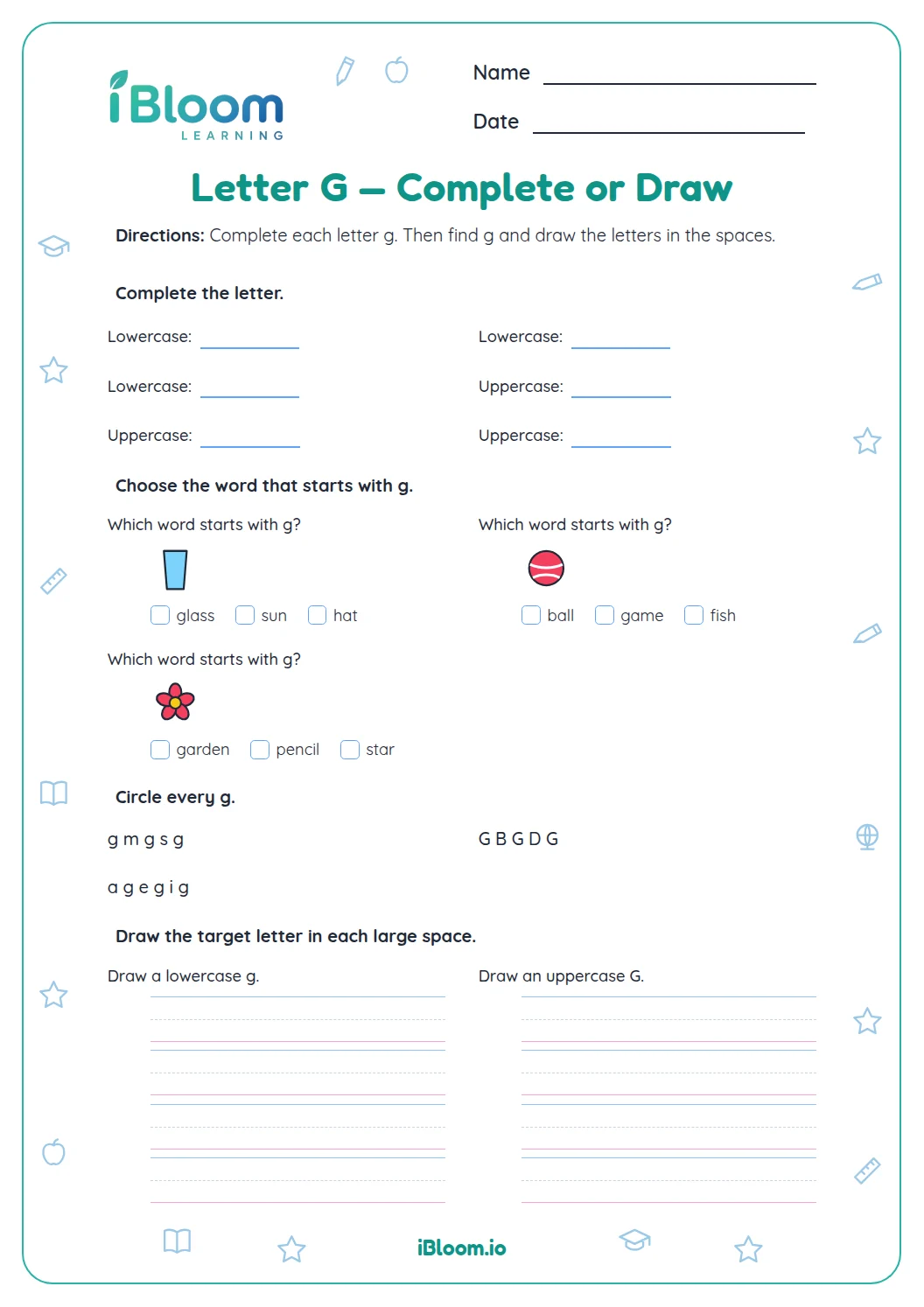
This free printable gives preschool and kindergarten learners repeated practice with uppercase F, lowercase f, and the beginning /f/ sound. Children trace both forms, recognize F among other letters, and choose pictures and words that begin with F. A separate answer key is included. The practice supports the kindergarten letter-sound correspondence standard.
Aligned to RF.K.3.a
How does the sheet practice F?
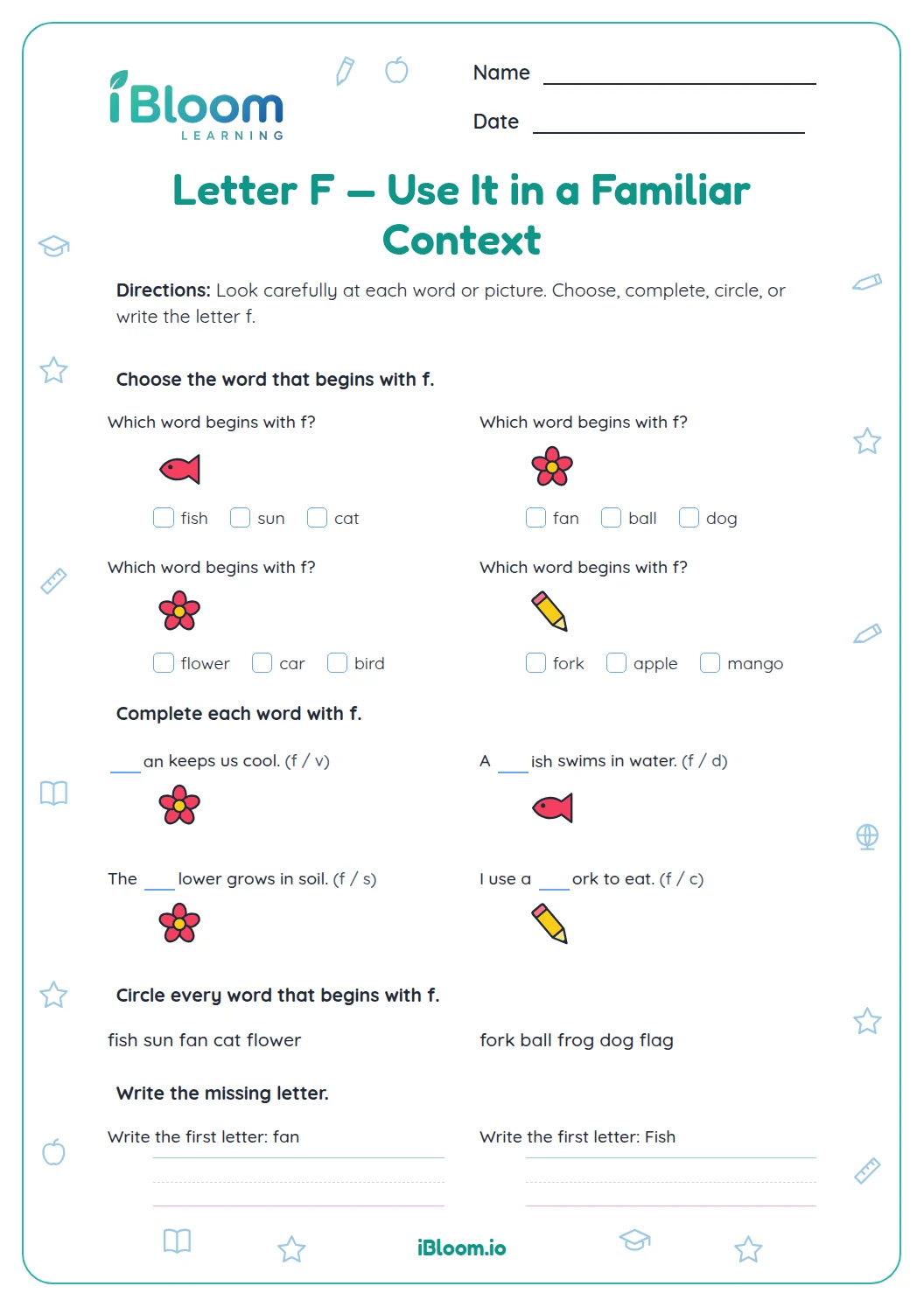
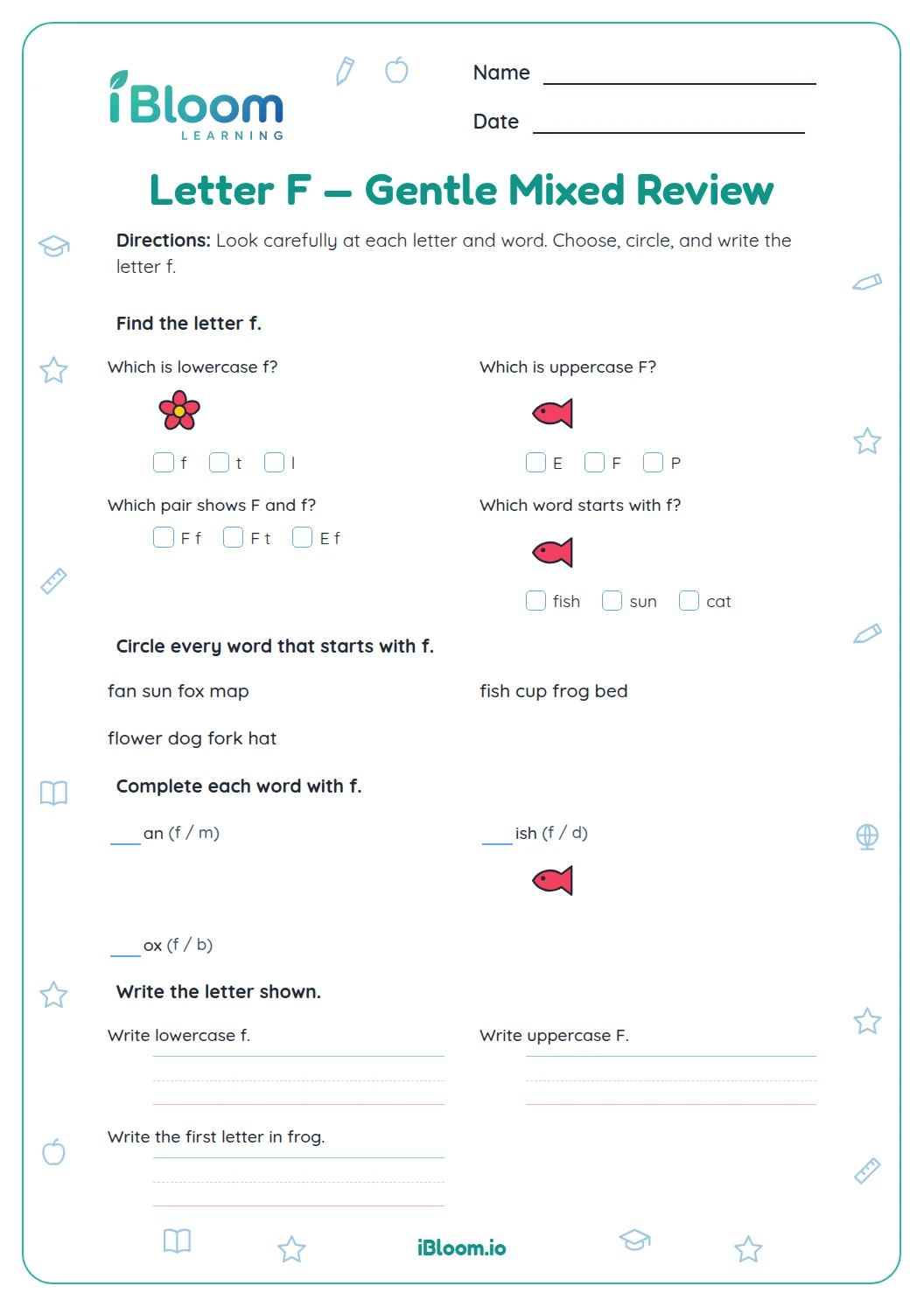
The first item gives learners a trace row for uppercase F and lowercase f. Later questions ask them to identify the forms, find F in short rows, and connect F with the beginning sound in fish, flower, fan, frog, and fork.
How can children hear the /f/ sound?
Say a word slowly and listen to its first sound. In “fan,” the first sound is /f/, which matches the letter F. The picture choices use familiar words so the child can focus on the beginning sound.
- 1Write the first letter in fan: ___
- 2Say fan slowly: /f/…an.
- 3The missing letter is F.
How can adults support tracing?
Model the letter from top to bottom, then let the child trace the repeated forms. Invite the child to say “F” or “f” while tracing. Point out that uppercase F and lowercase f look different but represent the same letter sound.
How to use this worksheet
- 1Read the directions before starting each part.
- 2Complete one question at a time and say the clue aloud.
- 3Use a drawing, count, or number strategy where helpful.
- 4Review each response before moving to the next part.
- 5Check the finished page with the separate answer key.
Common mistakes and quick fixes
The mistake
Choosing a picture because its name contains f later in the word.
The fix
Say the word slowly and listen to its very first sound.
The mistake
Mixing up uppercase F and lowercase f.
The fix
Compare the printed choices with the trace row before choosing.
The mistake
Writing the whole word when the prompt asks for its first letter.
The fix
Look at the blank and give just F or f, as requested.
Common Core alignment
Name the common sound for F and connect it to familiar words.
On this sheet: Learners identify F and connect its letter to the beginning sound in familiar words.
Show the official wordingHide the official wording
Demonstrate basic knowledge of one-to-one letter-sound correspondences by producing the primary sound or many of the most frequent sounds for each consonant.
What to practice next
Make more practice
Further reading
Questions parents and teachers ask
What letter forms does the worksheet practice?
It starts with a trace row for uppercase F and lowercase f. The next items ask learners to identify each form, find F in short letter rows, and use F or f to complete familiar words.
Which beginning sound do the picture choices practice?
The choices focus on the /f/ sound at the start of a word. Learners can say each picture name aloud, then choose fish or flower when they hear /f/ first.
How many items are on the worksheet?
There are 14 items in three parts: one trace activity, six recognition and sound choices, and seven letter-finding or word-completion prompts. The separate answer key shows the expected response for each item.
Can an adult read the prompts aloud?
Yes. An adult can name the pictures or read the word prompts while the child looks for the first sound. Keep the letter choices visible so the learner can make the match rather than having the answer supplied.
What should a child do after tracing F and f?
Have the child compare the tall uppercase F with lowercase f, then look for the same letter at the start of fan, frog, and fork. Saying each word slowly helps connect the printed letter with its sound.