






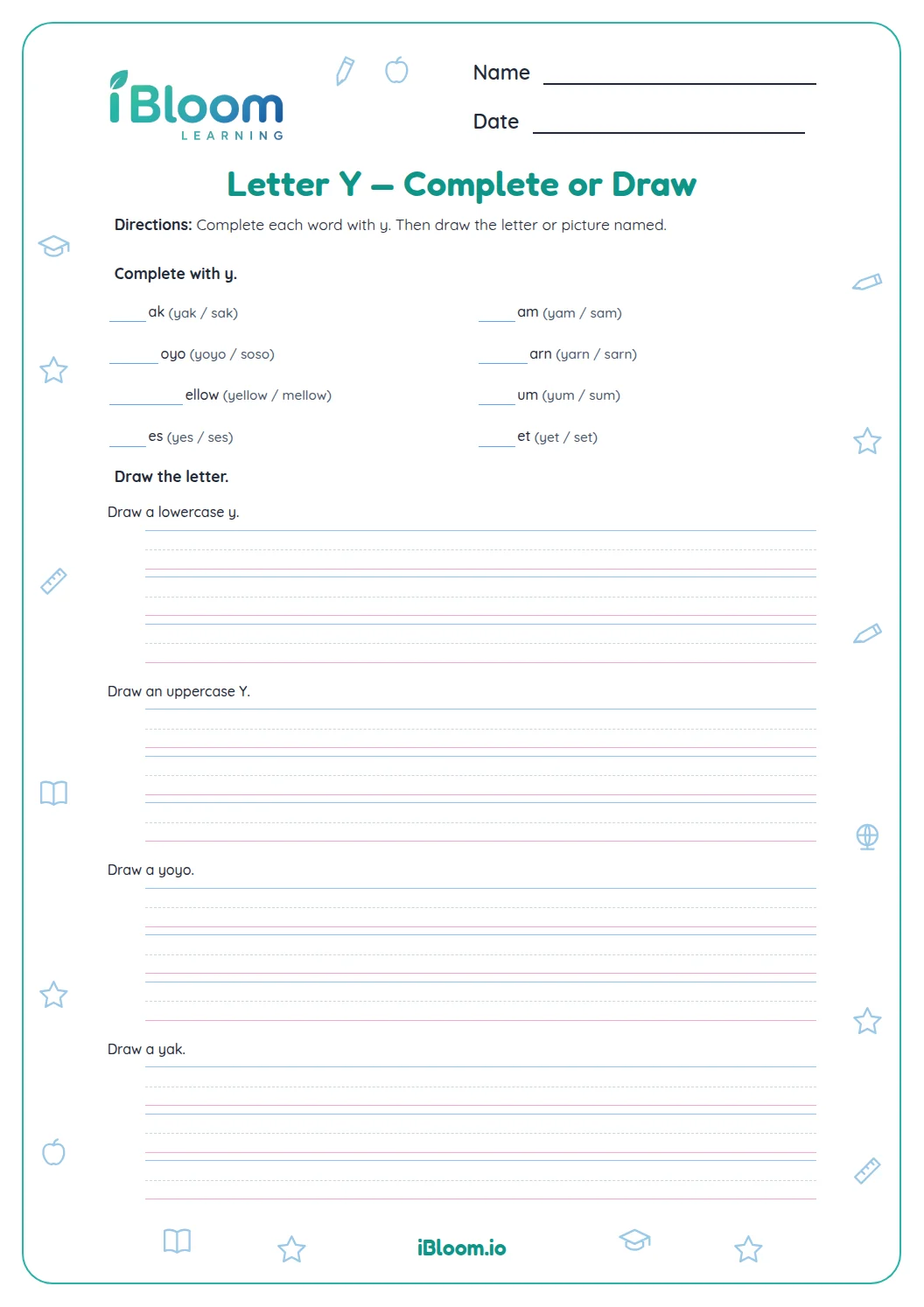
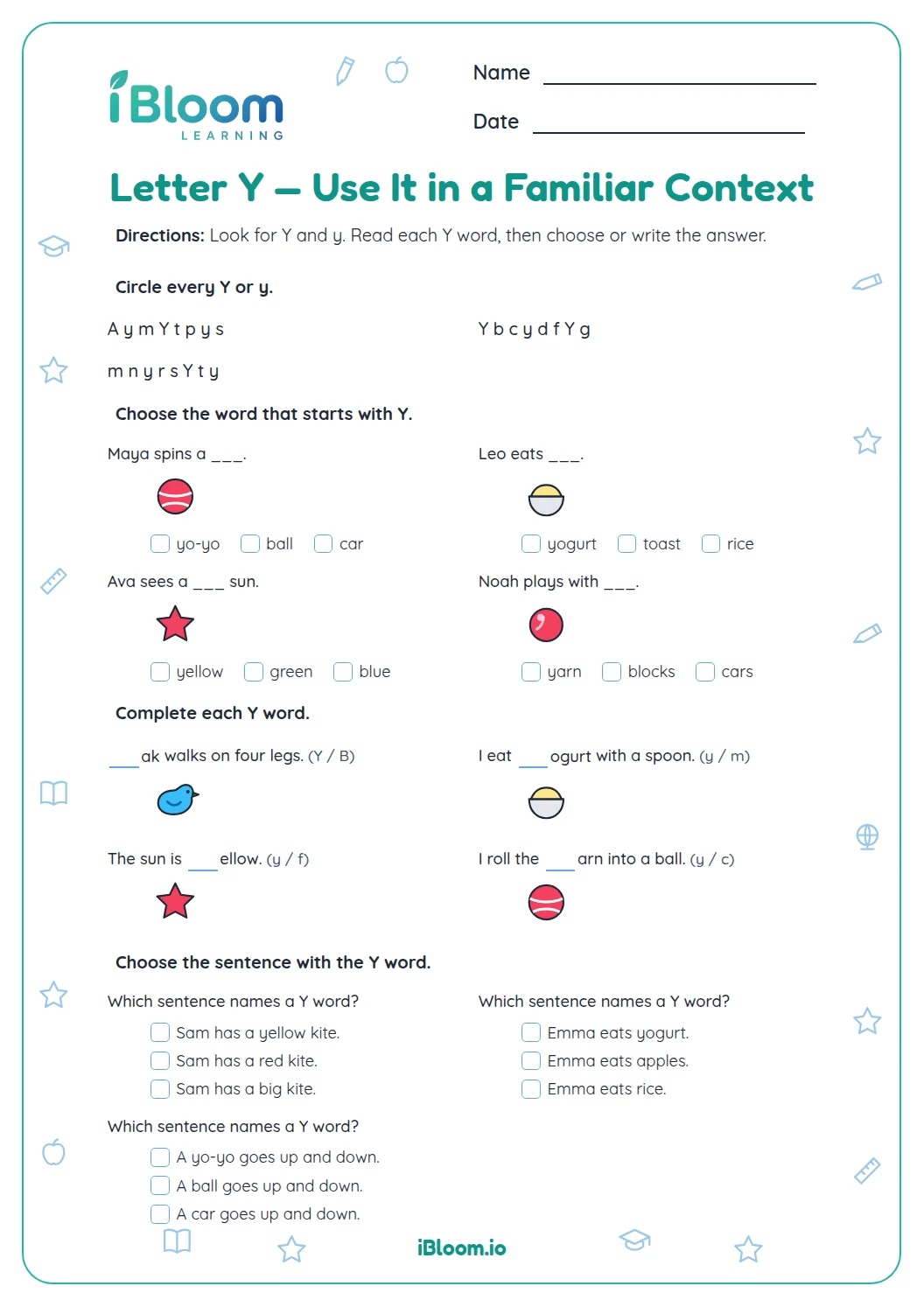

About this worksheet
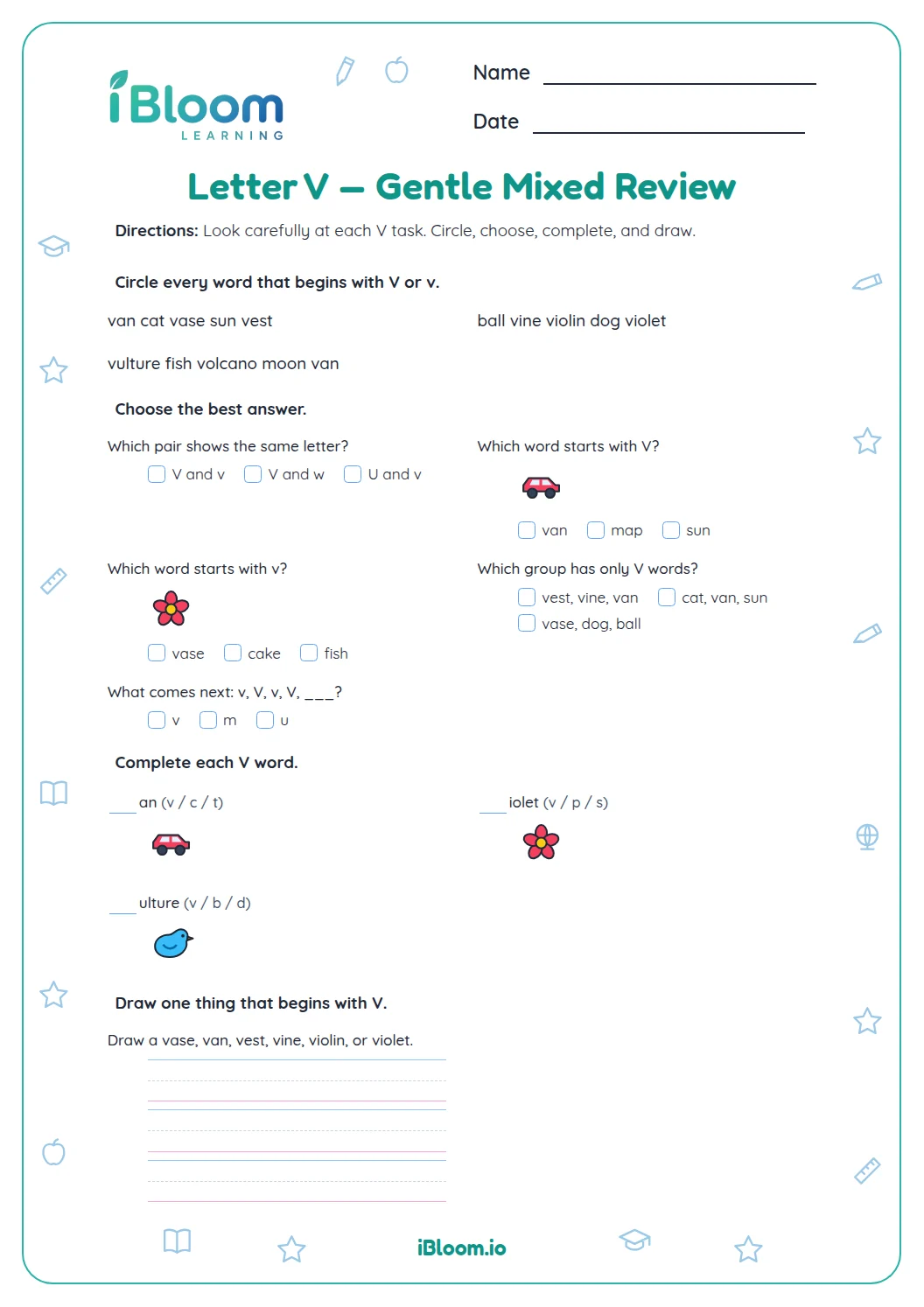
This free printable letter V worksheet brings a word hunt into familiar settings: music, play, getting dressed and a visit. Preschool and kindergarten children identify uppercase V and lowercase v, choose six pictures, and circle V words in six short rows. An adult can read the words aloud while the child looks for the starting letter. The 14 tasks support Common Core RF.K.1d and RF.K.3a through letter recognition and consonant sounds. The answer key marks picture choices and target words, making it easy to check each part together.
Aligned to RF.K.1d and RF.K.3a
What does the V word hunt look like?
Part A has two tracing lines, one for uppercase V and one for lowercase v. Part B has four picture choices. Part C has four rows of words: children circle every word that starts with V or v.
The rows connect the letter to a violin at music time, a volleyball at playtime, a vest to wear and a visit. Read each row aloud and let the child point to the first letter of every word.
How do you help a child hear /v/?
Say violin slowly, holding the first sound briefly: /vvv/. Let the child say it with you, then connect that sound to the printed v. Name both pictures in each question so the choice depends on the sound and word meaning.
- 1Question 3 asks for the violin at music time.
- 2Name the pictures: violin, drum.
- 3Violin begins with /v/.
- 4Choose the violin picture.
How are uppercase V and lowercase v connected?
The two letters share a pointed shape, while uppercase V is taller in ordinary print. Question 9 includes both Vest and vest, giving children a chance to recognize the letter at either size.
Circle every matching word, including repeated words. In violin drum violin, both copies of violin begin with v and both should be circled. The key shows the targets in each row.
Use the sheet with an adult
- 1Say the letter name V and the sound /v/.
- 2Find and circle uppercase V and lowercase v in Part A.
- 3Name each pair of pictures before choosing the V word.
- 4Read each word-hunt row aloud and point to the starting letters.
- 5Check that every V word, including repeats, is circled.
What to watch for
The mistake
Naming the letter but skipping its sound.
The fix
Say V, then /v/, then violin so the connection is audible.
The mistake
Circling only the first violin in its row.
The fix
Point to each word from left to right and check its first letter.
The mistake
Missing uppercase Vest in the word hunt.
The fix
Compare the traced V and v, then find both forms at the starts of words.
Common Core alignment
Find uppercase V and lowercase v in familiar words.
On this sheet: Children trace V and v and locate words beginning with those letters.
Show the official wordingHide the official wording
Recognize and name all upper- and lowercase letters of the alphabet.
Say /v/ and connect it to the beginning of violin and volleyball.
On this sheet: Picture choices connect the consonant sound /v/ with the letter v.
Show the official wordingHide the official wording
Demonstrate basic knowledge of one-to-one letter-sound correspondences by producing the primary sound or many of the most frequent sounds for each consonant.
What to practice next
Make more practice
Further reading
Questions parents and teachers ask
Does my child need to read every word independently?
No, an adult can read the words while the child finds V and v. This keeps the focus on the letter and its sound. In the picture section, say both object names first, then invite the child to select the word that begins with /v/.
How is the word hunt arranged?
The hunt uses six short rows of words that children scan from left to right. Each row contains at least one V word and another word to compare with it. Children circle all words beginning with uppercase V or lowercase v, including repeated target words.
Which pictures are used for the V sound?
The V picture choices are violin, volleyball and volcano. Children say each picture name and listen for /v/ at the beginning. Comparison pictures include drum, basketball, mountain and piano. The word rows also include V words such as vest, visit and van.
Should both copies of a repeated V word be circled?
Yes, every V word in a row should be circled, including repeats. In violin drum violin, circle both copies of violin. In visit play visit, circle both copies of visit. Scan the entire row together before moving on so the child practices checking each starting letter.
Is this suitable for preschool as well as kindergarten?
Yes, preschool children can use the sheet with adult reading and help naming the pictures. Kindergarten children can take more responsibility for selecting the pictures and scanning the word rows. Follow the child’s pace, and pause after any part to say the V words together again.