




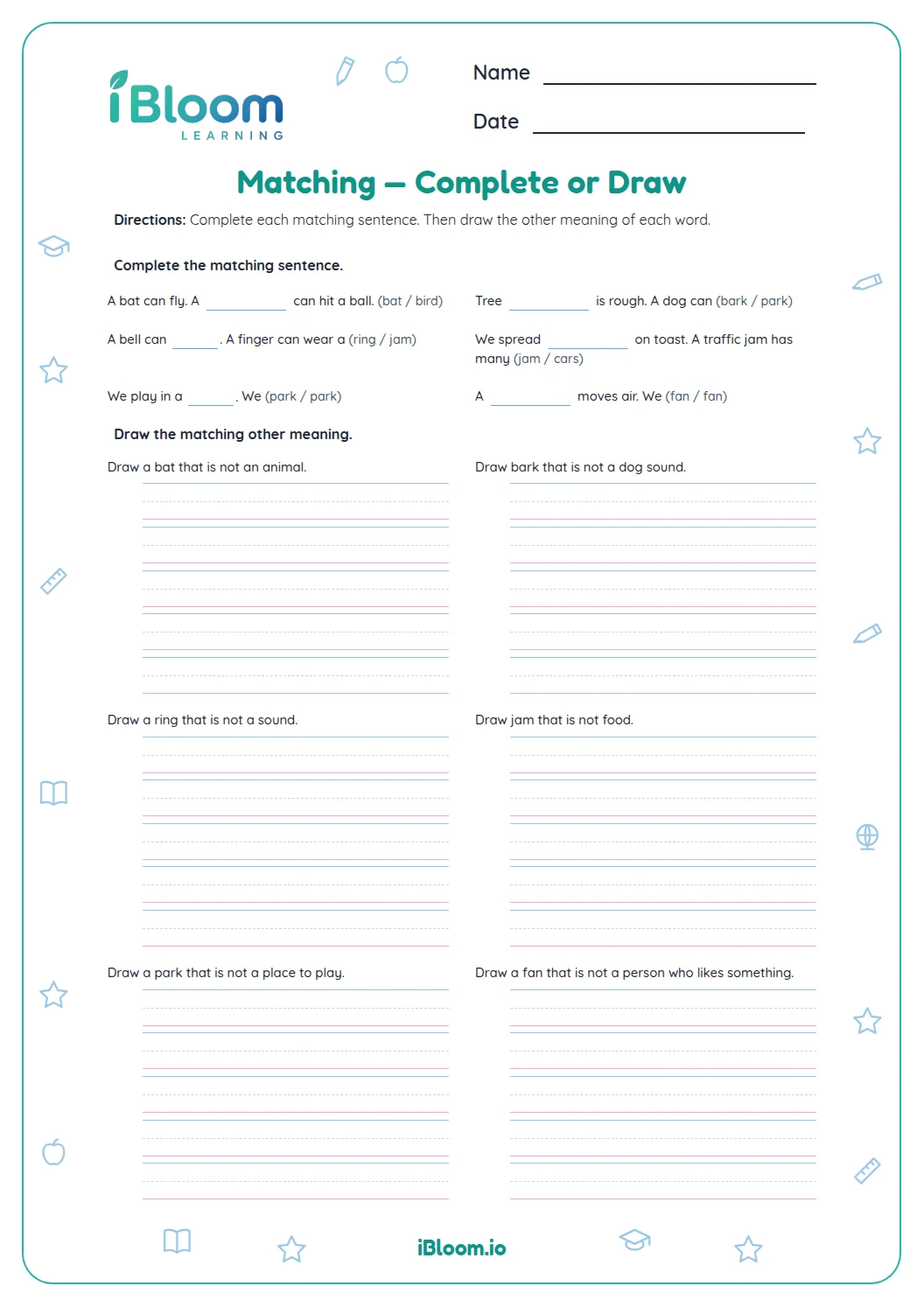
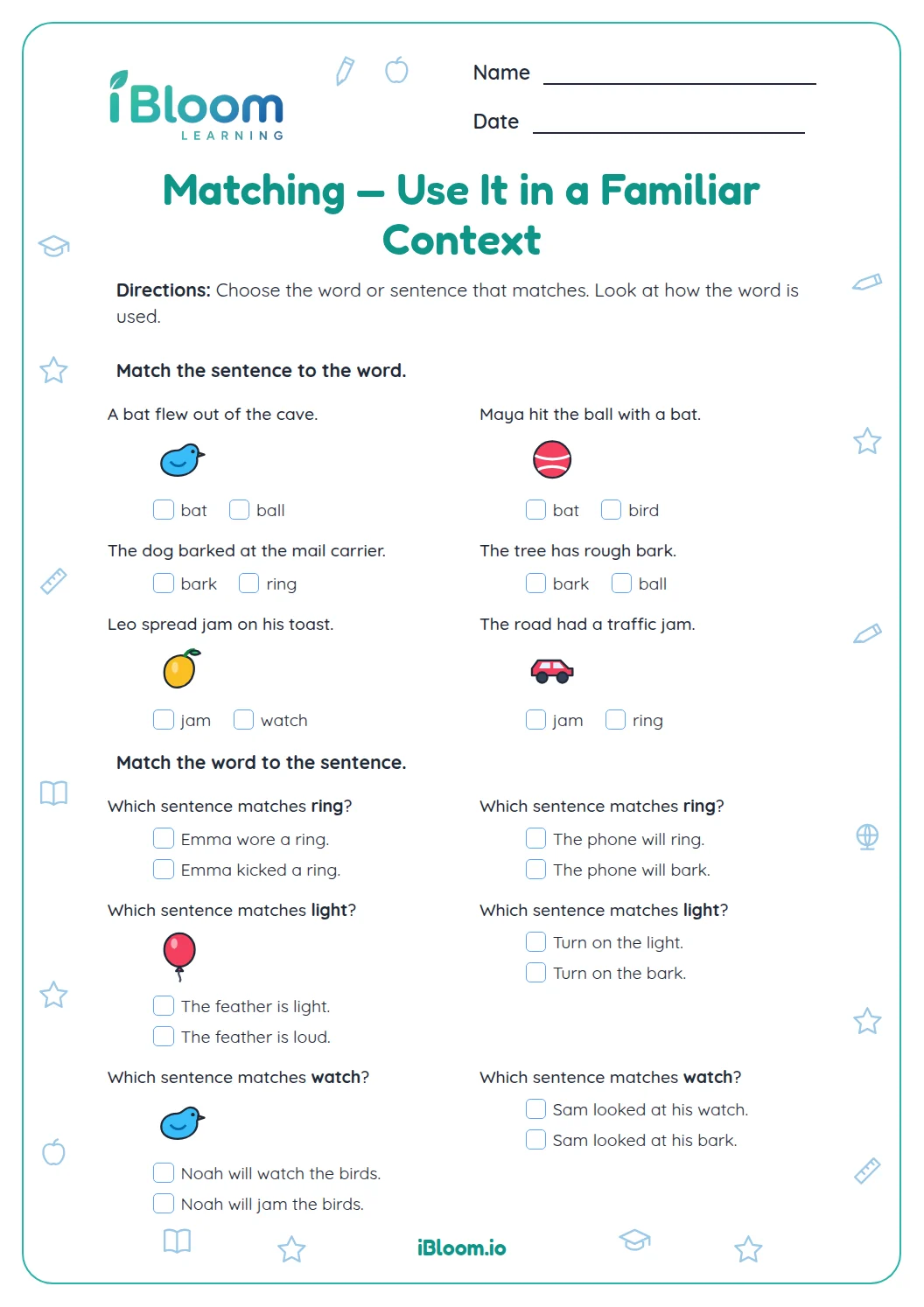

About this worksheet
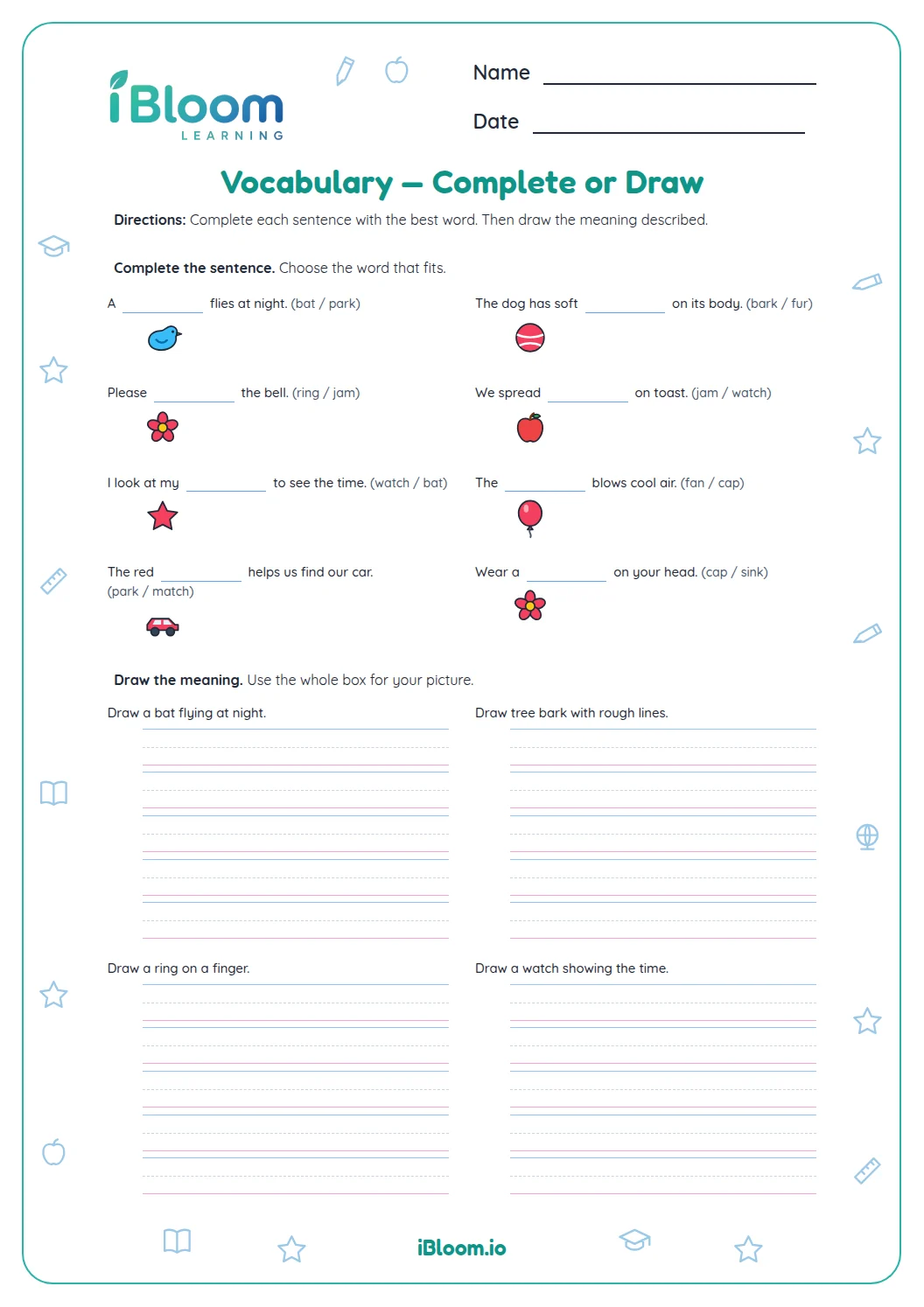
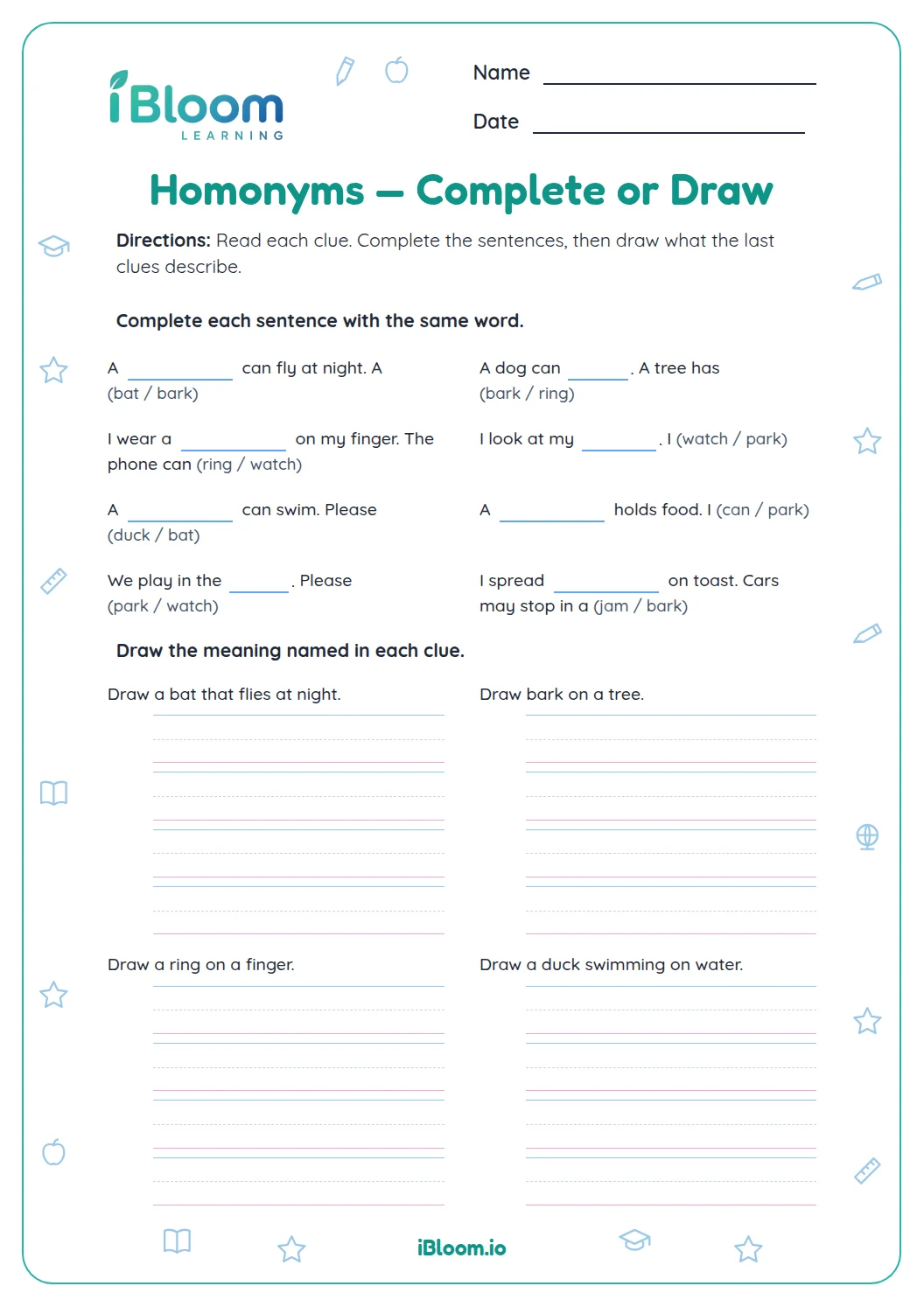
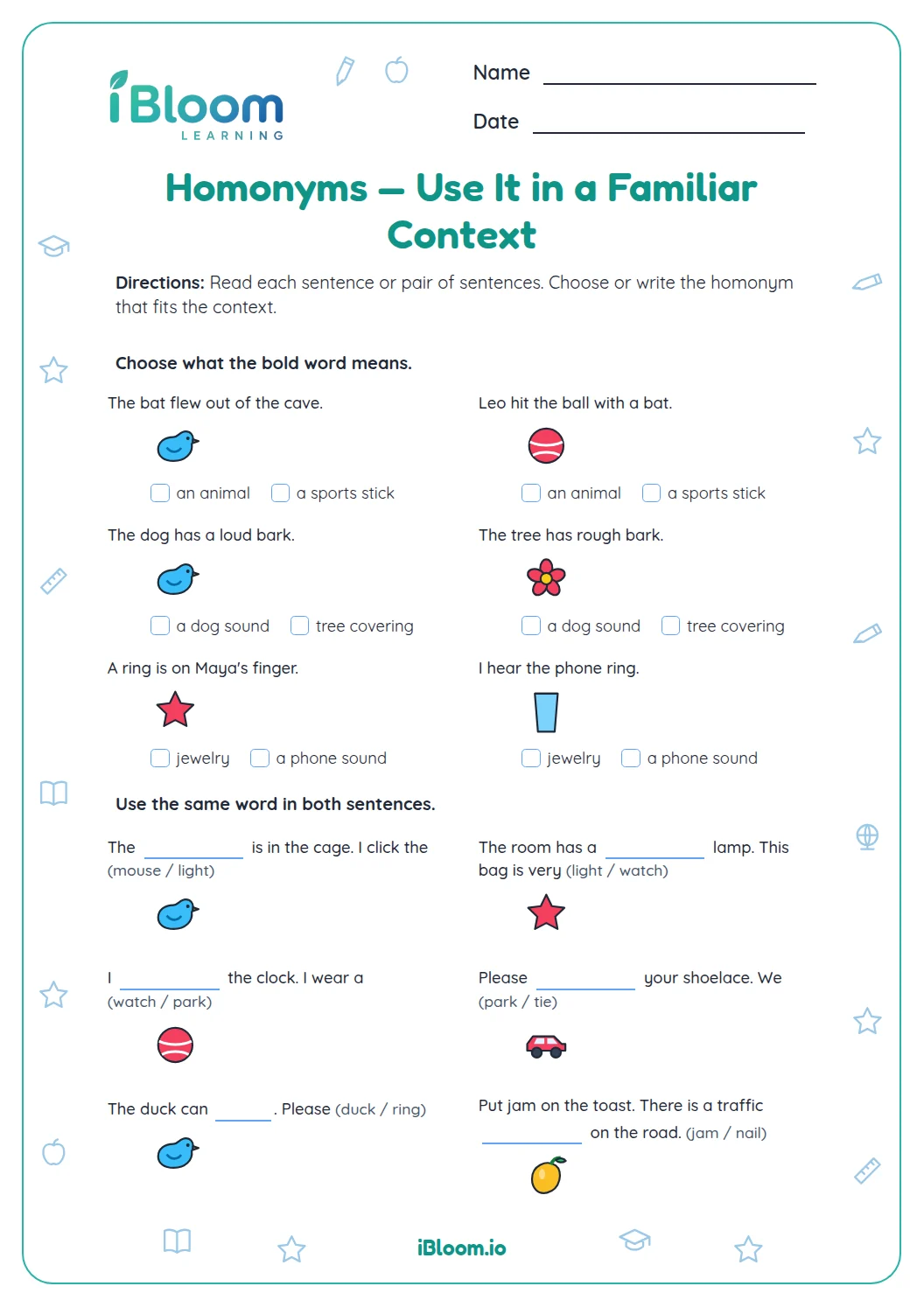
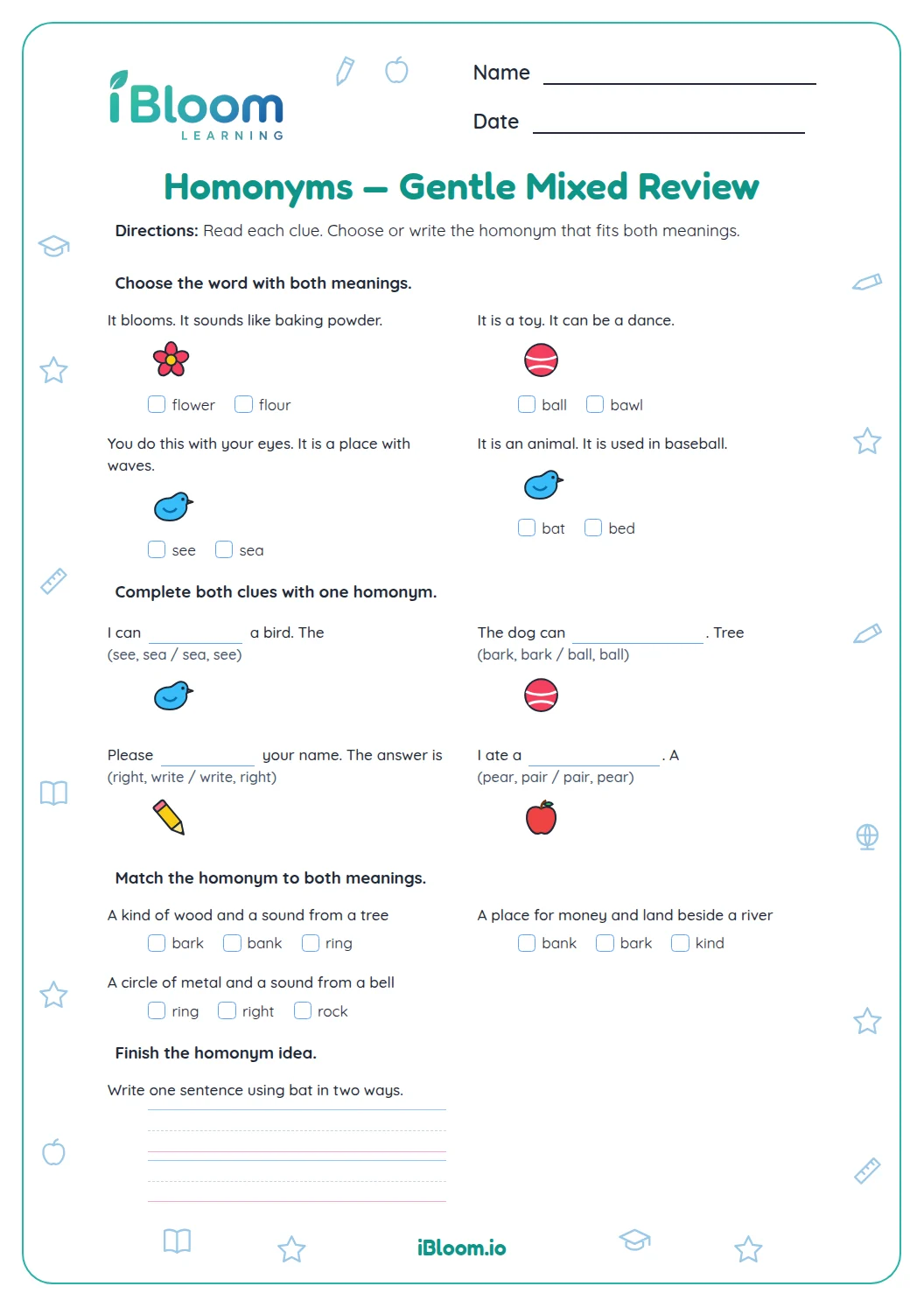
This gentle preschool and kindergarten worksheet introduces multiple-meaning words through 14 short, familiar sentences with picture cues. Children choose the meaning that fits words such as duck, bat, ring, bark, wave, jam, and light. An adult can read aloud, and the separate answer key supports quick discussion. The sheet practices CCSS L.K.4a.
Aligned to L.K.4a
What is a word with two meanings?
Some familiar words can mean different things. Duck can name a bird or tell someone to bend down. Ring can be a sound or a band worn on a finger. The words around it help listeners know which meaning is being used.
- 1The duck swam across the pond.
- 2The words swam and pond give a clue.
- 3Here, duck names a bird.
How does a sentence help?
Read or listen to the whole sentence. Think about what is happening, then choose the meaning that makes sense. Saying the sentence again with each meaning can make the difference easier to hear.
- 1Please duck when the ball comes near.
- 2A bird cannot do what the sentence asks.
- 3Duck means bend down quickly.
What familiar words will children try?
The worksheet uses short sentences, picture cues, and two choices each. Children hear a familiar target word in context, then decide which meaning fits the sentence.
- Part A: duck, bat, ring, and bark
- Part B: wave, jam, and light
- An adult may read the prompts aloud
How to use this worksheet together
- 1Read the sentence aloud once without pointing to the choices.
- 2Ask the child what is happening in the sentence.
- 3Read the two meanings and try each one in the sentence.
- 4Invite the child to point to or say the meaning that fits.
- 5Talk about another sentence that uses the word a different way.
- 6Check the separate answer key together.
Common mix-ups and helpful prompts
The mistake
Choosing the meaning the child knows first.
The fix
Reread the whole sentence and ask what the person or animal is doing.
The mistake
Listening only to the target word.
The fix
Point out nearby clue words, such as swam and pond.
The mistake
Thinking every word has just one meaning.
The fix
Give two simple oral examples and notice how the sentence changes the meaning.
Common Core alignment
Children use familiar sentence clues to learn another meaning for a known word.
Notice a new meaning for a familiar word and use it correctly.
On this sheet: Children identify familiar words used with a second meaning in simple sentences.
Show the official wordingHide the official wording
Identify new meanings for familiar words and apply them accurately (e.g., knowing duck is a bird and learning the verb to duck).
What to practice next
Make more practice
Further reading
Questions parents and teachers ask
What is a multiple-meaning word?
It is a word that can mean more than one thing. Duck can name a bird or tell someone to bend down. In each question, children listen to the sentence and choose the meaning that makes sense there.
Can an adult read the worksheet aloud?
Yes. An adult can read the sentence and both choices aloud, then invite the child to point to or say the answer. This keeps the activity focused on listening to context and understanding how the familiar word is being used.
Which words are included?
Children practice duck, bat, ring, bark, wave, jam, and light. Each target word appears in two short contexts with a picture cue, so children can hear that a familiar word may be used in different ways, such as an object or an action.
Is an answer key provided?
Yes. A separate answer key gives the correct choice for all 14 questions. Adults can use it to check responses and talk about the sentence clue that helped the child choose between the two meanings. Picture cues also make the target words familiar.
How long will this take?
About 10 minutes is a gentle pace for 14 short questions, especially when an adult reads aloud and pauses to talk about the pictures and sentences. Stop after a few items if the child is ready for a break, then continue the review later with the remaining questions.