



About this worksheet
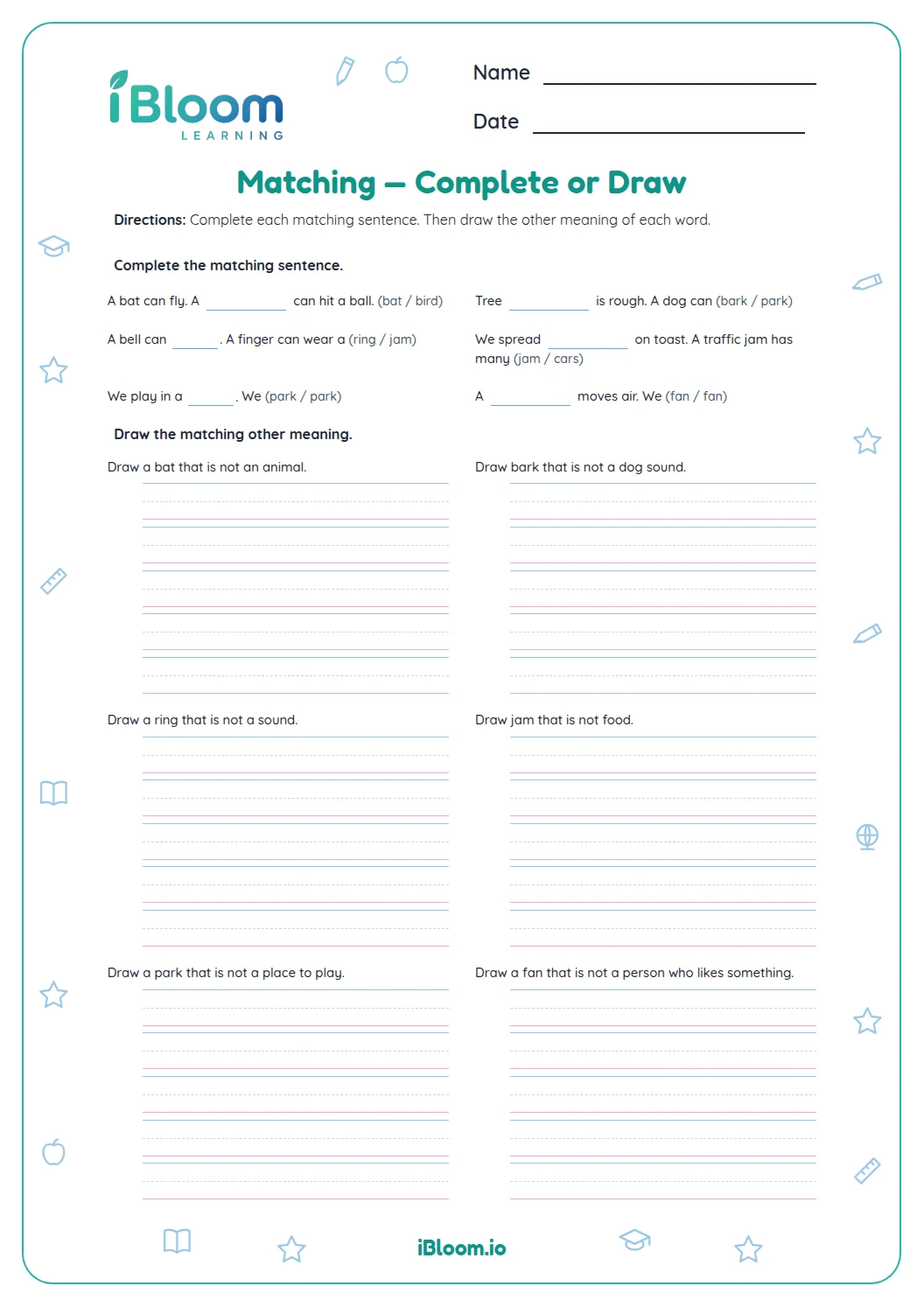
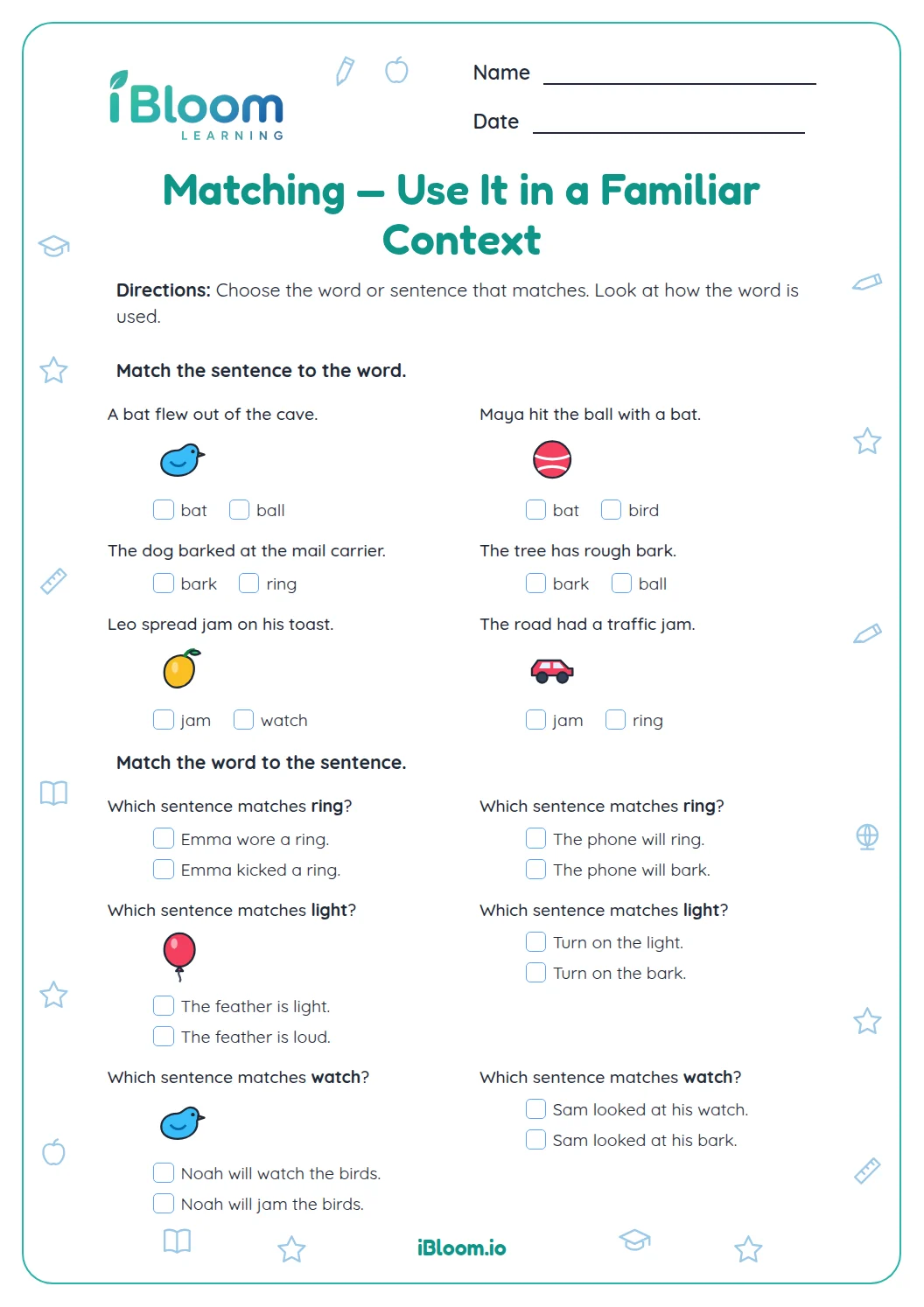
This free printable worksheet shows preschool and kindergarten children that one familiar word can mean two different things. A grown-up reads each sentence aloud, and the child marks the picture that fits. In Parts A and B, each word appears in two sentences with the same two pictures: for “A mouse ran under the couch” the child marks the mouse, and for “Dad clicked the mouse” the computer. Part C shows a duck and a bat and asks what else each word can mean. It supports Common Core L.K.4a, learning new meanings for familiar words. The answer key is on its own two pages.
Aligned to L.K.4a
What is a multiple meaning word?
It is a word that sounds and looks the same but means different things. A mouse is a small animal and also the thing you click on a computer. A dog's bark is a sound, and the bark of a tree is its rough outside. Children use these words long before they can read them, so the work at this age is hearing that one word has two jobs.
The kindergarten standard calls this identifying new meanings for familiar words. The word is not new to your child; the second meaning is.
How does a grown-up read this worksheet aloud?
Pre-readers cannot read the sentences, so this sheet is built for reading aloud. Read the whole sentence, then name the two pictures, pointing to each. Let your child say the word in the sentence again and decide which picture it matches.
In Parts A and B each word is used twice on purpose, and the two pictures stay the same. Questions 5 and 6 are both ring: first the ring you wear, then the sound a phone makes. For the computer mouse in question 2, the answer picture is the computer itself, since that is what the mouse belongs to. Hearing both meanings back to back is what teaches the idea.
- 1Listen! The phone will ring.
- 2The two pictures are a ring and a phone.
- 3A ring you wear on your finger cannot make a sound.
- 4Here ring means the sound a phone makes.
- 5Answer: the phone
What is on this worksheet?
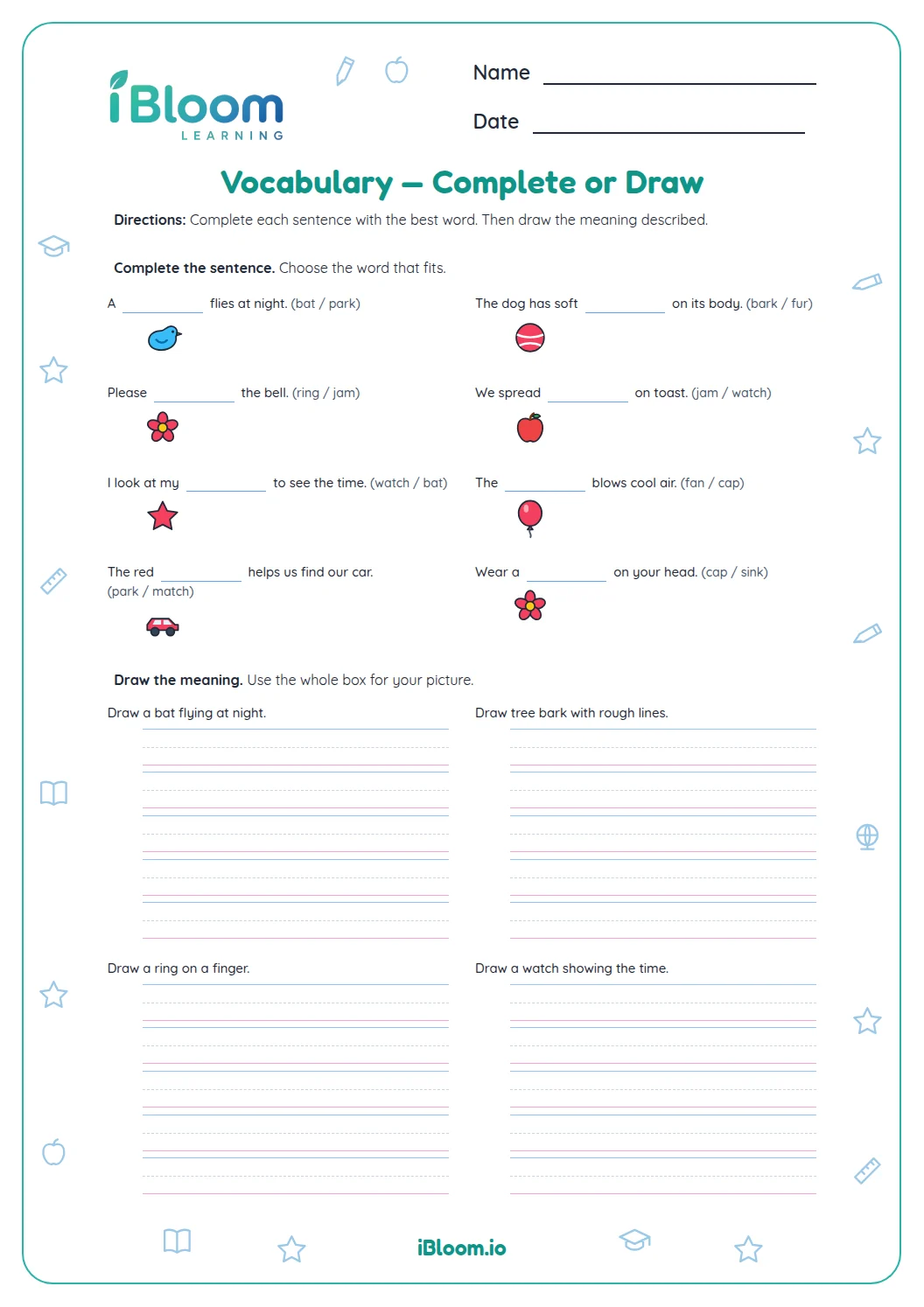
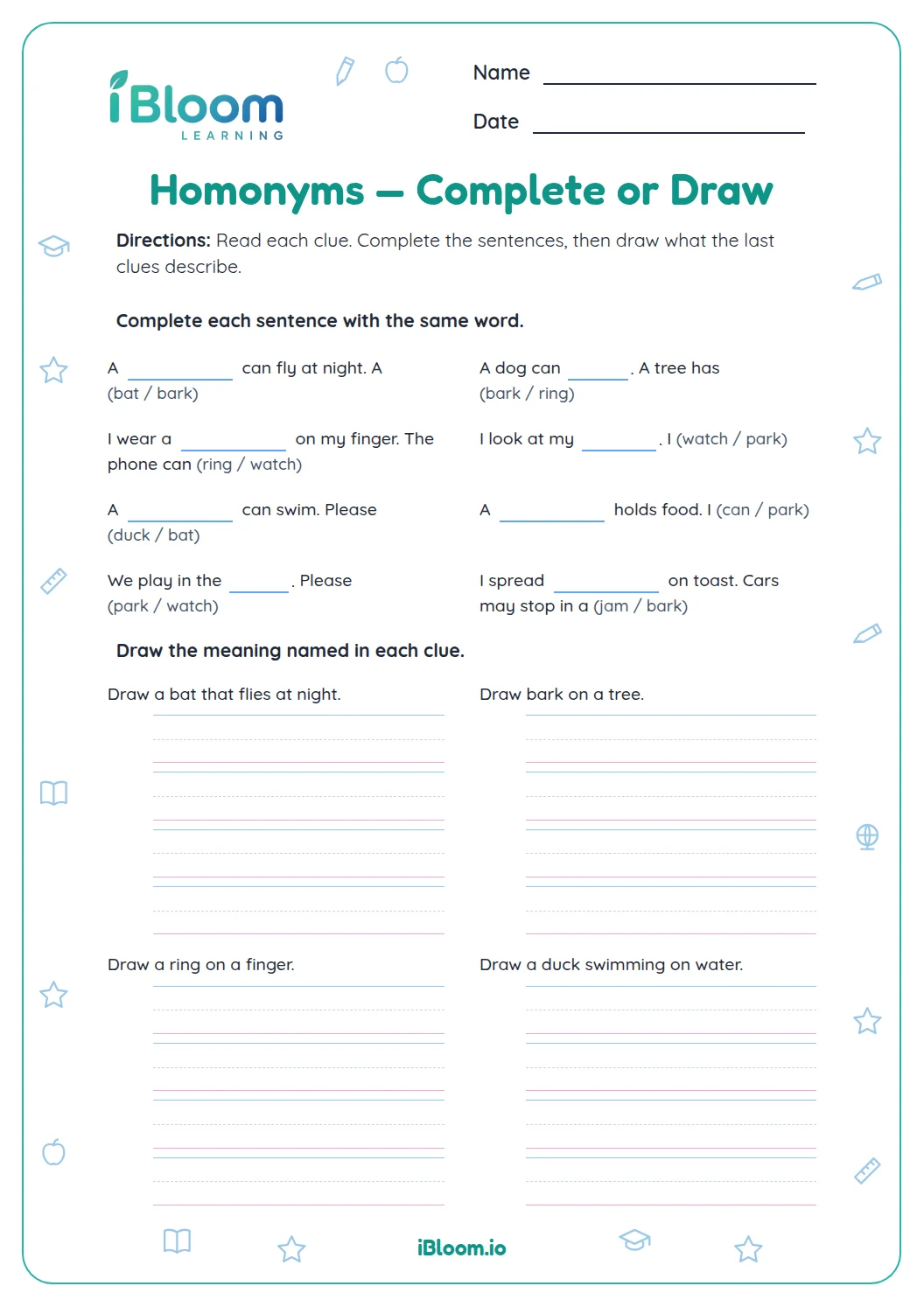
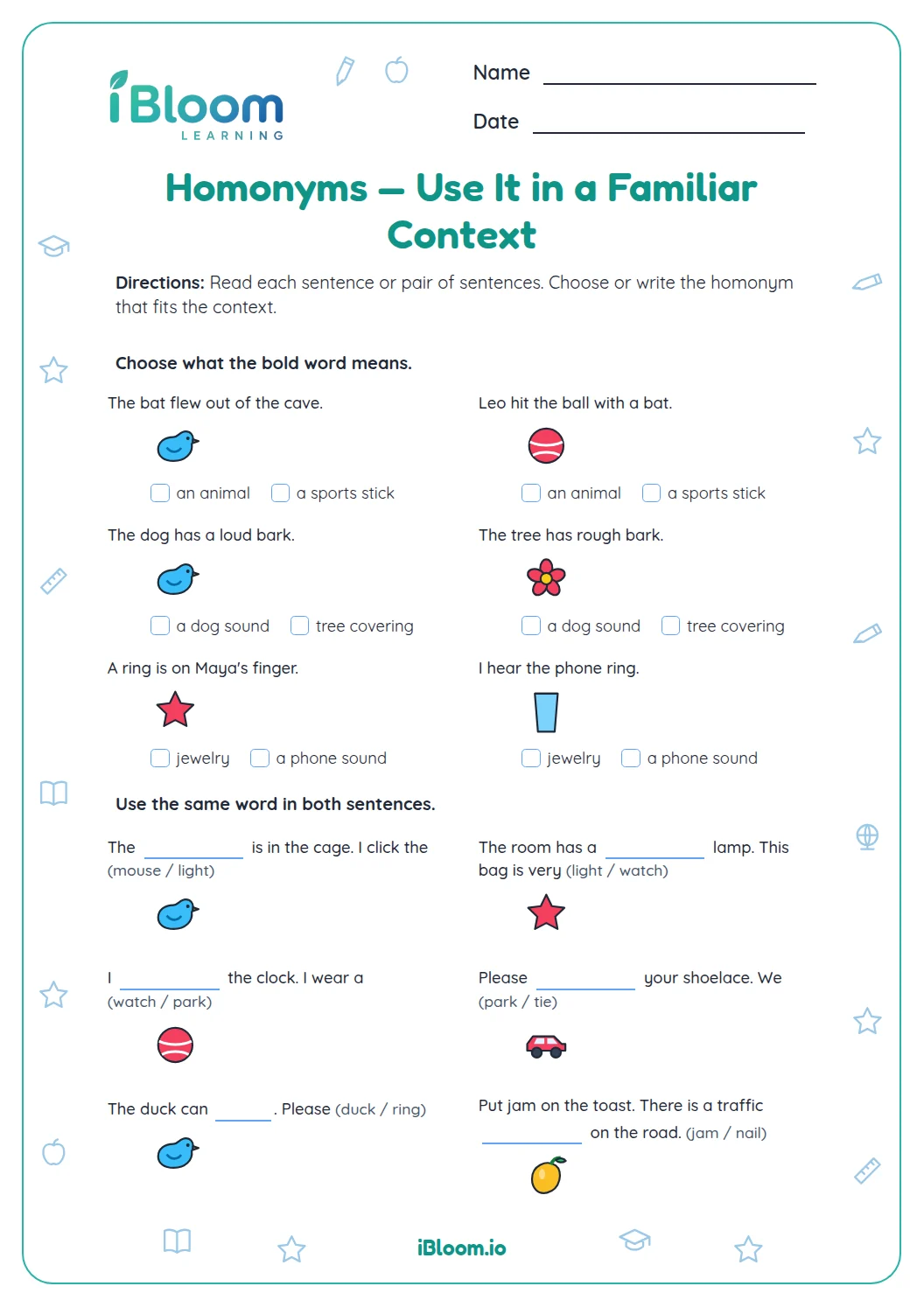
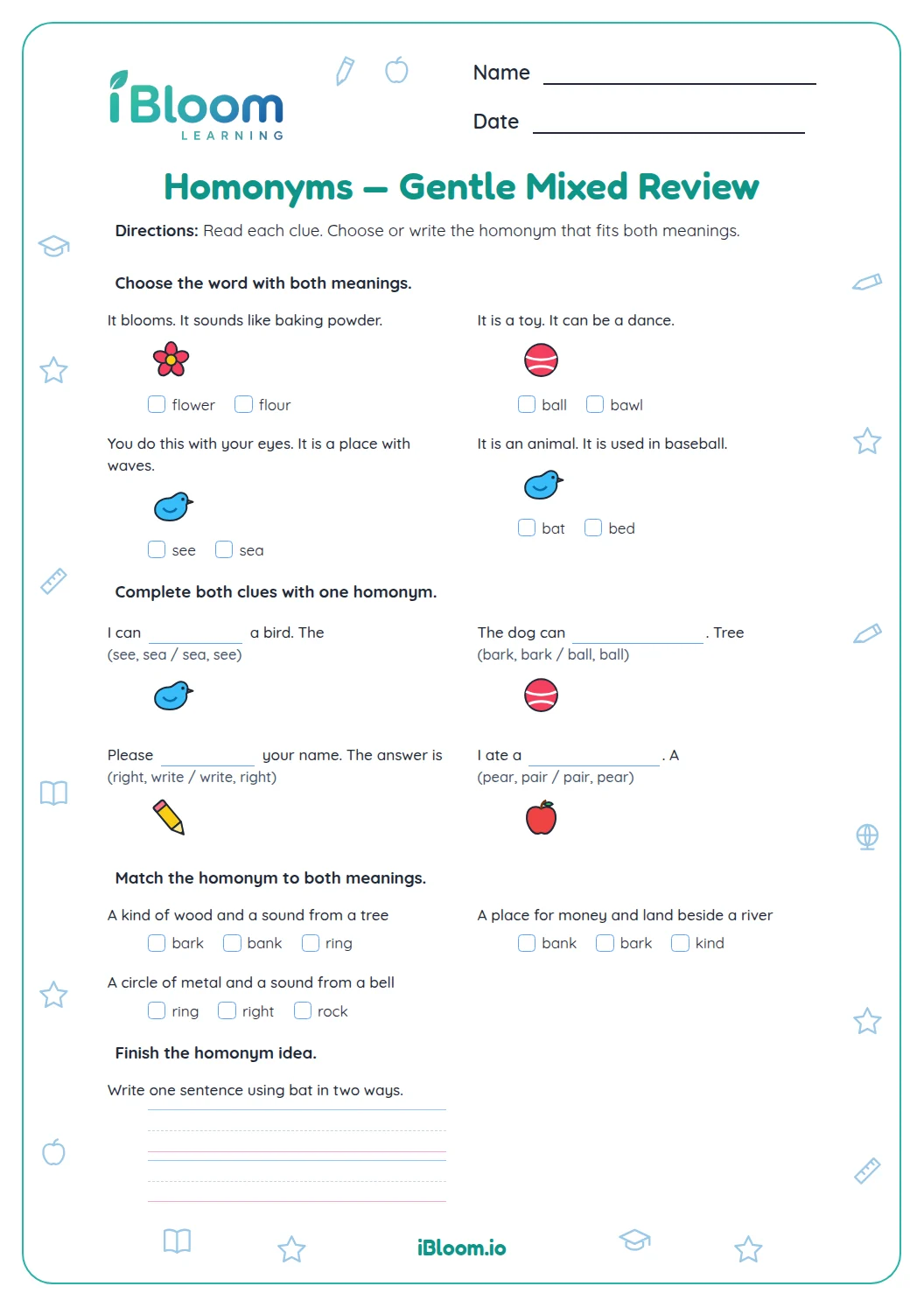
Part A uses mouse and bark. Each word has two sentences, and the child marks the picture that fits each one. Part B does the same for ring and watch. In Part C, children see a picture of a duck or a bat and choose a second meaning from three short phrases, which a grown-up reads aloud.
The wrong choices in Part C are things from everyday life, so a child has to think about the meaning and not just pick a familiar word.
- Part A: 4 questions on mouse and bark (animal, computer, dog, tree)
- Part B: 4 questions on ring and watch (ring, phone, watch, eye)
- Part C: 2 questions on the other meaning of duck and bat
- Two pages, with a matching answer key
Is this sheet right for preschoolers?
It can be, with a grown-up. The skills here are listening and choosing, not reading or writing, and each answer is a picture with a bubble. For younger preschoolers, do only Part A and talk about each word with real things: a toy mouse, a leaf with rough bark, a ring.
Use your own judgment about how much of the sheet a younger child enjoys.
How to use this worksheet at home or in class
- 1Warm up with real words: ask, "What is a mouse?" Let your child answer, then say, "A mouse can also be something you click on a computer."
- 2Read question 1 aloud and name both pictures, then let your child mark the one that fits the sentence.
- 3Do Part A together. Pause after questions 3 and 4 and say, "Bark is a sound a dog makes, and bark is also the outside of a tree."
- 4In Part B, read each sentence twice, then ask your child to act out the answer (wear a pretend ring, look carefully with your eyes).
- 5In Part C, read the three phrases and let your child act out each one, such as bending down low for duck.
- 6Check with the answer key. For a wrong answer, put the other picture back in the sentence and ask, "Does that sound right?"
Common mistakes and quick fixes
The mistake
Choosing the meaning they know best. Many children think of a mouse only as the animal and miss that Dad clicked the mouse (question 2).
The fix
Read the sentence slowly and ask, “What is Dad doing? Is he clicking an animal?” Point to the computer and talk about the mouse you click beside it.
The mistake
Repeating the last answer, because questions 1 and 2, 5 and 6, and 7 and 8 show the same two pictures.
The fix
The pictures repeat on purpose, but the correct picture changes with the sentence. Ask your child to say the new sentence again before choosing.
The mistake
In Part C, getting stuck on the meaning already shown. A child who only thinks of a duck as a bird may guess at random among the three phrases.
The fix
Use the word in a quick sentence of your own, like "Duck! A ball is coming!", then act out each choice and ask which one matches.
Common Core alignment
This sheet practices the kindergarten standard below on multiple meaning words.
Learn that a word you know, like duck, can have a second meaning, and use it correctly.
On this sheet: Duck as a bird and duck as an action is the exact example in the standard, and it is question 9.
Show the official wordingHide the official wording
Identify new meanings for familiar words and apply them accurately (e.g., knowing duck is a bird and learning the verb to duck).
What to practice next
Make more practice
Further reading
Questions parents and teachers ask
What is a multiple meaning word for a kindergartner?
It is a word that sounds and looks the same but means more than one thing. On this sheet, a mouse can be an animal or something you click on a computer, and to duck can mean to bend down low. The sentence around the word shows which meaning is right.
Does my child need to read to do this worksheet?
No. A grown-up reads every sentence aloud and names the pictures, and the child marks a bubble beside the picture that fits. The skill being practiced is hearing which meaning fits the sentence, not reading it. Part C has three short phrases that a grown-up reads aloud.
Why does each word appear twice?
Each word is used in two different ways on purpose. Question 1 is the animal mouse and question 2 is the computer mouse, with the same two pictures. Hearing both meanings back to back makes the idea clear: the word stays the same, but what it means changes with the sentence.
Can a preschooler do this worksheet?
Many can with help, especially Part A. Read each sentence aloud, name the two pictures, and let your child choose. If Parts B and C feel long, stop after Part A and come back to the rest another day. Real things, like a toy mouse or a ring, help.
How is this different from the homonyms worksheet?
This sheet introduces the idea with six familiar words, big pictures and a grown-up reading aloud. The Homonyms worksheets in the same section practice more words that look and sound the same but mean different things. If the idea is new to your child, start here, then move on to Homonyms and Matching.
What are the answers to Part C?
The answers are "To bend down low" for duck and "A stick for hitting a ball" for bat. Each is the second meaning of a word shown with its first, a duck swimming on a pond and a bat sleeping in a cave. The answer key shows all ten answers.