



About this worksheet
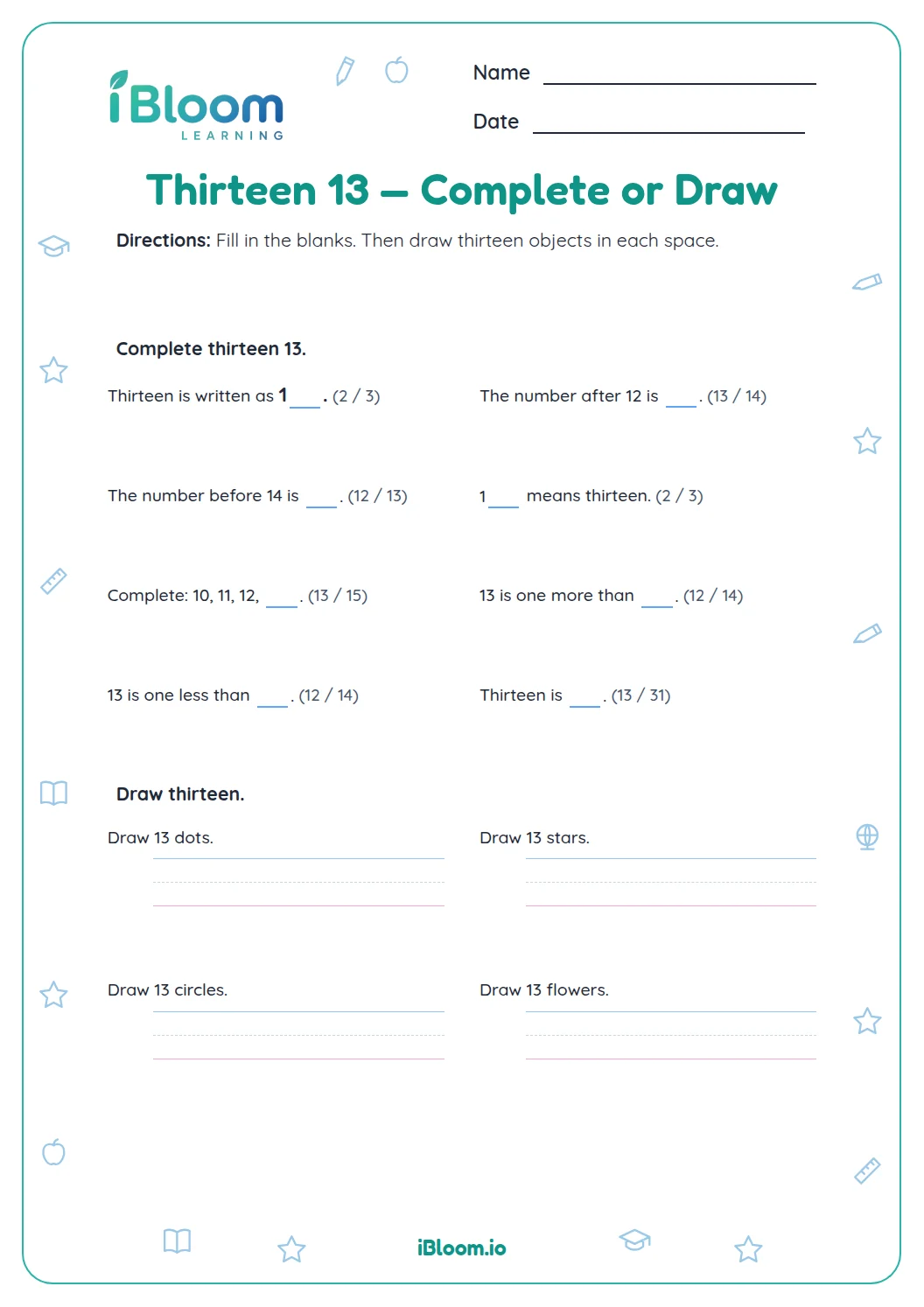
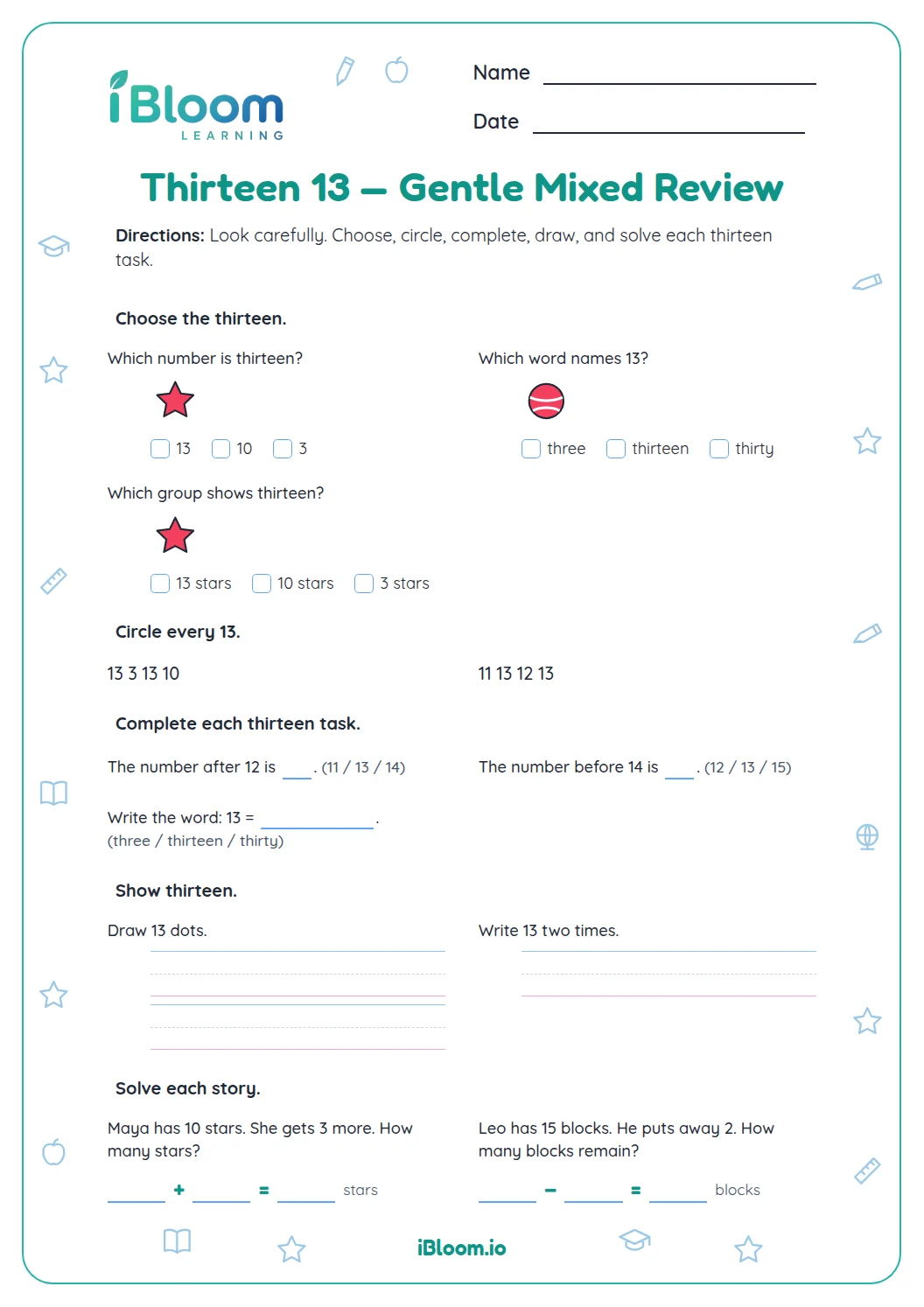
This printable preschool and kindergarten activity gives children several ways to understand the number thirteen. They count pictured groups of 13, see the number in a ten frame and base-ten blocks, complete number bonds, trace 13, and use it in familiar stories. The sequence connects the numeral to a quantity before asking children to write it independently. It practices the counting and cardinality idea in CCSS K.CC.B.4 and includes a simple answer key.
Aligned to K.CC.B.4
How can pictures show thirteen?
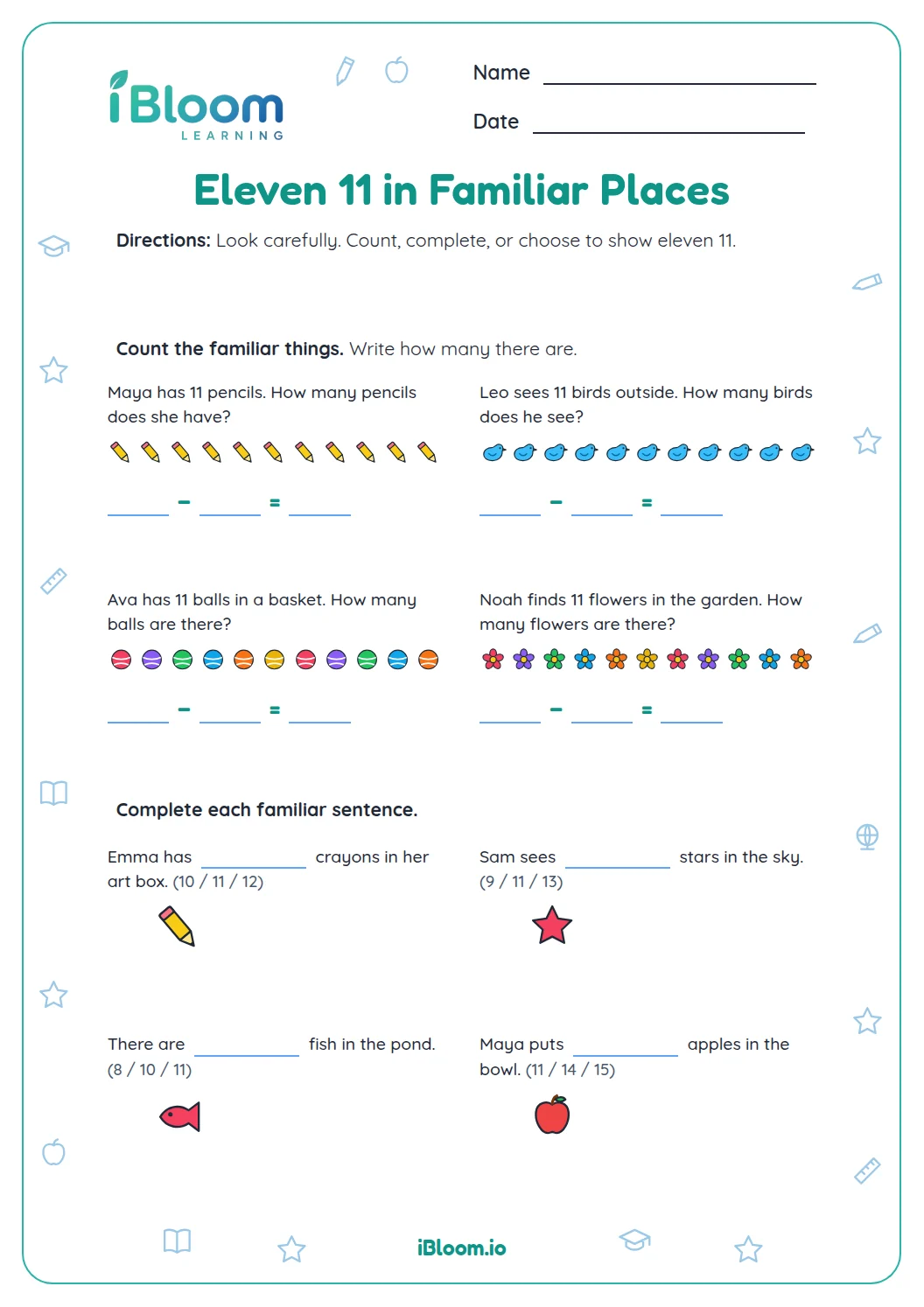
Each group has 13 objects. Count each picture once, then connect the last number said with the total number of objects. The apples, balls, birds and pencils keep the same quantity while changing the object.
How do models show ten and three more?
A ten frame can hold ten counters, then three more fill the next frame. Base-ten blocks show one ten and three ones. In a number bond, the two parts add to the whole thirteen.
- 1One full ten frame and 3 more counters.
- 210 + 3 = 13.
- 3There are 13 counters.
Where can children use thirteen?
After tracing 13, children solve short stories about crayons, stickers and flowers. Each story ends with a total of thirteen, linking the written numeral with a familiar group.
- Part A counts four pictured groups.
- Part B reads a ten frame, blocks and number bonds.
- Part C traces 13 and its digits.
- Part D solves three familiar stories.
How to use this worksheet
- 1Touch each apple once as you count the group.
- 2Count the balls one at a time to find the total.
- 3Point to each bird as you say the counting numbers.
- 4Count each pencil once, then name the group total.
- 5Count both ten frames to find the number of counters.
- 6Read the tens and ones in the base-ten blocks.
- 7Use the whole and one part to find the missing part.
- 8Find the number that completes the number bond.
- 9Trace the numeral 13.
- 10Trace the digit 1.
- 11Trace the digit 3.
- 12Trace 13 again, keeping both digits on the line.
- 13Write an equation and solve the crayon story.
- 14Write an equation and solve the sticker story.
- 15Write an equation and solve the flower story.
Common mistakes and quick fixes
The mistake
Stopping at ten when counting a group of thirteen.
The fix
Keep counting the three objects in the second ten frame: 11, 12, 13.
The mistake
Reading 13 as three tens.
The fix
Point to one tens block and three ones; say “one ten and three ones.”
The mistake
Writing the digits in the wrong order.
The fix
Say thirteen, then trace 1 first and 3 second to form 13.
Common Core alignment
Connect counting objects with the number that names the group.
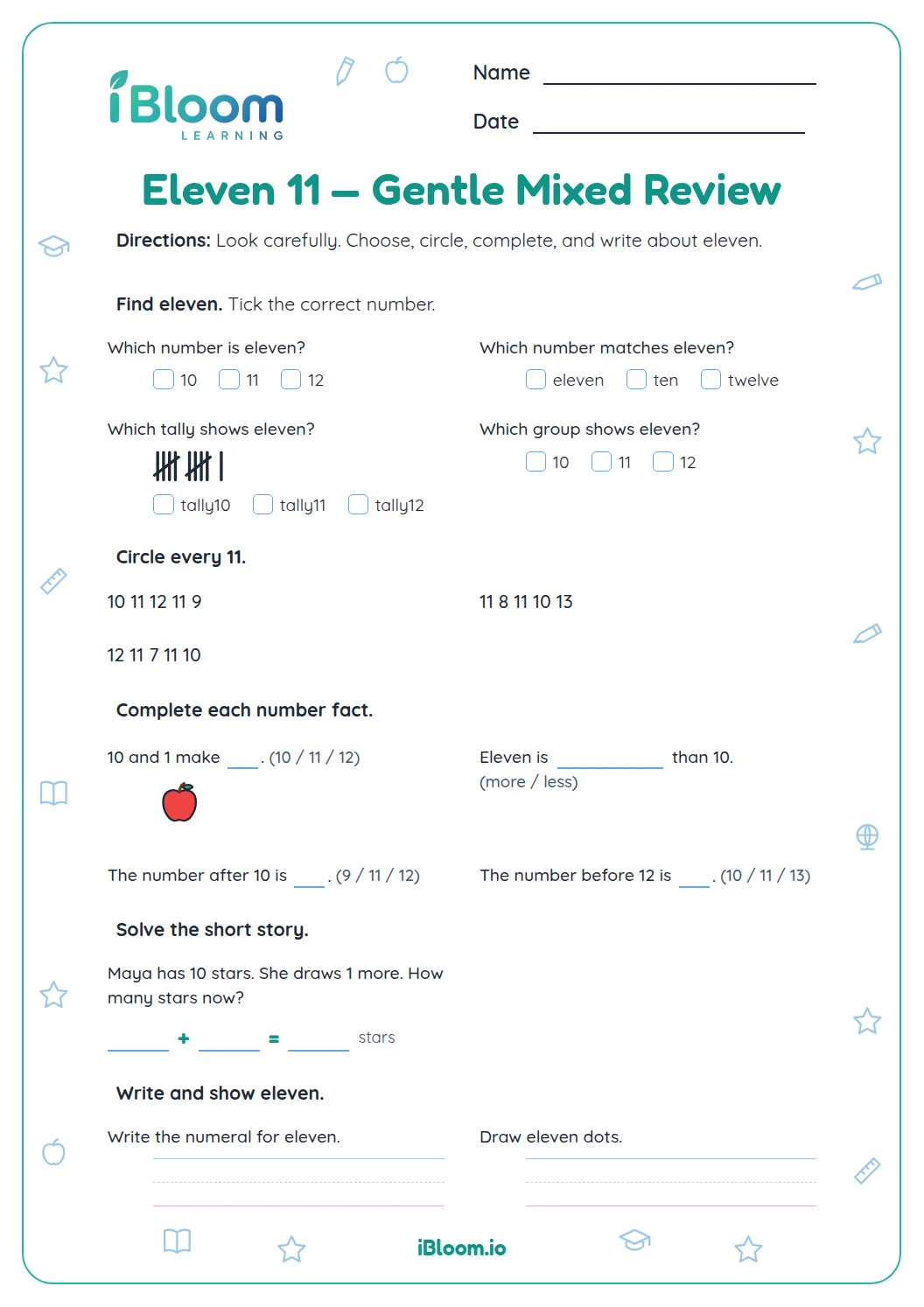
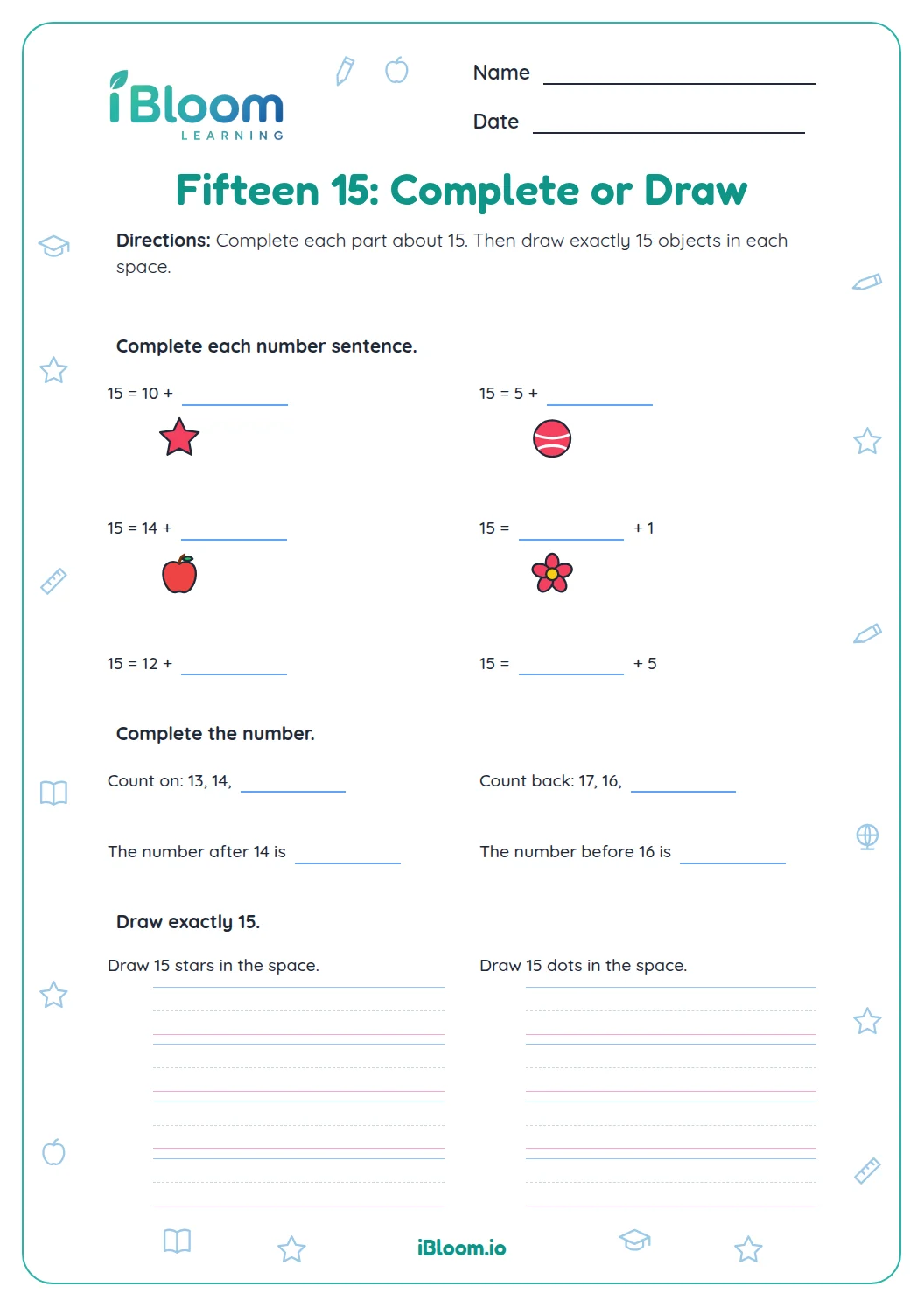
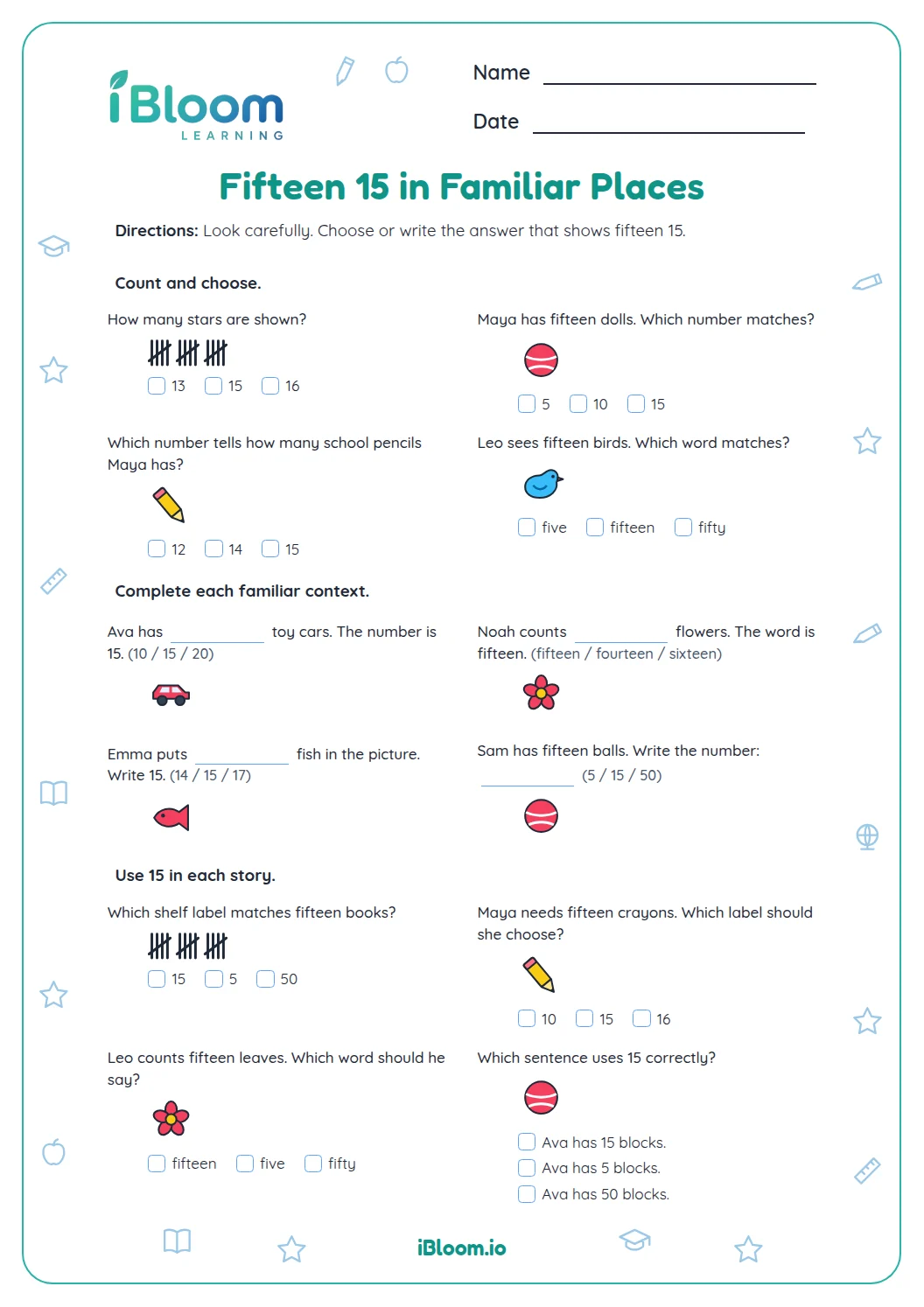
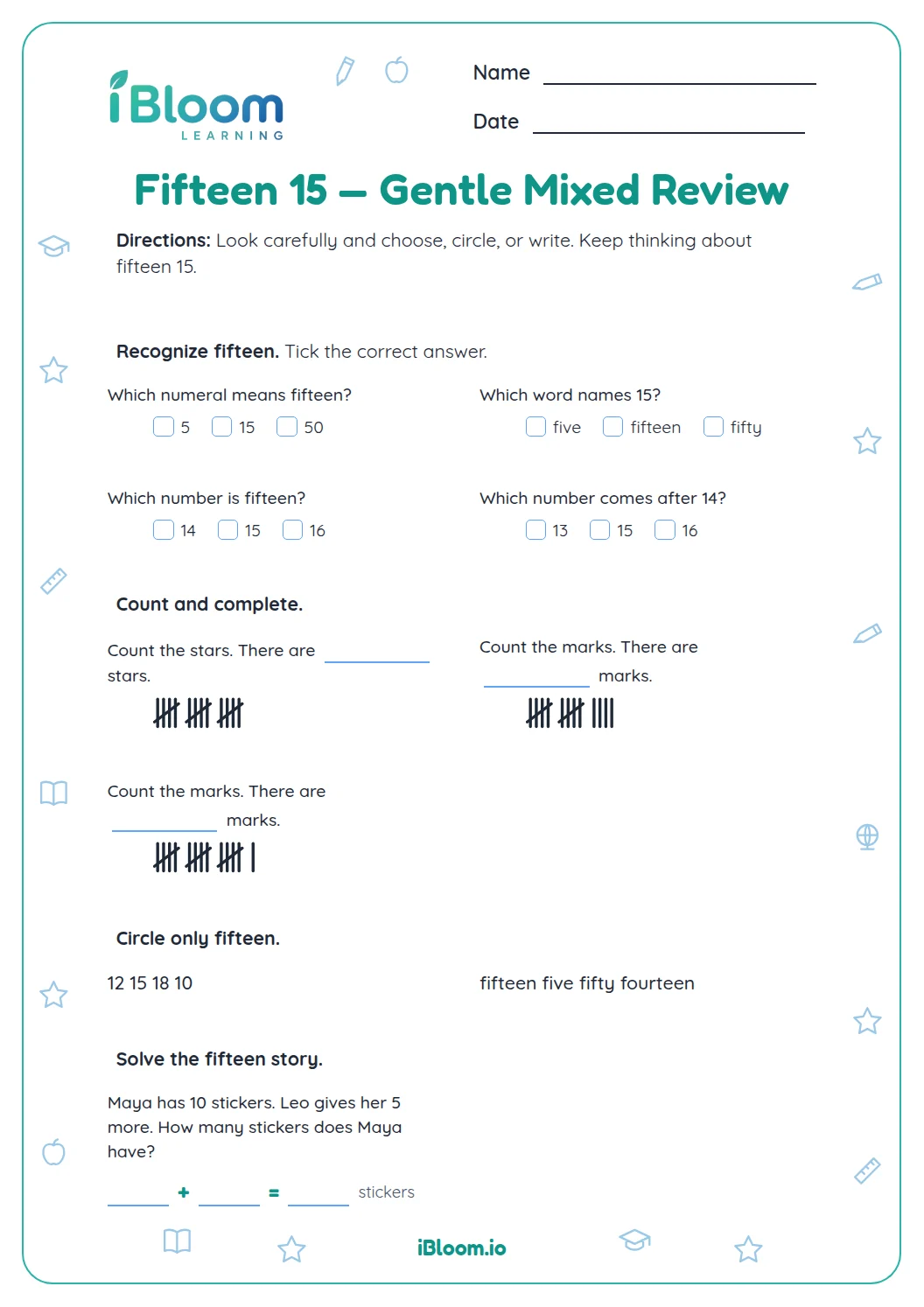
On this sheet: Children count pictured groups and counters, then connect the total to 13.
Show the official wordingHide the official wording
Understand the relationship between numbers and quantities; connect counting to cardinality.
What to practice next
Make more practice
Further reading
Questions parents and teachers ask
What does thirteen look like in a ten frame?
Thirteen fills one ten frame and adds three counters in the next frame. Count the full group of ten, then count on 11, 12, 13 to connect the model with the numeral. The second frame holds the three counters beyond the first ten.
How can a number bond show 13?
A number bond splits 13 into two parts. For example, 7 and 6 make 13, while 9 and 4 also make 13. The worksheet leaves one part blank so children can use the whole and the known part. Count both parts together to check the whole.
Does this worksheet include numeral tracing?
Yes. Four tracing items practice 13, the digit 1 and the digit 3. The tracing follows picture counts and number models, so children first connect the numeral with a quantity. A child can trace once and then say the number aloud.
How many activities are included?
There are 15 questions: four picture counts, four model questions, four tracing items and three familiar stories. The groups and stories all focus on thirteen. The picture and number-model questions offer additional ways to show the same quantity in familiar settings.
What supplies are needed?
A pencil is enough to complete the page. If useful, an adult can offer 13 small counters to build a group with one ten and three more, then let the child match that group to the printed models. The key gives the number or short answer for checking.