


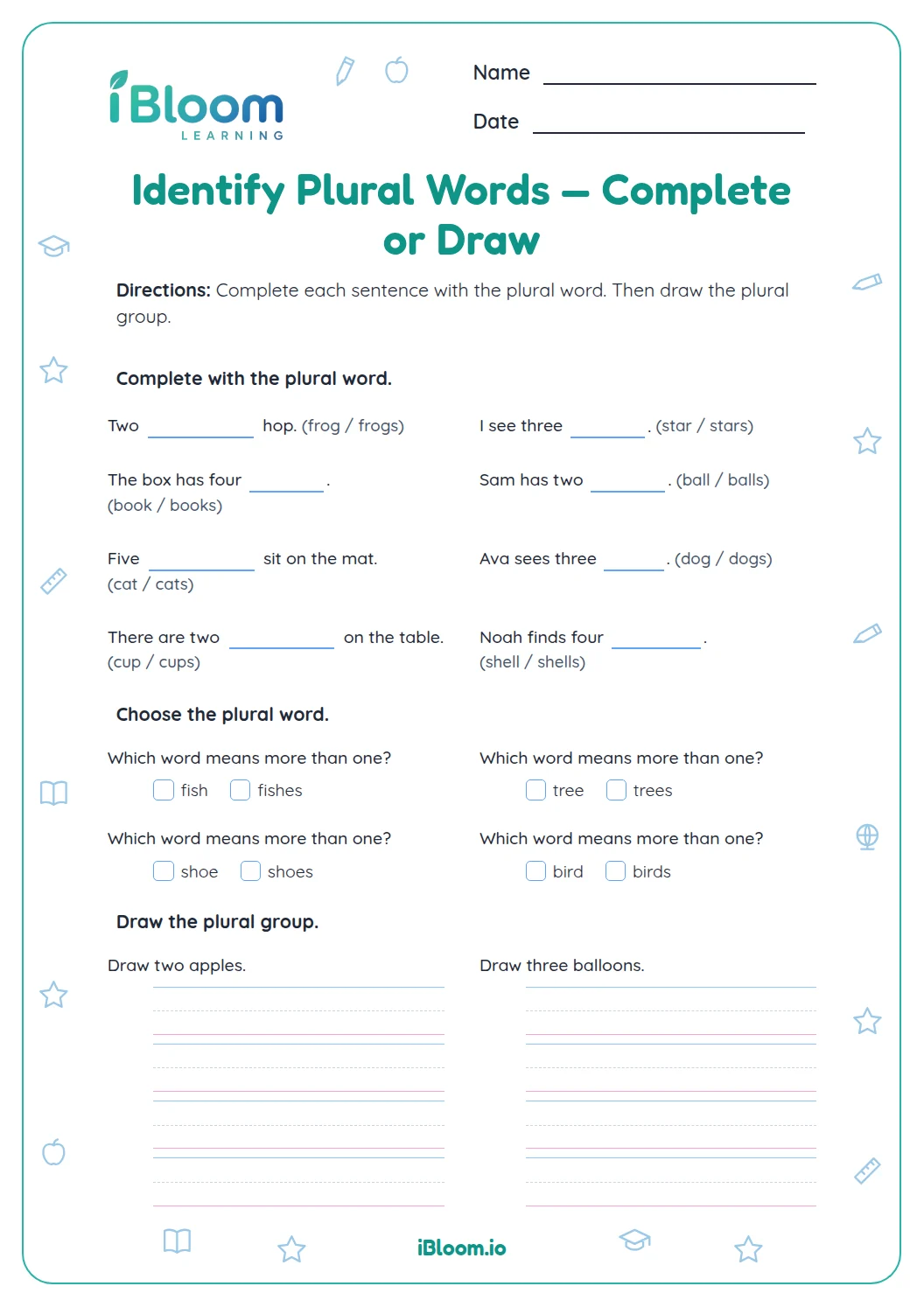
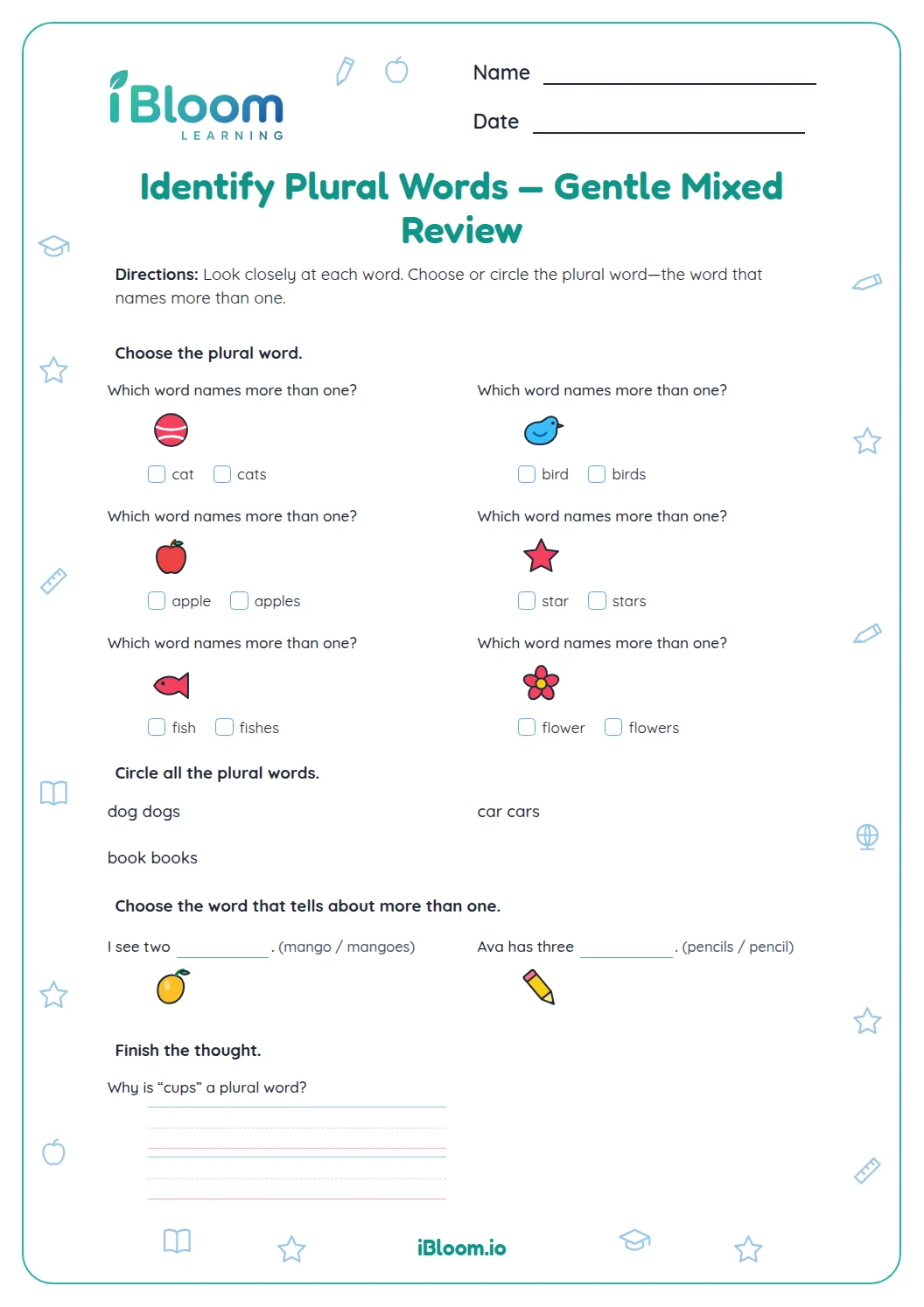


About this worksheet
This printable gives preschool and kindergarten learners a familiar context for identifying plural words. Children look at two pictured objects and choose the word that names both.
Aligned to L.K.1c
What does a plural word tell us?
A plural word names more than one person, animal, place, or thing. Many familiar nouns add s: one cat, two cats. Children can listen for the ending and connect it with the number of objects or people.
This worksheet practices regular plural forms with s in familiar examples. Questions 1–8 pair a picture count with singular and plural choices.
- 1The picture shows two cats.
- 2“Cat” names one; “cats” names more than one.
- 3Choose: cats
How do plural words work in a sentence?
Questions 9–16 place a plural noun in a short sentence. The words two, three, four, or five show that the sentence is about more than one object, so the plural form fits.
For example, “Leo packs three ___ for school” needs pencils. Read the number word and the noun together to hear whether the sentence makes sense.
What is on the two-page worksheet?
There are 16 questions: eight pictured pairs and eight sentence choices. The picture questions ask learners to select the word for the objects shown; the sentence questions ask them to choose the plural form that fits the context.
The answer key lists each selected word. An adult can read the words and sentences aloud for children who are still learning to read.
How to use this worksheet
- 1Count the pictured objects in questions 1–8.
- 2Choose the word that names more than one.
- 3In questions 9–16, notice the number word in each sentence.
- 4Choose the plural noun that fits the sentence.
- 5Say the singular and plural forms aloud, then check the answer key.
Common mistakes and quick fixes
The mistake
Choosing the singular word even though the picture shows two objects.
The fix
Touch and count each object, then choose the word for more than one.
The mistake
Missing the number word in a sentence.
The fix
Find words such as two, three, or four and use them to check the noun.
The mistake
Saying the plural form without its ending.
The fix
Say both forms aloud: “one book, two books.” Listen for the final s.
Early literacy alignment
Learners connect regular plural noun forms with the meaning “more than one.”
Recognize and use familiar regular plural nouns ending in s.
On this sheet: Learners select regular plural noun forms that match pictured quantities and sentence number words.
Show the official wordingHide the official wording
Form regular plural nouns orally by adding s or es (e.g., dog, dogs; wish, wishes).
What to practice next
Make more practice
Questions parents and teachers ask
What does a plural word mean?
A plural word names more than one person, animal, place, or thing. For example, cat names one, while cats names more than one. The worksheet connects that idea to counted pictures and number words in short sentences with familiar nouns.
How many questions are included?
There are 16 questions across two worksheet pages. The first eight use pictures of two objects and singular/plural choices. The last eight use short sentences with number words and two noun forms to choose from, including the separate answer key.
What should children do in the sentence section?
Read or listen for the number word, such as three or four, then choose the noun form that names more than one. In “Leo packs three ___ for school,” pencils fits because the sentence refers to three items.
Can an adult read the worksheet aloud?
Yes. An adult can name the objects in each picture and read both choices aloud. In the sentence section, read the whole sentence and pause at the blank so the child can choose the word that fits the meaning.
Does every plural word add only s?
No, English has several plural patterns. This practice focuses on familiar regular nouns that add s, such as books and ducks. It gives children a chance to connect that common ending with the meaning “more than one” while reading words and sentences aloud.