






About this worksheet
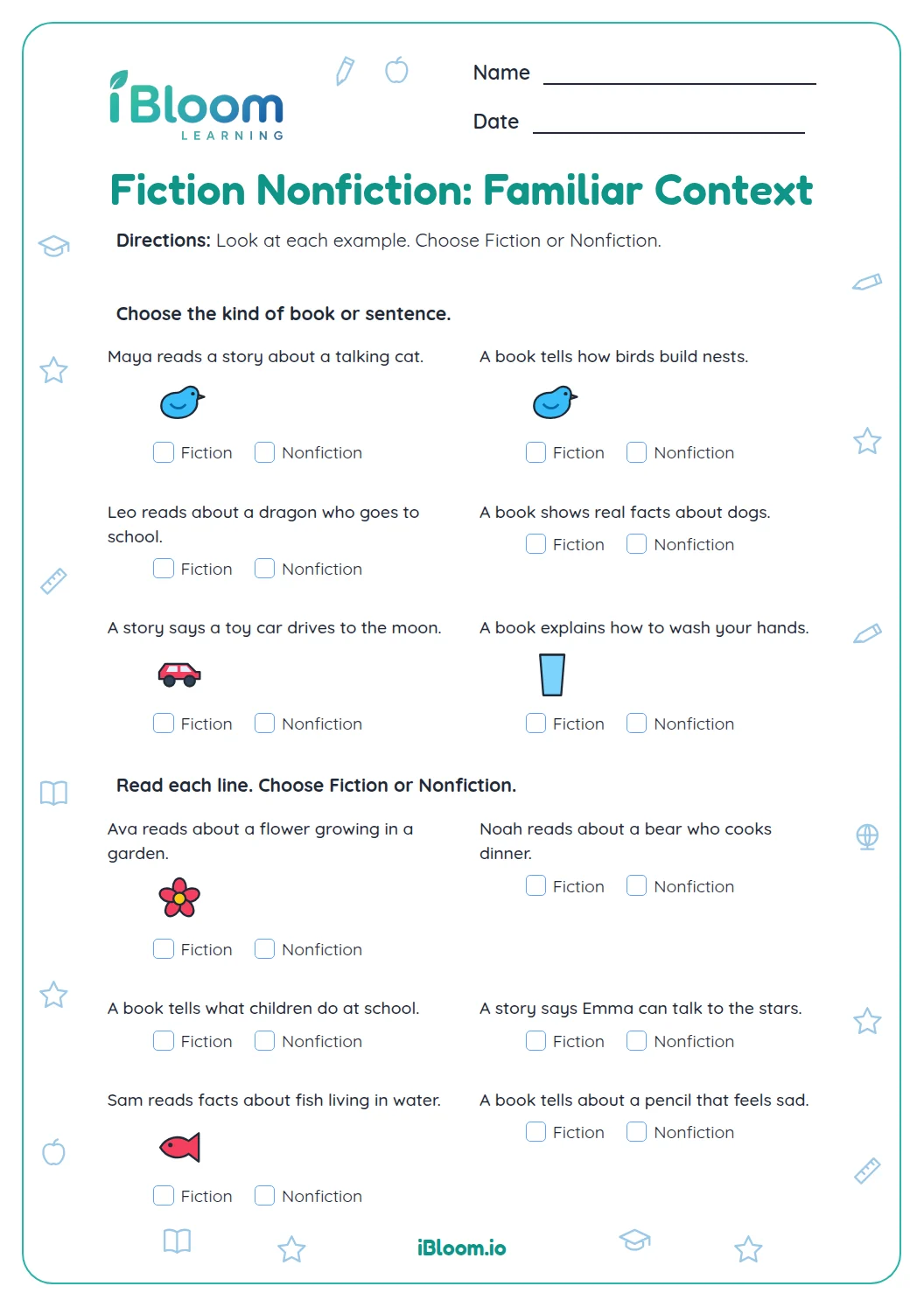
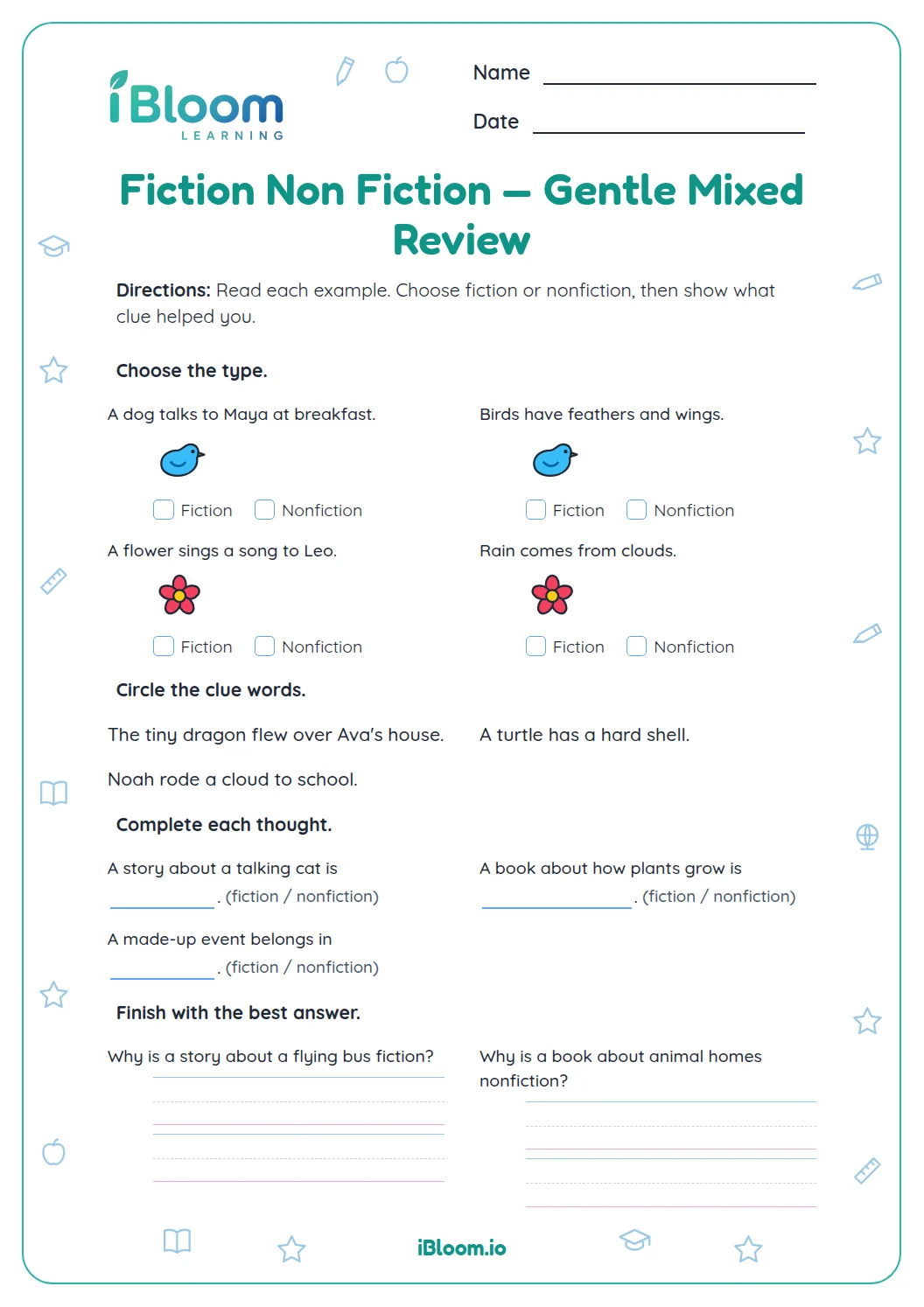
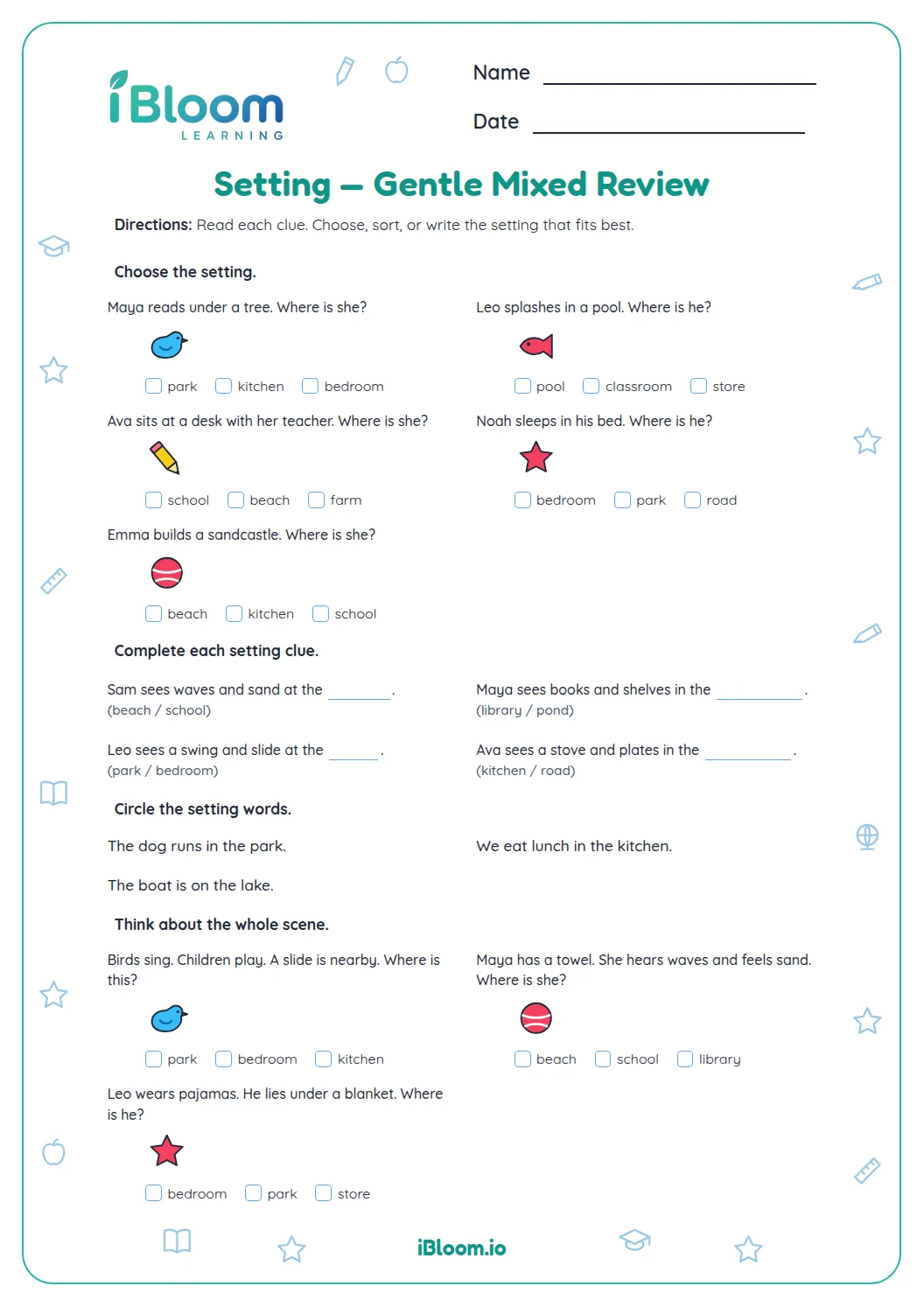
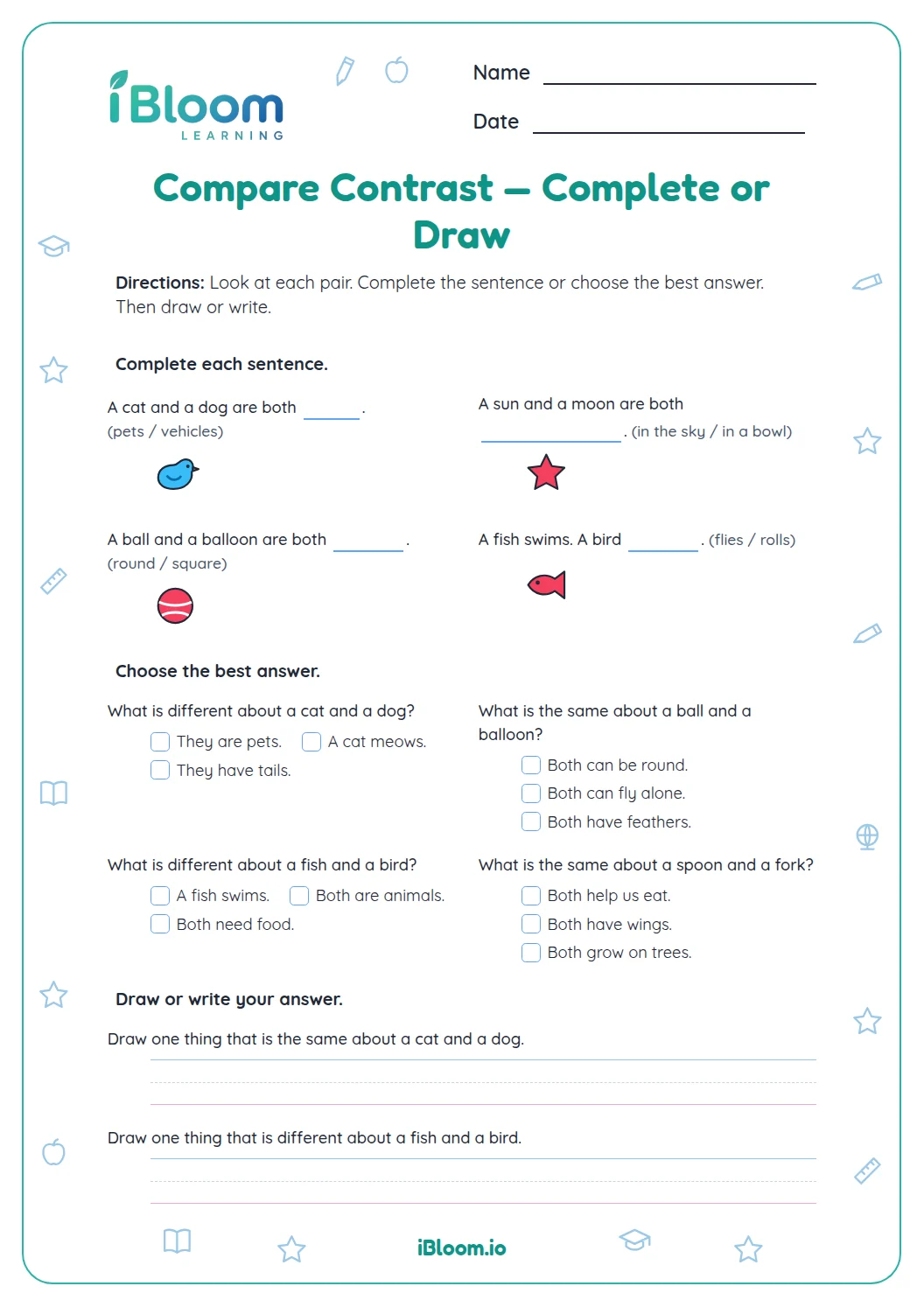
This printable helps preschool and kindergarten children tell fiction from nonfiction. It supports CCSS K.RL.5 by helping children recognize storybooks and other kinds of text. Children complete eight short book clues, choose a book type for four more ideas, and draw four examples. The repeated fiction and nonfiction labels keep the task focused on how a book presents its ideas. A separate answer key gives the classification answers and sample drawings.
Aligned to K.RL.5
What makes a clue fiction?
Fiction includes imagined characters or events, such as a singing pencil or a dragon. Ask whether the clue describes a made-up story idea.
- 1A story about a talking cat is ___.
- 2A talking cat is an imagined story idea.
- 3Complete the sentence with “fiction.”
What does nonfiction tell readers?
Nonfiction shares information about real things, such as birds laying eggs or plants needing light. A nonfiction book can use pictures and words to teach facts.
What can children draw?
The final four prompts ask children to draw two pretend ideas and two real things. Invite them to explain what makes each drawing fit its clue.
How to use the worksheet
- 1Read each clue aloud if needed.
- 2Ask whether it describes an imagined event or real information.
- 3Complete the blank with fiction or nonfiction.
- 4Choose the book type that matches each short idea.
- 5Draw each requested idea and tell why it fits.
- 6Use the key to check classifications and discuss open-ended drawings.
Common mix-ups and gentle fixes
The mistake
Calling every picture book fiction.
The fix
Some picture books teach facts; listen to what the words explain.
The mistake
Calling an animal clue nonfiction just because the animal is real.
The fix
Check what the animal does; real animals can have imagined adventures.
The mistake
Mixing up the two labels.
The fix
Fiction imagines events; nonfiction shares facts about the real world.
Common Core alignment
The page introduces children to familiar types of books.
Recognize storybooks as one kind of text.
On this sheet: Children identify pretend story ideas and distinguish them from factual information.
Show the official wordingHide the official wording
Recognize common types of texts (e.g., storybooks, poems).
What to practice next
Make more practice
Further reading
Questions parents and teachers ask
What do fiction and nonfiction mean here?
Fiction tells an imagined story, such as a dragon or a talking cat. Nonfiction gives information about real things, such as birds or plants. The worksheet asks children to use those clues to complete sentences, choose a book type, and draw examples.
Can an adult read the clues aloud?
Yes. Read each sentence slowly, then ask whether it describes an imagined event or gives information about the real world. Children can point to the fiction or nonfiction choice and explain their thinking before writing the word in the blank.
What should children draw?
The last four prompts ask for two pretend ideas and two real things. A child might draw a dragon for a pretend story, then a bird or flower from the real world. The examples in the key guide adults while leaving room for children’s own drawings.
Is a book with pictures always fiction?
No. Pictures can appear in both kinds of books. A nonfiction picture book might show real animals or plants while teaching facts, so focus on whether the words share information or imagine a story. Talk about what the words explain.
What is included in the answer key?
The separate key lists the correct fiction or nonfiction answers and provides sample ideas for the four drawings. Drawings can vary; ask the child to explain how each one matches the prompt and the kind of book. Invite the child to tell you why.