







About this worksheet
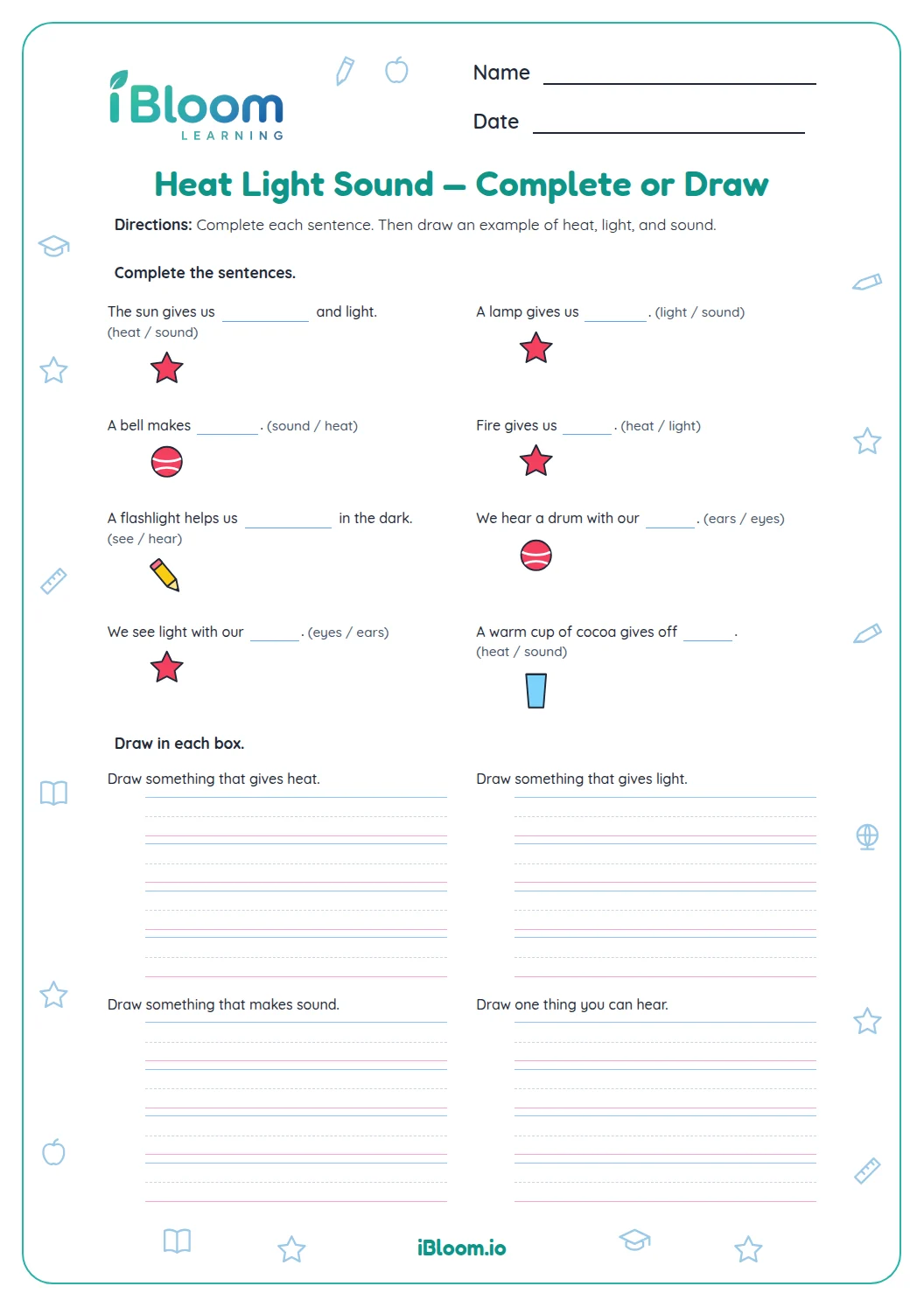
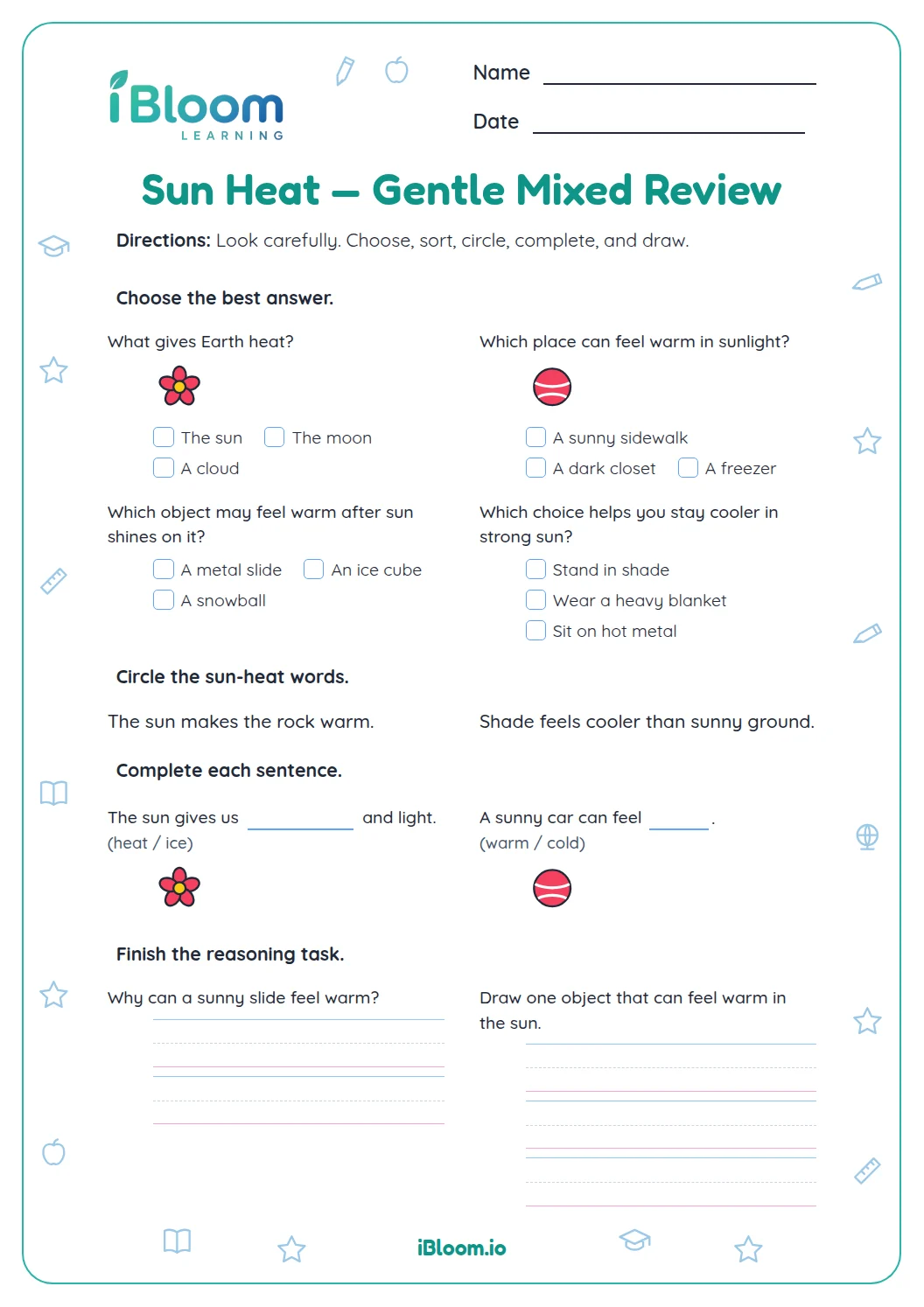
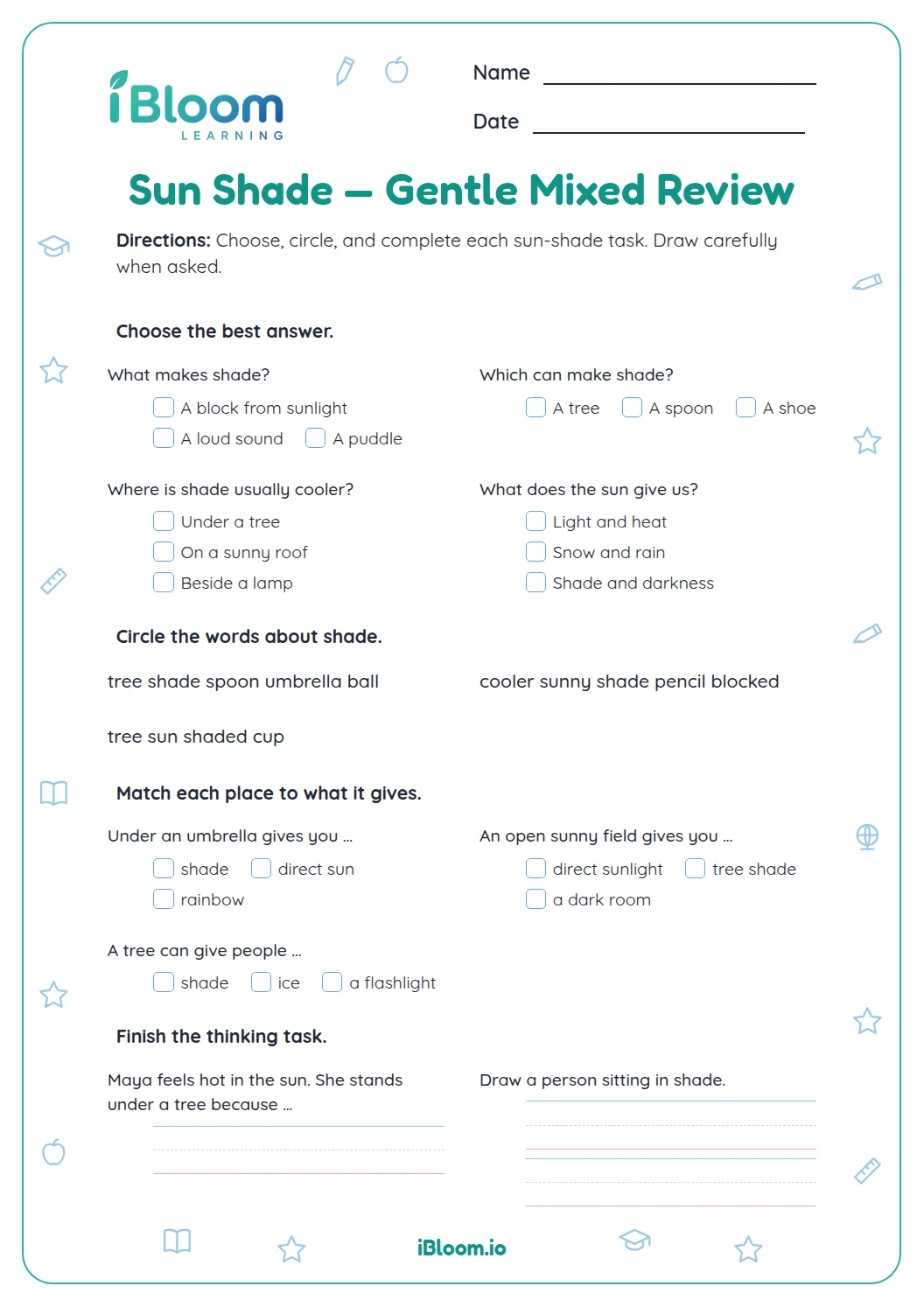
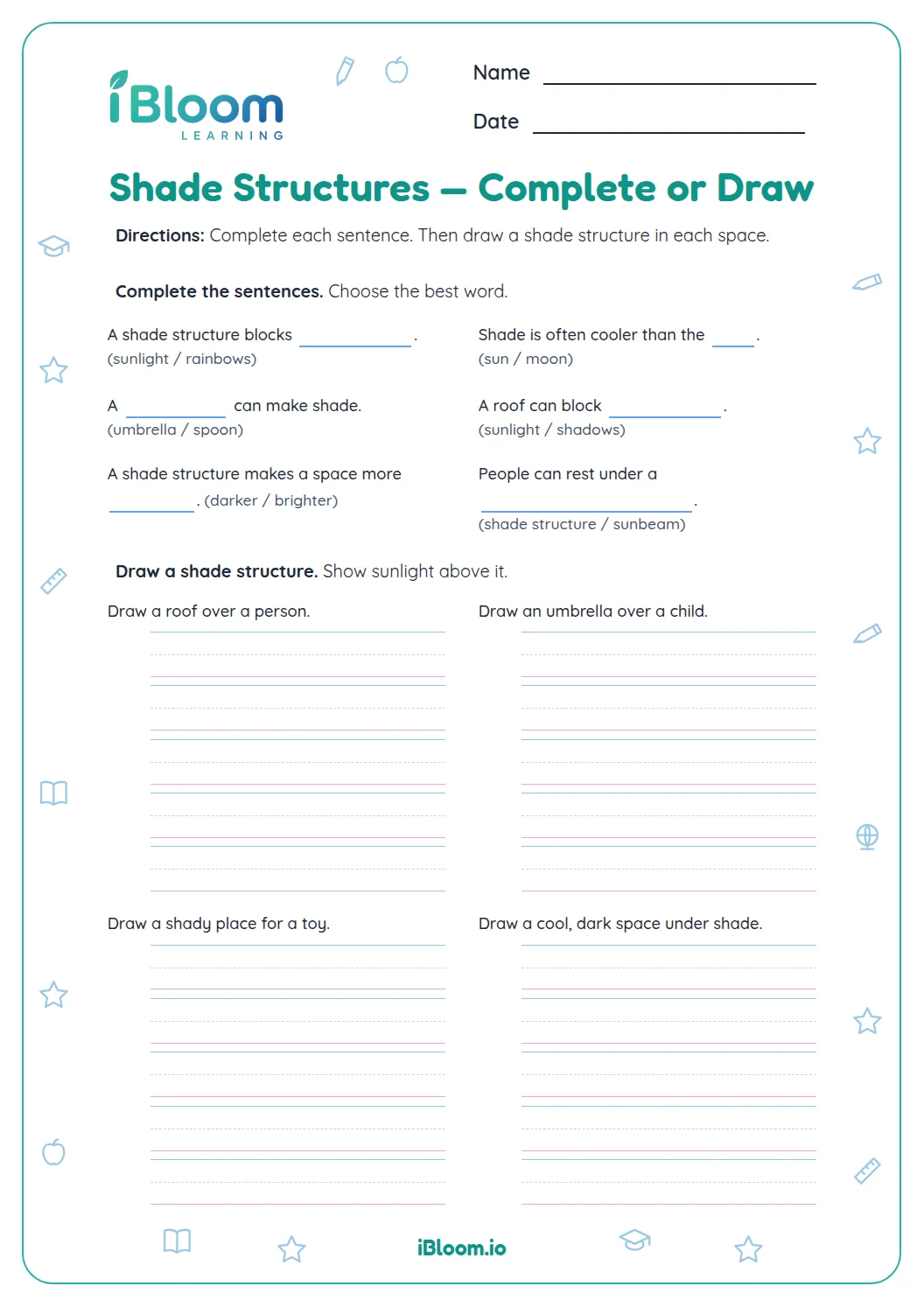
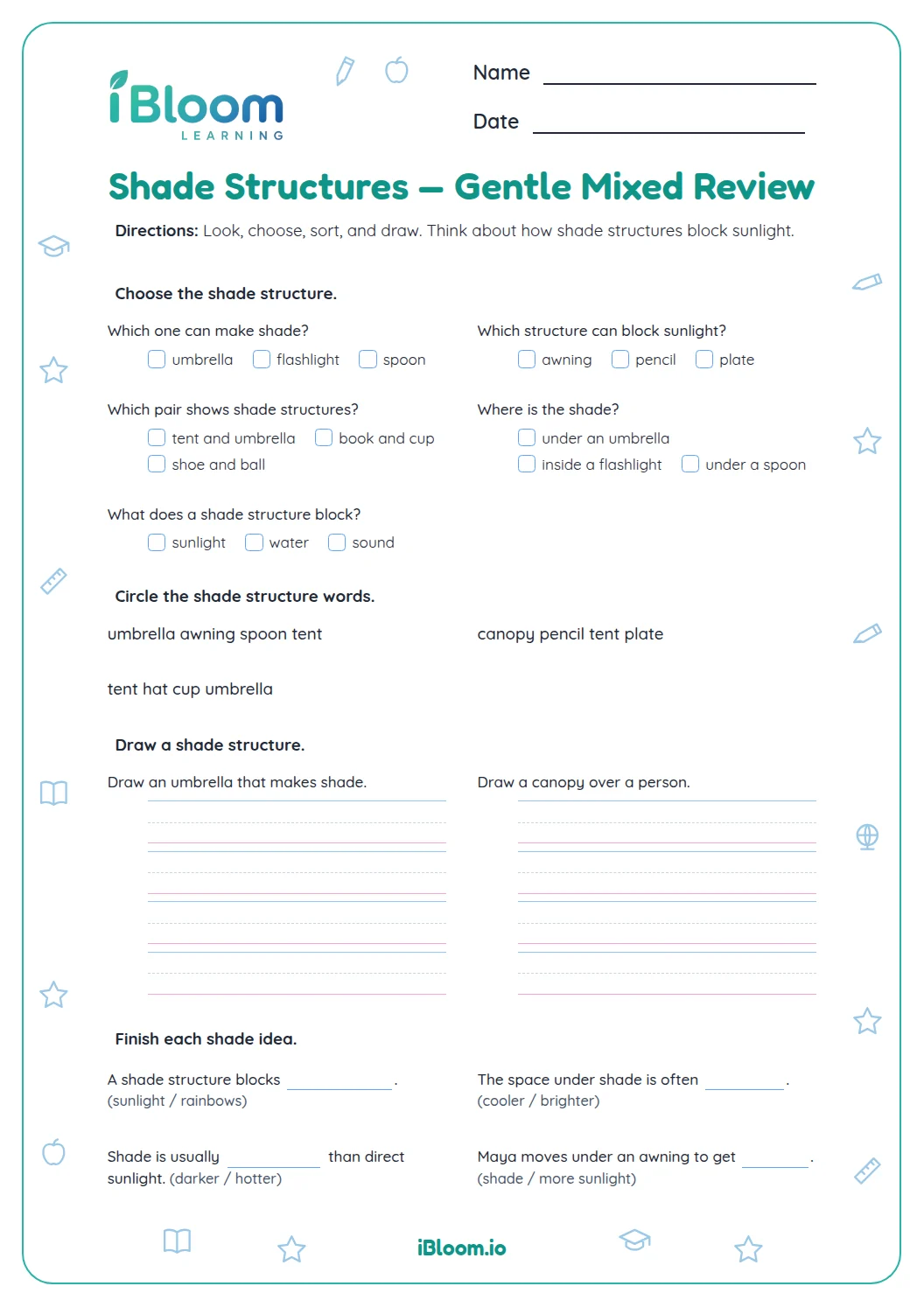
This preschool and kindergarten science worksheet uses picture choices to review familiar ideas about heat, light, and sound. Children identify a light source, a sound maker, a warm surface, and an object that provides shade; they also connect sunlight to warming sand or a floor. The 14 short questions include a separate answer key. The sunlight questions practice noticing how sunlight warms Earth’s surface.
Aligned to K-PS3-1
What does this science review include?
Part A uses five picture choices to identify a light source, sound maker, warm surface, shade tool, and flashlight. Part B connects heat, light, and sound to familiar situations.
- Part A: 5 picture-choice questions
- Part B: 9 familiar-context questions
How does sunlight connect to heat?
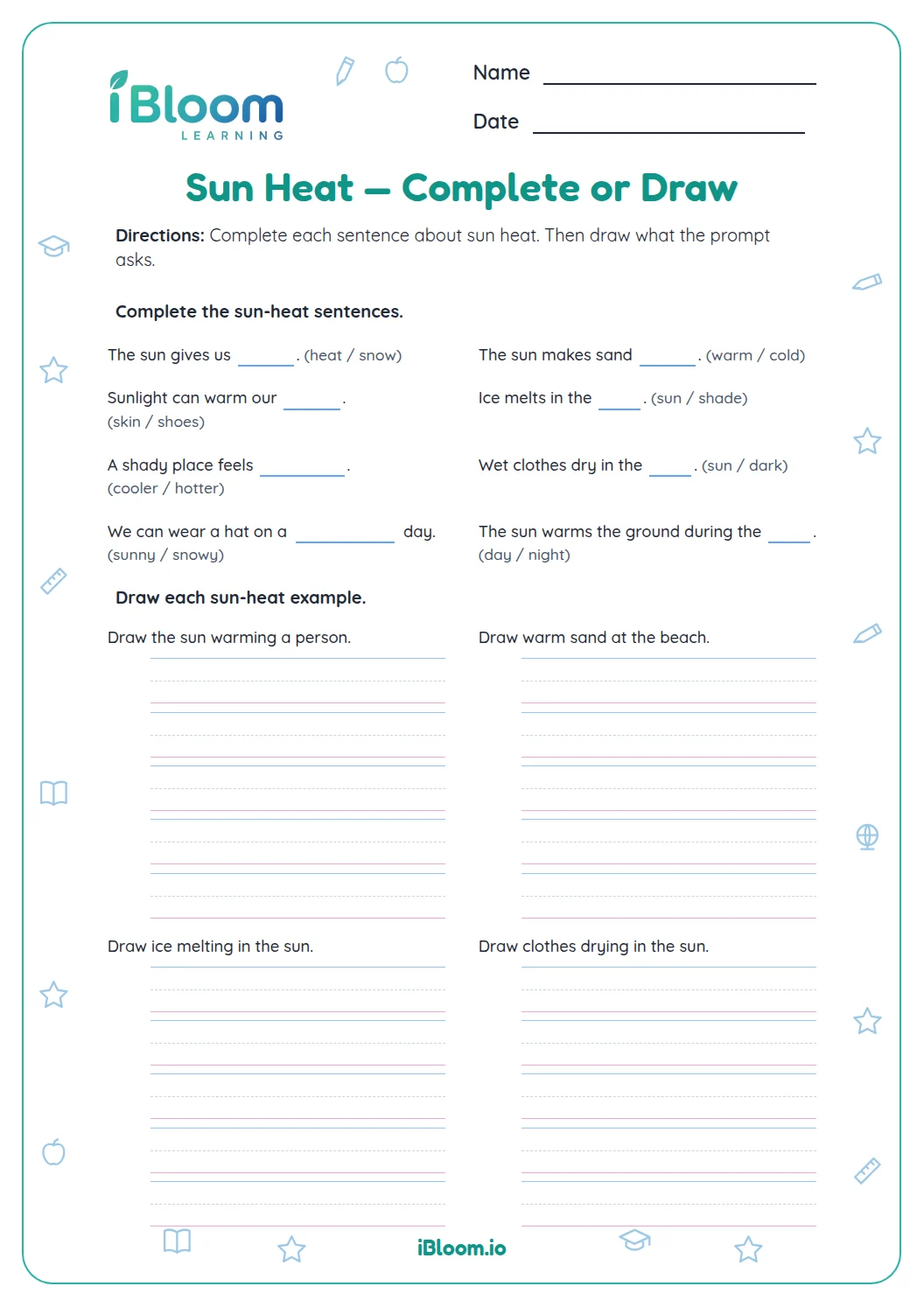
Sunlight can warm surfaces such as sand or a floor near a sunny window. A shaded spot gets less direct sunlight, which can reduce warming. Adults can invite children to notice warm and cool surfaces safely.
Which things help us see?
The sun, a lamp, and a flashlight give light that helps us see. A bell makes sound instead. Looking at what an object does helps children sort examples by the kind of energy they notice.
- 1A sunny window warms a floor spot.
- 2Ask: What warmed it?
- 3Answer: Sunlight.
How can children identify a sound source?
A bell rings and a drum can be tapped to make a sound. Point to a familiar object and ask whether it gives light, makes sound, or can be warmed by sunlight.
How to use this worksheet
- 1Name the object in each picture choice.
- 2Ask what the object can do: warm, give light, or make sound.
- 3Connect sunlight to surfaces such as sand or a floor.
- 4Use the answer key to review a choice with a short explanation.
Common mistakes and quick fixes
The mistake
Calling a bell a source of light
The fix
Ask what you notice when the bell rings: you hear sound.
The mistake
Thinking shade makes heat
The fix
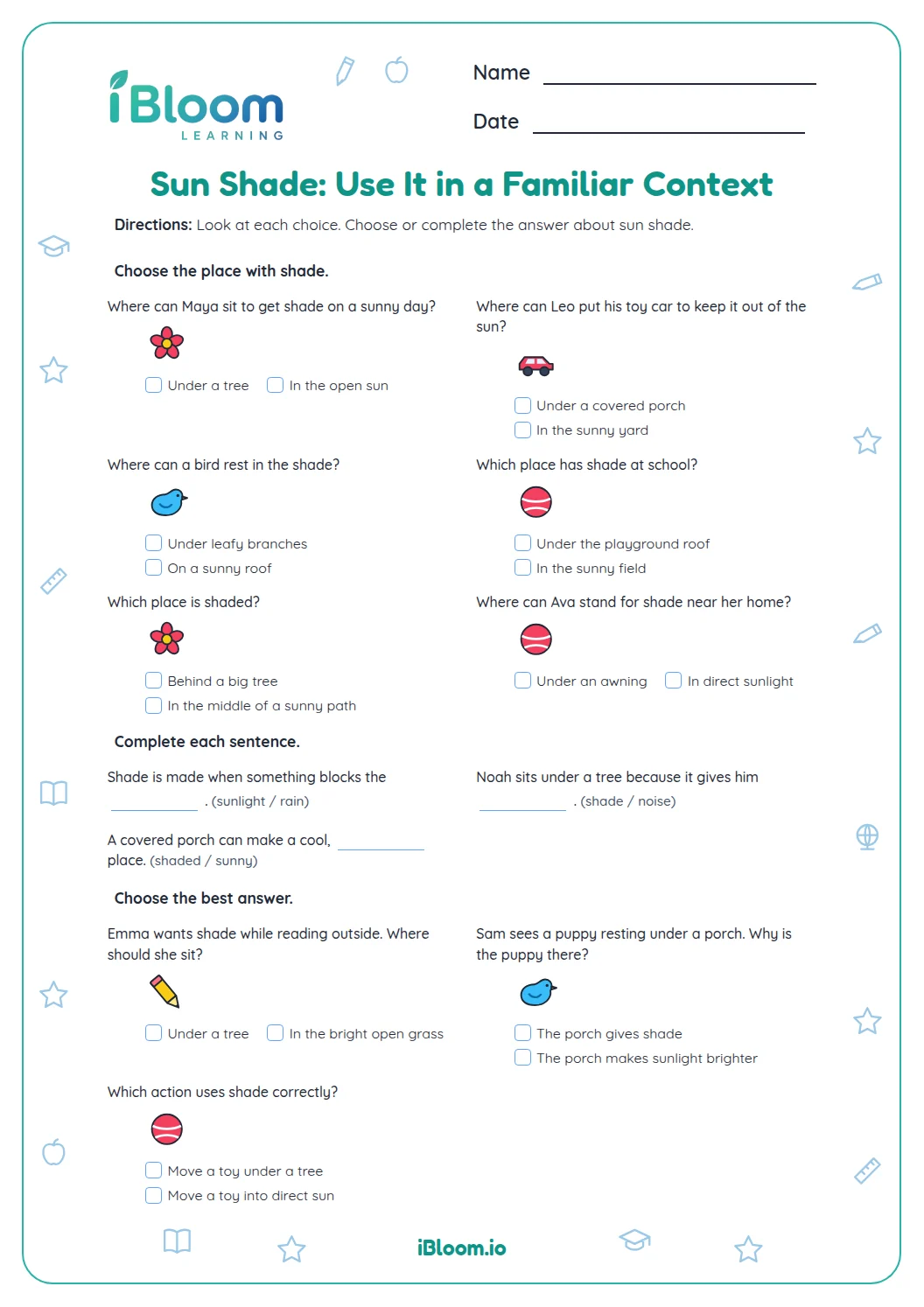
Shade blocks direct sunlight, so the shaded place gets less warming from the sun.
The mistake
Mixing up an object and its effect
The fix
Say the object first, then name what it does: a flashlight gives light.
Next Generation Science Standards
The sunlight questions ask children to connect sunlight with warming surfaces such as sand or a floor.
Observe examples of sunlight warming a surface, including sand and a floor.
On this sheet: Questions connect sunlight with warming sand and a floor near a sunny window.
Show the official wordingHide the official wording
Make observations to determine the effect of sunlight on Earth’s surface.
What to practice next
Make more practice
Further reading
Questions parents and teachers ask
Is this worksheet designed for preschool or kindergarten?
It is designed for preschool and kindergarten learners. Picture choices keep questions short, and an adult can read each prompt aloud while the child names or points to an answer. The 14 questions review heat, light, sound, and shade.
What does the worksheet teach about sunlight?
Children connect sunlight with warming a surface, such as sand or a floor near a sunny window. They also consider shade, which blocks direct sunlight from reaching a place. These are familiar examples to notice and discuss together.
Does the page include pictures?
Yes. Five questions use picture choices, including the sun, drum, rock, umbrella, and flashlight. The rest use short word choices about familiar situations. An adult can read either kind aloud and invite the child to point to a picture or answer.
How can I explain light and sound simply?
A lamp or flashlight gives light that helps us see. A bell or drum makes sound that we can hear. Invite a child to point to an object and describe what it does, then sort it as light or sound.
Is an answer key included?
Yes. A separate answer key gives the correct picture or word for every prompt. It helps an adult review the science ideas after the child completes the page. The key is a separate printable page for checking the picture choices.
How long does the review take?
About 12 minutes is a flexible estimate. An adult may read each prompt aloud and pause for the child to discuss the pictures, especially when comparing heat, light, and sound. It is fine to pause between questions or finish the sheet in two sittings.