





About this worksheet
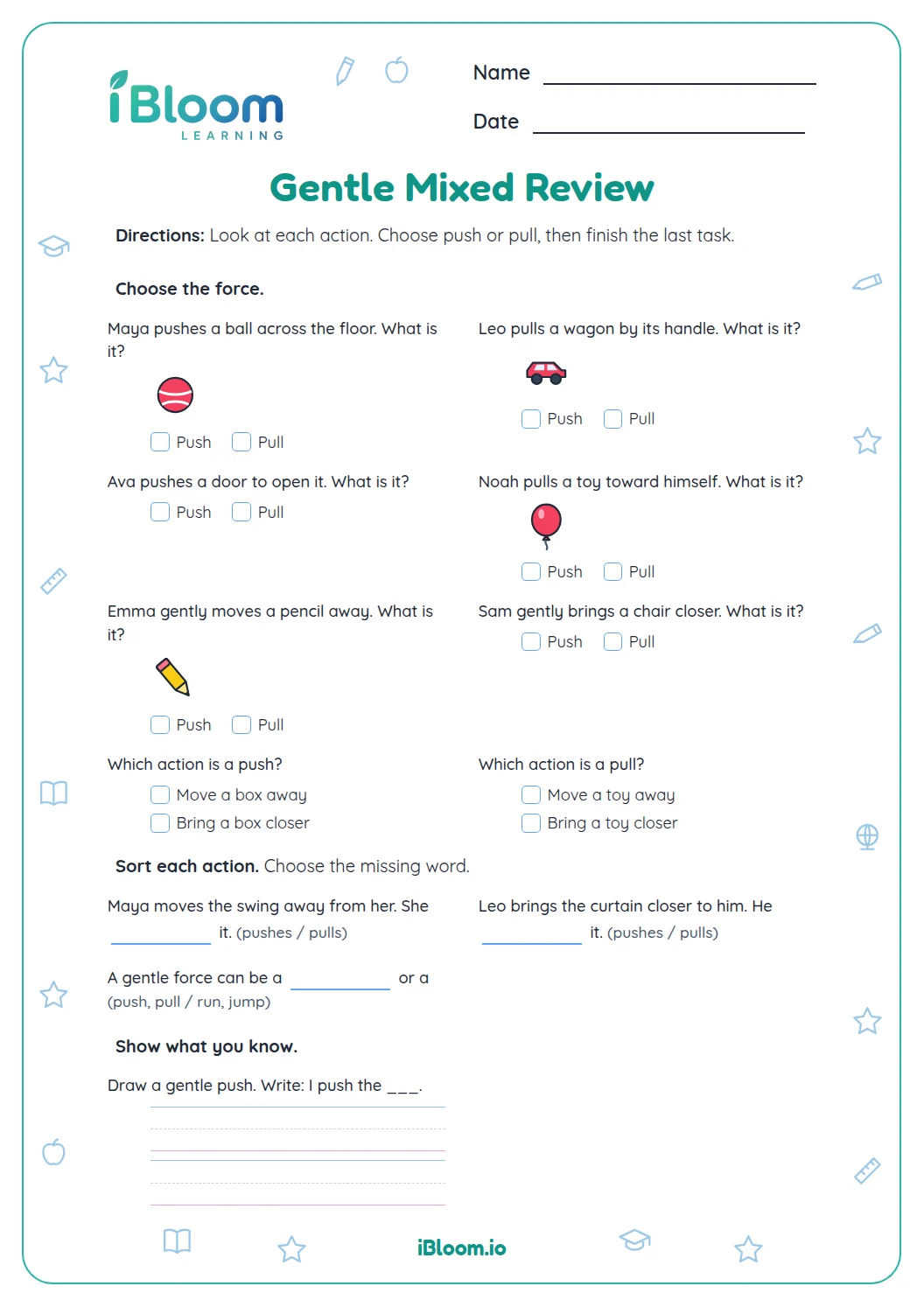
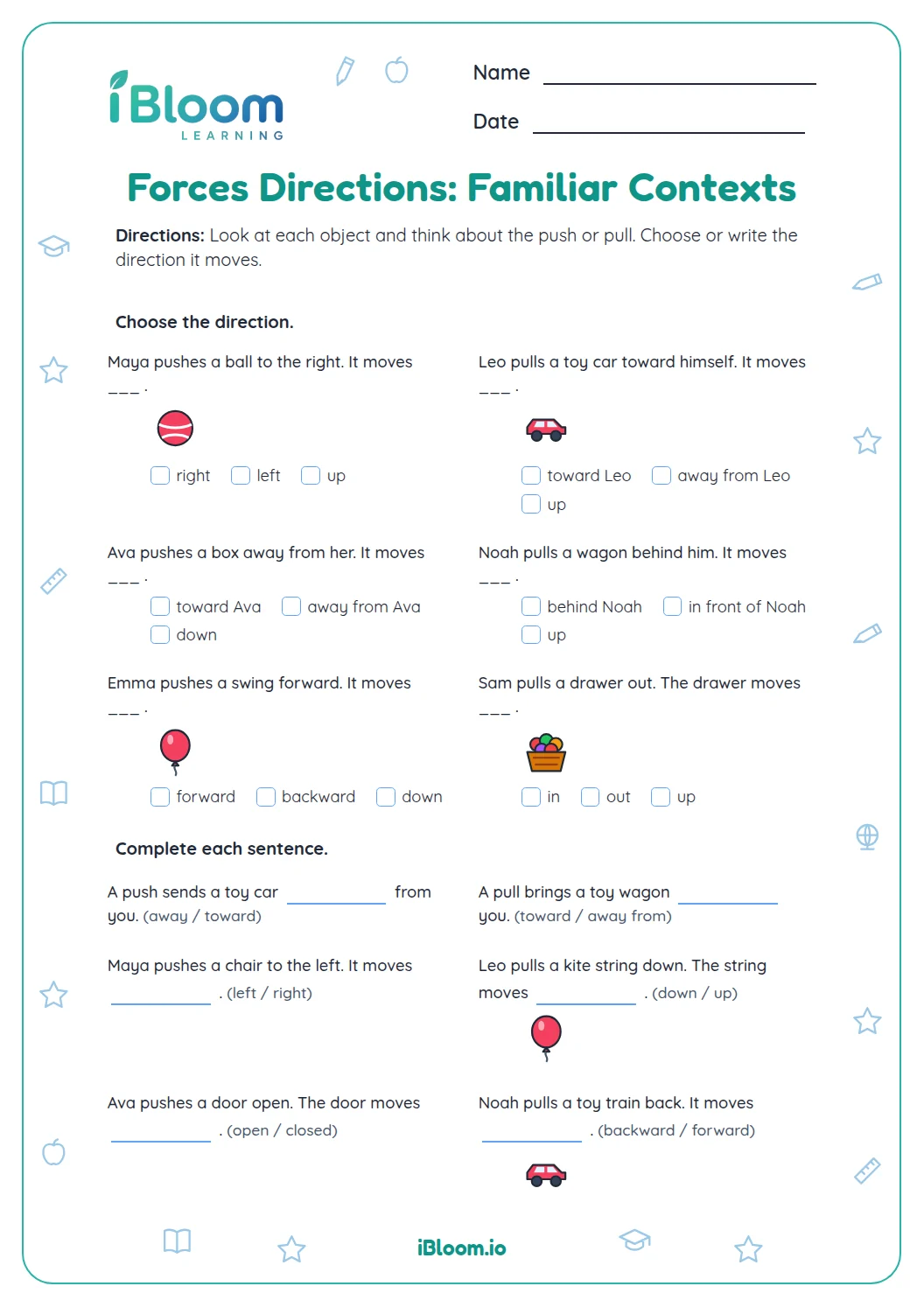
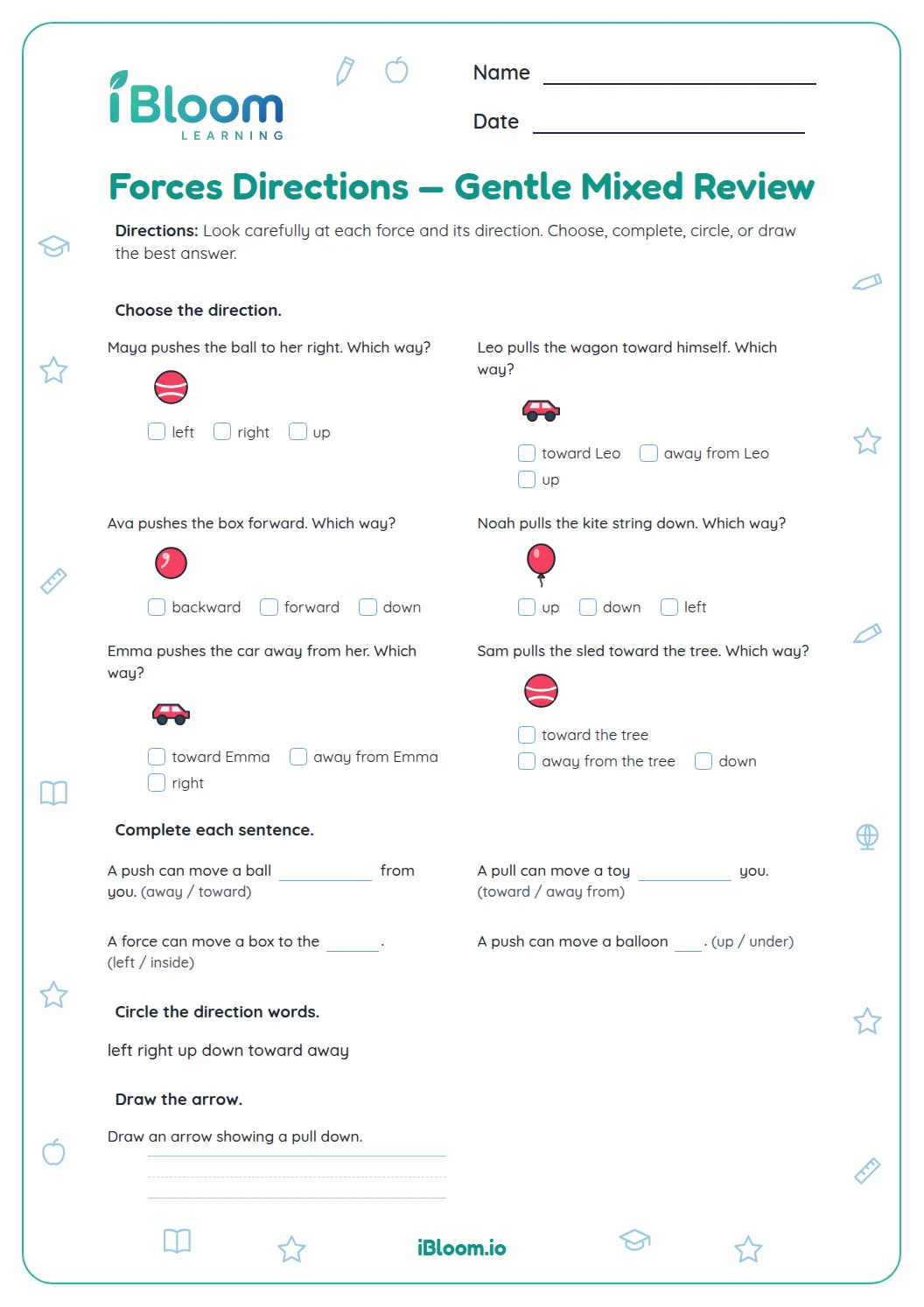
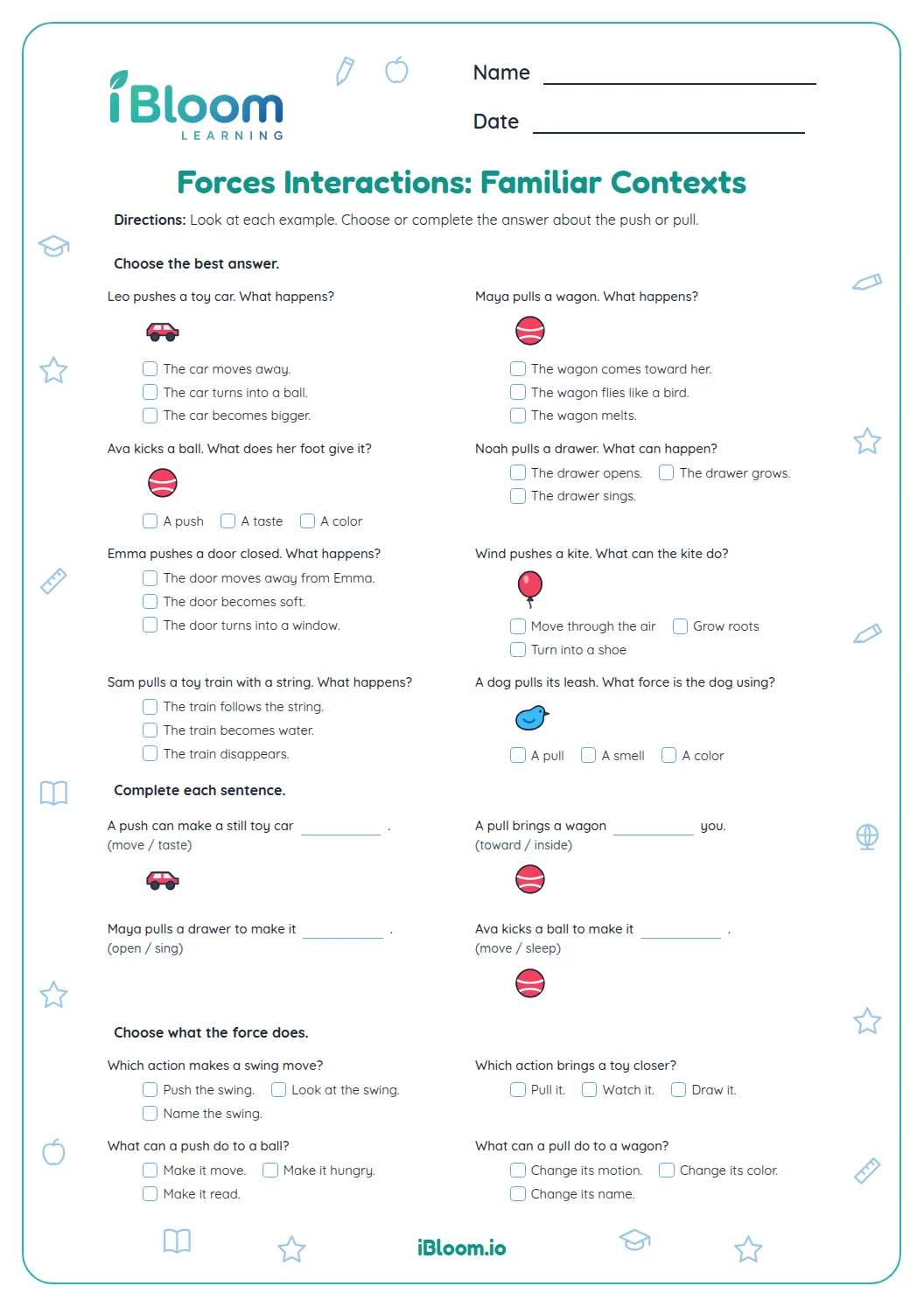
This printable science worksheet helps preschool and kindergarten children recognize pushes and pulls in familiar actions. Fourteen items use short action clues, three picture choices, and one drawing prompt that asks children to show both a push and a pull. The old color-shape circling activity is replaced with practice that directly matches the page’s forces topic. A separate key gives expected responses and describes the two-action drawing.
What is the difference between a push and a pull?
A push moves an object away from the person or thing applying the force. A pull brings an object closer. Children can act out both movements with a toy car, wagon, or ball and notice which direction the object travels.
The questions pair familiar objects with a simple action. The picture clue helps children connect the words with an object, while the sentence names how the object moves.
- 1A hand moves a toy car away.
- 2Away from the hand means push.
- 3Answer: push.
What do children do on the worksheet?
Children complete short push-or-pull action clues, choose between the two words for three pictured objects, then draw two actions of their own. The drawing prompt asks them to show an object moving away in a push and closer in a pull.
An adult can read each sentence aloud and invite the child to act out the movement. This keeps attention on the force and the direction the object moves.
How can a family explore forces after printing?
Use a safe toy on a clear surface. Try a gentle push, then a gentle pull, and describe how the object moves. Change one action at a time so the child can notice the effect of the force.
How to use this worksheet
- 1Read or listen to one action at a time.
- 2Point to the familiar object in the picture clue.
- 3Act out moving it away or bringing it closer.
- 4Choose push or pull to match the motion.
- 5For the final item, draw one push and one pull, showing which way each object moves.
Common mistakes and quick fixes
The mistake
Calling every hand movement a push.
The fix
Notice whether the object goes away or comes closer.
The mistake
Mixing up the force with the object.
The fix
Name the action first: moving an object away is a push; bringing it closer is a pull.
The mistake
Drawing an object without showing its motion.
The fix
Include the person or hands and make the direction clear in the scene.
What to practice next
Make more practice
Questions parents and teachers ask
What is a push?
A push is a force that moves an object away from the person or thing applying it. On the worksheet, children use actions such as pressing a button or moving a toy away to identify a push and its direction.
What is a pull?
A pull brings an object closer to the person or thing applying the force. Tugging a wagon by its handle or drawing a toy toward you on a string are familiar examples used in the questions and pictures. The action words and object help make the direction clear.
Can an adult read the questions aloud?
Yes. An adult can read each short action and invite the child to act it out or point to the pictured object. The child can then choose push or pull based on the direction the object moves. A quick demonstration can make the direction easier to notice.
What should the drawing show?
The drawing should show two clear actions: one object moving away because it is pushed, and another object coming closer because it is pulled. Include a person or hand and make each direction easy to see in the scene.
Why are there pictures in the questions?
Pictures give young learners a familiar object to connect with each action. They support the words in the prompt, while the sentence supplies the movement clue needed to choose push or pull correctly. The icons are a visual cue, while the action itself is described in words.
How can children explore pushes and pulls at home?
Use a small toy on a clear surface and try a gentle push followed by a gentle pull. Ask the child to describe whether the toy moves away or closer, changing one action at a time so the movement is easy to notice.