





About this worksheet
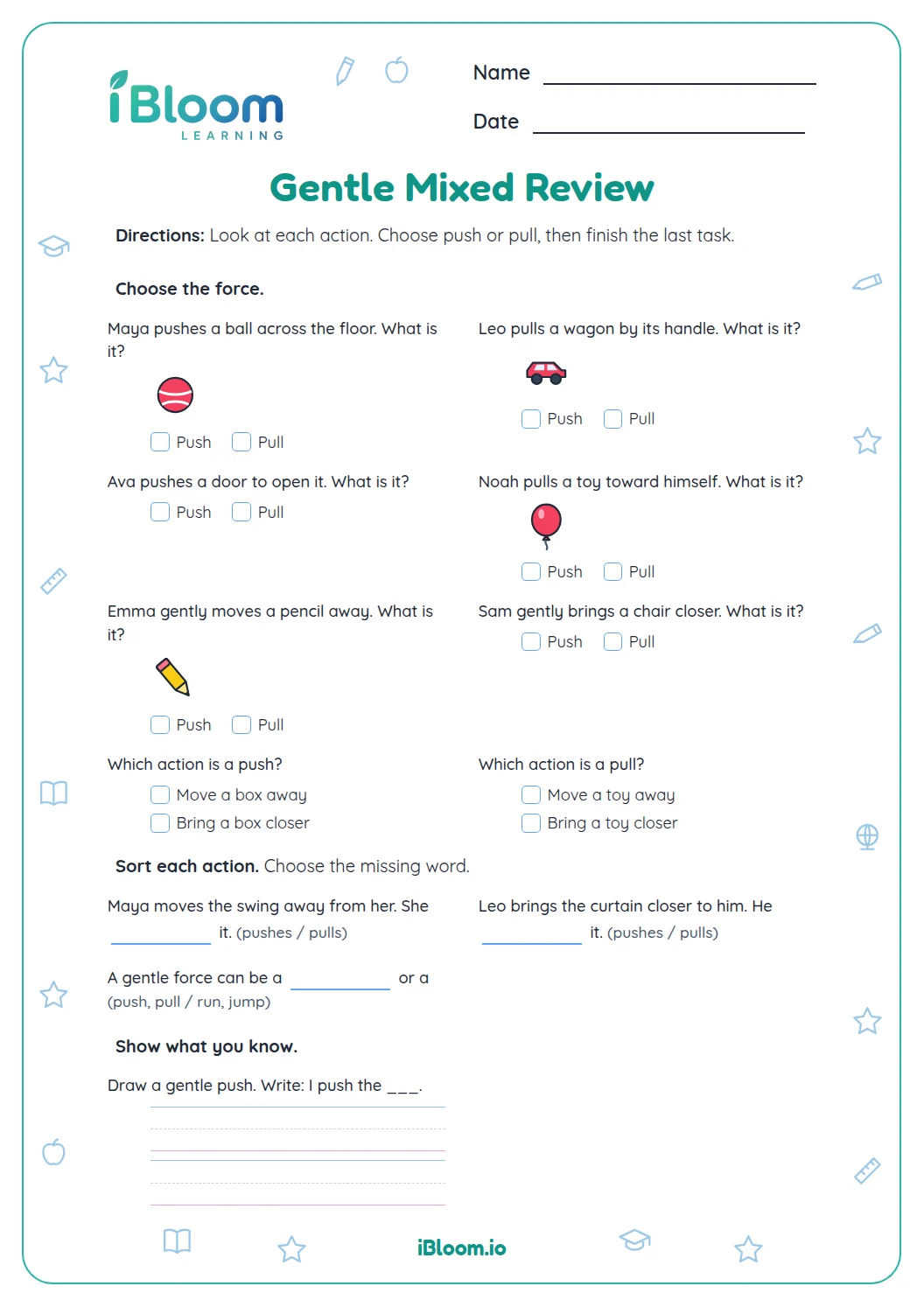
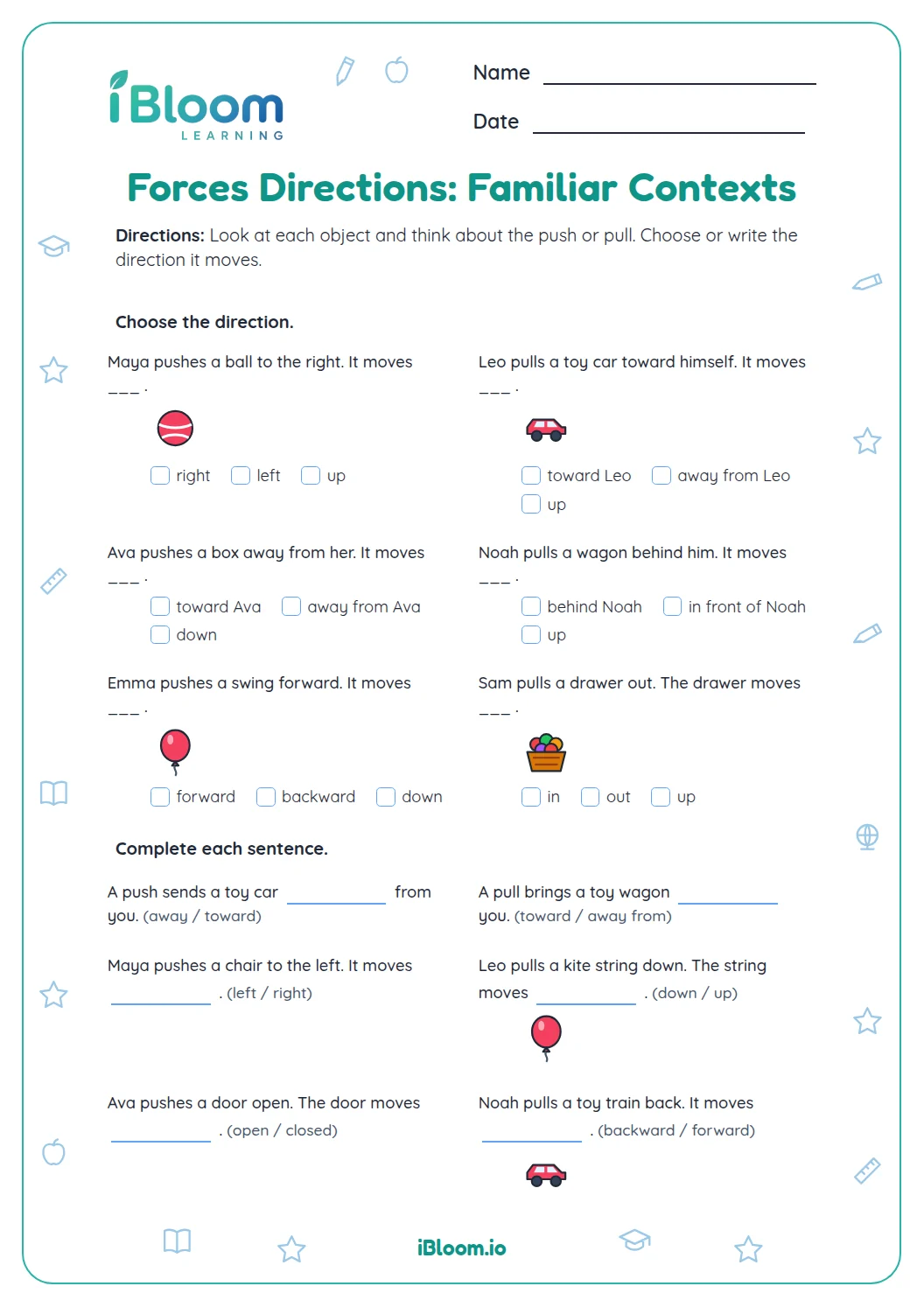
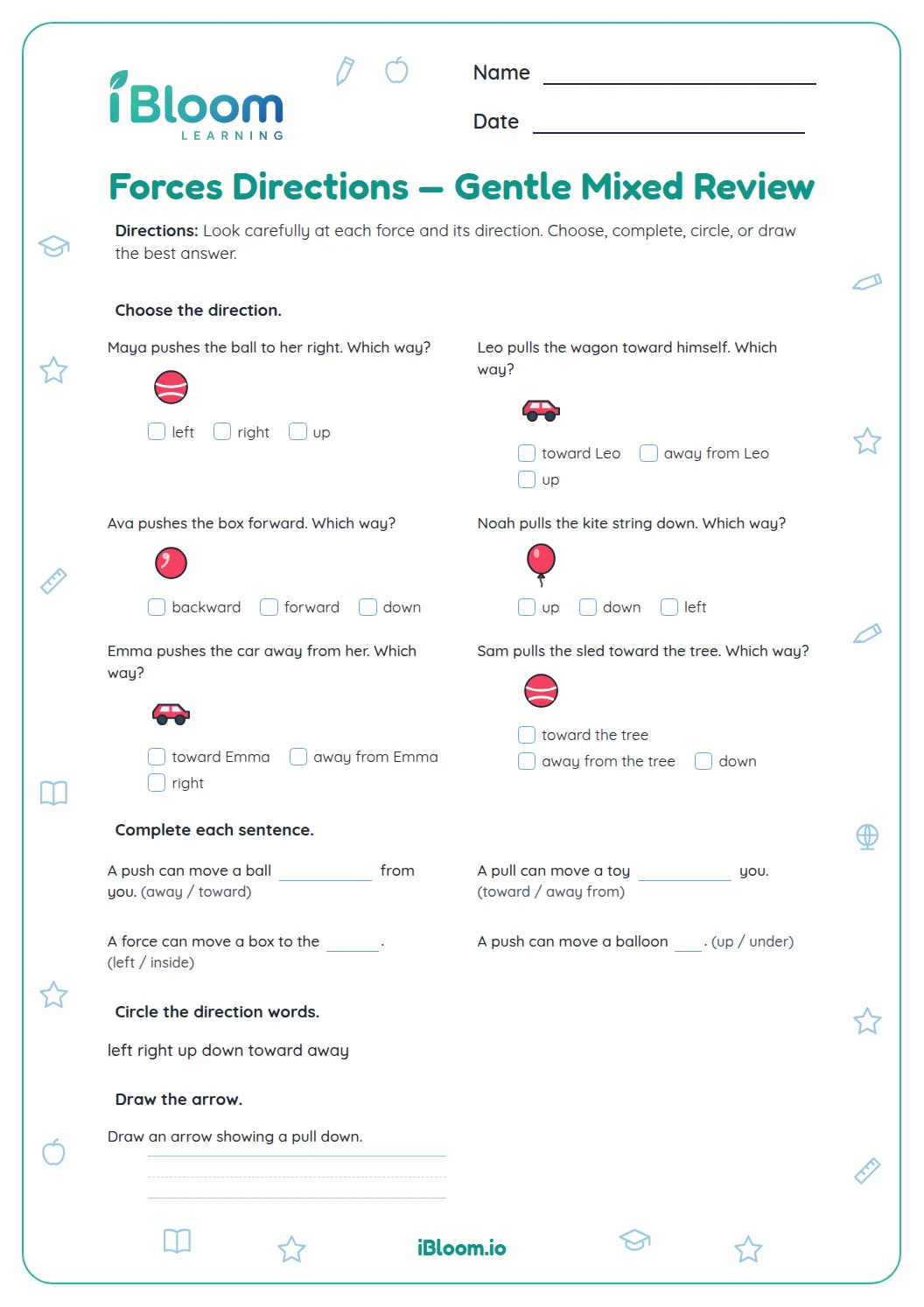
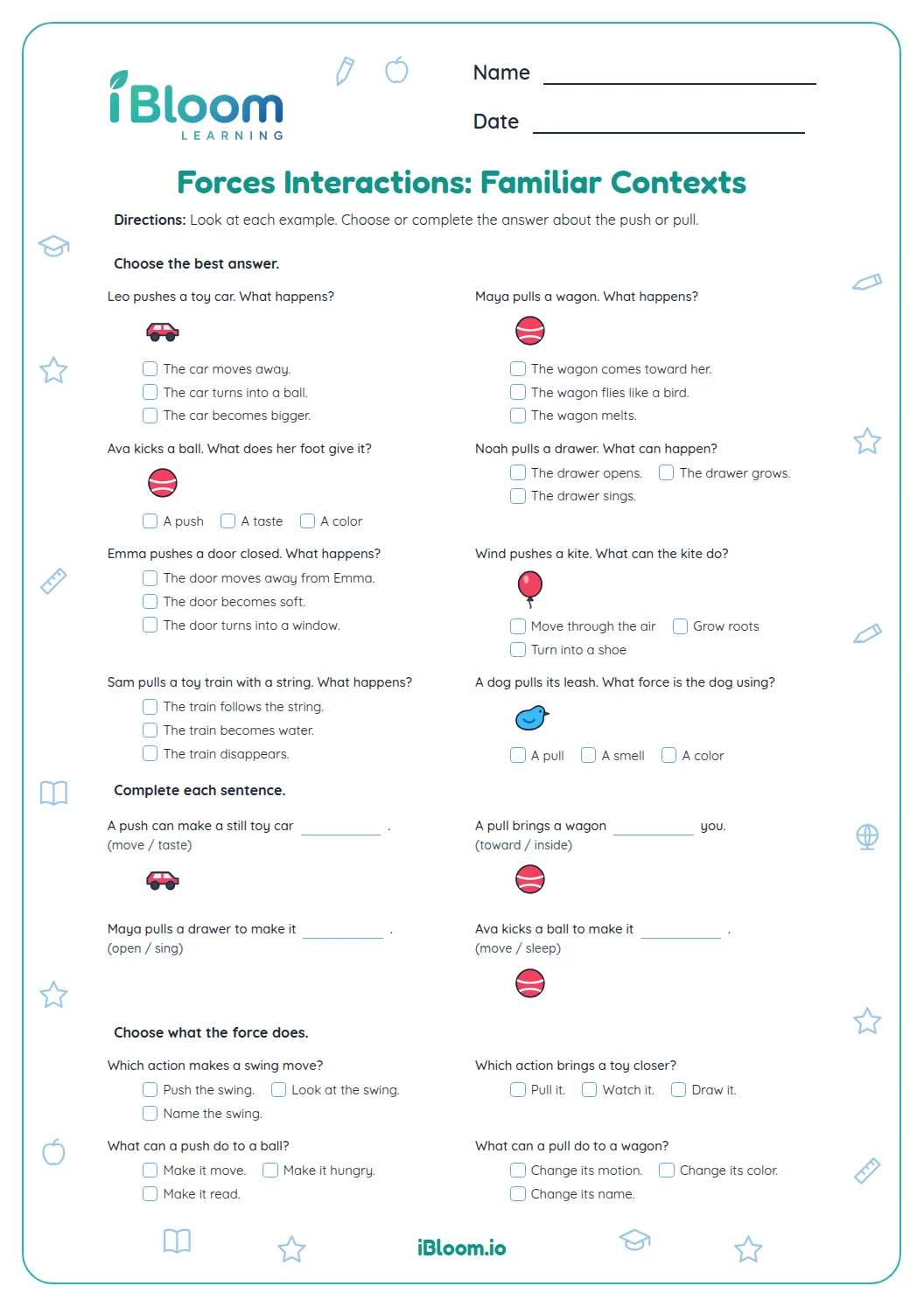
This printable science worksheet introduces pushes and pulls through familiar actions with a car, sled, door, ball, and other toys. Preschool and kindergarten learners identify each force from a short action prompt and picture, then choose a possible change in an object’s motion. The 14 items move from naming pushes and pulls to considering how an object can start, stop, slow down, speed up, or change direction. An answer key is included.
How can a child tell a push from a pull?
A push moves an object away from the person applying the force. A pull brings an object closer. In question 1, the child moves the car away, so the action is a push. The picture helps children identify the object while the words describe its movement.
- 1A child pushes a toy car away.
- 2Away from the child means push.
- 3Answer: push
What can a push or pull do to an object?
A force can start an object moving or change motion that has already begun. A push can make a toy speed up, and a force from the side can change its direction. A pull against a rolling wagon may slow it down.
How can children connect the picture and action?
Name the object in the picture, then notice whether the prompt says it moves away or comes closer. For the last six items, read both choices and select a change in motion that fits the described action.
How to use this worksheet at home or in class
- 1Name the familiar object in the picture.
- 2Read whether the person moves it away or brings it closer.
- 3Choose push or pull for the first eight questions.
- 4For the last six, notice whether motion starts, stops, slows, speeds up, or changes direction.
- 5Point to the object as you describe its motion.
- 6Use the key to check each choice.
Common mistakes and quick fixes
The mistake
Calling every hand action a push.
The fix
Ask whether the object moves away or comes closer.
The mistake
Thinking a push always makes an object move faster.
The fix
A force can start, stop, slow, speed, or redirect motion.
The mistake
Mixing up the person’s movement with the object’s movement.
The fix
Point to the object and say where it goes after the force.
What to practice next
Make more practice
Questions parents and teachers ask
What is the difference between a push and a pull?
A push moves an object away from the person applying the force, while a pull brings it closer. The first eight questions show familiar actions with objects such as a car, sled, and ball. Children choose which force the action describes.
What can a push do to a moving object?
A push can change an object’s motion. Depending on the action, it may start moving, speed up, stop, or change direction. The last six questions ask children to choose a possible motion change for a familiar toy or object.
How do the pictures help?
Each of the 14 questions includes a picture of the object named in its action prompt. The words describe whether it moves away, comes closer, or changes motion; the picture helps young learners connect the action to a familiar object.
Can children act out the examples?
Yes. A child can use a toy or pretend to move an object away and toward their body. For the motion questions, act out a gentle push or a pull against a rolling toy. An adult can read the prompt aloud and ask what changed.
How long does the worksheet take?
Plan for about 15 to 20 minutes for the 14 questions. The first eight ask children to name a push or pull; the last six focus on motion. Young learners may want to act out each example or talk through the picture before choosing.