






About this worksheet
This gentle habitat worksheet is designed for preschool and kindergarten learners. Children use pictures and simple choices to connect animals and plants with familiar habitats, then talk or write about what living things need. The 18 questions include animal matches, plant matches, and two short response prompts. The focus supports NGSS K-LS1-1 by asking learners to notice what plants and animals need to survive.
Aligned to K-LS1-1
How do children match animals to habitats?
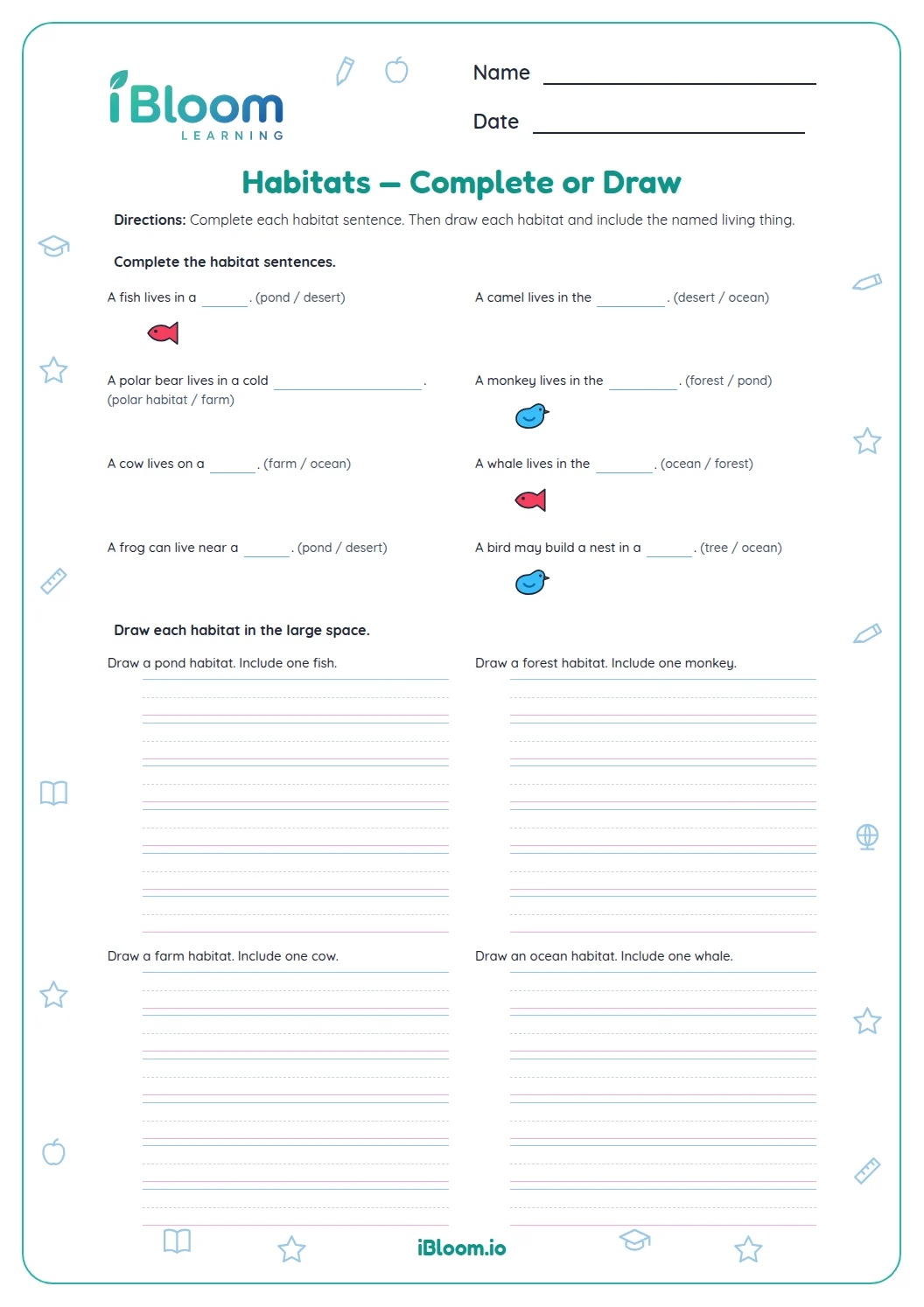
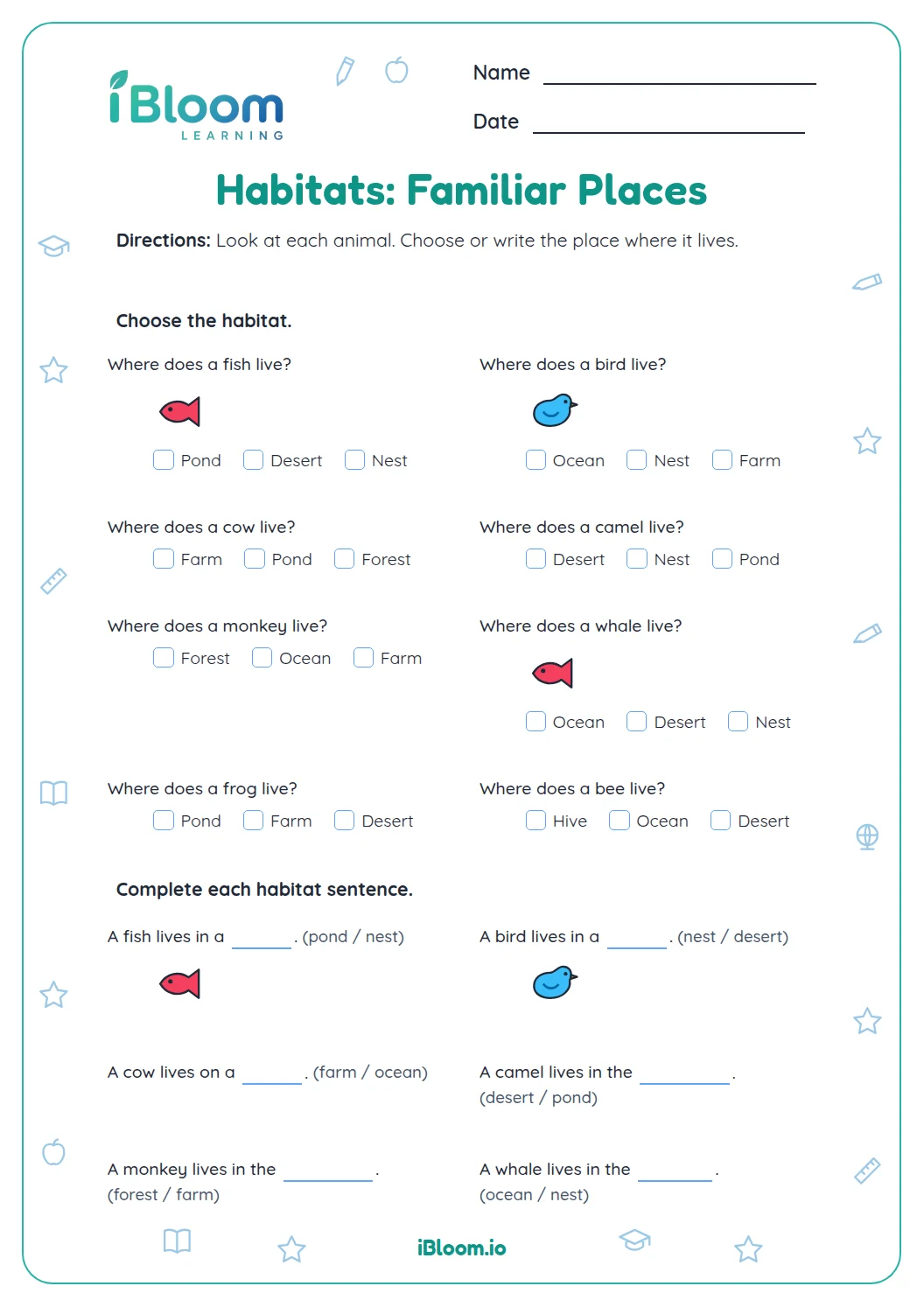
The first questions pair a picture with a choice of habitats. For example, a fish is matched with a pond, while a camel is matched with a desert. Children can name the animal first, then consider which place fits the clue.
Why do plants have habitats too?
Plants grow in places that meet their needs. The worksheet includes a water lily, pine tree, cactus, and seaweed, each matched with a familiar habitat.
What do living things find in a habitat?
Habitats can provide food, water, and shelter. The final prompts ask children to say what a habitat provides and name an animal with a place to find food.
Common mistakes and quick fixes
The mistake
Choosing a place without looking at the living thing.
The fix
Name the pictured plant or animal first, then compare the choices.
The mistake
Thinking only animals have habitats.
The fix
Remember that plants grow in habitats that meet their needs too.
The mistake
Naming a habitat but not a need.
The fix
Add one resource, such as food, water, or shelter, that living things need.
This page supports the kindergarten expectation to observe what plants and animals need to survive.
The questions practice how habitats meet the needs of living things.
On this sheet:
Show the official wordingHide the official wording
Use observations to describe patterns of what plants and animals (including humans) need to survive.
What to practice next
Make more practice
Further reading
Questions parents and teachers ask
What is a habitat?
A habitat is a place where a living thing finds what it needs. This worksheet uses familiar examples such as a pond, forest, ocean, desert, and icy shore so children can connect an animal or plant picture with a place.
How many questions are on the page?
There are 18 questions: eight animal picture matches, four habitat clue choices, four plant and habitat matches, and two short response prompts. An answer key is included for choice questions and sample responses, giving an adult a clear way to review the page.
Can a preschooler complete this with an adult?
Yes. An adult can read each prompt aloud, name the picture, and invite the child to point to a choice. The final two prompts are useful for oral answers, so a young learner does not need to write a full sentence independently.
What should children notice about habitats?
They can notice that a habitat provides resources living things need, such as food, water, and shelter. Use the picture choices as a starting point, then ask the child to name one need the habitat can meet and how it helps.
Why are plants included with animals?
Plants live in habitats too. The worksheet connects water lilies, pine trees, cactus plants, and seaweed with familiar places, broadening the idea of a habitat beyond an animal’s home and helping children compare living things that grow in very different environments.