


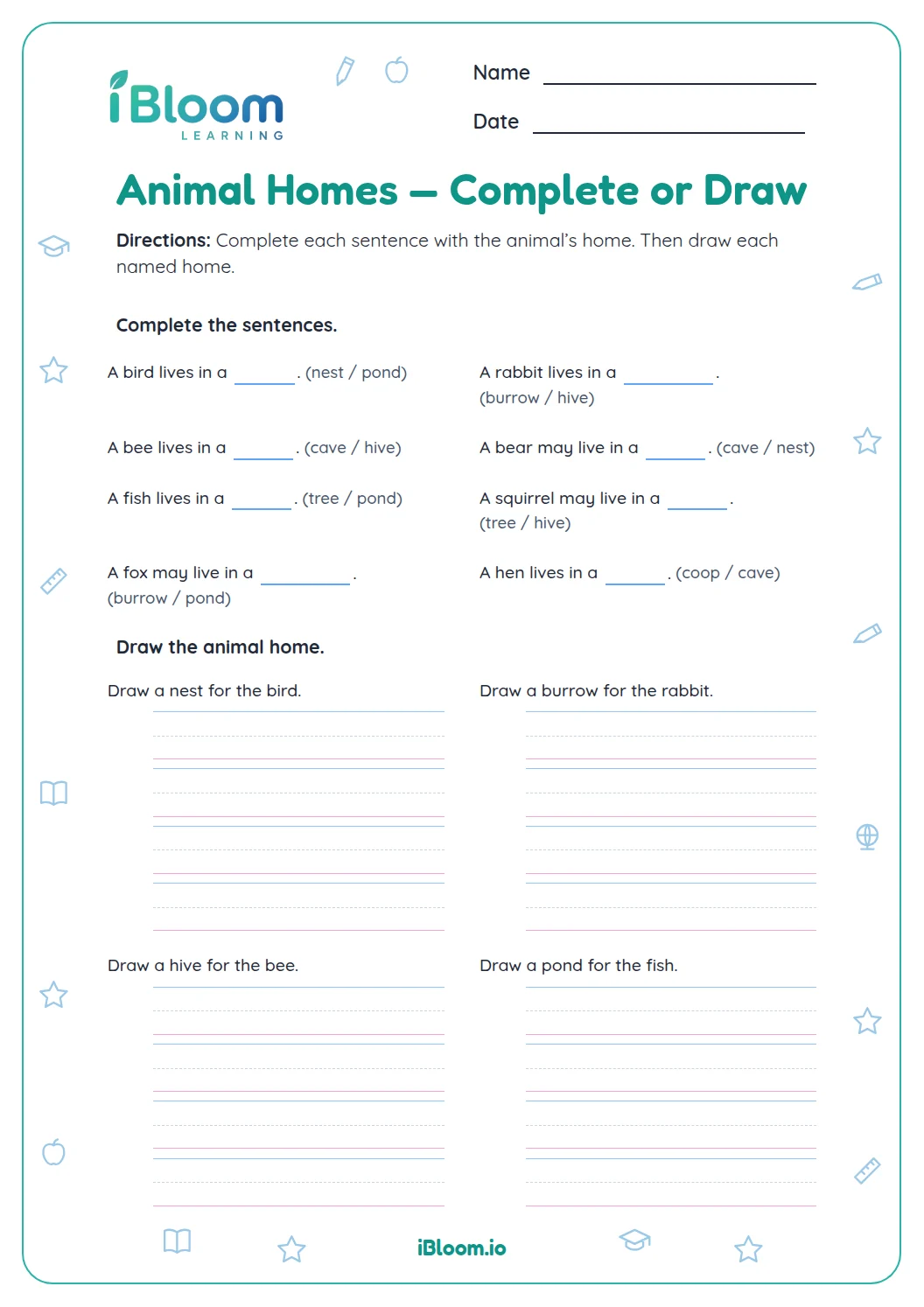


About this worksheet
This preschool and kindergarten science worksheet introduces animal adaptations with familiar animal pictures and short choices. Part A connects animals with a helpful feature or home. Part B asks what a feature helps an animal do, such as a frog’s strong legs helping it jump. An adult can read each prompt aloud while a child points to or marks an answer. A separate key lists the intended choices.
What is an animal adaptation?
An adaptation is a feature or behavior that helps an animal meet a need in its home. A duck’s webbed feet help it paddle, and a turtle’s shell helps protect its body.
- 1[pic:duck] Which body feature helps a duck paddle?
- 2Webbed feet help push through water.
- 3Answer: webbed feet
What will children match?
Part A has seven picture-supported questions about animal features and homes. Part B has seven more questions about what a feature helps an animal do. The prompts use a picture of the animal named in each item.
- 1[pic:frog] A frog has strong back legs. What can it do with them?
- 2Strong legs help the frog jump.
- 3Answer: jump
How can an adult guide the activity?
Name the animal and point to its picture. Read the choices aloud, then ask which one matches the feature or job in the question. Invite the child to describe the match in a few words.
How to use this worksheet
- 1Look at the animal picture and say its name.
- 2Read the question and choices aloud if helpful.
- 3Choose a feature, job, or home that fits the clue.
- 4Ask the child to tell how the feature helps.
- 5Check the picture-supported answer key together.
What mistakes can I help with?
The mistake
Choosing a feature that belongs to a different animal.
The fix
Point to the animal picture and read the body-feature clue again before choosing.
The mistake
Naming a feature without connecting it to a job.
The fix
Ask, “What does this feature help the animal do?” Then compare the answer choices.
The mistake
Matching a home from memory without using the clue.
The fix
Read the words that describe the animal’s surroundings, such as hot and dry, and match those words to a home.
What to practice next
Make more practice
Questions parents and teachers ask
What is an animal adaptation?
An animal adaptation is a feature or behavior that helps an animal meet a need. A shell can help protect a turtle, and webbed feet help a duck paddle. The worksheet gives children picture-supported examples and asks them to connect a feature with a use.
Can a preschooler do this activity?
Yes. An adult can read each short question and choice while the child looks at the animal picture. The child may point to an answer or mark it. Talking about the feature and its job helps connect the picture with the idea.
Why are there animal pictures?
The pictures help young learners identify the animal named in a prompt. Each question also includes a short clue and choices, so children can connect what they see with a feature, job, or home. An adult can name the animal before reading the question.
Which animals appear on the worksheet?
The worksheet includes a camel, duck, bird, turtle, fish, fox, bee, snail, frog, squirrel, and rabbit. Children consider features such as shells, fins, fur, teeth, beaks, and wings. Each prompt asks how a feature relates to an animal’s home or action.
What should I do if two choices seem possible?
Read the whole clue and focus on the job named in it. For instance, the frog question asks what strong back legs help it do, which points to jumping. Ask the child to compare each choice with that specific job before marking an answer.