





About this worksheet
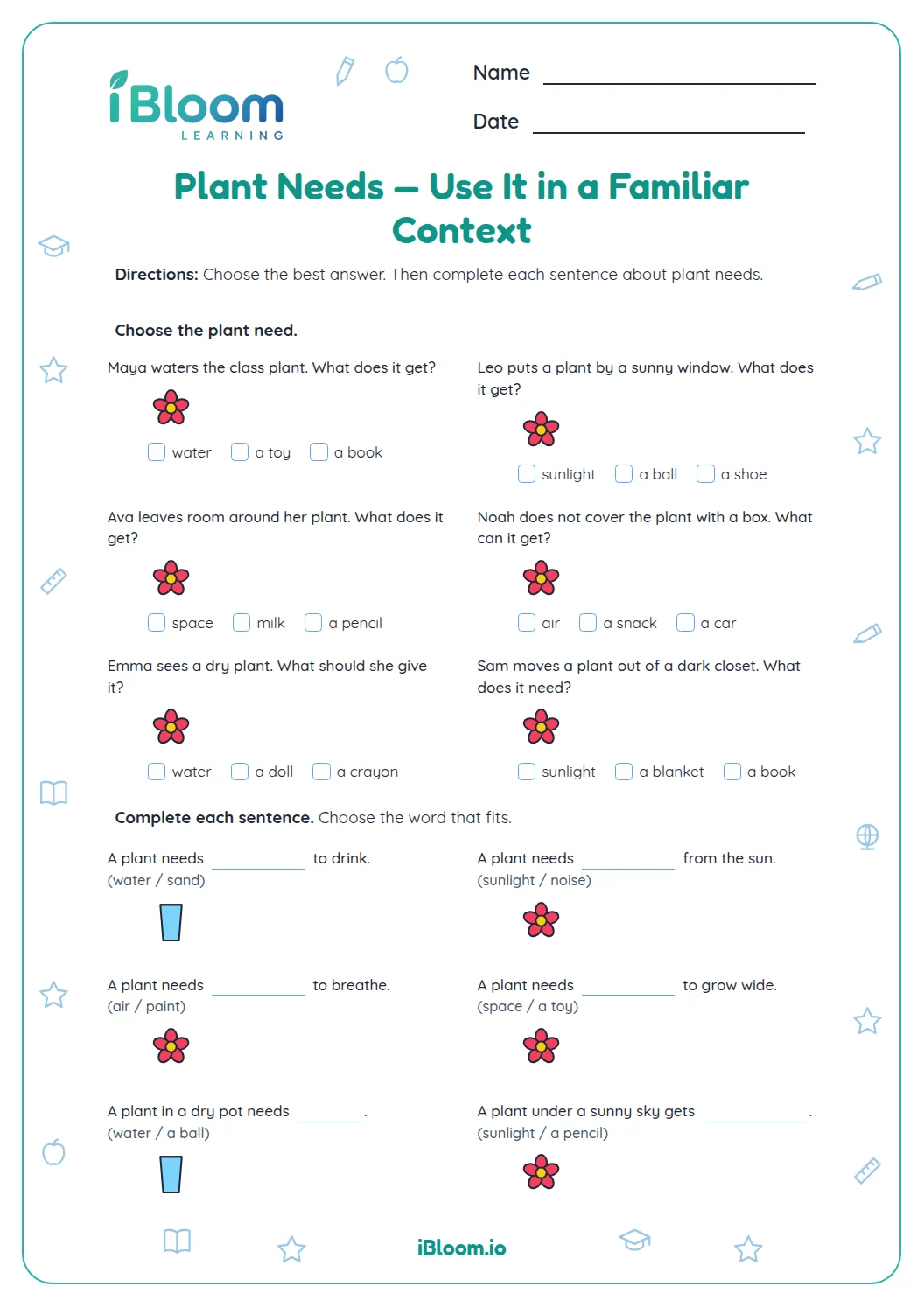
This free preschool and kindergarten science worksheet helps children recognize basic animal needs and ways those needs are met. Fourteen short questions use familiar animals and everyday situations to review food, water, and shelter. A separate answer key gives the intended choice for each item. The practice connects to NGSS K-LS1-1, which asks learners to observe patterns in what plants and animals need to survive.
Aligned to K-LS1-1
What basic needs do animals share?
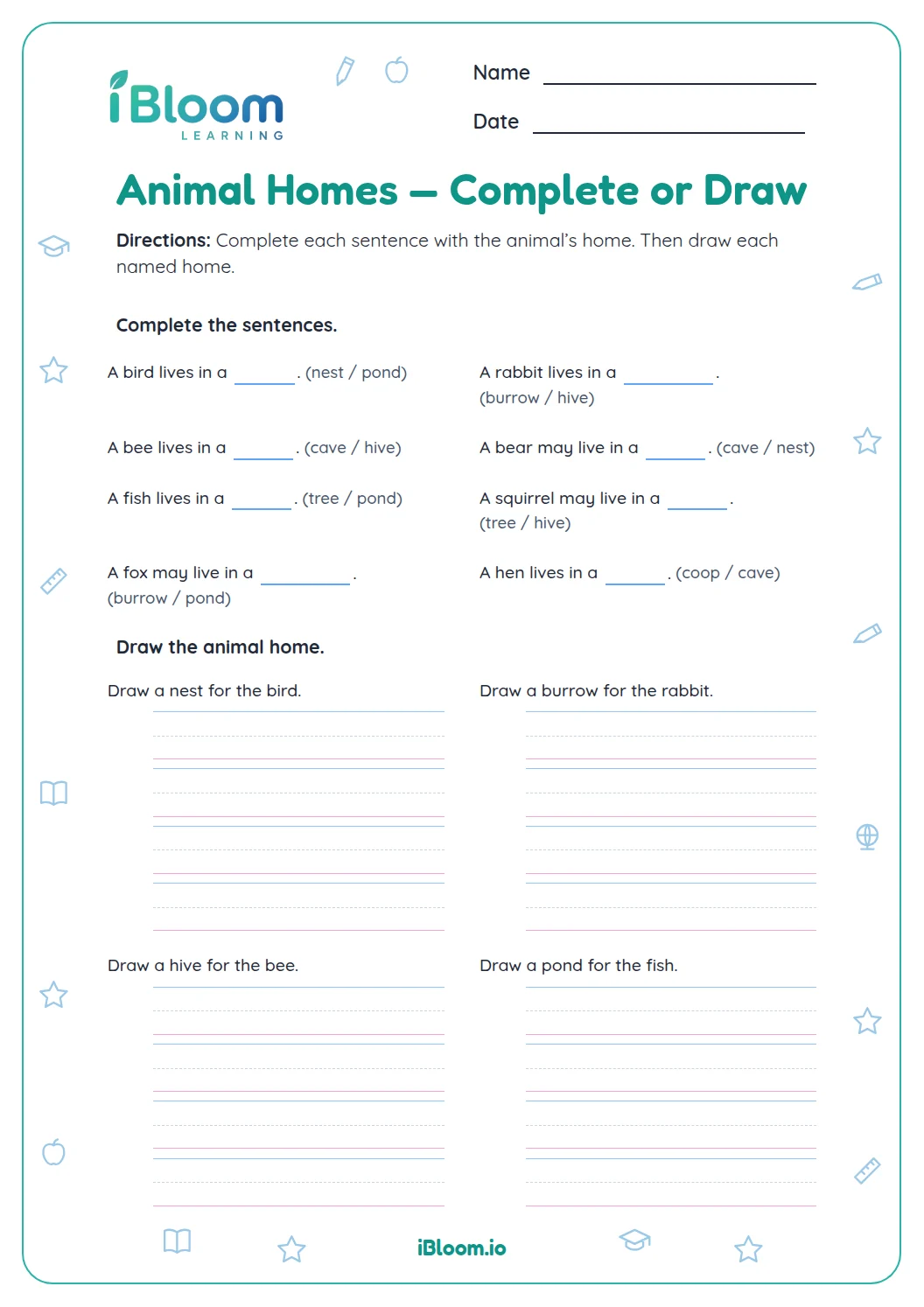
Animals need food and water. They also need shelter, a safe place that helps protect them. The foods and homes can look different for different animals.
- 1A hungry puppy needs food.
How can a home help an animal?
A nest can shelter a bird, while a doghouse can shelter a dog. Think about what each place provides for the animal.
How can a situation reveal a need?
A thirsty animal needs water; a hungry animal needs food. Read the clue and decide what need it describes.
How to use this worksheet
- 1Read each animal clue.
- 2Notice whether it mentions hunger, thirst, or a safe place.
- 3Choose the need or example that fits.
- 4Read the complete question again with your choice.
- 5Check the key after finishing.
Mistakes to watch for
The mistake
Choosing an object the animal can play with instead of food.
The fix
Ask which choice is something the animal eats.
The mistake
Mixing up food and shelter.
The fix
A nest or doghouse is a home; a carrot or grass is food.
The mistake
Thinking each animal has the same home or food.
The fix
Compare the animals and notice how their needs are met in different ways.
Next Generation Science Standards alignment
This worksheet gives children practice with the named skill.
Observe patterns in what animals need to survive.
On this sheet: Observe patterns in what animals need to survive.
Show the official wordingHide the official wording
Use observations to describe patterns of what plants and animals (including humans) need to survive.
What to practice next
Make more practice
Further reading
Questions parents and teachers ask
Which animal needs are covered?
The worksheet focuses on food, water, and shelter. Questions use familiar animals, including dogs, rabbits, fish, birds, and horses, to show examples of these needs and ways animals meet them. The answer key lists the intended response to each question.
What does shelter mean here?
Shelter is a safe place that helps protect an animal. A nest can shelter a bird, and a doghouse can shelter a dog. Food and water are different needs, so consider what the place provides when choosing an answer.
Can I read the questions aloud?
Yes. Read one short question at a time and invite the child to identify whether the situation is about food, water, or a safe place. This lets the learner focus on the science idea and the animal example without needing to read every prompt independently.
How many questions are included?
There are 14 multiple-choice questions in two parts. They begin with examples of food and water, then use short situations to review basic needs and shelter. A separate answer key lists the intended answer for every item. It can be used after each part for a short review.
How does the worksheet connect to K-LS1-1?
K-LS1-1 focuses on observing patterns in what plants and animals need to survive. This page uses animal examples to help children notice shared needs such as food and water, while comparing ways animals get shelter. The prompts use familiar situations.