


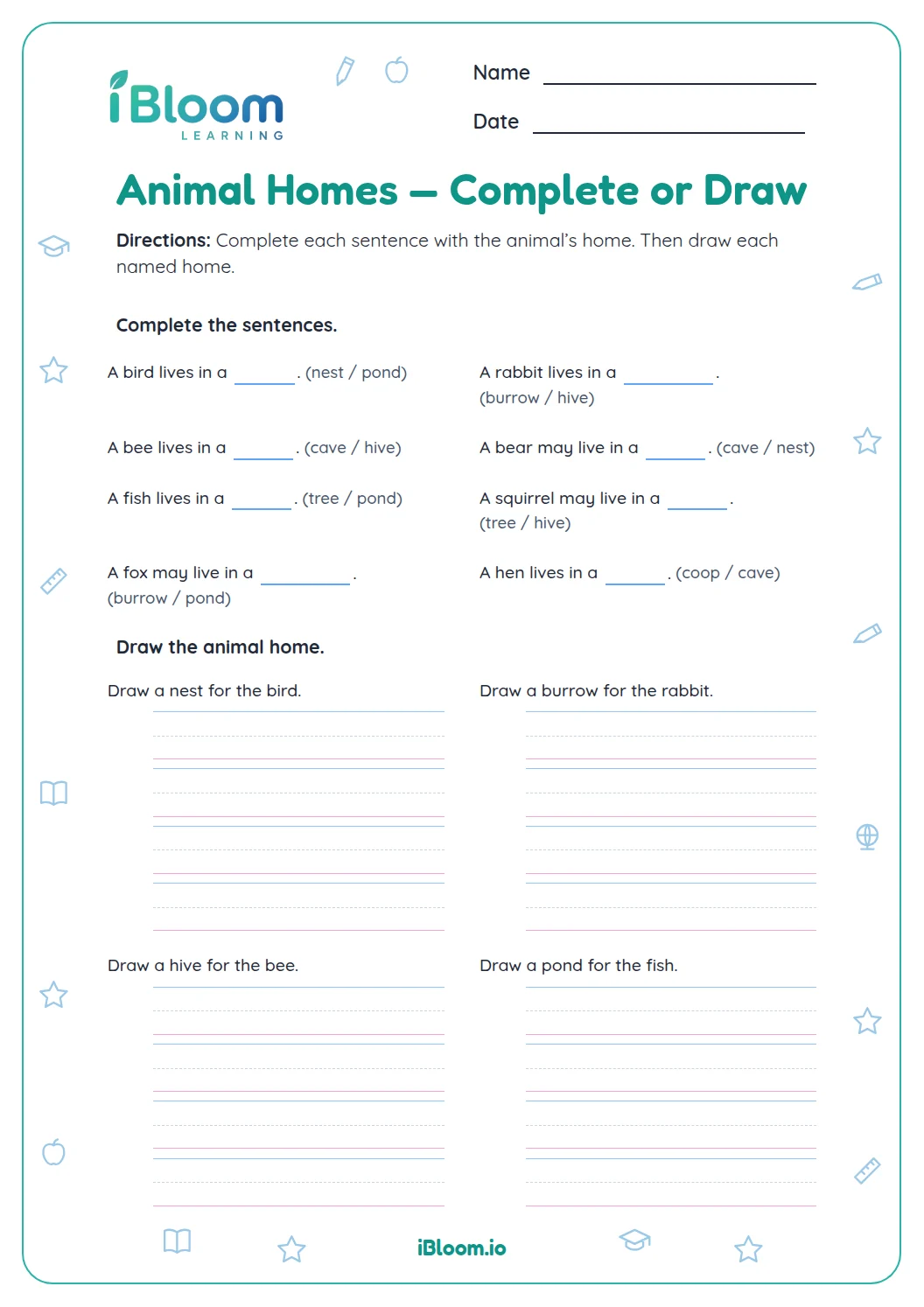


About this worksheet
This printable animal homes worksheet is for preschool and kindergarten learners. Children look at a familiar animal picture and choose a place that could shelter it, from a bird’s nest to a rabbit’s burrow. Sixteen short choices keep the focus on connecting animals with homes. The answer key gives one expected response for each clue.
How does the sheet connect animals and homes?
Each item pairs an animal picture with two home choices. The child uses the animal clue to select a familiar place that could offer shelter.
- Birds and nests
- Rabbits and burrows
- Bees and hives
What kinds of homes will children see?
The practice includes nests, dens, burrows, hives, ponds and several familiar farm or pet shelters. The prompts use “might” and “could” because an animal may use more than one shelter.
How should families check the choices?
Use the key after the child completes a page. If the child suggests another plausible shelter, discuss why it might fit and return to the exact clue on the worksheet.
How to use this worksheet
- 1Read the direction aloud and name the pictured animal.
- 2Read both home choices without pointing to one.
- 3Ask which place could shelter the animal.
- 4Have the child mark one choice and continue.
- 5Check the completed page with the answer key and discuss another plausible home if one comes up.
Common mistakes and quick fixes
The mistake
Choosing a home because it belongs to a different animal.
The fix
Say the pictured animal’s name again, then compare both home choices with that animal.
The mistake
Thinking every animal has only one possible shelter.
The fix
Explain that the key shows the likely match for this question; real animals may use other shelters too.
The mistake
Guessing from the picture without hearing the home words.
The fix
Read each choice aloud and invite the child to repeat the one they choose.
What to practice next
Make more practice
Questions parents and teachers ask
How many questions are on the sheet?
There are 16 picture-supported questions across the worksheet pages, followed by a separate answer key. Each question shows an animal and offers two possible homes. The child chooses the place that could shelter that animal, then checks the response with the key.
Which animal homes appear?
The choices include nests, dens, burrows, hives, ponds, kennels, stables, coops and woods. The animal clues include birds, rabbits, bears, bees, fish, dogs, horses, chickens, frogs, squirrels and deer. These are familiar examples of places animals may live or find shelter.
Can a preschooler use this worksheet?
Yes. An adult can read each short question aloud and invite the child to name the animal before looking at the choices. The pictures support the animal words, while the two home choices keep each decision brief. Children can point to an answer before marking it.
Why does the key give one home when animals can use different shelters?
The questions ask for a possible or likely home in a familiar example. Many animals use more than one kind of shelter, so the key gives the expected match for each particular clue. You can also discuss other reasonable places an animal might shelter.
How can I help if a child is unsure?
Read the animal name and the two home choices aloud, then ask which place seems suited to that animal. For example, a rabbit can dig a burrow underground. After the child answers, use the key to check and talk about the match.