






About this worksheet
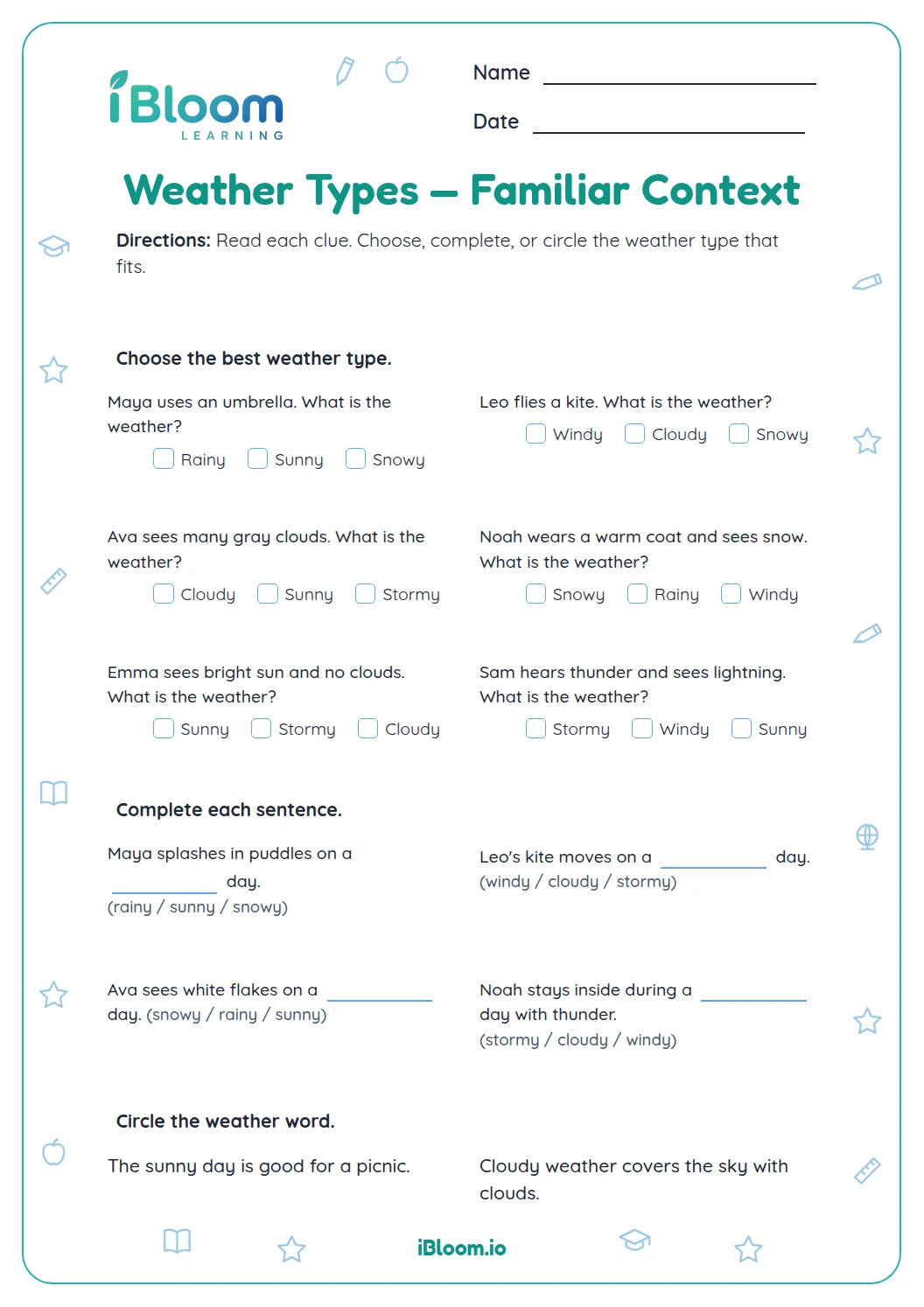
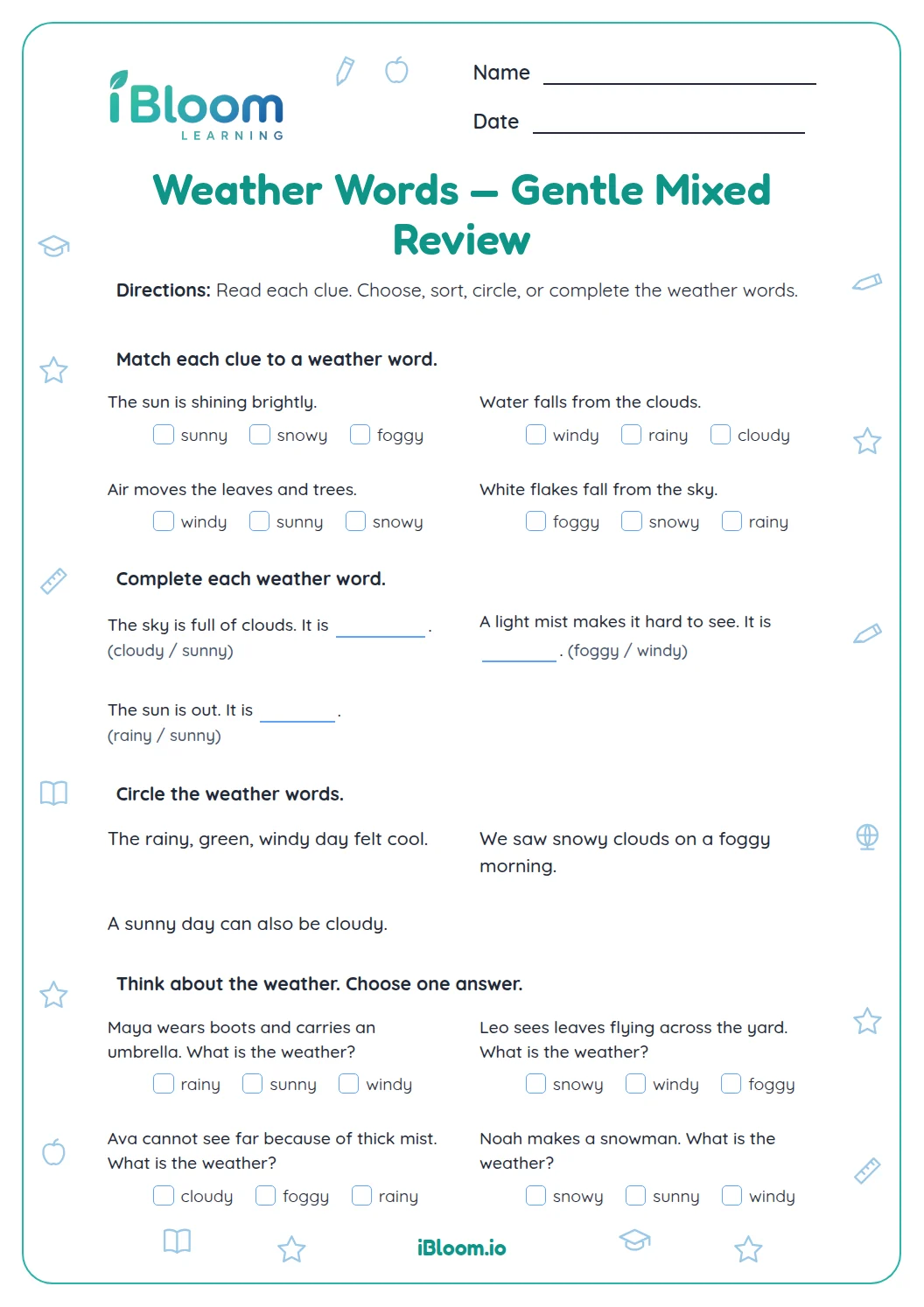
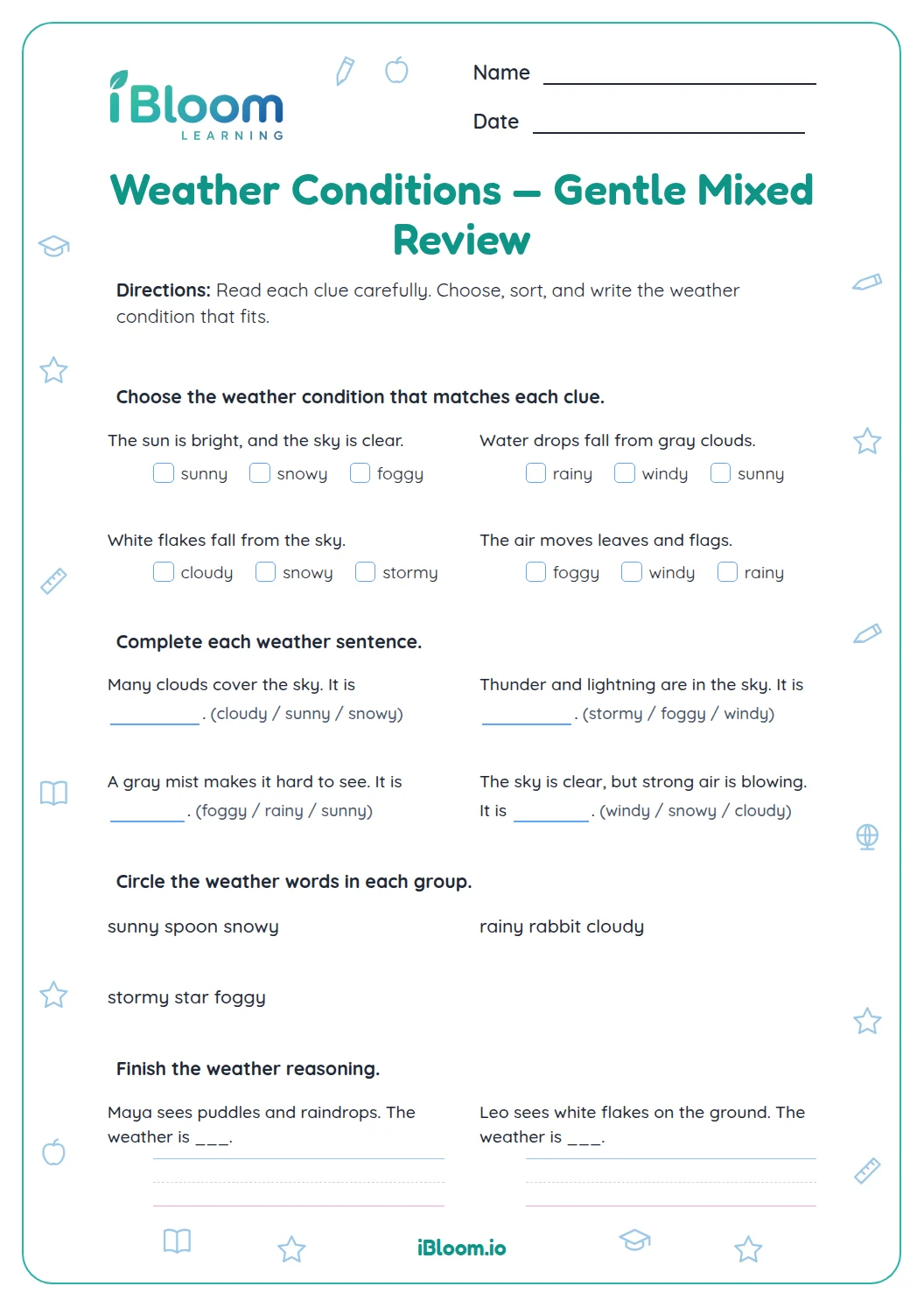
This printable helps preschool and kindergarten learners connect familiar weather words with visual clues. Across 14 short items, children complete sentences about sunny, rainy, snowy, windy, cloudy, and stormy weather. Picture cues and simple sentences support weather identification, and the answer key lists a response for each clue.
What weather clues appear in the pictures?
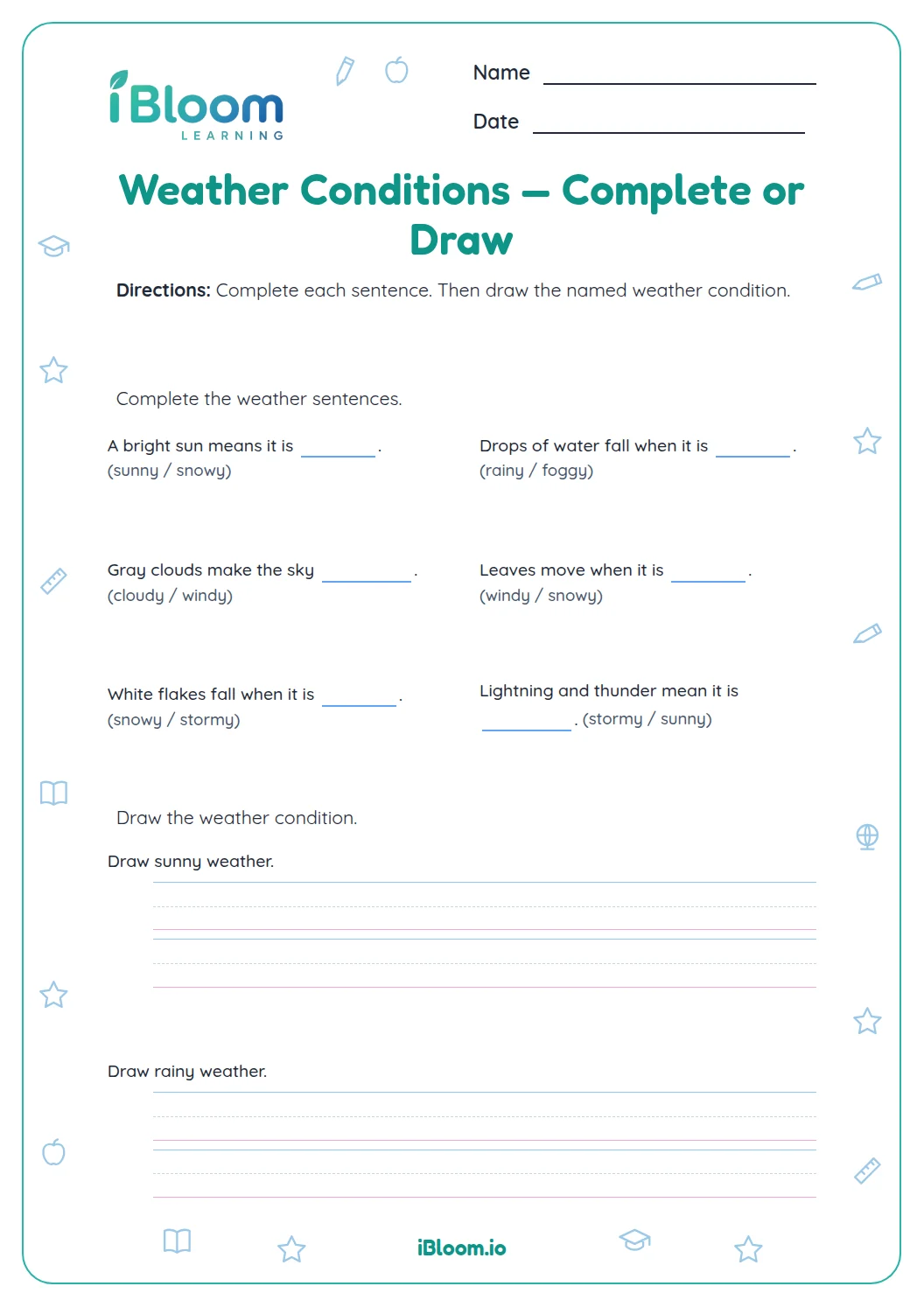
Part A pairs short sentences with small pictures. Children use clues such as falling snow, a bright sun, moving leaves, or lightning to complete each weather word.
How can a sentence help name the weather?
Part B adds familiar text clues, such as rain making a puddle or rain boots for a rainy day. Read the whole sentence and use its picture to decide which weather word fits.
For example, a snowman and a snowflake clue point to a snowy day.
How can a child check a weather word?
Say the completed sentence aloud and check that the picture matches the weather word. Lightning points to stormy weather; gray clouds without lightning point to cloudy weather.
How can you use this worksheet?
- 1Look at the picture and listen to the sentence clue.
- 2Say the weather word that fits before writing it.
- 3Notice whether the clue names sun, rain, snow, clouds, wind, or lightning.
- 4Reread the completed sentence and check the picture.
- 5Use the answer key to review all 14 words.
What mistakes can learners check?
The mistake
Using “cloudy” for every kind of cloudy sky.
The fix
Look for a clue such as lightning to decide whether the prompt describes stormy weather.
The mistake
Mixing up rainy and snowy conditions.
The fix
Rain is liquid water; snow falls as white flakes.
The mistake
Using a weather word that does not match the picture.
The fix
Check the picture and reread the sentence before writing.
What to practice next
Make more practice
Questions parents and teachers ask
What weather types are on this worksheet?
The prompts cover sunny, rainy, snowy, cloudy, windy, and stormy weather. Children complete 14 short clues using pictures and sentences. Each word is connected to an observable sign, such as snowflakes, moving leaves, a bright sun, or lightning.
How many questions are included?
There are 14 weather clues in two parts. Seven pair a sentence with a small picture, and seven use a sentence clue alone. The separate answer key lists the expected word for every prompt, including sunny, rainy, snowy, cloudy, windy, and stormy.
Can a preschooler use this worksheet?
Yes. An adult can read each short sentence aloud and invite the child to name the weather before writing. The picture gives a visual cue, and the adult can help with spelling or write the word the child says.
How can children recognize windy weather?
Look for something moving because of the wind, such as leaves or a kite. The worksheet pairs its windy clue with a picture and sentence about movement. A child can say the clue aloud before filling in “windy.”
How can children tell cloudy weather from stormy weather?
Cloudy weather has clouds covering the sky. A storm clue can include lightning. This worksheet uses gray-cloud clues for cloudy and lightning clues for stormy, helping children compare each sentence with its picture before writing one of the weather words in the blank.