







About this worksheet
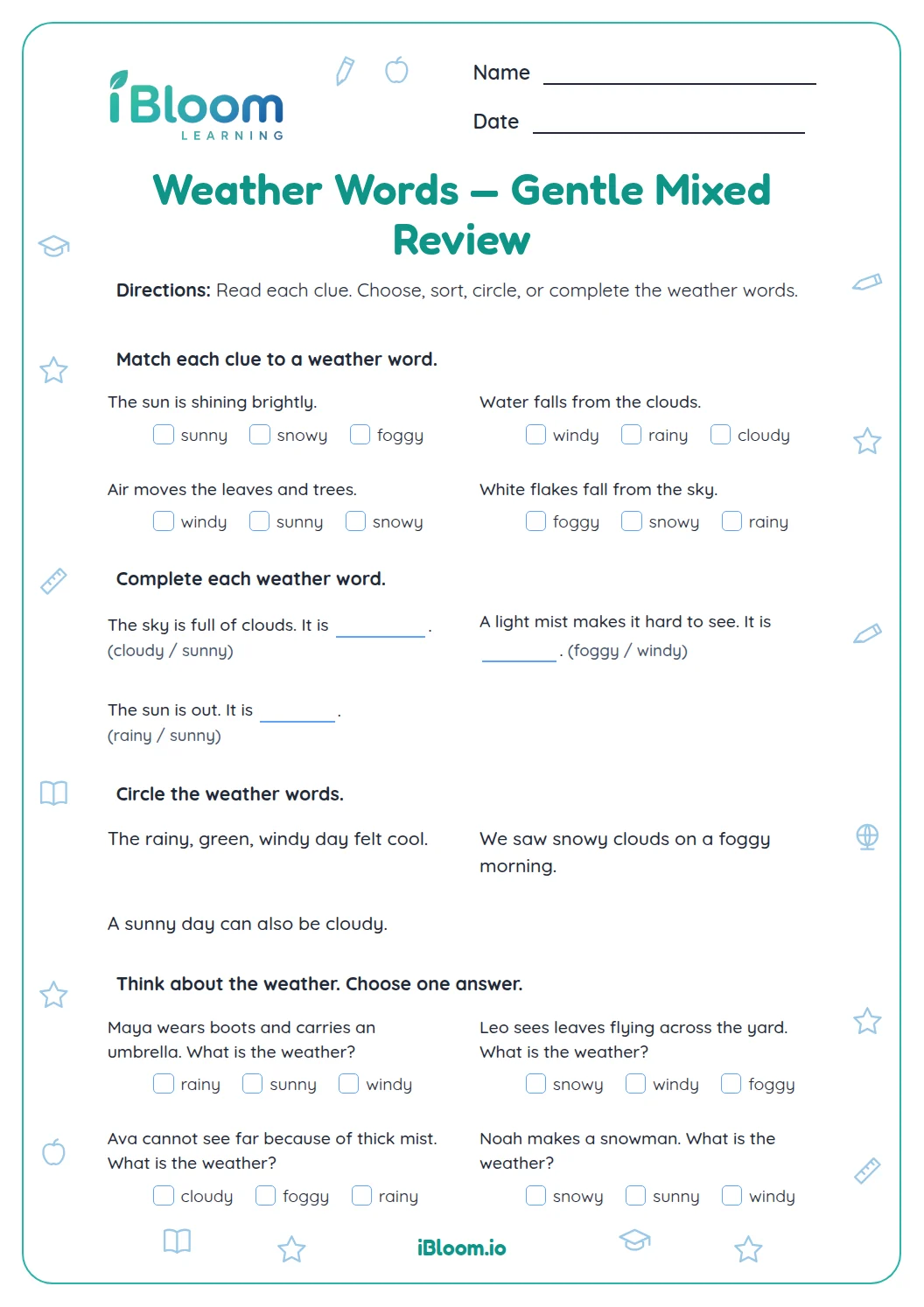
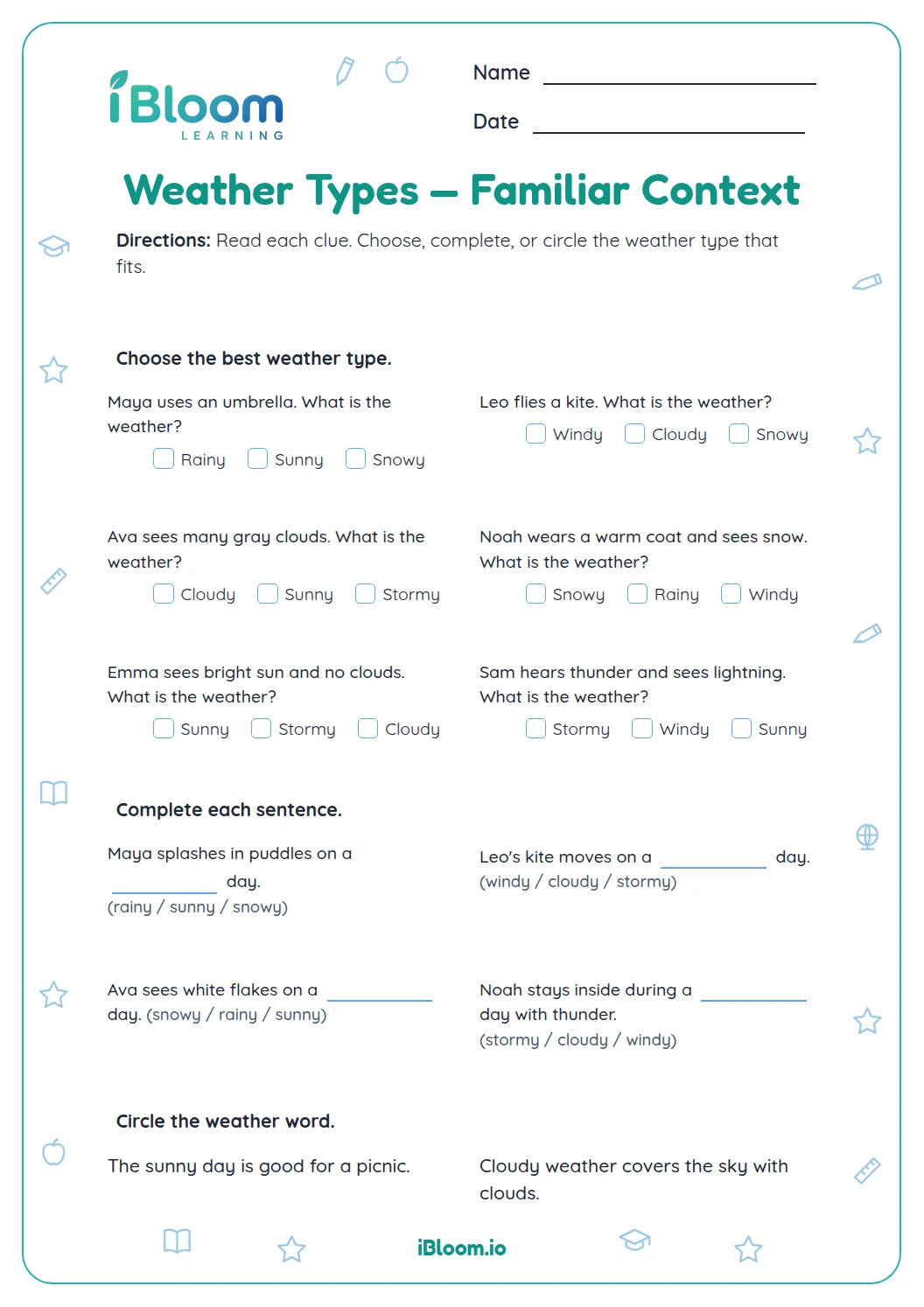
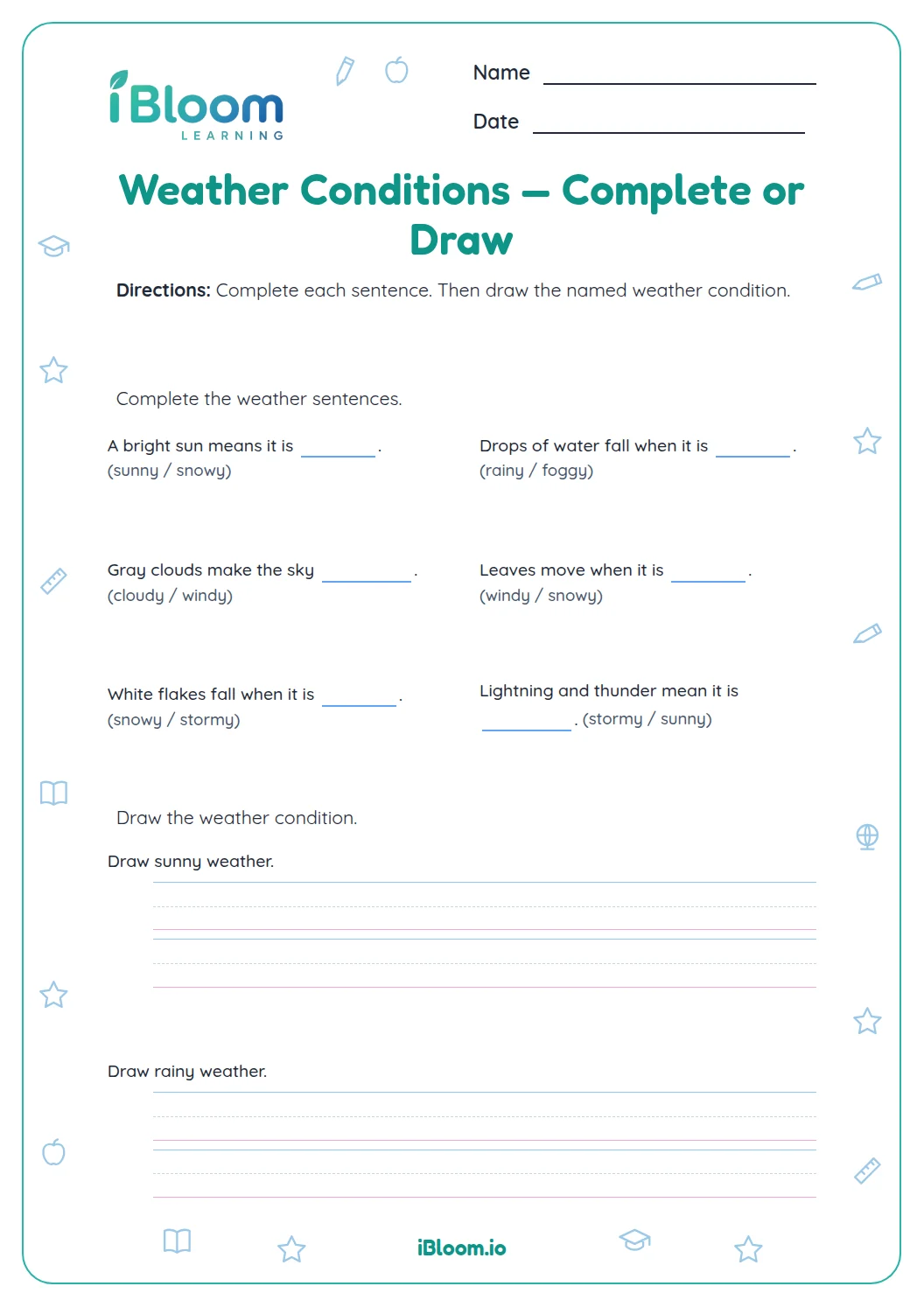
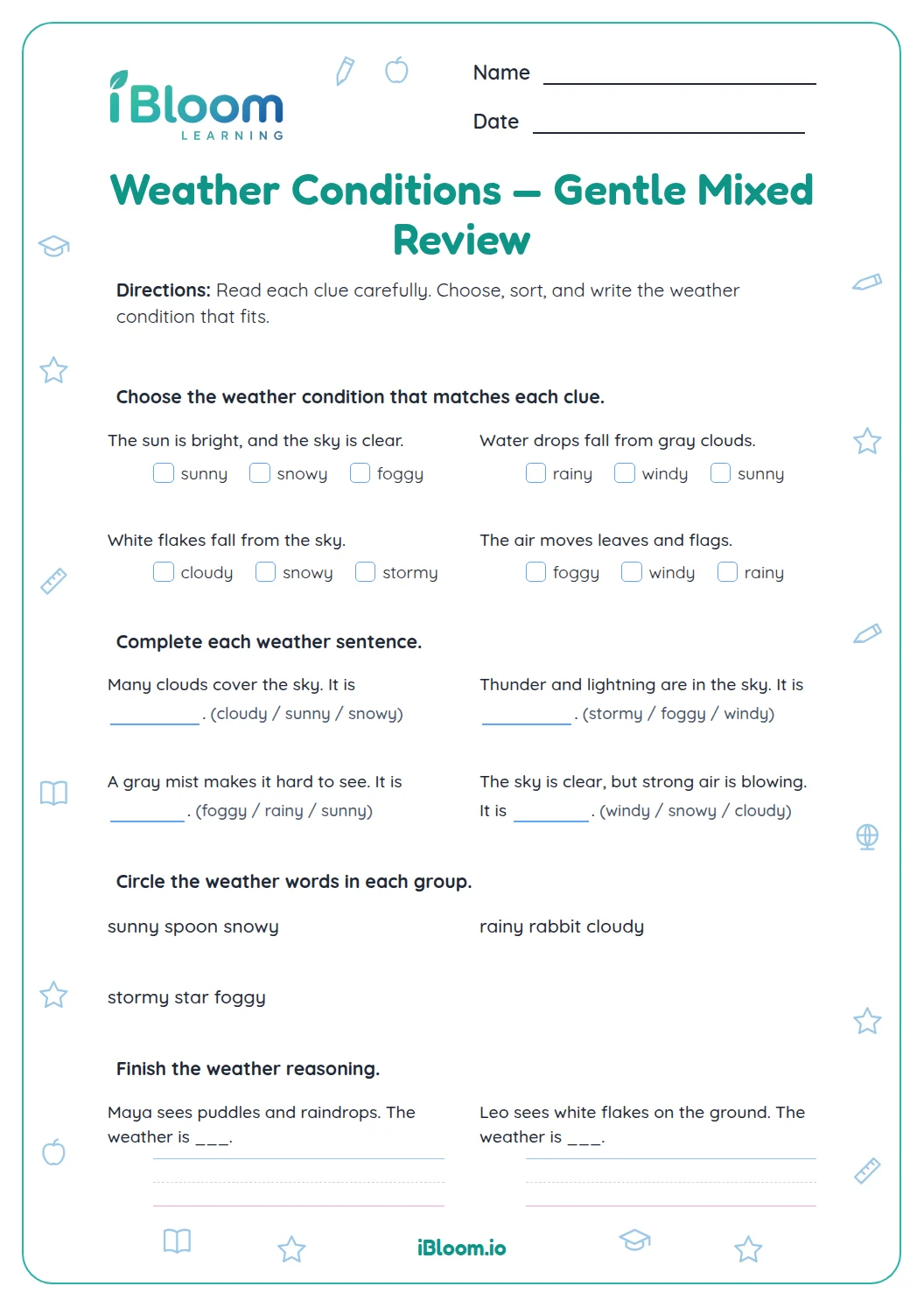
This free printable worksheet introduces Preschool and Kindergarten children to everyday weather words. On the first page they fill in the bubble under the picture that is sunny, rainy, snowy or shows lightning, then use a kite and a cloud picture to finish the words windy and cloudy. The second page has four large boxes to draw a sunny, rainy, windy and snowy day. Read the words aloud with younger children; a separate answer key shows each correct choice and what a good drawing includes.
What are weather words?
Weather words describe what is happening outside right now. A sunny day has a bright sun, a rainy day has raindrops, and a snowy day has white flakes. Children hear these words every morning, so a sheet that gives each word a picture helps them connect the word they hear to the sky they see.
This sheet uses six weather ideas: sun, rain, snow, wind, clouds and lightning. Sunny, rainy and snowy come with picture choices in Part A; windy and cloudy come with picture clues in Part B.
How do pictures help children learn the words?
Beginning readers can use the picture as a clue. In question 5 a kite is shown and the sentence says it flies on a ___ day. Children who know that wind lifts a kite can pick windy, even if they cannot yet read every word.
The words also follow a pattern: sun becomes sunny, rain becomes rainy, snow becomes snowy, wind becomes windy and cloud becomes cloudy. Saying the short word and then the longer one together helps children hear the y added at the end.
- 1Look at the picture: a kite
- 2A kite flies high when the wind blows
- 3The weather word is windy
- 4Color windy
Why do children draw the weather?
Drawing shows what a child understands about a word. To draw a windy day, a child has to show something they cannot see directly: a kite pulling, leaves blowing, a hat flying off. A rainy day needs clouds and drops, and a snowy day needs flakes or a snowman. Ask your child to tell you about each picture afterward, and write down the words they use.
What is on this worksheet?
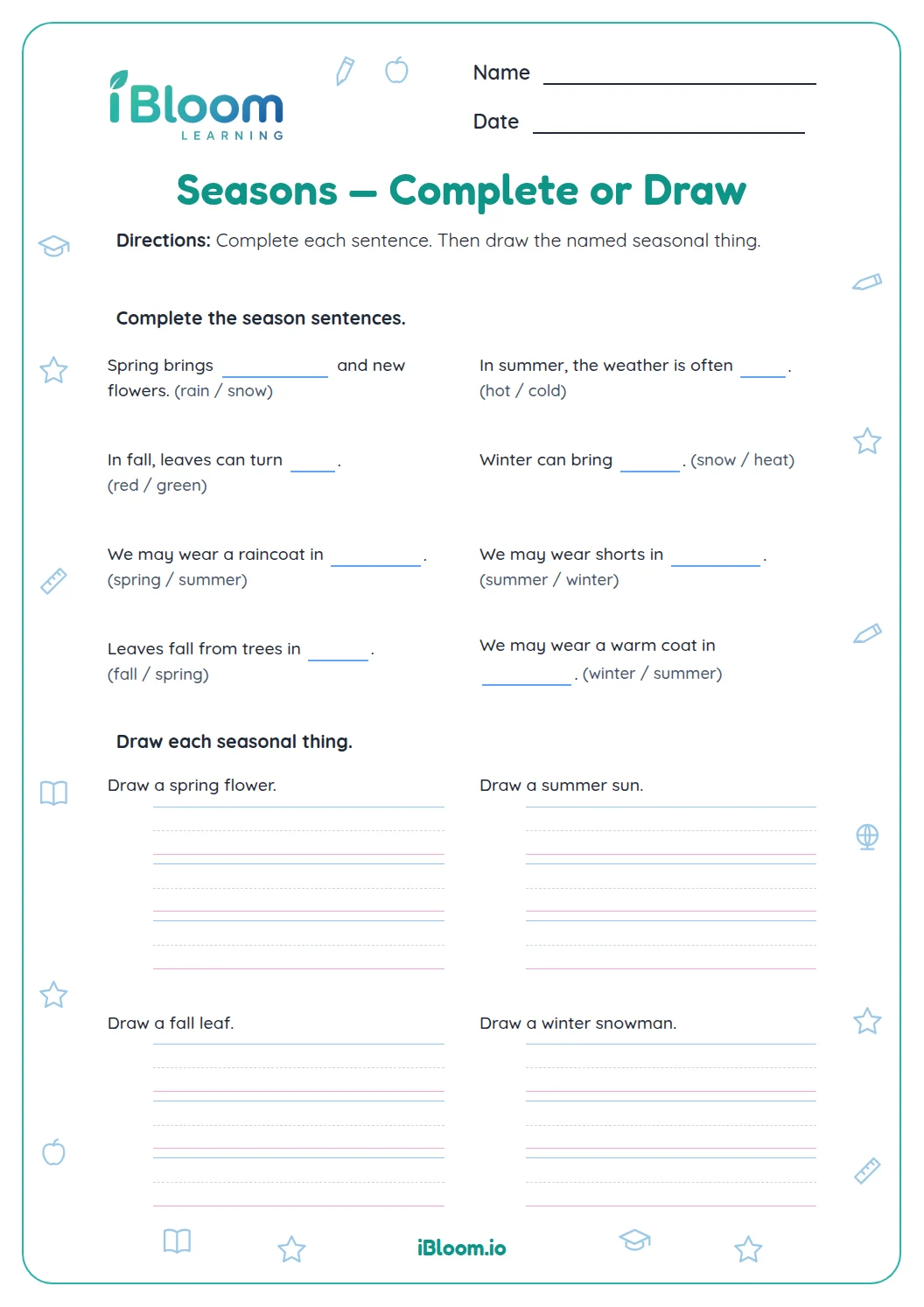
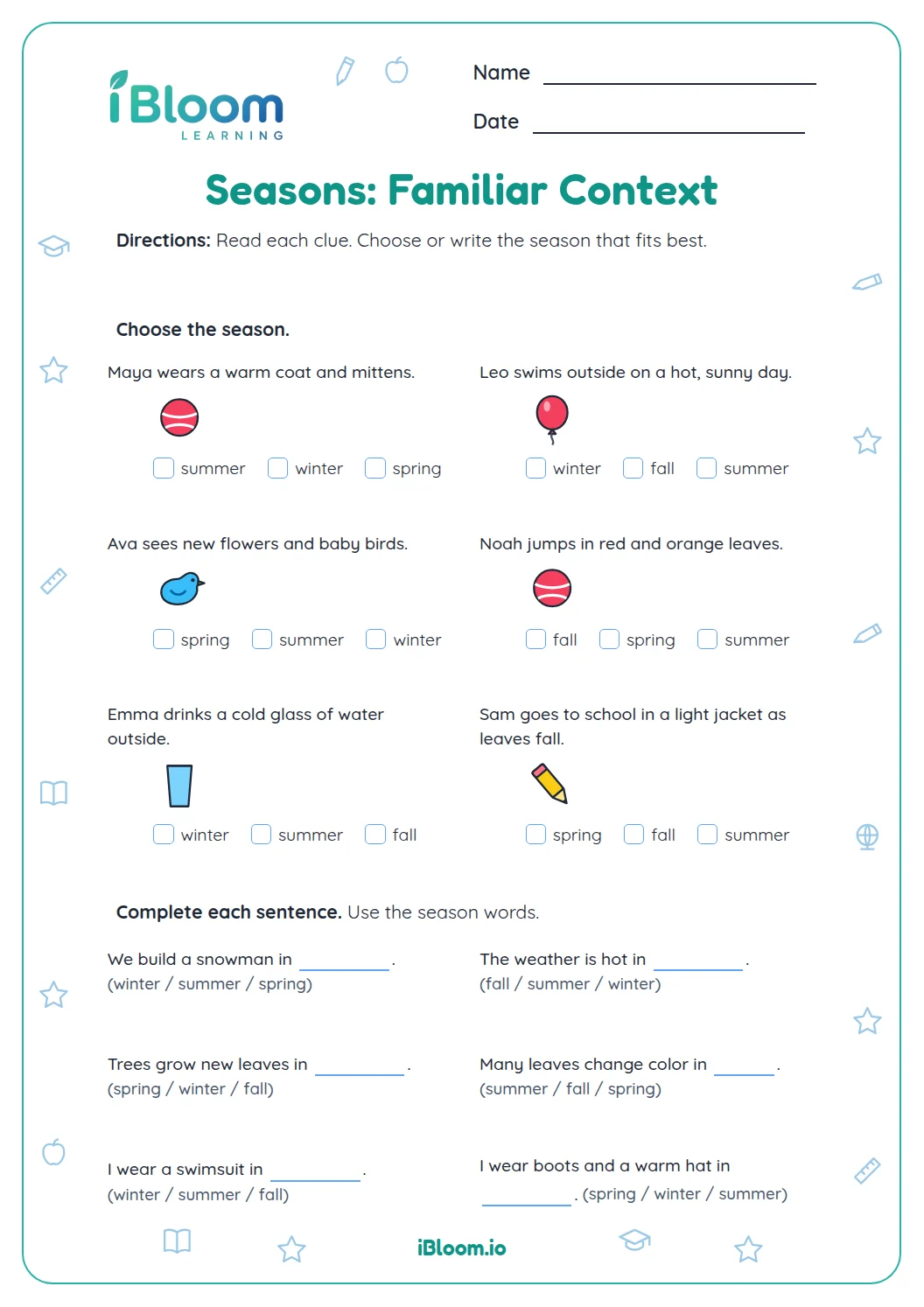
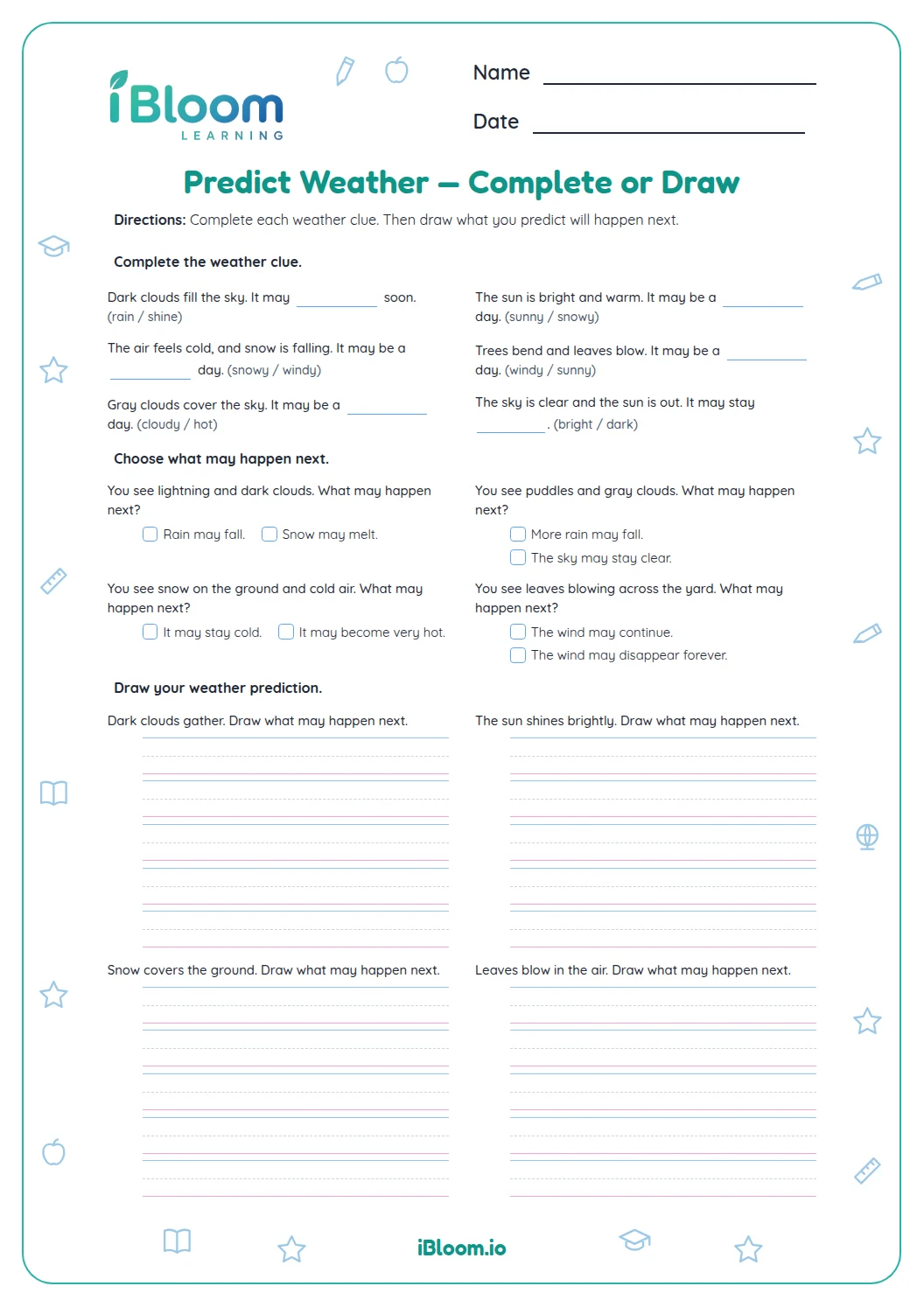
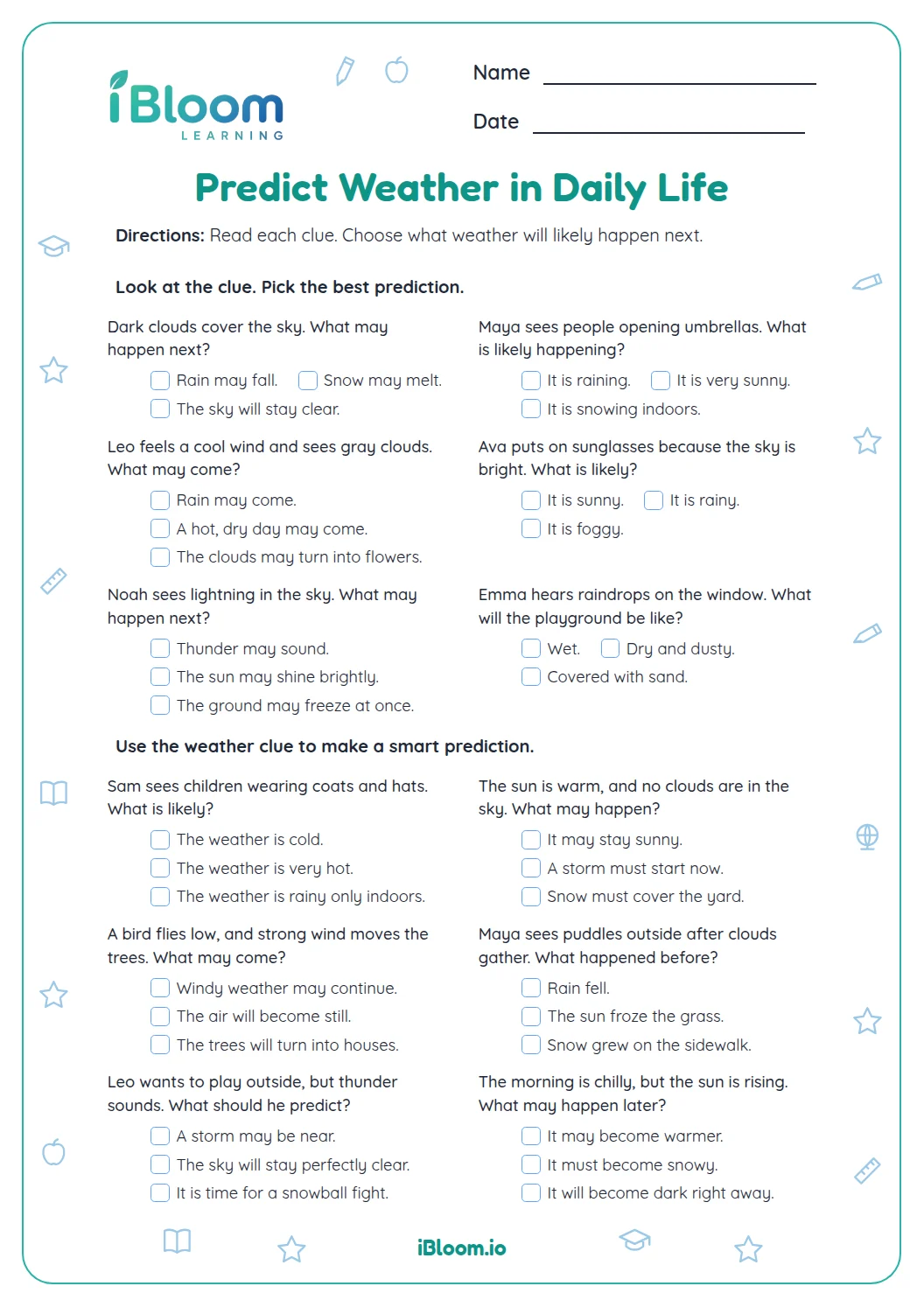
Ten tasks on two pages, in three parts, all with pictures or drawing:
- Part A: 4 questions, fill in the bubble under the sunny, rainy, snowy or lightning picture
- Part B: 2 questions, use a kite and a cloud to finish windy and cloudy
- Part C: 4 drawing boxes, a sunny, rainy, windy and snowy day
- A two-page answer key with a note on what each drawing should show
How to use this worksheet at home or in class
- 1Look out the window together and ask, "What is the weather today?" Say the weather word out loud.
- 2Read Part A aloud. Say each weather word slowly and let your child fill in the bubble under the matching picture.
- 3Do question 5 together. Ask what a kite needs to fly, then read the three words and let your child choose.
- 4Read question 6 aloud and let your child choose the word on their own.
- 5Give your child time for the four Part C boxes, one weather at a time, and ask what belongs in each picture.
- 6Check Parts A and B with the answer key, and ask your child to tell you about their drawings.
Common mistakes and quick fixes
The mistake
Picking the snowflake for rainy, because both rain and snow fall from the sky.
The fix
Compare them: rain is drops of water, and snow is white flakes in cold weather. Ask, "Which one would you jump in with rain boots?"
The mistake
Choosing windy for the cloud sentence, because clouds move across the sky.
The fix
Read the clue again: "gray clouds fill the sky." Cloudy means the sky has clouds in it. Windy means you can feel the air pushing.
The mistake
Saying "sun day" instead of "sunny day."
The fix
Say sun, then add the y sound at the end: sunny. Repeat with rain and rainy so your child hears the pattern.
What to practice next
Make more practice
Questions parents and teachers ask
Which weather words are on this worksheet?
The sheet uses sunny, rainy, snowy, windy and cloudy, plus a lightning picture for a storm. Sunny, rainy and snowy are picture choices in Part A, and windy and cloudy are finished with a kite and a cloud picture in Part B. Part C has children draw a sunny, rainy, windy and snowy day.
Does my child need to read the words on the worksheet?
Not on their own. For Preschool, read each question and answer choice aloud and let your child point or color. In Kindergarten, many children can sound out short words like sun and rain with help, and the pictures give the rest of the clue. Reading together is still the best way to use this sheet.
Why do the weather words end in y?
Adding y turns a thing into a describing word. Sun is the star in the sky, and sunny describes a day with sun in it. The same works for rain and rainy, snow and snowy, wind and windy, and cloud and cloudy. Saying both words aloud helps children hear the pattern.
What should my child draw in Part C?
Any picture that shows the weather is right. A sunny day might have a bright sun, a rainy day clouds and raindrops, a windy day a kite or blowing leaves, and a snowy day falling flakes or a snowman. The answer key gives a short note for each box, not a picture to copy.
How can I connect this worksheet to real weather?
Check the sky together before or after the worksheet and name what you see. Ask your child to pick the weather word for today and to draw it, just like the Part C boxes. Doing this on several mornings helps the new words move from the page into everyday talk.
Is there an answer key for this worksheet?
Yes. A separate two-page answer key marks the correct picture or word for each question in Parts A and B, and gives a short note for each drawing box in Part C, such as clouds with raindrops for the rainy day. Print the worksheet by itself and keep the key for checking.