





About this worksheet
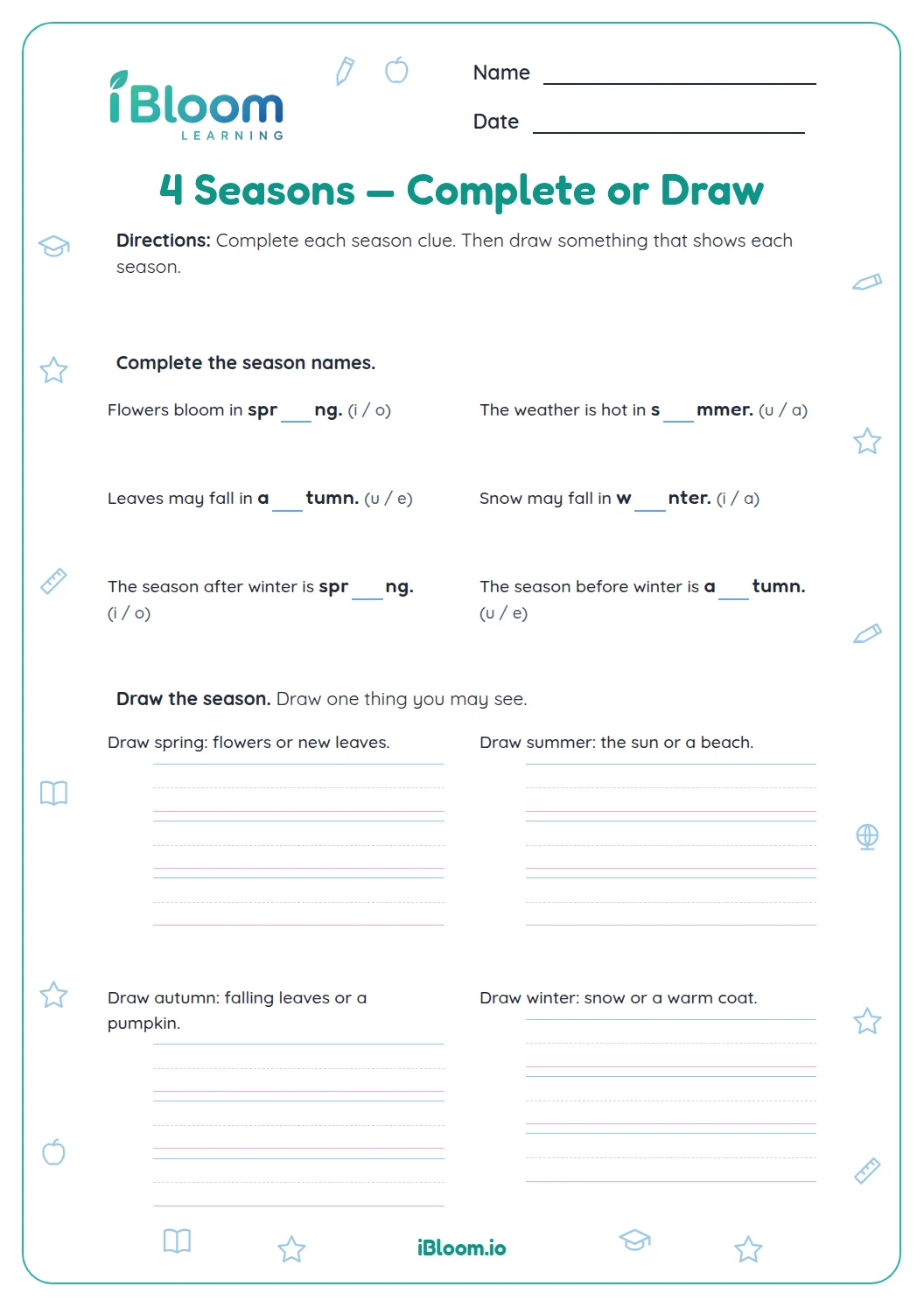
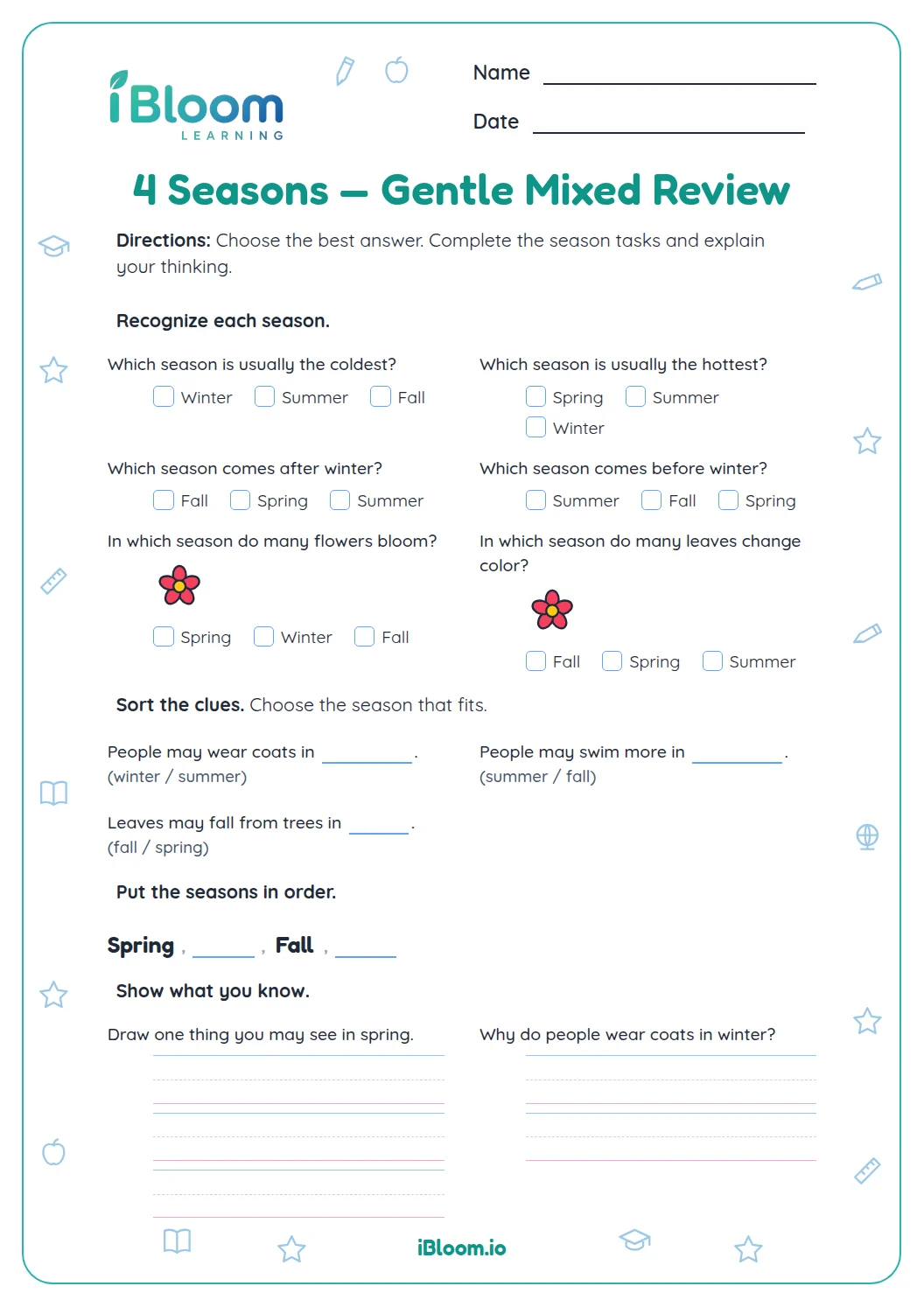
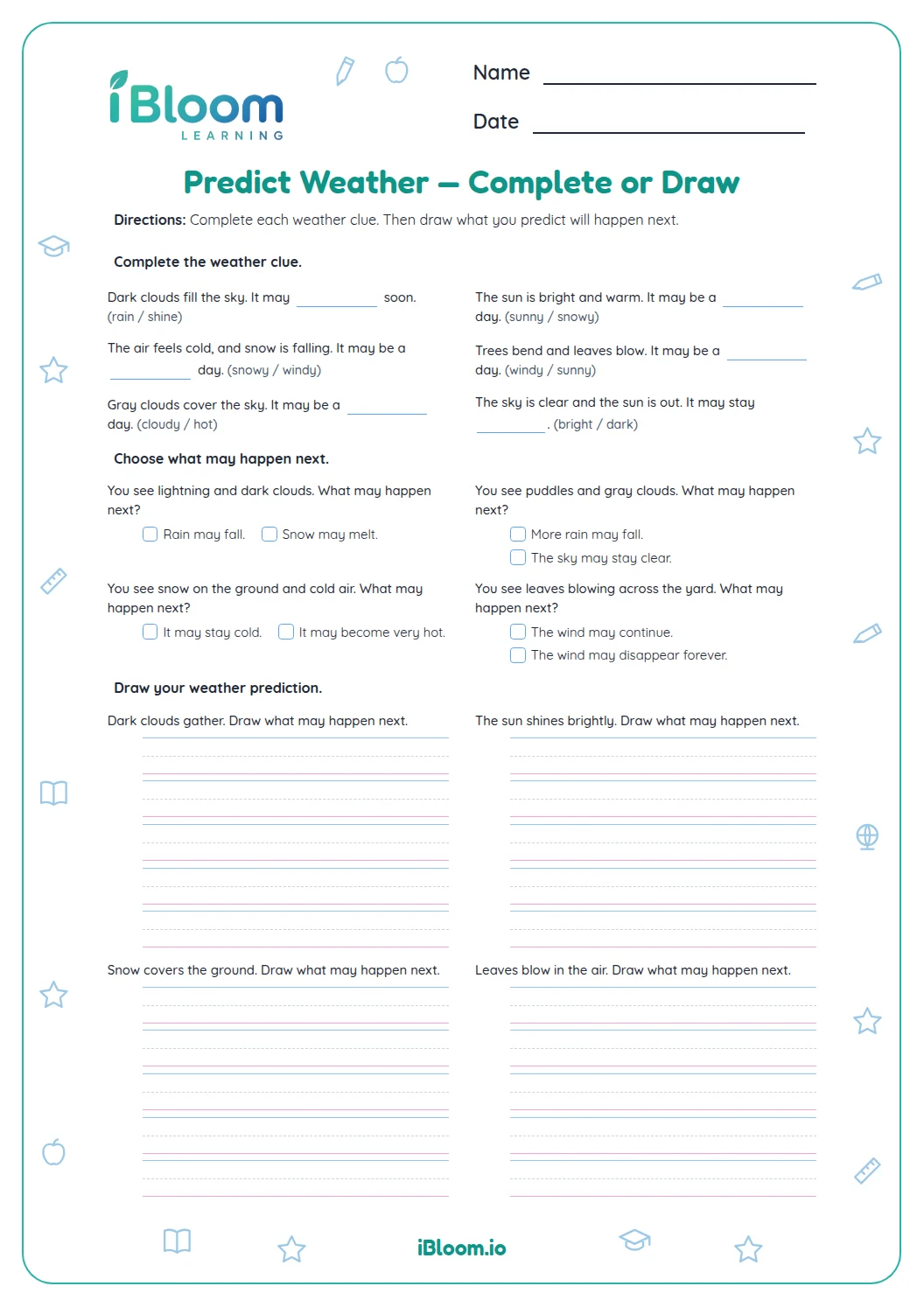
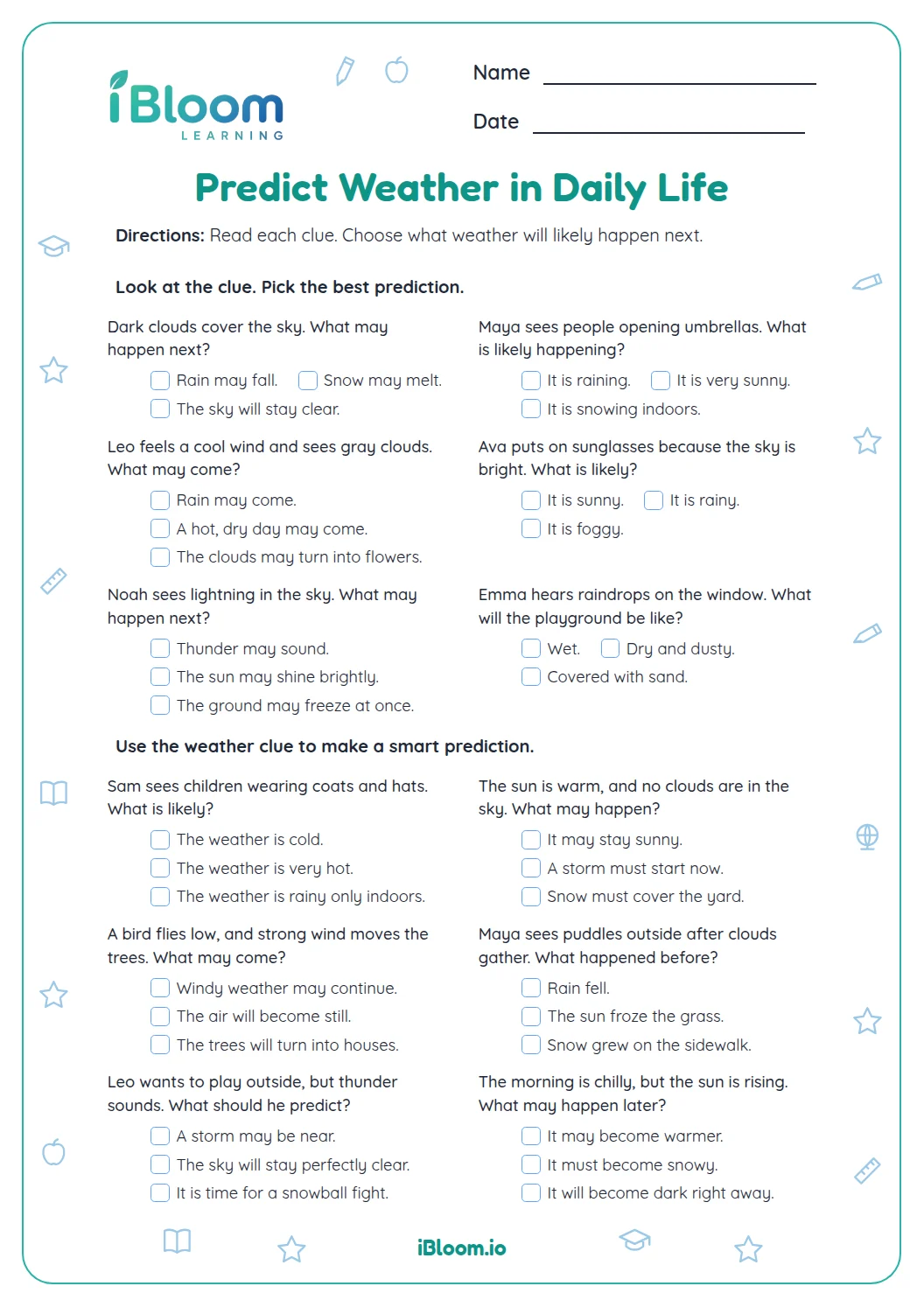
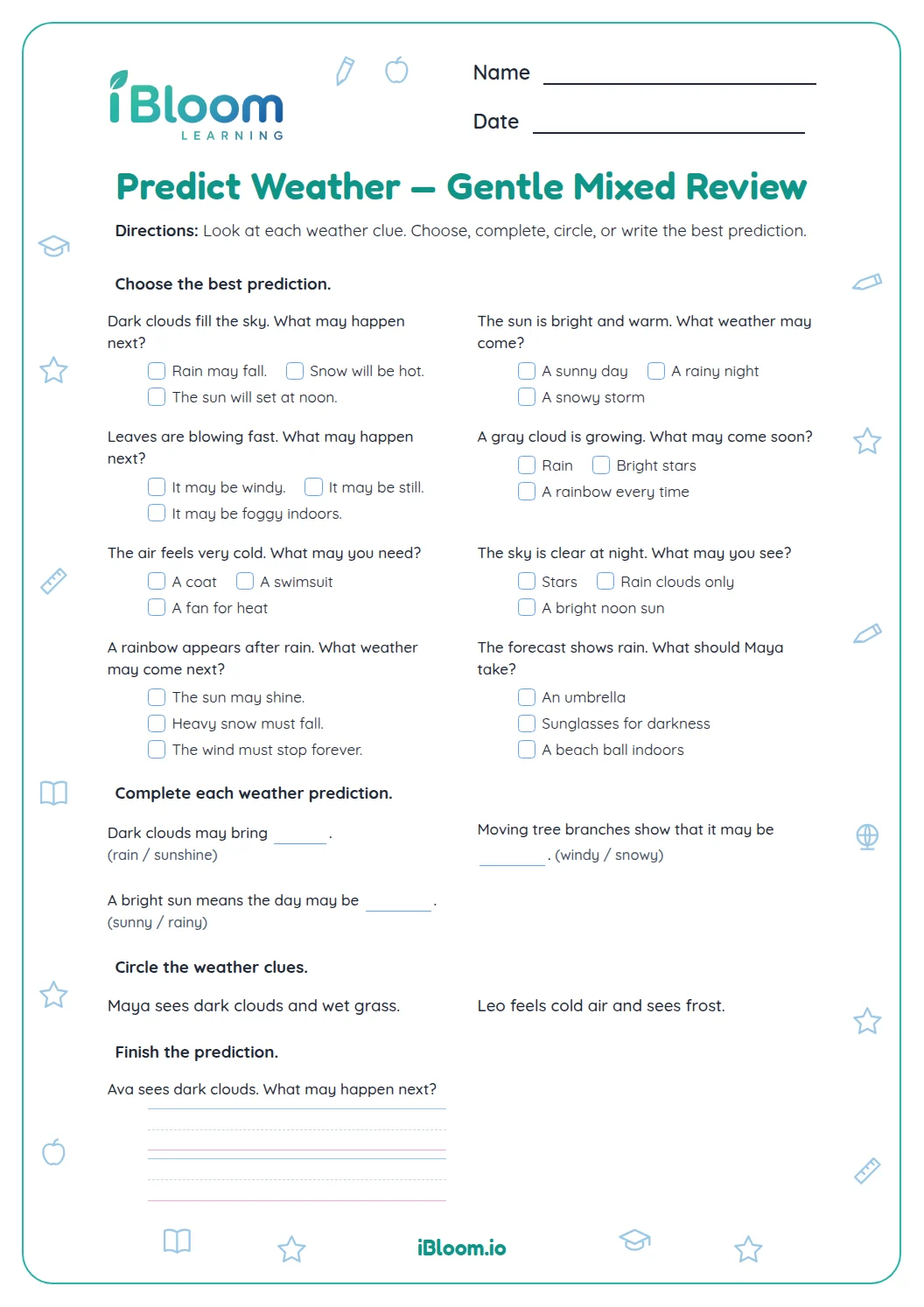
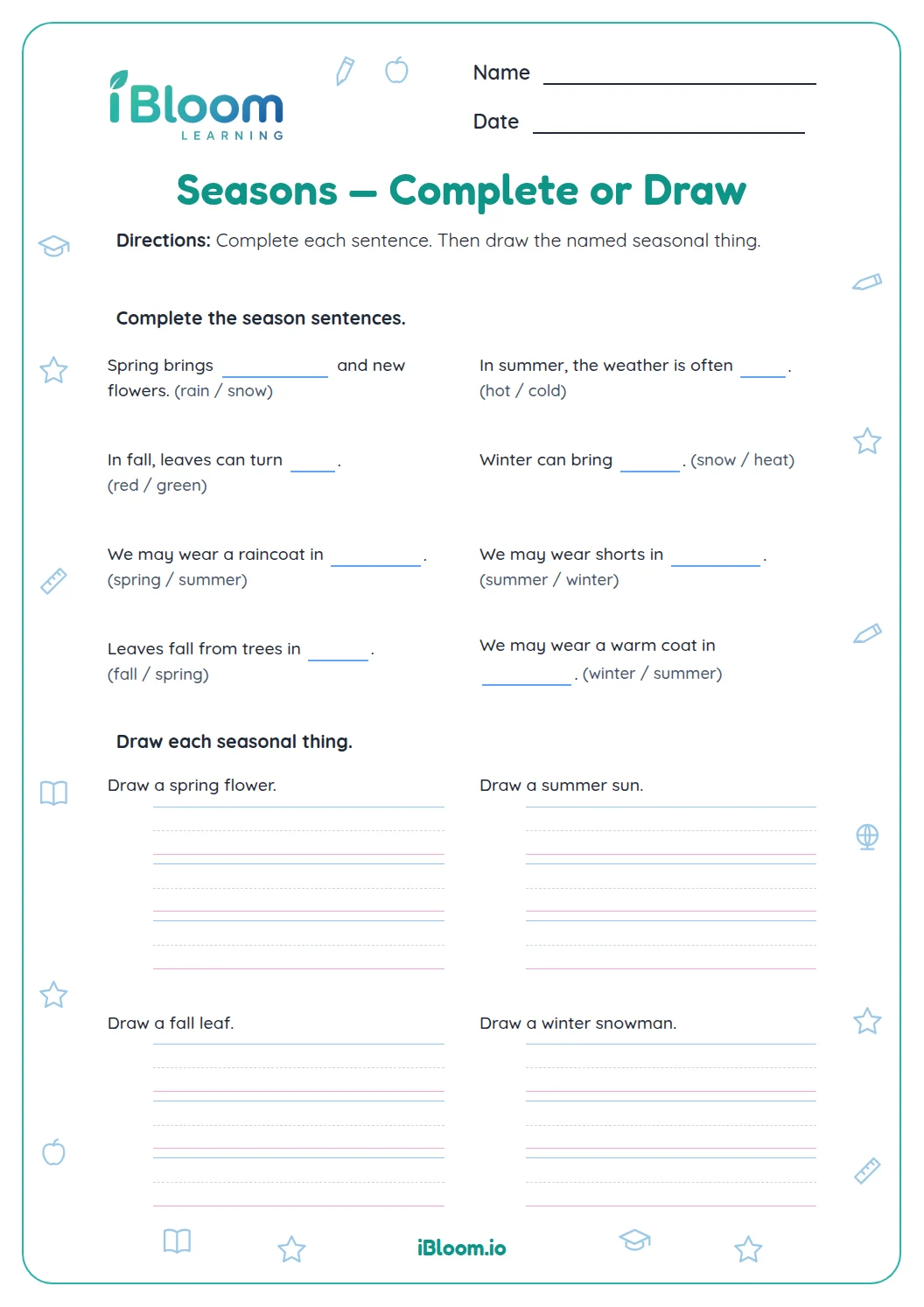
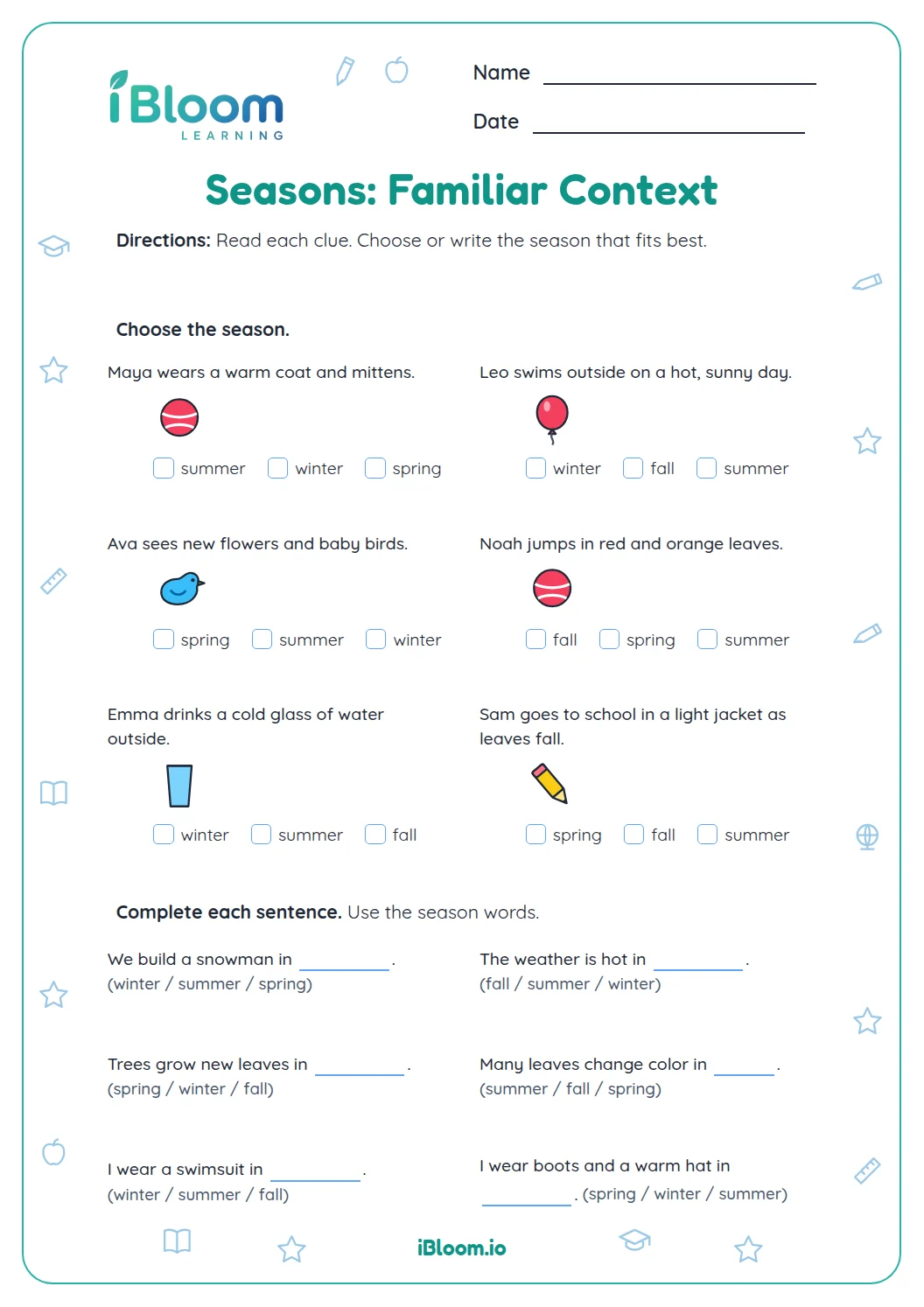
This preschool and kindergarten printable revisits the weather wheel’s purpose and the weather words children use to describe a day. Its 14 short choice questions cover rainy, sunny, snowy, and windy clues, familiar seasons, and a thermometer. The weather wheel itself is not drawn in the new sheet, so the questions use short spoken-style clues instead; an answer key is included.
What does a weather wheel record?
A weather wheel helps a child name the weather for the day, such as sunny, rainy, snowy, or windy. This review turns that idea into short clues and choices.
Which weather clues appear?
Part A matches weather words to observations. Part B connects familiar conditions to seasons and the daily weather record. Part C asks what a thermometer measures.
How can an adult guide the review?
Read each short clue aloud and let the child choose. Ask what part of the clue helped: falling flakes suggest snowy weather, while leaves blowing across a yard suggest wind.
How to use this worksheet
- 1Read one clue aloud at a time.
- 2Name the weather word that matches the observation.
- 3For a season clue, think about the change described.
- 4Remember that a wheel records weather for today.
- 5Use the answer key to check choices together.
Common slips and quick fixes
The mistake
Calling falling snow rainy weather.
The fix
Listen for the kind of precipitation: flakes are snow.
The mistake
Thinking a weather wheel predicts every future day.
The fix
Use it to record or name the weather for today.
The mistake
Mixing up a thermometer and a weather wheel.
The fix
A thermometer tells how warm or cold it is; a wheel shows a weather choice.
What to practice next
Make more practice
Questions parents and teachers ask
What is a weather wheel for?
A weather wheel helps a child identify or record the day’s weather, such as sunny, rainy, snowy, or windy. This printable reviews that idea with short questions rather than asking the child to turn a wheel. Talk about the clue and connect it to what the child has observed outdoors.
Which weather words appear in the questions?
The weather clues include rainy, sunny, snowy, and windy conditions, along with rain after which a rainbow may appear. Children use what is described in each sentence to select the matching word. Talk about the clue and connect it to what the child has observed outdoors.
Does the worksheet ask about seasons too?
Yes. Four questions connect simple clues with winter, summer, spring, or fall. The clues use familiar examples such as cold days, flowers blooming, and leaves changing color. Talk about the clue and connect it to what the child has observed outdoors.
What does a thermometer tell us?
A thermometer tells how warm or cold the air is. One question distinguishes that job from the weather wheel, which helps name or record a weather condition for the day. Talk about the clue and connect it to what the child has observed outdoors.
How should an adult use the answer key?
Read each clue aloud, let the child choose, and ask what words helped. Then use the separate key to check the response. It is fine to talk about how weather can vary by place and day while reviewing season examples.