





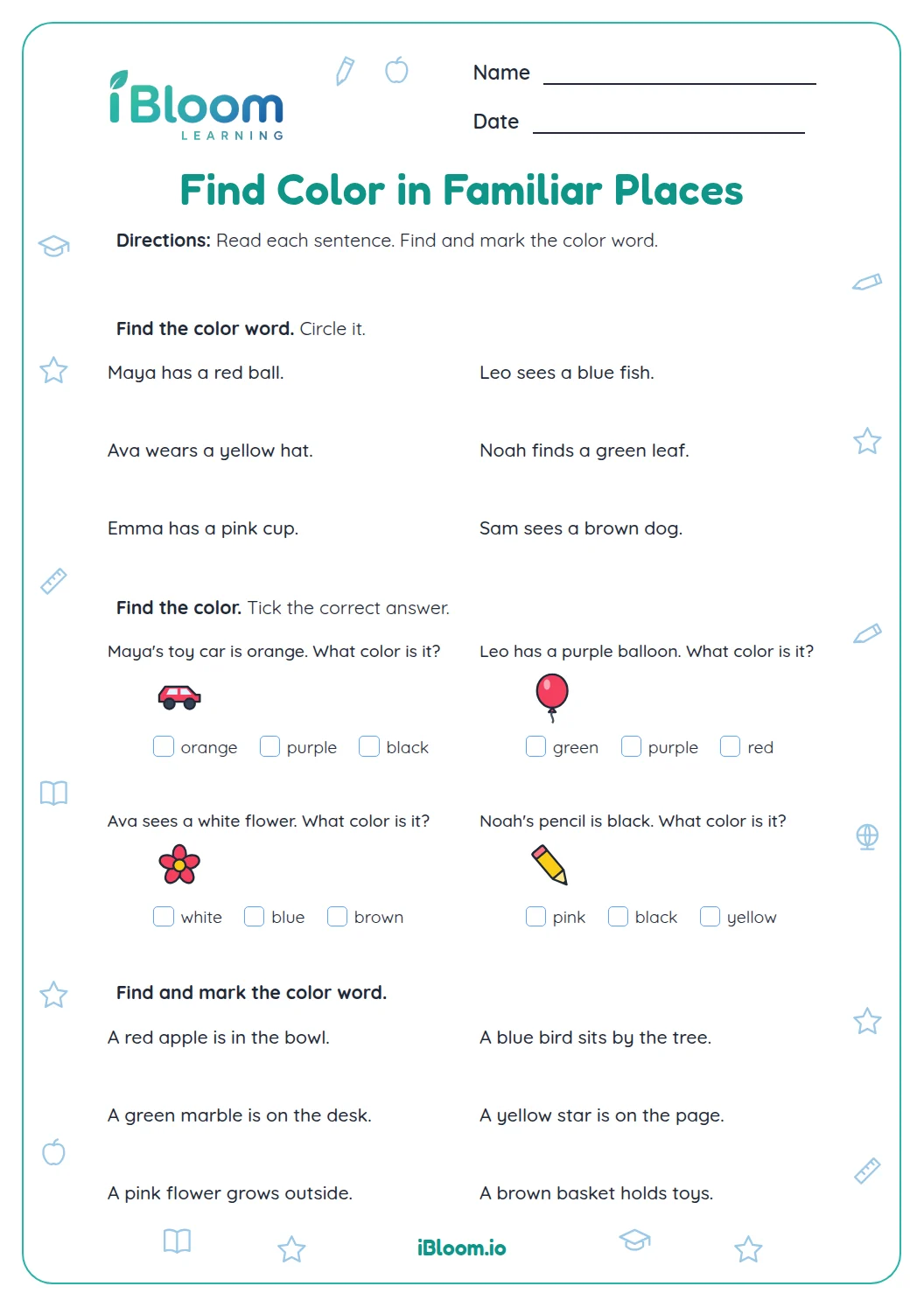
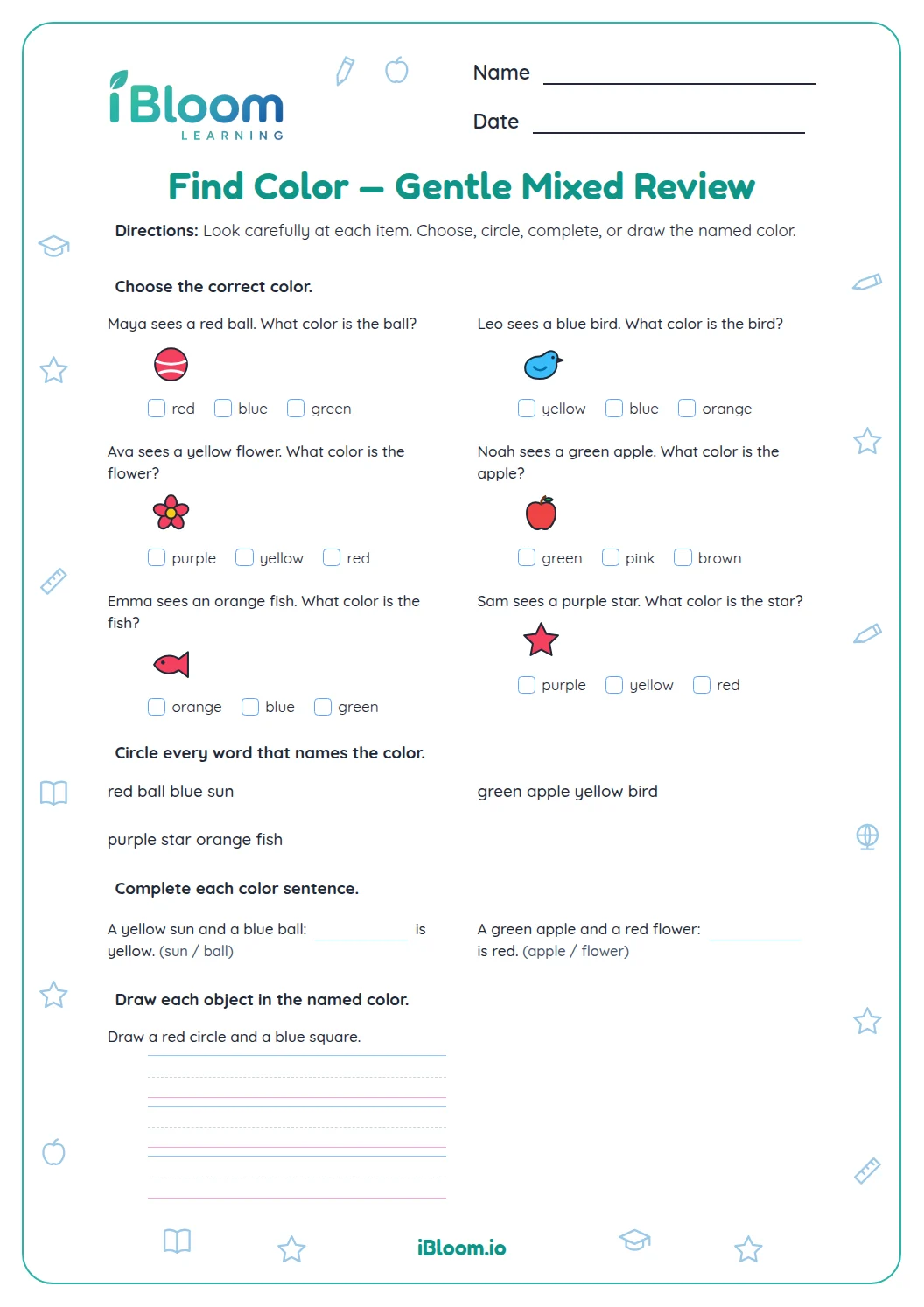
About this worksheet
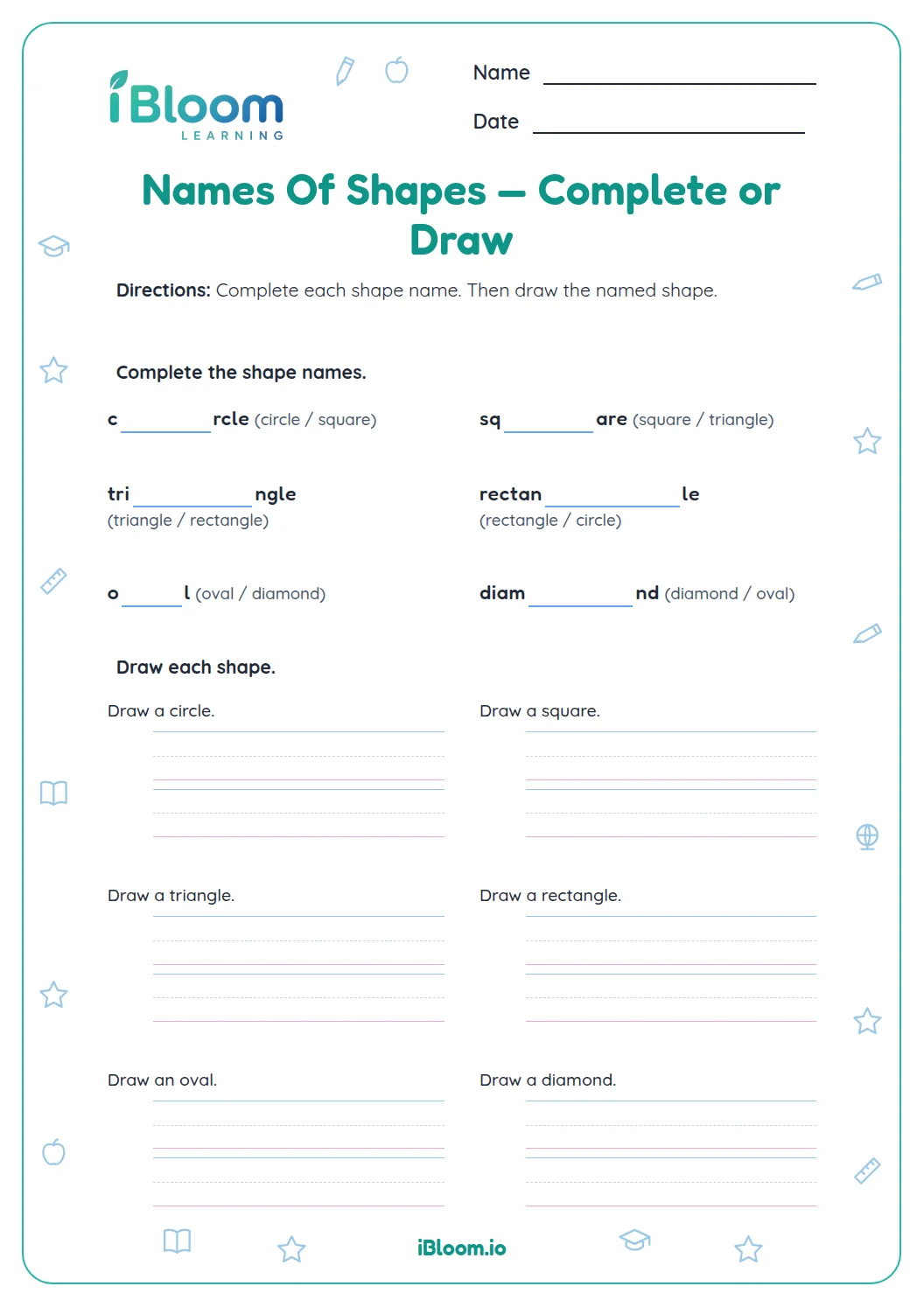
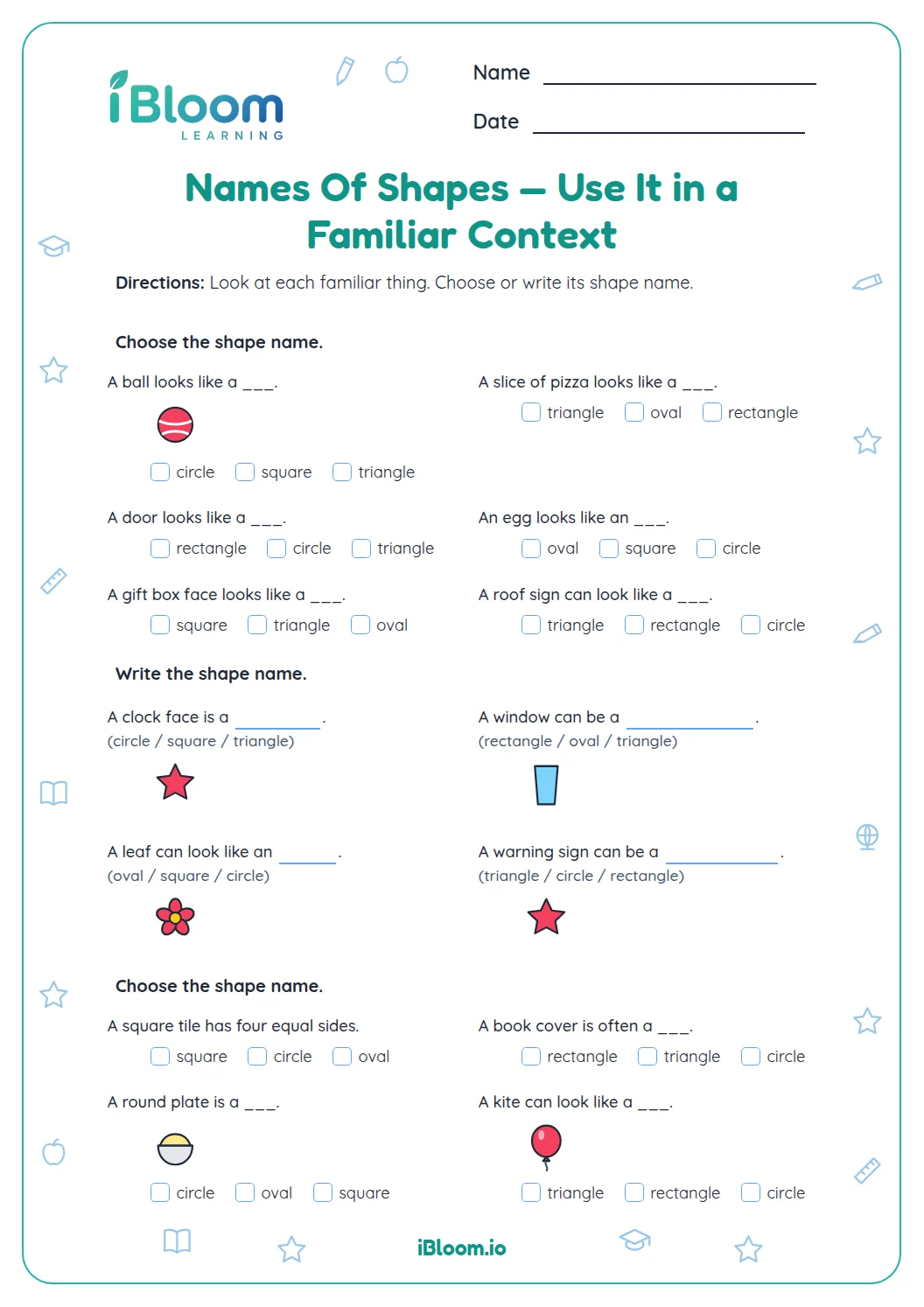
This preschool and Kindergarten printable gives children 14 chances to connect familiar objects with circles, squares, triangles, and rectangles. Children identify a shape suggested by each pictured object, then trace and name four shape outlines. The page practices naming basic shapes in varied orientations, aligned with CCSS K.G.A.2.
Aligned to K.G.A.2
How can children name shapes in any direction?
Look at the outline, not which way it points or how large it is. A triangle still has three straight sides when turned, and a square remains a square when small.
For question 3, look at the pizza slice’s three straight sides, then choose “Triangle.”
- 1Look at the three straight sides.
- 2The outline is a triangle.
- 3Choose “Triangle.”
What clues help identify each shape?
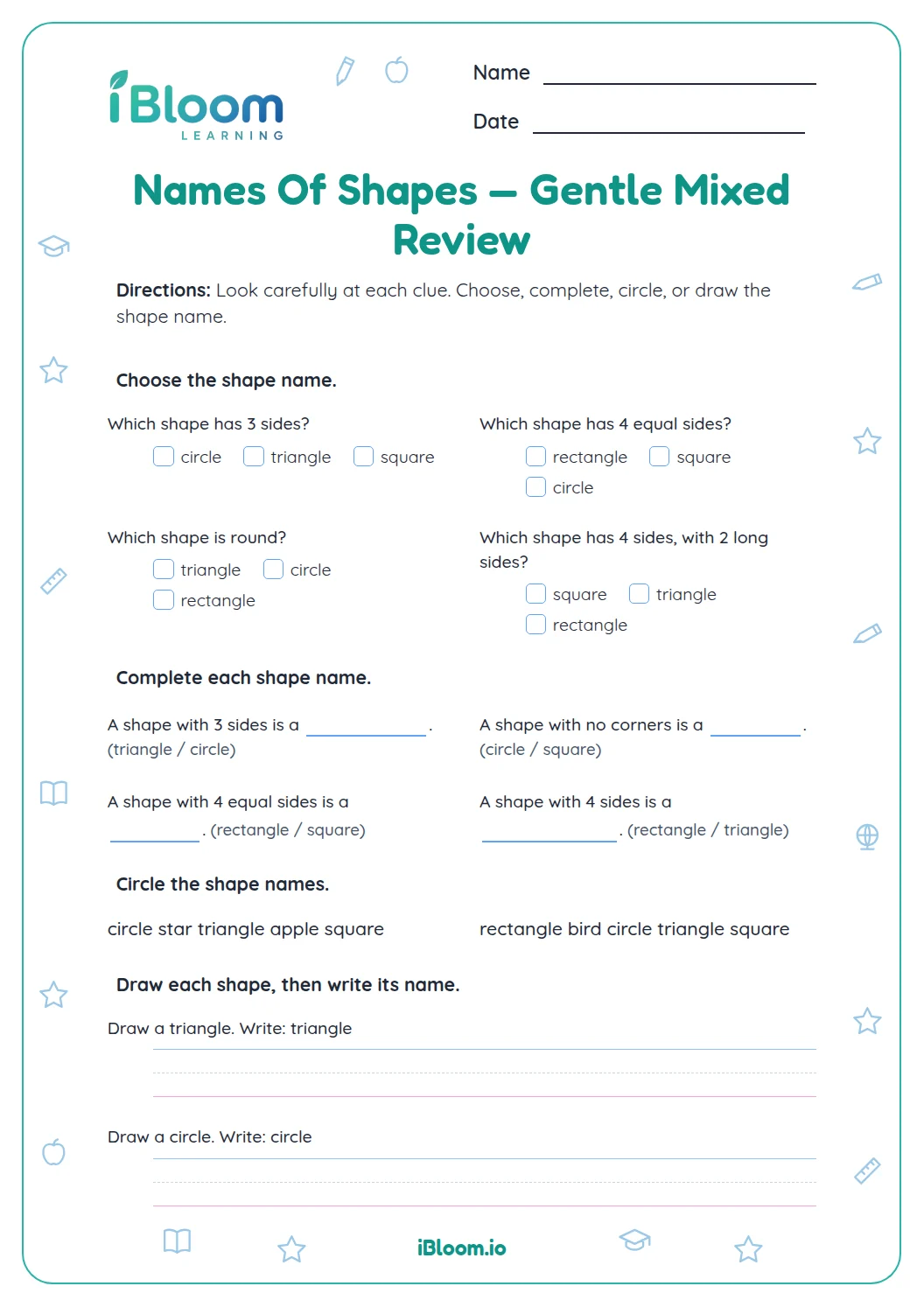
A circle has a curved edge and no corners. A triangle has three straight sides. A square and rectangle each have four corners; a square has equal sides, while a rectangle is longer in one direction.
What is on the printable?
Thirteen picture prompts ask children to name the shape suggested by each familiar object. The final item asks them to trace and name four dotted outlines.
- The first 13 prompts connect familiar objects with circle, square, triangle, or rectangle.
- The final activity traces and names four shapes.
- The answer key lists the matching shape names.
How to use this worksheet
- 1Say each shape name aloud before selecting it.
- 2Trace the outline with a finger to notice its sides.
- 3For a circle, look for a curved edge and no corners.
- 4For a triangle, count three straight sides.
- 5Check the answer key after finishing.
Common mistakes and quick fixes
The mistake
Calling every four-sided shape a square.
The fix
Check whether all four sides look equal; a rectangle is longer.
The mistake
Calling a turned triangle a different shape.
The fix
Count its three straight sides, no matter how it points.
The mistake
Counting a circle as having a side.
The fix
Trace its curved edge and notice that there are no straight sides.
Curriculum alignment
This worksheet practices the skills described in the standards below.
Name shapes in different orientations and sizes.
On this sheet: Children name basic two-dimensional shapes in varied orientations.
Show the official wordingHide the official wording
Correctly name shapes regardless of their orientations or overall size.
What to practice next
Make more practice
Further reading
Questions parents and teachers ask
How many questions are on the worksheet?
There are 14 activities across two worksheet pages. Children match familiar object clues with circle, square, triangle, or rectangle choices, then trace and name four shape outlines. A separate answer key supports review after the child finishes.
Which shapes will my child practice?
The page practices circles, squares, triangles, and rectangles. The object clues include familiar items such as a ball, window, pizza, clock, book, and door, followed by a tracing activity using the same shape names.
What happens in the tracing activity?
Children trace a dotted circle, square, triangle, and rectangle, then say each shape name. This gives them a chance to notice the outline and its corners after choosing shape names for familiar object clues.
How can I help without giving the answer?
Ask your child to name the object first, then describe its outline. They might notice that a clock face is round or that a book cover has four corners. Let them choose a shape before checking the key.
Is an answer key included?
Yes. A separate answer key shows the shape choices and identifies the shapes to trace. Children can complete the matching prompts and tracing activity first, then use the key together to review the shape names.