





About this worksheet
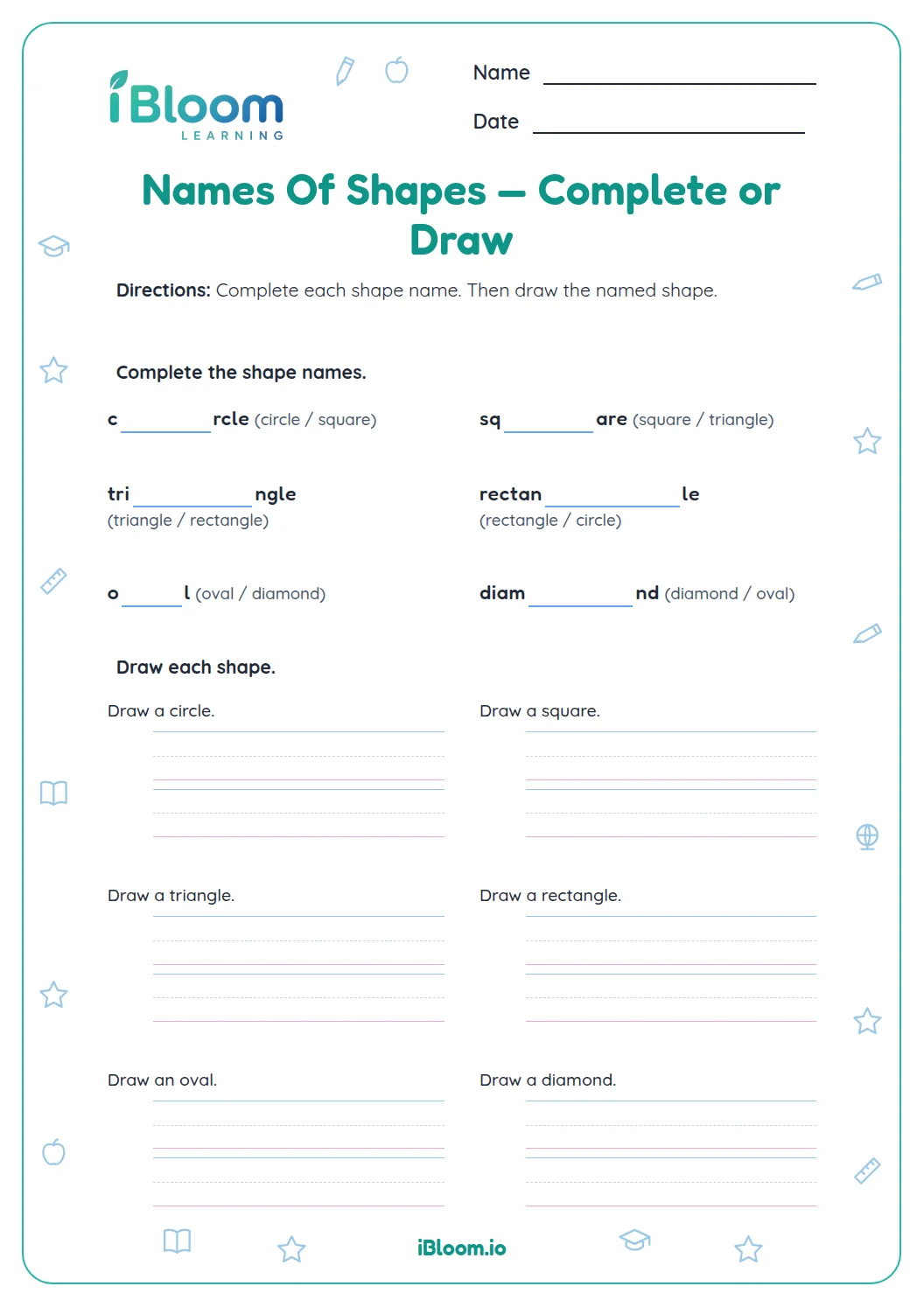
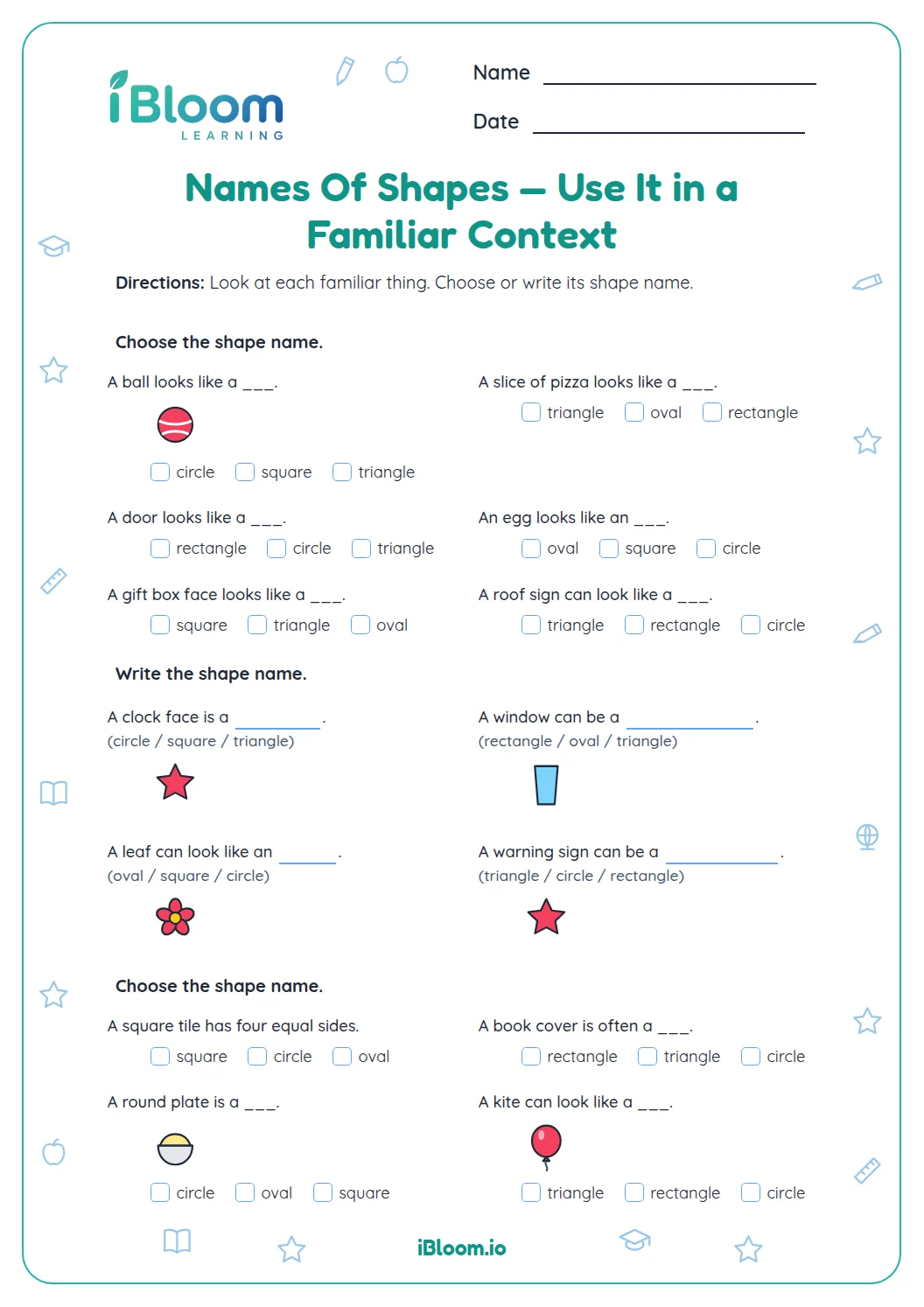
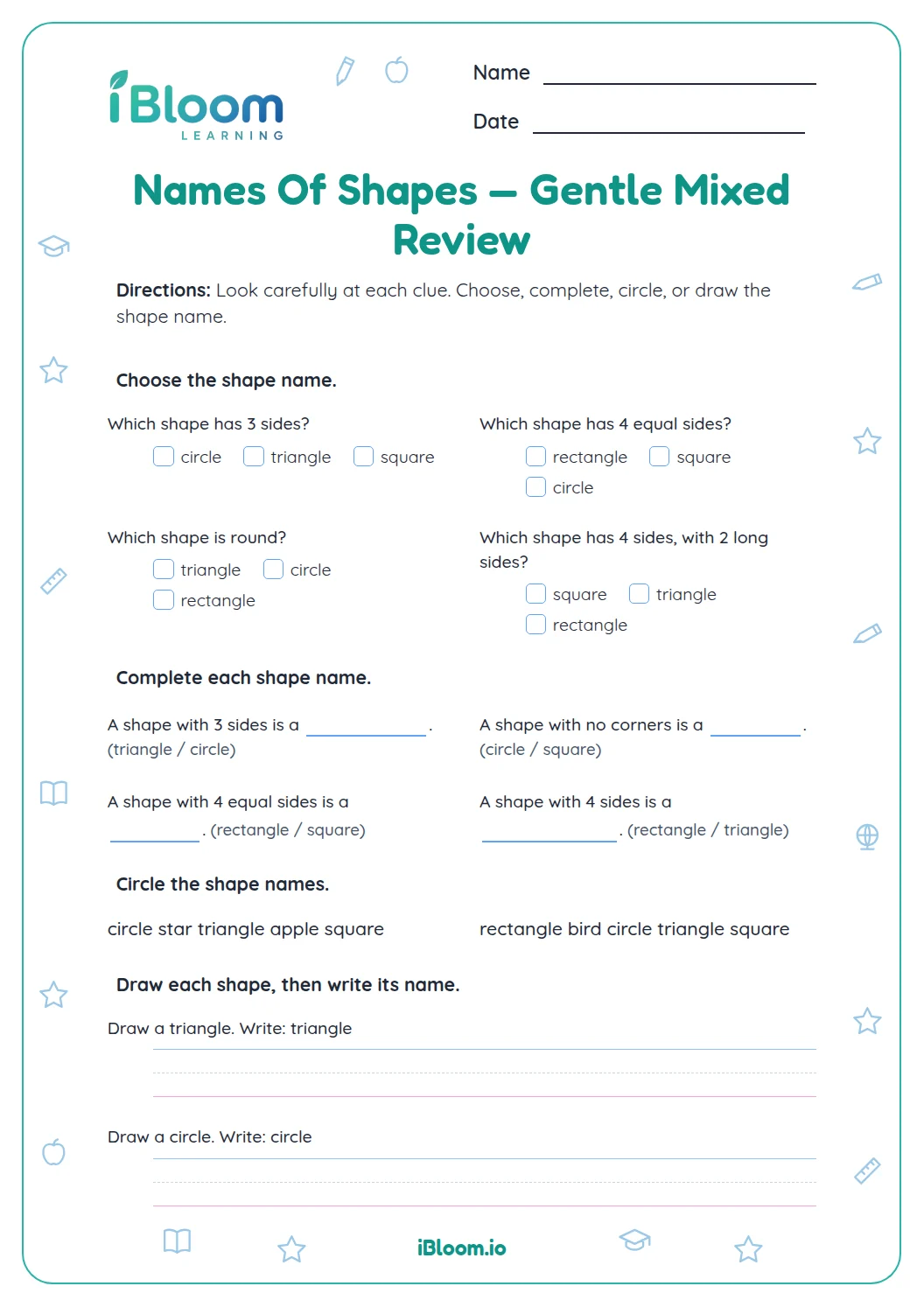
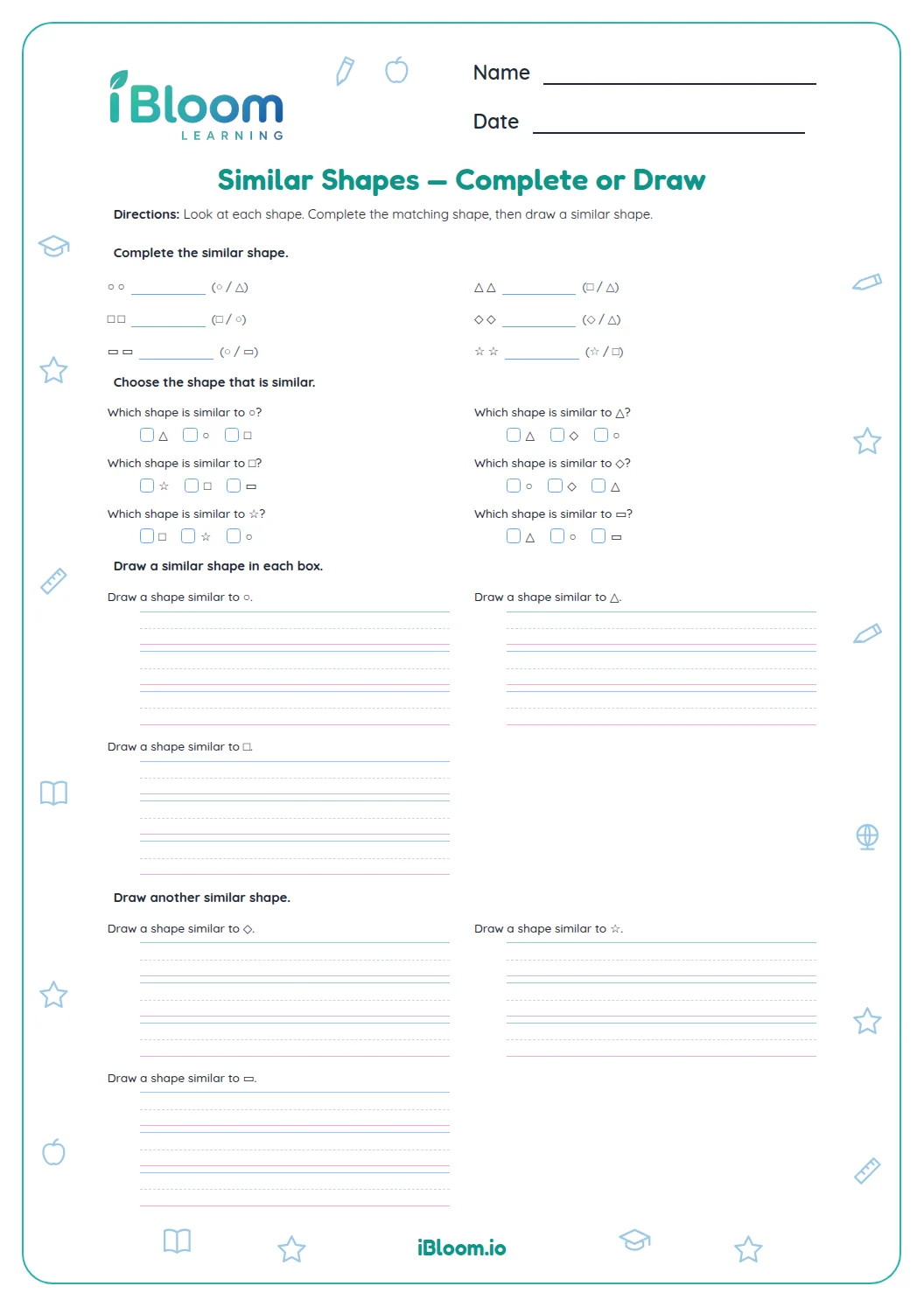
This free printable worksheet helps preschool and Kindergarten children notice flat shapes in familiar objects. Children name the shape of a clock face, a coin, a phone front and other pictured parts, then match or group objects by shape. Later questions ask them to compare shared outlines and reason about square objects. The 14 picture-supported questions connect shape names to familiar things. An adult can read each prompt aloud while the child looks, points and marks an answer. A separate answer key identifies the choices.
Aligned to K.G.A.1
Which part of an object should my child look at?
Focus on the part named in the question. A clock has hands and bells, but its face has a circular outline. A door has a handle, but its front has a rectangular outline. Point to that boundary before naming the shape.
A real object has thickness. The worksheet asks about a face, front or outline so children can connect a flat shape to something they recognize.
How do we match a picture to a shape?
Read the choices after tracing the outline with a finger. A circle curves all the way around; a rectangle has four straight sides and four square corners. The pizza slice provides a familiar triangle-like outline.
- 1Look at the clock face.
- 2Its outline curves all the way around.
- 3Choose circle.
What happens in each part?
Part A names shapes in pictured objects. Part B matches pictured objects to shape names and completes groups of objects with the same outline. Part C asks children to reason about square objects and which familiar object could have both a circle and a square shape.
How to use this worksheet
- 1Say circle, rectangle, triangle and square together before starting.
- 2Read Part A aloud and point to the exact object part named.
- 3Let the child choose one shape name for each picture.
- 4In Part B, choose matching objects, group object parts by shape, and compare a square with familiar objects.
- 5In Part C, choose an object that could have both a circle and a square shape.
Mistakes to watch for
The mistake
Choosing triangle for the clock because its hands make a point.
The fix
Trace the outside edge of the face; the outline is a circle.
The mistake
Calling the phone front a circle because of a button.
The fix
Point around the whole phone front, which looks like a rectangle.
The mistake
Choosing an object because its color matches another picture.
The fix
Cover the inside details with a finger and compare the outside outlines.
Curriculum alignment
Name the shapes of familiar objects and their flat parts.
On this sheet: Children match clock faces, coins, doors and other familiar object parts to shape names.
Show the official wordingHide the official wording
Describe objects in the environment using names of shapes, and describe the relative positions of these objects using terms such as above, below, beside, in front of, behind, and next to.
What to practice next
Make more practice
Further reading
Questions parents and teachers ask
Can I read every question aloud?
Yes, read the prompts and shape names aloud while your child studies the pictures. Part A asks for shape names; Part B asks children to choose or group objects by shape. Point to the named part without tracing its whole outline until your child has tried.
Does my child need to write shape names?
No, all 14 activities use answer choices. Your child can mark the bubbles and say shape names aloud. Ask them to name the outline or object part that supports each choice. For example, the round face of a clock supports choosing circle, while the phone front supports rectangle.
Why does the sheet ask about a face or front?
A face or front gives children one clear outline to examine. For example, a clock may have bells and hands, but its face is round. Naming the part helps children decide which boundary matters before matching it to a circle, rectangle or triangle on this sheet.
How can my child reason about objects with more than one shape?
Look for one flat part at a time. A house may have a square window and a round doorknob, so it can include both shapes. The last question asks children to choose an object that could have each shape, then name the matching parts.
What does the answer key show?
The answer key marks the correct choices for all 14 activities: shape names, object matches, shape groups, and reasoning about familiar objects. Ask your child to explain one choice by naming the flat part or outline they noticed.