






About this worksheet
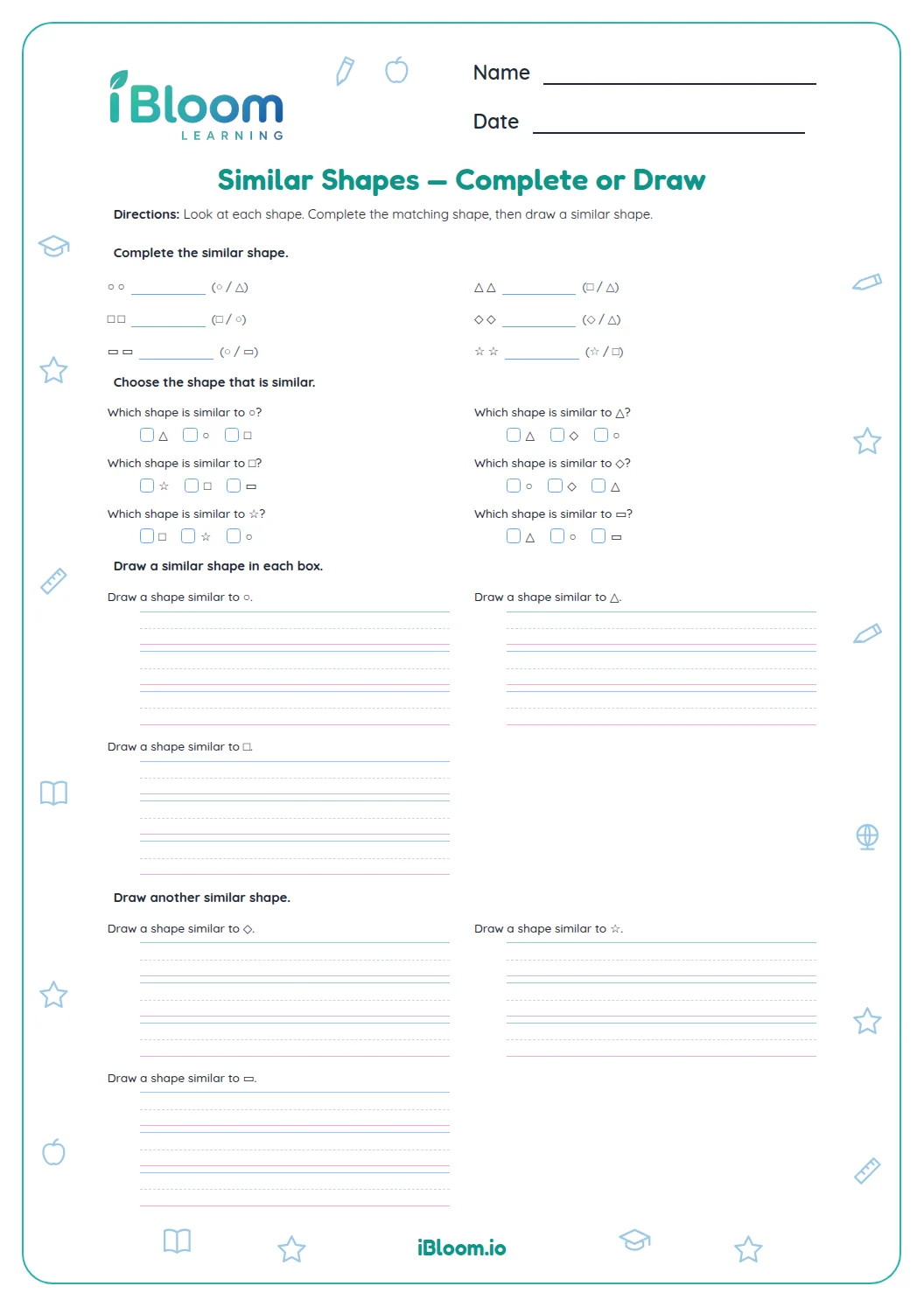
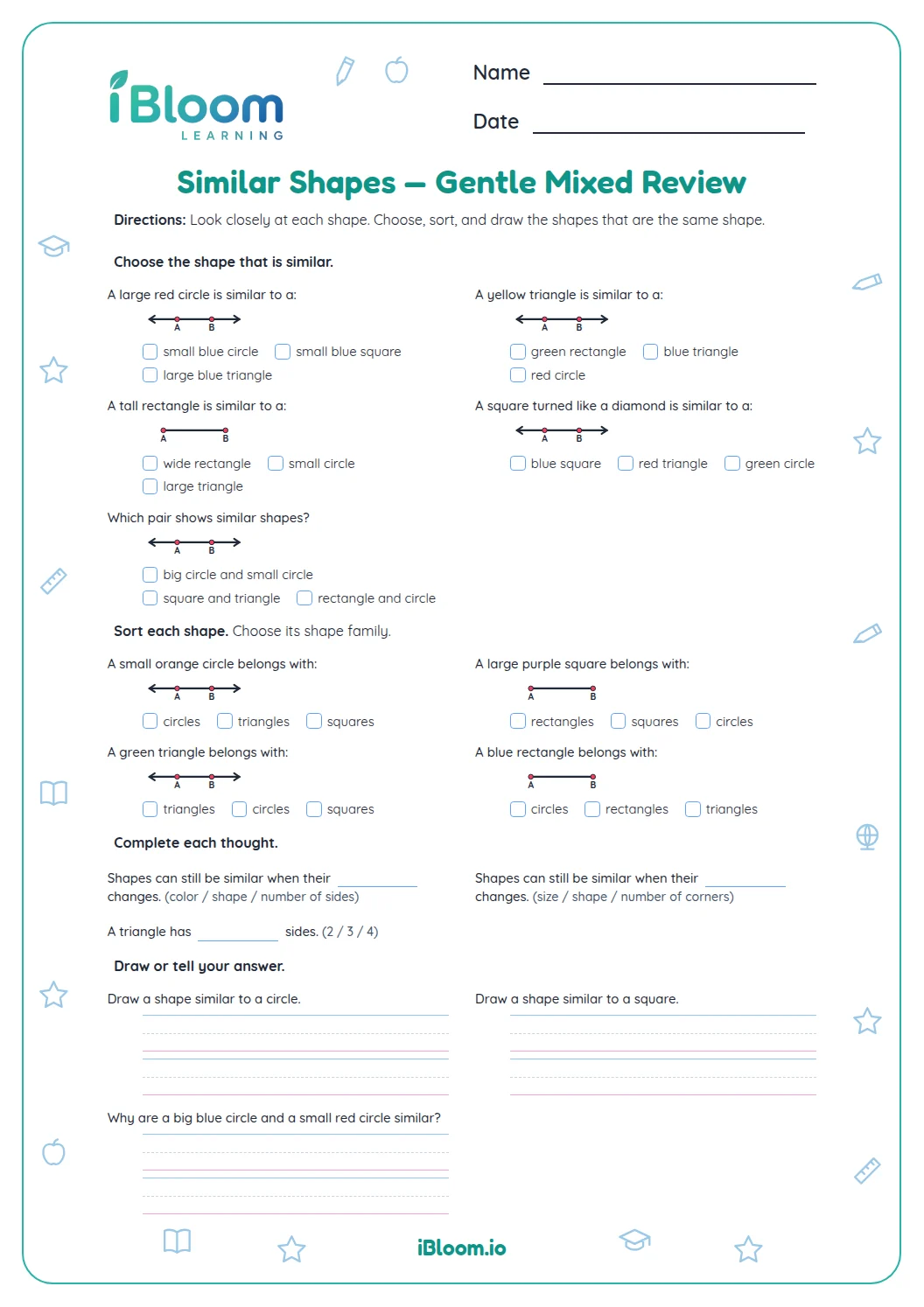
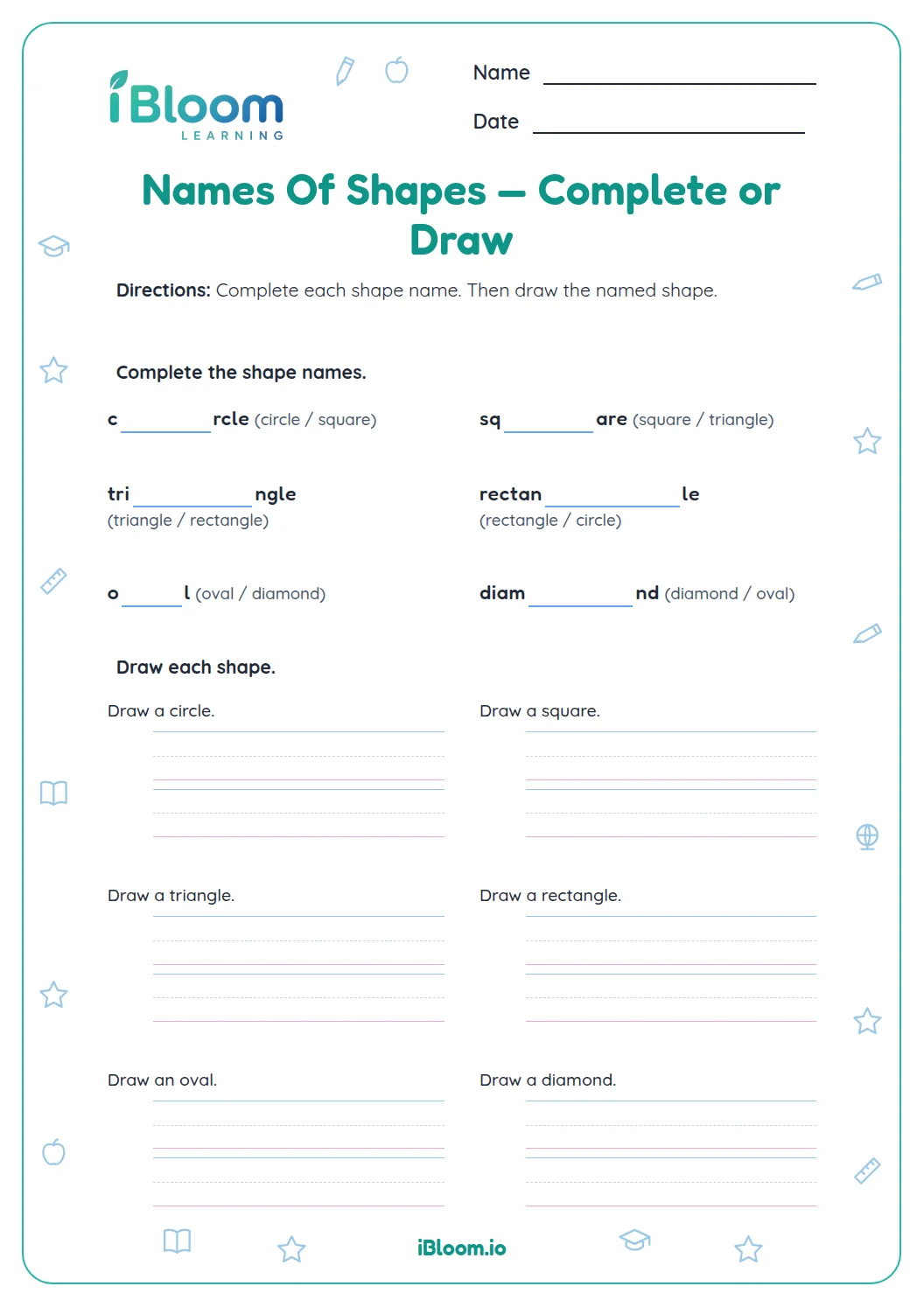
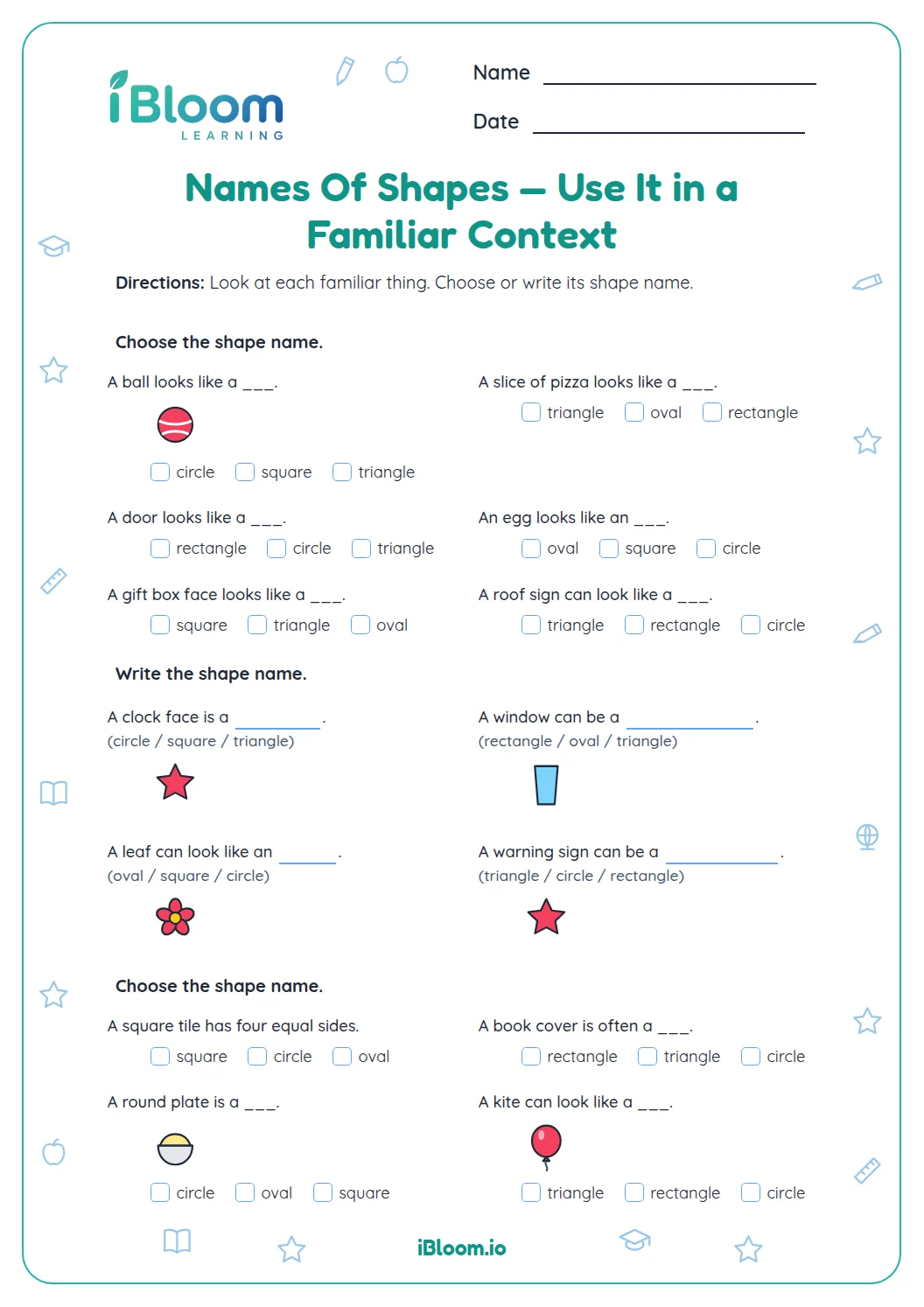
This printable worksheet gives Kindergarten learners practice with recognizing similar shapes. Learner pages move from supported examples to application, and a separate answer-key page makes checking straightforward. The questions use the skill in the same way as the original sheet, with clearer practice and enough room to work. It aligns with Common Core K.G.A.1.
Aligned to K.G.A.1
How does the worksheet practice shapes?
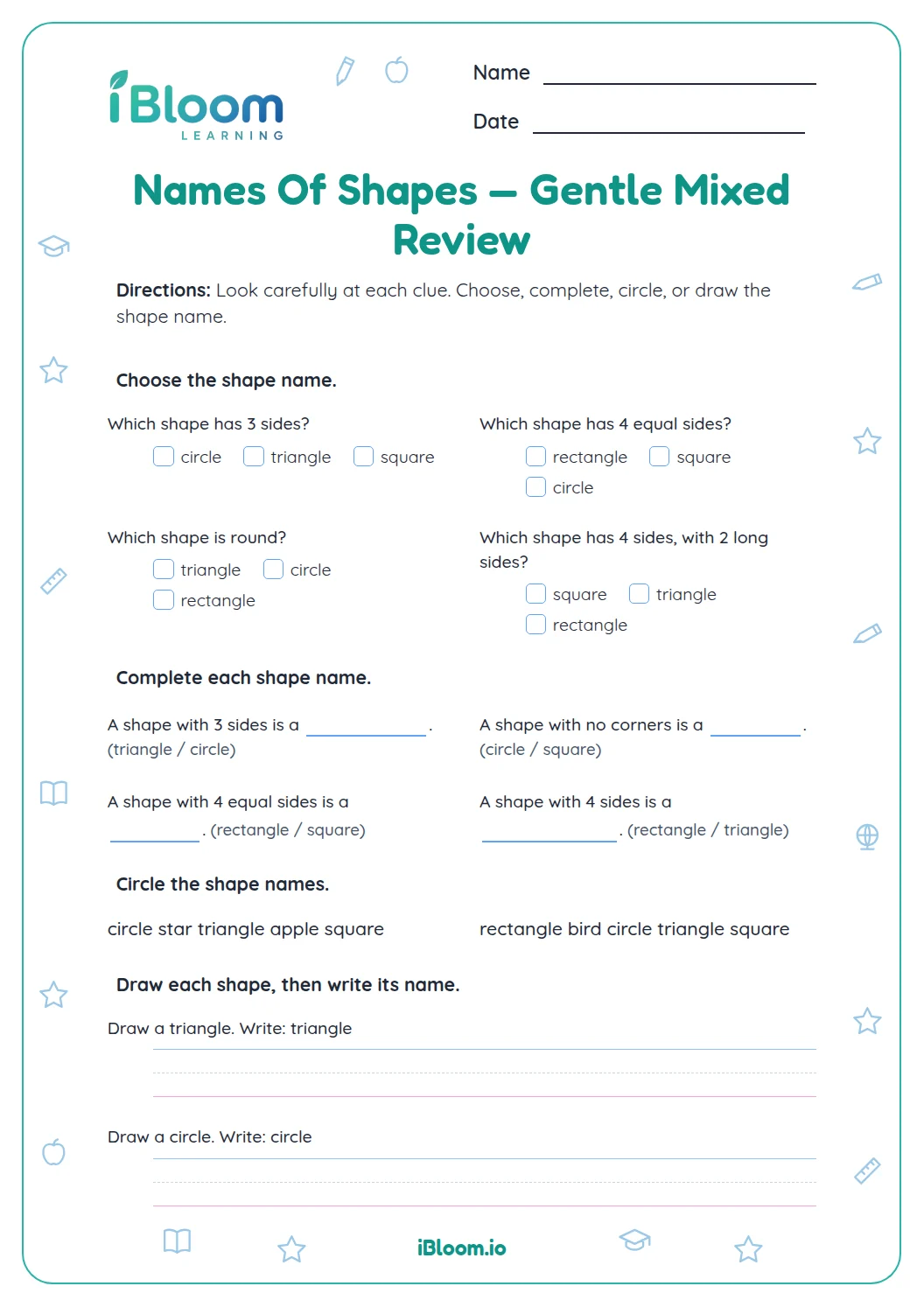
Part A starts with recognizing similar shapes. In question 1, learners see “Which shape has four corners?” and give “circle.” Later parts ask them to use the same idea with a new format or situation.
- 1Which shape has four corners?
- 2Answer: circle.
How can a learner check an answer?
Ask the learner to name the clue or operation that supports the answer. For recognizing similar shapes, a short explanation can make the reasoning easier to review.
How should we use the answer key?
Complete a section before checking it. If an answer differs, return to the question and work through the clue or calculation together.
How to use this worksheet
- 1Read the direction for each part of the 15-question sheet.
- 2Work through the recognizing similar shapes in order.
- 3Show a short calculation or point to the detail that supports an answer.
- 4Complete all worksheet practice before opening the answer key.
- 5Revisit missed questions and explain the corrected answer.
Common mistakes and quick fixes
The mistake
Calling a shape different because its color changed.
The fix
Compare the shape itself, not its color.
The mistake
Thinking a turned triangle is a new shape.
The fix
Turn it mentally and compare its sides and corners.
The mistake
Choosing an object by color instead of outline.
The fix
Look at the object’s overall shape.
Common Core alignment
The questions practice the following Common Core goal.
A shape stays the same when its color, size, or direction changes.
On this sheet:
Show the official wordingHide the official wording
Describe objects in the environment using names of shapes, and describe the relative positions of these objects using terms such as above, below, beside, in front of, behind, and next to.
What to practice next
Make more practice
Further reading
Questions parents and teachers ask
What will learners practice?
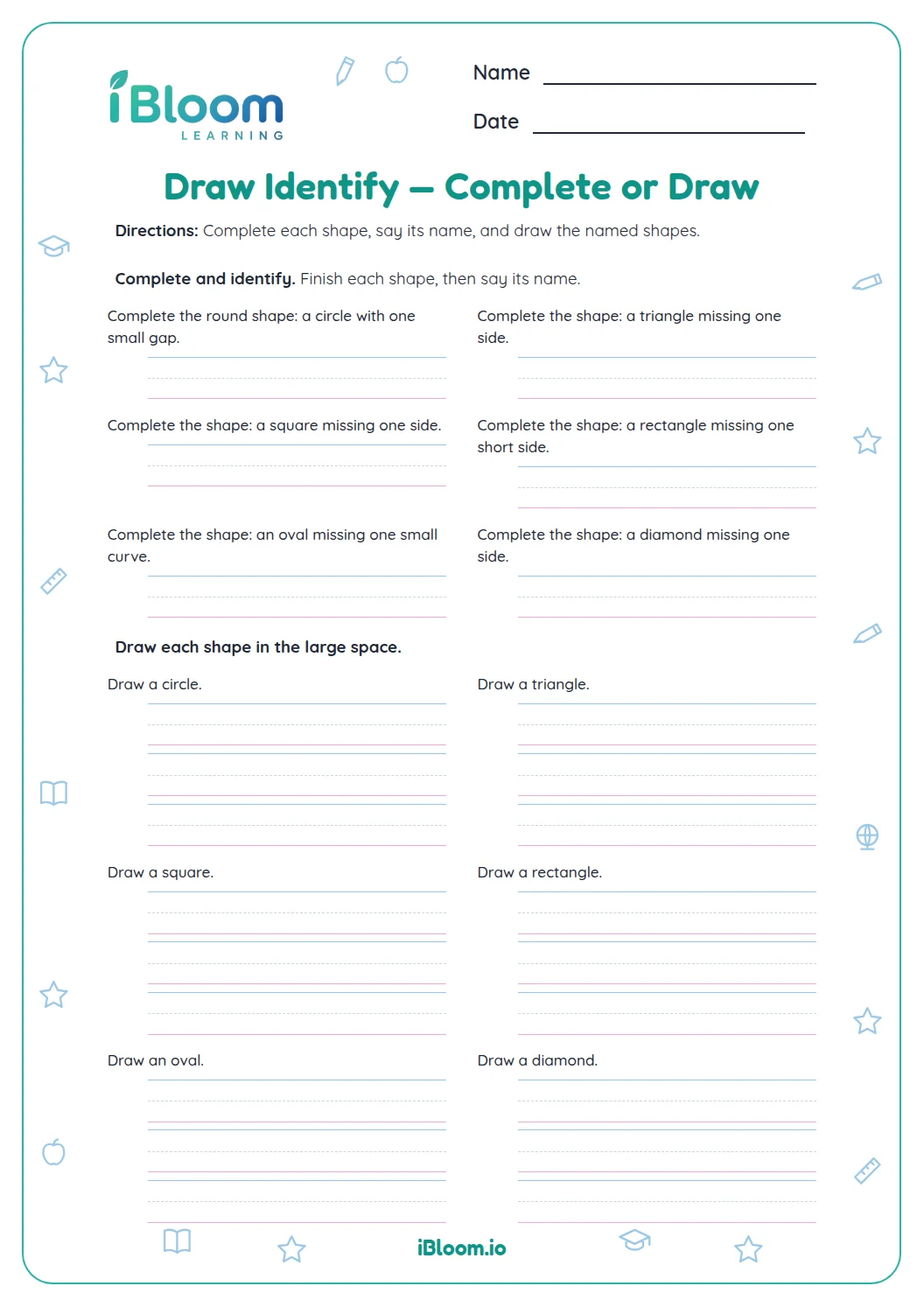
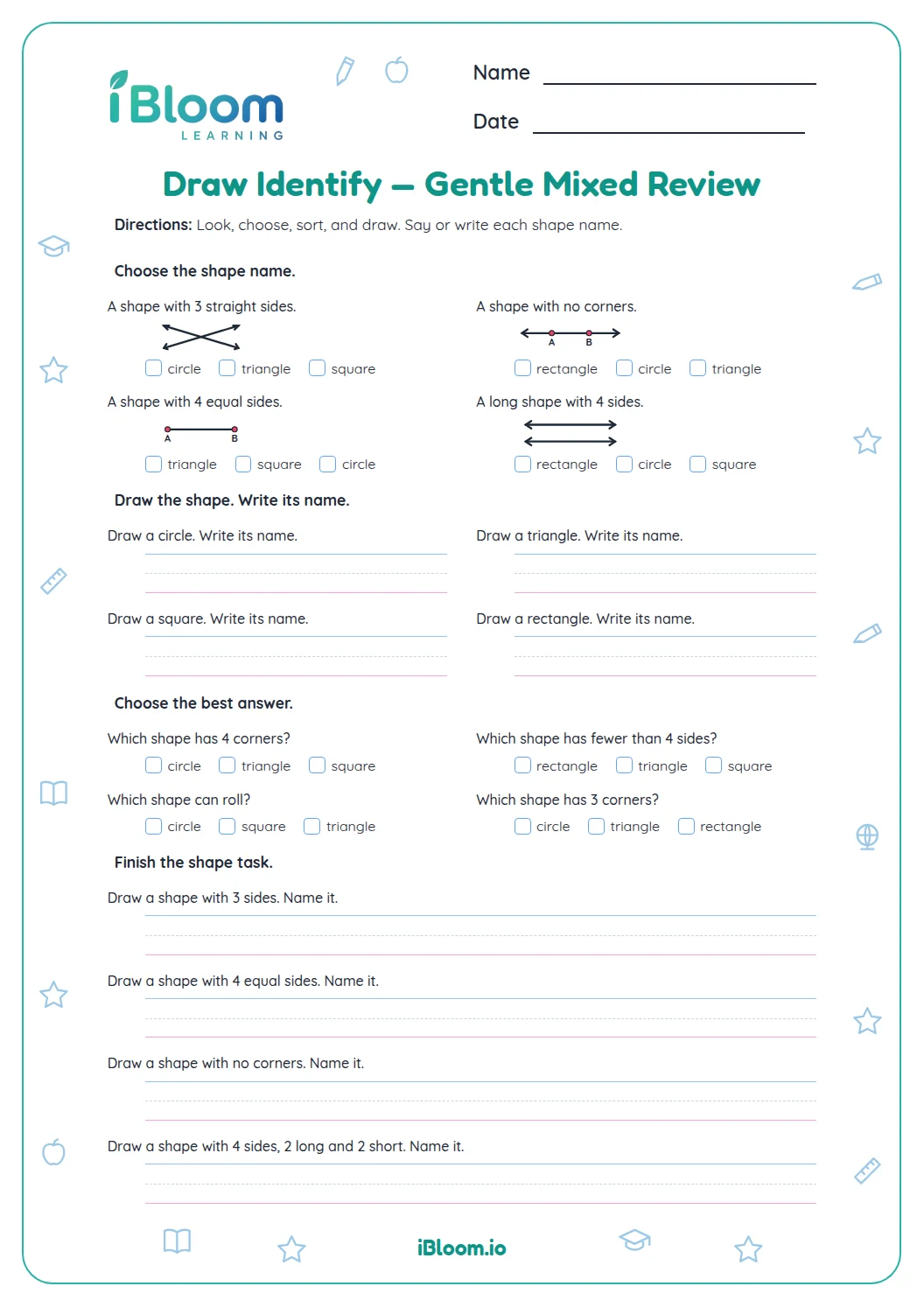
This worksheet provides 15 questions on recognizing shapes across familiar objects and changes in appearance. Learners work through the two printable practice pages, then use the separate answer key to check each response and revisit any missed item. This gives families a clear way to review the skill together after the learner has had time to think.
Is an answer key included?
Yes. A separate page follows the worksheet pages. It lists the correct response for each item and includes a sample when a short written answer may use different wording. This gives families a clear way to review the skill together after the learner has had time to think.
How can I help without giving away an answer?
Ask the learner to point to the useful clue and explain the step they chose. For recognizing similar shapes, a brief explanation helps you see whether they understand how the answer follows from the question. This gives families a clear way to review the skill together after the learner has had time to think.
How long should this take?
Plan for about 15 minutes, with extra time if you pause to discuss a strategy. Learners can finish one worksheet page at a time and check the key after completing both pages. This gives families a clear way to review the skill together after the learner has had time to think.
Can the worksheet be used for independent practice?
Yes. The directions are printed on the sheet, and the questions build through recognizing similar shapes. An adult can review the answer key afterward and talk through any item that needs another try. This gives families a clear way to review the skill together after the learner has had time to think.