




About this worksheet
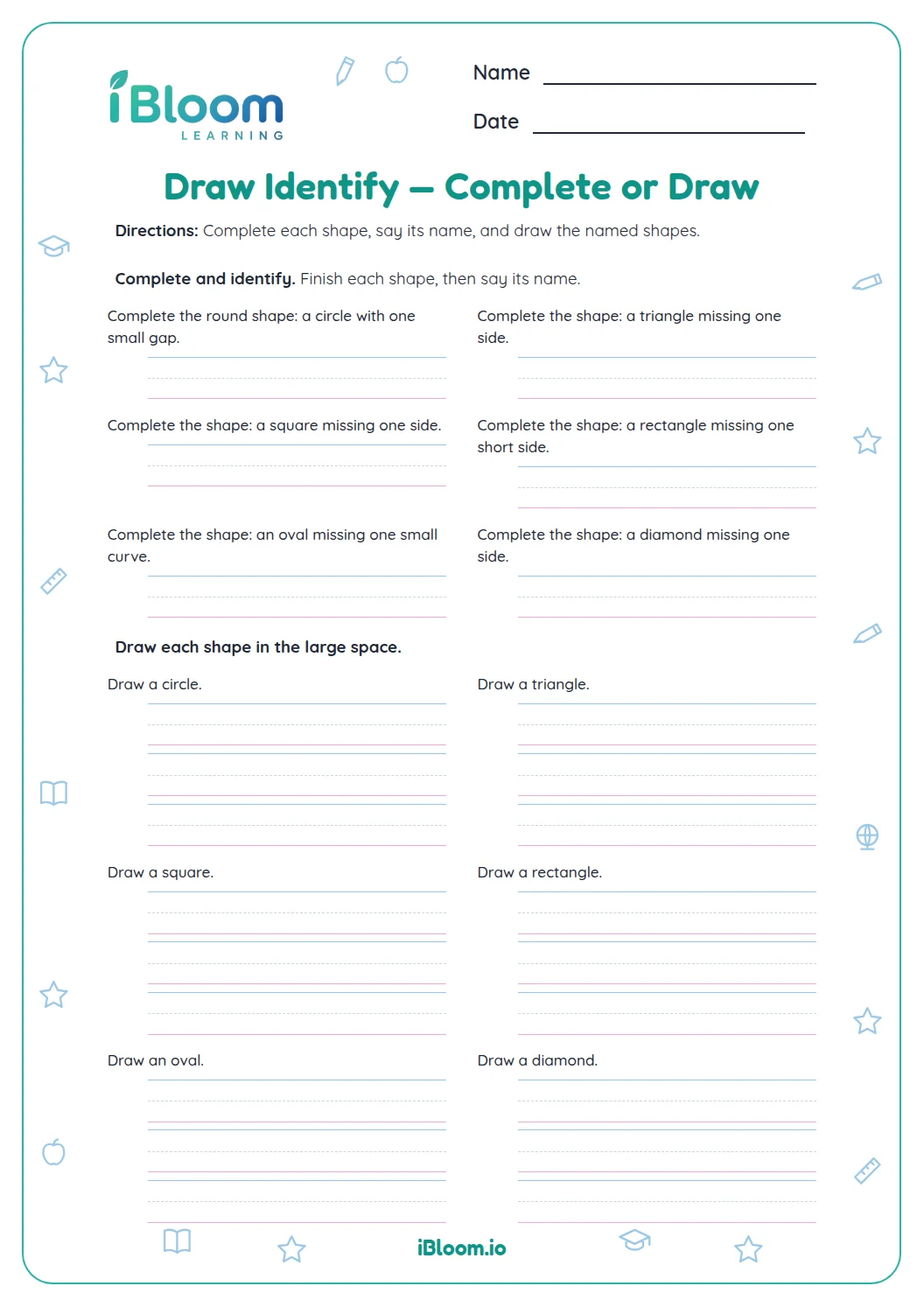
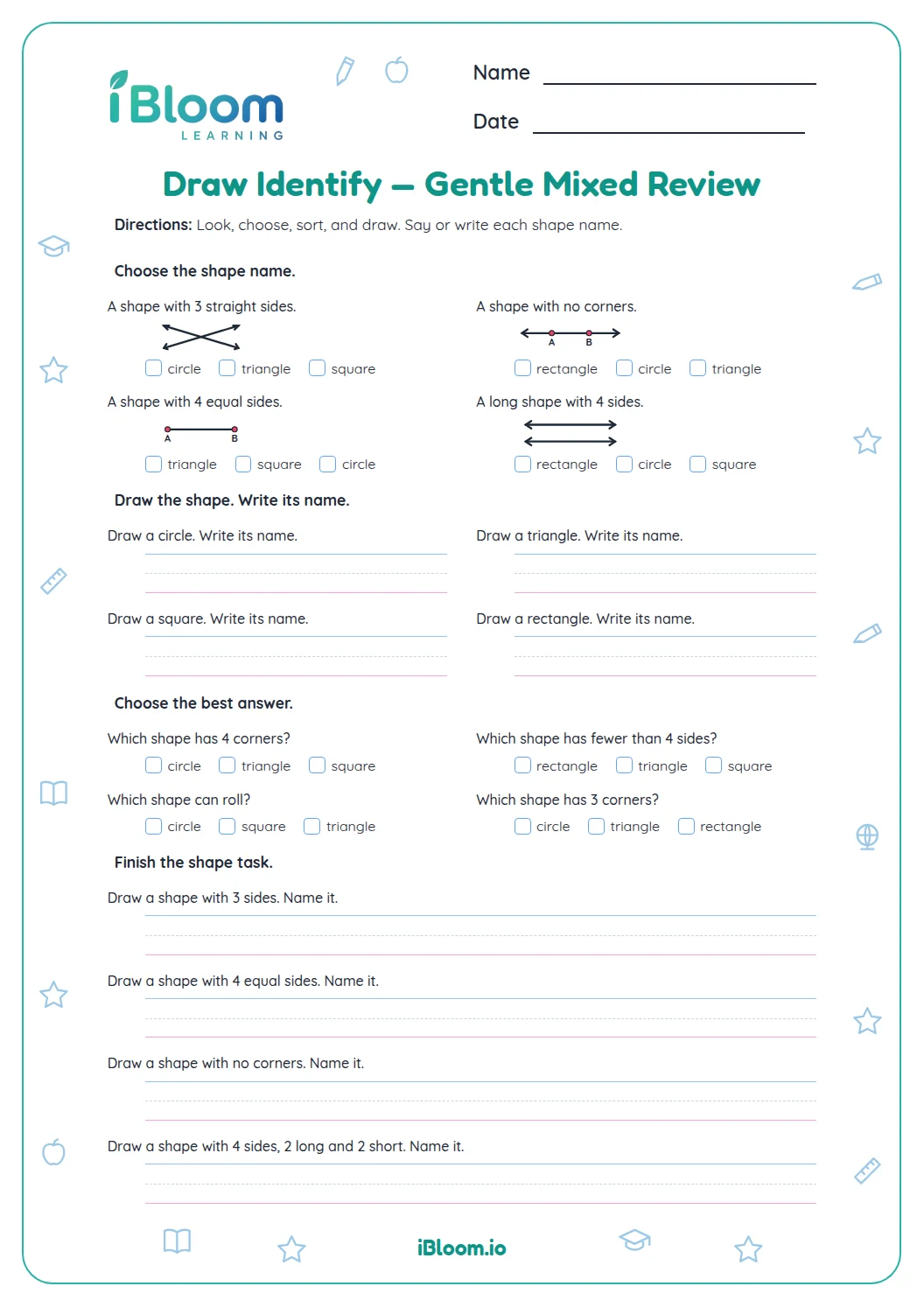
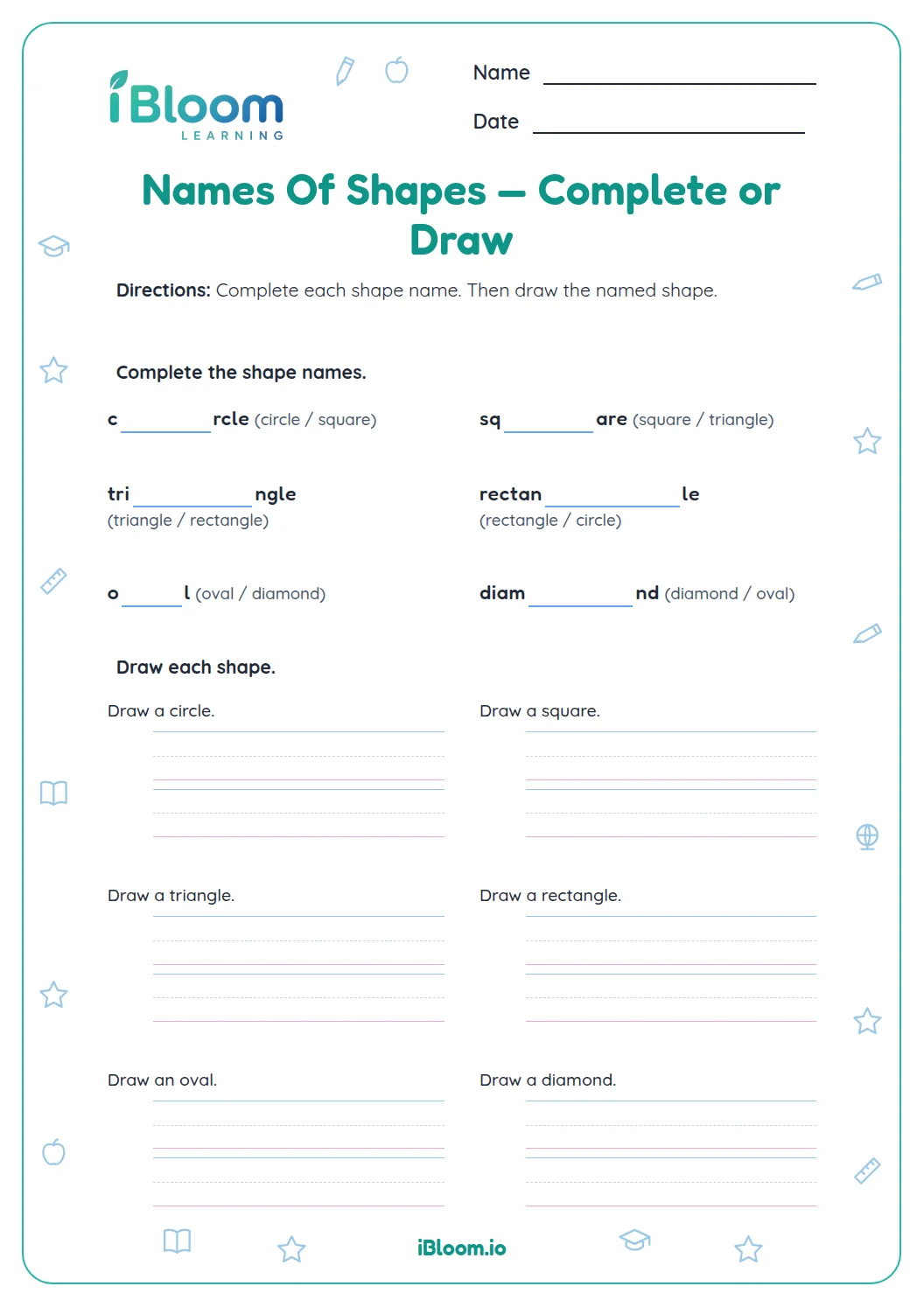
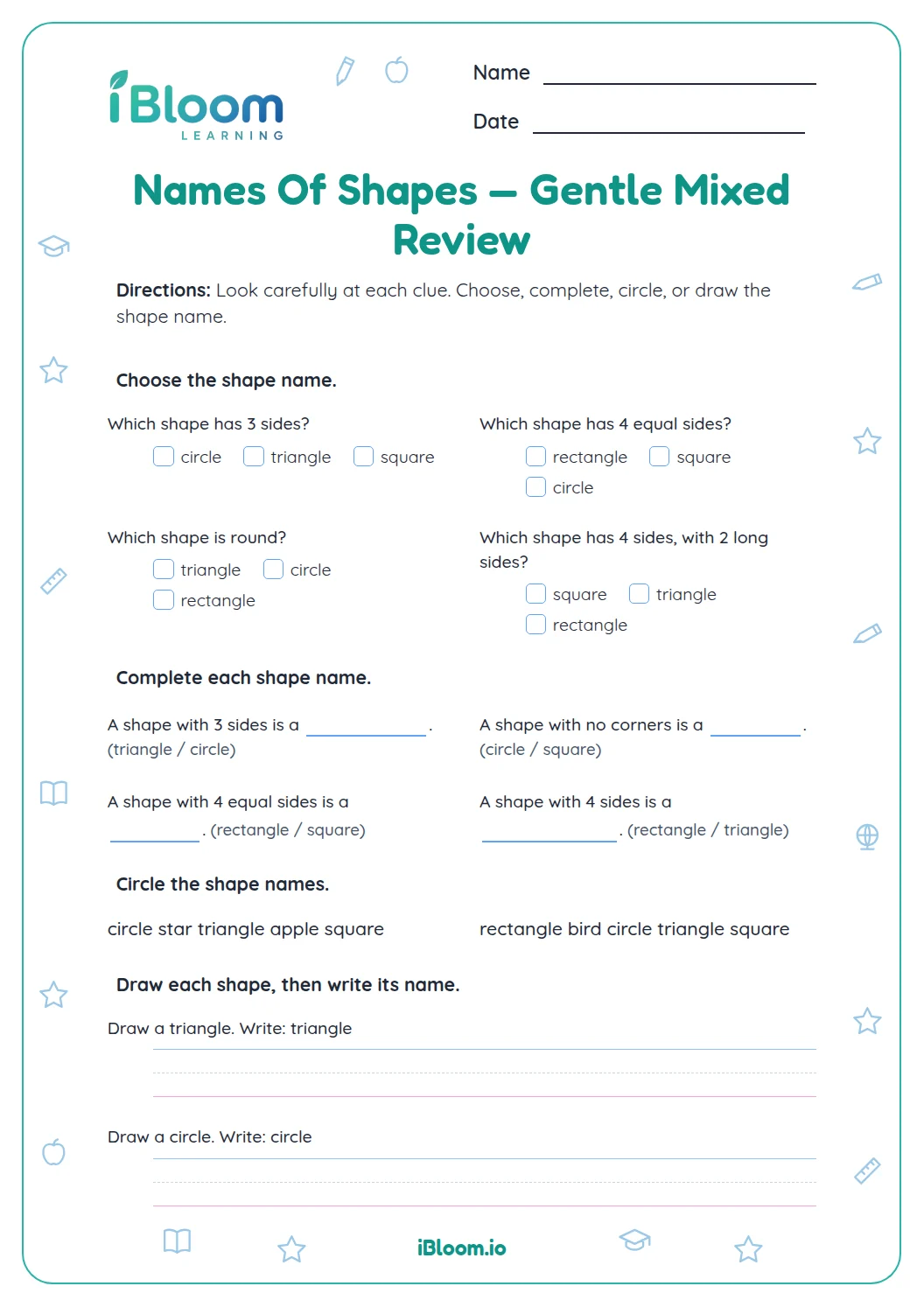
This printable gives preschool and kindergarten children practice recognizing circles, squares, triangles, rectangles, and ovals. Children name pictured shapes, connect familiar objects to a shape, trace dotted outlines, and draw shapes in simple settings. The page uses clear shape pictures so early learners can point, say the name, or work with a grown-up.
How do children name a shape?
Look at the outline and notice its sides or curve. A triangle has three straight sides; a circle is round with no corners.
- 1Look at the shape in question 11.
- 2It has three straight sides.
- 3Its name is triangle.
How can a familiar object help?
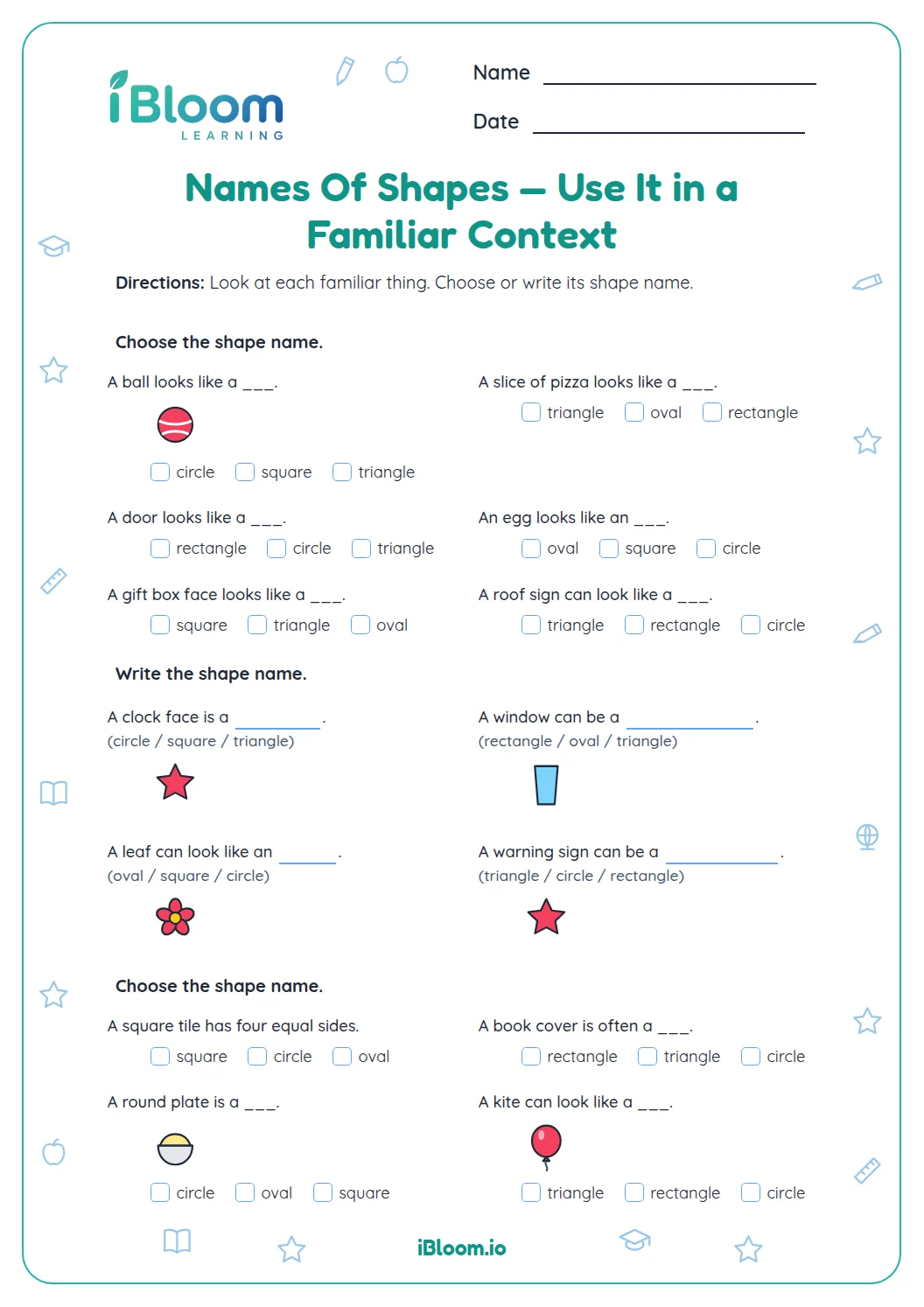
An object can remind a child of a shape. A clock face may look like a circle, and a book cover may look like a rectangle. Compare the main outline with the shape choices.
What happens on the worksheet?
Children match familiar objects to shape choices, name individual shape drawings, trace dotted outlines, and draw shapes in familiar settings.
How can I use this page?
- 1Say the five shape names together before starting.
- 2Point to one shape and ask the child to name its outline.
- 3For object questions, compare the object's outline with each shape choice.
- 4Trace the dotted outlines slowly, starting at any point.
- 5Let the child draw the requested shape and explain where it might appear.
Common mistakes and quick fixes
The mistake
Calling every four-sided shape a square.
The fix
Compare the sides: a rectangle can be longer in one direction, while a square has four equal sides.
The mistake
Calling an oval a circle.
The fix
Notice that an oval is stretched; a circle is evenly round.
The mistake
Choosing by color or decoration instead of outline.
The fix
Look around the outside edge and compare its curves and straight sides with the shape choices.
What to practice next
Make more practice
Further reading
Questions parents and teachers ask
Which shapes are on the page?
Children practice circles, squares, triangles, rectangles, and ovals. They match pictures of familiar things, such as a ball or book, to shape choices, name individual shape drawings, trace outlines, and draw shapes in familiar settings. Children can point to a picture first, then say or trace the matching shape name.
Is the worksheet suitable for preschool?
Yes. An adult can read the short prompts aloud and let a preschooler point to a picture or say a shape name. The page uses clear drawings and familiar objects, so children can participate even while they are still learning to write. A grown-up can model one example aloud, then let the child try the remaining picture choices.
Does the answer key show drawings?
The key gives expected shape names and brief notes for the drawing activities. For an open drawing task, it describes the shape or feature to look for rather than requiring one exact picture, since children may draw different settings. The drawing notes describe the expected outline, so families can check a child’s own drawing fairly.
How can I help with the object questions?
Ask the child to compare the outside edge of the object with the shape choices. A ball suggests a circle, while a book cover suggests a rectangle. Focus on the object’s overall outline rather than small details or decorations. The page asks children to match pictures such as a balloon, fish, flower, pizza, clock, and egg.
Can my child trace the shapes?
Yes. One question shows dotted outlines of a circle, square, and triangle to trace. Two more prompts invite children to draw shapes in familiar settings, giving them a chance to make the shape themselves. The child can name each traced outline afterward to connect hand practice with shape vocabulary.