





About this worksheet
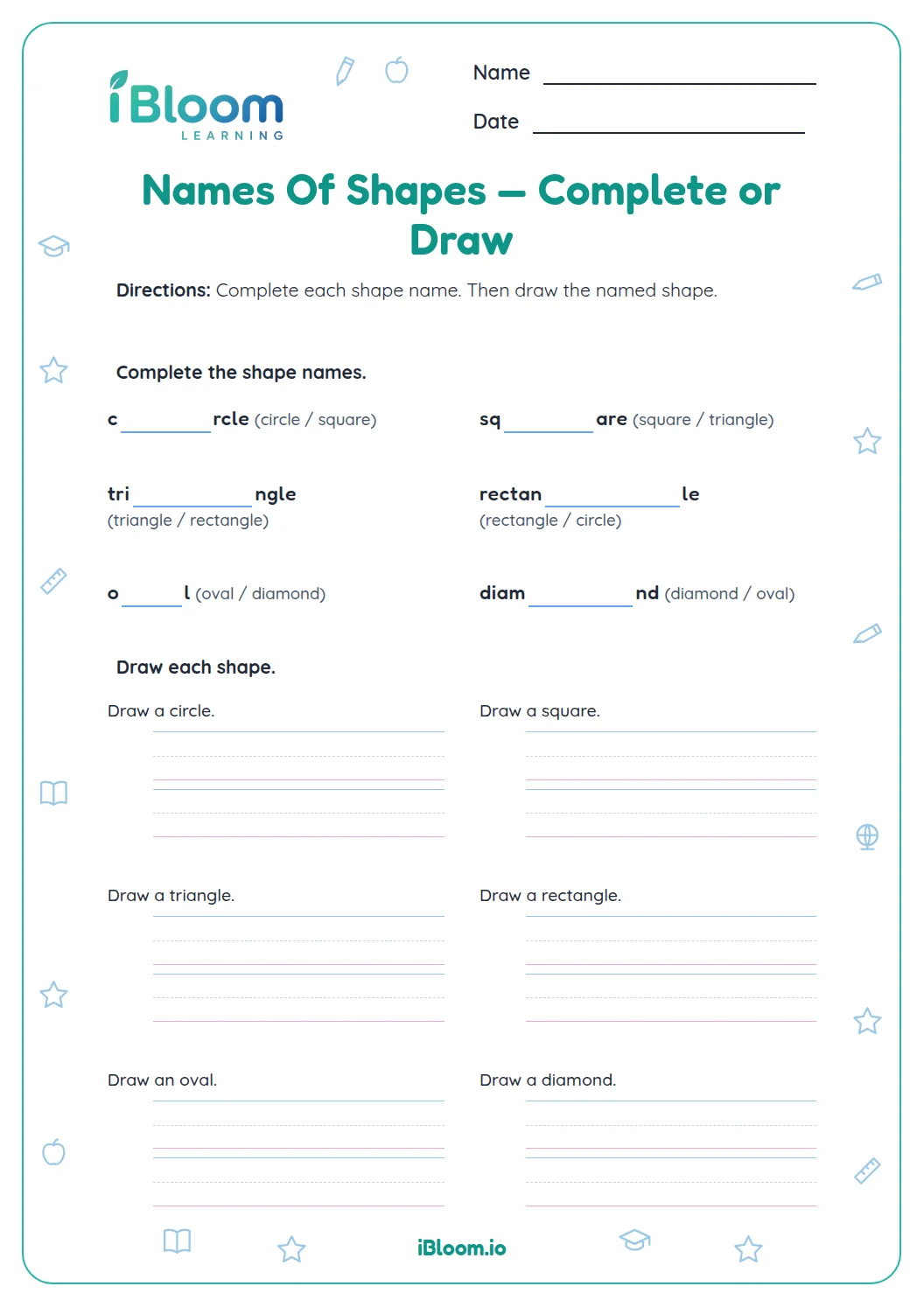
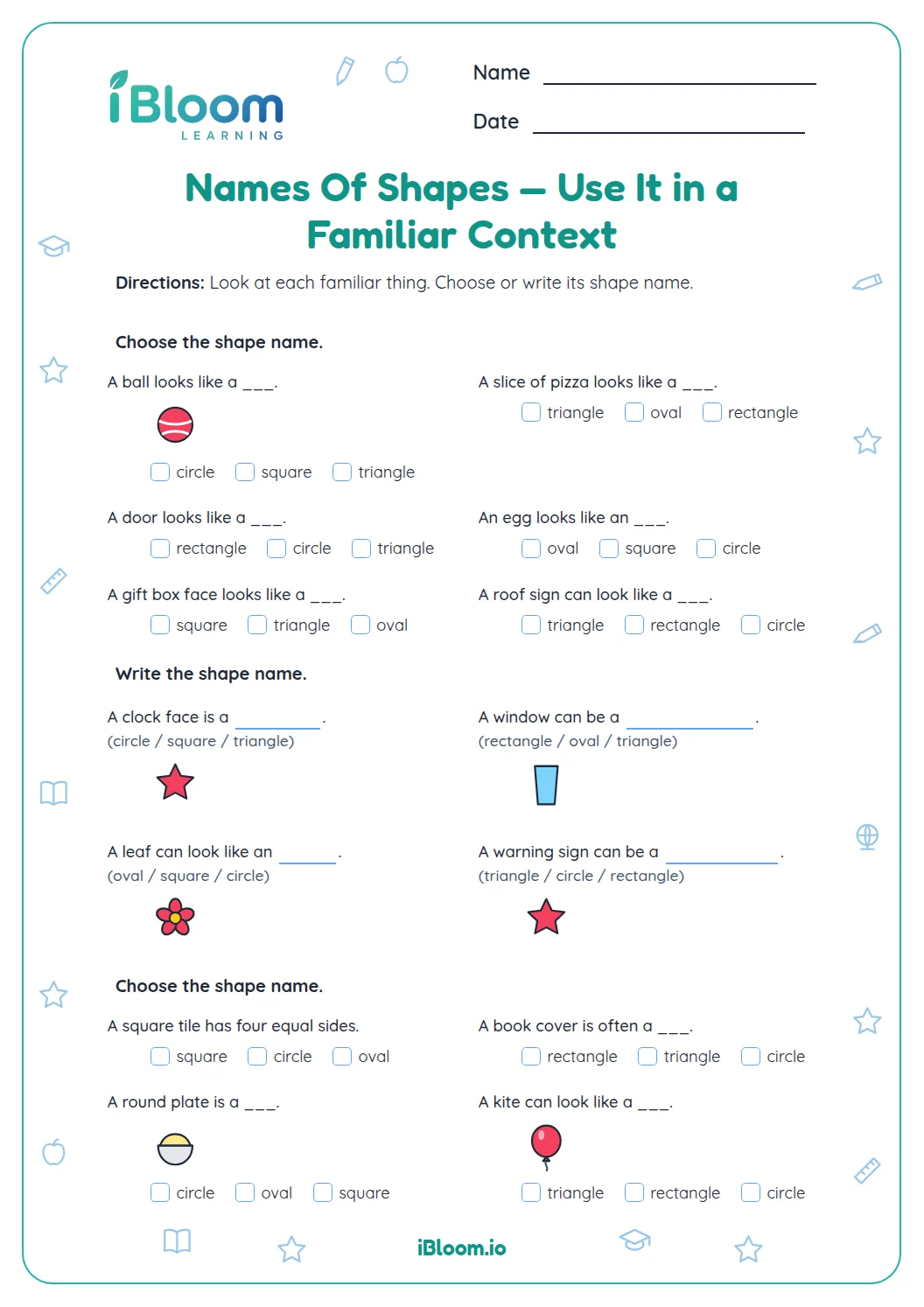
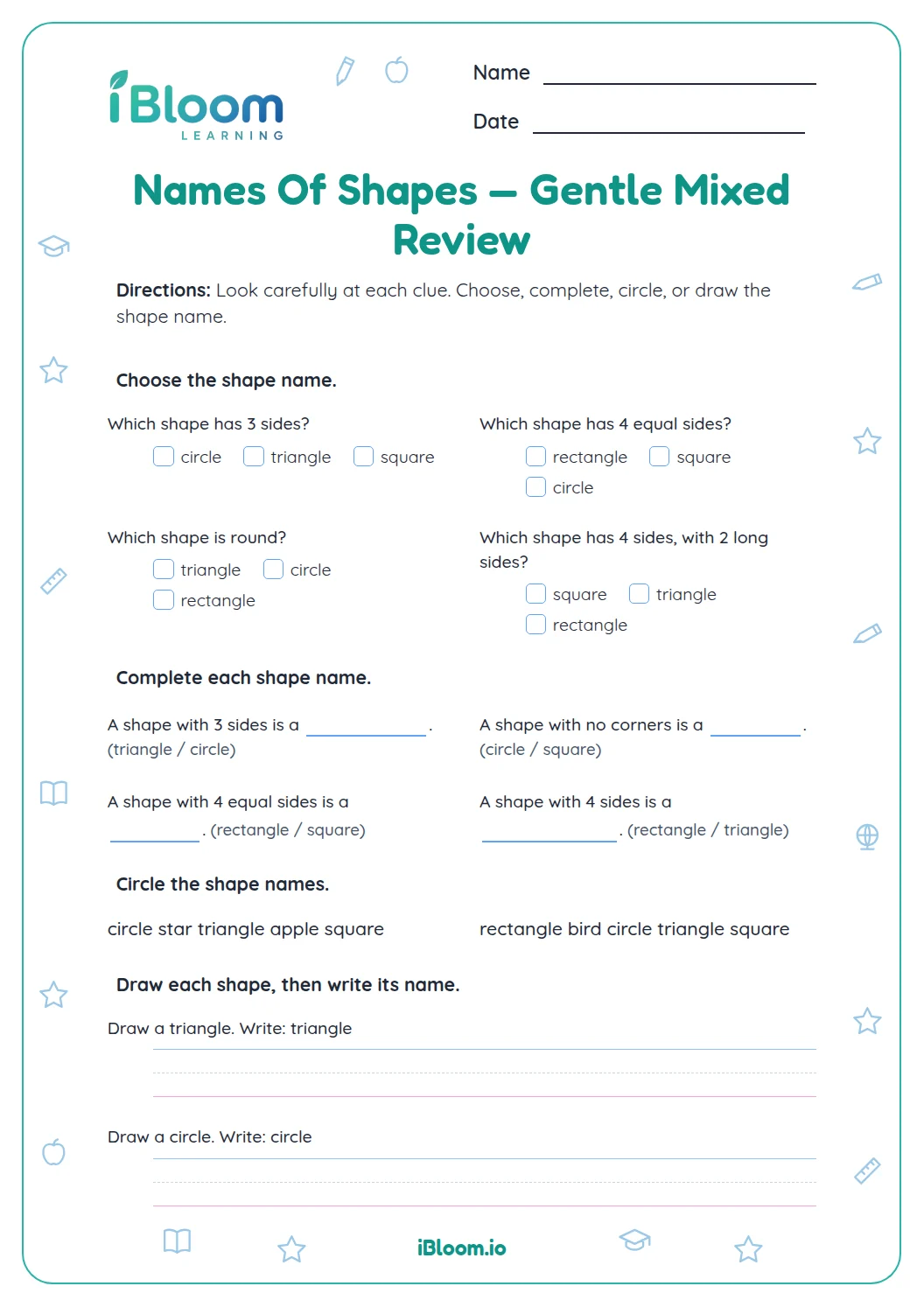
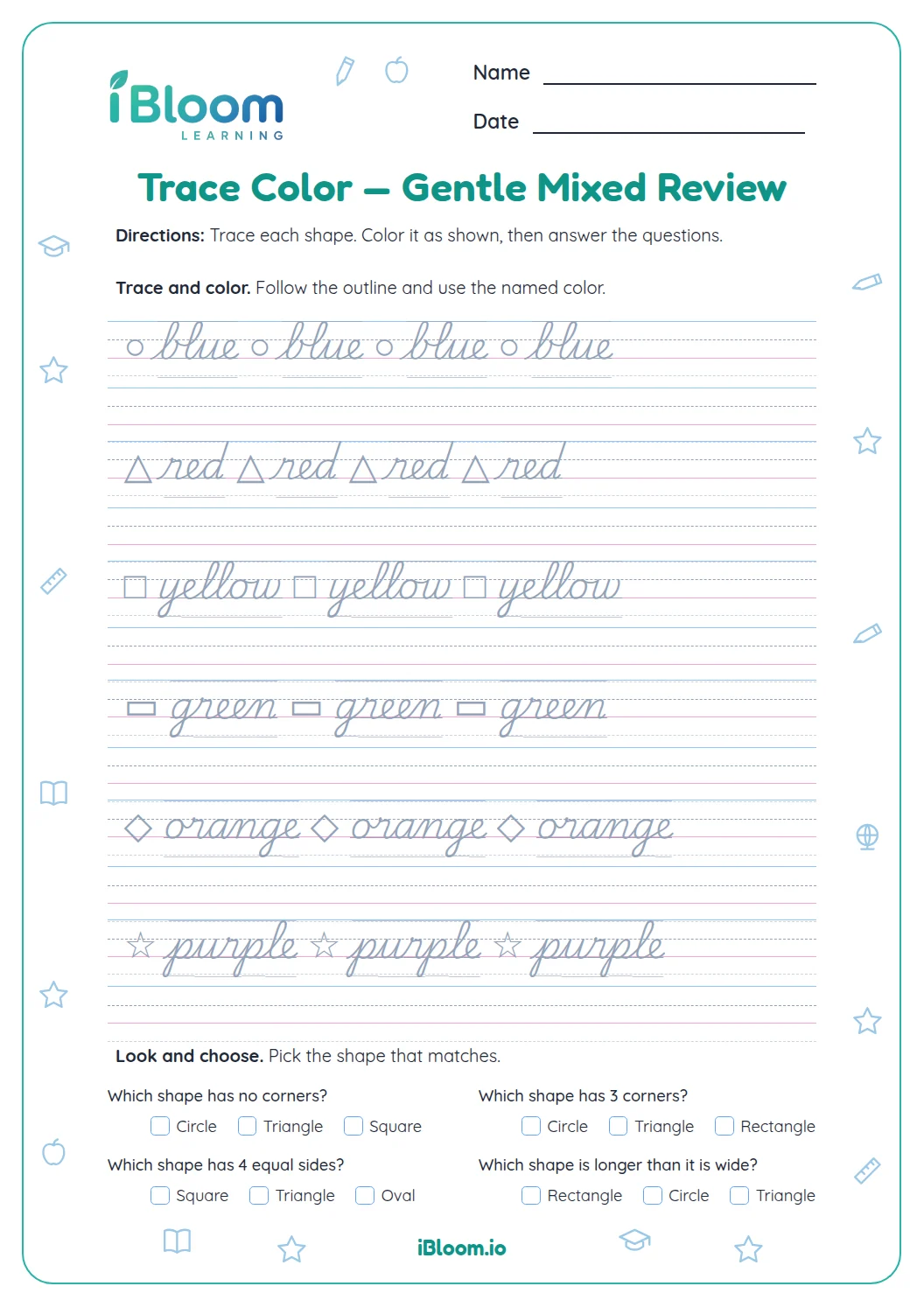
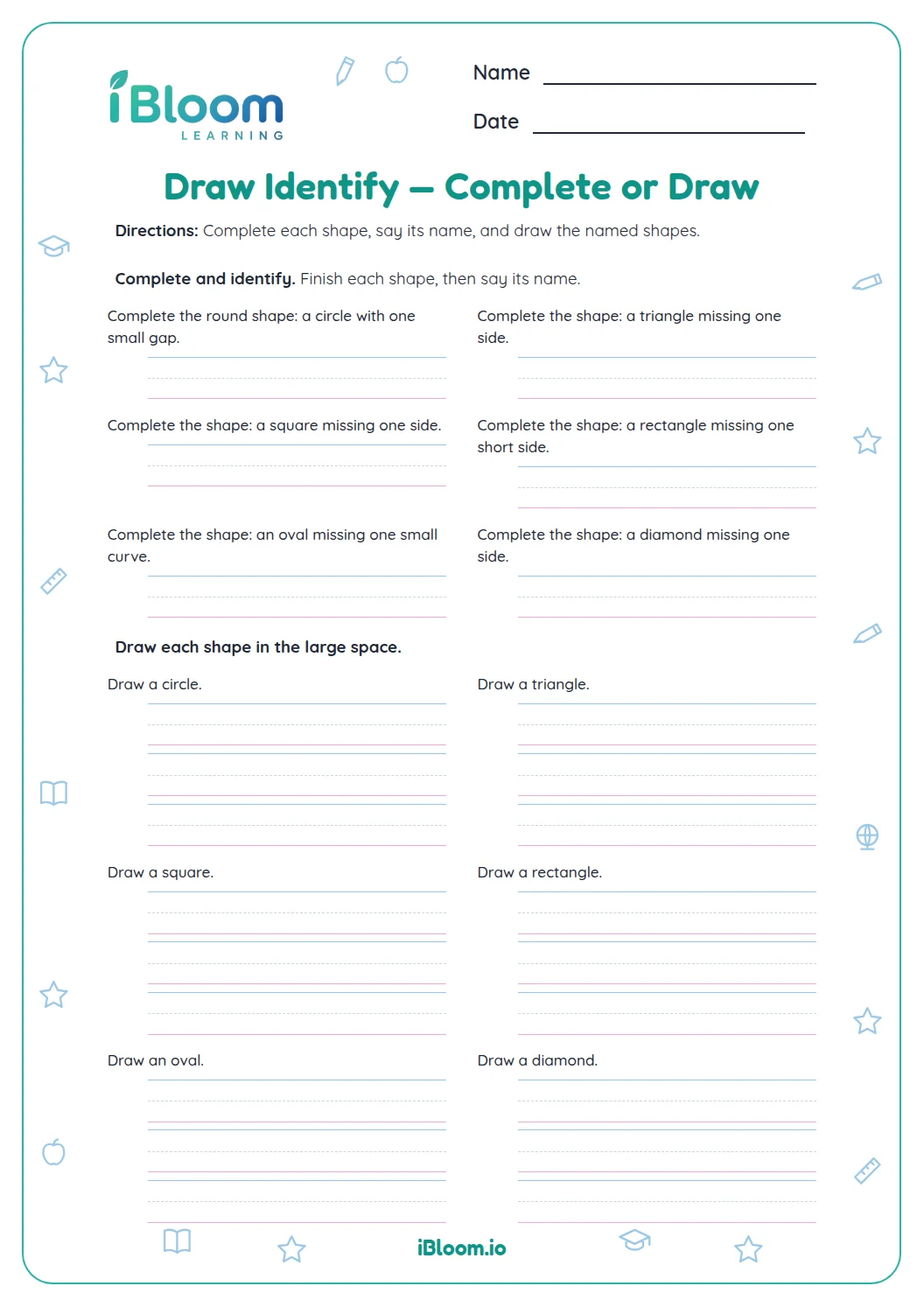
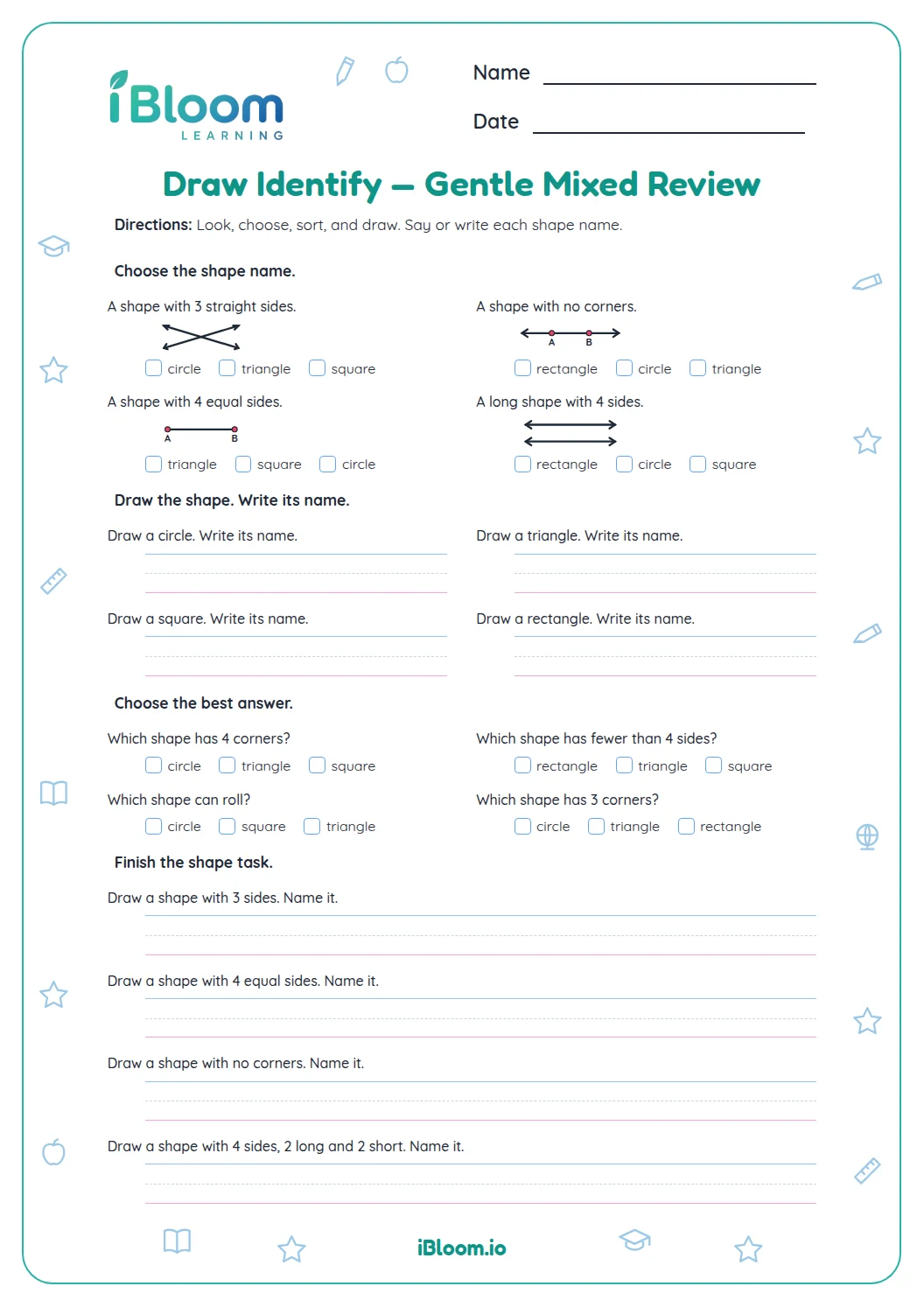
This free printable worksheet gives Preschool and Kindergarten children two steps with each shape: trace it, then draw it. Part A has six dotted outlines to trace with a pencil: a circle, an oval, a square, a rectangle, a triangle and a diamond. Part B has five big boxes where children draw a circle, a square, a triangle, a rectangle and an oval on their own. It practices Common Core K.G.B.5, drawing shapes. There are 11 activities on two pages, and the answer key says what each finished drawing should have.
Aligned to K.G.B.5
Why trace a shape before drawing it?
Tracing gives a young hand the path of the shape: where the corners are, where the line turns, and where it has to close. Drawing the same shape a few minutes later, with no dots to follow, asks the child to remember that path. The sheet is built in that order, so each shape in Part B has already been traced in Part A.
The dots also show where to stop. A traced circle ends where it began, and a traced square has four clear turns. Both are things children then try to copy in their own drawings.
- 1Question 3: start at a corner and follow the dots
- 2Count each side as you go: 1, 2, 3, 4
- 3Stop when you are back at the corner you started from
- 4Question 8: draw a square of your own in the box
- 5Count again: four sides, four corners
What should a good drawing look like?
Look for the features, not neat lines. A circle is round with no corners, and an oval is a stretched circle. A square has four sides about the same length, a rectangle has two long sides and two short sides, and a triangle has three sides and three corners.
The answer key lists these features for each box in Part B. A wobbly square with four sides and four corners is a good square for a preschooler.
What is on this worksheet?
Eleven activities on two pages, tracing first and drawing second.
- Part A, Trace the shapes: six dotted outlines (circle, oval, square, rectangle, triangle, diamond)
- Part B, Draw the shapes: five big boxes to draw a circle, a square, a triangle, a rectangle and an oval
- Answer key: the traced shapes, and what each drawing should have
How to use this worksheet at home or in class
- 1Before the pencil comes out, trace a shape in the air or on the table with a finger, saying its name.
- 2In Part A, show your child how to put the pencil on one dot and follow the dots all the way around without lifting it.
- 3Count the sides out loud while tracing the square, the rectangle, the triangle and the diamond.
- 4For Part B, remind your child to draw the shape big, filling most of the box.
- 5Ask “How many corners does yours have?” after each drawing, and let your child check against the traced shape on page 1.
- 6Use the answer key to talk about each shape’s features, not how straight the lines are.
Common mistakes and quick fixes
The mistake
Leaving a gap where the traced or drawn line should close, so the circle looks like a C.
The fix
Mark the starting dot with a small star and ask your child to keep going until the pencil reaches the star again.
The mistake
Drawing the square and the rectangle the same way.
The fix
Lay a sticky note and an envelope side by side. Run a finger along the sides of each and talk about which one has two long sides.
The mistake
Rounding the corners of the triangle until it looks like a circle.
The fix
Have your child stop the pencil at each corner and say “turn” before drawing the next side.
Common Core alignment
Most US states use the Common Core standards or a close state version. This sheet practices the standard below.
Draw shapes such as circles, squares, triangles and rectangles.
On this sheet: Part A traces six shapes and Part B has children draw five shapes on their own.
Show the official wordingHide the official wording
Model shapes in the world by building shapes from components (e.g., sticks and clay balls) and drawing shapes.
What to practice next
Make more practice
Further reading
Questions parents and teachers ask
Which shapes are on this worksheet?
Children trace a circle, an oval, a square, a rectangle, a triangle and a diamond in Part A. In Part B they draw five of them on their own: the circle, square, triangle, rectangle and oval. The diamond is for tracing only, since its slanted sides are hard to draw freehand at this age.
My child is three. Should they do the whole sheet?
Not in one sitting. Three-year-olds can trace the circle and the square in Part A and draw a circle in Part B, then stop. Come back to the other shapes another day. Short, happy practice does more for pencil control than finishing every box while tired.
How should my child hold the pencil for tracing?
Encourage a relaxed grip near the tip, with the paper held still by the other hand. A thick pencil or crayon is easier for small hands. Tracing slowly from dot to dot matters more than speed, and lifting the pencil is fine if your child keeps going from the same spot.
What if a drawing does not look like the traced shape?
Check the features rather than the neatness. Does the triangle have three corners? Does the circle close up? If something is missing, look back at the traced shape on page 1 together, count its sides or corners, and try again on scrap paper.
What does the answer key show?
The two answer key pages mark each Part A shape as traced and list what each Part B drawing should have, such as “three straight sides and three corners” for the triangle. Use those descriptions to praise what your child got right before fixing anything.
Is this worksheet for preschool or kindergarten?
Both. Preschoolers can focus on tracing in Part A with an adult nearby, while kindergartners can complete both pages on their own. Kindergarten children can also say how many sides and corners each drawing has, which links the drawing to the shape’s features.