





About this worksheet
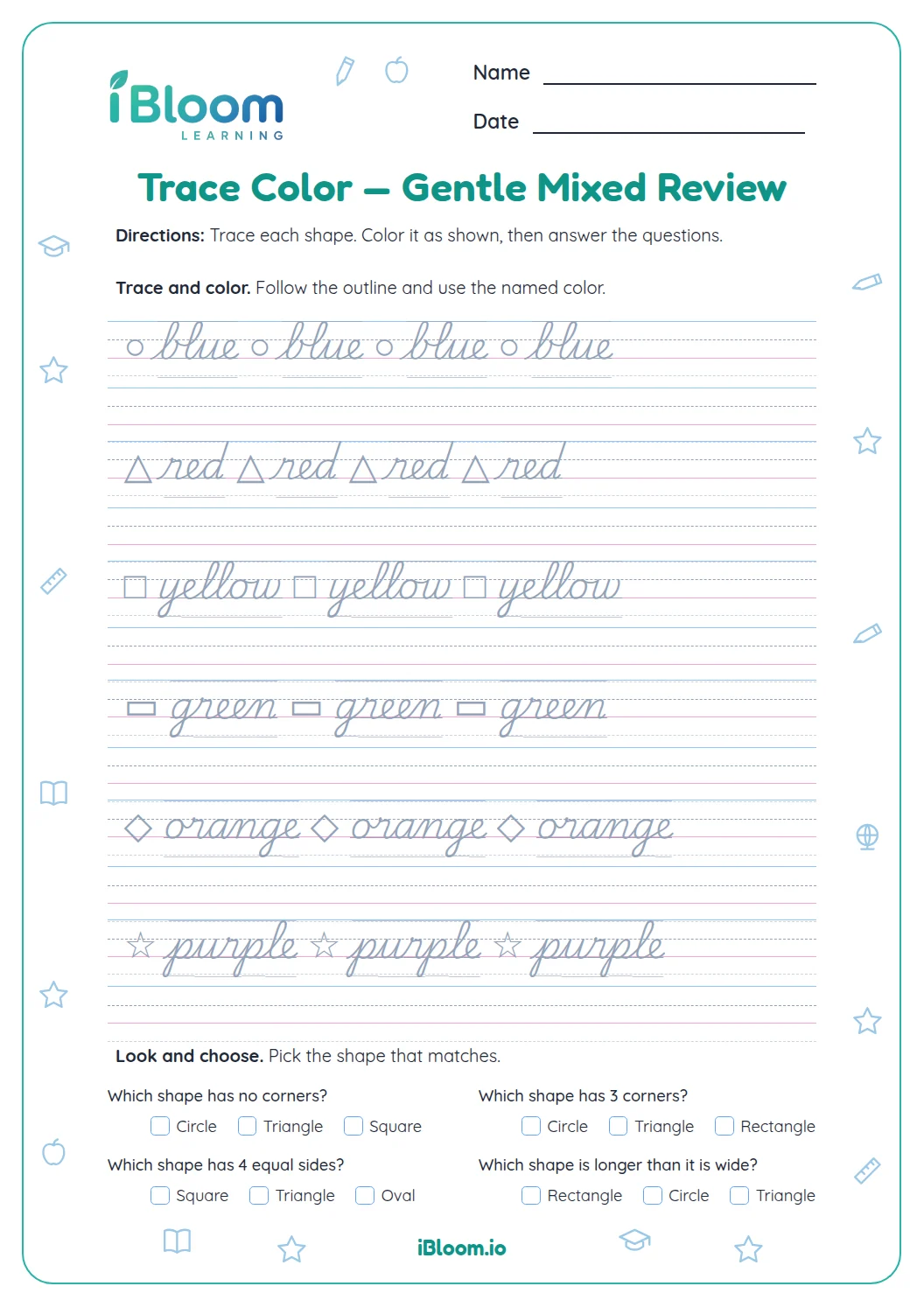
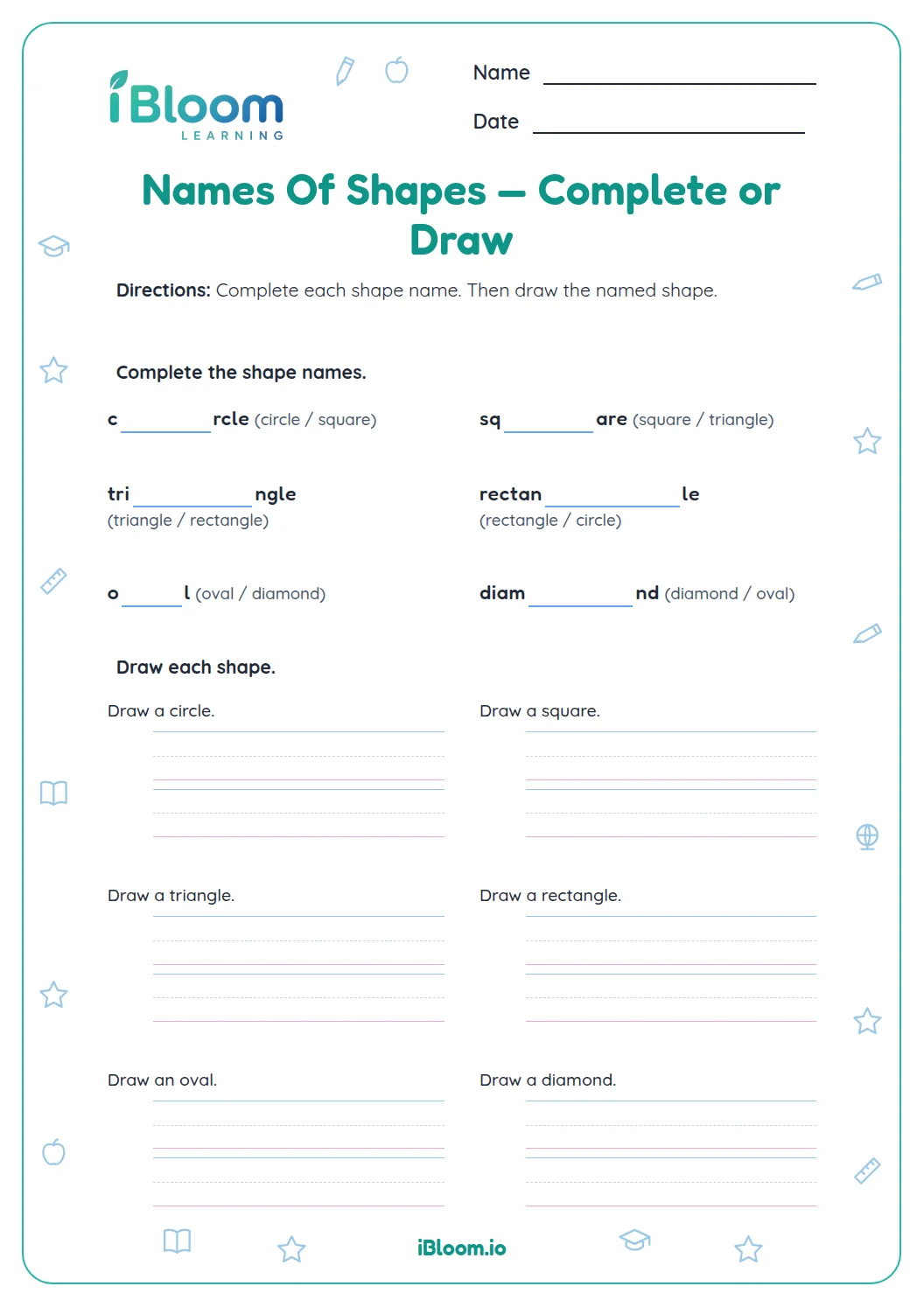
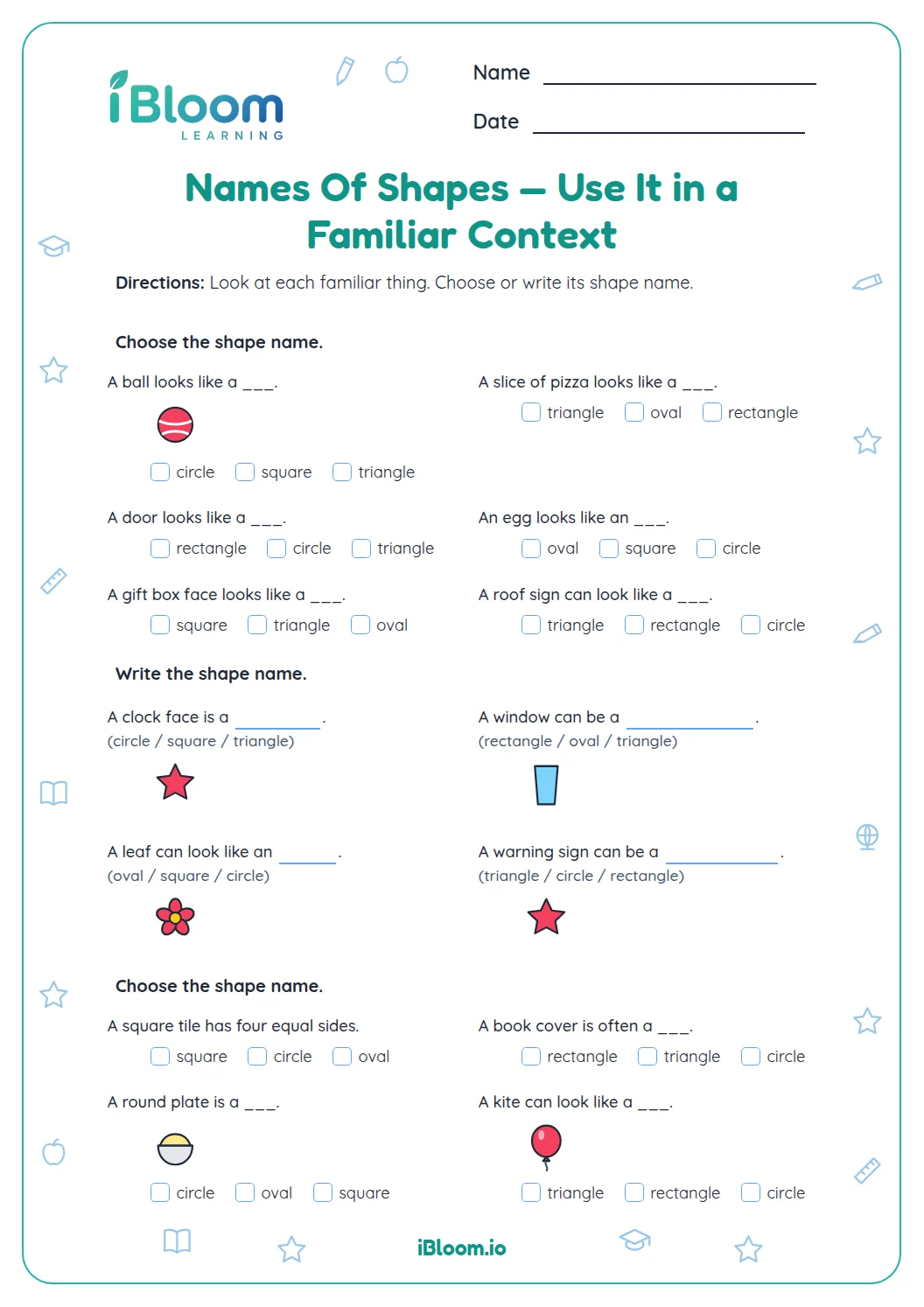
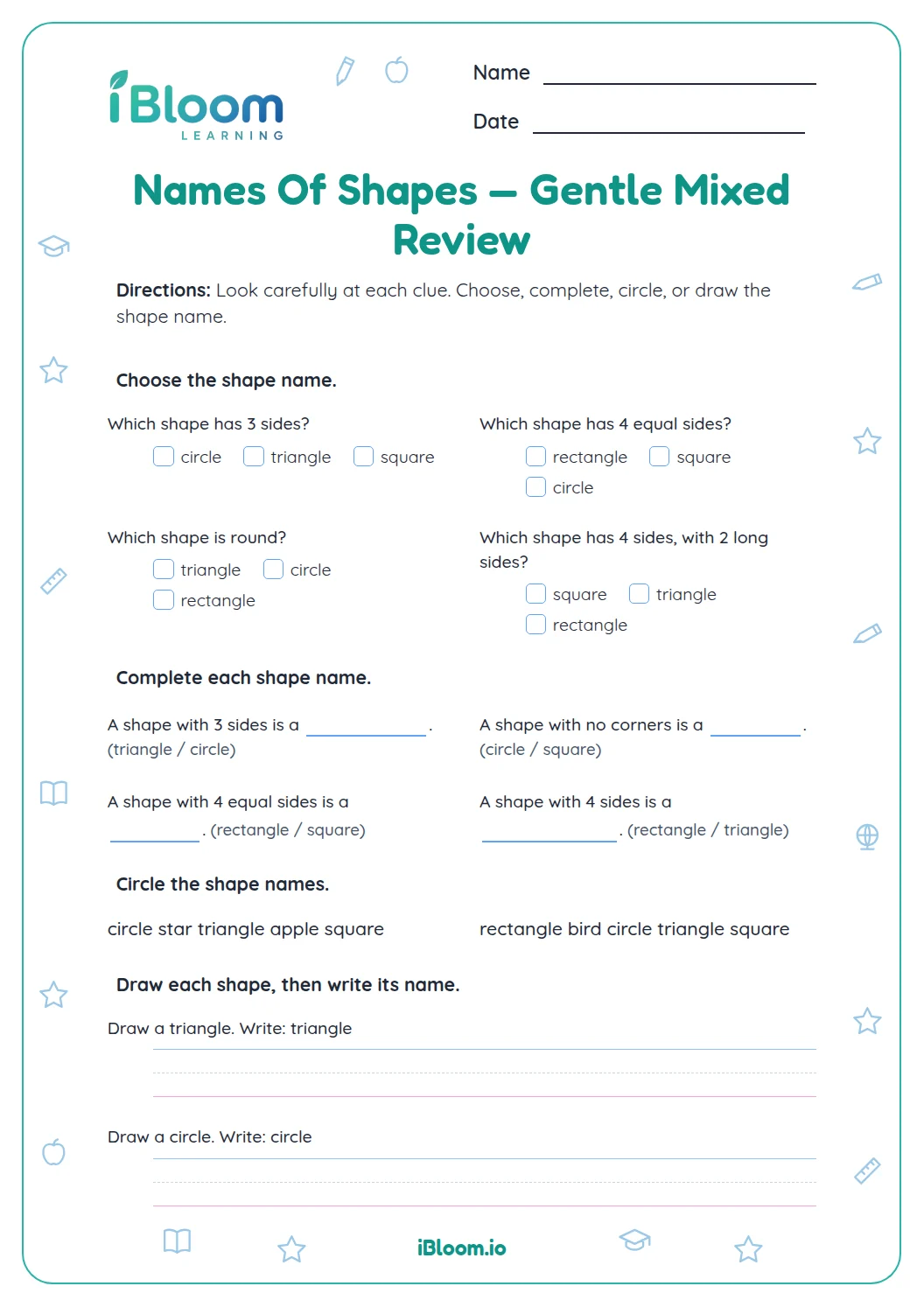
This printable gives preschool and kindergarten learners practice tracing and naming familiar flat shapes. Children trace five dotted outlines, then use the shape pictures in 13 questions to choose a circle, square, triangle, rectangle or oval. The page supports CCSS K.G.A.2 by asking children to name familiar shapes from their outlines. A separate answer key lists the selected shape names.
Aligned to K.G.A.2
How does tracing help children learn shape names?
Question 1 shows five dotted outlines to trace and name. Children can follow each edge or curve with a finger before saying the shape word.
Questions 2–14 ask short questions about the sides, corners and curved boundaries of familiar shapes.
- 1A triangle has three corners.
What should a child notice when a shape turns?
A shape keeps its name when it is turned or drawn larger or smaller. Encourage the child to follow the boundary and notice the corners rather than rely on which way the shape points.
How can an adult support the practice?
Read each short prompt aloud if helpful. Let the child trace with a pencil or crayon, then make one choice for each pictured group.
- Question 1: trace and name five shapes
- Questions 2–14: complete a shape fact about sides, corners or curves
- Answer key lists the traced group and feature answers
How to use this worksheet
- 1Trace the five dotted outlines in question 1.
- 2Say each shape name as you trace its boundary.
- 3Read each shape fact carefully.
- 4Count corners or straight sides when a number is requested.
- 5Use the answer key to check each response.
Common mistakes and quick fixes
The mistake
Calling a diamond a square because it is tilted.
The fix
Look for four equal sides; turn the page or picture in your mind before naming it.
The mistake
Calling an oval a circle.
The fix
Compare the outline: an oval is longer in one direction than the other.
The mistake
Naming every three-sided outline as a square.
The fix
Count corners: a triangle has three; a square has four.
Common Core alignment
This worksheet supports the listed Common Core skill through focused practice.
Name familiar shapes from their outlines, including when size or orientation changes.
On this sheet: The activity asks children to trace and identify familiar shapes from illustrated outlines.
Show the official wordingHide the official wording
Correctly name shapes regardless of their orientations or overall size.
What to practice next
Make more practice
Further reading
Questions parents and teachers ask
Which shapes appear on the worksheet?
The tracing activity uses circles, squares, triangles, rectangles and ovals. The later questions ask about familiar shape features, including the number of corners or sides and whether an outline is curved. The answer key lists the traced shape names and each short response.
Does a child need to write every shape name?
Children trace the five dotted outlines in the first activity. They can say each shape name aloud as they follow its boundary. The later items have short blanks for a number or feature word, so an adult can read a prompt aloud if helpful.
How can I help a child recognize a tilted shape?
Ask the child to follow the boundary with a finger and count corners. Turning a familiar shape does not change its name. The worksheet uses familiar outlines so children can attend to the boundary rather than its direction.
What does the answer key include?
The key names the five shapes in the tracing activity and gives the number or feature word for each of the 13 short questions. Accept spoken shape names during tracing as well as written answers in the later blanks. Review any missed feature together.
How can we practice after this sheet?
Look for circles, rectangles, triangles and other familiar outlines on classroom objects. Ask the child to name a shape by its boundary, then describe its corners or straight sides. This gives a chance to connect the worksheet words with everyday objects.