




About this worksheet
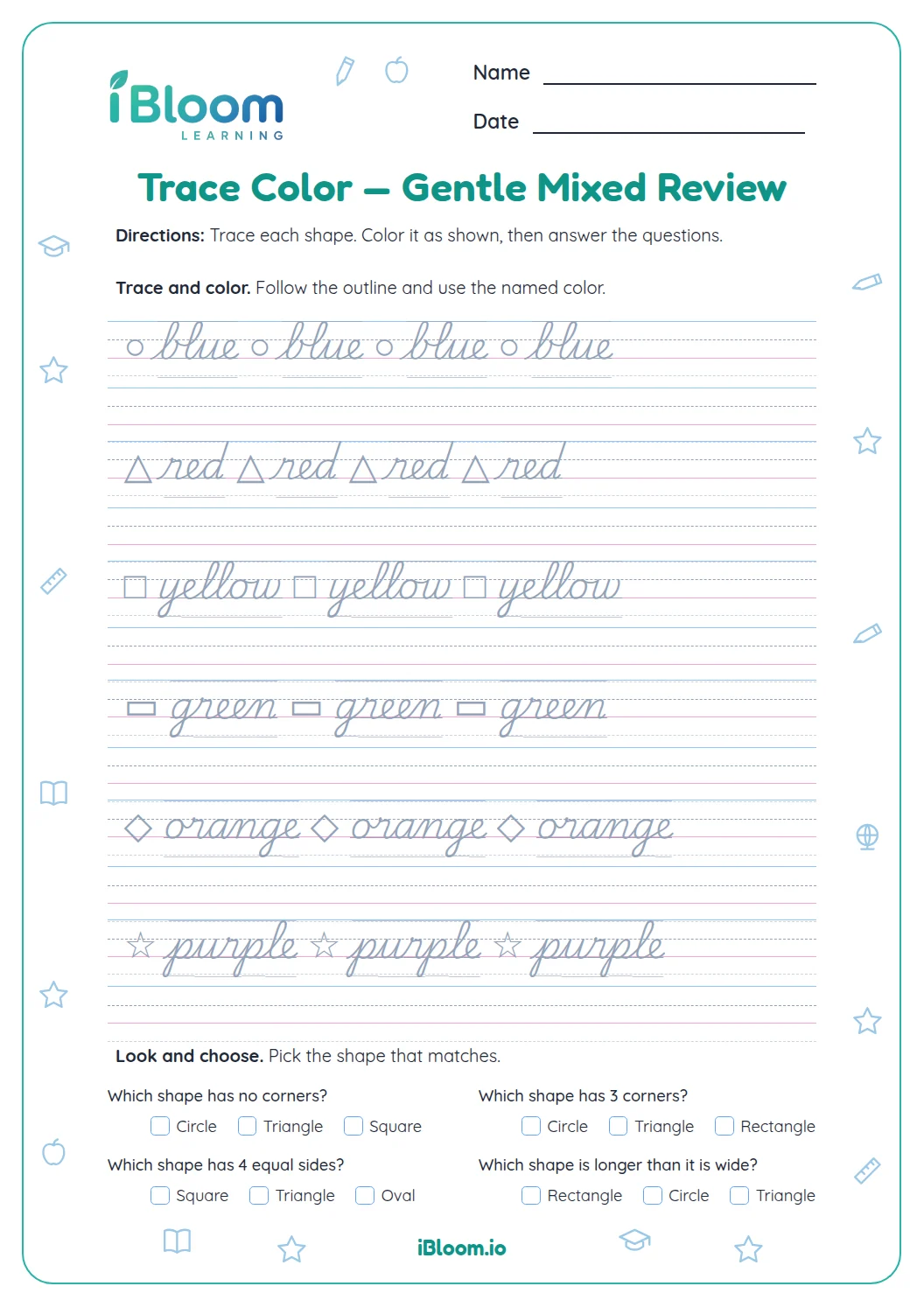
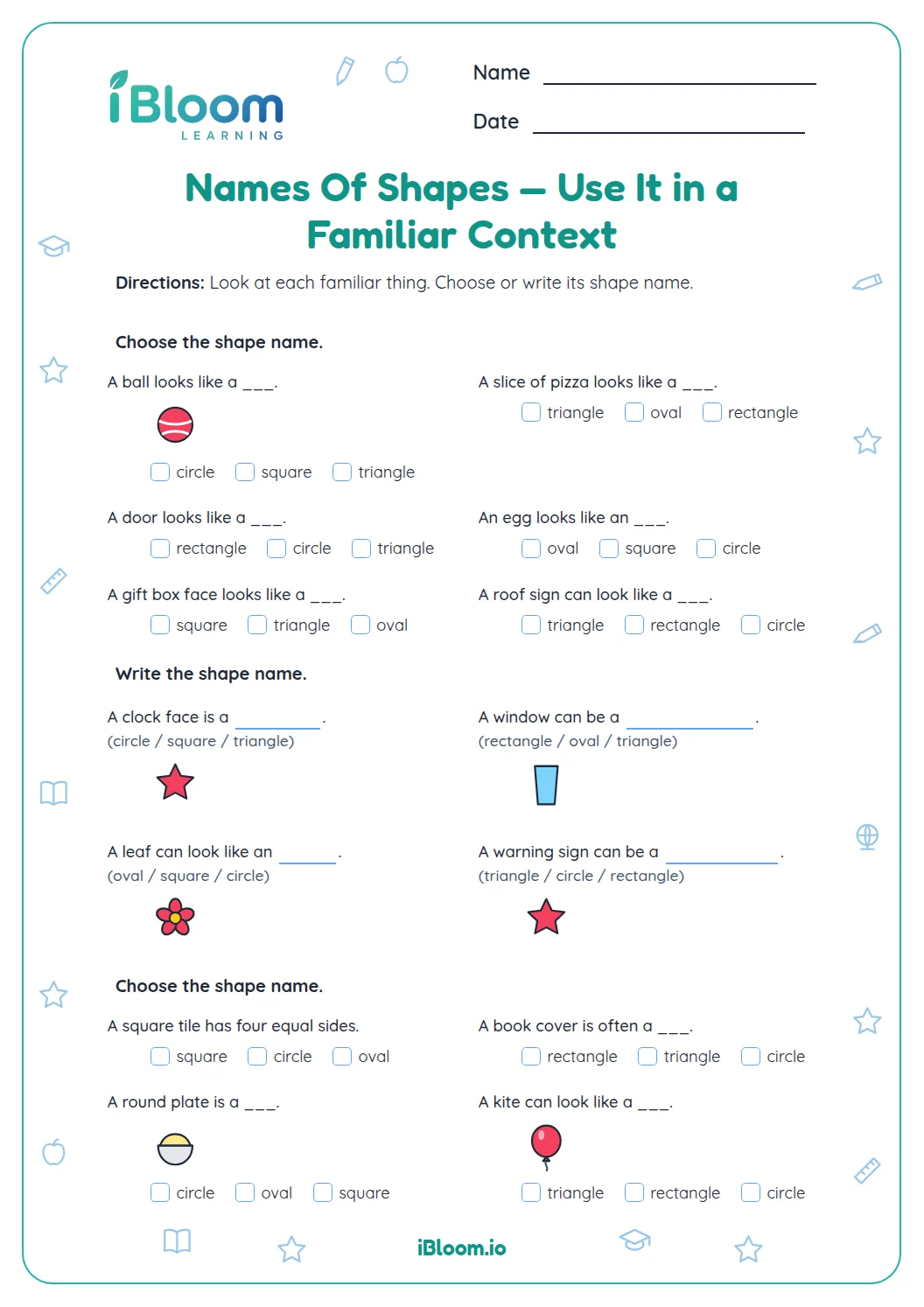
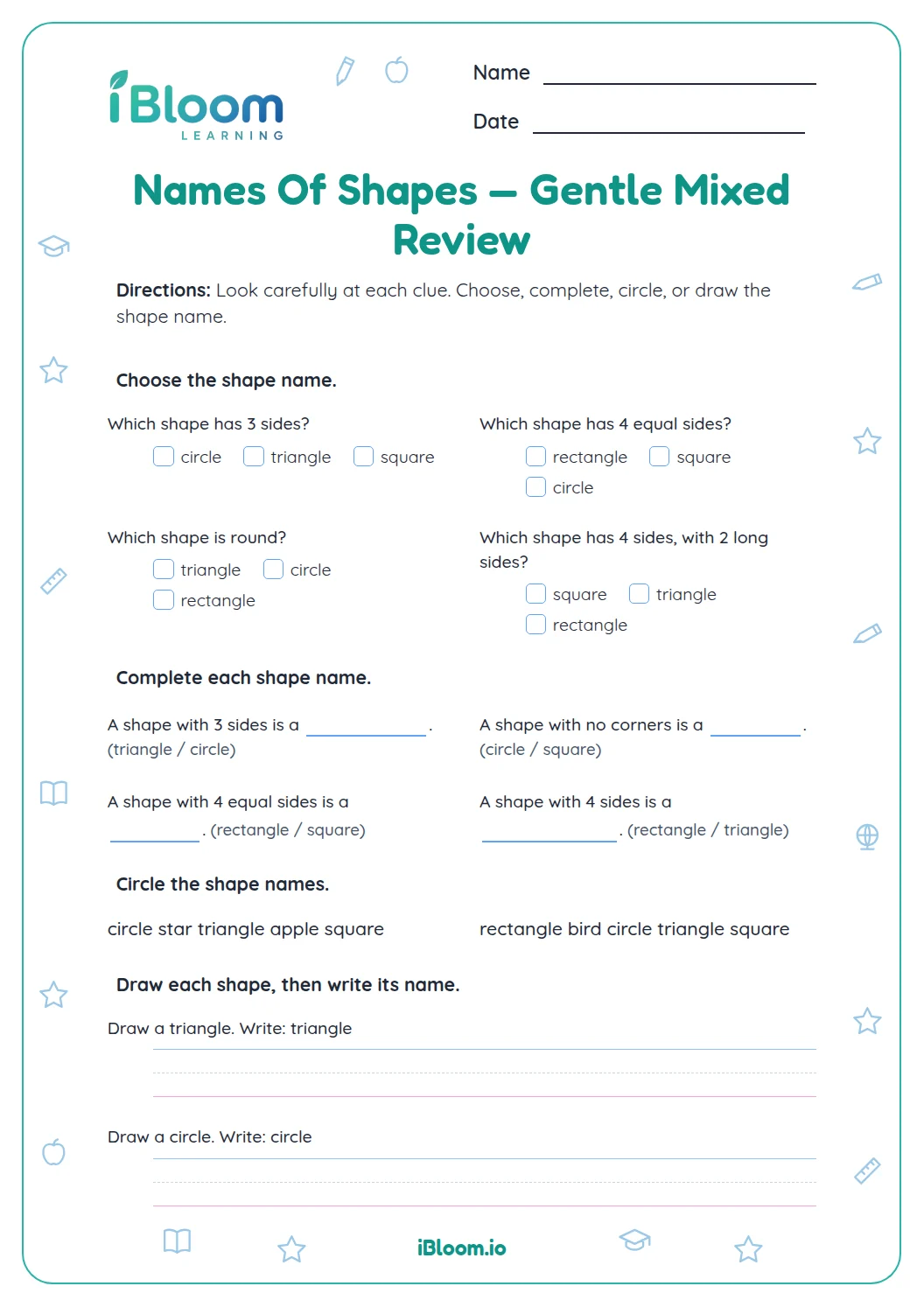
This printable gives preschool and kindergarten children practice tracing, naming, coloring, and drawing familiar shapes. Twelve activities use dotted outlines, and two drawing prompts ask children to make pairs of shapes in a box. The separate key describes the expected shapes and colors; a grown-up can check each child’s drawing against the named shape.
What can children notice while tracing?
Following a dotted outline helps children attend to a shape’s boundary. A circle curves and has no corners; a triangle has three straight sides; squares and rectangles have four sides and four corners.
- 1Find the dotted square.
- 2Follow its four straight sides.
- 3Color the traced square red.
How does drawing build on tracing?
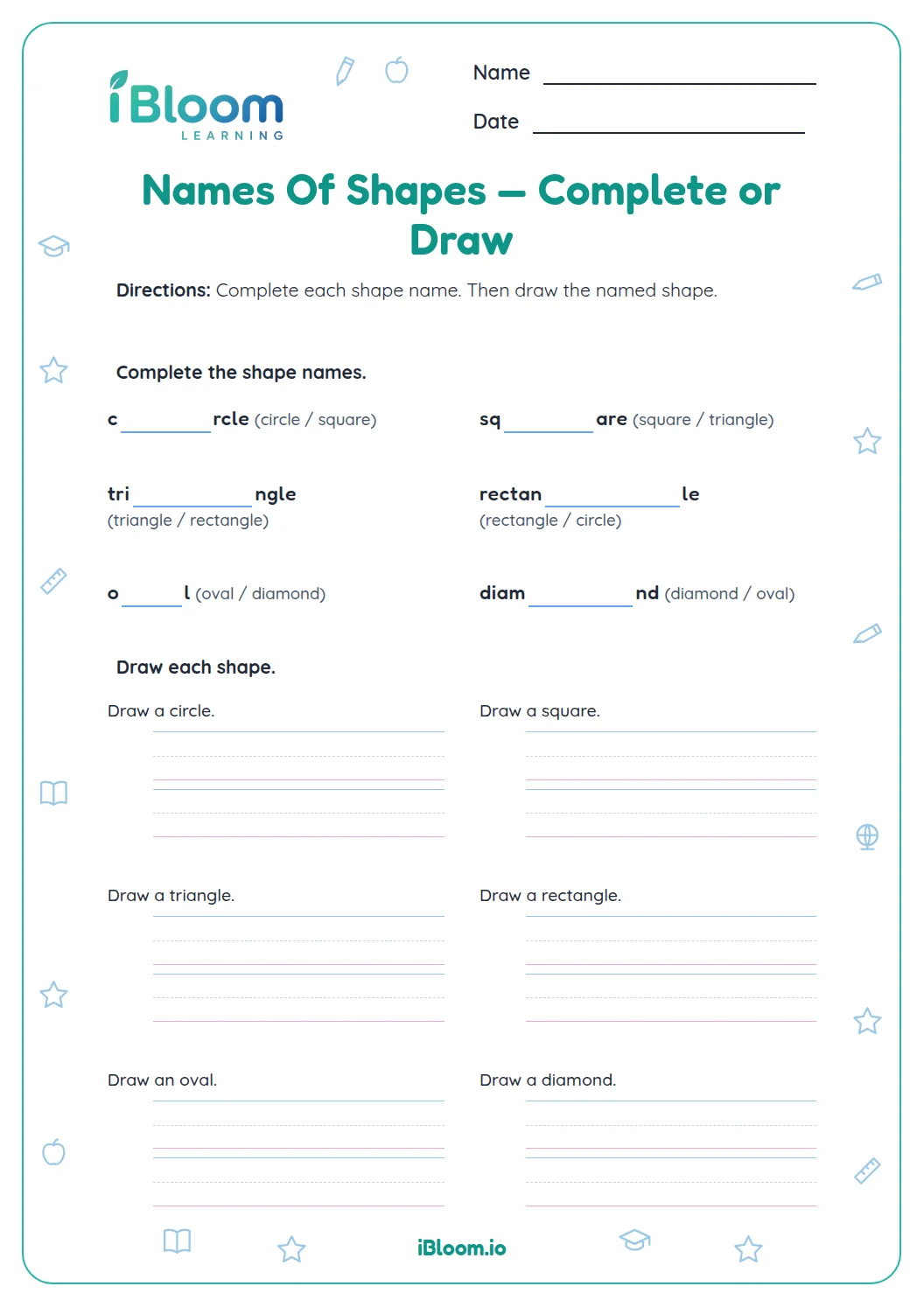
After tracing the familiar shapes, children draw a circle with a square and a triangle with a rectangle. They can check the number of sides or corners and then follow each color direction.
What is included on the printable?
The 14 activities include twelve single-shape tracing prompts and two drawing prompts, each asking for two shapes. The answer key describes the requested shape and color for each activity.
How to use this worksheet at home or in class
- 1Say the shape name before starting.
- 2Trace one dotted outline at a comfortable pace.
- 3Color the traced shape as requested.
- 4Draw each pair of shapes in its own box.
- 5Check the shape names and colors together.
Common mistakes and quick fixes
The mistake
Making a square with sides of very different lengths.
The fix
Compare the four sides and make them about the same length.
The mistake
Drawing a triangle with only two sides.
The fix
Trace three straight sides in the air before drawing.
The mistake
Coloring before finishing the outline.
The fix
Complete the boundary first, then color inside it.
What to practice next
Make more practice
Further reading
Questions parents and teachers ask
Which shapes will children practice?
The activities include circles, squares, triangles, rectangles, ovals, and diamonds. Children trace and color twelve dotted outlines, then draw four more shapes in two boxes. The repeated shapes give another chance to practice familiar forms with a pencil in this activity.
How should a child trace the shapes?
Start at any point on the dotted outline and follow its path with a pencil. Encourage the child to keep the line near the dots, then color inside the completed shape. A careful attempt is more useful than speed, especially for a first try.
Why does the worksheet include both tracing and drawing?
Tracing gives a clear outline to follow; drawing asks children to make shapes on their own. The two final prompts ask for two shapes each, so children can use what they noticed about sides and corners while tracing. They also practice following color directions.
What is a diamond on this worksheet?
The diamond is the familiar pointed shape with four straight sides and four corners. Children trace or draw its outline and then add the requested color. The worksheet uses the early-learning name “diamond” for this shape, which is also called a rhombus.
Does the answer key check the colors?
The key lists the expected shape and color for each activity. Children’s drawn outlines will vary, so an adult can check that each drawing has the named shape and requested color rather than comparing it with one exact pencil stroke.
Can preschoolers use the page?
Yes. The sheet is labeled for preschool and kindergarten. A younger learner can trace with an adult nearby, while a child who is ready can draw the final pairs independently and name each shape aloud. An adult can help read the color directions.